Ion Exchange Resins Market

lon Exchange Resins Market by Type (Cationic Resins, Anionic Resins), Application (Water, Non-Water), End-Use Industry (Power, Chemicals & Petrochemicals, Pharmaceuticals, Food & Beverage, Electrical & Electronics), and Region - Global Forecast to 2031




OVERVIEW
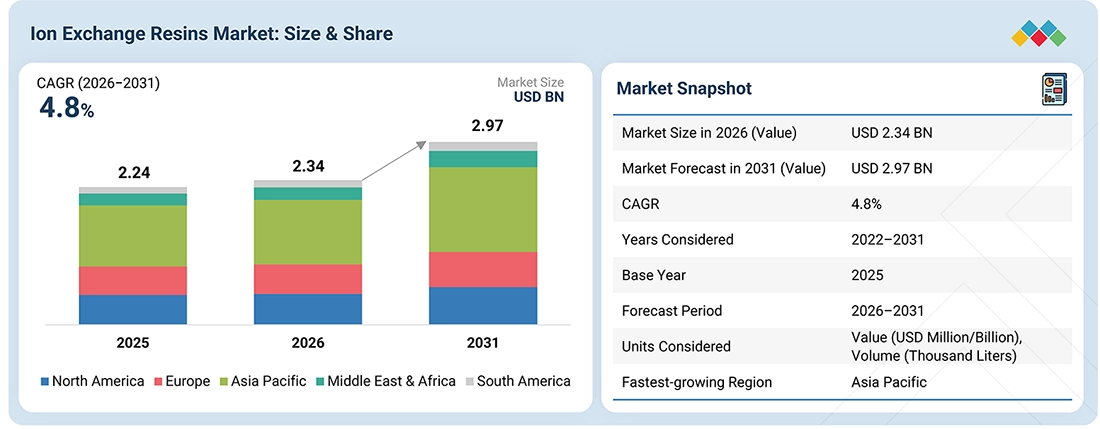
Source: Secondary Research, Interviews with Experts, MarketsandMarkets Analysis
The ion exchange resins market is projected to reach USD 2.97 billion by 2031, up from USD 2.34 billion in 2026, at a CAGR of 4.8%. Market growth is driven by rising demand for water treatment and purification across municipal and industrial applications. Rapid urbanization and industrialization are increasing the need for treated water and effective wastewater management. Demand for high-purity water is growing in the power generation, pharmaceuticals, chemicals, food & beverage, and electrical & electronics industries, supporting the adoption of ion exchange resins. Stringent water treatment regulations are also prompting industries to improve water quality and comply with discharge standards. Furthermore, the growing emphasis on water recycling and reuse is increasing the use of ion exchange resins in treatment processes.
KEY TAKEAWAYS
-
By RegionAsia Pacific accounted for a 44.3% share of the ion exchange resins market in 2025.
-
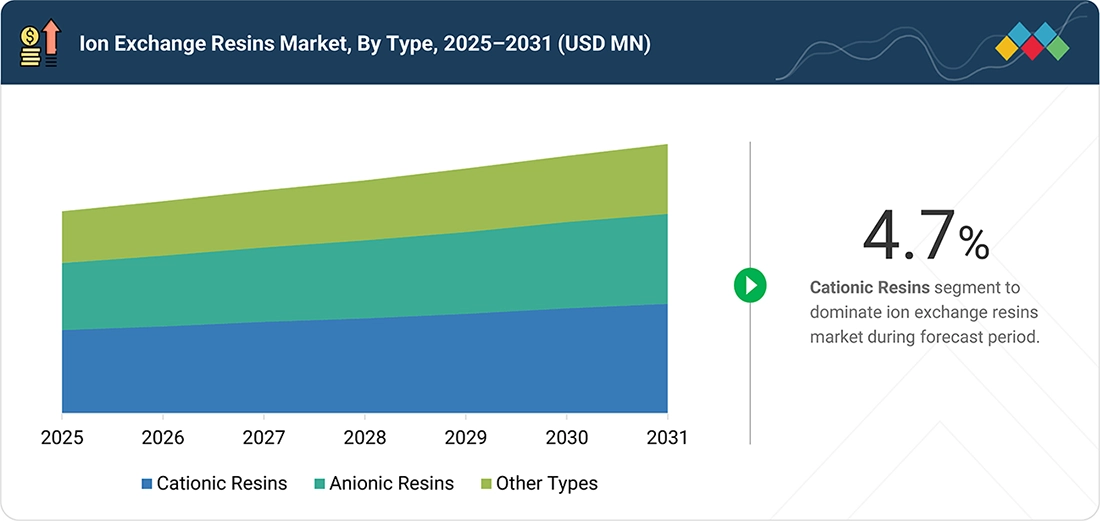
By TypeCationic resins held the largest share of 41.1% of the ion exchange resins market, by type, in 2025.
-
By ApplicationWater is the fastest-growing application in the ion exchange resins market, with a CAGR of 5.0% between 2026 and 2031.
-
By End-use IndustryThe power industry is projected to account for the largest share of the ion exchange resins market, by end-use industry, during the forecast period.
-
Competitive Landscape - Key PlayersDuPont, LANXESS, and Mitsubishi Chemical Group Corporation were identified as some of the star players in the global ion exchange resins market, given their strong market share and product footprint.
-
Competitive Landscape - StartupsResinTech, Inc., GFS Chemicals, and Suqing Group have distinguished themselves among startups and SMEs by securing strong footholds in specialized niche areas.
The ion exchange resins market is growing due to rising demand for water treatment and purification across municipal and industrial sectors. Rapid urbanization and industrial expansion continue to increase the need for clean water and effective wastewater management. Industries such as power generation, pharmaceuticals, chemicals, food & beverage, and electrical & electronics require high-purity water, which is driving the adoption of ion exchange resins. Governments are also tightening water treatment regulations, prompting companies to invest in meeting quality and discharge standards. In addition, the growing focus on water recycling and reuse is accelerating the adoption of advanced treatment methods that use ion exchange resins. Together, these factors are driving demand for ion exchange resins.
TRENDS & DISRUPTIONS IMPACTING CUSTOMERS' CUSTOMERS
Trends and disruptions are having a growing impact on clients' businesses in the ion exchange resins market as companies prioritize water efficiency, high-purity water, wastewater recovery, and resource conservation. TSMC is enhancing its ion exchange resin systems to extend resin life and reduce wastewater from semiconductor operations. Pfizer is focusing on water conservation, responsible discharge management, and water reuse across its manufacturing operations. The Coca-Cola Company is investing in water-efficiency technologies, recycling, and water replenishment, as water availability increasingly affects manufacturing operations. These trends are increasing demand for longer-lasting, higher-capacity, application-specific ion exchange resins.
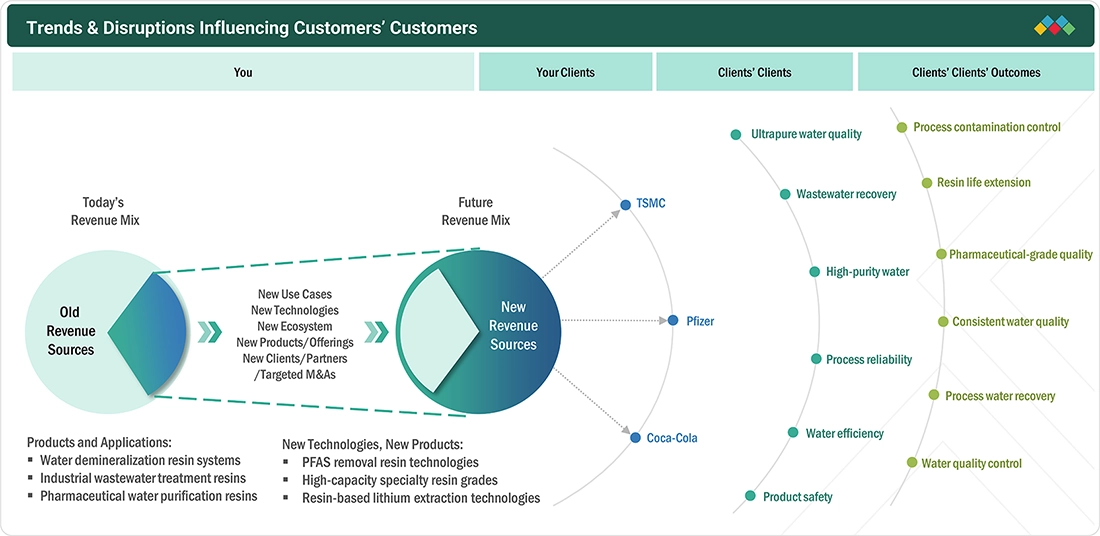
Source: Secondary Research, Interviews with Experts, MarketsandMarkets Analysis
MARKET DYNAMICS

Level
-
Increasing demand for nuclear power in emerging economies

-
Stringent water treatment regulations


Level
-
Volatility in raw material prices

-
Increasing competition from reverse osmosis membrane technology


Level
-
Growing industrialization in emerging economies

-
Increasing importance of water recycling and reuse


Level
-
Finding new applications for ion exchange resins

-
Complex wastewater compositions

Source: Secondary Research, Interviews with Experts, MarketsandMarkets Analysis
Driver: Increasing demand for nuclear power in emerging economies
Growing demand for nuclear power in emerging economies is driving the ion exchange resins market. Nuclear power plants require high-purity water for reactor systems, steam generation, cooling circuits, and wastewater treatment. To operate safely and efficiently, these facilities must comply with strict safety standards, which makes them reliant on water purification systems. Ion exchange resins play a key role in this process by removing dissolved ions, radioactive materials, and other impurities, helping control water chemistry within the plant. As more countries build new reactors and expand their existing nuclear power infrastructure, demand for specialized ion exchange resins continues to rise. The critical need for high-purity water in nuclear operations is expected to sustain strong market demand.
Restraint: Volatility in raw material prices
Volatility in raw material prices restrains the growth of the ion exchange resins market by raising production costs and creating uncertainty for manufacturers. Ion exchange resins are made from styrene, divinylbenzene, acrylic compounds, and other chemical reagents. The prices of these materials fluctuate with changes in crude oil prices, energy costs, supply conditions, and transportation costs. Higher input costs increase the price of ion exchange resins and influence purchasing decisions among price-sensitive customers. Manufacturers also find it difficult to maintain profit margins when raw material prices change rapidly. These price swings complicate production planning, pricing, and the securing of long-term supply agreements.
Opportunity: Growing industrialization in emerging economies
Growing industrialization in emerging economies presents a significant opportunity for the ion exchange resins market, as increased production raises the need for clean water and wastewater treatment. The chemicals, pharmaceuticals, power generation, food & beverage, electronics, and metals industries all depend on water to operate their facilities and equipment. As industrial activity expands, wastewater volumes increase, creating greater demand for technologies that remove dissolved ions and other contaminants before water is discharged or reused. Investments in manufacturing facilities and water infrastructure across Asia Pacific, Latin America, and the Middle East are further supporting market growth. With rising industrial water consumption, ion exchange resins are expected to see wider use in process water treatment and wastewater management.
Challenge: Finding new applications for ion exchange resins
Identifying new applications is a key challenge for the ion exchange resins market, as conventional applications in water treatment, power generation, chemical processing, pharmaceuticals, and food & beverage are already well established. Companies seek applications that can generate additional revenue without requiring major changes to existing resin technologies or systems. Developing resins for new applications may require extensive testing to demonstrate performance, durability, selectivity, and cost-effectiveness under varying operating conditions. Competing separation and purification technologies can further limit opportunities for these resins. As a result, resin manufacturers must continue to invest in product development and application research to address emerging needs and expand beyond traditional markets.
ION EXCHANGE RESINS MARKET: COMMERCIAL USE CASES ACROSS INDUSTRIES
| COMPANY | USE CASE DESCRIPTION | BENEFITS |
|---|---|---|
 |
Ion exchange resins purify industrial, nuclear, drinking, and electrolyzer process water | High-purity water, contaminant removal, and improved process efficiency |
 |
Lewatit resins treat water and liquids across power, pharmaceutical, chemical, mining, and semiconductor applications | Selective ion removal, purification, and resource recovery |
 |
DIAION resins support water purification, wastewater treatment, pharmaceutical, food, and semiconductor applications | Efficient purification, selective separation, and high-purity water |
 |
TRILITE resins enable water treatment and separation across pharmaceutical, semiconductor, and catalyst applications | Ultrapure water, contaminant removal, and efficient purification |
Logos and trademarks shown above are the property of their respective owners. Their use here is for informational and illustrative purposes only.
MARKET ECOSYSTEM
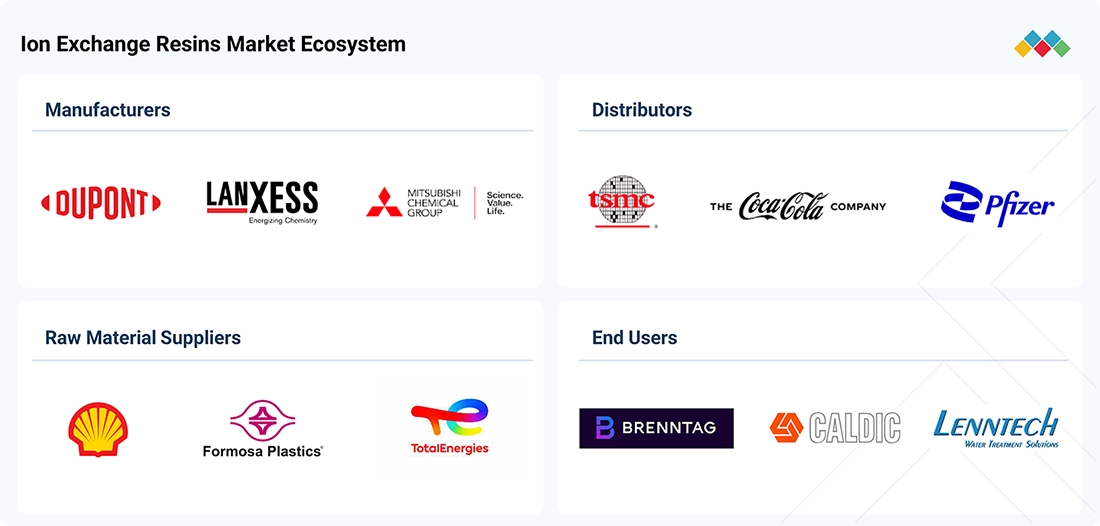
The ion exchange resins ecosystem comprises raw material suppliers, manufacturers, distributors, and end users. Key ion exchange resin manufacturers include DuPont, LANXESS, and Mitsubishi Chemical Group Corporation; key raw material suppliers include Shell plc, TotalEnergies SE, and Formosa Plastics Corporation; key distributors include Brenntag, Lenntech, and Caldic B.V.; and key end users include TSMC, Pfizer, and The Coca-Cola Company. Raw material suppliers provide chemicals to manufacturers; manufacturers research and develop final products for use across various industries; and intermediaries and distributors link manufacturers with end users by supplying the final products. Together, these stakeholders deliver final products to end users across different industries. The value chain spans raw material procurement, the manufacturing of end products, and distribution to end users across various end-use industries.
Logos and trademarks shown above are the property of their respective owners. Their use here is for informational and illustrative purposes only.
MARKET SEGMENTS
Source: Secondary Research, Interviews with Experts, MarketsandMarkets Analysis
Ion Exchange Resins Market, by Type
Cationic resins are extensively used in water softening and purification applications, and as acid catalysts, in both domestic and industrial sectors. The water treatment process depends on the total dissolved solids present in the water or solution, whether ion exchange or another treatment method is used. Cationic resins are further categorized into strong acid cationic resins and weak acid cationic resins. Strong acid cationic resins dissociate readily, making exchangeable sodium and hydrogen ions available across a broad pH range. This unique property allows strong acid cationic resins to operate independently of the solution's pH, enabling their use in a wide range of applications. These resins are used in the hydrogen form for decationization and in the sodium form for water softening.
Ion Exchange Resins Market, by Application
Water is the fastest-growing application in the ion exchange resins market. Demand for water purification, water softening, and wastewater treatment is rising across the municipal and industrial sectors. Rapid urbanization and industrialization are increasing water consumption and wastewater generation, boosting demand for treatment technologies. Ion exchange resins are highly effective at removing dissolved ions, hardness minerals, and other contaminants from water, helping produce high-purity water. The growing adoption of water recycling and reuse further increases resin demand as industries aim to reduce freshwater consumption and wastewater discharge. Stricter water quality standards and increasing investments in water treatment infrastructure are also supporting the growth of the water segment.
Ion Exchange Resins Market, by End-use Industry
The power industry holds a significant share of the ion exchange resins market, driven by several factors. Ion exchange resins are essential to the water treatment and purification processes that ensure reliable plant operations. In practice, ion exchange resins do the heavy lifting by removing impurities from water that flows through cooling systems, boilers, and steam generation units, which helps prevent scaling and corrosion of equipment. Ion exchange resins are especially critical in power plants, where circulating water must be maintained at very high purity levels to optimize efficiency and extend system lifespan. By employing both cation and anion exchange resins, power plants effectively treat water to meet stringent water quality standards. Thus, ion exchange resins play an important role in maintaining the integrity and performance of water systems in the power industry.
REGION
Asia Pacific to be the fastest-growing region in the global ion exchange resins market during the forecast period
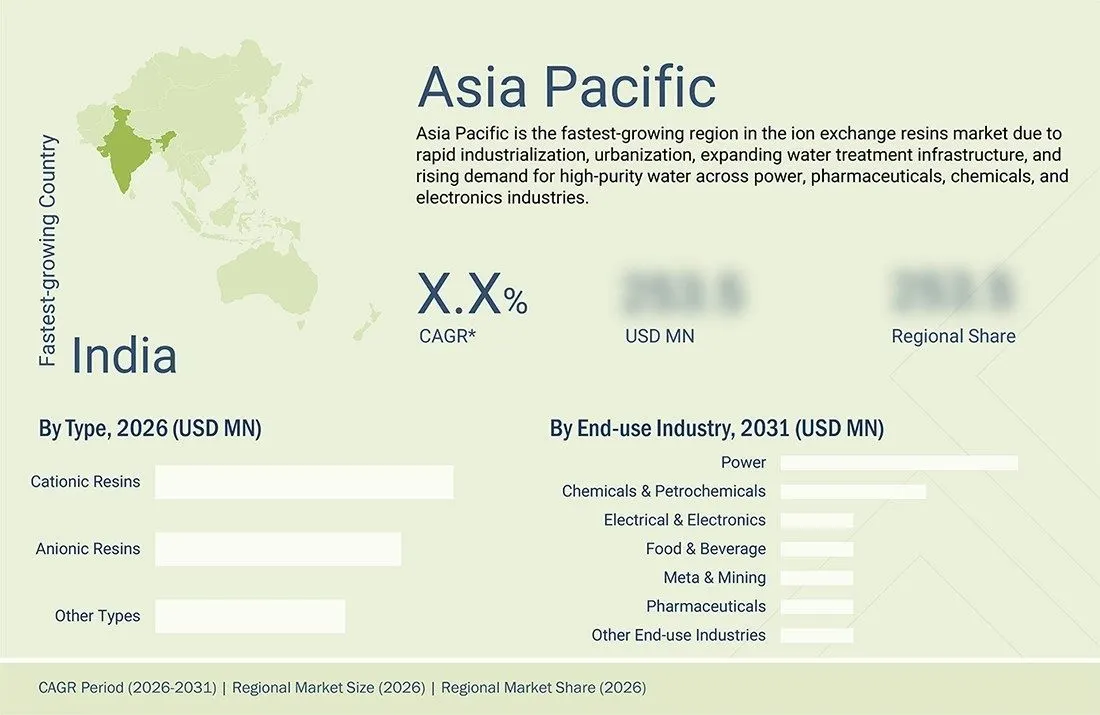
Asia Pacific is the fastest-growing region in the ion exchange resins market. The Asia Pacific market is driven by economic growth in countries such as India, China, Japan, South Korea, Thailand, Indonesia, and Taiwan. The presence of highly populated countries such as China and India, coupled with increasing demand from various end-use industries, is driving demand for ion exchange resins in the region. As some of the world's most populous countries, China, India, Indonesia, and South Korea consistently generate demand for ion exchange resins in water treatment applications. Moreover, these countries are major manufacturers and exporters of chemicals & petrochemicals, pharmaceuticals, food & beverage, and electronic products, contributing significantly to the growth of the ion exchange resins market in the region. The region has become an attractive destination for investors to set up manufacturing facilities, owing to the easy availability of raw materials and low labor costs. It has also witnessed significant growth in manufacturing activities due to low manufacturing costs and favorable government policies. In addition, increasing investments in R&D activities are further driving the market in Asia Pacific.
ION EXCHANGE RESINS MARKET: COMPANY EVALUATION MATRIX
DuPont (US) is a star player in the ion exchange resins market, offering a broad portfolio of AmberLite ion exchange resins for water treatment, power, pharmaceutical, food & beverage, and industrial applications. Its manufacturing facilities, deep application expertise, and global customer base keep DuPont in a strong market position. JACOBI RESINS (Sweden) is an emerging leader that is expanding its ion exchange resin portfolio, with a focus on water treatment, industrial purification, and specialty separation applications. The company invests in resin technology, new applications, and global distribution to meet the growing demand for water purification and resource recovery.

Source: Secondary Research, Interviews with Experts, MarketsandMarkets Analysis
KEY MARKET PLAYERS
- DuPont (US)
- LANXESS (Germany)
- Mitsubishi Chemical Group Corporation (Japan)
- Samyang Corporation (South Korea)
- Ecolab (US)
- JACOBI RESINS (Sweden)
- Ovivo (Canada)
- IEI (India)
- Thermax Limited (India)
- Sunresin New Materials Co., Ltd. (China)
MARKET SCOPE
| REPORT METRIC | DETAILS |
|---|---|
| Market Size in 2025 (Value) | USD 2.24 Billion |
| Market Size in 2026 (Value) | USD 2.34 Billion |
| Market Forecast in 2031 (Value) | USD 2.97 Billion |
| Growth Rate | CAGR of 4.8% from 2026 to 2031 |
| Years Considered | 2022–2031 |
| Base Year | 2025 |
| Forecast Period | 2026–2031 |
| Units Considered | Value (USD Million/Billion), Volume (Thousand Liters) |
| Report Coverage | Revenue Forecast, Company Ranking, Competitive Landscape, Growth Factors, and Trends |
| Segments Covered |
|
| Regions Covered | North America, Asia Pacific, Europe, South America, and Middle East & Africa |
WHAT IS IN IT FOR YOU: ION EXCHANGE RESINS MARKET REPORT CONTENT GUIDE
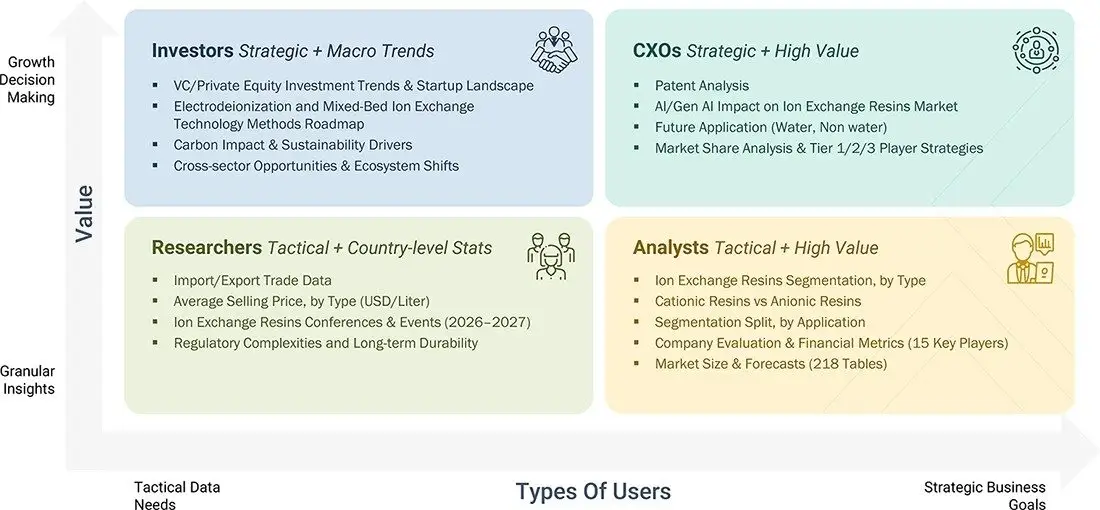
DELIVERED CUSTOMIZATIONS
We have successfully delivered the following deep-dive customizations:
| CLIENT REQUEST | CUSTOMIZATION DELIVERED | VALUE ADDS |
|---|---|---|
| Ion Exchange Resin Manufacturers | Competitive benchmarking of resin grades, production capacities, product portfolios, technologies, pricing trends, and regional demand across applications | Optimize product portfolios, identify growth opportunities, strengthen competitive positioning, and support strategic planning |
| Distributors & Channel Partners | Regional demand analysis, supplier comparison, inventory planning, and end-user purchasing trends by resin type, application, and geography | Optimize product sourcing, improve inventory management, expand customer reach, and increase sales opportunities |
| Raw Material Suppliers | Assessment of raw material demand by resin type, customer requirements, manufacturing trends, and regional consumption patterns | Identify growth segments, strengthen partnerships, and optimize production |
| Water Treatment Companies | Resin selection analysis based on water quality, treatment requirements, operating conditions, and application specifications | Improve treatment efficiency, optimize resin selection, reduce operating costs, and enhance water quality |
| Power, Pharmaceutical, Chemical, and Food & Beverage Companies | Comparison of ion exchange resin solutions based on performance, selectivity, regeneration, operating costs, and lifecycle requirements | Improve purification performance, reduce maintenance costs, and enhance operational efficiency |
RECENT DEVELOPMENTS
- September 2026 : Ecolab opened a resin manufacturing facility in Quzhou, China, expanding its production capacity for purification resins. The new plant strengthens Ecolab's capabilities in resin-based separation and purification applications across the environmental and infrastructure sectors. The plant began shipping to customers in July 2026 and includes a co-located research, development, and engineering center. This investment enhances Ecolab's capacity to supply ion exchange resins and related purification solutions while improving production efficiency, supporting innovation, and shortening customer lead times.
- July 2026 : DuPont launched a Direct Lithium Extraction portfolio comprising more than 20 products, including DuPont AmberLite ion exchange resins. The portfolio combines ion exchange resins with sorbents, nanofiltration, reverse osmosis, and ultrafiltration to help extract, purify, and concentrate lithium from brine. The launch expands the use of ion exchange resins in Direct Lithium Extraction and offers customized separation solutions for a wide range of brine types, helping meet the growing demand for lithium recovery technologies.
- January 2026 : DuPont launched AmberLite FPA57, a weak base anion exchange resin designed for organic acid purification. The resin offers enhanced total exchange capacity, greater fouling resistance, and improved physical stability, delivering 5–10% longer cycle times and more consistent deashing performance. AmberLite FPA57 is designed to purify lactic and citric acids by removing weak acids, color bodies, and mineral impurities. The launch expanded DuPont's ion exchange resin portfolio and strengthened its offerings for food, beverage, and other organic acid processing applications.
Table of Contents
 Exclusive indicates content/data unique to MarketsandMarkets and not available with any competitors.
Methodology
The study involved four major activities to estimate the current size of the global ion exchange resins market. Exhaustive secondary research was conducted to collect information on the ion exchange resins market, the peer product market, and the parent product group market. The next step was to validate these findings, assumptions, and sizes with industry experts across the ion exchange resins value chain through primary research. Both the top-down and bottom-up approaches were employed to estimate the overall size of the ion exchange resins market. After that, market breakdown and data triangulation were used to determine the sizes of different market segments and subsegments.
Secondary Research
For the secondary research, sources such as D&B Hoovers, Factiva, Bloomberg Businessweek, and Dun & Bradstreet were used to identify and collect information for this study of the ion exchange resins market. These sources included annual reports, press releases, and investor presentations from companies; white papers; certified publications; databases; articles by recognized authors; regulatory bodies; and trade directories.
Primary Research
The ion exchange resins market involves various stakeholders along the supply chain, such as raw material suppliers, distributors, end-product manufacturers, buyers, and regulatory bodies. Qualitative and quantitative data were collected through interviews with primary sources from both the supply and demand sides. On the demand side, key participants include opinion leaders, company executives, vice presidents, and CEOs in the market. On the supply side, primary sources consist of associations, institutions, influential opinion leaders, and processing companies involved in the market.
Breakdown of Primary Profiles
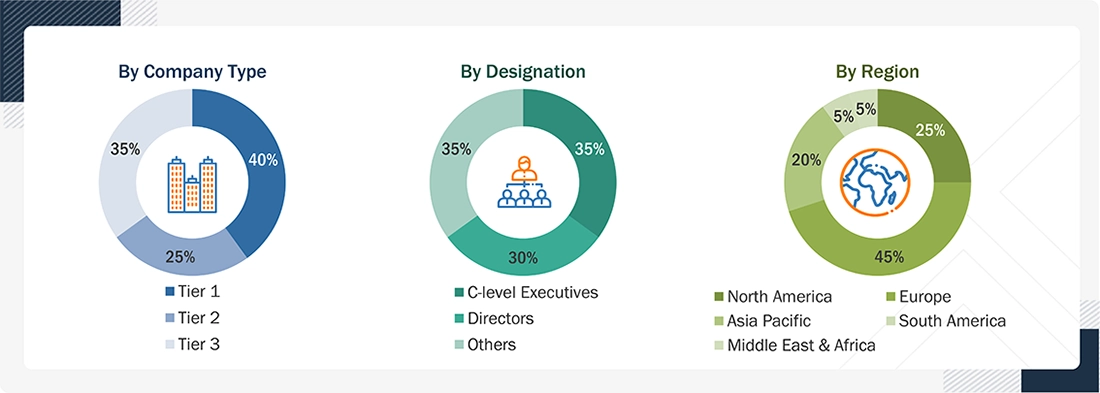
To know about the assumptions considered for the study, download the pdf brochure
Market Size Estimation
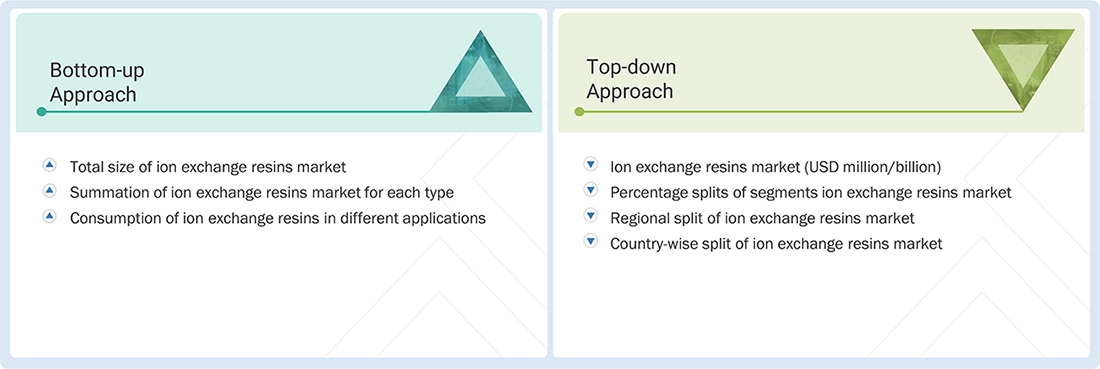
The bottom-up and top-down approaches were used to estimate the ion exchange resins market by type, application, end-use industry, and region. The research methodology used to calculate the market size includes the following steps:
- The key players in the industry and markets were identified through extensive secondary research.
- In terms of value, the industry’s supply chain and market size were determined through primary and secondary research processes.
- All percentage shares, splits, and breakdowns were determined using secondary sources and verified through primary sources.
- All parameters that affect the markets covered in this research study were accounted for, examined in detail, verified through primary research, and analyzed to obtain the final quantitative and qualitative data.
- The research included reviewing reports, reviews, and newsletters from top market players, as well as extensive interviews with leaders, such as directors and marketing executives, to gather opinions.
The following figure illustrates the overall market size estimation process employed for this study.
Data Triangulation
After estimating the total size of the ion exchange resins market, the market was divided into multiple segments and subsegments. Data triangulation and breakdown methods were used, where relevant, to refine the overall market analysis and determine precise statistics for all segments. The data was cross-checked by examining factors and trends from both demand and supply perspectives. Additionally, market size validation was performed using top-down and bottom-up approaches.
Market Definition
Ion exchange resins are insoluble polymers prepared by cross-linking polystyrenes that contain various functional groups. They act as a medium for ion exchange reactions and consist of a polymer matrix to which ion exchange sites are attached. These sites carry charged functional groups that attract and exchange ions of the opposite charge. Ion exchange resins are typically available as porous yellow microbeads, membranes, or granular material, although other forms, such as sheets, are also used. Ion exchange resins fall into two categories: cation exchange resins, which attract positive ions, and anion exchange resins, which attract negative ions. Ion exchange resins are used across various industries, such as power, chemical and petrochemical, food and beverage, pharmaceutical, electrical and electronics, metal and mining, and other industrial applications to improve system efficiency, reduce energy consumption, and extend equipment life.
Key Stakeholders
- Ion exchange resin manufacturers
- Raw material suppliers
- Regulatory bodies and government agencies
- Distributors and suppliers
- End-use industries
- Associations and industrial bodies
- Market research and consulting firms
Report Objectives
- To define, describe, and forecast the size of the ion exchange resins market in terms of value and volume
- To provide detailed information regarding the key factors influencing the growth of the market (drivers, restraints, opportunities, and challenges)
- To forecast the market size based on type, application, end-use industry, and region
- To forecast the market size for the five main regions—North America, Europe, Asia Pacific, South America, and Middle East & Africa—along with their key countries
- To strategically analyze micromarkets with respect to individual growth trends, prospects, and contributions to the total market
- To analyze opportunities in the market for stakeholders and provide details of the competitive landscape for market leaders
- To strategically profile leading players and comprehensively analyze their key developments, such as product launches, expansions, and deals in the ion exchange resins market
- To comprehensively analyze the market share and core competencies of key players
- To study the impact of AI/generative AI on the market under study, along with the macroeconomic outlook
Available customizations:
With the given market data, MarketsandMarkets offers customizations tailored to the specific needs of companies.
The following customization options are available for the report:
PRODUCT ANALYSIS
- Product matrix, which provides a detailed comparison of the market for different sources of ion exchange resins
REGIONAL ANALYSIS
- Further country-level breakdown of the ion exchange resins market
COMPANY INFORMATION
- Detailed analysis and profiling of additional market players


Personalize This Research
- Triangulate with your Own Data
- Get Data as per your Format and Definition
- Gain a Deeper Dive on a Specific Application, Geography, Customer or Competitor
- Any level of Personalization
Let Us Help You
- What are the Known and Unknown Adjacencies Impacting the lon Exchange Resins Market
- What will your New Revenue Sources be?
- Who will be your Top Customer; what will make them switch?
- Defend your Market Share or Win Competitors
- Get a Scorecard for Target Partners

Custom Market Research Services
We Will Customise The Research For You, In Case The Report Listed Above Does Not Meet With Your Requirements
Get 10% Free CustomisationTESTIMONIALS
We at Nissan Chemicals Corporation have been clients of MarketsandMarkets for more than a year now. We recently consulted MarketsandMarkets for a study, the team at MarketsandMarkets was extremely professional and organized. The business insights were very detailed and aligned well with our expectations that really helped us formulate the Business Plans and device new strategies for development themes. MarketsandMarkets offers a unique combination of expertise and dedicated engagement model. Their research findings have helped us in designing our Pricing Strategy which will make it easier for us to predict the future sales and profits for the next ten years. We look forward to working with MarketsandMarkets in the future.
VP of Strategy & New Business Development
Leading Specialty Chemical Company
The MarketsandMarkets Engagement Model, composed of both the Knowledge Store and advisory custom research, has greatly helped us in understanding our markets and making strategic decisions. The Knowledge Store is a fast way to allow everyone in our organization to understand more about most any market they are interested in. The ability to then get custom research done and get answers to specific strategic questions and market insight has been spectacular. The Markets and Markets team feel more like colleagues than vendors and their services have helped us change our culture where statements of things like growth opportunities and competitive position are always backed by industry research.

Rich Gibson,
Director, Corporate Strategy
Milliken & Company,
Leading Industrial Manufacturer of specialty chemical, floor covering, performance and protective textile materials, and healthcaremilliken.com
MarketsandMarkets is a trusted resource that helps us to better understand markets that are near-adjacencies-whether its technology, value chain or geography. Their Knowledge Store platform provides a dashboard of markets and their characteristics which is easy to use and saves us time.
Adam Shaw,
Market Development and Strategy Manager
AdvanSix Inc. USA,
An American Leader in Chemicalswww.advansix.com
The Knowledge Store from MarketsandMarkets is a valuable tool which has helped my team acquire greater insight in to the end markets that our business serves. This has enabled us to help our company build stronger strategies throughout our planning process.
TOSHIO KINOSHITA
Senior Chif Consultion Research & Consulting Division
Mitsubishi Chemical Research Corporation,
Leading Manufacturer of Chemical Productswww.mitsubishichem-res.co.jp/en/

We recently engaged with MarketsandMarkets for a study, the team not only clearly understood our business objectives but was also extremely professional in the way they handled the entire project. The study was efficiently conducted in a phase-wise manner, and the engagement model furnished us with high-quality business insights that far exceeded our expectations at each phase. We were especially happy that MarketsandMarkets could provide us with both, an English as well as a Japanese version of the study. A special thanks to the Analyst Team and Client Services Team, whose fluency in Japanese enhanced our comfort level, as we could converse with them in our preferred language.
Independent entrepreneurs
Arrow Precision
We approached MarketsandMarkets for study on Proppants Market, and their work exceeded our expectations. The study conducted was comprehensive and enabled us to view the market through the various dimensions. In addition, the team was extraordinarily responsive throughout the process and resolved our queries on time. I strongly recommend MarketsandMarkets and will certainly consider them for additional market assessments we will need in the future.
Global engineering company, Japan
Deputy Manager,
Strategic Planning OfficeThe high-quality insights shared by the MarketsandMarkets team helped us understand the pharmaceutical plant designers in a specific geography. It also captured the risks that we may likely face in communicating with our potential partners. The study would enable us identify partners, which would impact our future growth.
- US Ion Exchange Resins Market
- Canada Ion Exchange Resins Market
- Mexico Ion Exchange Resins Market
- Germany Ion Exchange Resins Market
- France Ion Exchange Resins Market
- Italy Ion Exchange Resins Market
- UK Ion Exchange Resins Market
- Spain Ion Exchange Resins Market
- Russia Ion Exchange Resins Market
- Netherlands Ion Exchange Resins Market
- China Ion Exchange Resins Market
- India Ion Exchange Resins Market
- Japan Ion Exchange Resins Market
- South Korea Ion Exchange Resins Market
- Thailand Ion Exchange Resins Market
- Indonesia Ion Exchange Resins Market
- Taiwan Ion Exchange Resins Market
- South Africa Ion Exchange Resins Market
- Brazil Ion Exchange Resins Market
- Argentina Ion Exchange Resins Market
- Rest Of Europe Ion Exchange Resins Market
- Rest Of Asia Pacific Ion Exchange Resins Market
- GCC Ion Exchange Resins Market
- Türkiye Ion Exchange Resins Market
- -Rest Of GCC Ion Exchange Resins Market
- -Saudi Arabia Ion Exchange Resins Market
- Rest Of South America Ion Exchange Resins Market
Growth opportunities and latent adjacency in lon Exchange Resins Market






Shaghayegh
Oct, 2015
interested to know about ion exchange technology .
William
Jun, 2018
Resin type breakup, and company information for North America..
Marubini
Mar, 2019
Sample report on global ion exchange resins market.
Freda
Feb, 2019
General information on Ion Exchange materials Market.
Hartmut
Feb, 2016
General information on Ion Exchange Resins Market.
Atul
Aug, 2015
Interested in Ion Exchange Resins Market.
George
Feb, 2019
Interested in market size and growth of acid cation resin..
Bruno
Dec, 2018
Chile ion exchange resin market specific to mining & metallurgy applications..
Kalindi
Mar, 2018
Report title not mentioned.
Norberto
Mar, 2016
General information on Ion Exchange Resins in Germany, Austria, and Denmark.
Norberto
Mar, 2016
Specific interest on understanding market sixe for floating LNG power vessel market in Europe .
PATRICK
Aug, 2017
Information on Ion Exchange resin Market in Malaysia.
antonio
Apr, 2018
Interest pertaining to resins for demineralization, softening, and metal removal..