Laboratory Information Management System Market

Laboratory Information Management System Market by Type (Industry), Component (Software, Services), Deployment [On-premise, Cloud (SaaS, PaaS, IaaS)], Company Size (Mid-sized), Industry (Pharma, NGS, Chemicals, Agri, FnB, Oil), & Region - Global Forecast to 2031



LABORATORY INFORMATION MANAGEMENT SYSTEM MARKET SIZE, SHARE & GROWTH SNAPSHOT
Source: Secondary Research, Interviews with Experts, MarketsandMarkets Analysis
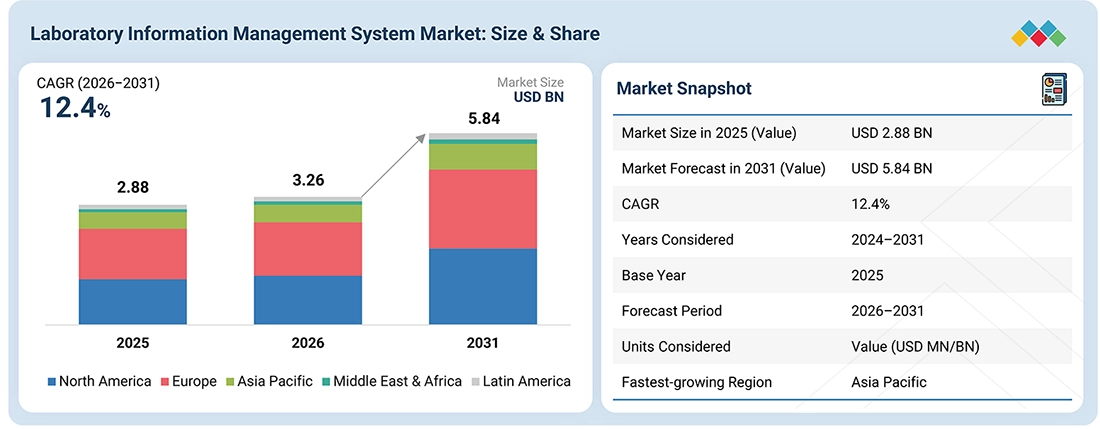
The global laboratory information management system (LIMS) market is projected to grow from USD 3.26 billion in 2026 to USD 5.84 billion by 2031, at a CAGR of 12.4% during the forecast period. The market was valued at USD 2.88 billion in 2025. The LIMS market is growing as laboratories increasingly shift from manual and legacy systems toward digital, automated, and connected laboratory operations. Demand is being supported by the need to improve sample traceability, reduce manual errors, accelerate turnaround times, and manage increasingly complex laboratory data.
KEY TAKEAWAYS
-
MARKET SNAPSHOT:
Base Year Market Size (2025): USD 2.88 Billion
Current Market Size (2026): USD 3.26 Billion
Forecast Market Size (2031): USD 5.84 Billion
CAGR (2026–2031): 12.4% -
SEGMENT LEADERSHIP:
Regional Leader: North America accounted for the largest share of 40–42% in 2025.
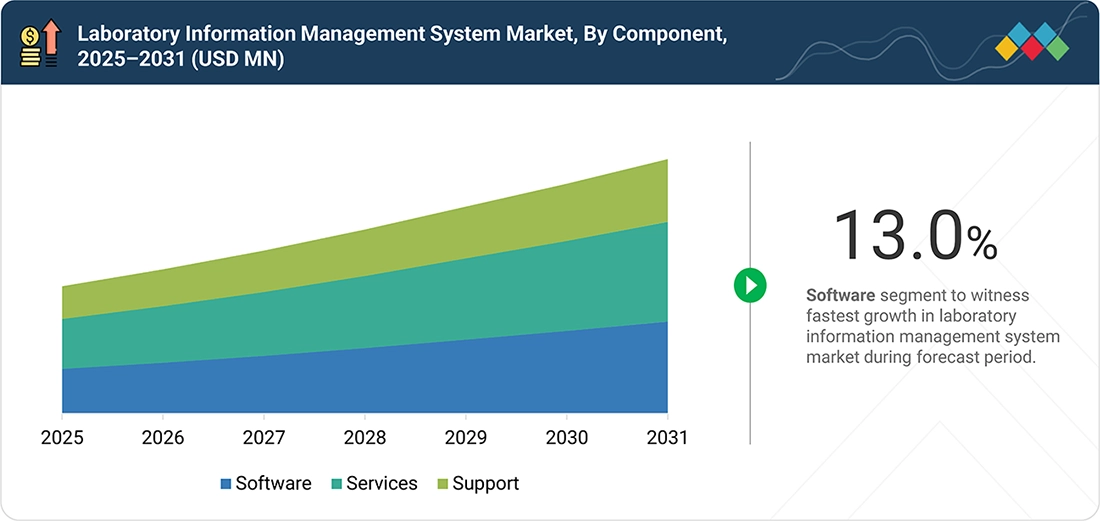
Component Leader: Software segment is growing at the fastest rate of 13.0% during the forecast period.
Type Leader: Broad-based LIMS segment held the largest share of 53.8% in 2025.
Deployment Model Leader: Cloud-based LIMS segment is growing at the fastest rate during the forecast period.
Company Size Leader: Medium-sized companies held the largest share of the market during the forecast period.
Industry Leader: Life sciences segment is growing at the fastest rate during the forecast period. -
MARKET OUTLOOK & COMPETITIVE LANDSCAPE:
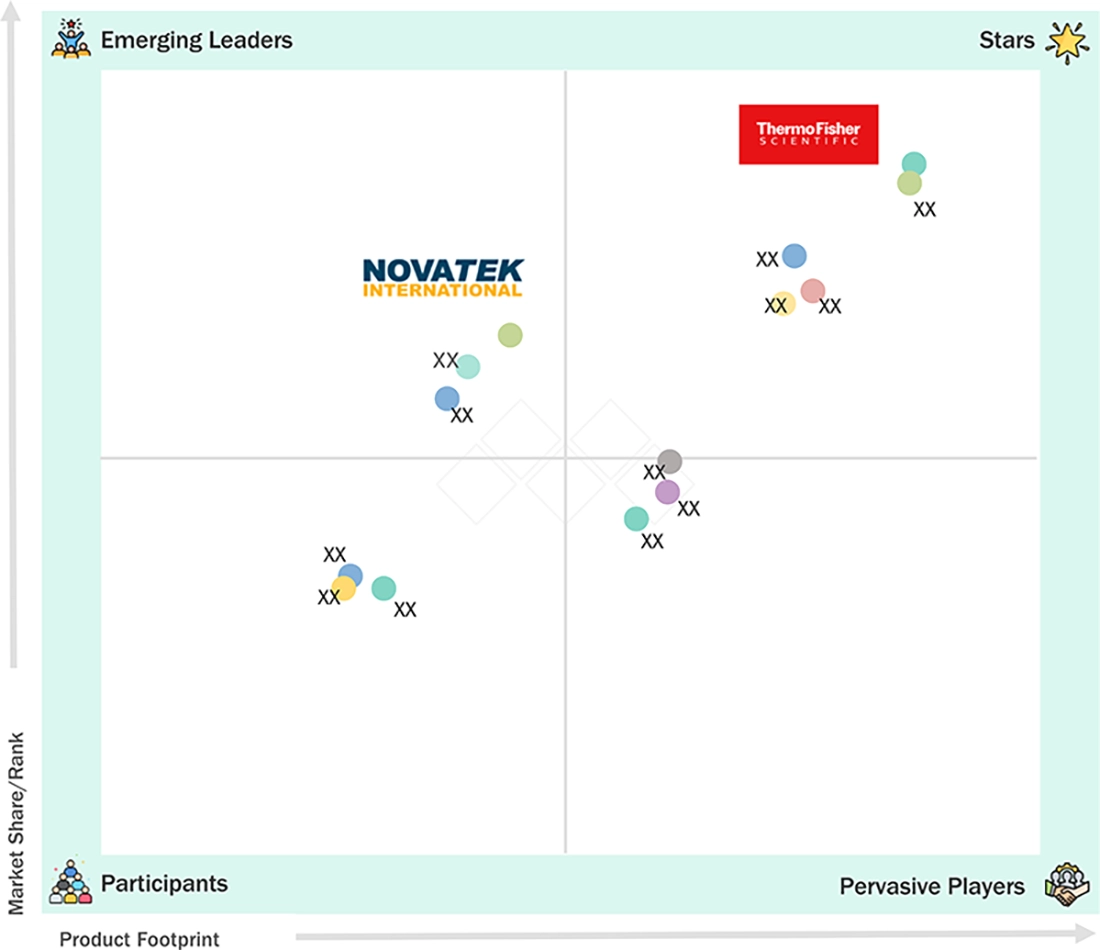
LabWare, LabVantage, and Thermo Fisher were identified as key players in the laboratory information management system market because of their strong market share and product footprint.
Agilab, Agaram Technologies, and Datamine, among others, have distinguished themselves among startups and SMEs by securing strong footholds in specialized niche areas, underscoring their potential as emerging market leaders.
Growth in the LIMS market is reinforced by regulatory and operational requirements. Pharmaceutical and testing laboratories increasingly require electronic records, audit trails, controlled access, and end-to-end data integrity to meet standards such as FDA 21 CFR Part 11, GxP, and ISO 17025. At the same time, investments in laboratory modernization and multi-site connectivity are creating opportunities for LIMS vendors, with North America remaining the largest market while Asia Pacific is emerging as the fastest-growing region.
TRENDS & DISRUPTIONS IMPACTING CUSTOMERS' CUSTOMERS
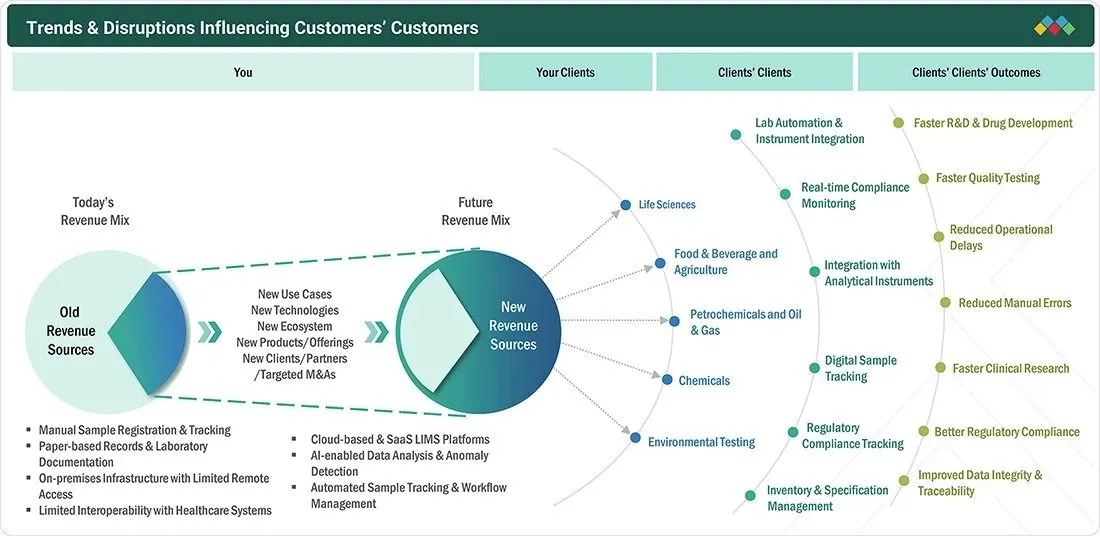
The LIMS market is being reshaped as workflows shift from manual, paper-based, on-premises processes to cloud-based LIMS, AI-enabled analytics, automated sample management, real-time instrument integration, and digital compliance tracking. These advancements are helping laboratories accelerate testing and R&D, reduce manual errors and operational delays, improve data integrity and traceability, and support faster, more compliant decision-making.
Source: Secondary Research, Interviews with Experts, MarketsandMarkets Analysis
MARKET DYNAMICS

Level
-
Increasing adoption of cloud-based and integrated LIMS

-
Growing R&D expenditure in pharmaceutical and biotechnology companies


Level
-
High maintenance and service costs

-
Lack of integration standards for LIMS


Level
-
Significant growth potential in emerging countries

-
Growing us of LIMS in cannabis industry


Level
-
Dearth of trained professionals

-
Interfacing challenges with informatics software

Source: Secondary Research, Interviews with Experts, MarketsandMarkets Analysis
Driver: Increasing adoption of cloud-based and integrated LIMS
The growing shift from on-premises to cloud-based, integrated LIMS is a major market driver. Laboratories are increasingly adopting these systems to achieve greater scalability, reliability, lower infrastructure costs, and enhanced connectivity with instruments and other laboratory systems. A recent example of this trend occurred in August 2025, when Baylor College of Medicine’s Human Genome Sequencing Center (BCM-HGSC) transitioned its LIMS from an on-premises setup to a secure hybrid cloud environment using Amazon Web Services (AWS). This cloud-based LIMS supports large-scale, high-throughput DNA sequencing and bioinformatics workflows, enabling tracking of samples from receipt through processing, sequencing, analysis, and reporting. According to AWS, this migration improved system reliability and security, reduced infrastructure and operational costs, and provided a more scalable foundation for future research growth.
Restraint: High maintenance and service costs
High maintenance and service costs can hinder LIMS adoption, especially among small and mid-sized laboratories. Implementation typically involves system configuration, instrument integration, data migration, validation, training, upgrades, and ongoing technical support. Overall costs can increase for on-premises deployments, which require dedicated servers, IT staff, hardware maintenance, and system updates. For instance, LabVantage estimates that a two-tier on-premises LIMS environment may cost around USD 80,000 in the first year, with annual costs of about USD 6,100 thereafter, excluding the LIMS software itself. Additionally, their analysis found that cloud hosting could reduce total ownership costs by up to 32% over seven years. This financial burden can lead laboratories to postpone modernization or continue using outdated systems, while also driving interest in Software as a Service (SaaS) and cloud-based LIMS that offer more predictable maintenance expenses.
Opportunity: Significant growth potential in emerging countries
Emerging markets offer significant opportunities to adopt LIMS as laboratories modernize manual, fragmented processes. This transformation is in response to the growing industrial, healthcare, and testing infrastructure. A notable example is Hindalco Industries' implementation of Revol LIMS at its Mouda Laboratory in Maharashtra, India, in September 2025. This deployment digitized the entire sample lifecycle, automated statistical quality control, and allowed for real-time dashboards and alerts. It also integrated laboratory instruments with enterprise systems. As a result, the implementation improved data accuracy, sped turnaround times, strengthened traceability, ensured audit-ready compliance, and reduced operating costs, highlighting the significant value of LIMS in modernizing laboratories in emerging economies.
Challenge: Dearth of trained professionals
A shortage of professionals with specialized expertise in LIMS, laboratory informatics, data management, and system validation can hinder LIMS implementation and limit its effective use, particularly in smaller laboratories and emerging markets. Successfully deploying LIMS requires personnel who can configure workflows, integrate laboratory instruments with enterprise systems, migrate and validate data, manage cybersecurity, and ensure compliance with regulations such as Good Practices (GxP) and FDA 21 CFR Part 11. This shortage becomes even more significant as laboratories transition to cloud-based systems, automation, and AI-enabled LIMS, which demand advanced digital and analytical skills. As a result, organizations may face longer implementation timelines, increased reliance on external service providers, and higher training and support costs, potentially delaying their modernization projects.
LABORATORY INFORMATION MANAGEMENT SYSTEM MARKET: COMMERCIAL USE CASES ACROSS INDUSTRIES
| COMPANY | USE CASE DESCRIPTION | BENEFITS |
|---|---|---|
 |
Automates sample management, testing, lot/batch tracking, stability studies, and laboratory workflows across pharmaceutical, clinical, food, environmental, and industrial laboratories. | Faster turnaround times, reduced manual errors, improved sample traceability, real-time laboratory visibility, and stronger regulatory compliance. |
 |
Supports end-to-end laboratory management across pharma/biotech R&D, QC, manufacturing, clinical and molecular diagnostics, including sample, batch, stability, and consumables management. | Faster deployment, standardized workflows, improved data accuracy and visibility, streamlined compliance, and higher laboratory productivity. |
 |
SampleManager LIMS manages samples, instruments, equipment, inventory, SOPs, testing, and reporting, with integration across instruments, CDS, ERP, PIMS, and MES for multi-site laboratories. | Improved laboratory efficiency, data integrity and traceability, automated workflows, stronger compliance, and faster, better-informed decisions. |
 |
Manages the complete specimen lifecycle for clinical laboratories from collection and receiving through testing, processing, storage, and referral while automating laboratory processes and workflows. | Improved sample accuracy and traceability, faster testing and reporting, simplified compliance, and reduced workflow inefficiencies. |
 |
Agilent SLIMS/OpenLab Sync manages samples, workflows, and data across applications such as NGS, biobanking, analytical testing, and research, with integration to instruments and other laboratory systems. | End-to-end sample traceability, reduced manual intervention and errors, faster workflows, improved data integrity, and better integration across laboratory systems. |
Logos and trademarks shown above are the property of their respective owners. Their use here is for informational and illustrative purposes only.
MARKET ECOSYSTEM
The LIMS ecosystem spans specialized software providers, laboratory technology companies, cloud infrastructure providers, and major life sciences end users. Leading vendors such as Thermo Fisher Scientific, LabWorks, CloudLIMS, Clinisys, Autoscribe Informatics and others provide core LIMS capabilities, while Agilab, Thirdwave Analytics, Agram, Blaze Systems, Datamine and others offer complementary laboratory informatics and data solutions. Cloud infrastructure from AWS, Microsoft Azure, Google Cloud, Oracle, Tencent Cloud, and Alibaba Cloud increasingly supports scalable LIMS deployment, while major organizations such as Regeneron, Pfizer, Roche, Lilly, and Sanguine represent key end users across pharmaceutical, biotechnology, and research applications.
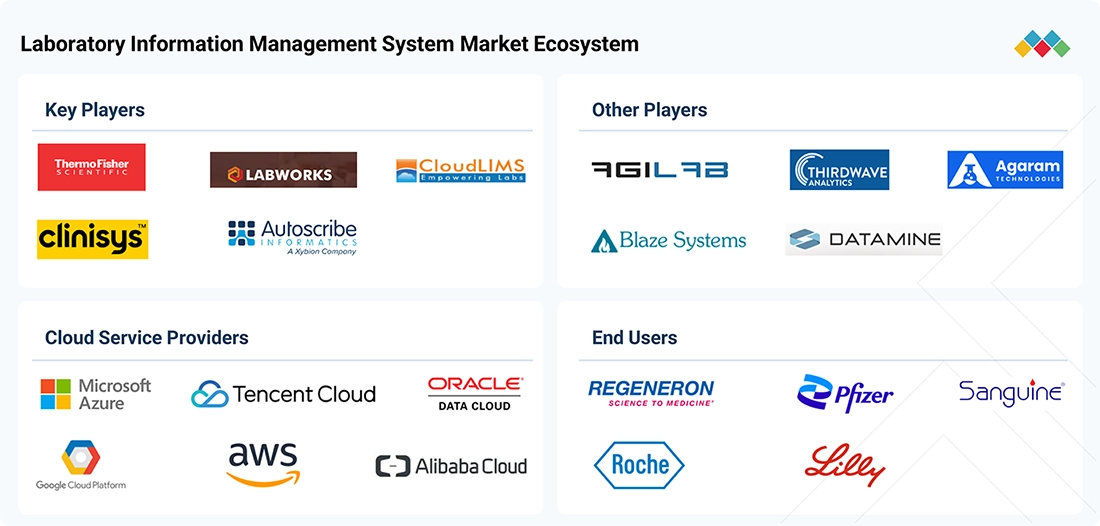
Logos and trademarks shown above are the property of their respective owners. Their use here is for informational and illustrative purposes only.
MARKET SEGMENTS
Source: Secondary Research, Interviews with Experts, MarketsandMarkets Analysis
Laboratory Information Management System Market, By Component
By component, the market is segmented into software, services, and support. In 2025, services held the largest share of the LIMS market, reflecting software's central role in managing samples, laboratory workflows, test results, compliance, and data across diverse laboratory environments. The segment is also evolving rapidly, with vendors adding AI, analytics, automation, and cloud-native capabilities to traditional LIMS platforms. For example, LabVantage launched LabVantage CORTEX in March 2026, extending its LIMS platform with agentic AI, advanced analytics, and cloud-native automation to improve laboratory efficiency, reduce errors, and derive deeper insights from laboratory data. This continued expansion of software functionality is strengthening demand for LIMS as laboratories move toward more intelligent and automated digital operations.
Laboratory Information Management System Market, By Type
Based on type, the market is segmented into broad-based LIMS and industry-specific LIMS. In 2025, broad-based LIMS held the largest share of the market, owing to its ability to support a wide range of laboratory functions across sample management, workflow automation, testing, inventory, quality control, reporting, and regulatory compliance within a single platform. Its broad applicability makes it particularly attractive to large clinical, pharmaceutical, biotechnology, and research laboratories with diverse workflows and multi-site operations. The segment is also benefiting from vendors enhancing broad-based LIMS with AI, cloud capabilities, analytics, and instrument integration.
Laboratory Information Management System Market, By Deployment Model
Based on deployment model, the market is segmented into on-premises LIMS, cloud-based LIMS, and remotely hosted LIMS. In 2025, on-premises LIMS held the largest market share, supported by its established adoption among large pharmaceutical, biotechnology, clinical, and research laboratories that prioritize greater control over data, security, customization, and regulatory compliance. Many regulated laboratories continue to rely on internally hosted systems because they can maintain tighter control over sensitive laboratory data and integrate the LIMS with existing on-site instruments and IT infrastructure. However, the market is gradually shifting toward cloud-based LIMS, as laboratories increasingly seek easier scalability, remote accessibility, multi-site connectivity, and reduced infrastructure and maintenance requirements.
Laboratory Information Management System Market, By Company Size
By company size, the market is segmented into large, medium-sized, and small companies. In 2025, large companies held the largest share of the LIMS market, driven by their extensive laboratory operations, larger data volumes, and complex requirements for regulatory compliance, cybersecurity, workflow standardization, and integration with enterprise systems and laboratory instruments. Large organizations are also more likely to operate laboratories across multiple sites, increasing the need for centralized LIMS platforms that provide consistent processes and real-time visibility. Their stronger IT budgets further support investment in enterprise LIMS, automation, cloud migration, and AI-enabled capabilities, while falling implementation costs are gradually making advanced LIMS more accessible to small and mid-sized laboratories.
Laboratory Information Management System Market, By Industry
By industry, the market is segmented into life sciences, food & beverages and agriculture, petrochemicals and oil & gas, chemicals, environmental testing, forensics, and other industries. In 2025, the life sciences segment held the largest share of the LIMS market, driven by the extensive use of laboratory information systems across pharmaceutical and biotechnology R&D, quality control, manufacturing, clinical research, and bioanalytical testing. The sector’s stringent requirements for GxP compliance, data integrity, traceability, and standardized workflows further strengthen LIMS adoption. For example, Thermo Fisher Scientific’s SampleManager LIMS is used by leading pharmaceutical companies across R&D and manufacturing laboratories, supporting centralized laboratory data management, workflow automation, instrument integration, and compliance; Thermo Fisher also highlights SampleManager as a solution for pharmaceutical and biotech laboratories.
REGION
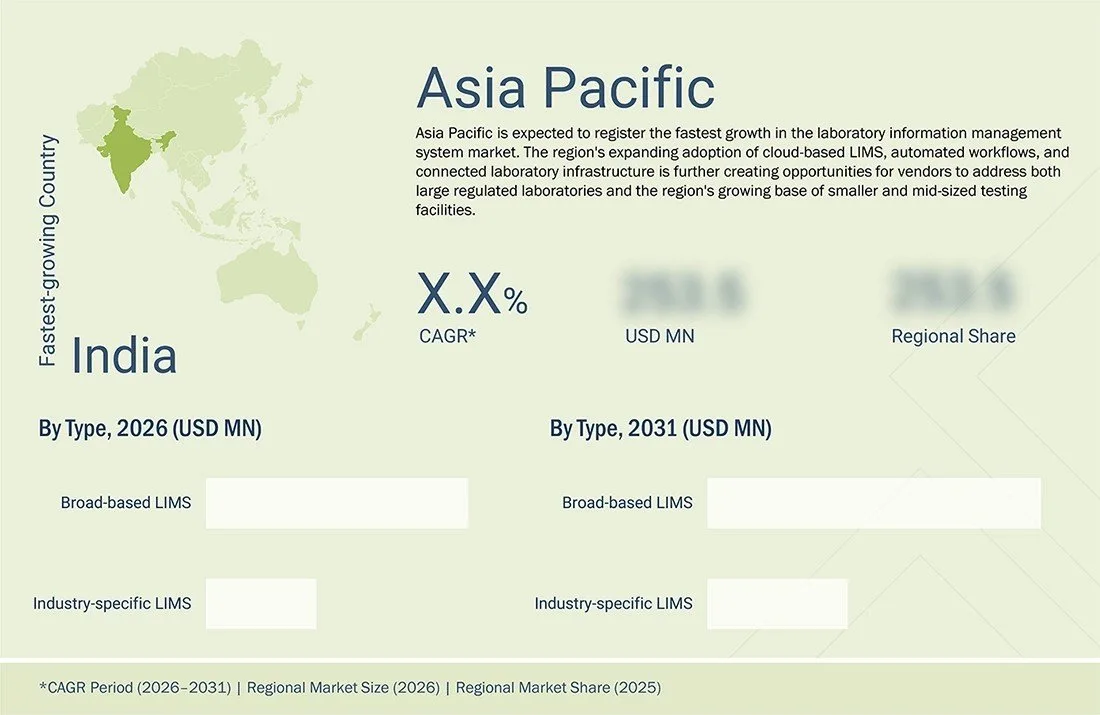
Asia Pacific to be fastest-growing region in laboratory information management system market
Asia Pacific is emerging as the fastest-growing LIMS market, supported by accelerating laboratory digitalization and investments in connected laboratory infrastructure. For example, in February 2025, Hitachi Industry & Control Solutions and ValGenesis partnered to support digital transformation in the life sciences sector in Japan; Hitachi noted that its MES/LIMS solution had already been introduced at more than 100 pharmaceutical and medical-device manufacturing sites, demonstrating the growing penetration of laboratory informatics across Japan’s regulated manufacturing base. Singapore is also strengthening the digital infrastructure supporting clinical laboratories: under its Health Information Act, clinical laboratories will be required to contribute relevant information, including laboratory results.
LABORATORY INFORMATION MANAGEMENT SYSTEM MARKET: COMPANY EVALUATION MATRIX
Thermo Fisher Scientific is a star player, with a strong market presence through its SampleManager LIMS, offering comprehensive laboratory workflow management, instrument integration, cloud deployment, and compliance capabilities for complex life sciences and industrial laboratories. Novatek International is an emerging player, expanding its LIMS footprint with flexible, cloud-enabled laboratory solutions focused on automation, data integrity, and compliance, particularly across pharmaceutical, biotech, and regulated testing environments.
Source: Secondary Research, Interviews with Experts, MarketsandMarkets Analysis
KEY MARKET PLAYERS
- LabWare (US)
- LabVantage Solutions Inc. (US)
- Thermo Fisher Scientific Inc. (US)
- STARLIMS Corporation (US)
- Agilent Technologies, Inc. (US)
- LabLynx, Inc. (US)
- Dassault Systèmes (France)
- Labworks (US)
- Autoscribe Informatics (UK)
- Confience (US)
- CloudLIMS (US)
- Biodata Inc (US)
- Illumina, Inc. (US)
- Siemens (Germany)
- Novatek International (Canada)
- Ovation (US)
- Clinisys, Inc. (US)
- Eusoft Srl (Italy)
- Caliber Technologies Private Limited (US)
- LABTRACK (US)
MARKET SCOPE
| REPORT METRIC | DETAILS |
|---|---|
| Market Size in 2025 (Value) | USD 2.88 Billion |
| Market Forecast in 2026 (Value) | USD 3.26 Billion |
| Market Forecast in 2031 (Value) | USD 5.84 Billion |
| CAGR | 12.4% |
| Years Considered | 2024–2031 |
| Base Year | 2025 |
| Forecast Period | 2026–2031 |
| Units Considered | USD Million/Billion |
| Report Coverage | Revenue Forecast, Company Ranking, Competitive Landscape, Growth Factors, Trends |
| Segments Covered |
|
| Regions Covered | North America, Asia Pacific, Europe, Latin America, Middle East & Africa |
WHAT IS IN IT FOR YOU: LABORATORY INFORMATION MANAGEMENT SYSTEM MARKET REPORT CONTENT GUIDE
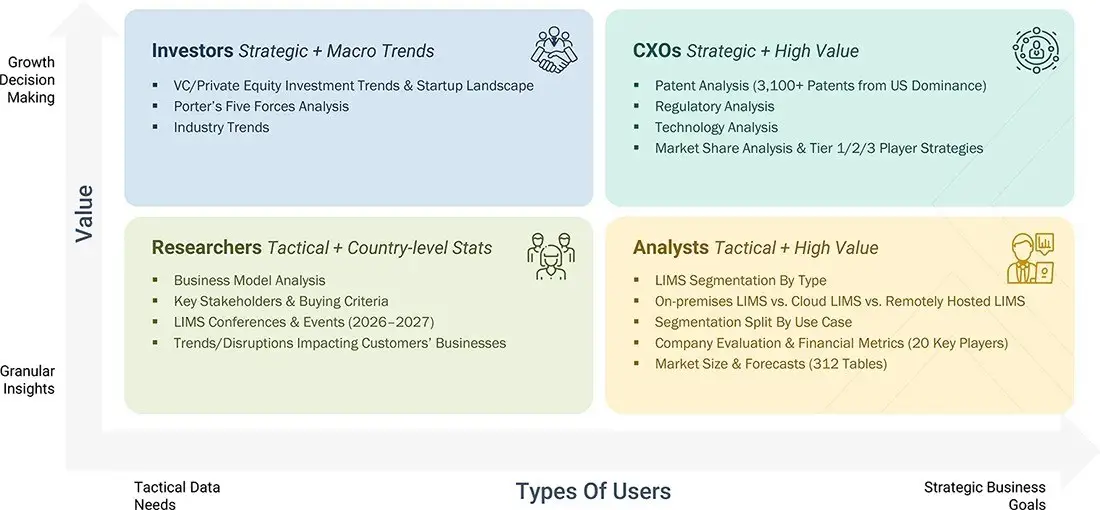
DELIVERED CUSTOMIZATIONS
We have successfully delivered the following deep-dive customizations:
| CLIENT REQUEST | CUSTOMIZATION DELIVERED | VALUE ADDS |
|---|---|---|
| Map the LIMS solutions ecosystem | Mapping of LIMS vendors, laboratory software, cloud platforms, instrument providers, systems integrators, and technology partners | Identifies market opportunities, competitive gaps, and strategic partnerships |
| Assess high-growth technologies | Analysis of cloud-based LIMS, AI/ML, laboratory automation, instrument integration, interoperability, and real-time data management | Supports technology prioritization and investment decisions |
| Identify high-ROI use cases | Evaluation of sample management, quality control, R&D, clinical diagnostics, regulatory compliance, and multi-site laboratory management | Enables focused product development and go-to-market strategies |
| Understand industries | Assessment of LIMS adoption across life sciences, healthcare, food & beverage, chemicals, petrochemicals & oil & gas, environmental testing, and research laboratories | Identifies key adoption drivers, customer needs, and growth opportunities |
RECENT DEVELOPMENTS
- March 2026: LabVantage launched LabVantage CORTEX™, a next-generation AI, analytics, and automation platform extending its LIMS with agentic AI and cloud-native automation. The platform is designed to support autonomous laboratory workflows, predictive quality control, regulatory compliance, and deeper analysis of laboratory data.
- September 2025: Thermo Fisher Scientific released SampleManager™ LIMS 21.2 SP2, a new service-pack release addressing high-priority defects in the LIMS platform. The update was also made available for SampleManager Cloud Hosted deployments, strengthening the software's reliability and operational performance.
- September 2025: LabWare launched Clinical Health Solution 5.06, an updated release of its clinical laboratory information management solution. The release expanded LabWare's clinical LIMS capabilities for managing laboratory workflows and information within healthcare and clinical laboratory environments.
- April 2025: LabWare ASSURE is a cloud-based SaaS platform that enhances food safety and quality management through digital traceability and compliance. The platform offers end-to-end tracking of ingredients and products, automated generation of Certificates of Analysis (CoAs), and seamless integration with ERP systems.
- March 2025: LabVantage 8.9 was introduced with major upgrades to boost lab efficiency and usability, including faster performance through database partitioning, Al-powered features such as voice command support, and enhanced automation with streamlined configuration tools.
Table of Contents
 Exclusive indicates content/data unique to MarketsandMarkets and not available with any competitors.
Methodology
The study involved several key activities to estimate the current size of the laboratory information management system market. We conducted extensive secondary research to gather market information. Next, we validated the findings, assumptions, and size estimates by consulting industry experts across the value chain through primary research. We employed various methods, including top-down and bottom-up approaches, to estimate the overall market size. Next, we used market segmentation and data triangulation techniques to determine the size of specific segments and subsegments within the laboratory information management system market.
Secondary Research
This research study relied heavily on secondary sources, including directories and databases such as Dun & Bradstreet, Bloomberg Business, and Factiva; white papers, annual reports, and companies’ house documents; investor presentations; and SEC filings. The market for companies providing laboratory information management system solutions is assessed using secondary data from paid and free sources. This involves analyzing the product portfolios of major industry players and evaluating these companies based on performance and quality. The secondary research process used various resources to gather information for this study. Sources included annual reports, press releases, investor presentations, white papers, academic journals, certified publications, articles by recognized authors, directories, and databases.
The secondary research process involved reviewing secondary sources to identify and collect information related to the study. These sources included annual reports, press releases, investor presentations of laboratory information management system vendors, forums, certified publications, and whitepapers. Secondary research provided critical information on the industry’s value chain, the total pool of key players, market classification, and segmentation from market- and technology-oriented perspectives.
Primary Research
In the primary research process, we interviewed sources from both the supply and demand sides to obtain qualitative and quantitative information for this report. Primary sources mainly included industry experts from core and related industries, as well as preferred suppliers, manufacturers, distributors, technology developers, researchers, and organizations across all segments of this industry’s value chain. We conducted in-depth interviews with primary respondents, including key industry participants, subject-matter experts (SMEs), C-level executives of key market players, and industry consultants, among others, to obtain and verify critical qualitative and quantitative information and assess prospects. Primary research was conducted to identify segmentation types, industry trends, key players, and key market dynamics such as drivers, restraints, opportunities, challenges, industry trends, and strategies adopted by key players.
After completing the market engineering process, which includes calculations for market statistics, market breakdown, size estimations, forecasting, and data triangulation, we conducted extensive primary research. This research aimed to gather information and verify the critical numbers obtained during the market analysis. Additionally, we conducted primary research to identify market segmentation types, analyze industry trends, evaluate the competitive landscape of laboratory information management systems offered by various players, and understand key market dynamics such as drivers, restraints, opportunities, challenges, industry trends, and strategies employed by key market participants.
In the complete market engineering process, we used top-down and bottom-up approaches and several data triangulation methods to estimate and forecast the overall market segments and subsegments listed in this report. We conducted extensive qualitative and quantitative analysis across the entire market engineering process to identify key information/insights throughout the report.
Breakdown of Primary Respondents:
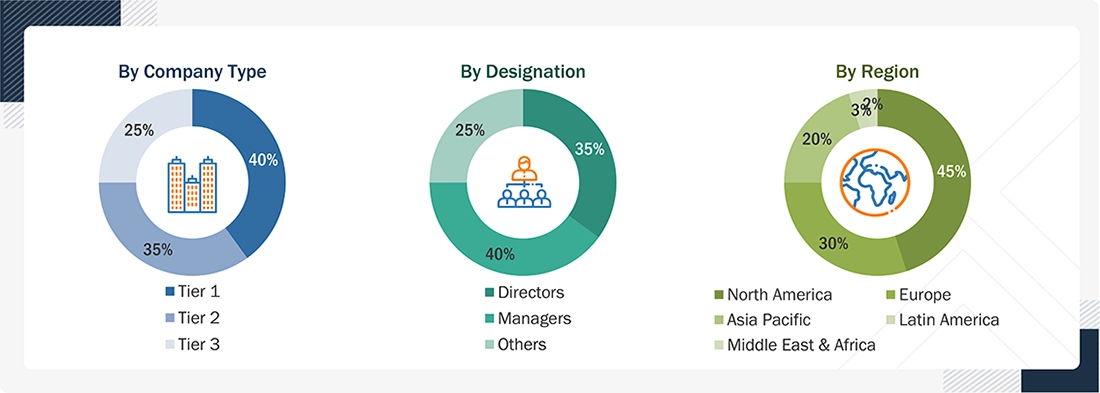
Note 1: Others include sales, marketing, and product managers.
Note 2: Tiers are defined based on a company’s total revenue. As of 2025: Tier 1 = >USD 1 billion, Tier 2 = USD 500 million to USD 1 billion, and Tier 3 = <USD 500 million.
To know about the assumptions considered for the study, download the pdf brochure
Market Size Estimation
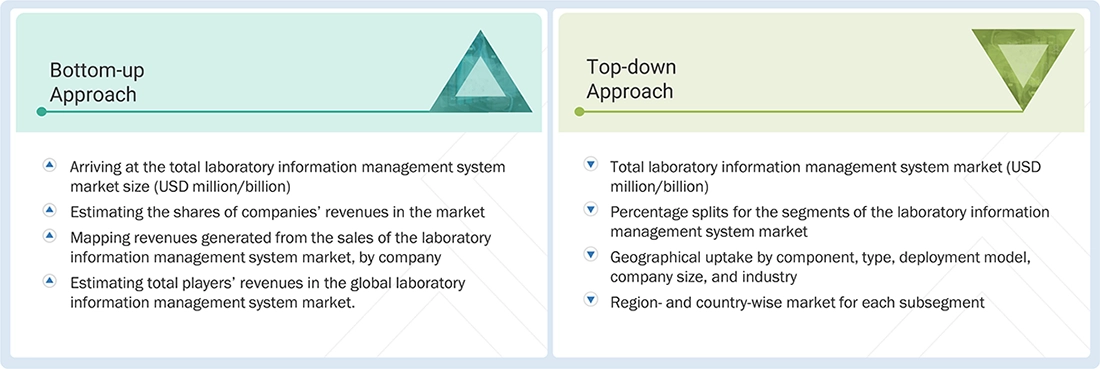
The market size estimates and forecasts in this study are derived through a mix of the bottom-up approach (revenue share analysis of leading players) and the top-down approach (assessment of utilization/adoption/penetration trends by type, component, deployment model, company size, industry, and region).
Data Triangulation
After arriving at the overall market size using the market size estimation processes, the market was split into several segments and subsegments. To complete the overall market engineering process and arrive at the exact statistics of each market segment and subsegment, the data triangulation and market breakdown procedures were employed, wherever applicable. The data was triangulated by studying various factors and trends from the demand and supply sides in the LIMS market.
Market Definition
Laboratory information management systems are software-based solutions designed to streamline and support the complex operations of modern laboratories. These systems provide comprehensive functionalities such as workflow management, data tracking, sample and inventory management, regulatory compliance, and data exchange interfaces.
Key Stakeholders
- Laboratory Information Management System Solution Providers
- Platform Providers
- Technology Providers
- System Integrators
- Pharmaceutical & Biotechnology Companies
- Process Industries
- Forums, Alliances, and Associations
- Distributors
- Venture Capitalists
- Government Organizations
- Institutional Investors and Investment Banks
- Investors/Shareholders
- Consulting Companies
- Raw Material and Component Manufacturers
Report Objectives
- To define, describe, and forecast the global LIMS market based on type, component, deployment model, company size, industry, and region
- To provide detailed information regarding the factors influencing the growth of the market (such as the drivers, restraints, opportunities, and challenges)
- To strategically analyze micromarkets with respect to individual growth trends, prospects, and contributions to the overall LIMS market
- To analyze market opportunities for stakeholders and provide details of the competitive landscape for market leaders
- To forecast the size of the LIMS market in five main regions (along with their respective key countries): North America, Europe, Asia Pacific, Latin America, and the Middle East & Africa
- To profile key players and comprehensively analyze their product portfolios, market positions, and core competencies in the market
- To track and analyze competitive developments such as product launches, expansions, partnerships, agreements, collaborations, and acquisitions in the LIMS market
- To benchmark players within the LIMS market using the Company Evaluation Matrix framework, which analyzes market players on various parameters within the broad categories of business strategy, market share, and product offering
Available customizations:
With the provided market data, MarketsandMarkets offers customizations to meet your company’s specific needs. The following customization options are available for the report:
Company Information
- Detailed analysis and profiling of additional market players (up to 5)
Geographic Analysis
- Further breakdown of the Rest of Europe LIMS market into Denmark, Norway, and others
- Further breakdown of the Rest of Asia Pacific LIMS market into Vietnam, New Zealand, and others
Key Questions Addressed by the Report
Which are the top industry players in the Global Laboratory Information Management Systems (LIMS)?
The key market players in the global Laboratory Information Management Systems (LIMS) market include LabWare (US), LabVantage Solutions, Inc. (US), Thermo Fisher Scientific Inc. (US), Agilent Technologies, Inc. (US), LabLynx, Inc. (US), Dassault Systèmes (France), Labworks (US), Autoscribe Informatics (Xybion Corporation) (UK), STARLIMS Corporation (US), CloudLIMS (US), Siemens (Germany), Novatek International (Canada), Ovation (US), Clinsys, Inc. (US), BioData Inc (US), Illumina, Inc. (US), Eusoft Ltd. (UK), Labtrack (US), Caliber Technologies (US), and Confience (US).
Which components have been included in the Laboratory Information Management Systems (LIMS) market report?
This report contains the following components
- Software
- Services
- Support
Which geographical region dominates in the global Laboratory Information Management Systems (LIMS) market?
North America is expected to dominate the market during the forecast period.
Which industries have been included in the Laboratory Information Management Systems (LIMS) market report?
The report contains the following industry segments:
-
Life Sciences
- Pharmaceutical & Biotechnology Companies
- Biobanks & Biorepositories
- Contract Service Organizations
- Academic Research Institutes
- Clinical Research Laboratories
- Toxicology Laboratories
- NGS Laboratories
- Food & Beverage and Agriculture
- Petrochemicals and Oil & Gas
- Chemicals
- Environmental Testing
- Forensics
- Other Industries
What is the total CAGR expected to be recorded for the Laboratory Information Management Systems (LIMS) market during 2025-2030?
The CAGR is expected to record a CAGR of 12.5% from 2025 to 2030.


Personalize This Research
- Triangulate with your Own Data
- Get Data as per your Format and Definition
- Gain a Deeper Dive on a Specific Application, Geography, Customer or Competitor
- Any level of Personalization
Let Us Help You
- What are the Known and Unknown Adjacencies Impacting the Laboratory Information Management System Market
- What will your New Revenue Sources be?
- Who will be your Top Customer; what will make them switch?
- Defend your Market Share or Win Competitors
- Get a Scorecard for Target Partners

Custom Market Research Services
We Will Customise The Research For You, In Case The Report Listed Above Does Not Meet With Your Requirements
Get 10% Free CustomisationTESTIMONIALS

JAYANT RAJPUROHIT
Director of Market Insights, Data and Analytics
SFI Health,
Leading Pharmaceutical Companywww.sfihealth.com/

We at SFI Health approached MarketsandMarkets for an Opportunity Assessment on "Incidence and Prevalence of Focus Indications" as we wanted to know the most attractive HCPs like Physician, Functional MD, Naturopath and Pharmacist. The project was critical for us to ensure our focus on the right target which would enable sustainable growth and profitability for SFI Health. The business insights provided exceeded our expectations and we were extremely impressed. The team at MarketsandMarkets is highly professional and detail oriented and very well understood our business needs. MarketsandMarkets offers a unique combination of expertise and dedicated engagement model. We identified 2 new products to be launched in coming months, based on the research findings provided by MarketsandMarkets. We are happy with the services and would strongly recommend MarketsandMarkets to my peers in the industry.

BEATRIZ DE LA CALLE
Head of Commercial Analytics
Qualicaps,
Leading Pharmaceutical Companywww.qualicaps.com/

We partnered with MarketsandMarkets for an assessment study on hard empty capsules. The team was extremely professional in understanding our business requirements and we received timely responses to all our queries. The market intelligence and the recommendations has met our business requirements. We were extremely impressed to see the final study results; it really exceeded our expectations. The market intelligence offered by MarketsandMarkets, and clarity on next steps will help us achieve our business objective for the Year 2021. We are happy with the services and would strongly recommend MarketsandMarkets to my peers in the industry.

Bob Williams,
Senior Director Business Development & Innovation
Bracco Diagnostics Inc.,
Italian Multinational in life sciences sector and a World Leader in imaging diagnosticsimaging.bracco.com/us-en
We were pleased with targeted insights that MarketsandMarkets identified from a custom study on the 'Radiation Dose Management Solutions Market'. Your team identified and characterized the market participants as well as underlying trends accurately. This study was useful to Bracco in formulating business strategies for our dose monitoring product lines and we thank MarketsandMarkets for the job well done.
Cody Coonradt,
Market Development and Strategy Manager
3M Health Information Systems,
Leader in Health care Coding, Payment & Analytics Solutions.www.3m.com/3M/en_US/health-information-systems-us
The value for our organization comes from three things: depth of research, specificity of segments and being easy to work with. As important as the first two are, the third can't be underestimated. MarketsandMarkets, maybe more than any other research vendor, wants to know what is top of mind for our team and what big questions we are grappling to answer.
Their customer first approach and high value engagement model, have given us great analysis and excellent value for money
- US Laboratory Information Management System Market
- Canada Laboratory Information Management System Market
- Germany Laboratory Information Management System Market
- UK Laboratory Information Management System Market
- France Laboratory Information Management System Market
- Italy Laboratory Information Management System Market
- Spain Laboratory Information Management System Market
- Japan Laboratory Information Management System Market
- China Laboratory Information Management System Market
- India Laboratory Information Management System Market
- Brazil Laboratory Information Management System Market
- Mexico Laboratory Information Management System Market
- Rest Of Europe Laboratory Information Management System Market
Growth opportunities and latent adjacency in Laboratory Information Management System Market






Jon
Aug, 2021
This is interesting to see how the LIMS industry breakdown throughout the world. Seeing its projected growth over the next few years is pretty cool as well. .