Legal AI Software Market

Legal AI Software Market by Offering (Legal AI Platforms, Generative AI Agents, Legal Drafting Tools, Report Generation Tools), Application (Ediscovery, Legal Research & Analytics, Contract Drafting & Review, IP Management) - Global Forecast to 2030




OVERVIEW
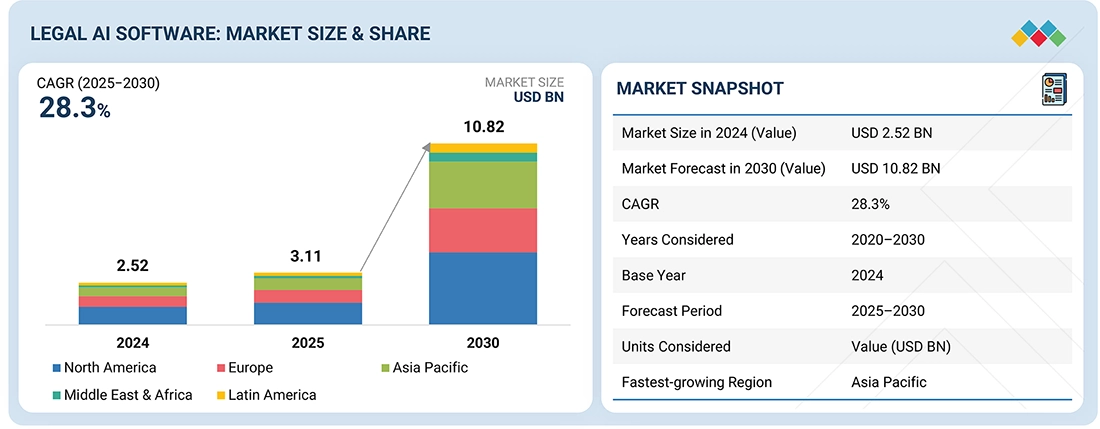
Source: Secondary Research, Interviews with Experts, MarketsandMarkets Analysis
The legal AI software market is transforming the legal industry, helping law firms and corporate legal departments streamline research, contract management, compliance, and litigation. Estimated to be valued at USD 3.11 billion in 2025 and projected to reach USD 10.82 billion by 2030 at a CAGR of 28.3%, the market is driven by advances in natural language processing (NLP), machine learning, and predictive analytics. Rising regulatory complexities, growing legal data volumes, and client demand for faster, cost-efficient services are accelerating adoption. From document review automation to case prediction and compliance monitoring, AI-driven solutions are becoming a strategic necessity for legal enterprises aiming to boost efficiency, reduce risk, and stay competitive in an evolving regulatory landscape.
Market Size and Forecast:
- 2024 Market Size: USD 2.52 Billion
- 2025 Projected Market Size: USD 3.11 Billion
- 2030 Forecasted Market Size: USD 10.82 Billion
- Growth Rate (2025-2030): CAGR of 28.3%
- Data available from 2025 to 2030
Key Market Trends and Insights
- Fastest Growing region: Asia Pacific
-
Growth Drivers: Rising demand for faster legal research, contract automation, compliance efficiency, and cost reduction through AI
- Latest Trends: generative AI, contract automation, eDiscovery, and predictive legal analytics.
- Key Opportunities: Legal AI Software Market enables law firms to improve speed, accuracy, and cost efficiency in legal operations
- Leading Region: Legal AI Software Market in North America leads and is growing through AI adoption, legal tech funding, and compliance automation
- Leading Companies: LexisNexis (US), Thomson Reuters (Canada), Sirion (US), Wolters Kluwer (Netherlands)
KEY TAKEAWAYS
- North America is estimated to account for the largest market share (42.2%) of the legal AI software market in 2025.
- by offering, the generative AI software segment to register fastest growth rate of 36.1% during the forecast period, 2025-2030.
- By application, the contract drafting & review segment is projected to register the highest CAGR of 31.8% during the forecast period.
- By technology, the generative AI segment is projected to register the highest CAGR during the forecast period.
- By end user, the corporate legal departments segment is estimated to account for the largest share of the legal AI software market in 2025.
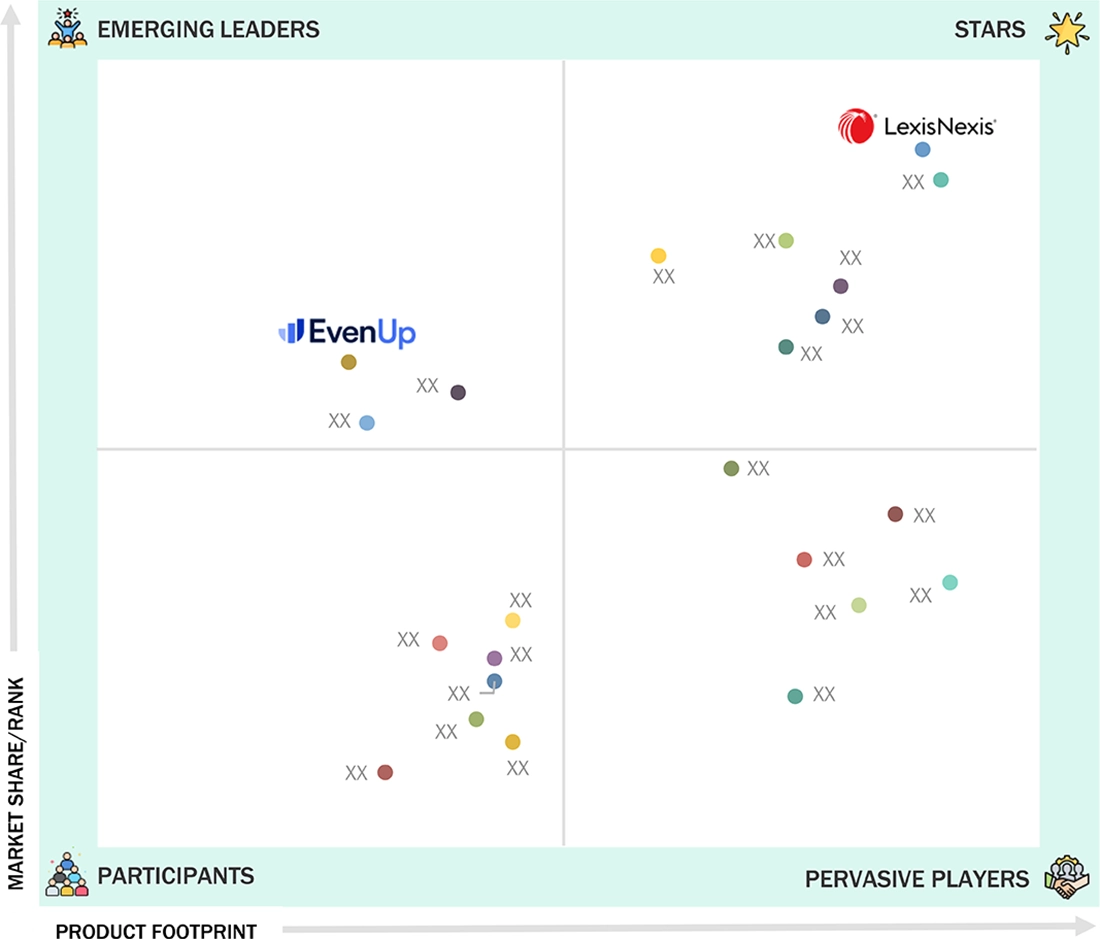
- Companies such as LexisNexis, Thomson Reuters, and Sirion were identified as some of the star players in the legal AI software Market, given their strong market share and product footprint.
- Companies Mapsted, GeoVerra, and MapQuest, among others, have distinguished themselves among startups and SMEs by securing strong footholds in specialized niche areas, underscoring their potential as emerging market leaders
The Legal AI Software Market is entering a phase of intelligent expansion, driven by the convergence of generative AI, machine learning, and NLP-powered automation across critical legal functions. Vendors are rapidly evolving their platforms to meet the rising demand for context-aware legal reasoning, contract intelligence, and data-driven litigation support, positioning AI as a strategic lever for legal transformation.
TRENDS & DISRUPTIONS IMPACTING CUSTOMERS' CUSTOMERS
The impact on consumers' business emerges from customer trends or disruptions. Hotbets are clients of legal AI software providers, and target applications are clients of legal AI software providers. Shifts, which are changing trends or disruptions, will impact the revenues of end users. The revenue impact on end users will affect the revenue of hotbets, which will further affect the revenues of legal AI software providers.
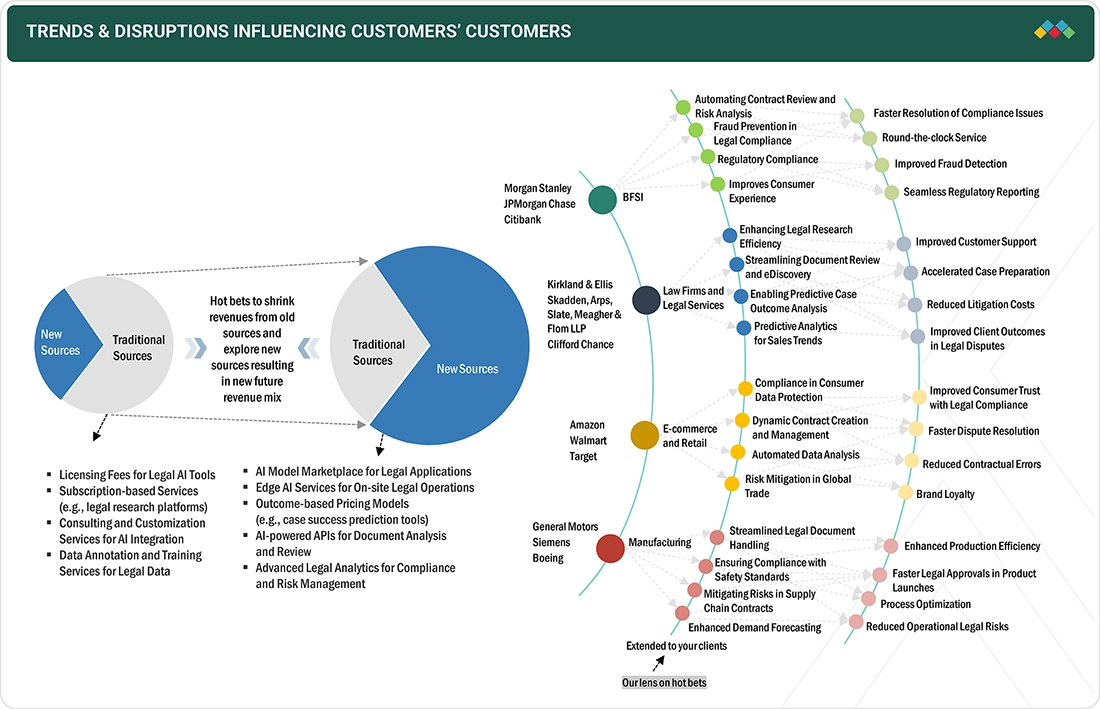
Source: Secondary Research, Interviews with Experts, MarketsandMarkets Analysis
MARKET DYNAMICS

Level
-
Rising Demand for Seamlessly Integrated and Interoperable AI Solutions

-
AI Adoption Accelerates to Eliminate Contract Review Delays and Reduce Costs


Level
-
Complex Regional Legal Frameworks Limit Scalable AI Deployment


Level
-
Expansion of AI Adoption in Virtual Courts and Online Hearings

-
Growing Demand for Compliance-Focused AI Solutions in Regulated Industries


Level
-
Difficulty Balancing Model Accuracy with Explainability in Legal AI Systems

Source: Secondary Research, Interviews with Experts, MarketsandMarkets Analysis
Driver: AI Adoption Accelerates to Eliminate Contract Review Delays and Reduce Costs
Enterprises and law firms are increasingly adopting AI-powered tools to automate contract analysis, clause extraction, and document comparison, significantly reducing review time and human error. Legal AI software enhances operational efficiency, enabling faster deal closures and cost savings. As clients demand quicker turnaround and compliance accuracy, organizations are turning to AI-driven contract lifecycle management solutions to streamline workflows and gain a competitive edge in legal service delivery.
Restraint: Complex Regional Legal Frameworks Limit Scalable AI Deployment
The legal landscape varies widely across jurisdictions, with differing regulations, contract standards, and data privacy requirements posing major challenges for AI deployment. Vendors often struggle to build models that can adapt to localized terminology and evolving legal norms. This fragmentation limits scalability and increases development costs, forcing providers to customize solutions for each market and slowing the broader adoption of legal AI technologies across global enterprises.
Opportunity: Growing Demand for Compliance-Focused AI Solutions in Regulated Industries
Highly regulated sectors such as finance, healthcare, and energy are driving strong demand for AI solutions that ensure legal and regulatory compliance. Legal AI software is increasingly used to monitor policy adherence, identify potential non-compliance, and generate audit-ready documentation. This creates growth opportunities for vendors offering domain-specific AI models and explainable systems that help organizations proactively manage legal risks and meet evolving governance and data protection standards.
Challenge: Difficulty Balancing Model Accuracy with Explainability in Legal AI Systems
AI models used in legal contexts must not only deliver high accuracy but also provide transparent, explainable reasoning for their outputs. However, complex algorithms often operate as “black boxes,” raising trust and accountability concerns among legal professionals. Striking a balance between precision, interpretability, and ethical use remains a major challenge, limiting adoption among conservative legal teams that demand verifiable decision trails for AI-generated insights.
Legal AI Software Market: COMMERCIAL USE CASES ACROSS INDUSTRIES
| COMPANY | USE CASE DESCRIPTION | BENEFITS |
|---|---|---|
 |
Aikyam Law Offices partnered with Clio that could accommodate flexible fee structures and diverse client needs while ensuring transparency and effective firm management. | Achieved enhanced operational efficiency, improved billing transparency, and greater adaptability in managing firm-wide processes, demonstrating the strategic value of AI-enabled legal operations platforms in modernizing practice management. |
 |
Withers LLP utilized DISCO to collect and refine extensive documents into a relevant, searchable database that could withstand legal scrutiny. The firm needed a solution that could handle sensitive personal information while ensuring accuracy and speed in document processing. | Significantly improved document management workflows, enabling faster access to relevant materials during litigation while maintaining client confidentiality. This showcases the impact of AI-powered eDiscovery platforms in streamlining complex legal processes. |
Logos and trademarks shown above are the property of their respective owners. Their use here is for informational and illustrative purposes only.
MARKET ECOSYSTEM
The legal AI software market ecosystem is shaped by a mix of vendors, end users, and regulatory bodies. Thomson Reuters, LexisNexis, and Wolters Kluwer lead in AI-powered legal research and compliance, while Ironclad, Icertis, and Sirion dominate contract intelligence and automation. In generative AI, Harvey, Robin AI, and Spellbook are revolutionizing legal drafting and case analysis. Conversational AI and chatbots, led by DoNotPay, Leya, and Pocketlaw, enhance client interactions and legal assistance.
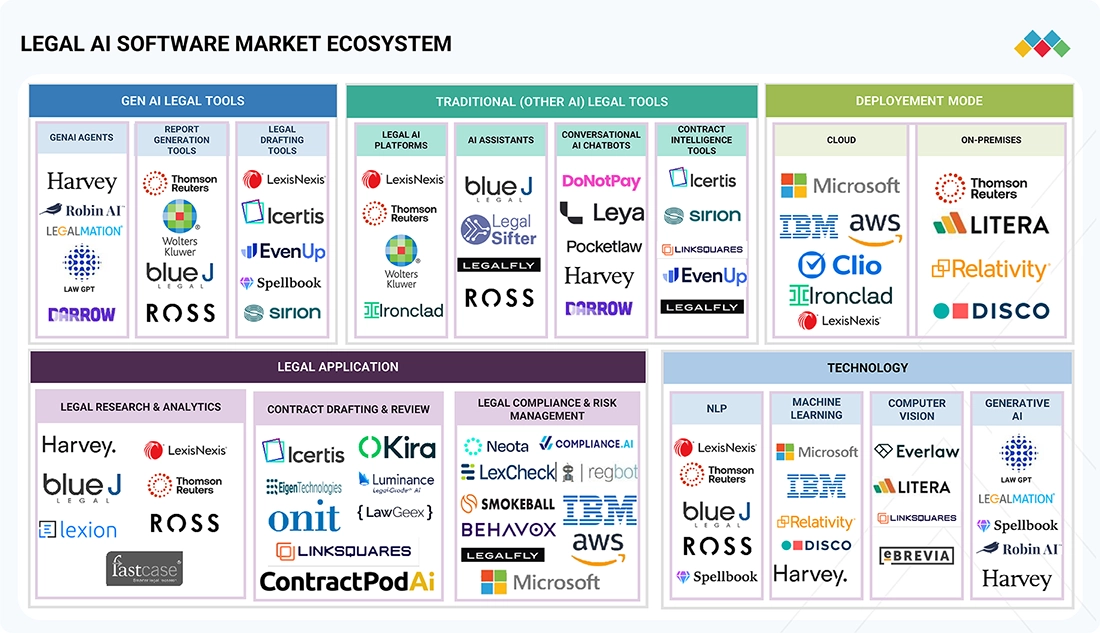
Logos and trademarks shown above are the property of their respective owners. Their use here is for informational and illustrative purposes only.
MARKET SEGMENTS
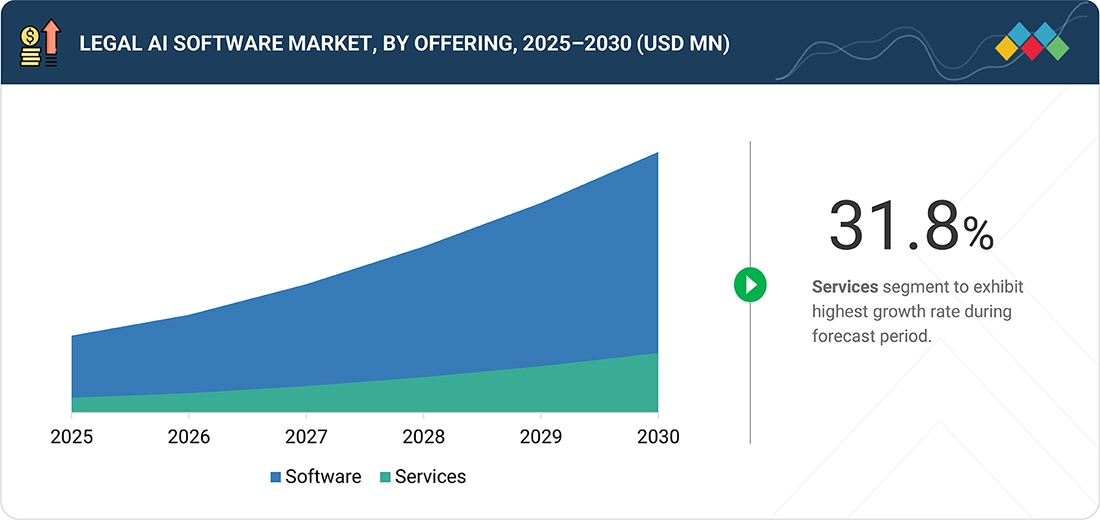
Source: Secondary Research, Interviews with Experts, MarketsandMarkets Analysis
Legal AI Software market, By Offering
Legal AI Assistants are projected to experience the fastest growth, driven by their integration into platforms such as Thomson Reuters LegalTech, Casetext CoCounsel, and Harvey AI. These assistants are transforming legal workflows by enabling automated legal drafting, AI-enhanced case research, and real-time advisory augmentation. As law firms prioritize intelligent legal automation to reduce manual effort and improve service delivery, AI assistants are becoming central to next-generation legal operations platforms.
Legal AI Software Market, By Application
eDiscovery is expected to dominate the application segment in 2025, driven by the exponential growth of electronically stored information (ESI) across litigation, compliance, and regulatory investigations. AI-powered eDiscovery platforms are essential for automated data classification, predictive coding, and intelligent keyword search, enabling legal teams to efficiently identify relevant evidence and meet discovery obligations.
Legal AI Software Market, By Technology
Generative AI is forecasted to record the highest growth rate, with platforms like Harvey AI, Lexion, and LexisNexis CounselLink embedding generative models into legal workflows. These technologies enable automated contract generation, brief preparation, and predictive legal argumentation, making generative AI a cornerstone of intelligent legal transformation, especially in high-risk and high-complexity domains.
Legal AI Software Market, By End User
Law Firms are expected to lead adoption, from global firms like Baker McKenzie and Clifford Chance to mid-sized practices. The need to deliver faster client outcomes, manage rising operational costs, and stay competitive is driving investment in AI-powered litigation strategy, contract review automation, IP management, and eBilling optimization.F2D4F1:F5
REGION
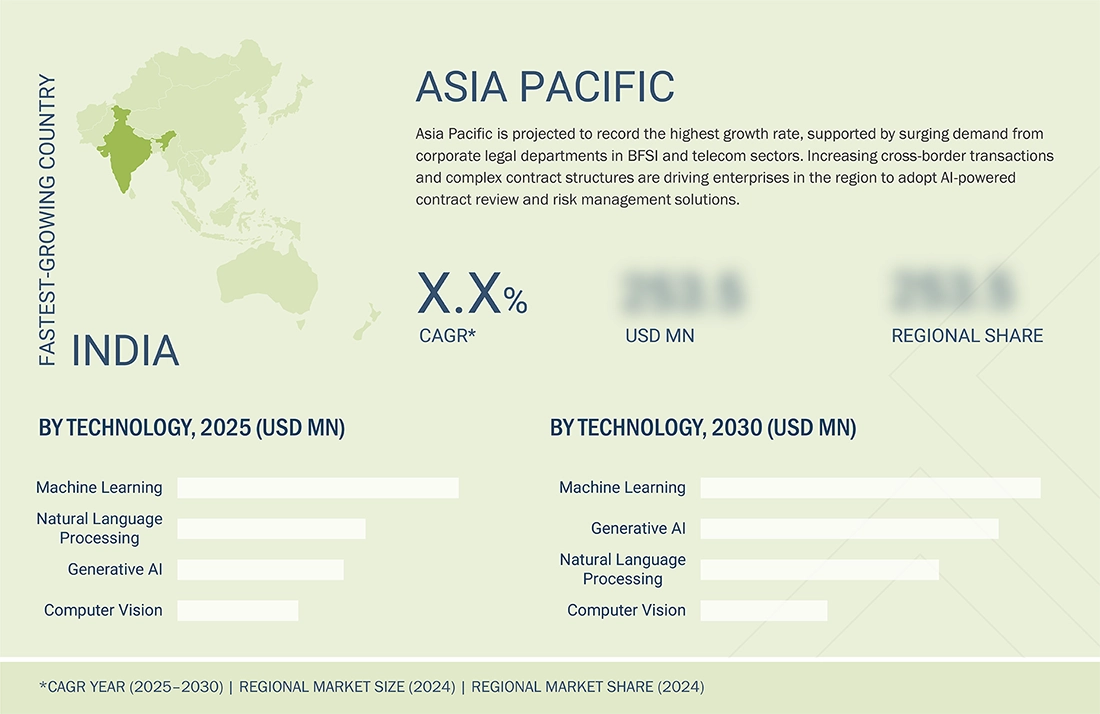
Asia Pacific to be fastest-growing region in global Legal AI Software Market during forecast period
The Asia Pacific legal AI software market is undergoing accelerated growth, driven by government-led digital transformation initiatives and judiciary modernization programs across key economies such as India, China, and Singapore. These countries are investing in AI-enabled compliance monitoring, smart court infrastructure, and automated legal workflows, positioning the region as a strategic hub for legal tech innovation. | The increasing presence of global legal tech vendors including those offering AI-powered legal research, eDiscovery platforms, and litigation analytics solutions is further catalyzing adoption through local partnerships and regional deployment strategies. Asia Pacific is rapidly evolving into a high-growth market for AI-driven legal transformation, with strong demand for scalable, cloud-native platforms that support regulatory intelligence, contract analytics, and digital case management.
Legal AI Software Market: COMPANY EVALUATION MATRIX
The company evaluation matrix highlights LexisNexis as a Star, reflecting its strong market share, extensive product footprint, and advanced AI-driven legal solutions that dominate global adoption. EvenUp is positioned among the Emerging Leaders, driven by its innovative approach in legal automation and litigation support, showcasing high growth potential.
Source: Secondary Research, Interviews with Experts, MarketsandMarkets Analysis
KEY MARKET PLAYERS
MARKET SCOPE
| REPORT METRIC | DETAILS |
|---|---|
| Market Size in 2024 (Value) | USD 2.52 Billion |
| Market Forecast in 2030 (Value) | USD 10.82 Billion |
| Growth Rate | 28.3% |
| Years Considered | 2020–2030 |
| Base Year | 2024 |
| Forecast Period | 2025 – 2030 |
| Units Considered | USD BN |
| Report Coverage | Company ranking, competitive landscape, growth factors, and trends |
| Segments Covered |
|
| Regions Covered | North America, Asia Pacific, Europe, South America, Middle East & Africa |
WHAT IS IN IT FOR YOU: Legal AI Software Market REPORT CONTENT GUIDE
DELIVERED CUSTOMIZATIONS
We have successfully delivered the following deep-dive customizations:
| CLIENT REQUEST | CUSTOMIZATION DELIVERED | VALUE ADDS |
|---|---|---|
| Leading Legal AI Software Vendor | Conducted a comparative analysis of legal AI platforms, evaluating product capabilities, application coverage (e.g., contract analytics, eDiscovery, litigation support), and pricing models across vendors. | Enabled the client to perform data-driven vendor selection, optimize cost structures across practice areas, and enhance procurement efficiency. |
| Leading Legal AI Software Vendor | Delivered region-specific market sizing and growth forecasts, mapped strategic opportunities, and provided ecosystem-level insights to align vendor offerings with emerging market dynamics. | Supported early-mover advantage in developing markets by tailoring offerings to local needs, driving competitive differentiation and market penetration in high-growth segments. |
RECENT DEVELOPMENTS
- December 2024 : RelativityOne introduced advanced Import/Export capabilities, allowing users to rename workspace field names during export streamlining data governance and workspace management for legal teams.
- November 2024 : Litera acquired Office & Dragons, strengthening its mass document drafting and editing automation capabilities through generative AI, reinforcing its position in legal drafting intelligence.
- October 2024 : Thomson Reuters acquired Materia, integrating agentic AI into its tax, audit, and accounting portfolio to eliminate low-value tasks and enhance advisory productivity.
- October 2024 : CS DISCO launched Cecilia AI in Europe, introducing a suite of generative AI-powered eDiscovery tools to streamline document analysis and enhance litigation readiness.
- September 2024 : IBM acquired Accelalpha, boosting its legal practice management consulting and reinforcing its commitment to AI-powered document analytics and legal workflow optimization.
- May 2024 : Microsoft partnered with Litera to embed intelligent legal workflows into Microsoft 365, enabling lawyers to improve efficiency, accuracy, and client service delivery through AI-enhanced productivity tools.
Table of Contents
 Exclusive indicates content/data unique to MarketsandMarkets and not available with any competitors.
Methodology
The research methodology for the global legal AI software market report involved the use of extensive secondary sources and directories, as well as various reputed open-source databases, to identify and collect information useful for this technical and market-oriented study. In-depth interviews were conducted with various primary respondents, including key opinion leaders; subject matter experts from LegalTech companies, law firms, corporate legal departments and law enforcement agencies; high-level executives of multiple companies offering legal AI software & services; and industry consultants to obtain and verify critical qualitative and quantitative information and assess the market prospects and industry trends.
Secondary Research
In the secondary research process, various secondary sources were referred to for identifying and collecting information for the study. The secondary sources included annual reports; press releases and investor presentations of companies; white papers, certified publications such as Journal of Artificial Intelligence Research, MIT Computational Law Report, Harvard Journal of Law & Technology; and articles from recognized associations and government publishing sources including but not limited to High-Level Expert Group on AI, International Association for Artificial Intelligence and Law (IAAIL), The Stanford Center for Legal Informatics, International Legal Technology Association (ILTA), and European AI Alliance (EAI).
The secondary research was used to obtain key information about the industry’s value chain, the market’s monetary chain, the overall pool of key players, market classification and segmentation according to industry trends to the bottom-most level, regional markets, and key developments from the market and technology-oriented perspectives.
Primary Research
In the primary research process, a diverse range of stakeholders from both the supply and demand sides of the legal AI software ecosystem were interviewed to gather qualitative and quantitative insights specific to this market. From the supply side, key industry experts, such as chief executive officers (CEOs), vice presidents (VPs), marketing directors, technology & innovation directors, as well as technical leads from vendors offering legal AI software & services were consulted. Additionally, system integrators, service providers, and IT service firms that implement and support legal AI software were included in the study. On the demand side, input from IT decision-makers, infrastructure managers, and legal department/law firm heads was collected to understand the user perspectives and adoption challenges within targeted industries.
The primary research ensured that all crucial parameters affecting the legal AI software market—from technological advancements and evolving use cases (eDiscovery, legal research & analytics, report generation, legal contract drafting & review etc.) to regulatory and compliance needs (GDPR, CCPA, Europe AI Act etc.) were considered. Each factor was thoroughly analyzed, verified through primary research, and evaluated to obtain precise quantitative and qualitative data for this market.
Once the initial phase of market engineering was completed, including detailed calculations for market statistics, segment-specific growth forecasts, and data triangulation, an additional round of primary research was undertaken. This step was crucial for refining and validating critical data points, such as legal AI offerings (legal AI software and legal AI services), industry adoption trends, the competitive landscape, and key market dynamics like demand drivers (explosive growth in eDiscovery requirements, surge in adoption of NLP in legal operations, government support for judicial efficiency, proliferation of ai-driven knowledge management systems), challenges (adapting AI to non-standardized legal processes, complexities in adapting AI for litigation-specific applications), and opportunities (emergence of virtual hearings and online dispute resolution, real-time sentiment analysis in courtrooms, expansion of AI-driven arbitration platforms).
In the complete market engineering process, the top-down and bottom-up approaches and several data triangulation methods were extensively used to perform the market estimation and market forecast for the overall market segments and subsegments listed in this report. Extensive qualitative and quantitative analysis was performed on the complete market engineering process to record the critical information/insights throughout the report.
The following is the breakup of primary profiles:
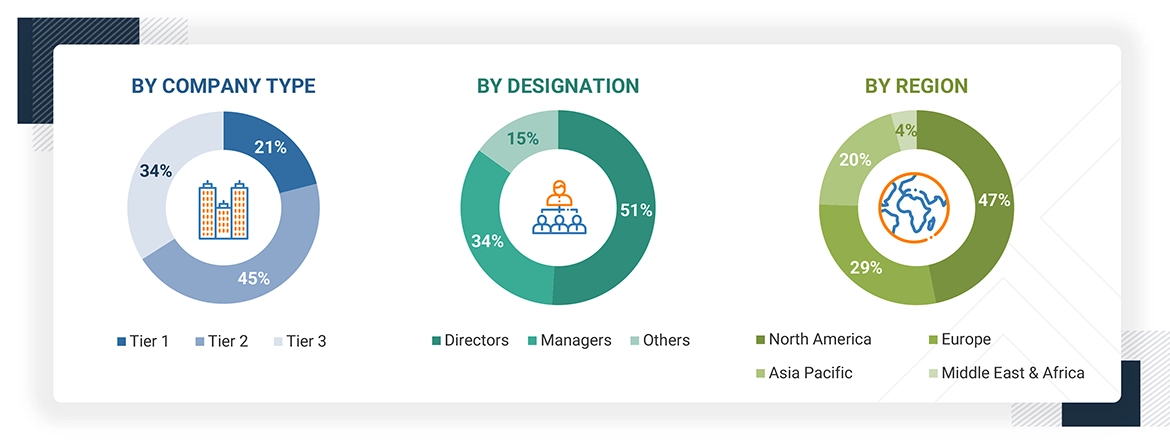
Note: Three tiers of companies are defined based on their total revenue as of 2024; tier 1 = revenue more than USD 500 million, tier 2 = revenue between USD 100 million and 500 million, tier 3 = revenue less than USD 100 million
Source: MarketsandMarkets Analysis
To know about the assumptions considered for the study, download the pdf brochure
Market Size Estimation
To estimate and forecast the legal AI software market and its dependent submarkets, both top-down and bottom-up approaches were employed. This multi-layered analysis was further reinforced through data triangulation, incorporating both primary and secondary research inputs. The market figures were also validated against the existing MarketsandMarkets repository for accuracy. The following research methodology has been used to estimate the market size:
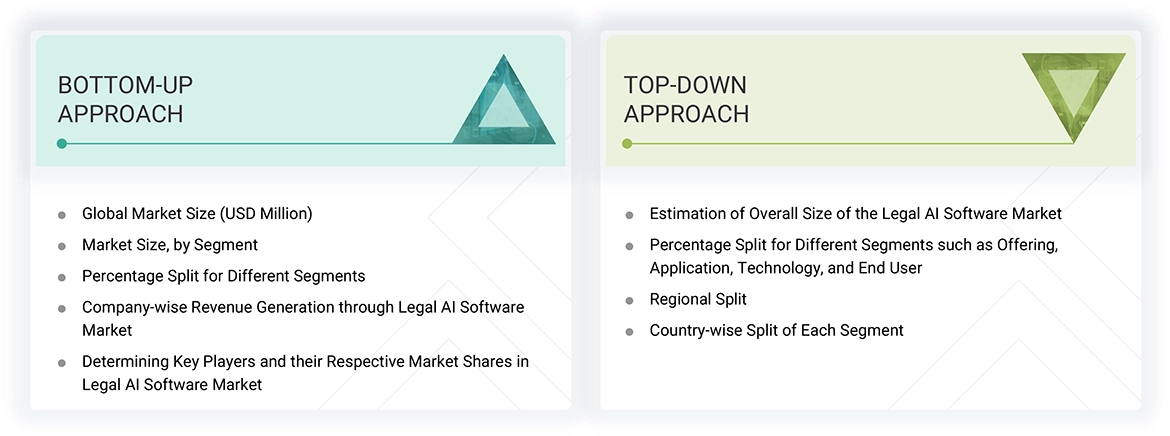
Data Triangulation
After arriving at the overall market size using the market size estimation processes as explained above, the market was split into several segments and subsegments. To complete the overall market engineering process and arrive at the exact statistics of each market segment and subsegment, data triangulation and market breakup procedures were employed, wherever applicable. The overall market size was then used in the top-down procedure to estimate the size of other individual markets via percentage splits of the market segmentation.
Market Definition
Legal AI software refers to technology solutions that leverage artificial intelligence, machine learning, and natural language processing to automate and enhance various legal processes. These tools encompass a wide range of functionalities, including contract drafting, legal research, compliance management, document review, knowledge sharing, and client communication. Generative AI tools, such as drafting software and intelligent chatbots, enable organizations to create legal documents and engage clients more efficiently, while other AI platforms facilitate contract intelligence, workflow automation, and risk management. By reducing manual effort, increasing accuracy, and accelerating workflows, legal AI software empowers law firms, corporate legal departments, and other entities to navigate complex legal landscapes with greater efficiency.
Stakeholders
- Vendors offering legal AI software and services
- Alternative legal service providers (ALSPs)
- Generative AI/AI technology providers
- Business analysts
- Distributors and Value-added Resellers (VARs)
- Government agencies
- Independent Software Vendors (ISV)
- Market research and consulting firms
- Support & maintenance service providers
- Courts and judiciary
- Government agencies and regulatory bodies
- In-house legal teams
- Law firms
- Professional associations & bar councils
- Academia & research institutions
- Investors & venture capital firms
Report Objectives
- To define, describe, and forecast the legal AI software market, by offering, application, technology and end user
- To provide detailed information related to major factors (drivers, restraints, opportunities, and industry-specific challenges) influencing the market growth
- To analyze the micro markets with respect to individual growth trends, prospects, and their contribution to the total market
- To analyze the opportunities in the market for stakeholders by identifying the high-growth segments of the legal AI software market
- To analyze opportunities in the market and provide details of the competitive landscape for stakeholders and market leaders
- To forecast the market size of segments for five main regions: North America, Europe, Asia Pacific, the Middle East & Africa, and Latin America
- To profile the key players and comprehensively analyze their market ranking and core competencies
- To analyze competitive developments, such as partnerships, product launches, and mergers and acquisitions, in the legal AI software market
Key Questions Addressed by the Report


Personalize This Research
- Triangulate with your Own Data
- Get Data as per your Format and Definition
- Gain a Deeper Dive on a Specific Application, Geography, Customer or Competitor
- Any level of Personalization
Let Us Help You
- What are the Known and Unknown Adjacencies Impacting the Legal AI Software Market
- What will your New Revenue Sources be?
- Who will be your Top Customer; what will make them switch?
- Defend your Market Share or Win Competitors
- Get a Scorecard for Target Partners

Custom Market Research Services
We Will Customise The Research For You, In Case The Report Listed Above Does Not Meet With Your Requirements
Get 10% Free CustomisationTESTIMONIALS






Growth opportunities and latent adjacency in Legal AI Software Market