Location Analytics Market Size, Size, Growth & Latest Trends

Location Analytics Market by Software (Spatial Query, Indexing, Geospatial Visualization, Routing, Navigation Engines, Location Enrichment Tools, Spatial APIs), Positioning & Tracking System (GNSS Receivers, IMU, PNT Systems) - Global Forecast to 2031




OVERVIEW
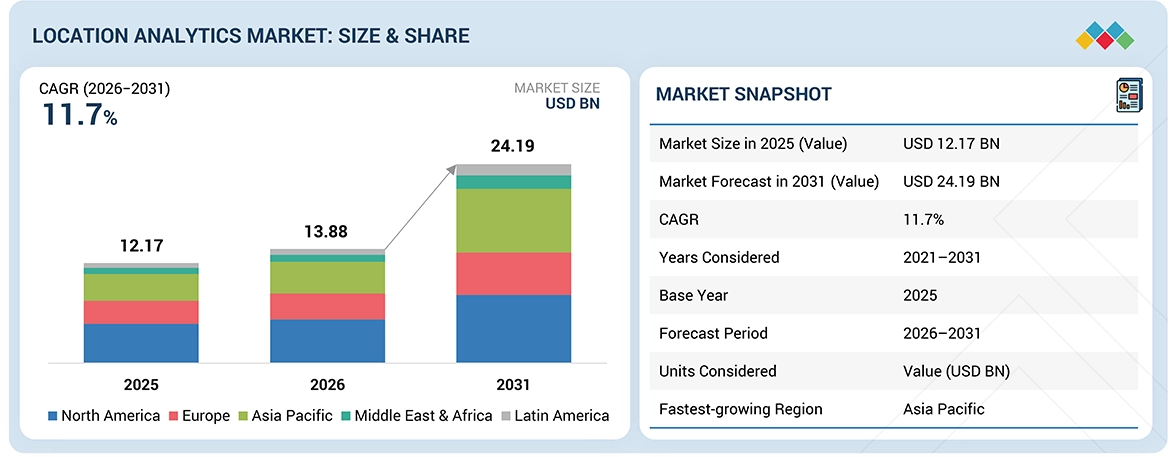
Source: Secondary Research, Interviews with Experts, MarketsandMarkets Analysis
The location analytics market is projected to grow from USD 13.88 billion in 2026 to USD 24.19 billion by 2031, registering a CAGR of 11.7%. The market's growth is driven by the rising adoption of location data from mobile devices, connected assets, and digital platforms across retail, transport, logistics, and public sector operations, where geographic insights directly influence efficiency and service outcomes. Adoption is increasing with companies using this data to understand movement patterns, improve customer engagement, and support planning activities, resulting in customer satisfaction and accretive growth.
Market Size and Forecast:
- Market Size Value in 2025: USD 12.17 Billion
- Market Size Value in 2026: USD 13.88 Billion
- Revenue Forecast in 2031: USD 24.19 Billion
- Growth Rate: CAGR of 11.7% from 2026 to 2031
- Forecast period: 2025–2031
- North America is estimated to account for the largest market share of 39.30% in 2026.
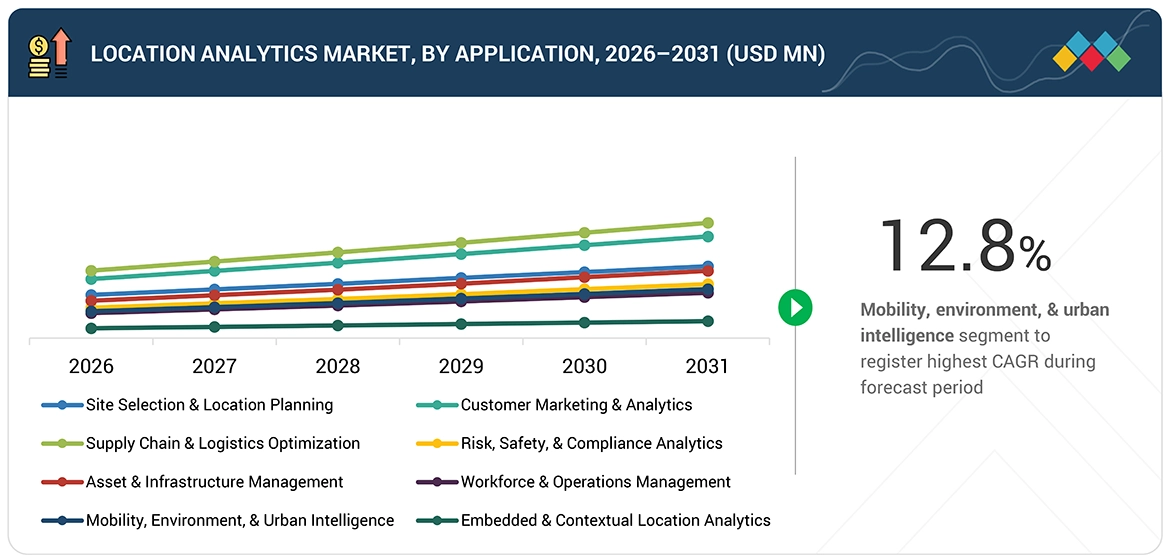
- The Mobility, Environment, & Urban Intelligence segment is projected to register the highest CAGR of 12.8% during the forecast period.
Key Market Trends and Insights
- By Software: The Geospatial Visualization segment accounts for a significant share of the Location Analytics market, driven by the increasing demand for interactive maps, real-time spatial data visualization, location-based decision-making, and enhanced business intelligence across industries.
- Market Trends: Organizations are increasingly leveraging AI, cloud computing, GIS technologies, and advanced geospatial visualization tools to transform location data into actionable insights, improve operational efficiency, and support data-driven business decisions.
- Market Drivers: Rising adoption of geographic information systems (GIS), increasing demand for location-based services, growing investments in smart city initiatives, expanding use of spatial analytics, and the need for real-time geospatial intelligence are supporting market growth.
- Future Opportunities: Significant opportunities are emerging in AI-powered geospatial visualization, digital twin technologies, cloud-based location intelligence platforms, IoT-enabled spatial analytics, and immersive 3D mapping solutions designed to enhance operational planning and business performance.
KEY TAKEAWAYS
-
By RegionBy region, North America is estimated to account for the largest market share of 39.30% in 2026.
-
By offeringSpatial APIs & microservices are estimated to be the largest market segment by offering in 2026.
-
By Data & Sensing ModalityBy data & sensing modality, the IoT & sensor fusion-based data segment is projected to register the highest CAGR of 12.7%.
-
By ApplicationBy Application, the mobility, environment, & urban intelligence segment is projected to register the highest CAGR of 12.8%.
-
By VerticalBy vertical, the retail & e-commerce segment is estimated to lead the market in 2026.
-
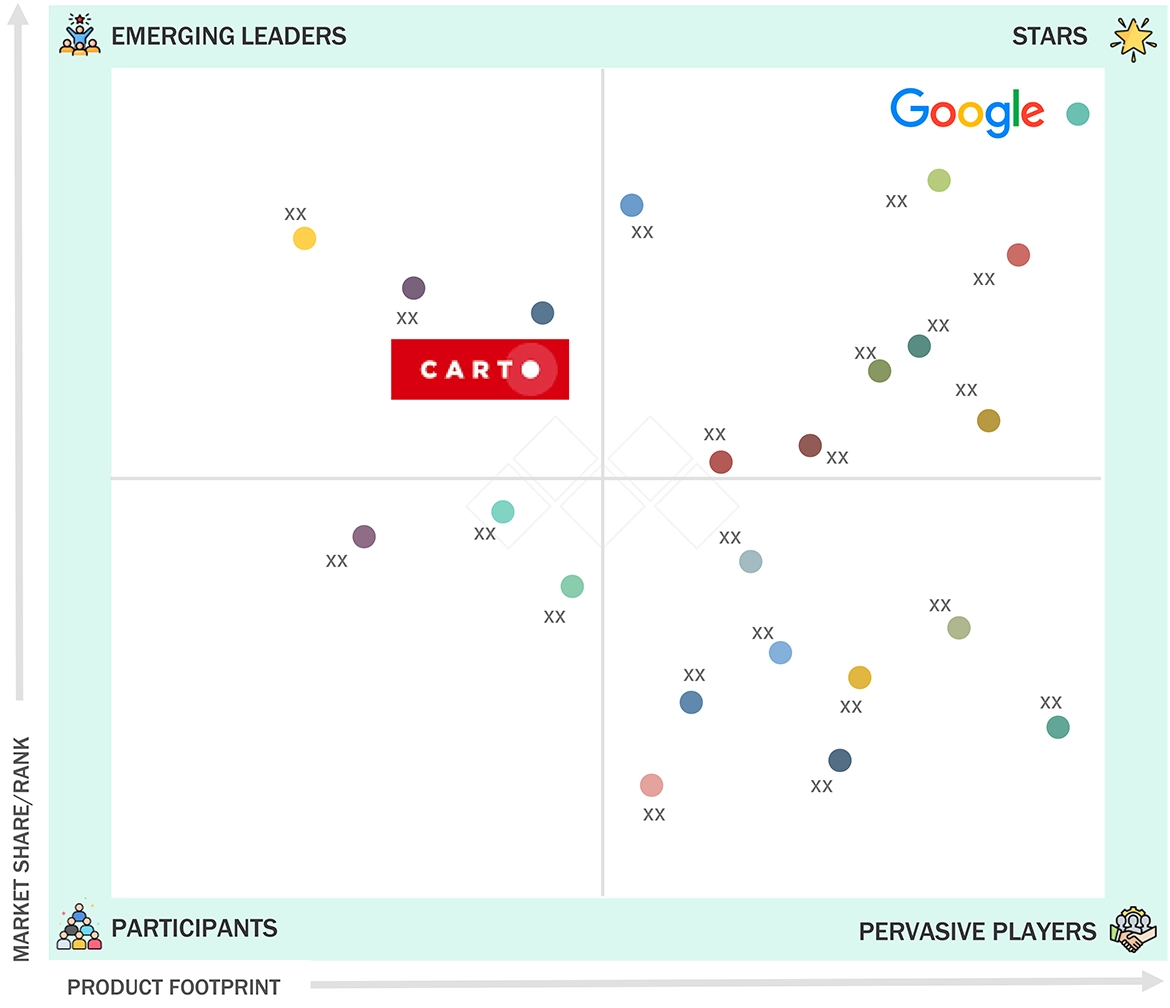
Competitive Landscape – Key PlayersGoogle, Esri, RMSI, and TomTom were identified as star players in the location analytics market, given their strong market share and product footprint.
-
Competitive Landscape – Startup/SMEsGeomoby, clevermaps, and Quuppa, among others, have distinguished themselves among startups and SMEs by securing strong footholds in specialized niche areas, underscoring their potential as emerging market leaders
Location analytics solutions from vendors are being enhanced with better maps, real-time capabilities, and more interpretable visualizations. Analytics platforms now support spatial analysis and straightforward integration in the established enterprise platform, with a bigger emphasis on cloud availability to manage even larger data streams. The accuracy and speed of satellite calculation and AI-assisted processing are providing users with more reliable and rapid insights.
TRENDS & DISRUPTIONS IMPACTING CUSTOMERS' CUSTOMERS
Location analytics has been transitioning from conventional GIS configurations to cloud native implementations. Past solutions required rigid layers and manual upkeep, but now modern solutions integrate real-time data with analysis and visualization on a single platform. Companies can now incorporate location intelligence into applications through APIs. It also offers more adaptable pricing structures for growth.
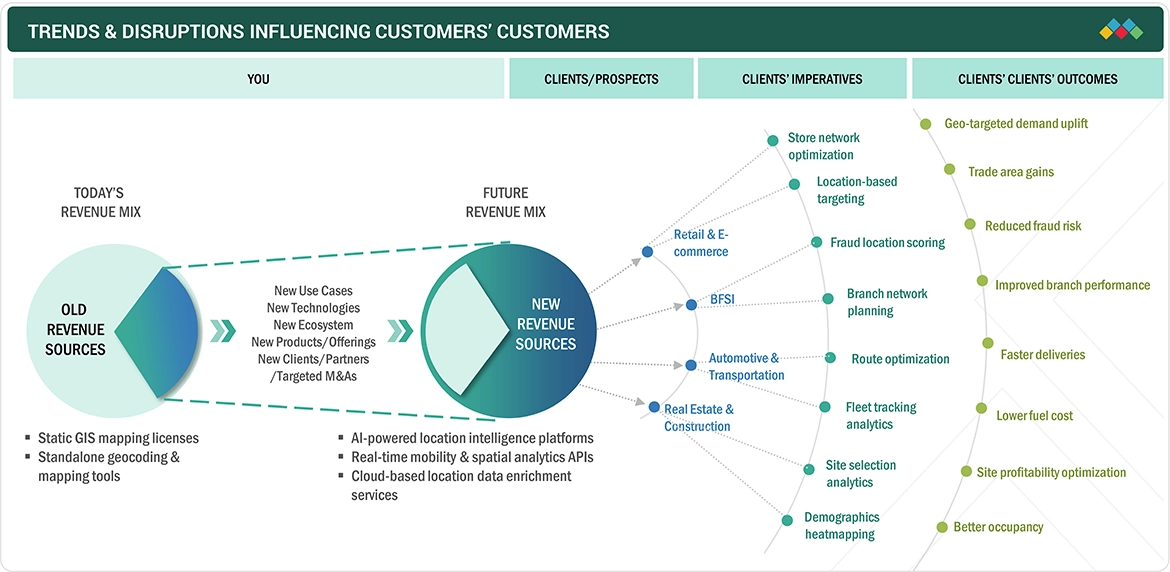
Source: Secondary Research, Interviews with Experts, MarketsandMarkets Analysis
MARKET DYNAMICS

Level
-
High-precision mapping and navigation demand

-
GIS-enabled predictive spatial decision intelligence


Level
-
High deployment cost of GIS platforms

-
High geospatial data processing complexity


Level
-
Location-based services in mobility ecosystems

-
AI-driven predictive spatial analytics


Level
-
Integration across diverse data source platforms

-
Real-time data integration latency issues

Source: Secondary Research, Interviews with Experts, MarketsandMarkets Analysis
High-precision mapping and navigation demand
The need for precision mapping and navigation is rising, with the demand for sub-meter accuracy in autonomous vehicles, precision agriculture, and smart city infrastructure. Accurate location data supports route optimization, tracking, and operations control across retail, logistics, and manufacturing industries. This makes decision-making faster and more reliable in real-world scenarios.
High deployment cost of GIS platforms
The high deployment cost continues to be a barrier to adoption among SME-targeted users, both in terms of initial and ongoing costs. This is attributed to the significant software license costs, high-end hardware costs, and high-performance cloud storage costs. Maintenance and update costs add to this in the case of large-scale deployments.
Location-based services in mobility ecosystems
The integration of location-based services into mobility systems is a growth opportunity driven by the advent of ride-hailing, micro-mobility, and autonomous vehicles that necessitate access to live spatial information for route planning, dynamic pricing, and safety information. Mobility companies are providing high-fidelity HD maps and traffic intelligence to increase operational efficiency for mobility fleets and enabling smart city initiatives to reduce congestion and increase sustainable transportation solutions.
Integration across diverse data source platforms
Integration across diverse data source platforms remains a key challenge due to the lack of standardized formats, differing coordinate systems, and the large amount and speed at which real-time IoT and satellite streams are generated. The absence of specific infrastructure and the dearth of a hybrid talent pool in GIS and data science drive operational costs up and do not allow many organizations to scale up their location intelligence efforts.
LOCATION ANALYTICS MARKET SIZE, SIZE, GROWTH & LATEST TRENDS: COMMERCIAL USE CASES ACROSS INDUSTRIES
| COMPANY | USE CASE DESCRIPTION | BENEFITS |
|---|---|---|
 |
Mastercard partnered with CARTO to develop the Mastercard Retail Location Insights (MRLI), which secures transaction data and facilitates commercialization at scale. This partnership provides location insights based on mobility, financial, and POI data to generate a consolidated platform for developing products. | The Mastercard Retail Location Insights (MRLI) platform could be used by clients and partners to gain detailed insights from the data that was gathered. The platform helps overcome a range of challenges associated with the project, such as data safety and security. |
 |
The Altoona Police Department started using Esri’s ArcGIS Insights to support a more data-driven approach to policing. By bringing together both spatial and non-spatial data, they were able to better analyze crime trends, plan more effectively, and allocate resources where they were needed most. The tool also replaced time-consuming manual work with spreadsheets and static reports, giving officers and leadership an easier way to explore and understand data in real time. | With ArcGIS Insights, the department moved away from static reports and began working with real-time data, which made it easier to make informed decisions across the team. Officers could dig into the data themselves, spot patterns, and get a clearer picture of what was happening in their areas. At the same time, the department improved how it assigned resources and reduced the effort spent on manual data processing, making day-to-day operations more efficient. |
Logos and trademarks shown above are the property of their respective owners. Their use here is for informational and illustrative purposes only.
MARKET ECOSYSTEM
The location analytics ecosystem includes software providers, service providers, and positioning and tracking system providers. Software providers deliver mapping and analytics solutions, while positioning providers generate location data through sensors and devices. Service providers enable data hosting, processing, and deployment of location analytics solutions.
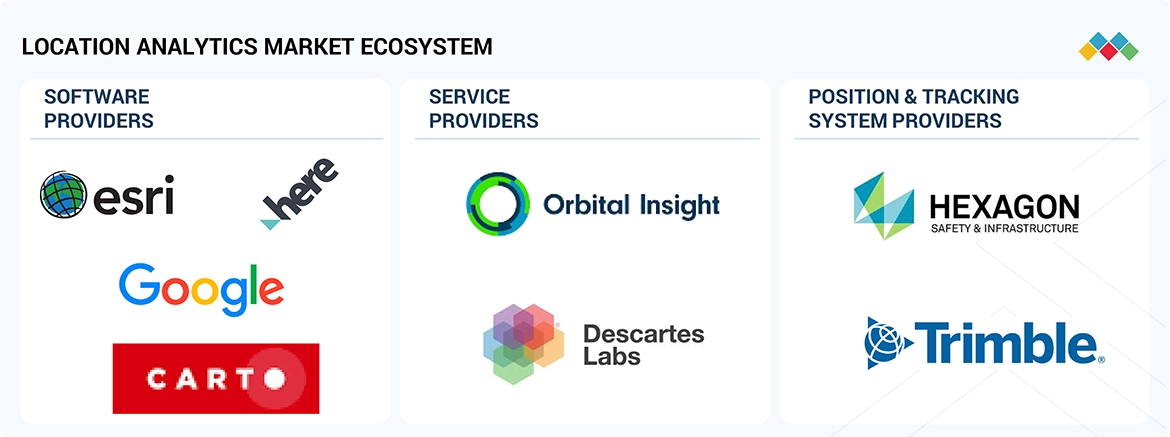
Logos and trademarks shown above are the property of their respective owners. Their use here is for informational and illustrative purposes only.
MARKET SEGMENTS
Source: Secondary Research, Interviews with Experts, MarketsandMarkets Analysis
Location Analytics Market, By Offering
Location enrichment tools are the fastest-growing segment as organizations increasingly adopt advanced spatial data solutions to make smarter decisions based on available data. These solutions integrate demographics, mobility, and location data to provide smarter customer targeting, site selection, and risk management. The demand for real-time and data-driven insights with scalable cloud-based analytics is propelling their adoption in retail, BFSI, and logistics to improve segmentation analysis, network planning, and risk assessment.
Location Analytics Market, By Data & Sensing Modality
GNSS and satellite-based positioning information is the largest segment as organizations rely on near-real-time, highly accurate positional information to facilitate vital decision infrastructure. This includes persistent geospatial information feeds derived from a constellation of satellites to facilitate mobility, navigation, and creation of detailed Geographic Information Systems (GIS) for enterprise applications.
Location Analytics Market, By Application
The mobility, environment, and urban intelligence segment is expected to exhibit the fastest growth, as it addresses the infrastructure and sustainability issues faced by cities and enterprises through a number of integrated data solutions. These solutions combine geographic data with mobility flows and environmental information to address transportation issues, minimize pollution, and contribute to urban planning.
Location Analytics Market, By Vertical
The retail & e-commerce vertical holds the largest revenue share, driven by the growing need to harness non-traditional spatial data sets to derive demand and customer trends for improving both service experience and operational profitability. Location analytics for retail & e-commerce use case includes advanced analysis of consumer behavior relative to footfalls, trade zones, and demand hotspots to facilitate site optimization, inventory planning, and product placement strategies.
REGION
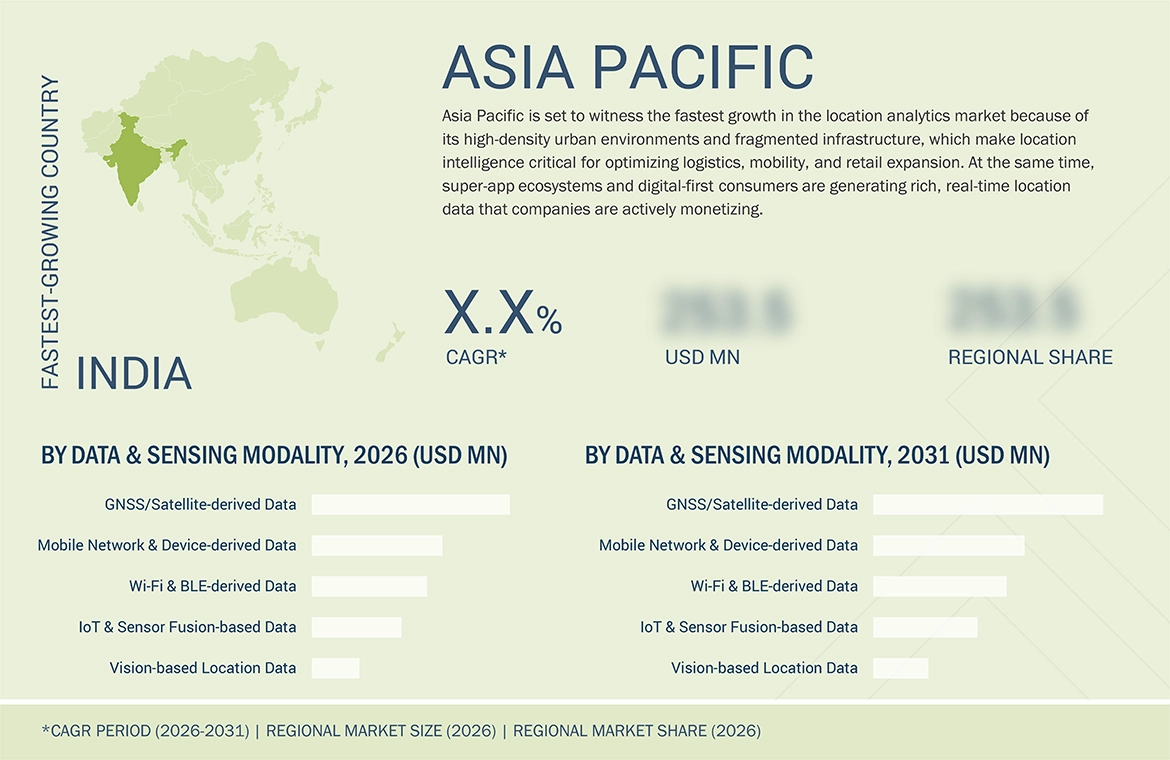
Asia Pacific to be fastest-growing region in global location analytics market during forecast period
Asia Pacific is projected to be the fastest-growing regional market for location analytics. Countries like China, India, Japan, South Korea, and Australia are increasing investments in digital infrastructure, smart city projects, and mobility platforms. The increasing penetration of e-commerce, urbanization, and mobile connectivity is leading to the proliferation of location-based analytics in the region.
LOCATION ANALYTICS MARKET SIZE, SIZE, GROWTH & LATEST TRENDS: COMPANY EVALUATION MATRIX
In the location analytics company landscape, Google is positioned as a key player, buoyed by its mapping platforms, API, and global data. CARTO is positioned as an emerging player, buoyed by its focus on cloud-native spatial analytics and data-driven location intelligence.
Source: Secondary Research, Interviews with Experts, MarketsandMarkets Analysis
KEY MARKET PLAYERS
- IBM (US)
- Google (US)
- Oracle (US)
- Esri (US)
- Precisely (US)
- Microsoft (US)
- SAS (US)
- SAP (Germany)
- Cisco (US)
- TomTom (Netherlands)
- Hexagon (Sweden)
- Zebra Technologies (US)
- Alteryx (US)
- HERE (US)
- Purple (UK)
- Galigeo (France)
MARKET SCOPE
| REPORT METRIC | DETAILS |
|---|---|
| Market Size in 2025 (Value) | USD 12.17 Billion |
| Market Size in 2026 (Value) | USD 13.88 Billion |
| Market Forecast in 2031 (Value) | USD 24.19 Billion |
| Growth Rate | 11.7% |
| Years Considered | 2021–2031 |
| Base Year | 2025 |
| Forecast Period | 2026–2031 |
| Units Considered | USD Billion/Million |
| Report Coverage | Revenue forecast, company ranking, competitive landscape, growth factors, and trends |
| Segments Covered |
|
| Regions Covered | North America, Europe, Asia Pacific, Middle East & Africa, Latin America |
WHAT IS IN IT FOR YOU: LOCATION ANALYTICS MARKET SIZE, SIZE, GROWTH & LATEST TRENDS REPORT CONTENT GUIDE
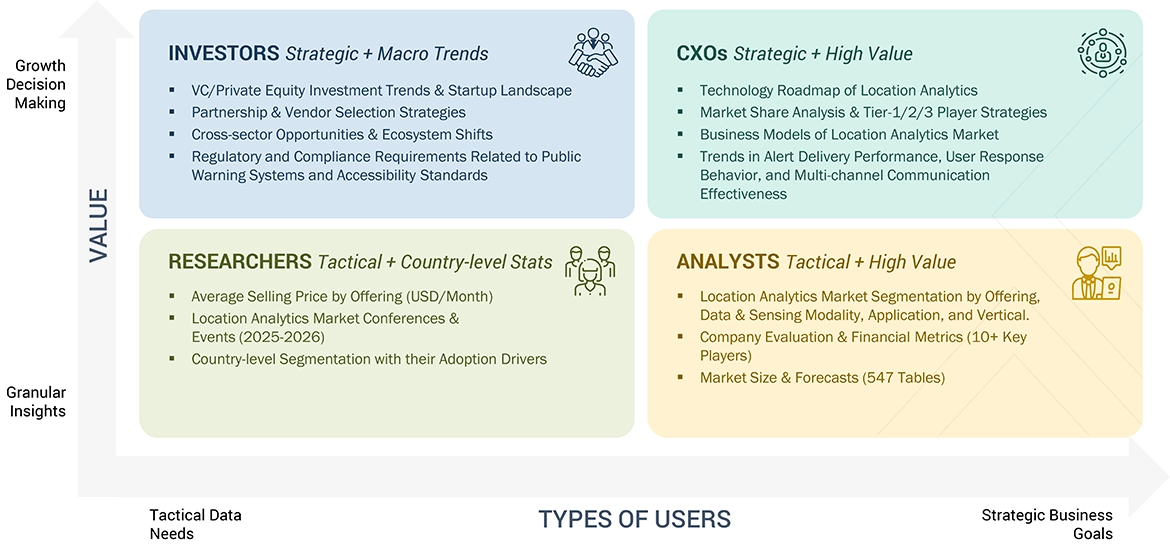
DELIVERED CUSTOMIZATIONS
We have successfully delivered the following deep-dive customizations:
| CLIENT REQUEST | CUSTOMIZATION DELIVERED | VALUE ADDS |
|---|---|---|
| Retail & E-commerce Vendor |
|
|
| Automotive & Transportation Firm |
|
|
RECENT DEVELOPMENTS
- February 2026 : CARTO unveiled improved cloud-native spatial analytics capabilities in 2026 for its location intelligence platform to facilitate scalable geospatial analysis and enterprise data integration. The solution allows enterprise users to analyze large quantities of spatial data directly inside cloud data warehouses, discover geographic trends swiftly, and produce actionable business insights.
- March 2026 : TomTom enhanced its partnership with Hyundai AutoEver to deliver an advanced location intelligence solution for connected vehicles, bundling real-time traffic information, speed cameras, and high-precision mapping into Hyundai's navigation systems. The solution allows information on constantly changing location details to be processed to increase navigation accuracy and enable driver-assistance applications.
Table of Contents
 Exclusive indicates content/data unique to MarketsandMarkets and not available with any competitors.
Methodology
The research methodology for the location analytics market report relied on extensive secondary sources and directories, as well as reputable open-source databases, to identify and collect relevant information for this technical and market-oriented study. In-depth interviews were conducted with various primary respondents, including end users, high-level executives from multiple companies offering location analytics solutions, position & tracking systems, and services, and industry consultants, to obtain and verify critical qualitative and quantitative information and assess market prospects and industry trends.
Secondary Research
During the secondary research process, various secondary sources were consulted to identify and collect information for the study. The secondary sources included annual reports, press releases, and investor presentations of companies; white papers; and certified publications.
Secondary research was used to gather key information on the industry’s value chain, the market’s monetary chain, the overall pool of key players, market classification, and segmentation based on industry trends, regional markets, and key developments from both market- and technology-oriented perspectives.
Primary Research
In the primary research process, a diverse range of stakeholders from both the supply and demand sides of the location analytics ecosystem were interviewed to gather qualitative and quantitative insights specific to this market. From the supply side, key industry experts, such as chief executive officers (CEOs), vice presidents (VPs), marketing directors, technology & innovation directors, and technical leads from vendors offering location analytics hardware, solutions, position & tracking systems, and services, were consulted. Additionally, system integrators, service providers, and IT service firms that implement and support location analytics solutions were included in the study. On the demand side, input from IT decision-makers, infrastructure managers, and business heads from prominent industry verticals was collected to understand user perspectives and adoption challenges within the targeted industries.
The primary research ensured that all crucial parameters affecting the location analytics market, including technological advancements and evolving use cases, as well as regulatory and compliance needs, were considered. Each factor was thoroughly analyzed, verified through primary research, and evaluated to obtain precise quantitative and qualitative data for this market.
Once the initial phase of market engineering was completed, which included detailed calculations for market statistics, segment-specific growth forecasts, and data triangulation, a second round of primary research was conducted. This step was crucial for refining and validating critical data points, such as location analytics offerings (solutions, position & tracking systems, & services), industry adoption trends, the competitive landscape, and key market dynamics like demand drivers (GIS-enabled predictive spatial decision intelligence, High-precision mapping and navigation demand), challenges (Real-time data integration latency issues, Integration across diverse data sources), and opportunities (AI-driven predictive spatial analytics, Location-based services in mobility ecosystems), restraints (High geospatial data processing complexity, High deployment cost of GIS platforms).
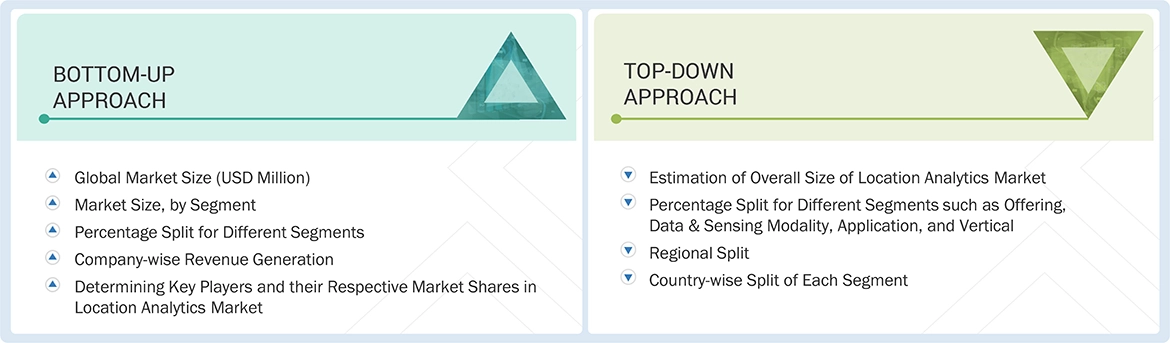
In the comprehensive market engineering process, the top-down and bottom-up approaches, along with several data triangulation methods, were extensively employed to estimate and forecast the overall market segments and subsegments listed in this report. Extensive qualitative and quantitative analysis was conducted across the complete market engineering process to capture critical information/insights throughout the report.
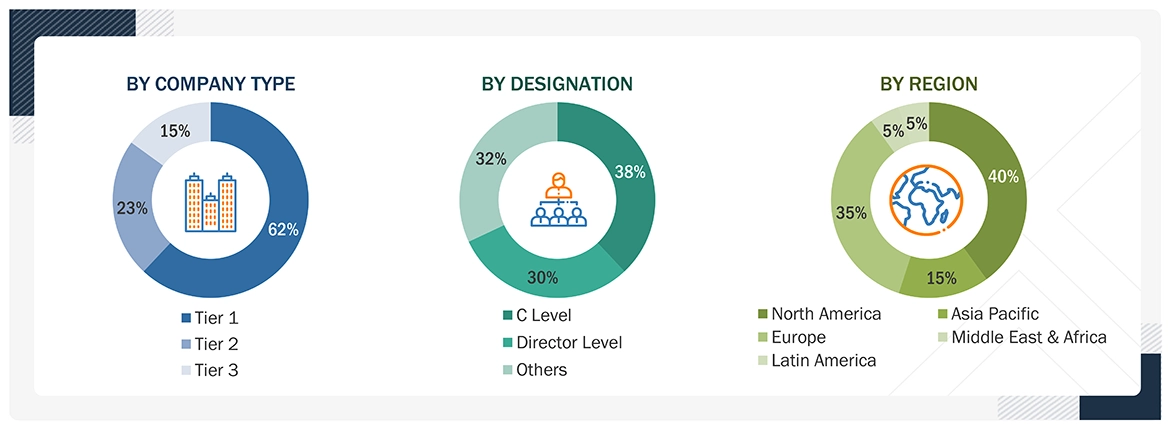
Note: Tier 1 companies' overall annual revenue is more than USD 10 billion, tier 2 companies' revenue is between USD 1 and 10 billion, and tier 3 companies' revenue is between USD 500 million and USD 1 billion.
Source: MarketsandMarkets Analysis
To know about the assumptions considered for the study, download the pdf brochure
Market Size Estimation
The top-down and bottom-up approaches were employed to estimate and forecast the location analytics market, as well as its dependent submarkets. This multi-layered analysis was further reinforced through data triangulation, which incorporated primary and secondary research inputs. The market figures were also validated against the existing MarketsandMarkets repository for accuracy.
Data Triangulation
The market was divided into several segments and subsegments after determining the overall market size using the market size estimation processes described above. To complete the overall market engineering process and determine the exact statistics for each market segment and subsegment, data triangulation and market segmentation procedures were employed, wherever applicable. The overall market size was then used in the top-down approach to estimate the size of other individual markets by applying percentage splits to the market segmentation.
Market Definition
According to Esri, location analytics is a critical capability that enables organizations to derive actionable insights by analyzing data in a geographic context. It integrates spatial information with business datasets to uncover patterns, relationships, and trends that support informed decision-making. Through advanced GIS platforms, users can visualize, map, and interpret data across multiple layers such as demographics, infrastructure, and environmental conditions. By leveraging real-time data streams, cloud-based tools, and intuitive interfaces, location analytics helps enterprises optimize operations, improve planning, and enhance resource allocation. This approach plays a vital role in driving efficiency, strengthening situational awareness, and enabling smarter, data-driven strategies across industries.
Stakeholders
- Location analytics solution providers
- Location-based solution providers
- Consultants /consultancies /advisory firms
- Independent Solution vendors (ISVs)
- Investors and venture capitalists (VCs)
- Managed service providers
- Support and maintenance service providers
- System integrators/migration service providers
- Value-added resellers (VARs) and distributors
Report Objectives
- To define, describe, and predict the location analytics market by offering (solutions, position & tracking systems, and services), data & sensing modality, application, vertical, and region
- To provide detailed information related to major factors (drivers, restraints, opportunities, and industry-specific challenges) influencing market growth
- To analyze opportunities in the market and provide details of the competitive landscape for stakeholders and market leaders
- To forecast the market size of segments with respect to five main regions: North America, Europe, Asia Pacific, the Middle East & Africa, and Latin America
- To analyze each submarket with respect to individual growth trends, prospects, and contributions to the overall market
- To analyze the competitive developments, such as partnerships, product launches, and mergers & acquisitions, in the market
- To analyze the impact of macroeconomic factors on the location analytics market across all regions
Key Questions Addressed by the Report
What is the projected size of the global location analytics market?
The global location analytics market is projected to grow from USD 13.88 billion in 2026 to USD 24.19 billion by 2031, at a CAGR of 11.7% during the forecast period. Growth is driven by increasing adoption of geospatial intelligence, location-based services, AI-powered analytics, and smart city initiatives.
Which segment holds the largest share of the location analytics market?
The Spatial APIs & Microservices segment is estimated to hold the largest share of the location analytics market by offering in 2026. By vertical, the Retail & E-commerce segment leads the market due to increasing use of location intelligence for customer insights, site selection, and demand forecasting.
What are the key trends driving the location analytics market?
Key trends include the integration of AI with geospatial analytics, cloud-native GIS platforms, real-time location intelligence, digital twin technologies, IoT-enabled spatial analytics, and advanced geospatial visualization for business decision-making.
Which region holds the largest share of the location analytics market?
North America is estimated to hold the largest share of the location analytics market, accounting for 39.3% in 2026. The region's leadership is driven by strong adoption of GIS technologies, smart infrastructure investments, and widespread use of location intelligence across enterprises and government agencies.
Who are the key players in the location analytics market?
Key companies operating in the location analytics market include IBM (US), Google (US), Oracle (US), Esri (US), Precisely (US), Microsoft (US), SAS (US), SAP (Germany), Cisco (US), TomTom (Netherlands), Hexagon (Sweden), Zebra Technologies (US), Alteryx (US), HERE (US), Purple (UK), and Galigeo (France).


Personalize This Research
- Triangulate with your Own Data
- Get Data as per your Format and Definition
- Gain a Deeper Dive on a Specific Application, Geography, Customer or Competitor
- Any level of Personalization
Let Us Help You
- What are the Known and Unknown Adjacencies Impacting the Location Analytics Market
- What will your New Revenue Sources be?
- Who will be your Top Customer; what will make them switch?
- Defend your Market Share or Win Competitors
- Get a Scorecard for Target Partners

Custom Market Research Services
We Will Customise The Research For You, In Case The Report Listed Above Does Not Meet With Your Requirements
Get 10% Free CustomisationTESTIMONIALS
- US Location Analytics Market
- UK Location Analytics Market
- China Location Analytics Market
- Canada Location Analytics Market
- France Location Analytics Market
- Germany Location Analytics Market
- Italy Location Analytics Market
- Rest Of Europe Location Analytics Market
- Spain Location Analytics Market
- United Kingdom Location Analytics Market
- Anz Location Analytics Market
- Asean Location Analytics Market
- India Location Analytics Market
- Japan Location Analytics Market
- Rest Of Asia Pacific Location Analytics Market
- South Korea Location Analytics Market
Growth opportunities and latent adjacency in Location Analytics Market






Ava
May, 2022
looking for market outlook and forecast for global location analytics market.