



Machine Safety Market Size, Share and Growth Analysis
Report Code
SE 2053
Published in
Nov, 2025, By MarketsandMarkets™
Machine Safety Market by Component (Safety Light Curtains, Laser Scanners, Safety Controllers/Modules/Relays, Programmable Safety Systems, Safety Interlock Switches, Push Buttons, Pull Rope Buttons, Two-Hand Safety Controls) - Global Forecast to 2030

USD 7.45 Billion
MARKET SIZE, 2030

CAGR 5.7%
(2025-2030)

300
REPORT PAGES

240
MARKET TABLES
MACHINE SAFETY MARKET OVERVIEW
The machine safety market size is projected to reach USD 7.45 billion by 2030 from USD 5.66 billion in 2025, at a CAGR of 5.7%. The machine safety market is growing due to the adoption of automation and Industry 4.0 technologies, which increase machinery complexity and workplace risks. Strict global regulations are driving compliance in high-risk industries, while the focus on predictive analytics and IoT-enabled solutions is further boosting market growth.
The Machine Safety industry is expanding rapidly as organizations across manufacturing, automotive, packaging, and food processing sectors focus on protecting workers and ensuring regulatory compliance. Increasing automation and the adoption of smart manufacturing technologies are contributing significantly to the growth of the Machine Safety market size worldwide. As companies upgrade production facilities with advanced safety solutions such as safety controllers, light curtains, safety sensors, and emergency stop devices, the Machine Safety market share of leading providers continues to grow. Furthermore, strict workplace safety regulations and international standards are encouraging businesses to implement modern safety systems, which is further supporting the expansion of the Machine Safety industry.
Several emerging Machine Safety market trends are shaping the future of the sector. The integration of Industry 4.0 technologies, including IoT-enabled safety devices and real-time monitoring systems, is transforming how organizations approach machine protection and worker safety. These innovations are expected to positively influence the Machine Safety market size as industries increasingly adopt connected safety solutions. In addition, growing awareness about accident prevention and operational efficiency is driving companies to invest in advanced safety technologies, helping major players strengthen their Machine Safety market share. With continuous technological advancements and increased automation across industries, the Machine Safety industry is expected to witness sustained growth in the coming years.
Market Size & Forecast
• 2025 Market Size: USD 5.66 Billion
• 2030 Projected Market Size: USD 7.45 Billion
• CAGR (2025-2030): 5.7%
• Wireless Segment: Highest CAGR
• Asia Pacific: Fastest-growing Market
MACHINE SAFETY MARKET KEY TAKEAWAYS
-
BY OFFERINGSystems account for the largest market share due to their comprehensive integration of multiple components (sensors, controllers, PLCs) into scalable, SIL-compliant solutions that ensure end-to-end safety and regulatory compliance across complex industrial processes.
-
BY COMPONENTPresence detection sensors are set to form the largest component segment due to their essential role in real-time hazard monitoring across diverse applications like robotics and assembly, ensuring immediate machine shutdowns to prevent accidents and comply with safety standards.
-
BY IMPLEMENTATIONIndividual implementation of machine safety is estimated to account for a larger share due to widespread use in retrofitting legacy machinery and cost-effective deployment in SMEs, offering flexibility despite the growing adoption of embedded systems.
-
BY CONNECTIVITYThe wireless segment is projected to grow at a high CAGR due to increasing demand for flexible, reconfigurable automation in robotics and mobile machinery, along with IIoT-driven real-time monitoring in dynamic industrial environments.
-
BY APPLICATIONThe robotics segment is estimated to grow faster due to the rapid rise in human-robot collaboration and Industry 4.0 adoption, requiring advanced safety systems like laser scanners and AI-integrated controls to ensure safe, dynamic interactions in manufacturing.
-
BY INDUSTRYThe process industry segment is estimated to record a high CAGR due to stringent safety regulations in high-risk sectors like oil & gas and pharmaceuticals, coupled with rising automation and SIL-compliant system adoption for continuous operations.
-
BY REGIONThe machine safety market trends covers Europe, North America, Asia Pacific, and RoW. Among these regions, Asia Pacific is projected to grow at the highest rate due to due to rapid industrial expansion and surging manufacturing activities in countries like China and India, driving demand for advanced safety solutions to protect workers, ensure equipment reliability, and comply with evolving safety regulations.
-
COMPETITIVE LANDSCAPEMajor market players have adopted both organic and inorganic strategies, including partnerships and investments. Siemens (Germany), Schneider Electric (France), KEYENCE CORPORATION (Japan), Rockwell Automation (US), and Emerson Electric Co. (US) have entered into a number of agreements and partnerships to cater to the growing demand for machine safety across innovative applications.
The machine safety industry is rising due to the rapid adoption of automation and Industry 4.0 technologies, which increase machinery complexity and workplace risks, driving demand for advanced systems like safety PLCs and presence detection sensors. Stringent global regulations (e.g., IEC 61508, ISO 13849) mandate compliance in high-risk industries such as oil & gas, pharmaceuticals, and automotive, further accelerating investments. Additionally, the focus on predictive analytics, worker safety, and reducing downtime through IoT-enabled solutions is propelling market growth across regions, especially in Asia Pacific.
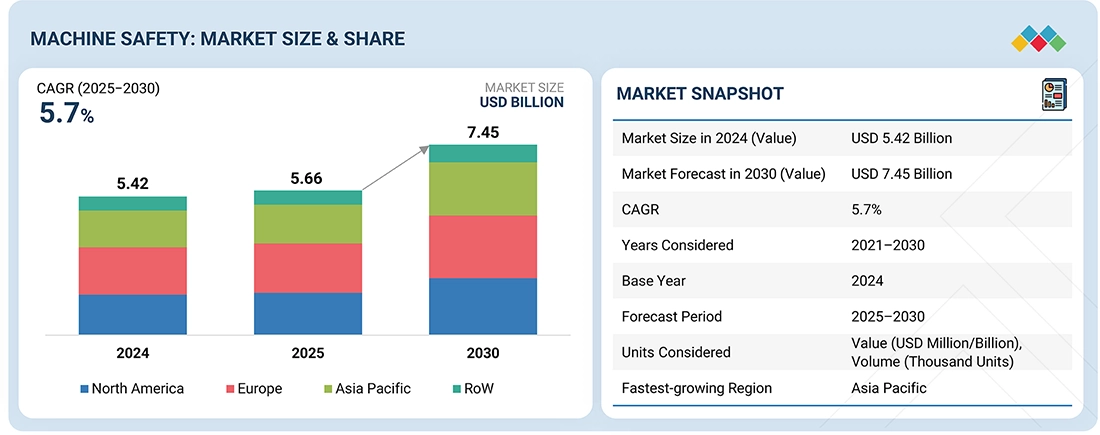
Source: Secondary Research, Interviews with Experts, MarketsandMarkets Analysis
TRENDS & DISRUPTIONS IMPACTING CUSTOMERS' CUSTOMERS
The industry-wide focus on personnel and asset protection, driven by the enforcement of increasingly stringent machinery safety regulations, is rapidly expanding the market for sophisticated machine safety solutions. This trend is coupled with the rising adoption of intelligent, networked technologies, including the Industrial Internet of Things (IIoT), computer vision, and programmable safety systems. These advancements enable predictive maintenance and improved performance monitoring of industrial assets, creating new demand for digitally connected safety products. These developments are compelling end-user industries (such as Automotive, Healthcare, and Power) to move beyond traditional, reactive safety measures toward holistic, smart safety systems. This shift is projected to create new and sustained revenue streams for machine safety hardware providers during the forecast period.
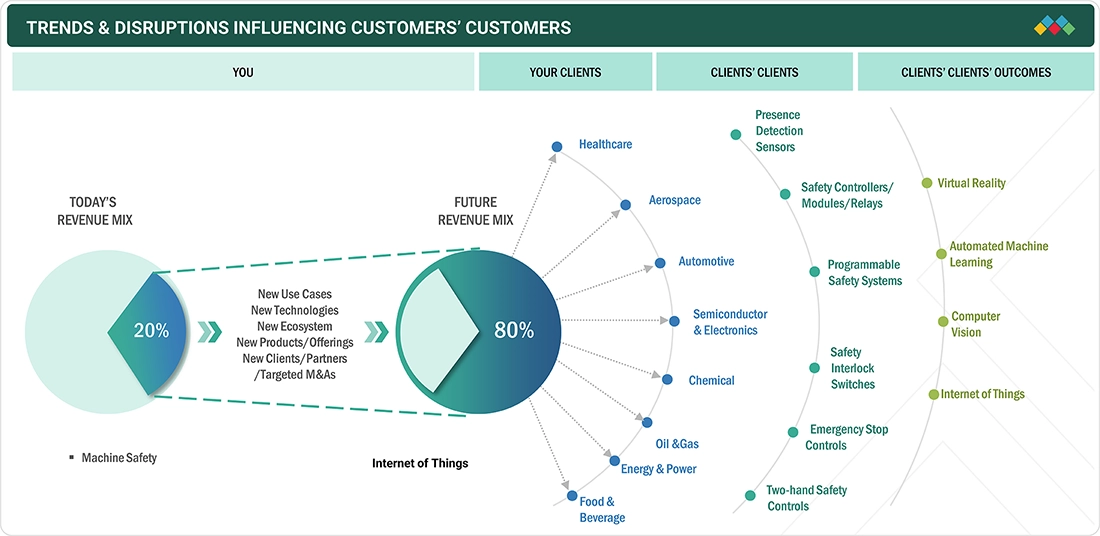
Source: Secondary Research, Interviews with Experts, MarketsandMarkets Analysis
MARKET DYNAMICS

Drivers
Impact
Level
Level
-
Mandatory safety standards for equipment and machinery

-
Automation to drive efficiency and productivity gains


RESTRAINTS
Impact
Level
Level
-
High costs associated with of automated machine safety system implementation

-
Complexity of machine safety system integration


OPPORTUNITIES
Impact
Level
Level
-
Rising workplace safety awareness in emerging economies

-
Growing adoption of IIoT to optimize industrial asset performance and lifespan


CHALLENGES
Impact
Level
Level
-
Technological advancements complicate machine safety product design

-
Failing to assess potential risks in machine configuration

Source: Secondary Research, Interviews with Experts, MarketsandMarkets Analysis
Driver: Mandatory safety standards for equipment and machinery
Stringent safety regulations from governments and organizations like OSHA, IEC, ISO, and ANSI are driving machine safety market growth by mandating certified equipment such as explosion-proof sensors, safety interlocks, and light curtains in hazardous areas. In the US and Europe, proactive measures like OSHA standards and EU Machinery Directives enforce compliance to prevent workplace accidents. These regulations enhance industrial process efficiency and worker protection. Overall, regulatory enforcement creates sustained demand for advanced safety solutions.
Restraint: High costs associated with of automated machine safety system implementation
Machine safety systems are essential for protecting employees, machines, and production lines during emergencies, but their high installation, maintenance, and repair costs create a significant budget burden. Large organizations can absorb these expenses, while SMEs struggle, limiting adoption. Frequent updates to regulatory standards (e.g., IEC 61508) force costly system upgrades, and safety investments are often excluded from initial plant budgets. These financial challenges restrain overall market growth.
Opportunity: Growing adoption of IIoT to optimize industrial asset performance and lifespan
The Industrial Internet of Things (IIoT) enables real-time monitoring of industrial assets, supporting predictive maintenance, reducing downtime, and extending equipment lifespan. It enhances workplace safety by detecting hazards early through sensor data transmitted via wired or wireless networks for instant analysis and alerts. IIoT integrates safety systems with operational processes, enabling rapid response and compliance. Overall, it drives efficiency, safety, and performance in industrial environments.
Challenge: Technological advancements complicate machine safety product design
Advanced machines with complex systems and software complicate the integration of safety features, challenging uniform standards across industries and regions. Continuous technological evolution demands ongoing R&D, innovation, and collaboration between manufacturers and regulators. This ensures safe design and operation of modern equipment, protecting workers and preventing accidents.
Machine Safety Market: COMMERCIAL USE CASES ACROSS INDUSTRIES
| COMPANY | USE CASE DESCRIPTION | BENEFITS |
|---|---|---|
 |
Safety PLCs and interlock switches for robotic assembly lines and hazardous zone control in automotive manufacturing | Ensures SIL 3 compliance, real-time diagnostics via IIoT, and seamless integration with automation systems for enhanced worker protection and uptime |
 |
Modular safety relays and emergency stop systems for material handling and packaging machinery in food & beverage plants | Provides scalable, fail-safe responses, reducing downtime and ensuring regulatory adherence with easy retrofitting for cost-effective safety |
 |
Vision-based presence detection sensors and light curtains for metalworking and welding processes in electronics assembly | Delivers high-precision hazard detection, minimizing false alarms and enabling predictive maintenance for precise, efficient operations |
 |
GuardLogix safety controllers for human-robot collaboration and emergency shutdowns in aerospace production lines | Offers integrated redundancy and diagnostics, supporting Industry 40 connectivity to boost productivity while maintaining high safety integrity levels |
 |
PACSystems safety modules for process control and burner management in oil & gas facilities | Facilitates cybersecurity-protected, scalable SIL 2 solutions with real-time monitoring, extending asset life and preventing hazardous failures |
Logos and trademarks shown above are the property of their respective owners. Their use here is for informational and illustrative purposes only.
MACHINE SAFETY MARKET ECOSYSTEM
The machine safety ecosystem is structured across three tiers: component providers, who supply core safety devices like sensors, relays, and interlocks; system integrators who embed these components into programmable safety systems and PLCs for seamless industrial integration; and end users who deploy these solutions in high-risk environments such as automotive assembly and food processing. This layered model ensures compliance with standards like IEC 61508 while enabling scalability and predictive safety. Component providers dominate innovation, system integrators bridge technology with application, and end users drive demand through operational needs and regulatory adherence.

Logos and trademarks shown above are the property of their respective owners. Their use here is for informational and illustrative purposes only.
MACHINE SAFETY MARKET SEGMENTS
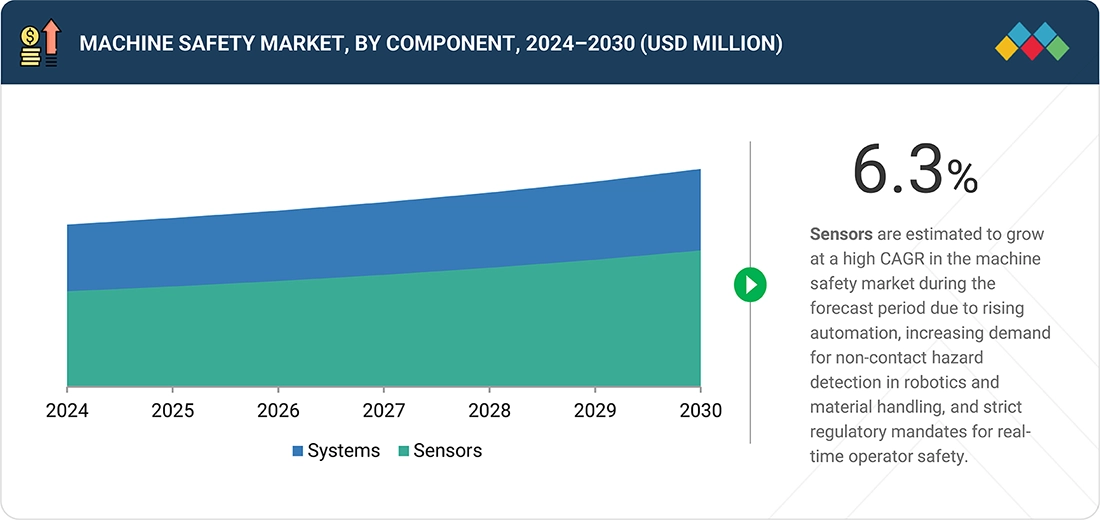
Source: Secondary Research, Interviews with Experts, MarketsandMarkets Analysis
Machine Safety Market, by Offering
Systems are estimated to account for the largest machine safety market share, primarily because these solutions form the backbone of industrial safety protocols. By integrating both hardware and software, they facilitate the comprehensive monitoring, control, and risk mitigation necessary in today’s complex manufacturing environments. The rising adoption of these systems can be attributed to their ability to seamlessly interface with programmable logic controllers (PLCs), safety relays, and various control networks, which enhances operational efficiency and safety. As manufacturing processes continue to grow in complexity, the need for robust systems that ensure workers' safety and compliance with regulatory standards becomes increasingly vital, driving further investment and integration of advanced safety solutions across diverse industries.
Machine Safety Market, by Component
Presence detection sensors have become essential in various industries, significantly enhancing safety protocols by enabling real-time monitoring of operator movement in hazardous zones. These advanced sensors are integral to applications in robotics, packaging, and assembly, where they not only help in preventing accidents but also optimize operational efficiency. By instantly detecting the presence of personnel, they facilitate a safer working environment, allowing for quick responses to potential dangers, which in turn fosters greater confidence among workers. This technology also contributes to productivity by ensuring that safety measures do not impede workflow, thus striking a balance between maintaining high operational standards and prioritizing employee well-being.
Machine Safety Market, by Implementation
The individual implementation segment plays a pivotal role in the machine safety market due to its versatile deployment options, which effectively cater to both legacy systems and standalone machinery. This adaptability makes it especially appealing to small and medium enterprises, as it provides a cost-effective solution that does not necessitate extensive modifications to existing equipment. Many businesses appreciate the straightforward installation process, which allows them to enhance safety protocols without the burden of significant redesign efforts or high capital expenditure. This has emerged as a preferred choice for companies seeking immediate improvements in workplace safety while maintaining operational efficiency.
Machine Safety Market, by Connectivity
Wired safety systems lead the market due to their reliability and robust performance, particularly in industries that prioritize safety and efficiency. These systems provide secure signal transmission, reducing the risk of interference that can compromise critical operations, making them ideal for high-load manufacturing environments. Their ability to maintain stable and continuous communication ensures that machinery operates smoothly and responds promptly to any safety triggers or emergencies. The durability of wired connections in harsh industrial settings adds to their appeal, reinforcing their status as the preferred choice for organizations committed to maintaining high safety standards and optimizing productivity.
Machine Safety Market, by Application
Assembly applications are essential in sectors like automotive and electronics, where operators work with automated systems to boost production efficiency. Safety mechanisms such as light curtains, interlocks, and emergency stops are vital for protecting workers and ensuring a safe environment. These measures not only prevent accidents but also reduce downtime from machinery issues. As demand in these industries rises, enhancing safety and productivity through advanced assembly applications becomes increasingly important, leading to innovation and investment in adaptable safety technologies.
Machine Safety Market, by Industry
The process industry segment is prominent due to the stringent safety regulations in sectors like oil and gas, chemicals, and pharmaceuticals, which are inherently risky. These industries utilize advanced technologies for continuous monitoring and fail-safe controls that intervene during abnormal conditions. Automatic shutdown systems play a vital role in quickly halting operations during emergencies, minimizing hazards and ensuring uninterrupted, safe operations. Consequently, compliance with safety regulations not only protects lives and the environment but also enhances operational efficiency across these critical sectors.
MACHINE SAFETY MARKET BY REGION
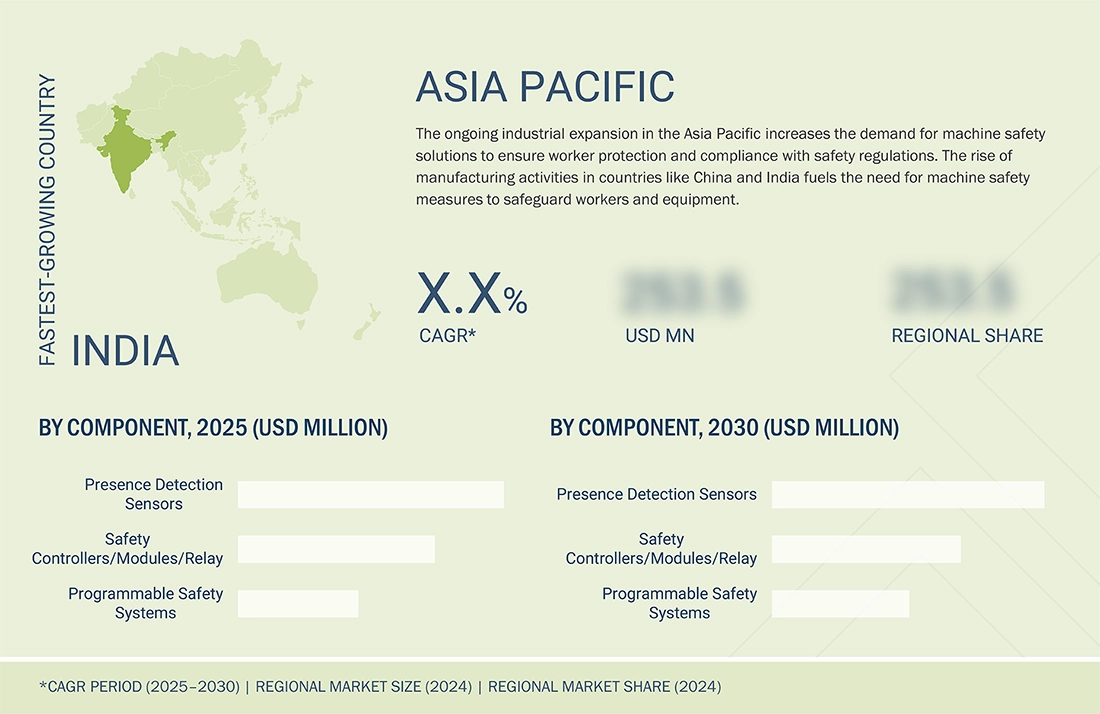
Asia Pacific to be fastest-growing region in global machine safety market during forecast period
The Asia Pacific (APAC) region is projected to grow at the highest CAGR in the machine safety market, driven by rapid industrialization and the expansion of manufacturing hubs in countries such as China, India, and South Korea. This surge is fueled by increasing adoption of automation and Industry 4.0 technologies, which heighten the need for advanced safety solutions to protect workers amid complex machinery deployments. Additionally, the region's economic dynamism, including FDI inflows and a growing focus on sectors like automotive and electronics, creates substantial opportunities for scalable, cost-effective safety innovations. These factors enable Asia Pacific to outpace mature markets like North America and Europe in machine safety adoption.
Machine Safety Market: COMPANY EVALUATION MATRIX
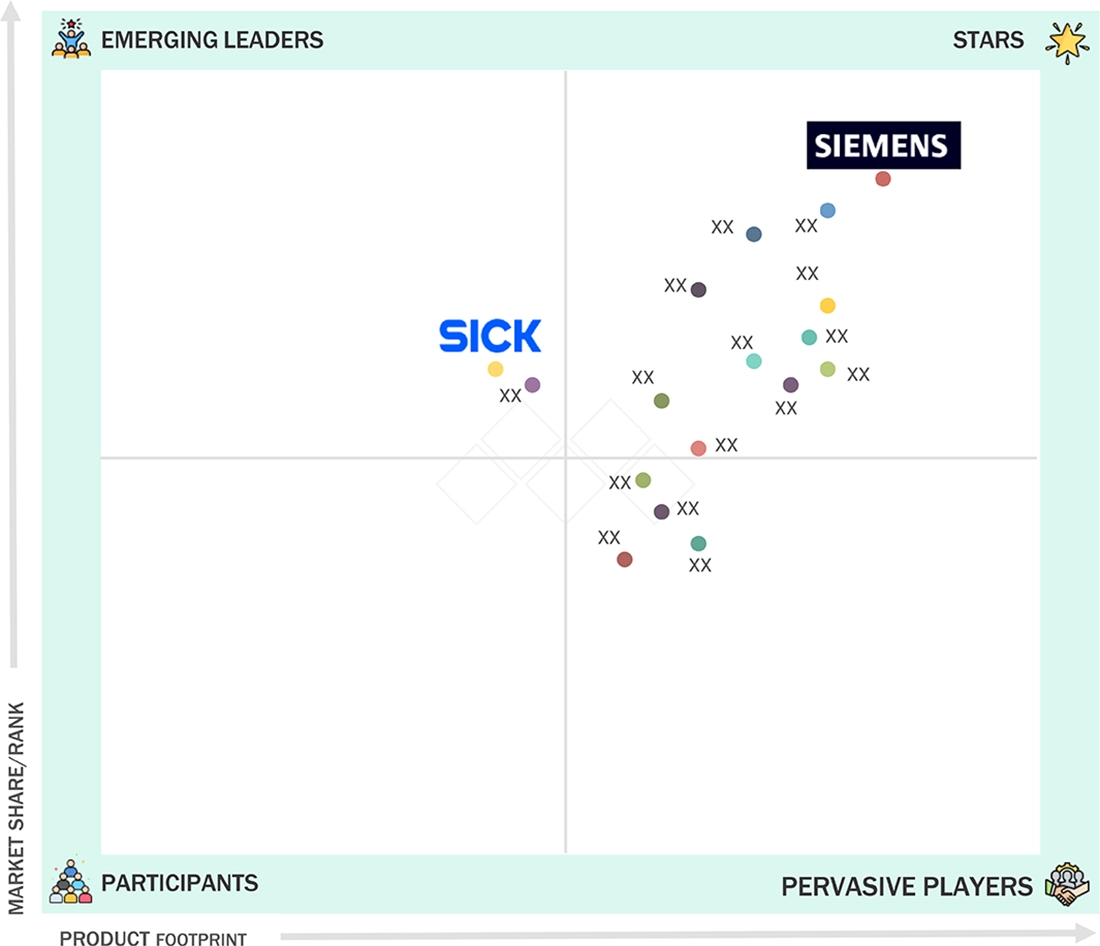
In the machine safety companies matrix, Siemens (Star) leads with a commanding market share, providing seamless compliance with global standards and robust diagnostics for high-risk industries such as automotive and oil & gas. SICK AG falls under the emerging leader category, driven by its innovative presence-sensing technologies, including AI-enhanced laser scanners and safety light curtains that enable real-time hazard detection in dynamic environments like robotics and material handling.
Source: Secondary Research, Interviews with Experts, MarketsandMarkets Analysis
MACHINE SAFETY MARKET KEY PLAYERS
MACHINE SAFETY MARKET SCOPE
| REPORT METRIC | DETAILS |
|---|---|
| Market Size, 2024 (Value) | USD 5.42 Billion |
| Market Forecast, 2030 (Value) | USD 7.45 Billion |
| Growth Rate | CAGR of 5.7% from 2025 to 2030 |
| Years Considered | 2021–2030 |
| Base Year | 2024 |
| Forecast Period | 2025–2030 |
| Units Considered | Value (USD Million/Billion), Volume (Thousand Units) |
| Report Coverage | Revenue Forecast, Company Ranking, Competitive Landscape, Growth Factors, and Trends |
| Segments Covered |
|
| Regions Covered | North America, Asia Pacific, Europe, RoW |
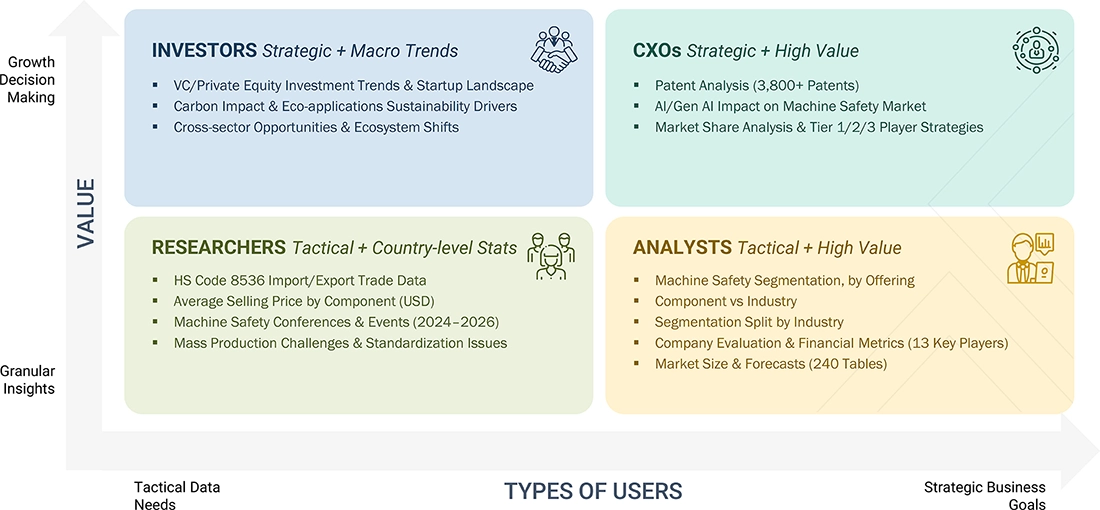
WHAT IS IN IT FOR YOU: Machine Safety Market REPORT CONTENT GUIDE
DELIVERED CUSTOMIZATIONS
We have successfully delivered the following deep-dive customizations:
| CLIENT REQUEST | CUSTOMIZATION DELIVERED | VALUE ADDS |
|---|---|---|
| European Automotive OEM |
|
|
| North American Industrial Automation Supplier |
|
|
| Asia Pacific Electronics Manufacturing Firm |
|
|
| Middle East Oil & Gas EPC Contractor |
|
|
RECENT DEVELOPMENTS
- September 2026: Emerson Electric Co. (US) announced updates to its AMS 6500 ATG version 5.0 protection system and AMS Machine Works version 2.4 software, adding continuous machine-data streaming, enhanced startup/shutdown analytics, programmable dashboards, and improved connectivity. The updated protection system is designed to improve the safety and condition monitoring of critical turbomachinery, directly addressing protection of industrial machinery during complex operating conditions.
- August 2025: Emerson Electric Co. (US) introduced the PACSystems™ RX3i CPS400 Safety Controller, a new SIL2-capable safety controller with certified function blocks, preconfigured templates, redundant configurations, and IEC 61508 certification. The controller is designed to implement safety functions for industrial equipment and emergency-shutdown applications, providing a new safety-control development directly relevant to industrial machinery protection.
- June 2025 : KEYENCE CORPORATION recently introduced the GL-V series, a new small and robust safety light curtain designed for industrial applications. The announcement highlighted improvements in safety standards while preserving compactness and durability for varied manufacturing environments.
- June 2025 : Yokogawa Electric Corporation launched CENTUM VP Release 7.01, its 10th-generation distributed control system, on its 50th anniversary, introducing enhanced cybersecurity, OPC UA connectivity, and AI-driven autonomous operations. Targeting industries like oil & gas, it boosted efficiency and reliability under Yokogawa's OpreX brand for sustainable automation.
- September 2024 : Rockwell Automation launched Logix SIS, a next-generation safety instrumented system offering both SIL 2 and SIL 3 certifications for process and hybrid safety applications. The system integrated safety logic, I/O, and control on familiar Rockwell hardware (1756 controller, FLEX 5000 I/O), aiming for high availability, reduced engineering complexity, and seamless upgrades without downtime.
- COLUMN 'A' SHOULD BE IN TEXT FORMAT AND NOT DATE FORMAT :
Table of Contents
 Exclusive indicates content/data unique to MarketsandMarkets and not available with any competitors.
TITLE
PAGE NO
1
INTRODUCTION
29
2
EXECUTIVE SUMMARY
34
3
PREMIUM INSIGHTS
39
4
MARKET OVERVIEW
Discover lucrative cross-sector opportunities driving dynamic market growth.
42
5
INDUSTRY TRENDS
Discover how competitive dynamics and economic shifts redefine machine safety component pricing and strategy.
50
5.1
PORTER’S FIVE FORCES ANALYSIS
5.1.1
THREAT OF NEW ENTRANTS
5.1.2
THREAT OF SUBSTITUTES
5.1.3
BARGAINING POWER OF SUPPLIERS
5.1.4
BARGAINING POWER OF BUYERS
5.1.5
INTENSITY OF COMPETITIVE RIVALRY
5.2
MACROECONOMICS INDICATORS
5.2.1
INTRODUCTION
5.2.2
GDP TRENDS AND FORECAST
5.2.3
TRENDS IN GLOBAL AUTOMOTIVE INDUSTRY
5.2.4
TRENDS IN POWER GENERATION INDUSTRY
5.3
VALUE CHAIN ANALYSIS
5.4
ECOSYSTEM ANALYSIS
5.5
PRICING ANALYSIS
5.5.1
PRICING RANGE OF MACHINE SAFETY COMPONENTS PROVIDED BY KEY PLAYERS, BY DEPLOYMENT
5.5.2
AVERAGE SELLING PRICE TREND OF MACHINE SAFETY COMPONENT, BY REGION
5.6
TRADE ANALYSIS
5.6.1
IMPORT SCENARIO (HS CODE 8536)
5.6.2
EXPORT SCENARIO (HS CODE 8536)
5.7
KEY CONFERENCES AND EVENTS
5.8
TRENDS/DISRUPTIONS IMPACTING CUSTOMERS’ BUSINESS
5.9
INVESTMENT AND FUNDING SCENARIO
5.10
CASE STUDY ANALYSIS
5.10.1
ELOPAK INTEGRATED EMERSON’S ROBUST AVENTICS PNEUMATIC COMPONENTS INTO ITS NEW ASEPTIC FILLING MACHINE DESIGNED FOR GABLE TOP PACKAGING APPLICATIONS
5.10.2
MP EQUIPMENT PARTNERED WITH ROCKWELL AUTOMATION SAFETY EXPERTS TO ENHANCE DESIGN OF ITS PROTEIN PORTIONING MACHINES
5.10.3
MOLLART ENGINEERING CHOSE PROCTER MACHINE SAFETY’S ENCLOSED GUARDS FOR MACHINE TOOL INSTALLATION
5.11
IMPACT OF 2025 US TARIFF - OVERVIEW
5.11.1
INTRODUCTION
5.11.2
KEY TARIFF RATES
5.11.3
PRICE IMPACT ANALYSIS
5.11.4
IMPACT ON COUNTRIES/REGIONS
5.11.5
US
5.11.6
EUROPE
5.11.7
ASIA PACIFIC
5.11.8
IMPACT ON END-USE INDUSTRIES
6
STRATEGIC DISRUPTION, PATENT, DIGITAL, AND AI ADOPTIONS
Unlock transformative market potential through AI-driven machine safety innovations and patent insights.
74
6.1
KEY EMERGING TECHNOLOGIES
6.1.1
COMPUTER VISION
6.1.2
IOT
6.2
COMPLEMENTARY TECHNOLOGIES
6.2.1
VIRTUA REALITY (VR)
6.2.2
AUTOMATED MACHINE LEARNING
6.3
TECHNOLOGY/PRODUCT ROADMAP
6.4
PATENT ANALYSIS
6.5
IMPACT OF AI/GEN AI ON MACHINE SAFETY MARKET
6.5.1
TOP USE CASES AND MARKET POTENTIAL
6.5.2
BEST PRACTICES IN MACHINE SAFETY
6.5.3
CASE STUDIES OF AI IMPLEMENTATION IN MACHINE SAFETY MARKET
6.5.4
INTERCONNECTED ADJACENT ECOSYSTEM AND IMPACT ON MARKET PLAYERS
6.5.5
CLIENTS’ READINESS TO ADOPT GENERATIVE AI IN MACHINE SAFETY MARKET
7
REGULATORY LANDSCAPE
Navigate global compliance with a comprehensive guide to key regulatory bodies and standards.
82
7.1
REGULATORY BODIES, GOVERNMENT AGENCIES, AND OTHER ORGANIZATIONS
7.1.1
STANDARDS
8
CUSTOMER LANDSCAPE & BUYER BEHAVIOR
Understand buyer dynamics and unmet needs to navigate complex decision-making landscapes effectively.
86
8.1
DECISION-MAKING PROCESS
8.2
BUYER STAKEHOLDERS AND BUYING EVALUATION CRITERIA
8.2.1
KEY STAKEHOLDERS IN BUYING PROCESS
8.2.2
BUYING CRITERIA
8.3
ADOPTION BARRIERS & INTERNAL CHALLENGES
8.4
UNMET NEEDS FROM VARIOUS END-USE INDUSTRIES
9
MACHINE SAFETY MARKET, BY OFFERING
Market Size & Growth Rate Forecast Analysis to 2030 in USD Million | 6 Data Tables
92
9.1
INTRODUCTION
9.2
SYSTEMS
9.2.1
NEED FOR COMPLIANCE WITH STRINGENT SAFETY STANDARDS TO DRIVE GROWTH
9.3
SENSORS
9.3.1
ADVANCEMENTS IN TECHNOLOGY SUCH AS AI TO HELP EXAMINE SENSOR DATA AND PREDICT SAFETY HAZARDS
10
MACHINE SAFETY MARKET, BY COMPONENT
Market Size & Growth Rate Forecast Analysis to 2030 in USD Million and Units | 46 Data Tables
96
10.1
INTRODUCTION
10.2
PRESENCE DETECTION SENSORS
10.2.1
INCREASE IN INTEREST IN INDUSTRY 4.0 AND IIOT TO DRIVE GROWTH
10.2.2
SAFETY EDGES
10.2.2.1
SAFETY EDGES HELP PREVENT ACCIDENTS AND INJURIES BY PROVIDING IMMEDIATE RESPONSE TO CONTACT
10.2.3
LASER SCANNERS
10.2.3.1
ESCALATING DEMAND FOR AUTOMATION IN MANUFACTURING AND REQUIREMENT FOR DEPENDABLE AND PRACTICAL SAFETY SOLUTIONS TO FUEL GROWTH
10.2.4
SAFETY LIGHT CURTAINS
10.2.4.1
SAFETY LIGHT CURTAINS TO SAFEGUARD WORKERS AND PREVENT EXTERNAL THREATS TO MACHINERY
10.2.4.2
LIGHT-EMITTING DIODES (LEDS)
10.2.4.3
PHOTOELECTRIC CELLS
10.2.4.4
CONTROL UNITS
10.2.4.5
DISPLAYS
10.2.4.6
ENCLOSURES
10.2.5
SAFETY MATS
10.2.5.1
SAFETY MATS HELP SAFEGUARD PERSONNEL FROM ENTERING CRITICAL AREAS
10.2.6
OTHER DEVICES
10.3
PROGRAMMABLE SAFETY SYSTEMS
10.3.1
INCREASING ADOPTION OF PROGRAMMABLE LOGIC CONTROLLERS TO FUEL GROWTH
10.4
SAFETY CONTROLLERS/MODULES/RELAYS
10.4.1
EXPANDED PRODUCT OFFERINGS TO FUEL GROWTH FOR MANUFACTURING FIRMS
10.5
SAFETY INTERLOCK SWITCHES
10.5.1
ELECTROMECHANICAL SWITCHES
10.5.1.1
ELECTROMECHANICAL SWITCHES HELP LOCK AND UNLOCK GATE GUARDS OR DOORS IN RESTRICTED AREAS
10.5.2
HINGE PIN SWITCHES
10.5.2.1
HINGE PIN SAFETY SWITCHES PROVIDE POSITIVELY OPERATED SWITCHING CONTACTS AND TAMPER-RESISTANT ACTUATOR MECHANISM FOR HINGING MACHINE GUARDS
10.5.3
LIMIT SWITCHES
10.5.3.1
LIMIT SWITCHES PROTECT PERSONNEL AND EQUIPMENT BY MONITORING POSITION OF MOVABLE COMPONENTS
10.5.4
NON-CONTACT INTERLOCK SWITCHES
10.5.4.1
NON-CONTACT INTERLOCK SWITCHES HELP WHERE PRECISE IMPLEMENTATION OF SAFETY SYSTEMS IS COMPLEX
10.5.5
TONGUE INTERLOCK SWITCHES
10.5.5.1
TONGUE INTERLOCK GUARD SWITCHES HELP IN PREVENTING ACCESS
10.5.6
TRAPPED KEY INTERLOCK SWITCHES
10.5.6.1
TRAPPED KEY INTERLOCK SWITCHES HELP IN PRESCRIBED SEQUENCE TO START OR SHUT DOWN
10.6
EMERGENCY STOP CONTROLS
10.6.1
PUSH BUTTONS
10.6.1.1
PUSH BUTTONS TO REDUCE POTENTIAL EMERGENCY HAZARDS
10.6.2
ROPE PULL BUTTONS
10.6.2.1
USED AS EMERGENCY STOP DEVICES IN AREAS WHERE SIMPLE PUSH BUTTONS CANNOT BE DEPLOYED
10.7
TWO-HAND SAFETY CONTROLS
10.7.1
EFFECTIVE AS COMPONENT OF MULTI-LAYERED SAFETY APPROACH DESIGNED TO PROTECT OPERATOR AND OTHER INDIVIDUALS
11
MACHINE SAFETY MARKET, BY IMPLEMENTATION
Market Size & Growth Rate Forecast Analysis to 2030 in USD Million | 2 Data Tables
121
11.1
INTRODUCTION
11.2
INDIVIDUAL
11.2.1
INDIVIDUAL SAFETY COMPONENTS TO OFFER EASY INSTALLATION FOR BASIC MACHINE REQUIREMENTS
11.3
EMBEDDED
11.3.1
EMBEDDED SAFETY COMPONENTS TO DRIVE MACHINE EFFICIENCY AND FUNCTIONAL SAFETY EVOLUTION
12
MACHINE SAFETY MARKET, BY CONNECTIVITY
Market Size & Growth Rate Forecast Analysis to 2030 in USD Million | 6 Data Tables
124
12.1
INTRODUCTION
12.2
WIRED
12.2.1
WIRED SAFETY SYSTEMS TO REMAIN RELIABLE FOR HIGH-RISK APPLICATIONS
12.3
WIRELESS
12.3.1
WIRELESS SAFETY SYSTEMS TO PROVIDE FLEXIBLE ALTERNATIVE FOR MODERN AUTOMATION
13
MACHINE SAFETY MARKET, BY SALES CHANNEL
Market Size & Growth Rate Forecast Analysis
128
13.1
INTRODUCTION
13.2
DIRECT
13.2.1
MACHINE SAFETY VENDORS TO UTILIZE DIRECT SALES CHANNELS FOR PRODUCT DISTRIBUTION
13.3
INDIRECT
13.3.1
INDIRECT SALES CHANNELS TO LEVERAGE TRADITIONAL RETAIL DESPITE DIGITAL AGE CHALLENGES
14
MACHINE SAFETY MARKET, BY APPLICATION
Market Size & Growth Rate Forecast Analysis to 2030 in USD Million | 2 Data Tables
129
14.1
INTRODUCTION
14.2
ASSEMBLY
14.2.1
MACHINE SAFETY CRUCIAL FOR HIGH-SPEED ASSEMBLY LINE APPLICATIONS
14.3
ROBOTICS
14.3.1
MACHINE SAFETY IN ROBOTICS TO EVOLVE WITH NEW COLLABORATIVE SPECIFICATIONS
14.4
PACKAGING
14.4.1
PACKAGING PROCESS TO DRIVE DEMAND FOR ADVANCED MACHINE SAFETY TECHNOLOGIES
14.5
MATERIAL HANDLING
14.5.1
MACHINE SAFETY SYSTEMS REQUIRED FOR PROTECTING PERSONNEL AND EQUIPMENT IN MATERIAL-HANDLING OPERATIONS
14.6
METALWORKING
14.6.1
RISE IN NEED FOR MINIMUM MACHINE SAFETY MEASURES FOR HAZARDOUS METALWORKING PROCESSES
14.7
WELDING & SHIELDING
14.7.1
SPECIALIZED MACHINE SAFETY REQUIRED FOR WELDING AND SHIELDING APPLICATIONS
15
MACHINE SAFETY MARKET, BY INDUSTRY
Market Size & Growth Rate Forecast Analysis to 2030 in USD Million | 50 Data Tables
135
15.1
INTRODUCTION
15.2
PROCESS INDUSTRIES
15.2.1
CHEMICAL
15.2.1.1
RISE IN EMPHASIS ON IMPLEMENTING MORE ADVANCED SAFETY MEASURES OWING TO REGULATORY REQUIREMENTS AND FOCUS TO IMPROVE OPERATIONAL EFFICIENCY
15.2.2
FOOD & BEVERAGE
15.2.2.1
IMPLEMENTATION OF SAFETY SYSTEMS TO REDUCE RISKS OF ACCIDENTS TO ACHIEVE HIGH-QUALITY PRODUCTS AT A LOWER PRICE
15.2.3
METAL & MINING
15.2.3.1
RISE IN ADOPTION OF MACHINE SAFETY SYSTEMS FOR GAS LEAK PREVENTION
15.2.4
OIL & GAS
15.2.4.1
STRICT ENFORCEMENT OF SAFETY NORMS AND COMPLIANCE STANDARDS TO FUEL MARKET GROWTH
15.2.5
PHARMACEUTICAL
15.2.5.1
ADOPTION OF MACHINE SAFETY SOLUTIONS TO BOOST OPERATIONAL EFFICIENCY AND INNOVATION
15.2.6
POWER GENERATION
15.2.6.1
GROWING EMPHASIS ON WORKPLACE SAFETY AWARENESS IN HIGHLY HAZARDOUS ENVIRONMENTS TO PROPEL MARKET GROWTH
15.2.7
OTHER PROCESS INDUSTRIES
15.3
DISCRETE INDUSTRIES
15.3.1
AEROSPACE
15.3.1.1
CUTTING-EDGE ADVANCES IN AEROSPACE MANUFACTURING FACILITIES TO FUEL MARKET EXPANSION
15.3.2
AUTOMOTIVE
15.3.2.1
AUTOMATION AND MACHINE SAFETY INNOVATIONS TO DRIVE ENHANCED SAFETY AND EFFICIENCY IN AUTOMOTIVE MANUFACTURING
15.3.3
SEMICONDUCTOR & ELECTRONICS
15.3.3.1
DEMAND FOR ENHANCED PRECISION IN MANUFACTURING TO FUEL MARKET GROWTH
15.3.4
OTHER DISCRETE INDUSTRIES
16
MACHINE SAFETY MARKET, BY REGION
Comprehensive coverage of 9 Regions with country-level deep-dive of 21 Countries | 40 Data Tables.
159
16.1
INTRODUCTION
16.2
NORTH AMERICA
16.2.1
US
16.2.1.1
INCREASED INSTALLATION OF SAFETY-RELATED SYSTEMS TO DRIVE MARKET GROWTH
16.2.2
CANADA
16.2.2.1
STRICT GOVERNMENT REGULATIONS FOR WORKPLACE SAFETY TO FUEL MARKET GROWTH
16.2.3
MEXICO
16.2.3.1
RISING INNOVATIONS AND SIGNIFICANT GROWTH IN INDUSTRIAL PRODUCTION TO DRIVE MARKET GROWTH
16.3
EUROPE
16.3.1
UK
16.3.1.1
STRONG LEGAL FRAMEWORK FOR WORKPLACE SAFETY TO FUEL MARKET GROWTH
16.3.2
GERMANY
16.3.2.1
ACCELERATION OF MANUFACTURING PROCESSES THROUGH AUTOMATION TO DRIVE MARKET EXPANSION
16.3.3
FRANCE
16.3.3.1
MANDATORY ADHERENCE TO OCCUPATIONAL HEALTH AND SAFETY POLICIES TO DRIVE MARKET GROWTH
16.3.4
ITALY
16.3.4.1
STRONG MANUFACTURING TRADITION TO PROPEL MACHINE SAFETY MARKET GROWTH
16.3.5
SPAIN
16.3.5.1
INDUSTRIAL REVITALIZATION AND AUTOMOTIVE SECTOR TO BOOST SAFETY SYSTEM DEMAND
16.3.6
NORDICS
16.3.6.1
HIGH AUTOMATION AND STRONG WORKER PROTECTION LAWS NECESSITATE PREMIUM SAFETY SOLUTIONS
16.3.7
REST OF EUROPE
16.4
ASIA PACIFIC
16.4.1
CHINA
16.4.1.1
INCREASE IN ADOPTION OF ADVANCED PRODUCTION TECHNOLOGIES TO FUEL GROWTH
16.4.2
JAPAN
16.4.2.1
EXPANSION OF CONTINUOUS PROCESSING INDUSTRIES TO DRIVE MARKET GROWTH
16.4.3
INDIA
16.4.3.1
NATIONAL INFRASTRUCTURE AND MANUFACTURING INITIATIVES TO DRIVE MARKET GROWTH
16.4.4
SOUTH KOREA
16.4.4.1
RISING INVESTMENT IN MACHINE SAFETY TECHNOLOGIES TO FUEL MARKET GROWTH
16.4.5
AUSTRALIA
16.4.5.1
ROBUST SAFETY LEGISLATION TO PROPEL HIGH-VALUE MACHINE SAFETY INVESTMENT
16.4.6
INDONESIA
16.4.6.1
RAPID INDUSTRIALIZATION AND MANUFACTURING EXPANSION TO FUEL SAFETY DEMAND
16.4.7
SINGAPORE
16.4.7.1
FOCUS ON HIGH-TECH AUTOMATION TO DRIVE DEMAND FOR INTELLIGENT SAFETY SOLUTIONS
16.4.8
REST OF ASIA PACIFIC
16.5
REST OF THE WORLD (ROW)
16.5.1
SOUTH AMERICA
16.5.1.1
BRAZIL
16.5.1.2
ARGENTINA
16.5.1.3
REST OF SOUTH AMERICA
16.5.2
MIDDLE EAST
16.5.2.1
SAUDI ARABIA
16.5.2.2
UAE
16.5.2.3
OMAN
16.5.2.4
QATAR
16.5.2.5
KUWAIT
16.5.2.6
BAHRAIN
16.5.2.7
REST OF THE MIDDLE EAST
16.5.3
AFRICA
16.5.3.1
SOUTH AFRICA
16.5.3.2
REST OF AFRICA
17
COMPETITIVE LANDSCAPE
Discover top players' winning strategies and market dominance through in-depth revenue and valuation analysis.
190
17.1
INTRODUCTION
17.2
KEY PLAYER STRATEGIES/RIGHT TO WIN, 2021–2025
17.3
REVENUE ANALYSIS, 2020–2024
17.4
MARKET SHARE ANALYSIS OF TOP FIVE PLAYERS, 2024
17.5
PRODUCT COMPARISON
17.6
COMPANY VALUATION AND FINANCIAL METRICS
17.6.1
COMPANY VALUATION
17.6.2
FINANCIAL METRICS
17.7
COMPANY EVALUATION MATRIX: KEY PLAYERS, 2024
17.7.1
STARS
17.7.2
EMERGING LEADERS
17.7.3
PERVASIVE PLAYERS
17.7.4
PARTICIPANTS
17.7.5
COMPANY FOOTPRINT: KEY PLAYERS, 2024
17.7.5.1
COMPANY FOOTPRINT
17.7.5.2
REGIONAL FOOTPRINT
17.7.5.3
DEPLOYMENT FOOTPRINT
17.7.5.4
OFFERING FOOTPRINT
17.7.5.5
INDUSTRY FOOTPRINT
17.8
COMPANY EVALUATION MATRIX: STARTUPS/SMES, 2024
17.8.1
PROGRESSIVE COMPANIES
17.8.2
RESPONSIVE COMPANIES
17.8.3
DYNAMIC COMPANIES
17.8.4
STARTING BLOCKS
17.8.5
COMPETITIVE BENCHMARKING: STARTUPS/SMES, 2024
17.8.5.1
DETAILED LIST OF KEY STARTUPS/SMES
17.8.5.2
COMPETITIVE BENCHMARKING OF KEY STARTUPS/SMES
17.9
COMPETITIVE SCENARIO
17.9.1
PRODUCT LAUNCHES
17.9.2
DEALS
18
COMPANY PROFILES
In-depth Company Profiles of Leading Market Players with detailed Business Overview, Product and Service Portfolio, Recent Developments, and Unique Analyst Perspective (MnM View)
212
18.1
KEY PLAYERS
18.1.1
SCHNEIDER ELECTRIC
18.1.1.1
BUSINESS OVERVIEW
18.1.1.2
PRODUCTS/SOLUTIONS/SERVICES OFFERED
18.1.1.3
RECENT DEVELOPMENTS
18.1.1.4
MNM VIEW
18.1.2
KEYENCE CORPORATION
18.1.3
ROCKWELL AUTOMATION
18.1.4
SIEMENS
18.1.5
EMERSON ELECTRIC CO.
18.1.6
HONEYWELL INTERNATIONAL INC.
18.1.7
ABB
18.1.8
OMRON CORPORATION
18.1.9
YOKOGAWA ELECTRIC CORPORATION
18.1.10
MITSUBISHI ELECTRIC CORPORATION
18.1.11
SICK AG
18.1.12
HIMA
18.1.13
IDEC CORPORATION
18.2
OTHER PLAYERS
18.2.1
BALLUFF GMBH
18.2.2
BANNER ENGINEERING CORP.
18.2.3
BAUMER
18.2.4
PILZ GMBH & CO. KG
18.2.5
PEPPERL+FUCHS SE
18.2.6
EUCHNER GMBH + CO. KG
18.2.7
DATALOGIC S.P.A.
18.2.8
LEUZE ELECTRONIC GMBH + CO. KG
18.2.9
FORTRESS INTERLOCKS
18.2.10
K.A. SCHMERSAL GMBH & CO. KG
18.2.11
STEUTE TECHNOLOGIES GMBH & CO. KG
18.2.12
CARLO GAVAZZI
18.2.13
MURRELEKTRONIK GMBH
18.2.14
EAO AG
19
RESEARCH METHODOLOGY
262
19.1
RESEARCH DATA
19.1.1
SECONDARY AND PRIMARY RESEARCH
19.1.2
SECONDARY DATA
19.1.2.1
LIST OF KEY SECONDARY SOURCES
19.1.2.2
KEY DATA FROM SECONDARY SOURCES
19.1.3
PRIMARY DATA
19.1.3.1
LIST OF PRIMARY INTERVIEW PARTICIPANTS
19.1.3.2
KEY DATA FROM PRIMARY SOURCES
19.1.3.3
KEY INDUSTRY INSIGHTS
19.1.3.4
BREAKDOWN OF PRIMARIES
19.2
MARKET SIZE ESTIMATION METHODOLOGY
19.2.1
BOTTOM-UP APPROACH
19.2.1.1
APPROACH TO DERIVE MARKET SIZE USING BOTTOM-UP ANALYSIS (DEMAND SIDE)
19.2.2
TOP-DOWN APPROACH
19.2.2.1
APPROACH TO DERIVE MARKET SIZE USING TOP-DOWN ANALYSIS (SUPPLY SIDE)
19.3
DATA TRIANGULATION
19.4
RESEARCH ASSUMPTIONS
19.5
RESEARCH LIMITATIONS
20
APPENDIX
273
20.1
INSIGHTS FROM INDUSTRY EXPERTS
20.2
DISCUSSION GUIDE
20.3
KNOWLEDGESTORE: MARKETSANDMARKETS’ SUBSCRIPTION PORTAL
20.4
AVAILABLE CUSTOMIZATIONS
20.5
RELATED REPORTS
20.6
AUTHOR DETAILS
LIST OF TABLES
TABLE 1
INCLUSIONS AND EXCLUSIONS
TABLE 2
INTERCONNECTED MARKETS AND CROSS-SECTOR OPPORTUNITIES
TABLE 3
MARKET DYNAMICS
TABLE 4
IMPACT OF PORTER’S FIVE FORCES
TABLE 5
GDP PERCENTAGE CHANGE, BY KEY COUNTRY, 2021–2030
TABLE 6
ROLE OF COMPANIES IN MACHINE SAFETY ECOSYSTEM
TABLE 7
PRICING RANGE OF MACHINE SAFETY COMPONENTS PROVIDED BY KEY PLAYERS, BY COMPONENT (USD)
TABLE 8
AVERAGE SELLING PRICE TREND OF MACHINE SAFETY COMPONENT, BY REGION, 2021–2024 (USD MILLION)
TABLE 9
IMPORT DATA FOR HS CODE 8536-COMPLIANT PRODUCTS, BY COUNTRY, 2020–2024 (USD MILLION)
TABLE 10
EXPORT DATA FOR HS CODE 8536-COMPLIANT PRODUCTS, BY COUNTRY, 2020–2024 (USD MILLION)
TABLE 11
LIST OF KEY CONFERENCES AND EVENTS, 2025–2026
TABLE 12
US ADJUSTED RECIPROCAL TARIFF RATES
TABLE 13
MACHINE SAFETY MARKET: TECHNOLOGY ROADMAP
TABLE 14
LIST OF MAJOR PATENTS, 2021–2024
TABLE 15
TOP USE CASES AND MARKET POTENTIAL
TABLE 16
BEST PRACTICES: COMPANIES IMPLEMENTING USE CASES
TABLE 17
MACHINE SAFETY MARKET: CASE STUDIES RELATED TO GEN AI IMPLEMENTATION
TABLE 18
INTERCONNECTED ADJACENT ECOSYSTEM AND IMPACT ON MARKET PLAYERS
TABLE 19
NORTH AMERICA: LIST OF REGULATORY BODIES, GOVERNMENT AGENCIES, AND OTHER ORGANIZATIONS
TABLE 20
EUROPE: LIST OF REGULATORY BODIES, GOVERNMENT AGENCIES, AND OTHER ORGANIZATIONS
TABLE 21
ASIA PACIFIC: LIST OF REGULATORY BODIES, GOVERNMENT AGENCIES, AND OTHER ORGANIZATIONS
TABLE 22
ROW: LIST OF REGULATORY BODIES, GOVERNMENT AGENCIES, AND OTHER ORGANIZATIONS
TABLE 23
STANDARDS: MACHINE SAFETY
TABLE 24
INFLUENCE OF STAKEHOLDERS ON BUYING PROCESS FOR END USERS
TABLE 25
KEY BUYING CRITERIA FOR END USERS
TABLE 26
UNMET NEEDS IN THE MACHINE SAFETY MARKET BY END-USE INDUSTRY
TABLE 27
MACHINE SAFETY MARKET, BY OFFERING, 2021–2024 (USD MILLION)
TABLE 28
MACHINE SAFETY MARKET, BY OFFERING, 2025–2030 (USD MILLION)
TABLE 29
MACHINE SAFETY SYSTEMS MARKET, BY CONNECTIVITY, 2021–2024 (USD MILLION)
TABLE 30
MACHINE SAFETY SYSTEMS MARKET, BY CONNECTIVITY, 2025–2030 (USD MILLION)
TABLE 31
MACHINE SAFETY SENSORS MARKET, BY CONNECTIVITY, 2021–2024 (USD MILLION)
TABLE 32
MACHINE SAFETY SENSORS MARKET, BY CONNECTIVITY, 2025–2030 (USD MILLION)
TABLE 33
MACHINE SAFETY MARKET, BY COMPONENT, 2021–2024 (USD MILLION)
TABLE 34
MACHINE SAFETY MARKET, BY COMPONENT, 2025–2030 (USD MILLION)
TABLE 35
MACHINE SAFETY MARKET, BY COMPONENT, 2021–2024 (THOUSAND UNITS)
TABLE 36
MACHINE SAFETY MARKET, BY COMPONENT, 2025–2030 (THOUSAND UNITS)
TABLE 37
PRESENCE DETECTION SENSORS MARKET, BY TYPE, 2021–2024 (USD MILLION)
TABLE 38
PRESENCE DETECTION SENSORS MARKET, BY TYPE, 2025–2030 (USD MILLION)
TABLE 39
PRESENCE DETECTION SENSORS MARKET, BY PROCESS INDUSTRY, 2021–2024 (USD MILLION)
TABLE 40
PRESENCE DETECTION SENSORS MARKET, BY PROCESS INDUSTRY, 2025–2030 (USD MILLION)
TABLE 41
PRESENCE DETECTION SENSORS MARKET, BY DISCRETE INDUSTRY, 2021–2024 (USD MILLION)
TABLE 42
PRESENCE DETECTION SENSORS MARKET, BY DISCRETE INDUSTRY, 2025–2030 (USD MILLION)
TABLE 43
PRESENCE DETECTION SENSORS MARKET, BY REGION, 2021–2024 (USD MILLION)
TABLE 44
PRESENCE DETECTION SENSORS MARKET, BY REGION, 2025–2030 (USD MILLION)
TABLE 45
PROGRAMMABLE SAFETY SYSTEMS MARKET, BY PROCESS INDUSTRY, 2021–2024 (USD MILLION)
TABLE 46
PROGRAMMABLE SAFETY SYSTEMS MARKET, BY PROCESS INDUSTRY, 2025–2030 (USD MILLION)
TABLE 47
PROGRAMMABLE SAFETY SYSTEMS MARKET, BY DISCRETE INDUSTRY, 2021–2024 (USD MILLION)
TABLE 48
PROGRAMMABLE SAFETY SYSTEMS: MACHINE SAFETY MARKET, BY DISCRETE INDUSTRY, 2025–2030 (USD MILLION)
TABLE 49
PROGRAMMABLE SAFETY SYSTEMS MARKET, BY REGION, 2021–2024 (USD MILLION)
TABLE 50
PROGRAMMABLE SAFETY SYSTEMS MARKET, BY REGION, 2025–2030 (USD MILLION)
TABLE 51
SAFETY CONTROLLERS/MODULES/RELAYS MARKET, BY PROCESS INDUSTRY, 2021–2024 (USD MILLION)
TABLE 52
SAFETY CONTROLLERS/MODULES/RELAYS MARKET, BY PROCESS INDUSTRY, 2025–2030 (USD MILLION)
TABLE 53
SAFETY CONTROLLERS/MODULES/RELAYS MARKET, BY DISCRETE INDUSTRY, 2021–2024 (USD MILLION)
TABLE 54
SAFETY CONTROLLERS/MODULES/RELAYS MARKET, BY DISCRETE INDUSTRY, 2025–2030 (USD MILLION)
TABLE 55
SAFETY CONTROLLERS/MODULES/RELAYS MARKET, BY REGION, 2021–2024 (USD MILLION)
TABLE 56
SAFETY CONTROLLERS/MODULES/RELAYS MARKET, BY REGION, 2025–2030 (USD MILLION)
TABLE 57
SAFETY INTERLOCK SWITCHES MARKET, BY TYPE, 2021–2024 (USD MILLION)
TABLE 58
SAFETY INTERLOCK SWITCHES MARKET, BY TYPE, 2025–2030 (USD MILLION)
TABLE 59
SAFETY INTERLOCK SWITCHES MARKET, BY PROCESS INDUSTRY, 2021–2024 (USD MILLION)
TABLE 60
SAFETY INTERLOCK SWITCHES MARKET, BY PROCESS INDUSTRY, 2025–2030 (USD MILLION)
TABLE 61
SAFETY INTERLOCK SWITCHES MARKET, BY DISCRETE INDUSTRY, 2021–2024 (USD MILLION)
TABLE 62
SAFETY INTERLOCK SWITCHES MARKET, BY DISCRETE INDUSTRY, 2025–2030 (USD MILLION)
TABLE 63
SAFETY INTERLOCK SWITCHES MARKET, BY REGION, 2021–2024 (USD MILLION)
TABLE 64
SAFETY INTERLOCK SWITCHES MARKET, BY REGION, 2025–2030 (USD MILLION)
TABLE 65
EMERGENCY STOP CONTROLS MARKET, BY TYPE, 2021–2024 (USD MILLION)
TABLE 66
EMERGENCY STOP CONTROLS MARKET, BY TYPE, 2025–2030 (USD MILLION)
TABLE 67
EMERGENCY STOP CONTROLS MARKET, BY PROCESS INDUSTRY, 2021–2024 (USD MILLION)
TABLE 68
EMERGENCY STOP CONTROLS MARKET, BY PROCESS INDUSTRY, 2025–2030 (USD MILLION)
TABLE 69
EMERGENCY STOP CONTROLS MARKET, BY DISCRETE INDUSTRY, 2021–2024 (USD MILLION)
TABLE 70
EMERGENCY STOP CONTROLS MARKET, BY DISCRETE INDUSTRY, 2025–2030 (USD MILLION)
TABLE 71
EMERGENCY STOP CONTROLS: MACHINE SAFETY MARKET, BY REGION, 2021–2024 (USD MILLION)
TABLE 72
EMERGENCY STOP CONTROLS MARKET, BY REGION, 2025–2030 (USD MILLION)
TABLE 73
TWO-HAND SAFETY CONTROLS MARKET, BY PROCESS INDUSTRY, 2021–2024 (USD MILLION)
TABLE 74
TWO-HAND SAFETY CONTROLS MARKET, BY PROCESS INDUSTRY, 2025–2030 (USD MILLION)
TABLE 75
TWO-HAND SAFETY CONTROLS MARKET, BY DISCRETE INDUSTRY, 2021–2024 (USD MILLION)
TABLE 76
TWO-HAND SAFETY CONTROLS MARKET, BY DISCRETE INDUSTRY, 2025–2030 (USD MILLION)
TABLE 77
TWO-HAND SAFETY CONTROLS MARKET, BY REGION, 2021–2024 (USD MILLION)
TABLE 78
TWO-HAND SAFETY CONTROLS MARKET, BY REGION, 2025–2030 (USD MILLION)
TABLE 79
MACHINE SAFETY MARKET, BY IMPLEMENTATION, 2021–2024 (USD MILLION)
TABLE 80
MACHINE SAFETY MARKET, BY IMPLEMENTATION, 2025–2030 (USD MILLION)
TABLE 81
MACHINE SAFETY MARKET, BY CONNECTIVITY, 2021–2024 (USD MILLION)
TABLE 82
MACHINE SAFETY MARKET, BY CONNECTIVITY, 2025–2030 (USD MILLION)
TABLE 83
WIRED MACHINE SAFETY MARKET, BY OFFERING, 2021–2024 (USD MILLION)
TABLE 84
WIRED MACHINE SAFETY MARKET, BY OFFERING, 2025–2030 (USD MILLION)
TABLE 85
WIRELESS MACHINE SAFETY MARKET, BY OFFERING, 2021–2024 (USD MILLION)
TABLE 86
WIRELESS MACHINE SAFETY MARKET, BY OFFERING, 2025–2030 (USD MILLION)
TABLE 87
MACHINE SAFETY MARKET, BY APPLICATION, 2021–2024 (USD MILLION)
TABLE 88
MACHINE SAFETY MARKET, BY APPLICATION, 2025–2030 (USD MILLION)
TABLE 89
MACHINE SAFETY MARKET, BY INDUSTRY, 2021–2024 (USD MILLION)
TABLE 90
MACHINE SAFETY MARKET, BY INDUSTRY, 2025–2030 (USD MILLION)
TABLE 91
MACHINE SAFETY MARKET IN PROCESS INDUSTRIES, BY TYPE, 2021–2024 (USD MILLION)
TABLE 92
MACHINE SAFETY MARKET IN PROCESS INDUSTRIES, BY TYPE, 2025–2030 (USD MILLION)
TABLE 93
MACHINE SAFETY MARKET IN CHEMICALS INDUSTRY, BY COMPONENT, 2021–2024 (USD MILLION)
TABLE 94
MACHINE SAFETY MARKET IN CHEMICALS INDUSTRY, BY COMPONENT, 2025–2030 (USD MILLION)
TABLE 95
MACHINE SAFETY MARKET IN CHEMICALS INDUSTRY, BY REGION, 2021–2024 (USD MILLION)
TABLE 96
MACHINE SAFETY MARKET IN CHEMICALS INDUSTRY, BY REGION, 2025–2030 (USD MILLION)
TABLE 97
MACHINE SAFETY MARKET IN FOOD & BEVERAGE INDUSTRY, BY COMPONENT, 2021–2024 (USD MILLION)
TABLE 98
MACHINE SAFETY MARKET IN FOOD & BEVERAGE INDUSTRY, BY COMPONENT, 2025–2030 (USD MILLION)
TABLE 99
MACHINE SAFETY MARKET IN FOOD & BEVERAGE INDUSTRY, BY REGION, 2021–2024 (USD MILLION)
TABLE 100
MACHINE SAFETY MARKET IN FOOD & BEVERAGE INDUSTRY, BY REGION, 2025–2030 (USD MILLION)
TABLE 101
MACHINE SAFETY MARKET IN METAL & MINING INDUSTRY, BY COMPONENT, 2021–2024 (USD MILLION)
TABLE 102
MACHINE SAFETY MARKET IN METAL & MINING INDUSTRY, BY COMPONENT, 2025–2030 (USD MILLION)
TABLE 103
MACHINE SAFETY MARKET IN METAL & MINING INDUSTRY, BY REGION, 2021–2024 (USD MILLION)
TABLE 104
MACHINE SAFETY MARKET IN METAL & MINING INDUSTRY, BY REGION, 2025–2030 (USD MILLION)
TABLE 105
MACHINE SAFETY MARKET IN OIL & GAS INDUSTRY, BY COMPONENT, 2021–2024 (USD MILLION)
TABLE 106
MACHINE SAFETY MARKET IN OIL & GAS INDUSTRY, BY COMPONENT, 2025–2030 (USD MILLION)
TABLE 107
MACHINE SAFETY MARKET IN OIL & GAS INDUSTRY, BY REGION, 2021–2024 (USD MILLION)
TABLE 108
MACHINE SAFETY MARKET IN OIL & GAS INDUSTRY, BY REGION, 2025–2030 (USD MILLION)
TABLE 109
MACHINE SAFETY MARKET IN PHARMACEUTICALS INDUSTRY, BY COMPONENT, 2021–2024 (USD MILLION)
TABLE 110
MACHINE SAFETY MARKET IN PHARMACEUTICALS INDUSTRY, BY COMPONENT, 2025–2030 (USD MILLION)
TABLE 111
MACHINE SAFETY MARKET IN PHARMACEUTICALS INDUSTRY, BY REGION, 2021–2024 (USD MILLION)
TABLE 112
MACHINE SAFETY MARKET IN PHARMACEUTICALS INDUSTRY, BY REGION, 2025–2030 (USD MILLION)
TABLE 113
MACHINE SAFETY MARKET IN POWER GENERATION INDUSTRY, BY COMPONENT, 2021–2024 (USD MILLION)
TABLE 114
MACHINE SAFETY MARKET IN POWER GENERATION INDUSTRY, BY COMPONENT, 2025–2030 (USD MILLION)
TABLE 115
MACHINE SAFETY MARKET IN POWER GENERATION INDUSTRY, BY REGION, 2021–2024 (USD MILLION)
TABLE 116
MACHINE SAFETY MARKET IN POWER GENERATION INDUSTRY, BY REGION, 2025–2030 (USD MILLION)
TABLE 117
MACHINE SAFETY MARKET IN OTHER PROCESS INDUSTRIES, BY COMPONENT, 2021–2024 (USD MILLION)
TABLE 118
MACHINE SAFETY MARKET IN OTHER PROCESS INDUSTRIES, BY COMPONENT, 2025–2030 (USD MILLION)
TABLE 119
MACHINE SAFETY MARKET IN OTHER PROCESS INDUSTRIES, BY REGION, 2021–2024 (USD MILLION)
TABLE 120
MACHINE SAFETY MARKET IN OTHER PROCESS INDUSTRIES, BY REGION, 2025–2030 (USD MILLION)
TABLE 121
MACHINE SAFETY MARKET IN DISCRETE INDUSTRIES, BY TYPE, 2021–2024 (USD MILLION)
TABLE 122
MACHINE SAFETY MARKET IN DISCRETE INDUSTRIES, BY TYPE, 2025–2030 (USD MILLION)
TABLE 123
MACHINE SAFETY MARKET IN AEROSPACE INDUSTRY, BY COMPONENT, 2021–2024 (USD MILLION)
TABLE 124
MACHINE SAFETY MARKET IN AEROSPACE INDUSTRY, BY COMPONENT, 2025–2030 (USD MILLION)
TABLE 125
MACHINE SAFETY MARKET IN AEROSPACE INDUSTRY, BY REGION, 2021–2024 (USD MILLION)
TABLE 126
MACHINE SAFETY MARKET IN AEROSPACE INDUSTRY, BY REGION, 2025–2030 (USD MILLION)
TABLE 127
MACHINE SAFETY MARKET IN AUTOMOTIVE INDUSTRY, BY COMPONENT, 2021–2024 (USD MILLION)
TABLE 128
MACHINE SAFETY MARKET IN AUTOMOTIVE INDUSTRY, BY COMPONENT, 2025–2030 (USD MILLION)
TABLE 129
MACHINE SAFETY MARKET IN AUTOMOTIVE INDUSTRY, BY REGION, 2021–2024 (USD MILLION)
TABLE 130
MACHINE SAFETY MARKET IN AUTOMOTIVE INDUSTRY, BY REGION, 2025–2030 (USD MILLION)
TABLE 131
MACHINE SAFETY MARKET IN SEMICONDUCTOR & ELECTRONICS INDUSTRY, BY COMPONENT, 2021–2024 (USD MILLION)
TABLE 132
MACHINE SAFETY MARKET IN SEMICONDUCTOR & ELECTRONICS INDUSTRY, BY COMPONENT, 2025–2030 (USD MILLION)
TABLE 133
MACHINE SAFETY MARKET IN SEMICONDUCTOR & ELECTRONICS INDUSTRY, BY REGION, 2021–2024 (USD MILLION)
TABLE 134
MACHINE SAFETY MARKET IN SEMICONDUCTOR & ELECTRONICS INDUSTRY, BY REGION, 2025–2030 (USD MILLION)
TABLE 135
MACHINE SAFETY MARKET IN OTHER DISCRETE INDUSTRIES, BY COMPONENT, 2021–2024 (USD MILLION)
TABLE 136
MACHINE SAFETY MARKET IN OTHER DISCRETE INDUSTRIES, BY COMPONENT, 2025–2030 (USD MILLION)
TABLE 137
MACHINE SAFETY MARKET IN OTHER DISCRETE INDUSTRIES, BY REGION, 2021–2024 (USD MILLION)
TABLE 138
MACHINE SAFETY MARKET IN OTHER DISCRETE INDUSTRIES, BY REGION, 2025–2030 (USD MILLION)
TABLE 139
MACHINE SAFETY MARKET, BY REGION, 2021–2024 (USD MILLION)
TABLE 140
MACHINE SAFETY MARKET, BY REGION, 2025–2030 (USD MILLION)
TABLE 141
NORTH AMERICA: MACHINE SAFETY MARKET, BY COUNTRY, 2021–2024 (USD MILLION)
TABLE 142
NORTH AMERICA: MACHINE SAFETY MARKET, BY COUNTRY, 2025–2030 (USD MILLION)
TABLE 143
NORTH AMERICA: MACHINE SAFETY MARKET, BY COMPONENT, 2021–2024 (USD MILLION)
TABLE 144
NORTH AMERICA: MACHINE SAFETY MARKET, BY COMPONENT, 2025–2030 (USD MILLION)
TABLE 145
NORTH AMERICA: MACHINE SAFETY MARKET, BY PROCESS INDUSTRY, 2021–2024 (USD MILLION)
TABLE 146
NORTH AMERICA: MACHINE SAFETY MARKET, BY PROCESS INDUSTRY, 2025–2030 (USD MILLION)
TABLE 147
NORTH AMERICA: MACHINE SAFETY MARKET, BY DISCRETE INDUSTRY, 2021–2024 (USD MILLION)
TABLE 148
NORTH AMERICA: MACHINE SAFETY MARKET, BY DISCRETE INDUSTRY, 2025–2030 (USD MILLION)
TABLE 149
EUROPE: MACHINE SAFETY MARKET, BY COUNTRY, 2021–2024 (USD MILLION)
TABLE 150
EUROPE: MACHINE SAFETY MARKET, BY COUNTRY, 2025–2030 (USD MILLION)
TABLE 151
EUROPE: MACHINE SAFETY MARKET, BY COMPONENT, 2021–2024 (USD MILLION)
TABLE 152
EUROPE: MACHINE SAFETY MARKET, BY COMPONENT, 2025–2030 (USD MILLION)
TABLE 153
EUROPE: MACHINE SAFETY MARKET, BY PROCESS INDUSTRY, 2021–2024 (USD MILLION)
TABLE 154
EUROPE: MACHINE SAFETY MARKET, BY PROCESS INDUSTRY, 2025–2030 (USD MILLION)
TABLE 155
EUROPE: MACHINE SAFETY MARKET, BY DISCRETE INDUSTRY, 2021–2024 (USD MILLION)
TABLE 156
EUROPE: MACHINE SAFETY MARKET, BY DISCRETE INDUSTRY, 2025–2030 (USD MILLION)
TABLE 157
ASIA PACIFIC: MACHINE SAFETY MARKET, BY COUNTRY, 2021–2024 (USD MILLION)
TABLE 158
ASIA PACIFIC: MACHINE SAFETY MARKET, BY COUNTRY, 2025–2030 (USD MILLION)
TABLE 159
ASIA PACIFIC: MACHINE SAFETY MARKET, BY COMPONENT, 2021–2024 (USD MILLION)
TABLE 160
ASIA PACIFIC: MACHINE SAFETY MARKET, BY COMPONENT, 2025–2030 (USD MILLION)
TABLE 161
ASIA PACIFIC: MACHINE SAFETY MARKET, BY PROCESS INDUSTRY, 2021–2024 (USD MILLION)
TABLE 162
ASIA PACIFIC: MACHINE SAFETY MARKET, BY PROCESS INDUSTRY, 2025–2030 (USD MILLION)
TABLE 163
ASIA PACIFIC: MACHINE SAFETY MARKET, BY DISCRETE INDUSTRY, 2021–2024 (USD MILLION)
TABLE 164
ASIA PACIFIC: MACHINE SAFETY MARKET, BY DISCRETE INDUSTRY, 2025–2030 (USD MILLION)
TABLE 165
ROW: MACHINE SAFETY MARKET, BY REGION, 2021–2024 (USD MILLION)
TABLE 166
ROW: MACHINE SAFETY MARKET, BY REGION, 2025–2030 (USD MILLION)
TABLE 167
ROW: MACHINE SAFETY MARKET, BY COMPONENT, 2021–2024 (USD MILLION)
TABLE 168
ROW: MACHINE SAFETY MARKET, BY COMPONENT, 2025–2030 (USD MILLION)
TABLE 169
ROW: MACHINE SAFETY MARKET, BY PROCESS INDUSTRY, 2021–2024 (USD MILLION)
TABLE 170
ROW: MACHINE SAFETY MARKET, BY PROCESS INDUSTRY, 2025–2030 (USD MILLION)
TABLE 171
ROW: MACHINE SAFETY MARKET, BY DISCRETE INDUSTRY, 2021–2024 (USD MILLION)
TABLE 172
ROW: MACHINE SAFETY MARKET, BY DISCRETE INDUSTRY, 2025–2030 (USD MILLION)
TABLE 173
SOUTH AMERICA: MACHINE SAFETY MARKET, BY COUNTRY, 2021–2024 (USD MILLION)
TABLE 174
SOUTH AMERICA: MACHINE SAFETY MARKET, BY COUNTRY, 2025–2030 (USD MILLION)
TABLE 175
MIDDLE EAST: MACHINE SAFETY MARKET, BY COUNTRY, 2021–2024 (USD MILLION)
TABLE 176
MIDDLE EAST: MACHINE SAFETY MARKET, BY COUNTRY, 2025–2030 (USD MILLION)
TABLE 177
AFRICA: MACHINE SAFETY MARKET, BY COUNTRY, 2021–2024 (USD MILLION)
TABLE 178
AFRICA: MACHINE SAFETY MARKET, BY COUNTRY, 2025–2030 (USD MILLION)
TABLE 179
MACHINE SAFETY MARKET: OVERVIEW OF STRATEGIES ADOPTED BY KEY PLAYERS, JANUARY 2021–AUGUST 2025
TABLE 180
MACHINE SAFETY MARKET: DEGREE OF COMPETITION, 2024
TABLE 181
MACHINE SAFETY MARKET: REGIONAL FOOTPRINT, 2024
TABLE 182
MACHINE SAFETY MARKET: OFFERING FOOTPRINT, 2024
TABLE 183
MACHINE SAFETY MARKET: COMPONENT FOOTPRINT, 2024
TABLE 184
MACHINE SAFETY MARKET: INDUSTRY FOOTPRINT, 2024
TABLE 185
MACHINE SAFETY MARKET: DETAILED LIST OF KEY STARTUPS/SMES, 2024
TABLE 186
MACHINE SAFETY MARKET: COMPETITIVE BENCHMARKING OF KEY STARTUPS/SMES, 2024
TABLE 187
MACHINE SAFETY MARKET: PRODUCT LAUNCHES, JANUARY 2021–AUGUST 2025
TABLE 188
MACHINE SAFETY MARKET: DEALS, JANUARY 2021–AUGUST 2025
TABLE 189
SCHNEIDER ELECTRIC: COMPANY OVERVIEW
TABLE 190
SCHNEIDER ELECTRIC: PRODUCTS/SOLUTIONS/SERVICES OFFERED
TABLE 191
SCHNEIDER ELECTRIC: PRODUCT LAUNCHES
TABLE 192
SCHNEIDER ELECTRIC: DEALS
TABLE 193
KEYENCE CORPORATION: COMPANY OVERVIEW
TABLE 194
KEYENCE CORPORATION: PRODUCTS/SOLUTIONS/SERVICES OFFERED
TABLE 195
KEYENCE CORPORATION: PRODUCT LAUNCHES
TABLE 196
ROCKWELL AUTOMATION: COMPANY OVERVIEW
TABLE 197
ROCKWELL AUTOMATION: PRODUCTS/SOLUTIONS/SERVICES OFFERED
TABLE 198
ROCKWELL AUTOMATION: PRODUCT LAUNCHES
TABLE 199
SIEMENS: COMPANY OVERVIEW
TABLE 200
SIEMENS: PRODUCTS/SOLUTIONS/SERVICES OFFERED
TABLE 201
SIEMENS: PRODUCT LAUNCHES
TABLE 202
EMERSON ELECTRIC CO.: COMPANY OVERVIEW
TABLE 203
EMERSON ELECTRIC CO.: PRODUCTS/SOLUTIONS/SERVICES OFFERED
TABLE 204
EMERSON ELECTRIC CO.: PRODUCT LAUNCHES/ENHANCEMENTS
TABLE 205
EMERSON ELECTRIC CO.: DEALS
TABLE 206
HONEYWELL INTERNATIONAL INC.: COMPANY OVERVIEW
TABLE 207
HONEYWELL INTERNATIONAL INC.: PRODUCTS/SOLUTIONS/SERVICES OFFERED
TABLE 208
HONEYWELL INTERNATIONAL INC.: DEALS
TABLE 209
ABB: COMPANY OVERVIEW
TABLE 210
ABB: PRODUCTS/SOLUTIONS/SERVICES OFFERED
TABLE 211
ABB: DEALS
TABLE 212
OMRON CORPORATION: COMPANY OVERVIEW
TABLE 213
OMRON CORPORATION: PRODUCTS/SOLUTIONS/SERVICES OFFERED
TABLE 214
OMRON CORPORATION: PRODUCT LAUNCHES
TABLE 215
OMRON CORPORATION: DEALS
TABLE 216
YOKOGAWA ELECTRIC CORPORATION: COMPANY OVERVIEW
TABLE 217
YOKOGAWA ELECTRIC CORPORATION: PRODUCTS/SOLUTIONS/SERVICES OFFERED
TABLE 218
YOKOGAWA ELECTRIC CORPORATION: PRODUCT LAUNCHES
TABLE 219
MITSUBISHI ELECTRIC CORPORATION: COMPANY OVERVIEW
TABLE 220
MITSUBISHI ELECTRIC CORPORATION: PRODUCTS/SOLUTIONS/SERVICES OFFERED
TABLE 221
SICK AG: COMPANY OVERVIEW
TABLE 222
SICK AG: PRODUCTS/SOLUTIONS/SERVICES OFFERED
TABLE 223
SICK AG: PRODUCT LAUNCHES/ENHANCEMENTS
TABLE 224
SICK AG: DEALS
TABLE 225
HIMA: COMPANY OVERVIEW
TABLE 226
HIMA: PRODUCTS/SOLUTIONS/SERVICES OFFERED
TABLE 227
IDEC CORPORATION: COMPANY OVERVIEW
TABLE 228
IDEC CORPORATION: PRODUCTS/SOLUTIONS/SERVICES OFFERED
TABLE 229
IDEC CORPORATION: PRODUCT LAUNCHES
TABLE 230
LIST OF KEY SECONDARY SOURCES
TABLE 231
LIST OF PRIMARY INTERVIEW PARTICIPANTS
TABLE 232
MACHINE SAFETY MARKET: RESEARCH ASSUMPTIONS
TABLE 233
MACHINE SAFETY MARKET: RISK ANALYSIS
LIST OF FIGURES
FIGURE 1
MACHINE SAFETY MARKET SEGMENTATION AND REGIONAL SCOPE
FIGURE 2
STUDY YEARS CONSIDERED
FIGURE 3
MARKET SCENARIO
FIGURE 4
GLOBAL MACHINE SAFETY MARKET, 2025–2030
FIGURE 5
MAJOR STRATEGIES ADOPTED BY KEY PLAYERS IN MACHINE SAFETY MARKET, 2021–2025
FIGURE 6
DISRUPTIVE TRENDS INFLUENCING GROWTH OF MACHINE SAFETY MARKET
FIGURE 7
HIGH-GROWTH SEGMENTS IN MACHINE SAFETY MARKET, 2024
FIGURE 8
ASIA PACIFIC TO REGISTER HIGHEST GROWTH DURING FORECAST PERIOD
FIGURE 9
RISING DEMAND OF MACHINE SAFETY IN POWER GENERATION INDUSTRY TO DRIVE MACHINE SAFETY MARKET
FIGURE 10
MACHINE SAFETY SYSTEMS TO FORM LARGER SEGMENT IN 2025 AND 2030
FIGURE 11
USE OF MACHINE SAFETY IN PROCESS INDUSTRY TO LEAD MARKET THROUGH PROJECTION PERIOD
FIGURE 12
FOOD & BEVERAGES AND US ACCOUNTED FOR LARGEST RESPECTIVE SEGMENTAL SHARES OF NORTH AMERICAN MARKET IN 2024
FIGURE 13
INDIA TO EXHIBIT HIGHEST CAGR IN GLOBAL MACHINE SAFETY MARKET DURING FORECAST PERIOD
FIGURE 14
DRIVERS, RESTRAINTS, OPPORTUNITIES, AND CHALLENGES
FIGURE 15
IMPACT ANALYSIS: DRIVERS
FIGURE 16
IMPACT ANALYSIS: RESTRAINTS
FIGURE 17
IMPACT ANALYSIS: OPPORTUNITIES
FIGURE 18
IMPACT ANALYSIS: CHALLENGES
FIGURE 19
PORTER’S FIVE FORCES ANALYSIS
FIGURE 20
VALUE CHAIN ANALYSIS
FIGURE 21
MACHINE SAFETY ECOSYSTEM
FIGURE 22
AVERAGE SELLING PRICE TREND OF MACHINE SAFETY COMPONENT, BY REGION, 2021−2024 (USD MILLION)
FIGURE 23
IMPORT SCENARIO FOR HS CODE 8536-COMPLIANT PRODUCTS IN TOP 5 COUNTRIES, 2020–2024 (USD MILLION)
FIGURE 24
EXPORT SCENARIO FOR HS CODE 8536-COMPLIANT PRODUCTS IN TOP 5 COUNTRIES, 2020–2024 (USD MILLION)
FIGURE 25
TRENDS & DISRUPTIONS IMPACTING CUSTOMERS’ CUSTOMERS
FIGURE 26
INVESTMENT AND FUNDING SCENARIO, 2021–2024 (NO. OF DEALS AND USD MILLION)
FIGURE 27
PATENTS APPLIED AND GRANTED, 2015–2024
FIGURE 28
MACHINE SAFETY MARKET DECISION-MAKING FACTORS
FIGURE 29
INFLUENCE OF STAKEHOLDERS ON BUYING PROCESS FOR END USERS
FIGURE 30
KEY BUYING CRITERIA FOR END USERS
FIGURE 31
ADOPTION BARRIERS & INTERNAL CHALLENGES
FIGURE 32
MACHINE SAFETY MARKET, BY OFFERING
FIGURE 33
MACHINE SAFETY SYSTEMS TO LEAD MARKET DURING FORECAST PERIOD
FIGURE 34
MACHINE SAFETY MARKET, BY COMPONENT
FIGURE 35
PRESENCE DETECTION SENSORS TO LEAD MARKET DURING FORECAST PERIOD
FIGURE 36
MACHINE SAFETY MARKET, BY IMPLEMENTATION
FIGURE 37
INDIVIDUAL IMPLEMENTATION TO BE LARGER MARKET THROUGH 2030
FIGURE 38
MACHINE SAFETY MARKET, BY CONNECTIVITY
FIGURE 39
WIRED MACHINE SAFETY SOLUTIONS TO ACCOUNT FOR LARGER MARKET SHARE THROUGH 2030
FIGURE 40
MACHINE SAFETY MARKET, BY SALES CHANNEL
FIGURE 41
MACHINE SAFETY MARKET, BY APPLICATION
FIGURE 42
ASSEMBLY SEGMENT TO BE LARGEST IN 2025 AND 2030
FIGURE 43
MACHINE SAFETY MARKET, BY INDUSTRY
FIGURE 44
PROCESS INDUSTRIES TO DOMINATE MARKET DURING FORECAST PERIOD
FIGURE 45
MACHINE SAFETY MARKET, BY REGION
FIGURE 46
MACHINE SAFETY MARKET SNAPSHOT
FIGURE 47
NORTH AMERICA: MACHINE SAFETY MARKET SNAPSHOT
FIGURE 48
US TO ACCOUNT FOR LARGEST MARKET SHARE IN 2030
FIGURE 49
EUROPE: MACHINE SAFETY MARKET SNAPSHOT
FIGURE 50
GERMANY TO ACCOUNT FOR LARGEST MARKET SHARE FROM 2025 TO 2030
FIGURE 51
ASIA PACIFIC: MACHINE SAFETY MARKET SNAPSHOT
FIGURE 52
INDIA TO RECORD HIGHEST GROWTH RATE DURING FORECAST PERIOD
FIGURE 53
ROW: MACHINE SAFETY MARKET SNAPSHOT
FIGURE 54
SOUTH AMERICA TO ACCOUNT FOR LARGEST MARKET SHARE IN 2030
FIGURE 55
MACHINE SAFETY MARKET: REVENUE ANALYSIS OF FIVE KEY PLAYERS, 2020–2024 (USD MILLION)
FIGURE 56
MACHINE SAFETY MARKET SHARE ANALYSIS, 2024
FIGURE 57
PRODUCT COMPARISON
FIGURE 58
COMPANY VALUATION, 2025 (USD MILLION)
FIGURE 59
FINANCIAL METRICS (EV/EBITDA), 2025
FIGURE 60
MACHINE SAFETY MARKET: COMPANY EVALUATION MATRIX (KEY PLAYERS), 2024
FIGURE 61
MACHINE SAFETY MARKET: COMPANY FOOTPRINT, 2024
FIGURE 62
MACHINE SAFETY MARKET: COMPANY EVALUATION MATRIX (STARTUPS/SMES), 2024
FIGURE 63
SCHNEIDER ELECTRIC: COMPANY SNAPSHOT
FIGURE 64
KEYENCE CORPORATION: COMPANY SNAPSHOT
FIGURE 65
ROCKWELL AUTOMATION: COMPANY SNAPSHOT
FIGURE 66
SIEMENS: COMPANY SNAPSHOT
FIGURE 67
EMERSON ELECTRIC CO.: COMPANY SNAPSHOT
FIGURE 68
HONEYWELL INTERNATIONAL INC.: COMPANY SNAPSHOT
FIGURE 69
ABB: COMPANY SNAPSHOT
FIGURE 70
OMRON CORPORATION: COMPANY SNAPSHOT
FIGURE 71
YOKOGAWA ELECTRIC CORPORATION: COMPANY SNAPSHOT
FIGURE 72
MITSUBISHI ELECTRIC CORPORATION: COMPANY SNAPSHOT
FIGURE 73
SICK AG: COMPANY SNAPSHOT
FIGURE 74
IDEC CORPORATION: COMPANY SNAPSHOT
FIGURE 75
MACHINE SAFETY MARKET: RESEARCH DESIGN
FIGURE 76
MACHINE SAFETY MARKET: RESEARCH APPROACH
FIGURE 77
KEY DATA FROM SECONDARY SOURCES
FIGURE 78
KEY DATA FROM PRIMARY SOURCES
FIGURE 79
KEY INDUSTRY INSIGHTS
FIGURE 80
BREAKDOWN OF PRIMARIES, BY COMPANY TYPE, DESIGNATION, AND REGION
FIGURE 81
MACHINE SAFETY MARKET: BOTTOM-UP APPROACH
FIGURE 82
MACHINE SAFETY MARKET: TOP-DOWN APPROACH
FIGURE 83
MACHINE SAFETY MARKET SIZE ESTIMATION METHODOLOGY
FIGURE 84
MACHINE SAFETY MARKET: DATA TRIANGULATION
Methodology
The study involved four major activities in estimating the current size of the machine safety market. Exhaustive secondary research was conducted to gather information on the market, adjacent markets, and the overall machine safety landscape. These findings, along with assumptions and projections, were validated through primary research involving interviews with industry experts and key stakeholders across the value chain. Both top-down and bottom-up approaches were utilized to estimate the overall market size. Subsequently, market breakdown and data triangulation techniques were applied to determine the sizes of various segments and subsegments. Two key sources, secondary and primary, were leveraged to conduct a comprehensive technical and commercial assessment of the machine safety market.
Secondary Research
The secondary research process referred to various secondary sources to identify and collect necessary information for this study. The secondary sources included annual reports, press releases, and investor presentations of companies; white papers; journals and certified publications; and articles from recognized authors, websites, directories, and databases. Secondary research was conducted to obtain key information about the industry’s supply chain, the market’s value chain, the total pool of key players, market segmentation according to the industry trends (to the bottom-most level), regional markets, and key developments from market- and technology-oriented perspectives. The secondary data was collected and analyzed to determine the overall market size, which is further validated through primary research.
Primary Research
Extensive primary research was conducted after gaining knowledge about the current scenario of the machine safety market through secondary research. Several primary interviews were conducted with experts from the demand and supply sides across four major regions—North America, Europe, Asia Pacific, and RoW. This primary data was collected through questionnaires, emails, and telephonic interviews.
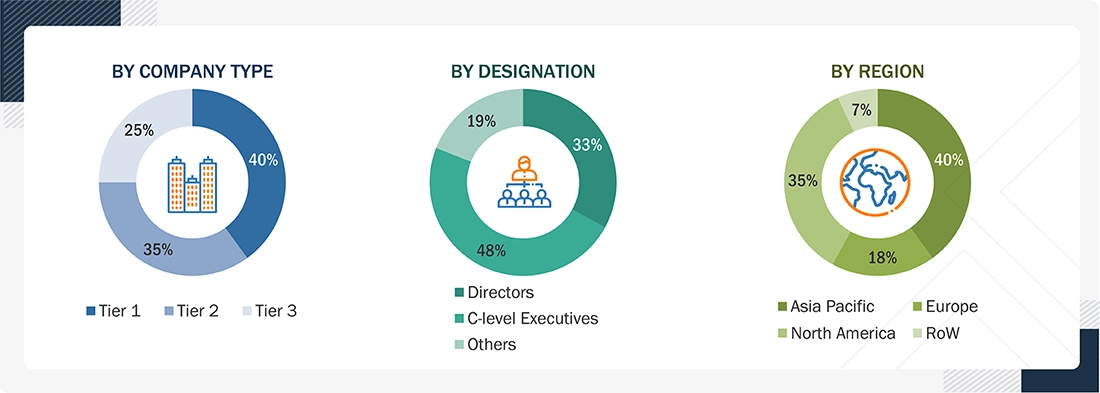
Note: Three tiers of companies have been defined based on their total revenue as of 2024; Tier 1: Greater than USD 100 million, Tier 2: USD 50 million–100 million, and Tier 3: Less than USD 50 million. Other designations include sales managers, marketing managers, and product managers.
To know about the assumptions considered for the study, download the pdf brochure
Market Size Estimation
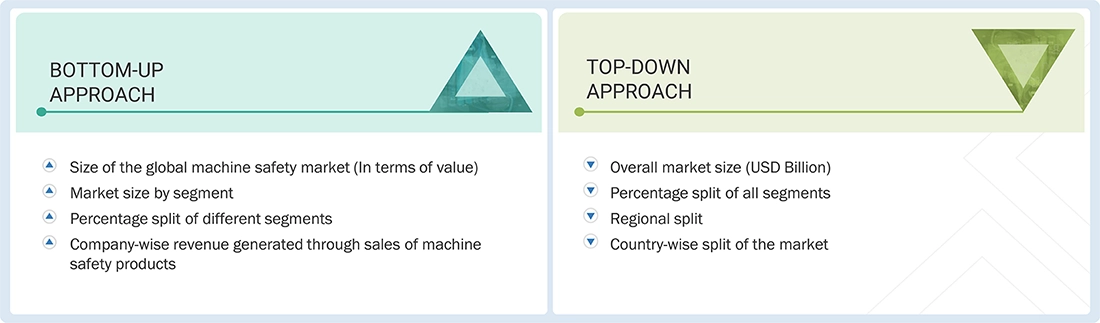
Both top-down and bottom-up approaches were used to estimate and validate the total size of the machine safety market. These methods have also been used extensively to estimate the size of various subsegments in the market. The following research methodology was used to estimate the market size:
- Major players in the markets were identified through extensive secondary research.
- The industry’s value chain and market size (in terms of value) were determined through primary and secondary research processes.
- All percentage shares, splits, and breakdowns were determined using secondary sources and verified through primary sources.
Machine Safety Market : Top-Down and Bottom-Up Approach
Data Triangulation
After arriving at the overall size of the machine safety market using the market size estimation process explained above, the total market was split into several segments and subsegments. Data triangulation procedures were employed, wherever applicable, to complete the overall market engineering process and arrive at the exact statistics for all segments and subsegments of the market. The data was triangulated by studying various factors and trends from both the demand and supply sides. The market size was also validated using both the top-down and bottom-up approaches.
Market Definition
Machine safety systems are crucial for ensuring the safety of operators and other personnel working with or near machines. These systems encompass various components such as physical guards, safety interlocks, emergency stops, and warning signs to minimize the risk of injury or harm. The primary objective of a machine safety system is to prevent accidents and injuries by reducing or eliminating potential hazards associated with operating machines. This includes ensuring all components are correctly installed and maintained, workers are adequately trained and informed about potential hazards, and appropriate safety procedures are followed. Besides safeguarding workers, machine safety systems can help minimize downtime and reduce the risk of equipment damage or failure. By implementing appropriate safety measures, businesses can improve their overall productivity and profitability while ensuring the safety of their employees.
Key Stakeholders
- Government bodies, venture capitalists, and private equity firms
- Machine safety manufacturers
- Machine safety distributors
- Machine safety industry associations
- Professional service/solution providers
- Research institutions and organizations
- Standards organizations and regulatory authorities related to the machine safety market
- System integrators
- Technology consultants
- End users
Report Objectives
- To define, describe, and forecast the machine safety market, in terms of offering, component, implementation, connectivity, application, industry, and region, in terms of value
- To describe and forecast the market, in terms of value, with regard to four main regions: North America, Europe, Asia Pacific, and Rest of the World (RoW), along with their respective countries
- To provide detailed information regarding major factors such as drivers, restraints, opportunities, and challenges influencing the market growth
- To provide a detailed overview of the machine safety value chain
- To strategically analyze micromarkets with respect to individual growth trends, prospects, and contributions to the machine safety market
- To analyze opportunities in the market for stakeholders by identifying high-growth segments of the machine safety market
- To strategically profile key players and comprehensively analyze their market position in terms of ranking and core competencies, along with detailing the competitive landscape for market leaders
- To analyze competitive strategies, such as product launches, expansions, and mergers & acquisitions, adopted by key players in the machine safety market
Available Customizations:
With the given market data, MarketsandMarkets offers customizations according to the company’s specific needs. The following customization options are available for the report:
Company Information
- Detailed analysis and profiling of additional market players (up to five)
Key Questions Addressed by the Report
What is the Machine Safety Market?
The Machine Safety Market refers to the industry focused on technologies, systems, and solutions designed to protect workers and equipment from hazards in industrial environments. It includes safety sensors, switches, relays, controllers, and other protective devices used in manufacturing and automation.
What is the current Machine Safety Market size?
The Machine Safety Market size is expanding steadily due to increasing industrial automation and stricter safety regulations across industries such as manufacturing, automotive, food processing, and pharmaceuticals.
What factors are driving Machine Safety Market growth?
Key drivers of Machine Safety Market growth include rising workplace safety awareness, strict government regulations, increasing adoption of industrial automation, and the need to reduce workplace accidents.
What are the major Machine Safety Market trends?
Major Machine Safety Market trends include the integration of safety systems with Industry 4.0 technologies, adoption of smart sensors, increased use of robotics safety solutions, and growth of predictive maintenance systems.
Which industries contribute most to the Machine Safety Industry?
Industries such as automotive, semiconductor, food & beverage, pharmaceuticals, and heavy manufacturing are major contributors to the Machine Safety Industry due to their high automation levels and strict safety requirements.
What is the expected Machine Safety Market growth in the coming years?
The Machine Safety Market is expected to witness significant growth in the coming years as industries invest more in automation, worker protection technologies, and advanced safety monitoring systems.
Who are the key players in the Machine Safety Industry?
Key players in the Machine Safety Industry include companies such as Siemens, Rockwell Automation, Schneider Electric, ABB, Honeywell, and Omron, which provide a wide range of industrial safety solutions.
What technologies are commonly used in Machine Safety systems?
Common technologies used in Machine Safety systems include safety sensors, light curtains, safety PLCs, emergency stop devices, interlock switches, and presence sensing systems.
How do regulations impact the Machine Safety Market share?
Government regulations and international safety standards such as ISO, IEC, and OSHA significantly influence Machine Safety Market share by pushing industries to adopt certified safety systems and compliance solutions.
Why is Machine Safety important for modern manufacturing?
Machine Safety is crucial for modern manufacturing because it reduces workplace accidents, improves operational efficiency, ensures regulatory compliance, and protects both employees and industrial equipment.
Fact checked
Personalize This Research
- Triangulate with your Own Data
- Get Data as per your Format and Definition
- Gain a Deeper Dive on a Specific Application, Geography, Customer or Competitor
- Any level of Personalization
Let Us Help You
- What are the Known and Unknown Adjacencies Impacting the Machine Safety Market
- What will your New Revenue Sources be?
- Who will be your Top Customer; what will make them switch?
- Defend your Market Share or Win Competitors
- Get a Scorecard for Target Partners

Custom Market Research Services
We Will Customise The Research For You, In Case The Report Listed Above Does Not Meet With Your Requirements
Get 10% Free CustomisationTESTIMONIALS

Tetsuya Ohhira
Business Development Manager-Technology Business
Nikon Corporation,
Leading Japanese MNC specializing in optics and imaging productswww.nikon.com
MarketsandMarkets™ response
is quick. Their attitude is flexible and positive. Analyst Insights are globally considered and
significant. Client Services quickly respond to our inquiry and demand. Their wide range of global
surveys help us make our strategic plan.
We hope Knowledge Store will be easier to search
for a report.
VP - Marketing & Business Development
Leading Provider of Process Control Solutions
We engaged with MarketsandMarkets on a study to perform an analysis and recommend a Go-To-Market strategy for metrology and process control in the semiconductor market. The study was tailored to our targets and needs with well-defined milestones. Our overall experience with the MarketsandMarkets team was very good throughout the project in all aspects including the analysis methodologies used, the quality and depth of primary and secondary data sets, the professionalism and flexibility of the team and the ability to meet the target schedule and milestones. We want to thank MarketsandMarkets team for a job well done.
- US Machine Safety Market
- Canada Machine Safety Market
- Mexico Machine Safety Market
- Germany Machine Safety Market
- UK Machine Safety Market
- France Machine Safety Market
- Italy Machine Safety Market
- Spain Machine Safety Market
- Nordics Machine Safety Market
- Rest Of Europe Machine Safety Market
- China Machine Safety Market
- Japan Machine Safety Market
- India Machine Safety Market
- South Korea Machine Safety Market
- Australia Machine Safety Market
- Rest Of Asia Pacific Machine Safety Market
- Saudi Arabia Machine Safety Market
- UAE Machine Safety Market
- Qatar Machine Safety Market
- Kuwait Machine Safety Market
- Bahrain Machine Safety Market
- Oman Machine Safety Market
- Rest Of The Middle East Machine Safety Market
- Brazil Machine Safety Market
- Argentina Machine Safety Market
- Rest Of South America Machine Safety Market
- South Africa Machine Safety Market
- Rest Of Africa Machine Safety Market
Growth opportunities and latent adjacency in Machine Safety Market






Evan
Apr, 2026
Can the report help identify high-growth opportunities in robotic safety and collaborative machine safety systems?.
Noah
Apr, 2026
How detailed is the report’s segmentation for safety components used in robotics, packaging, and heavy machinery applications?.