Semiconductor Intellectual Property (IP) Market Size, Share & Growth Trends

Semiconductor IP Market Size, Share, Growth & Trends by Design IP (Compute IP, Interface IP, Memory IP, Security IP), IP Core (Soft IP and Hard IP), IP Source (Licensing, Royalty), IP Consumer, Architecture (ARM, x86, RISC-V), Vertical, and Region - Global Forecast to 2032




SEMICONDUCTOR IP MARKET OVERVIEW
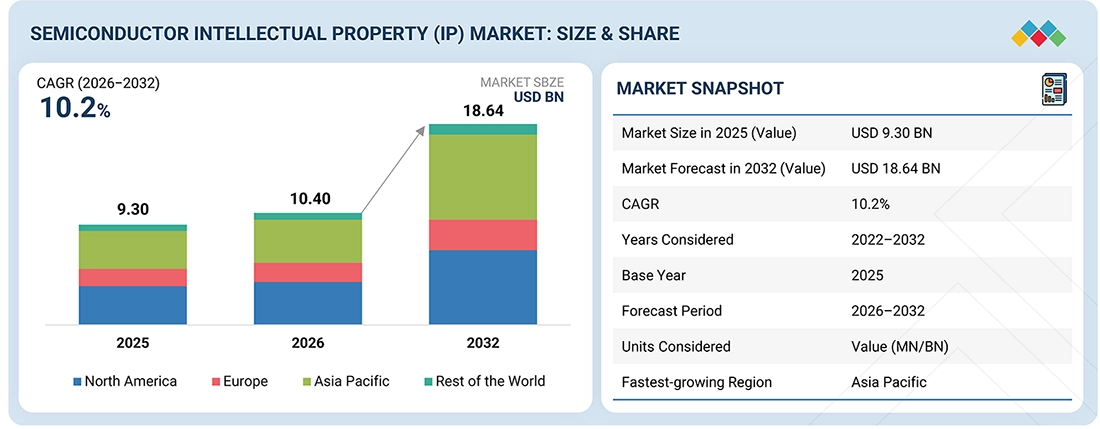
According to Marketsandmarkets, the global semiconductor IP market size is projected to grow from USD 10.40 billion in 2026 to USD 18.64 billion by 2032, growing at a CAGR of 10.2% from 2026 to 2032. The market is experiencing strong growth driven by the increasing complexity of semiconductor designs, rapid adoption of artificial intelligence (AI), proliferation of custom silicon programs, and rising demand for advanced computing across consumer electronics, automotive, data centers, industrial automation, and telecommunications applications. As semiconductor companies continue to develop highly integrated system-on-chips (SoCs), demand for reusable IP blocks has increased significantly to reduce design costs, accelerate time-to-market, and improve design efficiency.
REPORT SCOPE
| REPORT METRIC | DETAILS |
|---|---|
| Market Size in 2025 (Value) | USD 9.30 BN |
| Market Size in 2026 (Value) | USD 10.40 BN |
| Market Forecast in 2032 (Value) | USD 18.64 BN |
| CAGR | 10.2% |
| Years Considered | 2022–2032 |
| Base Year | 2025 |
| Forecast Period | 2026–2032 |
| Units Considered | Value (USD Billion) |
| Top Companies |
|
| Key Growth Drivers |
|
| Report Coverage | Revenue Forecast, Company Ranking, Competitive Landscape, Growth Factors, and Trends |
| Segments Covered |
|
| Regions Covered | North America, Europe, Asia Pacific, Rest of the World |
KEY TAKEAWAYS
-
BY DESIGN IPCompute IP is estimated to dominate the market owing to its foundational role in virtually every semiconductor device, ranging from smartphones and PCs to AI accelerators, networking equipment, automotive controllers, and data center processors.
-
BY IP CORESoft IP remains the preferred deployment model due to its portability across semiconductor process nodes, design flexibility, ease of customization, and compatibility with multiple foundry ecosystems.
-
BY IP SOURCEBy IP source, licensing revenue currently accounts for the largest share of the semiconductor IP market.
-
BY VERTICALThe data denter segment is expected to register the highest CAGR of 14.9% during the forecast period.
-
IP CONSUMER TYPEBy IP consumer type, fabless semiconductor companies account for the largest share of the semiconductor IP market.
-
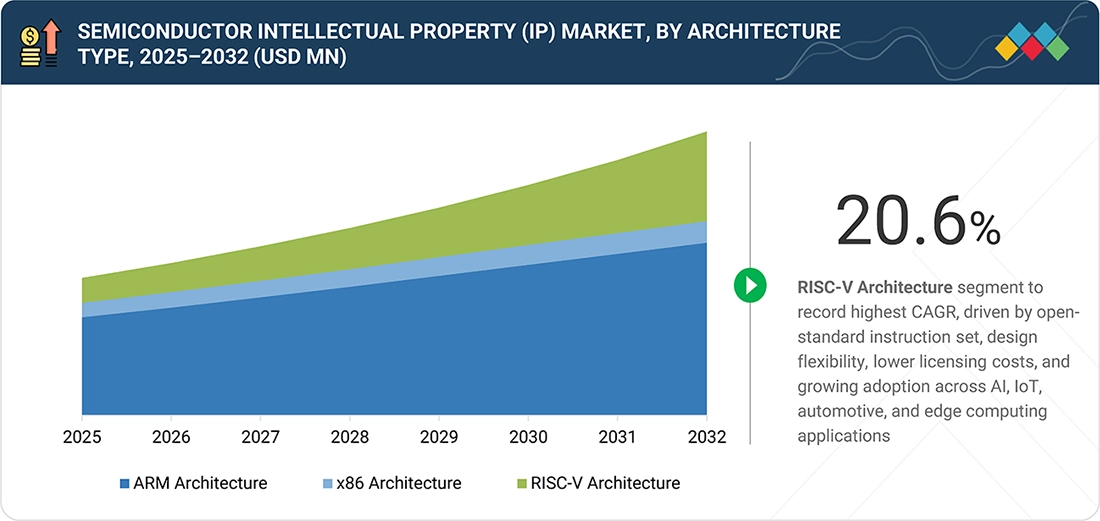
BY ARCHITECTURE TYPEThe RISC-V architecture segment is projected to experience the highest growth rate in the semiconductor IP market during the forecast period.
-
COMPETITIVE LANDSCAPE (KEY PLAYERS)Arm Holdings (UK), Synopsys (US), and Cadence Design Systems (US), among others, were identified as star players in the semiconductor IP market due to their large market shares and extensive product footprints.
-
COMPETITIVE LANDSCAPE (STARTUPS/SMES)Flex Logix Technologies (US), Semidynamics (Spain), and Intrinsix (US), among others, have distinguished themselves among startups and SMEs by securing strong footholds in specialized niche areas, underscoring their potential as emerging market leaders in the semiconductor IP market.
The semiconductor IP market growth is being fueled by the accelerating demand for advanced semiconductor designs capable of supporting AI workloads, high-performance computing, edge intelligence, and next-generation connectivity solutions. As chip architectures become increasingly sophisticated, semiconductor companies are relying more heavily on third-party intellectual property to streamline development processes and manage escalating design complexity. The growing adoption of custom silicon, coupled with rising semiconductor content across consumer electronics, automotive systems, cloud infrastructure, industrial equipment, and communication networks, is further strengthening demand for reusable and pre-verified IP solutions that enable faster product development and lower engineering costs.
According to MarketsandMarkets, the global RISC-V market is projected to grow from USD 1.31 billion in 2026 to USD 4.85 billion by 2032, at a CAGR of 24.3%.
Neural Processing Units (NPUs), AI accelerators, Digital Signal Processor (DSP) IP, Vision Processing Units (VPUs), and high-bandwidth memory interfaces are becoming essential building blocks in AI-enabled semiconductor devices.
Source: Secondary Research, Interviews with Experts, MarketsandMarkets Analysis
TRENDS & DISRUPTIONS IMPACTING CUSTOMERS' CUSTOMERS
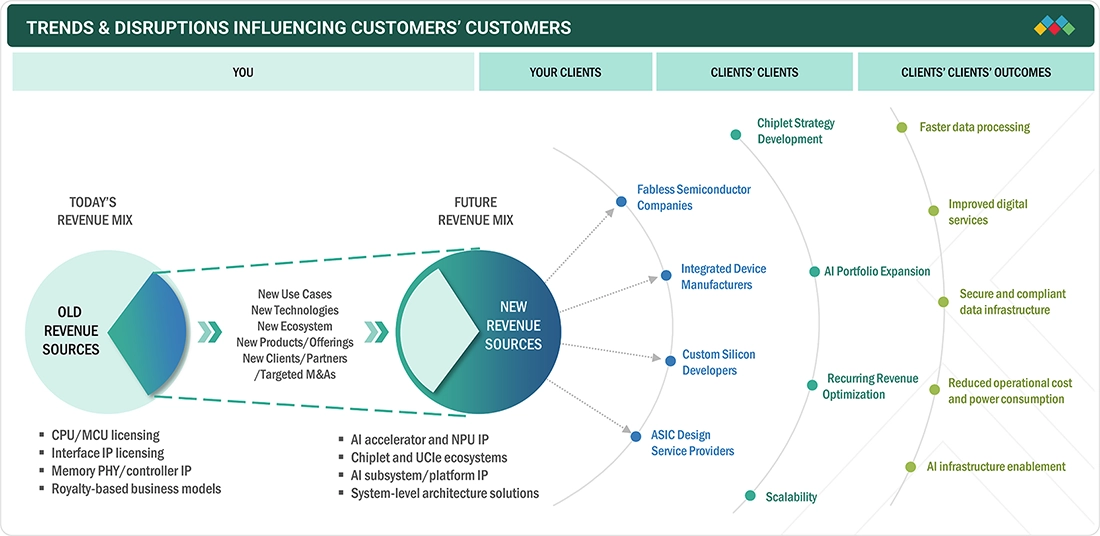
The semiconductor IP industry is expected to undergo a significant transformation in how revenue is generated. Historically, the market has relied heavily on processor core licensing, interface IP licensing, memory and physical IP licensing, and royalty payments tied to semiconductor shipments. However, future revenue growth will increasingly be driven by AI-centric and platform-oriented solutions. Semiconductor IP vendors are expected to generate substantial revenue from AI accelerator IP, NPU IP, AI subsystem platforms, chiplet and UCIe-based interconnect IP, AI networking and memory fabric technologies, and security solutions designed for AI and confidential computing environments.
Source: Secondary Research, Interviews with Experts, MarketsandMarkets Analysis
SEMICONDUCTOR IP MARKET DYNAMICS

Level
-
Growing complexity of advanced SoC designs

-
Rising adoption of AI-enabled and edge computing devices


Level
-
Rising complexity and cost associated with advanced process nodes

-
Integration and interoperability challenges across multiple IP blocks


Level
-
Rising adoption of AI accelerators, specialized compute IP, and edge computing architectures

-
Growing demand for semiconductor IP in automotive, autonomous systems, and software-defined vehicles


Level
-
Increasing risks related to IP theft, piracy, and counterfeiting

-
Rising design, verification, and integration complexity for advanced semiconductor architectures

Source: Secondary Research, Interviews with Experts, MarketsandMarkets Analysis
Driver: Growing complexity of advanced SoC designs
The increasing complexity of modern SoC designs is driving semiconductor companies to adopt reusable IP blocks to accelerate development and reduce design effort. As chips integrate processors, memory, AI accelerators, security modules, and high-speed interfaces, proven semiconductor IP helps simplify integration, improve design reliability, and shorten time-to-market across a wide range of applications.
Restraint: Rising complexity and cost associated with advanced process nodes
The semiconductor IP industry is constrained by the growing complexity and cost of developing solutions for advanced process nodes such as 5nm, 3nm, and below. Increasing requirements for performance optimization, power efficiency, verification, and foundry-specific customization demand significant investments in engineering resources and EDA tools, creating higher development costs and barriers for smaller market participants.
Opportunity: Rising adoption of AI accelerators, specialized compute IP, and edge computing architectures
Strong opportunities are emerging from the growing deployment of AI accelerators, domain-specific processors, and edge computing platforms across data centers, automotive systems, industrial automation, and consumer electronics. These applications require advanced processors, memory, interface, and security IP solutions that enable faster development, improved performance, and efficient integration of specialized computing capabilities.
Challenge: Increasing risks related to IP theft, piracy, and counterfeiting
The semiconductor IP market faces ongoing challenges related to IP theft, unauthorized usage, and counterfeiting, which can undermine revenue generation and reduce incentives for innovation. As semiconductor design ecosystems become increasingly global and collaborative, IP providers must invest in robust licensing, encryption, and protection mechanisms to safeguard proprietary technologies and maintain customer trust.
SEMICONDUCTOR INTELLECTUAL PROPERTY (IP) MARKET: COMMERCIAL USE CASES ACROSS INDUSTRIES
| COMPANY | USE CASE DESCRIPTION | BENEFITS |
|---|---|---|
 |
Siemens Digital Industries Software entered into an OEM agreement with Alphawave Semi to expand access to advanced high-speed connectivity and memory interface IP solutions for semiconductor developers. The collaboration integrates Alphawave Semi’s portfolio of interface IP, including technologies supporting PCIe, CXL, Ethernet, HBM, and UCIe, into Siemens’ semiconductor design ecosystem, enabling customers to streamline development of AI, high-performance computing (HPC), data center, and networking applications through a unified design environment. | The partnership broadened access to proven high-speed interface IP, reduced design complexity, and accelerated semiconductor development cycles. It also enabled faster integration of next-generation connectivity standards, lowered development risks, and improved time-to-market for AI, HPC, networking, and data center semiconductor solutions. |
 |
GlobalFoundries acquired MIPS to integrate processor IP capabilities, including RISC-V-based architectures and AI-focused compute technologies, into its semiconductor ecosystem. The acquisition expands GlobalFoundries’ offerings beyond manufacturing services by providing customers with access to customizable processor IP and design solutions, enabling the development of advanced semiconductor products for AI, automotive, industrial, data center, and intelligent edge applications. | The acquisition strengthened GlobalFoundries’ end-to-end semiconductor value proposition by combining manufacturing expertise with processor IP capabilities. It enabled customers to accelerate product development, simplify integration processes, reduce commercialization challenges, and support the deployment of next-generation semiconductor solutions across multiple high-growth markets. |
 |
Synopsys collaborated with TSMC to deliver a comprehensive portfolio of silicon-proven foundation and interface IP optimized for TSMC’s advanced process technologies. The portfolio supports key standards and technologies, including HBM4, UCIe, PCIe 7.0, Ethernet, DDR, and advanced memory interfaces, enabling semiconductor companies to develop next-generation AI accelerators, high-performance computing (HPC) platforms, and multi-die semiconductor solutions with greater design efficiency. | The collaboration enabled semiconductor developers to accelerate the deployment of advanced-node and multi-die architectures while reducing implementation and integration risks. Access to silicon-proven IP improved design productivity, shortened development timelines, and facilitated faster adoption of emerging connectivity and memory standards across AI, automotive, and HPC applications. |
Logos and trademarks shown above are the property of their respective owners. Their use here is for informational and illustrative purposes only.
SEMICONDUCTOR IP MARKET ECOSYSTEM
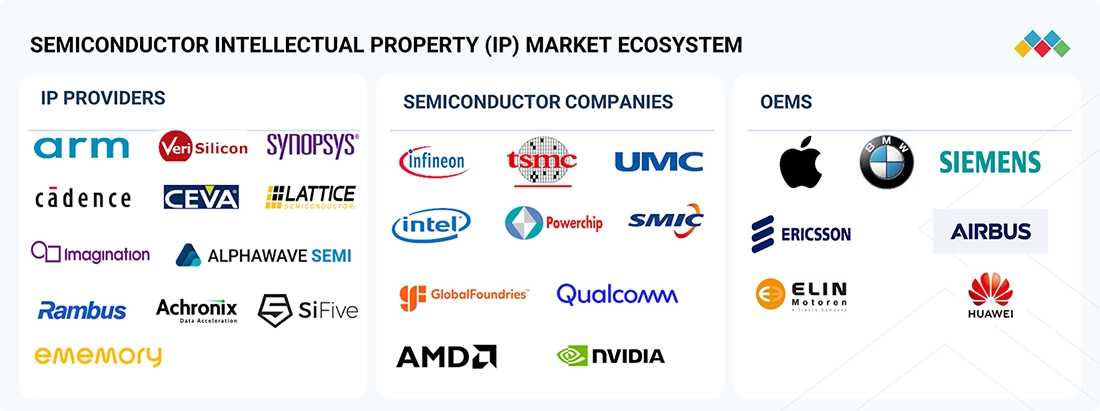
The semiconductor IP ecosystem consists of IP providers, semiconductor companies, and OEMs working together to enable advanced chip development. IP vendors such as Arm, Synopsys, Cadence, CEVA, Rambus, Alphawave Semi, and SiFive develop and license processors, interfaces, memory, security, and AI-related IP solutions. These solutions are adopted by semiconductor companies, including NVIDIA, AMD, Qualcomm, Intel, Infineon, TSMC, UMC, SMIC, and GlobalFoundries, to develop processors, AI accelerators, networking chips, and SoCs more efficiently. The resulting semiconductor devices are then integrated into products by OEMs such as Apple, BMW, Siemens, Airbus, Ericsson, and Huawei across consumer electronics, automotive, industrial, aerospace, and telecommunications sectors, making semiconductor IP a foundational enabler of innovation across the global technology value chain.
Logos and trademarks shown above are the property of their respective owners. Their use here is for informational and illustrative purposes only.
SEMICNODUCTOR IP MARKET SEGMENTS
Source: Secondary Research, Interviews with Experts, MarketsandMarkets Analysis
Semiconductor IP Market Trends, by Design IP
Compute IP dominates the market owing to its foundational role in virtually every semiconductor device, ranging from smartphones and PCs to AI accelerators, networking equipment, automotive controllers, and data center processors. Growing adoption of AI workloads, edge computing, high-performance computing (HPC), and autonomous systems has significantly increased demand for advanced processor architectures. Furthermore, strong adoption of ARM- and RISC-V-based processor cores by fabless semiconductor companies, IDMs, and system companies continues to drive revenue generation within the compute IP ecosystem
Semiconductor IP Market, by IP Core
Soft IP remains the preferred deployment model due to its portability across semiconductor process nodes, design flexibility, ease of customization, and compatibility with multiple foundry ecosystems. As semiconductor vendors increasingly develop application-specific chips for AI, automotive, industrial, and consumer applications, demand for configurable and reusable Soft IP solutions continues to outpace Hard IP adoption.
Semiconductor IP Market, by IP Source
Licensing revenue currently contributes the largest share to the semiconductor IP market. The segment remains dominant due to the increasing number of new chip development programs launched annually across AI processors, automotive electronics, networking ASICs, and custom silicon initiatives.
Semiconductor IP Market, by Architecture Type
ARM-based architectures have established a dominant position across smartphones, consumer electronics, embedded systems, automotive electronics, networking equipment, and, increasingly, data center processors. The extensive ARM ecosystem, broad software compatibility, energy-efficient processor designs, and strong developer support continue to drive widespread adoption.
The semiconductor IP industry supports several processor architectures, including ARM, x86, and RISC-V, each serving different application requirements. ARM dominates mobile and embedded systems due to its power efficiency, x86 continues to play a major role in high-performance computing and enterprise applications, while RISC-V is rapidly gaining traction because of its open-standard architecture, customization flexibility, and growing ecosystem.
SEMICNODUTCOR IP MARKET BY REGION
Asia Pacific to be fastest-growing region in global semiconductor IP market during forecast period
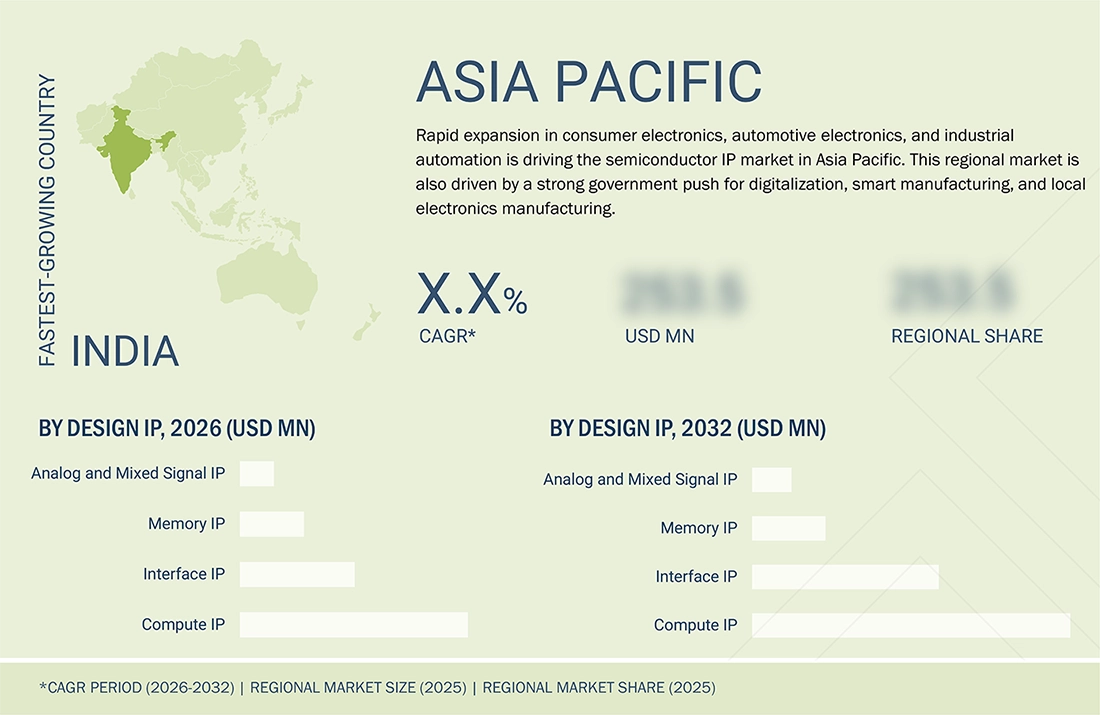
Asia Pacific dominates the semiconductor IP market share and is expected to maintain its leadership throughout the forecast period. The region benefits from the presence of major semiconductor design hubs, foundries, consumer electronics manufacturers, and fabless semiconductor companies across China, Taiwan, South Korea, Japan, and India. Strong investments in AI processors, advanced packaging, automotive semiconductors, memory technologies, and indigenous chip development initiatives continue to drive demand for semiconductor IP solutions.
Arm remains the dominant provider in the global semiconductor intellectual property ecosystem, with its processor IP powering billions of devices across smartphones, consumer electronics, networking equipment, automotive systems, and embedded applications.
The increasing complexity of AI processors, high-performance computing (HPC), and data center chips is accelerating the adoption of chiplet-based architectures and advanced interface intellectual property (IP).
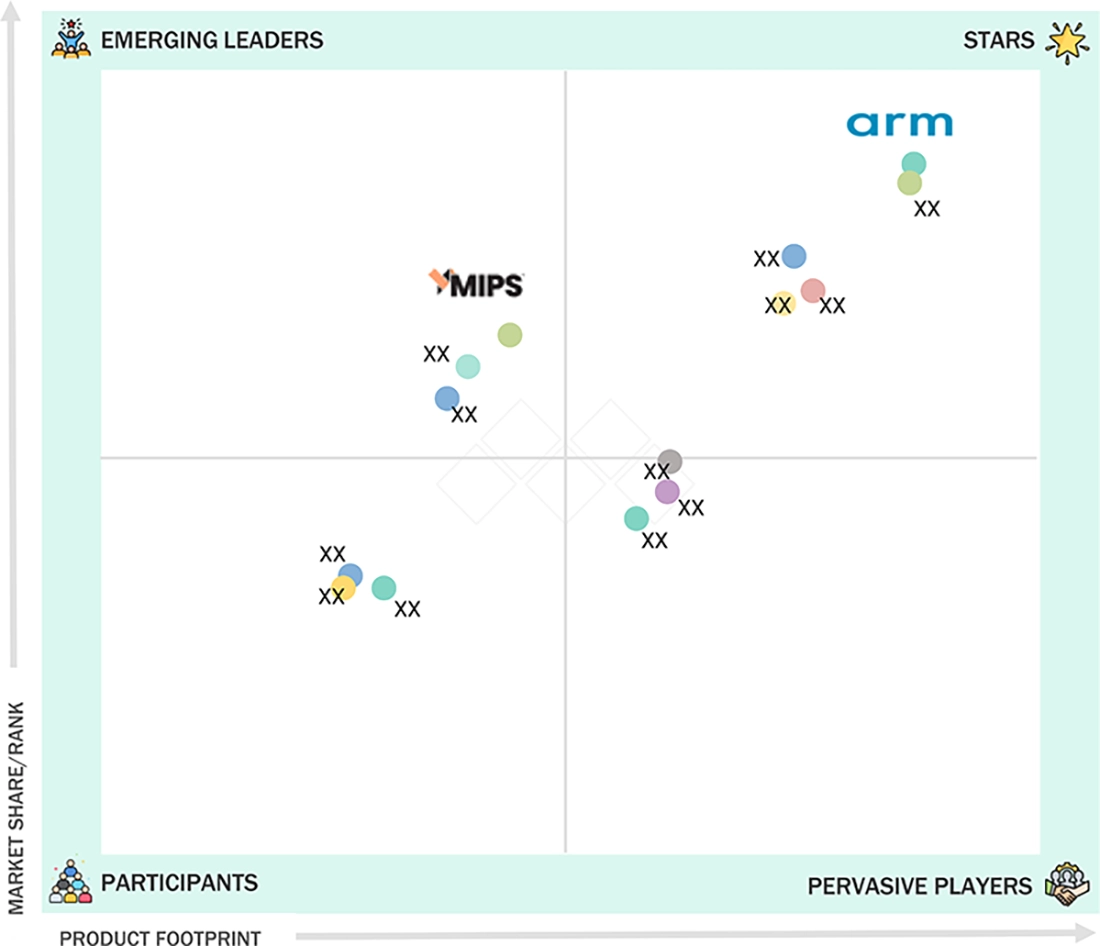
SEMICONDUCTOR INTELLECTUAL PROPERTY (IP) MARKET: COMPANY EVALUATION MATRIX
In the semiconductor IP market growth, Arm Holdings (UK) is positioned as the leading market player, supported by its extensive processor IP ecosystem, strong licensing and royalty model, and broad adoption across smartphones, automotive systems, networking equipment, and cloud infrastructure. SiFive (US) is emerging as a key growth challenger, strengthening its market position through its expanding RISC-V processor portfolio and increasing adoption in AI, automotive, industrial, and custom silicon applications. While Arm continues to dominate through its mature ecosystem, software compatibility, and global customer base, SiFive is steadily expanding its footprint as semiconductor companies increasingly seek flexible, customizable, and open-standard RISC-V architectures to support next-generation computing and AI-driven workloads.
Source: Secondary Research, Interviews with Experts, MarketsandMarkets Analysis
KEY MARKET PLAYERS - TOP SEMICONDUCTOR IP COMPANIES
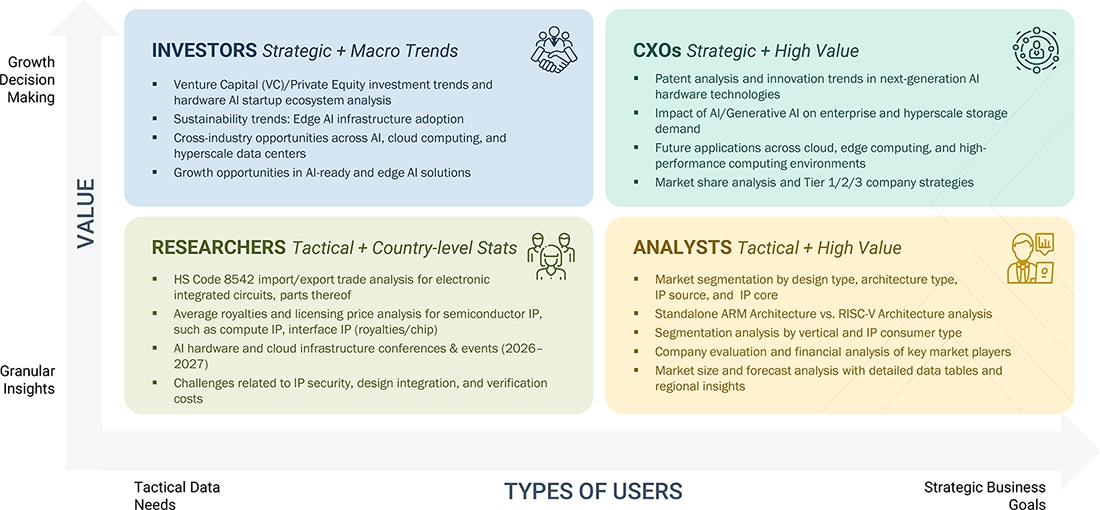
WHAT IS IN IT FOR YOU: SEMICONDUCTOR INTELLECTUAL PROPERTY (IP) MARKET REPORT CONTENT GUIDE
DELIVERED CUSTOMIZATIONS
We have successfully delivered the following deep-dive customizations:
| CLIENT REQUEST | CUSTOMIZATION DELIVERED | VALUE ADDS |
|---|---|---|
| Semiconductor IP Provider | Competitive benchmarking of processor IP, interface IP, memory IP, security IP, and physical IP portfolios, including licensing models, royalty structures, technology differentiation, and ecosystem positioning analysis. | Improved product positioning, pricing strategy, and roadmap alignment. |
| Semiconductor IP Platform Provider | Evaluation of opportunities across AI IP platforms, chiplet ecosystems, RISC-V ecosystems, software toolchains, and IP monetization models, with partnership and ecosystem assessment. | Stronger platform strategy and accelerated ecosystem expansion. |
| Semiconductor Manufacturer (Fabless/IDM) | Analysis of IP adoption trends across compute, interface, memory, security, and physical IP categories, including supplier benchmarking, licensing strategy assessment, and make-versus-buy evaluation. | Reduced development risk and optimized IP sourcing strategy. |
| Foundry & Packaging Provider | Assessment of demand for foundation IP, physical IP, chiplet interconnect IP, advanced packaging enablement IP, and ecosystem readiness across leading process nodes and packaging platforms. | Enhanced ecosystem development and improved customer acquisition opportunities. |
| Technology Investor / Private Equity Firm | Market attractiveness assessment covering IP categories, competitive landscape, licensing trends, revenue models, M&A opportunities, and growth outlook across the semiconductor IP ecosystem. | Better investment prioritization and identification of high-growth opportunities. |
| Government & Research Organization | Assessment of domestic semiconductor IP capabilities, RISC-V ecosystem development, sovereign semiconductor initiatives, and strategic technology gaps. | Stronger semiconductor self-sufficiency planning and technology roadmap development. |
RECENT DEVELOPMENTS in SEMICONDUCTOR IP
- August 2026 : Weebit Nano is gaining commercial momentum for its ReRAM semiconductor IP, with licensing agreements expanding across key customers. Three customer chip designs have now taped out with embedded Weebit ReRAM, including a functional prototype already running software. Technology transfers to Texas Instruments and onsemi are progressing, while FY26 revenue guidance has been raised to at least A$13.5 million. The progress positions Weebit Nano for broader semiconductor adoption and future royalty-generating production.
- August 2026 : Chengdu Superpure Applied Materials completed its Shenzhen Stock Exchange IPO, raising approximately RMB 1.68 billion and reaching a market value of about RMB 50.7 billion. The company specializes in semiconductor equipment special coating components and precision optical devices for advanced semiconductor manufacturing. Its components support etching, lithography, metrology, thin-film deposition, and other critical equipment, including processes at 5nm and below. Superpure Applied Materials plans to expand production capacity, advanced optical components, semiconductor materials, and R&D capabilities with the IPO proceeds. The listing strengthens its position in China’s semiconductor equipment supply chain and supports the growing drive for domestic component substitution.
- May 2026 : Rambus expanded its interface IP portfolio with the launch of PCIe 7.0 Switch IP for AI, cloud, and high-performance computing applications.
- May 2026 : SiFive introduced third-generation RISC-V processor IP to address growing performance and scalability requirements in embedded computing, edge AI, and consumer semiconductor applications.
- March 2026 : Rambus introduced HBM4E memory controller IP to address the increasing demand for high-bandwidth, low-latency memory solutions in AI, GPU, and high-performance computing applications.
Table of Contents
 Exclusive indicates content/data unique to MarketsandMarkets and not available with any competitors.
Methodology
The research process for this technical, market-oriented, and commercial study of the semiconductor IP market included systematic gathering, recording, and analysis of data about companies operating in the market. It involved the extensive use of secondary sources, directories, and databases (Factiva, Oanda) to identify and collect relevant information. In-depth interviews were conducted with various primary respondents, including experts from core and related industries and preferred manufacturers, to obtain and verify critical qualitative and quantitative information as well as to assess the growth prospects of the market. Key players in the semiconductor IP market were identified through secondary research, and their market rankings were determined through primary and secondary research. This included studying annual reports of top players and interviewing key industry experts, such as CEOs, directors, and marketing executives.
Secondary Research
In the secondary research process, various secondary sources were referred to for identifying and collecting information relevant to this study. Secondary sources included annual reports, press releases, and investor presentations of companies; white papers, certified publications, and articles from recognized authors; directories; and databases. Secondary research was mainly conducted to obtain key information about the supply of the industry; a total pool of key players; segmentation of the market according to industry trends, geographic markets, and key developments from market- and technology-oriented perspectives.
Primary Research
In the primary research process, primary sources from the supply and demand sides were interviewed to obtain qualitative and quantitative information for this report. Primary sources from the supply side included CEOs, vice presidents, marketing directors, technology and innovation directors, subject-matter experts, consultants, and related key executives from major companies and organizations operating in the semiconductor IP market.
After the complete market engineering process (market statistics calculations, market breakdown, market size estimations, market forecasting, and data triangulation), extensive primary research was conducted to gather information and verify and validate the critical market numbers.
Several primary interviews were conducted with experts from the demand and supply sides across four major regions—North America, Europe, Asia Pacific, and Rest of the World (RoW). Approximately 25% of the primary interviews were conducted with the demand side and 75% with the supply side. This primary data was collected through questionnaires, emails, and telephonic interviews
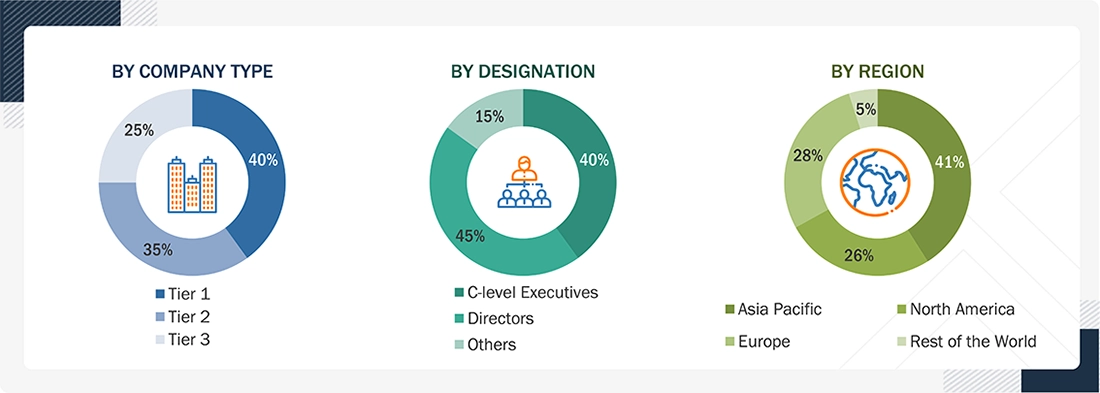
Note: Tier 1 companies include market players with revenues above USD 500 million; tier 2 companies earn revenues between USD 100 million and USD 500 million; and tier 3 companies earn revenues up to USD 100 million. Other designations include sales, marketing, and product managers.
To know about the assumptions considered for the study, download the pdf brochure
Market Size Estimation
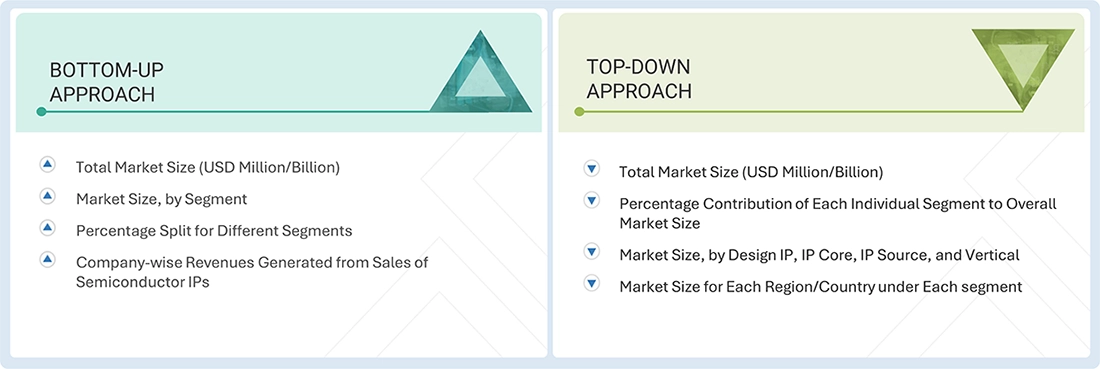
In the complete market estimation process, the top-down and bottom-up approaches were used, along with several data triangulation methods, to estimate and forecast the size of the market and its segments and subsegments listed in the report. Extensive qualitative and quantitative analyses were carried out on the complete market engineering process to list the key information/insights pertaining to the semiconductor IP market.
Key players in the semiconductor IP market were identified through secondary research, and their rankings in the respective regions were determined through primary and secondary research. This entire procedure involved the study of the annual and financial reports of top players and interviews with industry experts, such as chief executive officers, vice presidents, directors, and marketing executives, for quantitative and qualitative insights. All percentage shares, splits, and breakdowns were determined using secondary sources and verified through primary sources. All parameters that affect the markets covered in this research study were accounted for, viewed in extensive detail, verified through primary research, and analyzed to obtain the final quantitative and qualitative data. This data was consolidated and enhanced with detailed inputs and analysis from MarketsandMarkets and presented in this report.
BOTTOM-UP APPROACH
- Identifying the stakeholders in the semiconductor intellectual property (IP) market influencing the entire market, along with the related component players
- Analyzing major providers of semiconductor IPs, studying their portfolios, and understanding different types of product offerings
- Analyzing trends pertaining to the use of different types of semiconductor IP solutions for different applications
- Tracking the ongoing and upcoming developments in the market, such as investments made, R&D activities, product launches, collaborations, and partnerships, and forecasting the market based on these developments and other critical parameters
- Carrying out multiple discussions with key opinion leaders to understand the different types of semiconductor IP solutions and recent trends in the market, thereby analyzing the breakup of the scope of work carried out by major companies
- Arriving at the market estimates by analyzing and totaling the revenues generated by companies from each type of solution
- Categorizing the overall market into various segments
- Verifying and cross-checking the estimated values at every level through discussions with key opinion leaders such as CXOs, directors, and operations managers, and finally with the domain experts in MarketsandMarkets
- Studying various paid and unpaid sources of information, such as annual reports, press releases, white papers, and databases
TOP-DOWN APPROACH
- Focusing initially on top-line investments and expenditures being made in the semiconductor IP ecosystem
- Calculating the market size by considering the revenues generated by players through the sales of semiconductor IP solutions
- Segmenting the market based on R&D activities and developments in key areas
- Segmenting the market based on mapping the usage of semiconductor IP solutions in different applications
- Collecting information related to the revenues generated by players by offering key types of semiconductor IP solutions
- Conducting multiple on-field discussions with key opinion leaders across major companies involved in the development of semiconductor IP solutions
- Estimating the geographic split using secondary sources based on various factors, such as the number of players in a specific country and region, the role of major players in the market for the development of innovative products, adoption and penetration rates in a particular country for various end-use applications, and others
INFOGRAPHIC DEPICTING BOTTOM-UP AND TOP-DOWN APPROACHES
Data Triangulation
After arriving at the overall market size from the market size estimation process explained above, the total market was split into several segments and subsegments. To complete the overall market engineering process and arrive at the exact statistics for all segments and subsegments, the market breakdown and data triangulation procedures were employed, wherever applicable. The data was triangulated by studying various factors and trends from both the demand and supply sides. Along with this, the market size was validated using both the top-down and bottom-up approaches.
Market Definition
The semiconductor intellectual property (IP) market refers to the global ecosystem of reusable and licensable semiconductor design assets that are integrated into integrated circuits (ICs), System-on-Chip (SoC) designs, ASICs, FPGAs, chiplets, and advanced semiconductor devices. These IP blocks include processor architectures, interface protocols, memory subsystems, analog and mixed-signal functions, security engines, and verification IP that are licensed to semiconductor companies for integration into chip designs. The market includes revenues generated through licensing, royalties, subscriptions, maintenance, and IP customization services associated with reusable semiconductor design blocks.
Key Stakeholders
- IP Suppliers
- IP Core Developers
- Integrated Device Manufacturers (IDMs)
- Fabless Semiconductor Companies
- System Companies & Custom Silicon Developers
- Third-party IP Developers
- IP Licensors (licensing vendors)
- Open-source IP Vendors
- IP Aggregators
- Electronic Design Automation (EDA) Vendors
- Non-pure-play (IDM) Foundry Vendors
- Fabrication Players
- Raw Material Vendors
- Semiconductor IP Solution Providers
- System Integrators
- Original Equipment Manufacturers (OEMs)/Device Manufacturers
- Technology Standard Organizations, Forums, Alliances, and Associations
- Governments, Financial Institutions, and Investment Communities
- Research Organizations
- Analysts and Strategic Business Planners
- Venture Capitalists, Private Equity Firms, and Startups
Report Objectives
- To define, describe, and forecast the semiconductor IP market size, in terms of value by design IP, IP core, IP source, IP consumer type, architecture type, vertical, and region
- To describe and forecast the market size across four key regions, namely, North America, Europe, Asia Pacific, and the Rest of the World (RoW), along with their respective country-level market size, in terms of value
- To provide detailed information regarding the drivers, restraints, opportunities, and challenges in the market
- To strategically analyze the micromarkets concerning the individual growth trends, prospects, and their contribution to the market
- To map competitive intelligence based on company profiles, key player strategies, and key developments
- To analyze trends/disruptions impacting customer business, interconnected markets and cross-sector opportunities, strategic moves by tier-1/2/3 players, pricing analysis, patents analysis, trade analysis (export and import scenario), Porter's five forces analysis, macroeconomic indicators, case studies, investment and funding scenario, decision-making process, buyer stakeholders and buying evaluation criteria, adoption barriers and internal challenges, unmet needs from various industries, technology analysis, technology roadmap, ecosystem analysis, regional regulations and compliance, impact of 2025 US tariff, and key conferences and events related to the semiconductor IP market.
- To benchmark the market players using the proprietary company evaluation matrix framework, which analyzes them on various parameters within the broad categories of market ranking/share and product portfolio
- To analyze competitive developments such as contracts, acquisitions, product launches & developments, collaborations, and partnerships, along with research & development (R&D), in the semiconductor IP market
Available customizations:
With the given market data, MarketsandMarkets offers customizations according to the company’s specific needs. The following customization options are available for the report:
COMPANY INFORMATION
- Detailed analysis and profiling of additional market players (up to 7)
Key Questions Addressed by the Report
What is the current size of the Semiconductor Intellectual Property (IP) market?
The global Semiconductor IP market is estimated at USD 9.30 billion in 2025 and is projected to reach USD 18.64 billion by 2032, growing at a CAGR of 10.2% during 2026–2032.
What is driving the growth of the Semiconductor IP market?
Major growth drivers include increasing semiconductor design complexity, rapid adoption of AI, rising custom silicon development, growing demand for System-on-Chip (SoC) designs, and expansion of automotive, data center, industrial automation, telecommunications, and consumer electronics applications.
What market trends are shaping the Semiconductor IP industry?
Key trends include increasing adoption of reusable IP cores, growing demand for AI accelerators, expansion of RISC-V architecture, higher investment in custom silicon, advanced computing, and increased use of licensing-based IP business models.
Which region dominates the Semiconductor IP market?
Asia Pacific is the largest and fastest-growing regional market due to the presence of major semiconductor manufacturing hubs in China, Taiwan, South Korea, Japan, and India, along with increasing investments in AI chips and advanced semiconductor technologies.
Which companies are leading the Semiconductor IP market?
Leading companies include Arm Holdings, Synopsys, Cadence Design Systems, Rambus, and Alphawave Semi. Arm Holdings remains the leading market player because of its strong processor IP ecosystem and licensing model.
Which IP type holds the largest market share?
Compute IP holds the largest market share because it is widely used across smartphones, AI processors, networking equipment, automotive electronics, PCs, and data center processors. Soft IP also dominates among IP core types due to its portability and flexibility.
Which architecture is expected to grow the fastest?
RISC-V is expected to register the highest growth during the forecast period due to increasing demand for customizable, open-standard processor architectures for AI, automotive, industrial, and custom silicon applications.
Which industry vertical is expected to witness the highest growth?
The Data Center segment is projected to record the highest CAGR of 14.9% through 2032, driven by AI workloads, cloud computing, and high-performance computing infrastructure.
What does the Semiconductor IP market report analyze?
The report analyzes market size, forecasts, competitive landscape, company rankings, technology trends, drivers, restraints, opportunities, regional analysis, architecture types, design IP, IP core types, licensing models, industry verticals, Porter's Five Forces, patent analysis, trade analysis, and investment opportunities.
Why is the Semiconductor IP industry becoming increasingly important?
The industry enables semiconductor companies to reduce chip development time, lower design costs, improve design efficiency, accelerate time-to-market, and support increasingly complex SoC designs required for AI, automotive electronics, IoT, telecommunications, and advanced computing applications.


Personalize This Research
- Triangulate with your Own Data
- Get Data as per your Format and Definition
- Gain a Deeper Dive on a Specific Application, Geography, Customer or Competitor
- Any level of Personalization
Let Us Help You
- What are the Known and Unknown Adjacencies Impacting the Semiconductor IP Market
- What will your New Revenue Sources be?
- Who will be your Top Customer; what will make them switch?
- Defend your Market Share or Win Competitors
- Get a Scorecard for Target Partners

Custom Market Research Services
We Will Customise The Research For You, In Case The Report Listed Above Does Not Meet With Your Requirements
Get 10% Free CustomisationTESTIMONIALS

Tetsuya Ohhira
Business Development Manager-Technology Business
Nikon Corporation,
Leading Japanese MNC specializing in optics and imaging productswww.nikon.com
MarketsandMarkets™ response
is quick. Their attitude is flexible and positive. Analyst Insights are globally considered and
significant. Client Services quickly respond to our inquiry and demand. Their wide range of global
surveys help us make our strategic plan.
We hope Knowledge Store will be easier to search
for a report.
VP - Marketing & Business Development
Leading Provider of Process Control Solutions
We engaged with MarketsandMarkets on a study to perform an analysis and recommend a Go-To-Market strategy for metrology and process control in the semiconductor market. The study was tailored to our targets and needs with well-defined milestones. Our overall experience with the MarketsandMarkets team was very good throughout the project in all aspects including the analysis methodologies used, the quality and depth of primary and secondary data sets, the professionalism and flexibility of the team and the ability to meet the target schedule and milestones. We want to thank MarketsandMarkets team for a job well done.
- US Semiconductor IP Market
- Canada Semiconductor IP Market
- Mexico Semiconductor IP Market
- Germany Semiconductor IP Market
- UK Semiconductor IP Market
- France Semiconductor IP Market
- China Semiconductor IP Market
- Japan Semiconductor IP Market
- South Korea Semiconductor IP Market
- Taiwan Semiconductor IP Market
- India Semiconductor IP Market
- Netherlands Semiconductor IP Market
Growth opportunities and latent adjacency in Semiconductor IP Market




User
Sep, 2019
Hello, I work in UMC IPDS (IP Development and Design Support) department, coordinating several outsourcing IP projects with ARM, Cadence, Synopsys, True Circuit, Mixel, Analog Bits, eSilicon etc. This article about IP market to 2023 is definitely an intesresting/worth-reading one for person like me so I expect to get the pdf version with details. Thank you for sharing. .
User
Sep, 2019
Like to know what IP verticals and corresponding IPs are considered for this report and correlation with the market size. Companies in US are offering customer centric IP design to grab the market share. I want to understand what value proposition these players are offering and what is the opportunity in that business style?.
User
Sep, 2019
We are into core IP design business offering soft Ips (both standard and application specific). We are trying to understand the market trend in semiconductor segment to identify business opportunity with machine learning. We want to understand how big the opportunity in next 2-3 years, speciafically in China market..
User
Nov, 2019
I am trying to migrate Kisel from being an RFIC design services provider to an RF silicon IP vendor. RF IP seems to be a non-exisiting market and is not included in your report. My special field of interst is therefore Mixed-signal and Analog IP. Best regards, Pelle Wijk.
User
Mar, 2019
Hello, we are a startup trying to get some high-level numbers on the size of the "soft" IP market (FPGA IP). I was hoping you might be able to provide an excerpt from this Report - perhaps from either Section 5.2.2 or Table 30/31. Thanks in advance!.