Display Market Size, Share & Trends

Display Market Size, Share, Growth & Trends by Display Technology (LCD, OLED, Micro-LED, Quantum Dot Display, Direct-view LED), Panel Size (Microdisplays, Small & Medium, Large), Product Type (Automotive Displays, Wearables, Digital Signage, Smartphones) - Global Forecast to 2032




DISPLAY MARKET OVERVIEW
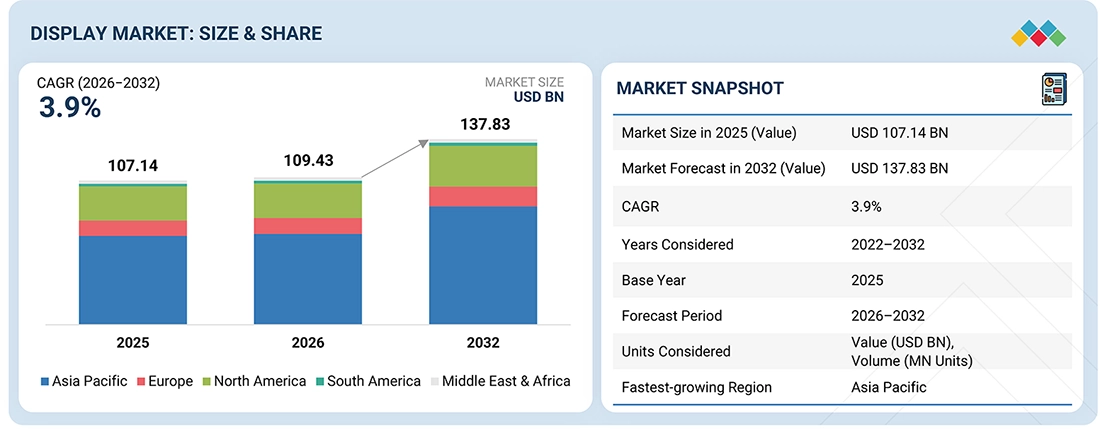
According to Marketsandmarkets, the global display market size is projected to grow from USD 109.43 billion in 2026 to USD 137.83 billion by 2032, growing at a CAGR of 3.9% from 2026 to 2032. The transition from traditional LCD displays to advanced technologies such as OLED, Mini-LED, and Micro-LED is accelerating market growth. These technologies offer advantages including improved image quality, deeper blacks, higher energy efficiency, thinner form factors, and greater design flexibility. Their adoption is expanding beyond premium smartphones and televisions to include laptops, automotive displays, wearables, and commercial applications. Continuous technological advancements and declining manufacturing costs are expected to further support their penetration across multiple verticals, including consumer electronics, sports & entertainment, and automotive.
Unlike the Display Module Market, this report does not measure the complete integrated display module value, which may include driver ICs, touch sensors, backlight units, optical components, mechanical assemblies, and other value-added hardware.
REPORT SCOPE
| REPORT METRIC | DETAILS |
|---|---|
| Market Size in 2025 (Value) | USD 107.14 Billion |
| Market Forecast in 2026 (Value) | USD 109.43 Billion |
| Market Forecast in 2032 (Value) | USD 137.83 Billion |
| CAGR | CAGR of 3.9% from 2026-2032 |
| Years Considered | 2022–2032 |
| Base Year | 2025 |
| Forecast Period | 2026–2032 |
| Units Considered | Value (USD Billion), Volume (Million Units) |
| Report Coverage | Revenue Forecast, Company Ranking, Competitive Landscape, Growth Factors, and Trends |
| Segments Covered |
|
| Regions Covered | North America, Europe, Asia Pacific, South America, and Middle East & Africa |
KEY TAKEAWAYS
-
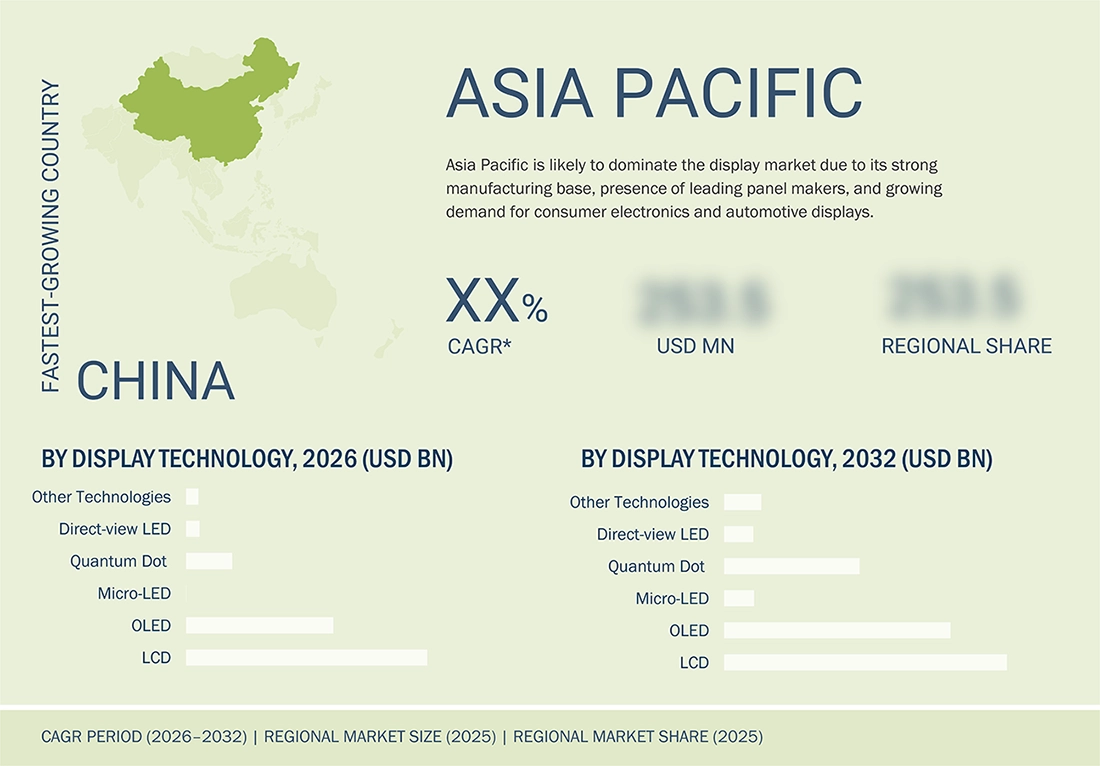
BY REGIONThe Asia Pacific region is anticipated to record the highest CAGR of 4.5% in the display market during the forecast period.
-
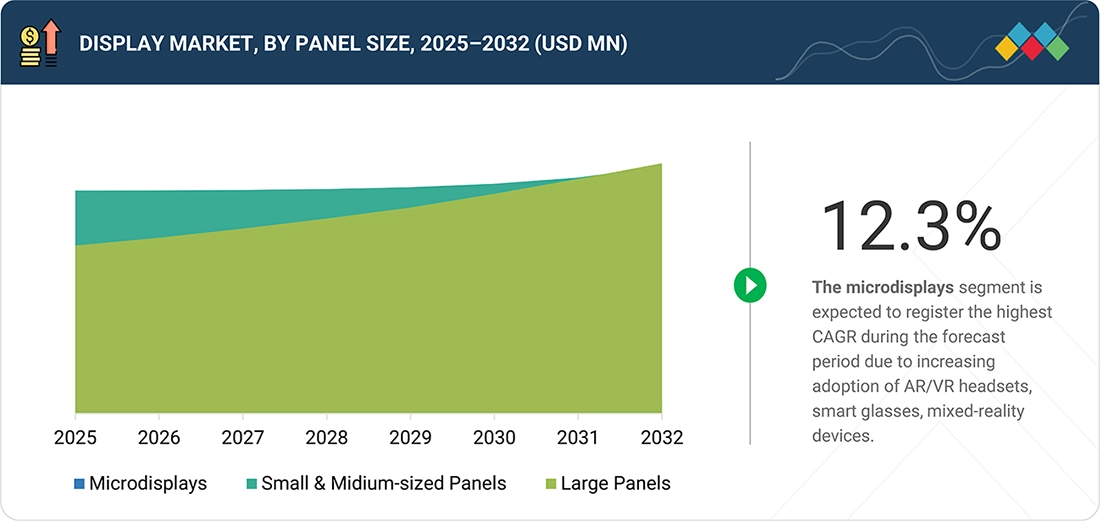
BY PANEL SIZEMicrodisplays are expected to register the highest CAGR of 12.3% in the display market, by panel size, from 2026 to 2032.
-
BY VERTICALThe aerospace & defense vertical is expected to witness the highest CAGR of 22.6% in the display market during the forecast period.
-
BY DISPLAY TECHNOLOGYMicro-LED is expected to be the fastest-growing display technology during the forecast period.
-
BY PRODUCT TYPETelevision sets are expected to account for the largest share of the display market, by product type, in 2032.
-
COMPETITIVE LANDSCAPE (KEY PLAYERS)Samsung Display, LG Display, BOE Technology Group, and AUO Corporation were identified as key players in the display market due to their heavy investments in fabrication facilities, process technologies, and research and development to improve resolution, brightness, energy efficiency, and form factors.
-
COMPETITIVE LANDSCAPE (STARTUPS/SMES)Porotech, Aledia, and VueReal are notable startups and SMEs that are gaining traction owing to their focus on niche applications, rapid innovation, and customized solutions for wearables, smart glasses, automotive, healthcare, and industrial devices, enabling them to compete effectively with established display manufacturers.
The increasing consumer preference for superior visual experiences is a major factor driving the display market. Demand for high-resolution displays, including Full HD, 4K, and 8K panels, continues to rise across televisions, smartphones, laptops, monitors, and gaming devices. Consumers are increasingly seeking displays with enhanced color accuracy, contrast ratios, brightness, and refresh rates to support high-quality content consumption, gaming, and professional applications. This trend is encouraging manufacturers to invest in advanced display technologies and expand production capacities.
Source: Secondary Research, Interviews with Experts, MarketsandMarkets Analysis
TRENDS & DISRUPTIONS IMPACTING CUSTOMERS' CUSTOMERS
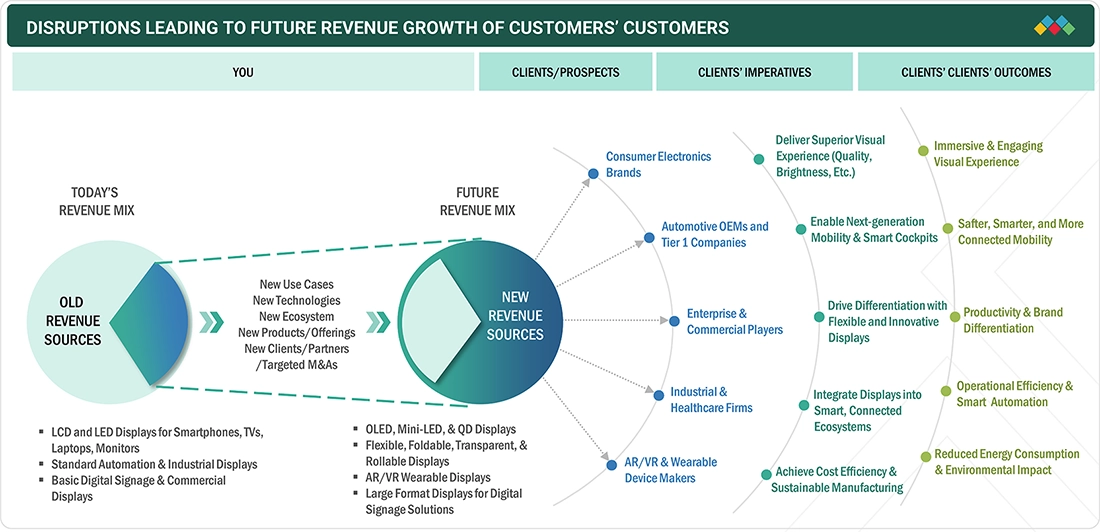
The display market is expected to undergo a significant transformation over the next 7–10 years, with revenue shifting from traditional LCD and LED display technologies toward next-generation display solutions such as OLED, Mini-LED, Micro-LED, QD displays, and flexible form factors. This transition is being driven by the emergence of new use cases, technological innovations, evolving customer requirements, and expanding ecosystem partnerships. Consumer electronics brands, automotive OEMs, enterprise players, industrial users, and AR/VR device manufacturers are increasingly demanding displays that offer superior visual performance, enhanced connectivity, design flexibility, and energy efficiency. As a result, display manufacturers are focusing on advanced display upgrades and innovative solutions that enable immersive user experiences, smart mobility applications, productivity enhancements, and sustainable operations. The analysis highlights that future growth opportunities in the display market will be concentrated in high-value, application-specific display technologies rather than conventional display products, making innovation and portfolio diversification critical for long-term revenue expansion.
Source: Secondary Research, Interviews with Experts, MarketsandMarkets Analysis
MARKET DYNAMICS

Level
-
Rising demand for high-resolution and premium displays across consumer electronics

-
Increasing adoption of OLED, Mini-LED, and Micro-LED technologies


Level
-
Intense price competition and declining average selling prices (ASPs)

-
High manufacturing costs of OLED and Micro-LED displays


Level
-
Development of flexible, foldable, transparent, and rollable displays

-
Growth of AR/VR and mixed-reality devices


Level
-
Achieving cost-effective mass production of Micro-LED and other next-generation displays

-
Supply chain disruptions and dependence on critical materials

Source: Secondary Research, Interviews with Experts, MarketsandMarkets Analysis
Driver: Rising demand for high-resolution and premium displays across consumer electronics
The growing consumer preference for enhanced visual experiences is driving demand for high-resolution displays, including 4K and 8K panels, across smartphones, televisions, laptops, gaming monitors, and tablets. Increasing consumption of digital content, gaming, and streaming services is further accelerating the adoption of premium display technologies.
Restraint: Intense price competition and declining average selling prices (ASPs)
The display market is characterized by intense competition among manufacturers, particularly in Asia Pacific, leading to continuous price reductions and declining average selling prices. While lower prices support demand growth, they also exert significant pressure on profit margins and profitability across the value chain.
Opportunity: Development of flexible, foldable, transparent, and rollable displays
Advancements in display materials and manufacturing technologies are enabling the commercialization of flexible, foldable, transparent, and rollable displays. These innovations are creating new product categories and use cases across consumer electronics, automotive, retail, and commercial applications, opening significant growth opportunities for market participants.
Challenge: Achieving cost-effective mass production of Micro-LED and other next-generation displays
Despite their technological advantages, next-generation display technologies such as Micro-LED face challenges related to manufacturing complexity, low production yields, and high production costs. Scaling these technologies for mass-market adoption while maintaining quality and profitability remains a critical challenge for industry participants.
DISPLAY MARKET SIZE, SHARE & GROWTH ANALYSIS: COMMERCIAL USE CASES ACROSS INDUSTRIES
| COMPANY | USE CASE DESCRIPTION | BENEFITS |
|---|---|---|
 |
Samsung Display continues to expand its OLED portfolio for smartphones, IT devices, automotive displays, and emerging XR applications through innovations in foldable, flexible, and high-resolution display technologies. | Enhanced display quality and color accuracy | Reduced power consumption | Enabled foldable and flexible form factors | Strengthened premium device differentiation |
 |
BOE is investing heavily in OLED, Mini-LED, and flexible display technologies while expanding production capacity to address growing demand from consumer electronics and automotive applications. | Increased production scalability | Broader customer reach | Enhanced display performance | Improved competitiveness in premium display segments |
 |
LG Display is advancing OLED and large-format display technologies for TVs, automotive applications, and commercial displays, focusing on improved brightness, durability, and energy efficiency. | Superior viewing experience | Improved energy efficiency | Expanded adoption of OLED technology | Enhanced automotive and premium TV offerings |
Logos and trademarks shown above are the property of their respective owners. Their use here is for informational and illustrative purposes only.
MARKET ECOSYSTEM
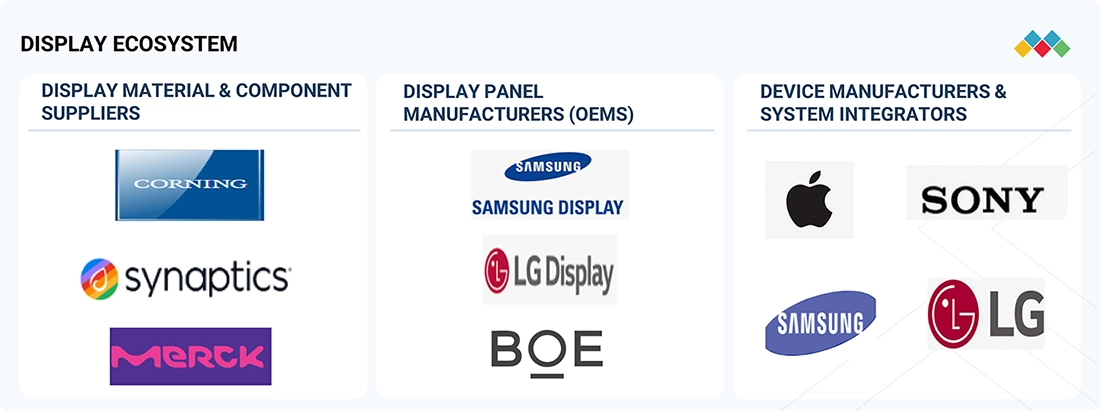
The display ecosystem primarily comprises three interconnected groups that collectively drive innovation, production, and commercialization of display technologies. Display material and component suppliers, such as Corning Incorporated, Merck KGaA, and Universal Display Corporation, provide essential inputs, including display glass, OLED emissive materials, polarizers, driver ICs, and semiconductor components that determine display performance, efficiency, and durability. Display panel manufacturers, including Samsung Display, LG Display, BOE Technology Group, and AUO Corporation, utilize these materials to design and manufacture LCD, OLED, Mini-LED, and Micro-LED panels while investing heavily in advanced fabrication technologies and capacity expansion. Device manufacturers and system integrators, such as Apple Inc., Samsung Electronics, Sony Group Corporation, and LG Electronics, incorporate these display panels into smartphones, televisions, laptops, automotive infotainment systems, digital signage, wearables, and AR/VR devices. Together, these ecosystem participants form an integrated value chain that enables continuous technological advancements and supports the long-term growth of the global display market.
Logos and trademarks shown above are the property of their respective owners. Their use here is for informational and illustrative purposes only.
MARKET SEGMENTS
Source: Secondary Research, Interviews with Experts, MarketsandMarkets Analysis
Display Market, By Display Technology
LCD technology accounts for the largest market share due to its cost-effectiveness, mature manufacturing ecosystem, high production capacity, and widespread adoption across televisions, monitors, laptops, smartphones, digital signage, and industrial applications. Despite the growing adoption of OLED and Micro-LED technologies, LCD remains the preferred choice for high-volume and price-sensitive applications because it offers a strong balance of performance, reliability, and affordability.
Display Market, By Panel Size
The microdisplays segment is expected to register the highest CAGR during the forecast period due to increasing demand for AR/VR headsets, smart glasses, mixed-reality devices, wearable electronics, and defense visualization systems, all of which require compact, lightweight, and ultra-high-resolution displays with high pixel density and low power consumption.
Display Market, Product Type
Smartphones are expected to account for the largest share of the display market during 2026–2032 due to their high shipment volumes, widespread global adoption, and increasing integration of advanced display technologies such as OLED, LTPO OLED, and foldable displays. Continuous device replacement cycles and growing demand for premium smartphones further support the segment's dominant market position.
Display Market, Vertical
Consumer electronics is expected to account for the largest share of the display market during the forecast period owing to the massive shipment volumes of smartphones, televisions, laptops, monitors, tablets, and wearable devices. Continuous product replacement cycles, increasing adoption of OLED and Mini-LED technologies, and growing demand for high-resolution displays contribute to the segment's dominant position.
REGION
Asia Pacific to be fastest-growing region in display market during forecast period
Asia Pacific is expected to dominate the display market in terms of both market share and CAGR due to the presence of major display manufacturers such as Samsung Display and LG Display, coupled with the region's extensive consumer electronics manufacturing ecosystem. The growing adoption of smartphones, televisions, laptops, electric vehicles, and advanced display technologies such as OLED and Micro-LED, particularly in China, South Korea, Japan, and India, further supports the region's leadership position and sustained market growth.
DISPLAY MARKET SIZE, SHARE & GROWTH ANALYSIS: COMPANY EVALUATION MATRIX
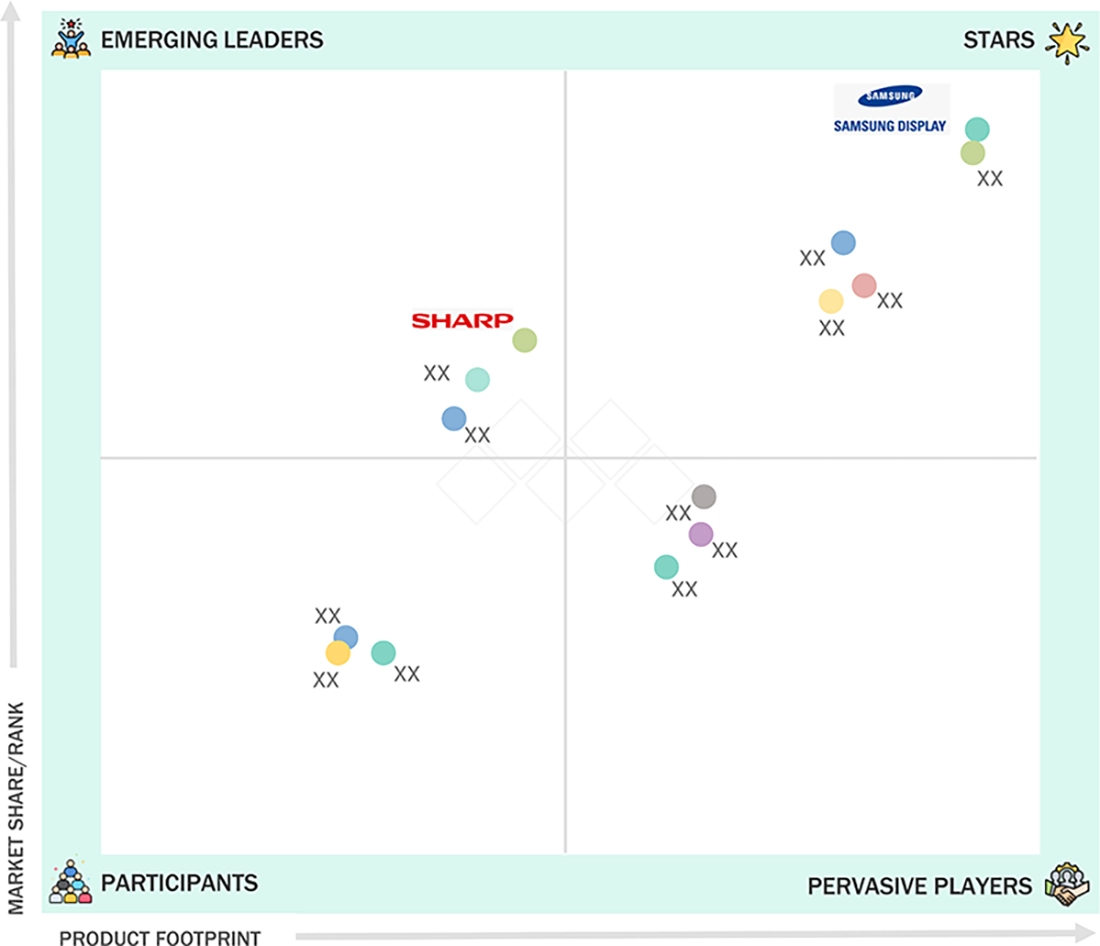
Samsung Display is a star player in the display market owing to its leadership in OLED technologies, large-scale manufacturing capabilities, and continuous innovation in next-generation displays. In contrast, Sharp Corporation is emerging as a leader by expanding its presence in high-value segments such as automotive, industrial, and large-format displays, leveraging its expertise in advanced display technologies and niche applications.
Source: Secondary Research, Interviews with Experts, MarketsandMarkets Analysis
KEY MARKET PLAYERS
- Samsung Display (South Korea)
- LG Display (South Korea)
- BOE Technology Group (China)
- AUO Corporation (Taiwan)
- Innolux Corporation (Taiwan)
- Sharp Corporation (Japan)
- Tianma Microelectronics (China)
- Sony Group Corporation (Japan)
- Japan Display Inc. (Japan)
- Visionox (China)
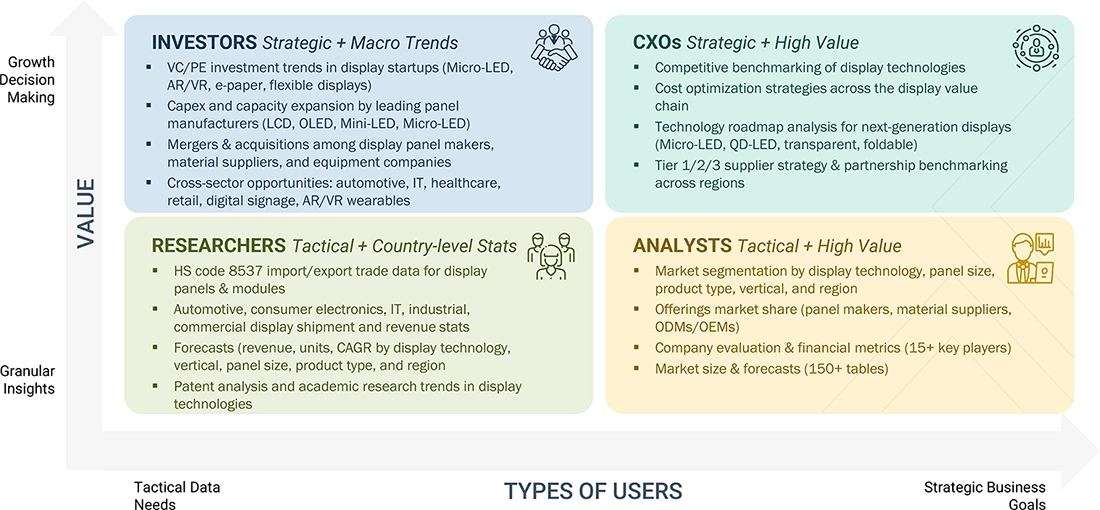
WHAT IS IN IT FOR YOU: DISPLAY MARKET SIZE, SHARE & GROWTH ANALYSIS REPORT CONTENT GUIDE
DELIVERED CUSTOMIZATIONS
We have successfully delivered the following deep-dive customizations:
| CLIENT REQUEST | CUSTOMIZATION DELIVERED | VALUE ADDS |
|---|---|---|
| Consumer Electronics OEM | Competitive benchmarking of OLED, LCD, Mini-LED, and Micro-LED adoption strategies, display sourcing analysis, and product roadmap assessment across smartphones, TVs, laptops, tablets, and wearables |
|
| Display Panel Manufacturer | Application-specific analysis of display demand across consumer electronics, automotive, healthcare, industrial, and commercial sectors, including technology transition assessment and capacity planning |
|
| Display Material & Component Supplier | Assessment of demand trends for display glass, OLED materials, driver ICs, backlighting units, polarizers, and semiconductor components, including supply chain and pricing analysis |
|
| Automotive & Mobility Company | Evaluation of display requirements for digital cockpits, infotainment systems, passenger displays, head-up displays (HUDs), and software-defined vehicles |
|
| Commercial Display & Digital Signage Provider | Analysis of display deployment trends across retail, hospitality, transportation, education, healthcare, and smart city infrastructure applications |
|
| AR/VR & Wearable Device Developer | Evaluation of microdisplay technologies, display performance requirements, supply ecosystem, and commercialization strategies for smart glasses and immersive devices |
|
| Industrial & Healthcare Equipment Manufacturer | Assessment of display adoption trends in medical imaging, surgical visualization, industrial automation, control systems, and ruggedized display applications |
|
RECENT DEVELOPMENTS
- August 2026: LG Display unveiled FLiPP (FMM-Less innovative Pixel Patterning), a new OLED manufacturing technology that replaces conventional fine metal masks with photolithography and UV-based pixel patterning. LG Display says FLiPP can deliver 1.6× higher brightness, 2.4× longer panel lifespan and 13% lower power consumption while enabling greater flexibility in panel size and resolution. The company plans to apply the technology initially to IT displays such as tablets and monitors, making this a significant development in next-generation OLED display manufacturing.
- August 2026: BOE Technology Group and 3M launched a joint laboratory focused on accelerating display-technology innovation across LCD, OLED and MLED applications. The collaboration combines BOE’s display-development capabilities with 3M’s materials and optical technologies to pursue advances in display performance and manufacturing. The initiative directly supports continued development of advanced display technologies and strengthens BOE’s R&D ecosystem in the global display market.
- July 2026: Samsung Display began full-scale supply of tandem OLED laptop panels meeting VESA DisplayHDR True Black 1400, with peak brightness of up to 1,600 nits. The company is supplying the panels to global PC manufacturers and showcased the technology at K-Display 2026, positioning the higher-brightness tandem architecture for premium laptops. The development directly advances OLED display performance in the premium IT-display segment.
- May 2026: Tianma Microelectronics showcased a broad portfolio of next-generation display technologies at SID Display Week 2026, including a Micro-LED HUD, ultra-high-refresh AMOLED and a glasses-free 3D medical display. Its workspace portfolio also included advanced Oxide LCD, AM-OLED and 2D/3D visualization technologies targeting professional, industrial, medical, notebook, tablet and gaming applications. The demonstrations highlight Tianma’s expansion of advanced display architectures across multiple high-growth display applications.
- May 2026: AUO Corporation showcased transparent Micro LED as the centerpiece of its next-generation display roadmap at SID Display Week 2026, combining display, sensing and AI technologies for interactive applications. The company presented transparent Micro LED solutions for smart mobility and other applications while highlighting advances in low-power displays, materials and system-level integration. The development demonstrates AUO’s continued push toward commercially scalable Micro LED and interactive display technologies.
Table of Contents
 Exclusive indicates content/data unique to MarketsandMarkets and not available with any competitors.
Methodology
The research process for this technical, market-oriented, and commercial study of the display market included the systematic gathering, recording, and analysis of data about companies operating in the market. It involved the extensive use of secondary sources, directories, and databases (Factiva and Oanda) to identify and collect relevant information. In-depth interviews were conducted with various primary respondents, including experts from core and related industries and preferred manufacturers, to obtain and verify critical qualitative and quantitative information as well as to assess the growth prospects of the market. Key players in the display market were identified through secondary research, and their market rankings were determined through primary and secondary research. This included studying annual reports of top players and interviewing key industry experts, such as CEOs, directors, and marketing executives.
Secondary Research
In the secondary research process, various secondary sources were referred to for identifying and collecting information relevant to this study. Secondary sources include annual reports, press releases, and investor presentations of companies; white papers, certified publications, and articles from recognized authors; directories; and databases. Secondary research has been mainly conducted to obtain key information about the supply chain and value chain of the industry; a total pool of key players; segmentation of the market according to the industry trends, geographic markets, and key developments from market- and technology-oriented perspectives.
Primary Research
In the primary research process, primary sources from the supply and demand sides were interviewed to obtain qualitative and quantitative information for this report. Primary sources from the supply side include experts, such as CEOs, vice presidents, marketing directors, technology and innovation directors, subject-matter experts, consultants, and related key executives from major companies and organizations operating in the display market.
After the complete market engineering process (market statistics calculations, market breakdown, market size estimations, market forecasting, and data triangulation), extensive primary research was conducted to gather information and verify and validate the critical market numbers.
Several primary interviews were conducted with experts from the demand and supply sides across four major regions—North America, Europe, Asia Pacific, and RoW (South America and the Middle East & Africa). This primary data was collected through questionnaires, emails, and telephonic interviews.
BREAKDOWN OF PRIMARY INTERVIEW PARTICIPANTS
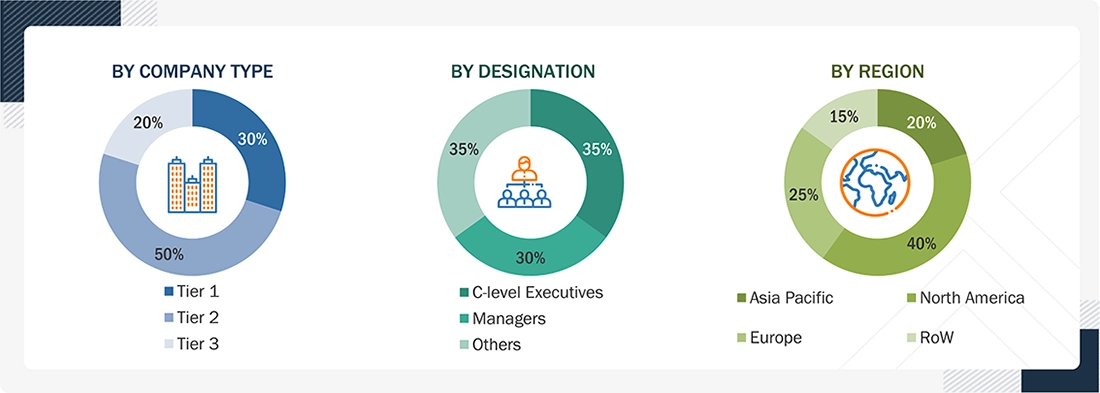
Note: Other designations include product managers, sales managers, and marketing managers.
Three tiers of companies have been defined based on their total revenue as of 2025: tier 3: revenue less than USD 500 million; tier 2: revenue between USD 500 million and USD 1 billion; and tier 1: revenue more than USD 1 billion.
RoW includes South America and the Middle East & Africa.
To know about the assumptions considered for the study, download the pdf brochure
Market Size Estimation
In the complete market engineering process, top-down and bottom-up approaches and several data triangulation methods were used to estimate and forecast the overall market segments and subsegments listed in this report. Key players in the market were identified through secondary research, and their market shares in the respective regions were determined through primary and secondary research. This entire procedure included the study of annual and financial reports of the top market players and extensive interviews for key insights (quantitative and qualitative) with industry experts (CEOs, VPs, directors, and marketing executives).
All percentage shares, splits, and breakdowns were determined using secondary sources and verified through primary sources. All the parameters affecting the markets covered in this research study were accounted for, viewed in detail, verified through primary research, and analyzed to obtain the final quantitative and qualitative data. This data was consolidated and supplemented with detailed inputs and analysis from MarketsandMarkets and presented in this report.
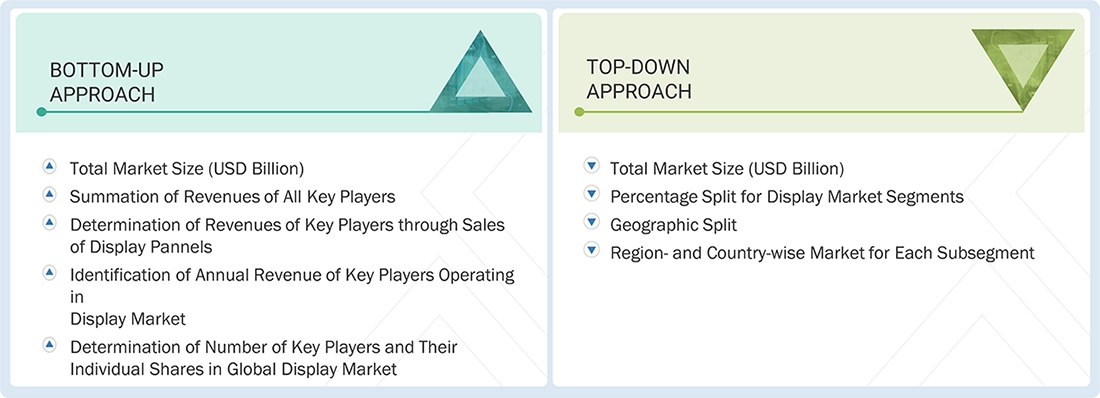
BOTTOM-UP APPROACH
- Companies offering display panels were identified, and their offerings were mapped based on technology and panel size footprint.
- The global display market size was derived through the data sanity method. The revenues of display panel providers were analyzed through annual reports and press releases and summed up to derive the overall market size.
- For each company, a percentage was assigned to the overall revenue to derive the revenues from display panels.
- Each company’s percentage was assigned after analyzing various factors, including its product offerings, geographic presence, R&D expenditures and initiatives, and recent developments/strategies adopted for growth in the display market.
- For the CAGR, the market trend analysis of display panels was carried out by understanding the industry penetration rate and the demand and supply of display panels to different verticals.
- Estimates at every level were verified and cross-checked by discussing them with key opinion leaders, including sales heads, directors, operations managers, and market domain experts of MarketsandMarkets.
- Various paid and unpaid information sources, such as annual reports, press releases, white papers, and databases, were studied.
TOP-DOWN APPROACH
- Focusing initially on the top-line investments and expenditures being made in the ecosystem of displays, further splitting into display technology, panel size, vertical, and product type, and listing key developments in key market areas
- Identifying all major players in the display market and their product portfolio for various verticals through secondary research, as well as verifying with a brief discussion with industry experts
- Analyzing revenues, product mix, geographic presence, and key verticals for which all identified players serve display products/technologies to estimate and arrive at the percentage splits for all key segments
- Discussing these splits with the industry experts to validate the information and identify key growth pockets across all key segments
- Breaking down the total market based on verified splits and key growth pockets across all segments
Display Market : Top-Down and Bottom-Up Approach
Data Triangulation
After arriving at the overall market size, the market was split into several segments and subsegments using the market size estimation processes as explained above. Data triangulation and market breakdown procedures were employed to complete the entire market engineering process and determine each market segment's and subsegment's exact statistics. The data was triangulated by studying various factors and trends from the demand and supply sides in the display market.
Market Definition
The display market comprises technologies, components, and systems used to visualize information, images, videos, and interactive content across a wide range of electronic devices and applications. The market includes display panels and solutions based on LCD, OLED, Mini-LED, Micro-LED, Quantum Dot, and other emerging technologies used in smartphones, televisions, laptops, monitors, tablets, wearables, automotive displays, digital signage, industrial equipment, healthcare devices, and AR/VR systems. Market growth is driven by increasing demand for high-resolution, energy-efficient, and advanced display solutions that enhance user experience, support digital transformation, and enable next-generation applications across consumer, commercial, automotive, and industrial sectors.
Key Stakeholders
- Raw material suppliers
- Original equipment manufacturers (OEMs)
- Technology providers
- Research institutes
- Market research and consulting firms
- Government agencies and financial institutions
- Analysts and strategic business planners
Report Objectives
- To describe and forecast the display market by display technology, panel size, vertical, product type, and region, in terms of value
- To describe and forecast the market for various segments across four main regions, namely, North America, Europe, Asia Pacific, South America, and the Middle East & Africa, in terms of value
- To describe and forecast the global market size, in terms of volume
- To strategically analyze micromarkets1 about individual growth trends, prospects, and their contribution to the market
- To provide detailed information regarding the drivers, restraints, opportunities, and challenges influencing market growth
- To analyze opportunities for stakeholders by identifying high-growth segments in the market
- To provide a detailed overview of the display value chain
- To strategically profile the key players in the automotive sensors market and comprehensively analyze their market shares and core competencies2
- To analyze competitive developments such as partnerships, acquisitions, expansions, collaborations, and product launches, along with R&D activities in the display market
- To provide interconnected markets and cross-sector opportunities, strategic moves by tier 1/2/3 players, ecosystem analysis, case study analysis, patent analysis, technology analysis, impact of AI/Gen AI, key conferences and events, Porter’s five forces analysis, and regulations pertaining to the market under study
Available customizations:
With the given market data, MarketsandMarkets offers customizations according to the company’s specific needs. The following customization options are available for the report:
Company Information
- Detailed analysis and profiling of additional market players (up to five)


Personalize This Research
- Triangulate with your Own Data
- Get Data as per your Format and Definition
- Gain a Deeper Dive on a Specific Application, Geography, Customer or Competitor
- Any level of Personalization
Let Us Help You
- What are the Known and Unknown Adjacencies Impacting the Display Market
- What will your New Revenue Sources be?
- Who will be your Top Customer; what will make them switch?
- Defend your Market Share or Win Competitors
- Get a Scorecard for Target Partners

Custom Market Research Services
We Will Customise The Research For You, In Case The Report Listed Above Does Not Meet With Your Requirements
Get 10% Free CustomisationTESTIMONIALS

Tetsuya Ohhira
Business Development Manager-Technology Business
Nikon Corporation,
Leading Japanese MNC specializing in optics and imaging productswww.nikon.com
MarketsandMarkets™ response
is quick. Their attitude is flexible and positive. Analyst Insights are globally considered and
significant. Client Services quickly respond to our inquiry and demand. Their wide range of global
surveys help us make our strategic plan.
We hope Knowledge Store will be easier to search
for a report.
VP - Marketing & Business Development
Leading Provider of Process Control Solutions
We engaged with MarketsandMarkets on a study to perform an analysis and recommend a Go-To-Market strategy for metrology and process control in the semiconductor market. The study was tailored to our targets and needs with well-defined milestones. Our overall experience with the MarketsandMarkets team was very good throughout the project in all aspects including the analysis methodologies used, the quality and depth of primary and secondary data sets, the professionalism and flexibility of the team and the ability to meet the target schedule and milestones. We want to thank MarketsandMarkets team for a job well done.
- Japan Display Market
- South Korea Display Market
- Taiwan Display Market
- Rest Of Asia Pacific Display Market
- GCC Display Market
- South Africa Display Market
- US Display Market
- Canada Display Market
- Mexico Display Market
- Germany Display Market
- UK Display Market
- France Display Market
- Rest Of Europe Display Market
- China Display Market
Growth opportunities and latent adjacency in Display Market






Preston
Apr, 2026
How does this report help identify the most profitable investment segments such as OLED or Micro-LED for the next 5 years?.
Larry
Apr, 2026
How can this report help me in identifying emerging opportunities in AR/VR, automotive displays, and smart IoT-based display applications?.