US Medical Aesthetics Market

US Medical Aesthetics Market by Product (Botox, Filler, Peel, Liposuction, Microneedling, Hair Removal, Laser Resurfacing, RF), Device type (Multimodal, At-home), Procedure (Surgical, Nonsurgical), End User (Hospital, Beauty Clinic, Spa) - Forecast to 2031




US MEDICAL AESTHETICS MARKET SIZE, SHARE & GROWTH SNAPSHOT
Source: Secondary Research, Interviews with Experts, MarketsandMarkets Analysis
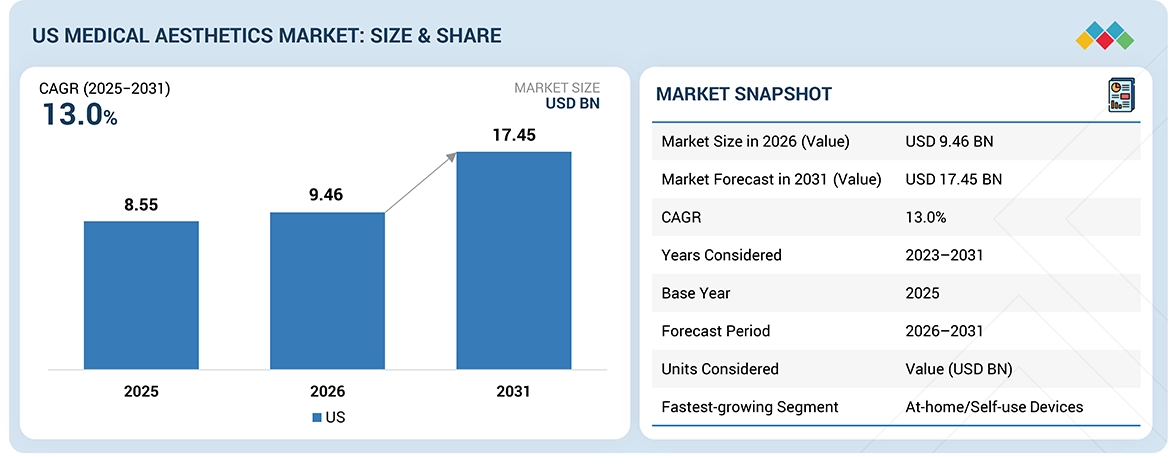
The US medical aesthetics market is projected to grow from USD 9.46 billion in 2026 to USD 17.45 billion by 2031, at a CAGR of 13.0% during the forecast period. The market was valued at USD 8.55 billion in 2025. The medical aesthetics industry in the US is primarily driven by a growing consumer preference for minimally invasive procedures, influenced by social media, along with an aging population and rising disposable incomes. Strict US regulations help build consumer confidence in treatments such as injectables (botulinum toxin, dermal fillers), energy-based devices (lasers, RF, ultrasound), and body contouring, which together account for about 55% of procedure volume due to their low downtime and high effectiveness. The US boasts some of the world's most advanced clinical infrastructure, supported by a high concentration of board-certified physicians, bolstering the medical aesthetics market. The ongoing introduction of new technologies, such as AI-based personalization and combined therapies, along with widespread medical centers and clinics, drives rapid adoption. Additionally, the increasing willingness of the US population to undergo elective aesthetic procedures, coupled with faster commercialization of new treatments, is expected to propel the market in the coming years.
KEY TAKEAWAYS
-
BY PRODUCTBy product, the facial aesthetics segment accounted for a 61.0% revenue share in 2025.
-
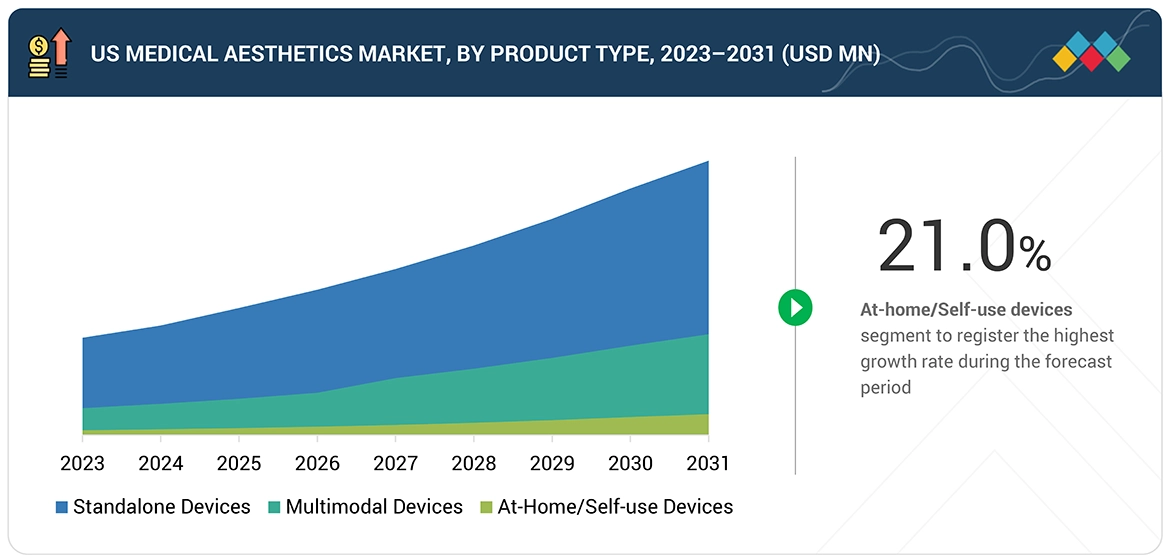
BY PRODUCT TYPEBy product type, the at-home/self-use devices segment is expected to register the highest CAGR of 21.0% during the forecast period.
-
BY PROCEDUREBy procedure, the surgical procedures segment is expected to register the highest CAGR of 12.5% during the forecast period.
-
BY END USERBy end user, the dermatology clinics, hospitals, and medical spas segment accounted for a 92.0% share of the US medical aesthetics market in 2025.
-
COMPETITIVE LANDSCAPE- KEY PLAYERSCompanies such as AbbVie (US), Cynosure Lutronic (US), and Inmode (Israel) were identified as key players in the US medical aesthetics market. Collaborating with hospitals, dermatology chains, and medispas to expand market presence while adhering to international safety and efficacy standards enhances credibility and drives strong demand for medical aesthetics in the US.
-
COMPETITIVE LANDSCAPE- STARTUPSCompanies like Merz Aesthetics (US), Medytox (South Korea), and PhotoMedex (US), among others, have built a solid foothold in the US medical aesthetics market by focusing on emerging trends like at-home/self-use devices or non-invasive treatments. These SMEs are gaining market share by collaborating with local distributors, beauty centers, and small medispas. They emphasize close client relationships, quicker response times, and a thorough understanding of regional client preferences and regulatory nuances.
The US medical aesthetics market is expected to experience steady growth from 2026 to 2031. This growth is primarily driven by an increasing consumer preference for minimally invasive procedures, heavily influenced by social media. Additionally, factors such as an aging population and rising disposable incomes contribute to this trend. Strict regulations in the US are also helping to build consumer confidence in a variety of treatments, including injectables (such as botulinum toxin and dermal fillers), energy-based devices (like lasers, radiofrequency, and ultrasound), and body contouring. Together, these treatments account for approximately 55% of the procedure volume, due to their low downtime and high effectiveness.
TRENDS & DISRUPTIONS IMPACTING CUSTOMERS' CUSTOMERS
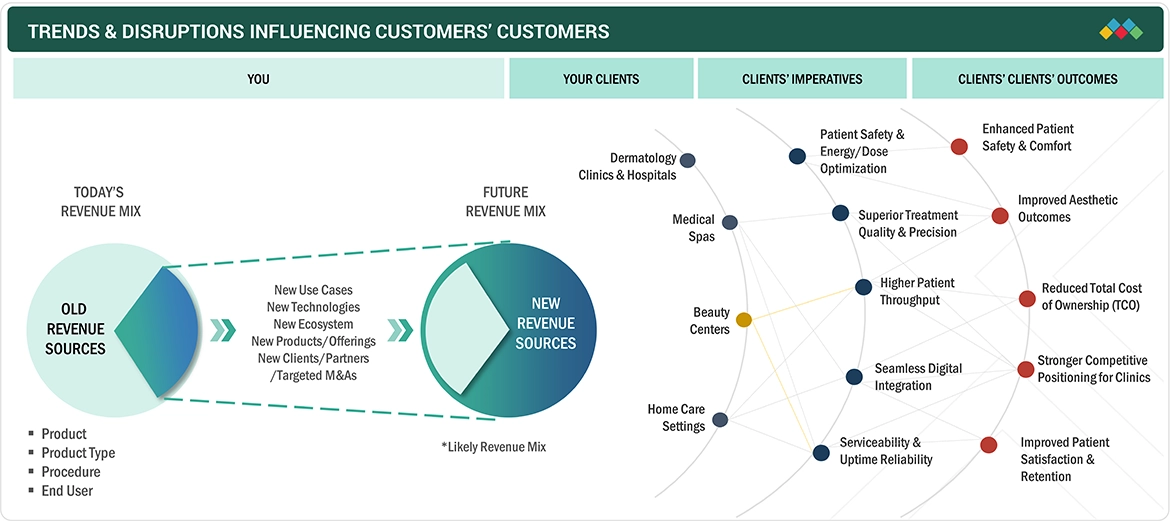
The US medical aesthetics market has witnessed a paradigm shift in its revenue base, with new applications, technologies, ecosystems, and strategic collaborations projected to contribute around 80% of revenue over the next 4-5 years, up from the current 20%. The key customer groups, including dermatology clinics, hospitals, medical spas, beauty centers, and home care, are shaping the landscape of the US medical aesthetics market with their evolving requirements of better patient safety, better utilization of energy/dose, best treatment quality, better productivity, easy integration, and services for the product. These, in turn, are being realized through improved patient safety and comfort, better aesthetic outcomes, reduced TCO, stronger competitive positioning for clinics, and increased patient satisfaction and loyalty among US medical aesthetics market players.
Source: Secondary Research, Interviews with Experts, MarketsandMarkets Analysis
MARKET DYNAMICS

Level
-
Growing demand for non-invasive and minimally invasive aesthetic procedures

-
Rising influence of social media and digital platforms


Level
-
Safety concerns and risk of adverse effects associated with aesthetic procedures

-
Complex and evolving regulatory frameworks


Level
-
Increasing acceptance of aesthetic treatments among male consumers

-
Technological advancements such as AI-enabled treatment planning, regenerative aesthetics (PRP, exosomes), and combination therapies


Level
-
High cost of aesthetic treatments and advanced devices

-
Rising medical liability and litigation risks

Source: Secondary Research, Interviews with Experts, MarketsandMarkets Analysis
Driver: Growing demand for non-invasive and minimally invasive aesthetic procedures
Social media has a great influence on beauty trends and the public’s understanding of aesthetic treatments. The promotion of influencers and celebrities, which often goes viral on social media, is the main driver of consumer interest in the procedures. Thus, social media platforms are considered an unavoidable marketing tool by the medical aesthetics industry. Besides, digital platforms have facilitated patient education, and consequently, patients have more trust in the services and the demand increases.
Restraint: Complex and evolving regulatory frameworks
The medical aesthetics market in the US is continuously evolving, with regulatory frameworks and federal authorities shaping the market. The market is regulated by both centralized FDA regulations for medical devices, drugs, and injectables and by state governments that regulate licensing, ownership, and supervision requirements. This fragmented system is creating compliance challenges for hospitals, clinics, and medical spa owners that operate across multiple states.
Opportunity: Increasing acceptance of aesthetic treatments among male consumers
The perception of aesthetics has changed significantly, with more men now seeking non-invasive treatments such as Botox, dermal fillers, and laser procedures. This growing acceptance not only enables medical aesthetics professionals to cater to the male consumer market but also aligns with evolving social standards of masculinity and appearance, benefiting both providers and clients.
Challenge: High cost of aesthetic treatments and advanced devices
The rising demand for medical aesthetics is significant, but the high costs of advanced equipment and procedures pose a substantial barrier for both consumers and companies. These expenses include not only the purchase of expensive machinery but also ongoing maintenance costs and the need for specialized practitioners. Together, these factors limit access for certain customer groups.
US MEDICAL AESTHETICS MARKET: COMMERCIAL USE CASES ACROSS INDUSTRIES
| COMPANY | USE CASE DESCRIPTION | BENEFITS |
|---|---|---|
 |
Supports dermatology clinics and medical aesthetic centers across US with injectable treatments for facial rejuvenation, anti-aging, contouring, and skin quality improvement. | Enables clinics to drive higher patient acquisition and retention through trusted, clinically validated brands, supports premium service positioning, and generates recurring revenue through repeat maintenance treatments. |
 |
Provides minimally invasive aesthetic solutions focused on facial volume restoration, wrinkle reduction, and skin health enhancement. | Offers effective non-surgical alternatives that reduce dependence on invasive procedures, improves patient satisfaction and confidence, and strengthens clinic credibility through science-backed products designed for long-term aesthetic and dermatological care. |
 |
Integrates medical aesthetic injectables and neuromodulators into dermatology clinics and aesthetic practices, often complementing spa-style services and advanced skincare offerings. | Aligns strongly with the US’s growing demand for natural-looking, minimally invasive enhancements, supports cross-selling of medical-grade skincare and cosmeceuticals, and enables clinics to expand service offerings. |
 |
Delivers energy-based, non-invasive aesthetic device solutions for skin rejuvenation, body contouring, and vascular treatments. | Enhances clinic differentiation through advanced device-based treatments, strengthens brand visibility and patient trust, and supports high utilization rates due to repeat treatment protocols. |
Logos and trademarks shown above are the property of their respective owners. Their use here is for informational and illustrative purposes only.
MARKET ECOSYSTEM
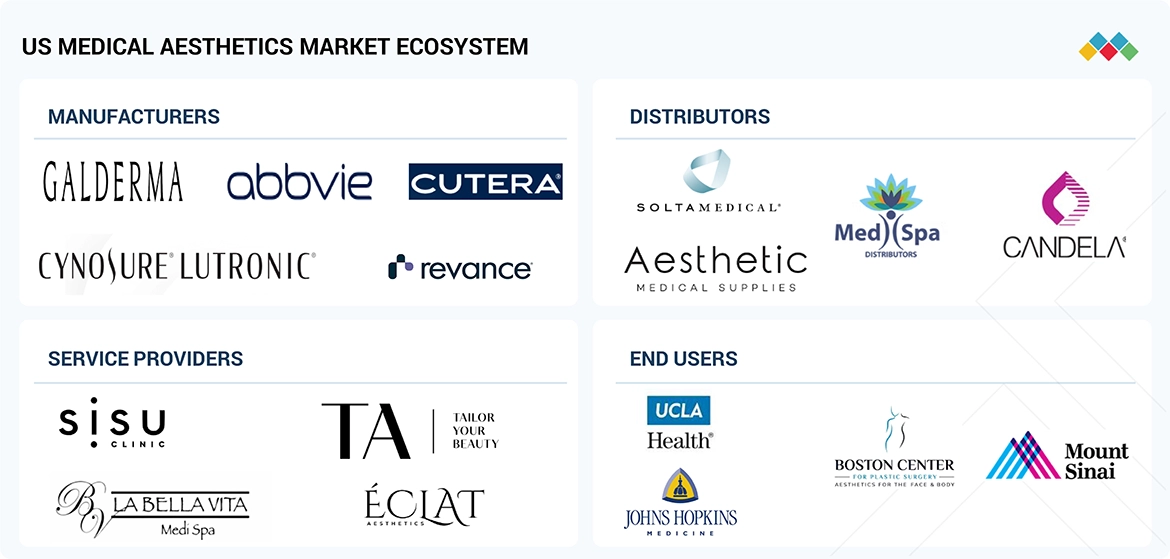
Manufacturers such as Galderma, AbbVie, Cutera, Cynosure- Lutronic, and Revance are developing FDA-approved injectables and energy-based devices supported by clinical research. Distributors such as Solta Medical, Candela, and specialized aesthetic suppliers manage sales, logistics, training, and equipment support, improving market access and accelerating product penetration across various provider networks. Service providers, which range from independent med spas to multi-location aesthetic clinics, are the main point of patient interaction. They choose technologies based on clinical outcomes, return on investment, and patient demand while focusing more on brand experience and repeat treatment models. End users, including academic medical centers and large health systems, play an important role in clinical validation, physician training, and setting standards. This reinforces credibility and affects broader market adoption. Altogether, these segments create an ecosystem driven by feedback where innovation and consumer demand support growth.
Logos and trademarks shown above are the property of their respective owners. Their use here is for informational and illustrative purposes only.
MARKET SEGMENTS
Source: Secondary Research, Interviews with Experts, MarketsandMarkets Analysis
US Medical Aesthetics Market, by Product
The US medical aesthetics market is well-established, offering a diverse range of products. This includes cosmetic implants, physician-prescribed cosmeceuticals, facial aesthetics, body contouring, skin lightening treatments, nail treatments, and laser therapies. Facial aesthetics accounted for the largest market share in 2025, driven by consumer preferences for non-invasive rejuvenation procedures. The market's growth is primarily attributed to the unique characteristics of individual product categories. Advances in sophisticated diagnostic and treatment instruments have transformed these areas, moving beyond traditional approaches. These technological innovations particularly appeal to the elderly population, resulting in increased popularity across age groups. However, the segment is maturing, prompting doctors and clinics to seek new and more effective treatment methods. This makes it a high-growth segment of the US aesthetics market, with particular expansion in major cities across the country.
US Medical Aesthetics Market, by Product Type
The US medical aesthetics market is categorized by product type into standalone and multimodal at-home devices. There has been a significant increase in consumer adoption of devices designed for skincare, anti-aging, body contouring, and hair treatments. These products are particularly appealing for home use due to their excellent safety profiles, effectiveness, and user-friendliness, attracting a larger consumer base that prefers comfortable alternatives to clinic visits. The growing influence of social media and influencer marketing, combined with an increasing demand for personal wellness and beauty, has made these products more accessible to consumers than ever before. As a result, at-home medical aesthetic devices are emerging as one of the fastest-growing segments in the market for producers.
US Medical Aesthetics Market, by End User
The US medical aesthetics market is categorized by end users into dermatology clinics, hospitals, and medical spas; beauty centers; and home-care settings. Dermatology clinics, hospitals, and medical spas hold the largest market share, as they are the primary locations where professional aesthetic procedures are conducted under clinical supervision. These facilities offer reliable and effective treatments, including injectables, laser therapies, body contouring, and skin rejuvenation. Consumer trust stems from the presence of certified practitioners and the stringent regulatory standards in the US. The growth of these end-user settings is driven by the integration of advanced technology, a wide range of treatment options, and well-established patient referral networks. Medical spas, in particular, are gaining popularity by blending clinical precision with wellness experiences, aligning with the increasing demand from US consumers for holistic, premium aesthetic solutions. Additionally, rising disposable incomes and heightened aesthetic awareness contribute to this demand. As a result, the dominance of professional care remains a significant factor enabling these channels to lead the market.
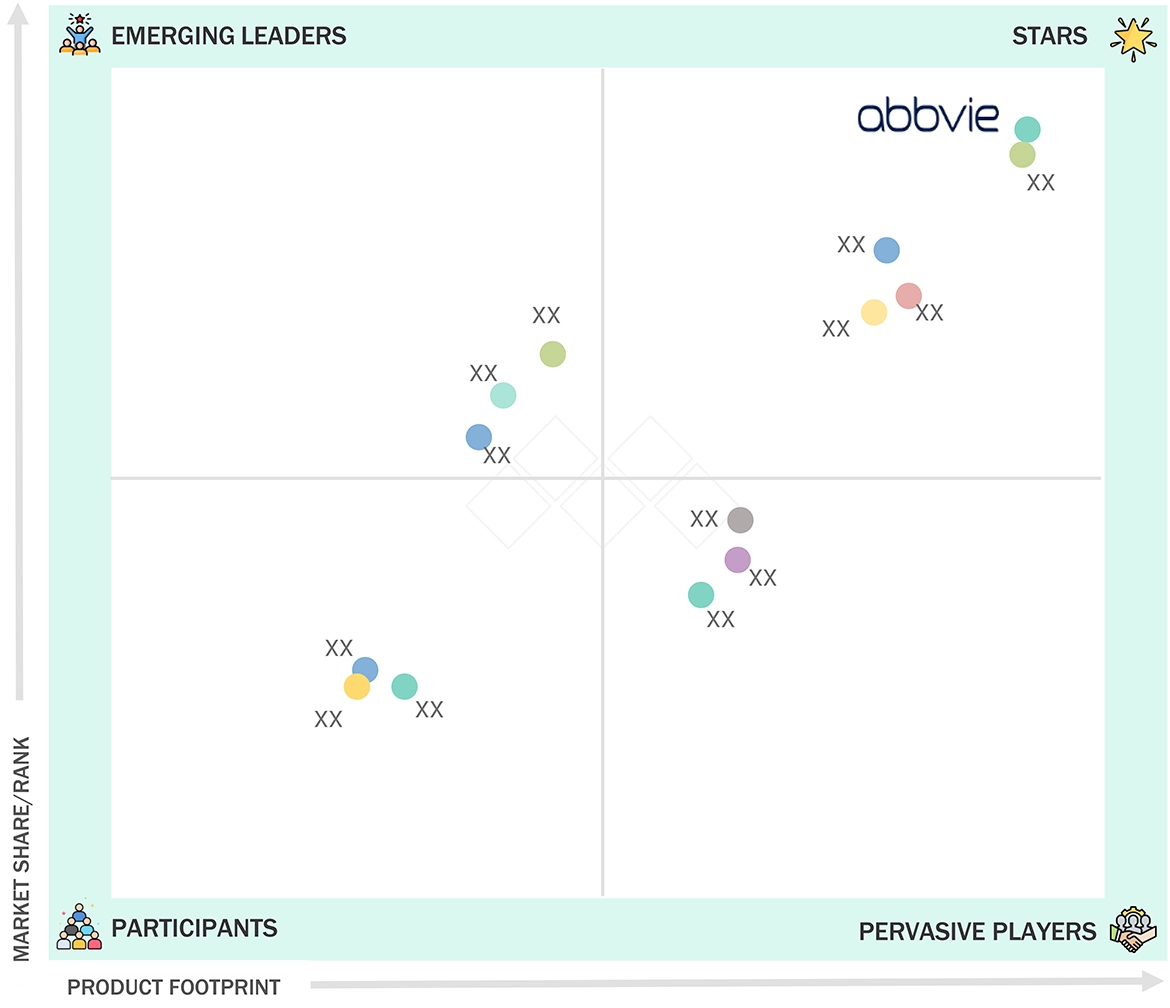
US MEDICAL AESTHETICS MARKET: COMPANY EVALUATION MATRIX
AbbVie occupies the top "STAR" quadrant as a market leader in the US medical aesthetics market, underpinned by product excellence, strategic integration, and superior commercial execution across key regions. The acquisition of Allergan has positioned the company exceptionally well, delivering a portfolio of highly trusted aesthetic brands, including Botox Cosmetic, Juvéderm dermal fillers, CoolSculpting, and complementary facial aesthetics devices that command strong physician confidence, robust clinical evidence, and widespread patient recognition under stringent US FDA standards. Ongoing R&D investments and lifecycle management enable continuous product enhancements, new indications, and next-generation formulations, sustaining AbbVie's competitive edge. Its integrated portfolio—spanning injectables, body contouring, and skin quality solutions—facilitates combination therapies, enhances clinic customer retention, and aligns with the US' demand for premium, minimally invasive treatments.
Source: Secondary Research, Interviews with Experts, MarketsandMarkets Analysis
KEY MARKET PLAYERS
- AbbVie Inc. (US)
- Alma Lasers (Israel)
- Cynosure (US)
- Johnson & Johnson (US)
- Bausch Health Companies Inc. (Canada)
- Cutera (US)
- Galderma (Switzerland)
- El.En. S.p.A. (Italy)
- InMode Ltd (Israel)
- Revance (US)
MARKET SCOPE
| REPORT METRIC | DETAILS |
|---|---|
| Market Size in 2026 (Value) | USD 9.46 Billion |
| Market Forecast in 2031 (value) | USD 17.45 Billion |
| Growth Rate | CAGR of 13.0% from 2026–2031 |
| Years Considered | 2023–2031 |
| Base Year | 2025 |
| Forecast Period | 2026–2031 |
| Units Considered | Value (USD Billion), Volume (Units Sold) |
| Report Coverage | Revenue Forecast, Company Ranking, Competitive Landscape, Growth Factors, and Trends |
| Segments Covered |
|
| Country Covered | US |
| Parent & Related Segment Reports |
Medical Aesthetics Market Energy Based Medical Aesthetics Market Europe Medical Aesthetics Market Asia Pacific Medical Aesthetics Market |
WHAT IS IN IT FOR YOU: US MEDICAL AESTHETICS MARKET REPORT CONTENT GUIDE
DELIVERED CUSTOMIZATIONS
We have successfully delivered the following deep-dive customizations:
| CLIENT REQUEST | CUSTOMIZATION DELIVERED | VALUE ADDS |
|---|---|---|
| Leading Medical Aesthetic Company |
|
|
| Medical Aesthetic Manufacturer |
|
|
RECENT DEVELOPMENTS
- September 2025 : Dermalogica announced the FDA clearance of its PRO Pen Microneedling System as a Class II medical device. The distribution is anticipated to begin in 2026.
- June 2025 : MicronJet USA and TRU Biologix announced a distribution deal with EXOBLANC for its pharmaceutical-grade regenerative skincare line.
- March 2025 : Candela announced the launch of the Glace solution, which is inspired by K-beauty. The treatment combines dual-mode cupping massage, LED technology, and hydrodermabrasion, providing skin hydration and purification.
Table of Contents
 Exclusive indicates content/data unique to MarketsandMarkets and not available with any competitors.
Methodology
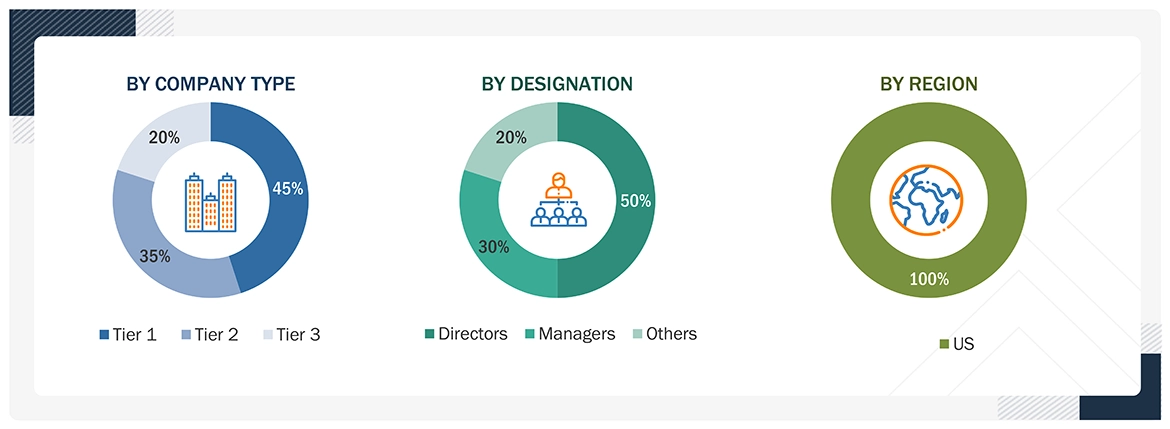
Four primary studies have been undertaken to size the US Medical Aesthetics Market. Secondary research has been used to obtain preliminary data for the US Medical Aesthetics Market and peer and parent markets. Data were collected from 3-5 secondary sources, and validated by primary sources for assumptions and market sizing. Through top-down and bottom-up approaches, the overall market size was informed and further broken down, and data was triangulated for segment and subsegment sizing.
Secondary Research
These included directories, Factiva, white papers, Bloomberg Businessweek, annual reports, SEC filings, business filings, and investor presentations, among others Through these souces, one can gain critical data about market leaders, how the industry is divided into sectors, and how technology varies from one industry level to another within medical aesthetics.
Primary Research
Primary research consisted of interviewing people from the supply side of the business and the demand side to get quantitative and qualitative insights. On the demand side, primary sources involved in the study included physicians, researchers, department heads, staff from diagnostic centers, hospital staff, and those attached to the research institutes, while on the supply side, it involved CEOs, area sales managers, territory and regional sales managers, and various other top executives of relevant companies. These direct meetings with people in key leadership positions helped validate assumptions arising from secondary research and bring them face-to-face so that any assumptions could also be directly
To know about the assumptions considered for the study, download the pdf brochure
Market Size Estimation
The revenue share analysis of major companies was used in this report to determine the size of the US Medical Aesthetics Market. This was accomplished by identifying the major market participants and calculating their medical aesthetics business revenues using a variety of information acquired throughout the primary and secondary research stages. Examining the annual and financial reports of the leading market participants was one aspect of secondary research. On the other hand, primary research involved in-depth interviews with important thought leaders, including directors, CEOs, and important marketing executives.
Segmental revenues were computed using the revenue mapping of the leading solution/service providers to determine the worldwide market value. The following steps were engaged in this process:
- Making a list of the leading international companies in the medical aesthetics industry
- Charting the annual profits made by the leading companies in the medical aesthetics sector (or the closest stated business unit/product category)
- As of 2023, revenue mapping of leading companies to cover a significant portion of the global market
- Calculating the medical aesthetics industry's global value
Data Triangulation
After determining the overall market size through the process of estimation as discussed above, the US Medical Aesthetics Market has been segmented and subsegmented. Data triangulation and market breakdown methods have been used to refine the accuracy of these estimates. This process is based on the analysis of multiple factors and trends from both the demand and supply perspectives. The US Medical Aesthetics Market has been validated through both the top-down and bottom-up approaches, ensuring the accuracy of the segment and subsegment statistics.
Market Definition
The US Medical Aesthetics Market comprises a broad scope of nonsurgical and minimally invasive treatments and products to improve the aesthetic appearance of an individual. Such procedures are usually aimed at issues concerning skin, body, and dental appearance and are specifically customized to meet individual needs. The use of advanced technologies makes it possible to rejuvenate, contour the body, and enhance dental aesthetics.
Applications under this US Medical Aesthetics Market include facial aesthetics, body shaping, skin rejuvenation, hair removal, scar reduction, and pigmentation correction. The market has several end customers, including dermatology and cosmetic clinics, hospitals, beauty centers, medical spas, and even home device consumers.
Stakeholders
- Medical Aesthetic Clinics
- Cosmetic Product Manufacturers
- Aesthetic Device Manufacturers
- Pharmaceutical Companies
- Hospitals and Surgical Centers
- Aesthetic Product Retailers
- Medical Spas and Beauty Spas
- Cosmetologists and Plastic Surgeons
- Media and Influencers
- Medical Aesthetics Device Distributors and Suppliers
- Market Research and Consulting Firms
Report Objectives
- To define, describe, and forecast the US Medical Aesthetics Market based on product, device type, procedure, end user, and region
- To provide detailed information regarding the major factors influencing the market growth (such as drivers, restraints, opportunities, and challenges)
- To analyze the micro markets for individual growth trends, prospects, and contributions to the overall US Medical Aesthetics Market
- To analyze the opportunities for stakeholders and provide details of the competitive landscape for market leaders
- To forecast the size of the market segments for five regions, namely, North America, Europe, the Asia Pacific, Latin America, and the Middle East & Africa
- To profile the key players and analyze their market shares and core competencies
- To track and analyze competitive developments, such as product launches, funding and grants, partnerships, agreements, collaborations, expansions, strategic alliances, and acquisitions
- To benchmark players within the market using the proprietary “Company Evaluation Matrix” framework to analyze players on various parameters within the broad categories of business and product excellence strategy.


Personalize This Research
- Triangulate with your Own Data
- Get Data as per your Format and Definition
- Gain a Deeper Dive on a Specific Application, Geography, Customer or Competitor
- Any level of Personalization
Let Us Help You
- What are the Known and Unknown Adjacencies Impacting the US Medical Aesthetics Market
- What will your New Revenue Sources be?
- Who will be your Top Customer; what will make them switch?
- Defend your Market Share or Win Competitors
- Get a Scorecard for Target Partners

Custom Market Research Services
We Will Customise The Research For You, In Case The Report Listed Above Does Not Meet With Your Requirements
Get 10% Free CustomisationTESTIMONIALS

JAYANT RAJPUROHIT
Director of Market Insights, Data and Analytics
SFI Health,
Leading Pharmaceutical Companywww.sfihealth.com/

We at SFI Health approached MarketsandMarkets for an Opportunity Assessment on "Incidence and Prevalence of Focus Indications" as we wanted to know the most attractive HCPs like Physician, Functional MD, Naturopath and Pharmacist. The project was critical for us to ensure our focus on the right target which would enable sustainable growth and profitability for SFI Health. The business insights provided exceeded our expectations and we were extremely impressed. The team at MarketsandMarkets is highly professional and detail oriented and very well understood our business needs. MarketsandMarkets offers a unique combination of expertise and dedicated engagement model. We identified 2 new products to be launched in coming months, based on the research findings provided by MarketsandMarkets. We are happy with the services and would strongly recommend MarketsandMarkets to my peers in the industry.

BEATRIZ DE LA CALLE
Head of Commercial Analytics
Qualicaps,
Leading Pharmaceutical Companywww.qualicaps.com/

We partnered with MarketsandMarkets for an assessment study on hard empty capsules. The team was extremely professional in understanding our business requirements and we received timely responses to all our queries. The market intelligence and the recommendations has met our business requirements. We were extremely impressed to see the final study results; it really exceeded our expectations. The market intelligence offered by MarketsandMarkets, and clarity on next steps will help us achieve our business objective for the Year 2021. We are happy with the services and would strongly recommend MarketsandMarkets to my peers in the industry.

Bob Williams,
Senior Director Business Development & Innovation
Bracco Diagnostics Inc.,
Italian Multinational in life sciences sector and a World Leader in imaging diagnosticsimaging.bracco.com/us-en
We were pleased with targeted insights that MarketsandMarkets identified from a custom study on the 'Radiation Dose Management Solutions Market'. Your team identified and characterized the market participants as well as underlying trends accurately. This study was useful to Bracco in formulating business strategies for our dose monitoring product lines and we thank MarketsandMarkets for the job well done.
Cody Coonradt,
Market Development and Strategy Manager
3M Health Information Systems,
Leader in Health care Coding, Payment & Analytics Solutions.www.3m.com/3M/en_US/health-information-systems-us
The value for our organization comes from three things: depth of research, specificity of segments and being easy to work with. As important as the first two are, the third can't be underestimated. MarketsandMarkets, maybe more than any other research vendor, wants to know what is top of mind for our team and what big questions we are grappling to answer.
Their customer first approach and high value engagement model, have given us great analysis and excellent value for money






Growth opportunities and latent adjacency in US Medical Aesthetics Market