
Biopesticides Market

Biopesticides Market by Type (Bioinsecticides, Biofungicides, Bionematicides), Crop Type (Cereals & Grains, Oilseeds & Pulses), Formulation (Liquid, Dry), Source (Microbials, Biochemicals), Mode of Application, And Region - Forecast To 2030




OVERVIEW
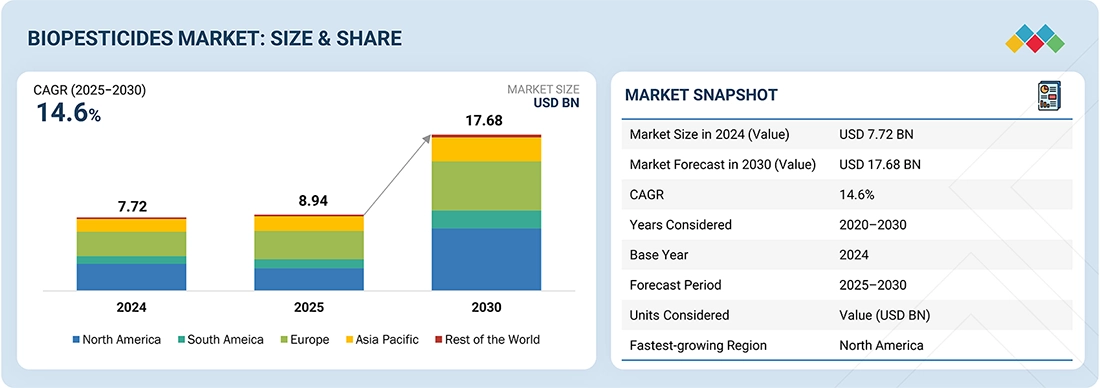
Source: Secondary Research, Interviews with Experts, MarketsandMarkets Analysis
The biopesticides market is projected to reach USD 17.68 billion by 2030 from USD 8.94 billion in 2025, registering a CAGR of 14.6% from 2025 to 2030. The market is experiencing strong growth owing to the demand for sustainable crop protection solutions that do not leave any chemical residues behind. The market growth momentum benefits from changing regulatory requirements, which are implemented for IPM systems, while scientists create better microbial and biochemical products. The use of biopesticides has expanded into specialty crops and vegetables, as well as in fruit and row crop farming.
KEY TAKEAWAYS
-
BY REGIONNorth America accounted for the largest revenue share (39.6%) of the biopesticides market in 2025.
-
BY TYPEBy type, the bionematicides segment is expected to register the highest CAGR of 15.7% from 2025 to 2030.
-
BY MODE OF APPLICATIONBy mode of application, the seed treatment segment is estimated to grow at the the highest rate during the forecast period.
-
BY FORMULATIONBy formulation, the liquid segment is projected to register the highest CAGR of 16.7% from 2025 to 2030.
-
BY CROP TYPEBy crop type, the fruits & vegetables segment is estimated to dominate the market.
-
BY SOURCEBy source, the microbial segment is projected to exhibit the fastest growth rate during the forecast period.
-
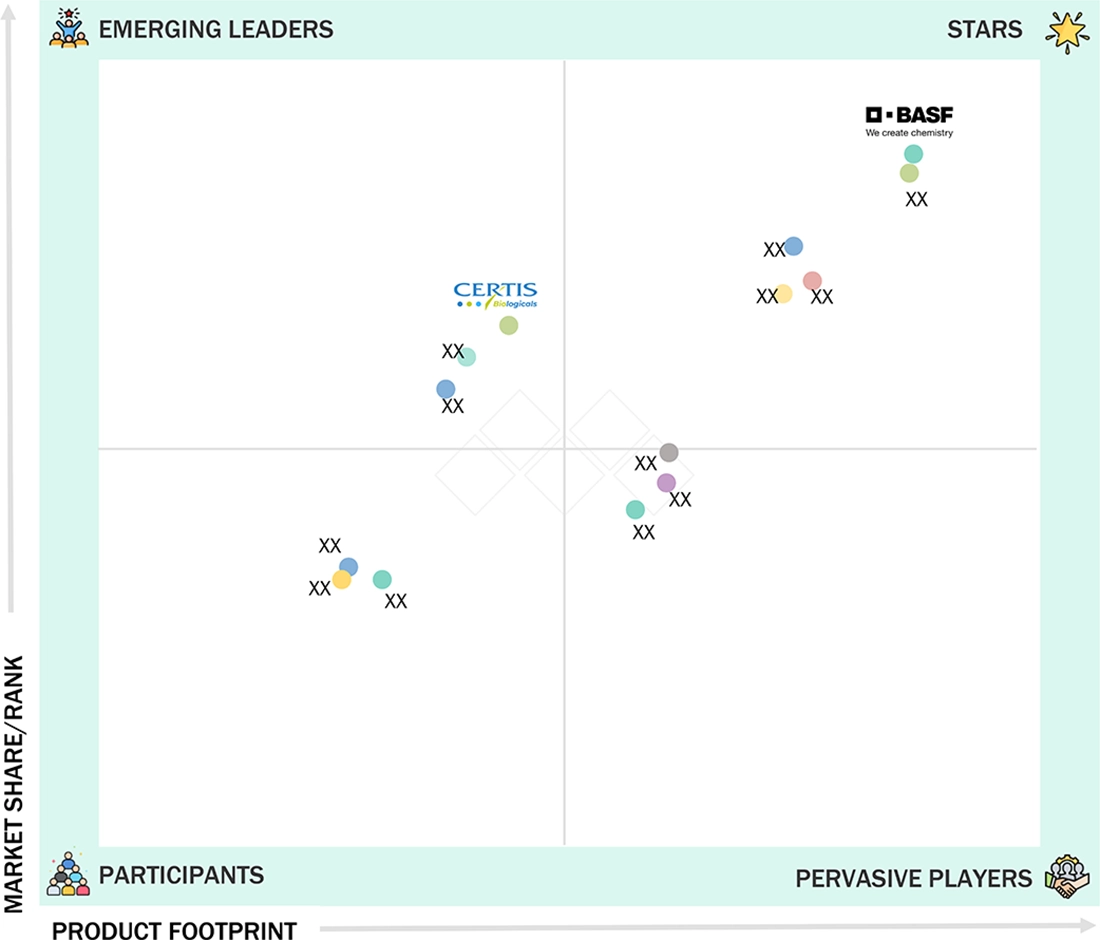
COMPETITIVE LANDSCAPECorteva Agriscience, Valent BioSciences, BASF, and Bayer CropScience were identified as some of the star players in the biopesticides market, given their strong market share and product footprint.
The biopesticides market is projected to reach USD 17.68 billion by 2030, exhibiting a CAGR of 14.6% from 2025 to 2030. The market growth is attributed to farmers' increased demand for environmentally friendly methods of crop protection. With new microbial and biochemical products entering the market, existing integrated pest management (IPM) systems are gaining wider acceptance among farmers. The agricultural industry identifies biopesticides as a highly promising growth sector because farmers now use biological products in their crop protection programs across all major crop categories, including fruits, vegetables, and row crops.
TRENDS & DISRUPTIONS IMPACTING CUSTOMERS' CUSTOMERS
The biopesticides market emphasizes sustainable crop protection methods that minimize chemical residues. The combination of stricter pesticide regulations and growing consumer demand for safe green products drives both manufacturers and growers to select biological solutions as their preferred choice. Innovations in microbial and biochemical technologies enable the development of sustainable agricultural systems that increase system resilience when used with precision agriculture and integrated pest management (IPM) solutions.
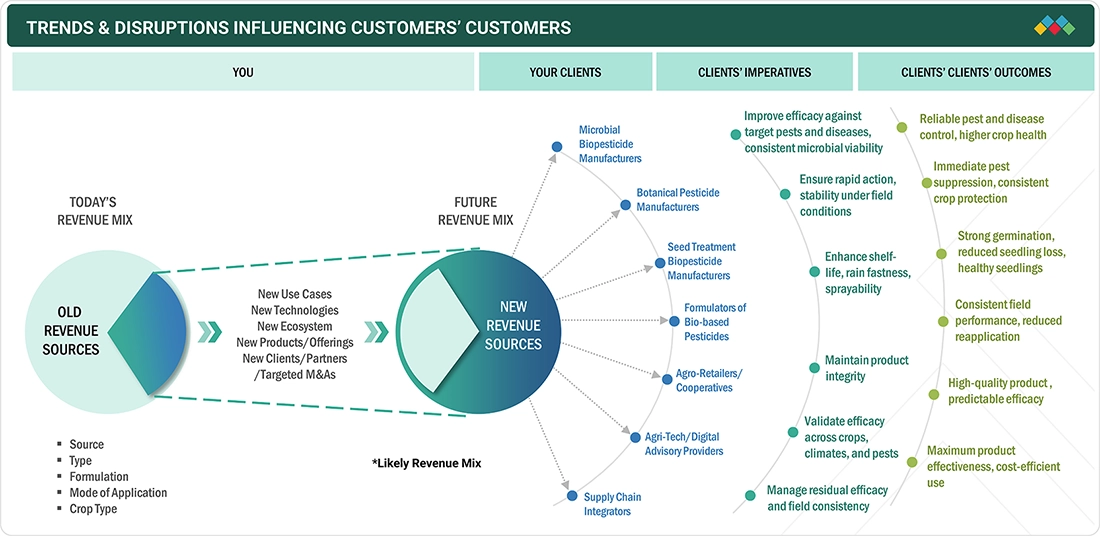
Source: Secondary Research, Interviews with Experts, MarketsandMarkets Analysis
MARKET DYNAMICS

Level
-
Stricter pesticide residue limits and sustainability-driven agricultural policies

-
Rising consumer demand for organic and chemical-free food


Level
-
Higher costs compared to conventional synthetic crop protection products

-
Variable efficacy under diverse climatic and pest conditions


Level
-
Expansion of organic farming and integrated pest management programs

-
Advancements in microbial formulations and precision application technologies


Level
-
Fragmented regulatory standards across regions delaying product approvals

-
Limited farmer awareness and technical adoption capabilities

Source: Secondary Research, Interviews with Experts, MarketsandMarkets Analysis
Driver: Stricter pesticide residue limits and sustainability-driven agricultural policies
A key driver for the biopesticides market is the growing emphasis on sustainable and low-residue crop protection solutions. With increasing regulation around synthetic chemicals and consumers demanding safer, eco-friendly food, both producers and growers are looking toward biological alternatives. Advances in microbial and biochemical technologies, as well as their incorporation into precision agriculture and integrated pest management systems, will further drive this trend. All of these converging trends eventually lead to more resilient and eco-friendlier farming practices.
Restraint: Higher costs compared to conventional synthetic crop protection products
Cost comparison between biopesticides and chemical pesticides is one of the key factors restraining the growth of the biopesticides market. Biopesticides need expert processing, fermented processing, and cold chain distributions, leading to incrementally high processing costs. Due to such cost variations, small and medium-scale farmers find it difficult to adopt this technological solution because cost-conscious regions demand an instant effect on pest control.
Opportunity: Expansion of organic farming and integrated pest management programs
There is an increasing acceptance of organic farming and a growing implementation of different integrated pest management (IPM) programs across regions. Governments, as well as certification bodies, push for reduced chemical use. This drives further demand for biological instead of synthetic products compliant with organic standards. All operations are now gearing toward sustainable production systems; thus, biopesticides will find their way into different components of the IPM strategies, providing high long-term growth potential for such products over key crop categories concerning microbial and biochemical products.
Challenge: Fragmented regulatory standards across regions delaying product approvals
Lack of consistency within the regulatory structures of various countries emerges as an issue for most of the biopesticide producers. Every country has its own registration processes and safety standards for biological crop protection agents. If consistency is not developed, it will create hurdles for producers to venture into large-scale opportunities. Redressing such issues will play an important role in the adoption of biopesticides worldwide.
BIOPESTICIDES MARKET: COMMERCIAL USE CASES ACROSS INDUSTRIES
| COMPANY | USE CASE DESCRIPTION | BENEFITS |
|---|---|---|
 |
Application of microbial bioinsecticides in corn and soybean farming | Enhances targeted pest control, minimizes residues, and supports sustainable row-crop systems |
 |
Use of Bacillus-based biofungicides in fruits and vegetables | Strengthens disease management, improves crop quality, and meets residue-free requirements |
 |
Integration of botanical and microbial biopesticides in specialty crops | Provides broad-spectrum protection and supports IPM while reducing synthetic pesticide use |
 |
Use of biofungicides and seed-applied biologicals in cereals and grains | Improves early-stage protection, enhances plant vigor, and promotes sustainable crop production |
Logos and trademarks shown above are the property of their respective owners. Their use here is for informational and illustrative purposes only.
MARKET ECOSYSTEM
Some of the prominent companies in this market include well-established and financially sound manufacturers of biopesticide products. These companies have been operational in the market for over a decade and have diversified portfolios, latest technologies, and excellent global sales and marketing networks. The global biopesticides ecosystem comprises manufacturers, regulatory bodies, and end users. Key manufacturers like Corteva Agriscience, Valent BioSciences, Certis Biologicals, and BASF develop microbial, botanical, and biochemical solutions.
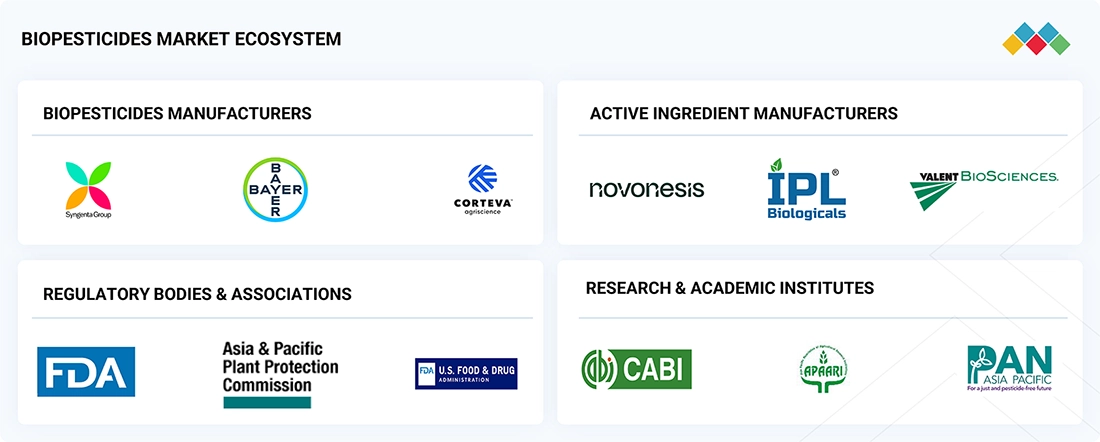
Logos and trademarks shown above are the property of their respective owners. Their use here is for informational and illustrative purposes only.
MARKET SEGMENTS
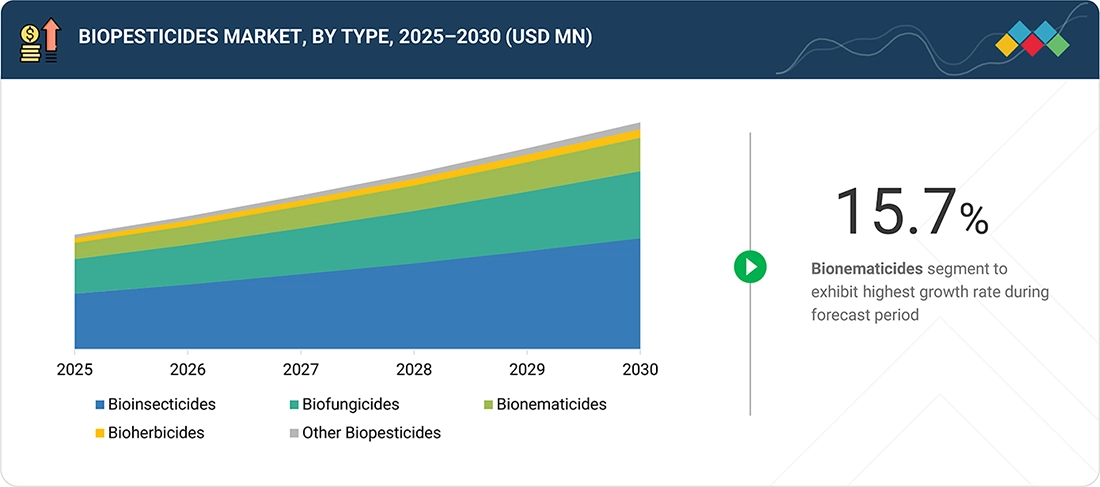
Source: Secondary Research, Interviews with Experts, MarketsandMarkets Analysis
Biopesticies Market, By Type
The bioinsecticides segment is estimated to account for the largest market share. The demand for bioinsecticides is attributed to the growing need for environmentally friendly substitutes for chemical insecticides, especially in respect of fruits, vegetables, and high-value row crops. Bioinsecticides promise either targeted insect pest management, lower pesticide residues in treated products, or some compatibility with integrated pest management. Public awareness of their advantages has also increased via advances in microbial and biochemical formulation technology for mass usage and securing leadership in the type segment.
Biopesticies Market, By Mode of Application
The seed treatment segment is estimated to command the largest market share. Thus far, the efficacy of seed-applied biopesticides to control pests, diseases, and nematodes in the early crop growth stages remains uncontested. Seed treatment applications help minimize the dependency on chemical sprays, increase nutrient utilization, and correspondingly fit into various integrated pest management programs. Continuous developments in formulation stability, coating technologies, and microbial viability promote the adoption of biopesticides with seed treatment as the preferred and undoubtedly most efficient mode of application.
Biopesticies Market, By Formulation
The liquid formulation segment is estimated to account for the largest share of the biopesticides market. Factors favoring this segment include ease of application, uniform crop coverage, and compatibility with existing spraying equipment and integrated pest management programs. This liquid formulation of biopesticides provides greater stability to the formulations, exhibiting higher efficacy and flexibility of application for a large array of crops, including row crops, fruits, and vegetables. Continued developments in microbial and biochemical formulation technologies will only serve to enhance product performance and attain wider acceptance, thus strengthening the dominance of liquid formulations in the marketplace.
Biopesticies Market, By Source
Microbials represent the largest segment within the source category. Their high efficacy, specificity, and environmentally sustainable profile make them a preferred choice for managing pests, diseases, and nematodes. Widely applied across row crops, fruits, and vegetables, microbial biopesticides are compatible with integrated pest management programs and have minimal impact on non-target organisms. Ongoing advancements in strain development, formulation technologies, and delivery methods are further enhancing performance and adoption, reinforcing microbials as the dominant source within the biopesticides market.
Biopesticies Market, By Crop Type
In the biopesticides market, fruits and vegetables form the largest crop type segment, due to their high economic value, strict regulations regarding pesticide residues, and increasing consumer preference for organically and sustainably-grown foods. Growers are increasingly resorting to microbial, biochemical, and botanical biopesticides in pest and disease management while ensuring crop quality and compliance with standards. Research focuses on advances in formulation technologies along with seed treatments and foliar applications, as well as integration into precision agriculture and integrated pest management programs, further enhancing the dominance of fruits and vegetables under the crop type segment of this market.
REGION
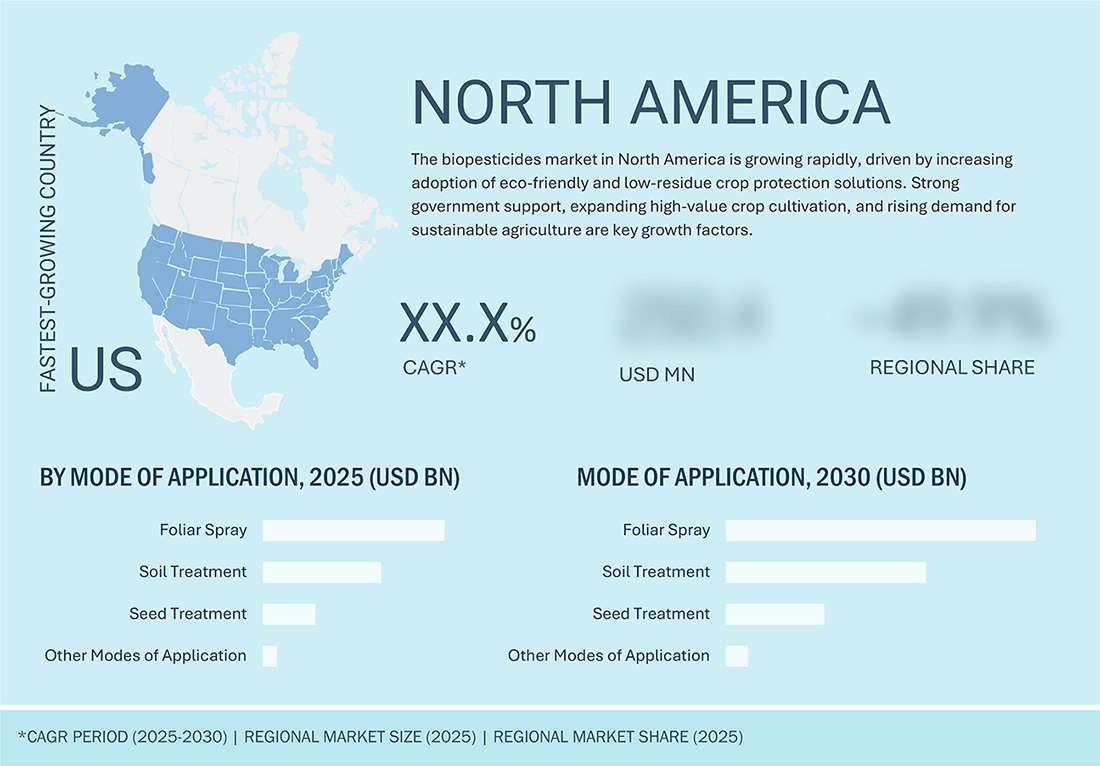
North America to be fastest-growing country in global biopesticides market during forecast period
North America is emerging as the fastest-growing market for biopesticides, backed by a strong government push for sustainable farming and stricter rules on chemical pesticide use. Farmers growing fruits, vegetables, and specialty crops are increasingly turning to biological solutions to meet both safety standards and market demands. Local companies are ramping up production, investing in research, and making these products more accessible, while awareness among growers continues to rise. These trends position North America as a key market for biopesticides.
BIOPESTICIDES MARKET: COMPANY EVALUATION MATRIX
Star companies such as Corteva Agriscience, along with leading regional biopesticide manufacturers, possess broad and diversified portfolios, strong brand visibility, and significant market influence. Emerging Leaders such as AgBiome are expanding rapidly through innovative, eco-friendly rodenticides and integrated pest-management solutions. Participants maintain steady operations, while Pervasive Players hold a moderate but growing market presence.
Source: Secondary Research, Interviews with Experts, MarketsandMarkets Analysis
KEY MARKET PLAYERS
- Corteva Agriscience (US)
- Valent BioSciences (US)
- BASF (Germany)
- Bayer CropScience (Germany)
- Syngenta Group (Switzerland)
- FMC Corporation (US)
- UPL (India)
- Marrone Bio Innovations (US)
- Certis Biologicals (US)
- Koppert Biological Systems (Netherlands)
- AgBiome (US)
- Novonesis (Denmark)
- Andermatt Group AG (Switzerland)
- Lallemand Plant Care (Canada)
- BioWorks Inc. (US)
MARKET SCOPE
| REPORT METRIC | DETAILS |
|---|---|
| Market Size in 2025 (Value) | USD 8.94 Billion |
| Market Forecast in 2030 (value) | USD 17.68 Billion |
| Growth Rate | CAGR of 14.6% from 2025 to 2030 |
| Years Considered | 2020-2030 |
| Base Year | 2024 |
| Forecast Period | 2025-2030 |
| Units Considered | Value (USD Million/Billion) |
| Report Coverage | Revenue forecast, company ranking, competitive landscape, growth factors, and trends. |
| Segments Covered |
|
| Countries Covered | North America, South America, Europe, Asia Pacific, Rest of the World |
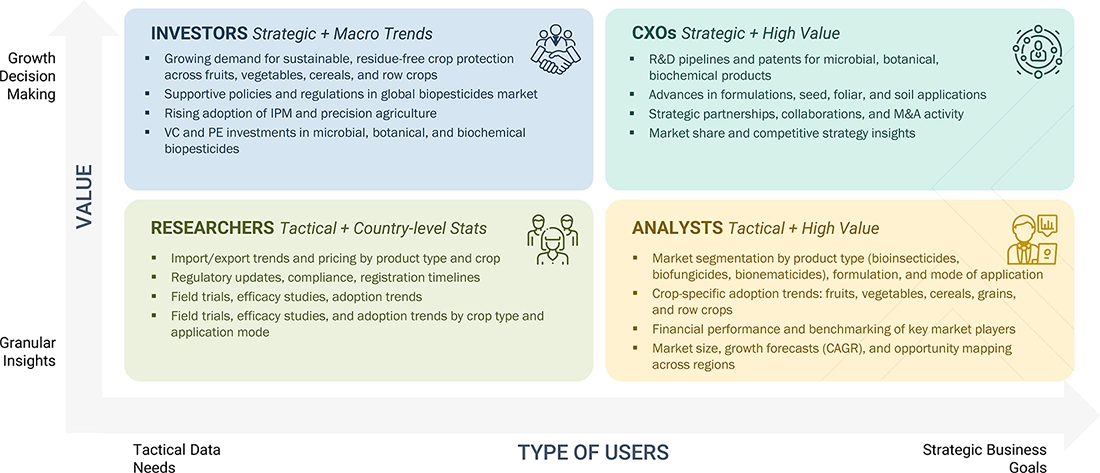
WHAT IS IN IT FOR YOU: BIOPESTICIDES MARKET REPORT CONTENT GUIDE
DELIVERED CUSTOMIZATIONS
We have successfully delivered the following deep-dive customizations:
| CLIENT REQUEST | CUSTOMIZATION DELIVERED | VALUE ADDS |
|---|---|---|
| Global–based Biopesticides Manufacturer |
|
|
| Globally Focused Distributor |
|
|
| Global Agri-Biologicals Company |
|
|
| Investor / Private Equity Firm |
|
|
RECENT DEVELOPMENTS
- January 2025 : Syngenta Group advanced its biologicals platform with the rollout of new nature-inspired microbial and biochemical solutions supported by expanded manufacturing capacity.
- February 2025 : UPL launched Thiopron, a sulfur-based biofungicide aimed at sustainable powdery mildew control in specialty crops
- January 2025 : Valent BioSciences entered into a strategic partnership to commercialize Sweetsei and other Seipasa biostimulants in the US market.
- December 2024 : AgBiome transferred its biological fungicides Howler and Theia to Certis Biologicals, enabling expanded commercialization of these microbial solutions globally.
Table of Contents
 Exclusive indicates content/data unique to MarketsandMarkets and not available with any competitors.
Methodology
This study involved four major activities in estimating the current size of the biopesticides market. Exhaustive secondary research was done to collect information on the market, peer market, and parent market. The next step was to validate these findings, assumptions, and sizing with industry experts across the value chain through primary research. Both top-down and bottom-up approaches were employed to estimate the complete market size. After that, market breakdown and data triangulation were used to estimate the market size of segments and subsegments.
Secondary Research
This research study involved the extensive use of secondary sources—directories and databases such as Bloomberg Businessweek and Factiva—to identify and collect information useful for a technical, market-oriented, and commercial study of the biopesticides market.
In the secondary research process, various sources such as annual reports, press releases & investor presentations of companies, white papers, certified publications, articles from recognized authors, gold & silver standard websites, directories, and databases were referred to to identify and collect information.
Secondary research was mainly used to obtain key information about the industry’s supply chain, the total pool of key players, and market classification and segmentation as per the industry trends to the bottom-most level, regional markets, and key developments from both market- and technology-oriented perspectives.
Primary Research
Extensive primary research was conducted after obtaining information regarding the biopesticides market scenario through secondary research. Several primary interviews were conducted with market experts from both the demand and supply sides across major countries of North America, Europe, Asia Pacific, South America, and the Rest of the World (RoW). Primary data was collected through questionnaires, emails, and telephonic interviews. The primary sources from the supply side included various industry experts, such as Chief X Officers (CXOs), Vice Presidents (VPs), Directors from business development, marketing, research, and development teams, and key opinion leaders. Primary interviews were conducted to gather insights such as market statistics, data on the revenue collected from the products and services, market breakdowns, market size estimations, market forecasting, and data triangulation. Primary research also helped in understanding the various trends related to biopesticides’ core material, shell material, method, technology, and application. Stakeholders from the demand side, such as research institutions and universities, and third-party vendors, were interviewed to understand the buyers’ perspective on the service, their current usage, and the outlook of their business, which will affect the overall market.
|
COMPANY NAME |
DESIGNATION |
|
Corteva Agriscience (US) |
R&D Expert |
|
BASF SE (Germany) |
Sales Manager |
|
Bayer CropSciences (Germany) |
Manager |
|
Syngenta Group (Switzerland) |
Sales Manager |
|
FMC Corporation (US) |
Marketing Manager |
To know about the assumptions considered for the study, download the pdf brochure
Market Size Estimation
Both the top-down and bottom-up approaches were used to estimate and validate the total size of the biopesticides market. These approaches were also used extensively to determine the size of various subsegments in the market. The research methodology used to estimate the market size includes the following details:
- The key players in the industry and the overall markets were identified through extensive secondary research.
- All shares, splits, and breakdowns were determined using secondary sources and verified through primary sources.
- All possible parameters that affect the market covered in this research study were accounted for, viewed in extensive detail, verified through primary research, and analyzed to obtain final quantitative and qualitative data.
- The research included the study of reports, reviews, and newsletters of top market players, along with extensive interviews for opinions from leaders, such as CEOs, directors, and marketing executives.
Data Triangulation
After arriving at the overall market size from the estimation process explained above, the total market was split into several segments and subsegments. Data triangulation and market breakdown procedures were employed, wherever applicable, to estimate the overall biopesticides market and arrive at the exact statistics for all segments and subsegments. The data was triangulated by studying various factors and trends from the demand and supply sides. Along with this, the market size was validated using both the top-down and bottom-up approaches.
Market Definition
Biopesticides have pesticide properties originating from natural living organisms, including microorganisms, plants, and animals. Biopesticides are gaining prominence due to their safer and eco-friendly nature.
The Environmental Protection Agency has defined biopesticides as follows:
“Biopesticides include naturally occurring substances that control pests (biochemical pesticides), microorganisms that control pests (microbial pesticides), and pesticidal substances produced by plants containing added genetic material (plant-incorporated protectants) or PIPs. “
Key Stakeholders
- Agriculture pesticide manufacturers & suppliers
- Associations and industry bodies
- Biopesticide manufacturers & suppliers
- Biopesticide traders, retailers, and distributors
- Commercial research & development (R&D) institutions
- Venture capitalists and investors
- Government, regulatory bodies, and research organizations
- Technology providers to biopesticide & microbial companies
- Public hygiene organizations, government regulatory institutions, and food safety agencies
-
Associations and industry bodies:
- Food and Agriculture Organization (FAO)
- European Food Safety Authority (EFSA)
- British Pest Control Association (BPCA)
- National Pest Management Association (NPMA)
- National Pest Technicians Association
- Confederation of European Pest Management Associations (CEPA)
- International associations and industry bodies such as the Biopesticide Industry Alliance (BPIA) and the International Biocontrol Manufacturers Association (IBMA)
- Organization for Economic Co-operation and Development (OECD)
Report Objectives
MARKET INTELLIGENCE
- To determine and project the size of the biopesticides market with respect to type, crop type, mode of application, source, formulation, and region.
- To identify the attractive opportunities in the market by determining the largest and fastest-growing segments
- To provide detailed information about the key factors influencing the market growth (drivers, restraints, opportunities, and industry-specific challenges)
- To provide the regulatory framework and market entry process related to the market
- To analyze the micro markets with respect to individual growth trends, prospects, and their contribution to the total market
Available customizations:
With the given market data, MarketsandMarkets offers customizations according to company-specific scientific needs.
The following customization options are available for the report:
Geographic Analysis
- Further breakdown of the Rest of Europe biopesticides market into key countries.
- Further breakdown of the Rest of Asia Pacific biopesticides market into key countries.
- Further breakdown of the Rest of South America biopesticides market into key countries.
- Detailed analyses and profiling of additional market players (up to five)
Key Questions Addressed by the Report
What is the projected size of the biopesticides market by 2030?
The global biopesticides market is projected to grow from USD 8.94 billion in 2025 to USD 17.68 billion by 2030, registering a CAGR of 14.6% during the forecast period.
What factors are driving the growth of the biopesticides market?
The growth of the biopesticides market is driven by increasing demand for organic food products, stricter regulations on chemical pesticide residues, and the rising adoption of sustainable farming methods. Farmers are also increasingly implementing integrated pest management (IPM) and precision agriculture practices, which support the use of microbial and biochemical pest control solutions.
Why are farmers adopting biopesticides in modern agriculture?
Farmers are adopting biopesticides because they provide effective pest control without leaving harmful chemical residues. These products are considered safer for the environment, human health, and beneficial organisms. They also fit well into sustainable agriculture systems and help farmers meet regulatory requirements related to pesticide residues.
Which region holds a significant share in the global biopesticides market?
Europe holds a substantial share of the global biopesticides market. The region’s growth is supported by strict regulations on chemical pesticides, strong government support for sustainable agriculture, and increasing demand for environmentally friendly crop protection products.
Who are the key players in the global biopesticides market?
Key companies operating in the biopesticides market include Corteva Agriscience (US), Valent BioSciences (US), BASF (Germany), Bayer CropScience (Germany), Syngenta Group (Switzerland), FMC Corporation (US), UPL (India), Marrone Bio Innovations (US), Certis Biologicals (US), Koppert Biological Systems (Netherlands), AgBiome (US), Novonesis (Denmark), Lallemand Plant Care (Canada), BioWorks Inc. (US), and Andermatt Group AG (Switzerland).
Need a Tailored Report?
Customize this report to your needs
Get 10% FREE Customization
Customize This ReportPersonalize This Research
- Triangulate with your Own Data
- Get Data as per your Format and Definition
- Gain a Deeper Dive on a Specific Application, Geography, Customer or Competitor
- Any level of Personalization
Let Us Help You
- What are the Known and Unknown Adjacencies Impacting the Biopesticides Market
- What will your New Revenue Sources be?
- Who will be your Top Customer; what will make them switch?
- Defend your Market Share or Win Competitors
- Get a Scorecard for Target Partners

Custom Market Research Services
We Will Customise The Research For You, In Case The Report Listed Above Does Not Meet With Your Requirements
Get 10% Free CustomisationGrowth opportunities and latent adjacency in Biopesticides Market




KORANGI
Jul, 2019
Looking for global biopesticides market and African share in consumption of biopesticides..
Giacomo
May, 2019
Want to develop an understanding regarding the global trend of Biopesticide - especially bacteria and microbials..
HyeGin
Aug, 2018
In addition to the sample report, I would like to know if you can provide the integrated table showing the market size of Beauveria Bassiana by soil treatment to berries in US..
User
Nov, 2019
Interested in the global biopesticide market.
Maitrayee
Jun, 2018
Want to know a detailed information about bio-insecticide..
Ricardo
Jun, 2019
By 2013/2014 Brazilian crop season a great amount of Dipel biospesticide was used against Helicoverpa armigera outbreaks. This represents a significant increase in Bacillus thuringiensis based biopesticides worldwide. I would like to know how important was this event to the whole biopesticide market..
David
Jan, 2019
Need information on the availability, mode of action and application of biopesticides in the UK..
David
Jan, 2019
Need information on the availability, mode of action and application of biopesticides in the UK..
Nguya
Feb, 2019
I would like to know the market outlook of microbial-based pesticides. .
MUJEEB
Nov, 2019
Looking for information regarding growth of global biopesticides market. .
Chen
Nov, 2019
Interested in the global biopesticide market.
Md
Oct, 2016
Looking for the bio pesticides (Bio-herbicides, Bio-insecticides, Bio-fungicides and others) details falong with bio pesticides list, explaining the active ingredient, doses, targeted crop, and targeted pest, mode of action, using methodology and price. .
Taufik
Sep, 2019
Interested in knowing the market potential for bio-oil from tobacco stem as biopesticide. .
Domenico
Jun, 2020
Very useful and interesting information. Thank you for your effort!.