
Smart Buildings Market

Smart Buildings Market by Solution (Building Infrastructure Management, Safety & Security Management, Energy Management, Integrated Workplace Management System), Building Type (Residential, Commercial, Industrial), and Region - Global Forecast to 2032




OVERVIEW
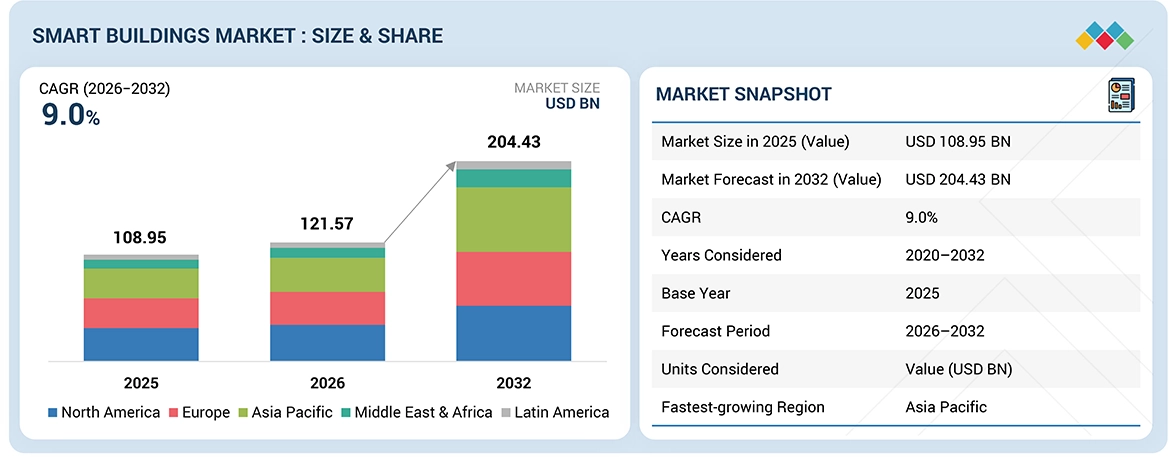
Source: Secondary Research, Interviews with Experts, MarketsandMarkets Analysis
The global smart building market size will reach USD 204.43 billion by 2032, at a CAGR of 9.0%. The smart building industry is constantly evolving as the need for efficient energy use and grid reliability becomes a top priority for all owners. Building operations no longer rely on separate, disconnected systems for heating, lighting, and security. Instead, buildings are managed through a combination of sensors, cloud-based platforms, and automated control systems that are directly connected to the local grid. As daily energy demands fluctuate, the importance of automated energy savings, reduced greenhouse gas emissions, and tenant comfort has become very clear, especially for offices, government buildings, and residences.
KEY TAKEAWAYS
-
By OfferingThe services segment is expected to register the highest CAGR of 9.8% during the forecast period.
-
By SolutionBy solution, the safety & security segment is expected to be the largest, with a 32.2% share, in 2026.
-
By Building TypeBy building type, the industrial segment is expected to grow at the highest CAGR of 10.1% during the forecast period.
-
By RegionAsia Pacific will be the fastest-growing region in the global smart buildings market.
-
Competitive LandscapeCisco, IBM, Honeywell, Siemens were identified as some of the star players in the smart buildings market, given their strong market share and product footprint.
-
Competitive Landscape Startups/SMEsSpacewell, 75F, Softdel, and ENTOUCH have distinguished themselves among startups and SMEs in the smart buildings market.
The evolution of the smart building platform has been notably significant. Originally, these platforms were isolated solutions primarily utilized for the management of lighting and HVAC systems. Nonetheless, in response to the escalating need for more efficient building operations, and considering the growing significance of corporate sustainability and environmental objectives, the building platform now integrates a diverse array of functions. The adoption of an integrated approach to building management through these technologies has positioned the smart building platform at the core of planning processes for contemporary real estate and facility management. Currently, the building platform is regarded as a fundamental component in achieving sustainable and efficient building operations. Its critical role is exemplified by the inclusion of occupancy-based ventilation and security monitoring systems.
TRENDS & DISRUPTIONS IMPACTING CUSTOMERS' CUSTOMERS
The smart building space is undergoing a major transformation, moving away from a traditional business model focused on hardware sales toward a more comprehensive approach centered on services, driven by data and digital technologies. Traditionally, revenue comes from the physical integration of proprietary solutions like HVAC, lighting, and access control with localized servers. However, the future emphasizes value-added services, powered by new technologies, AI, and ecosystems. This shift also influences adoption across diverse client segments, including commercial real estate, corporate enterprises, healthcare networks, and educational campuses. For these clients, the main drivers have shifted from basic maintenance to meeting ambitious ESG goals, reducing costs through preventative maintenance, space optimization, and more. Ultimately, the focus is on delivering high-quality outcomes for users and occupants—such as health and wellness, productivity, frictionless environments, and seamless operations—while prioritizing safety and security.
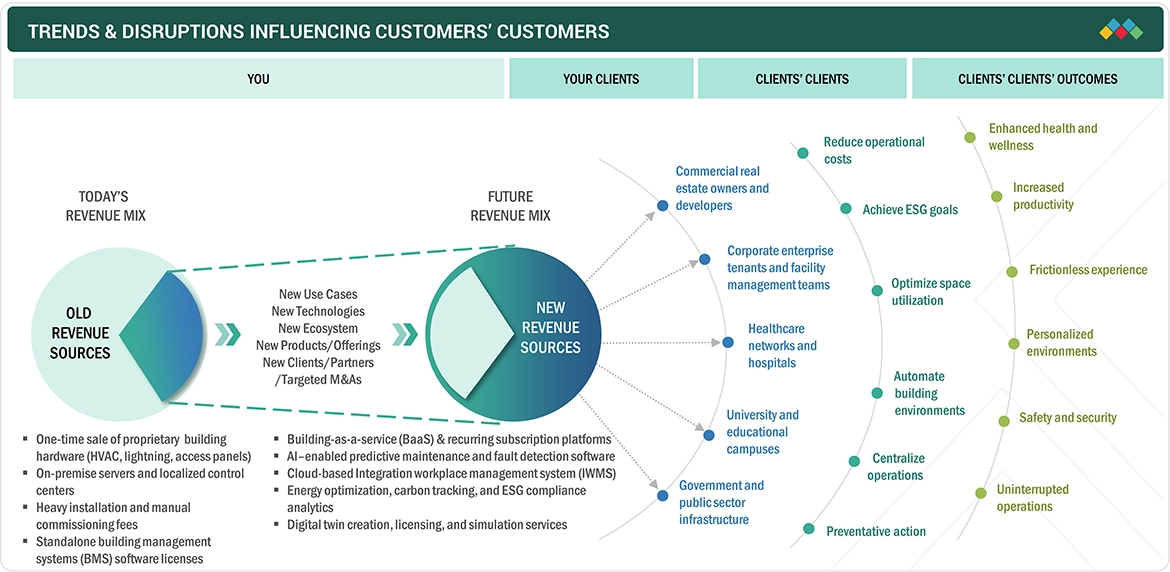
Source: Secondary Research, Interviews with Experts, MarketsandMarkets Analysis
MARKET DYNAMICS

Level
-
High Energy Consumption and Emissions Mandates

-
Need for Better Occupant Comfort and Health


Level
-
High Initial Costs and Implementation Complexities

-
Cybersecurity Risks in Interconnected IoT Devices


Level
-
Integration of Renewable Energy and Smart Grids

-
Using Machine Learning for Predictive Maintenance


Level
-
Legacy System Upgrades and Interoperability

-
Data Privacy and Managing User Information

Source: Secondary Research, Interviews with Experts, MarketsandMarkets Analysis
Driver: High Energy Consumption and Emissions Mandates
Buildings account for 40% of primary energy use and a significant portion of greenhouse gas emissions. Governments have put strict regulations in place to decrease energy consumption and carbon emissions. Smart building technologies, such as advanced sensors and climate control systems, are essential in helping meet these standards. Consequently, many building owners are eager to invest in smart building solutions to reduce energy costs.
Restraint: Cybersecurity Risks in Interconnected IoT Devices
Smart buildings use IoT devices and building automation systems that are connected to the Internet. This creates new opportunities for cyber attacks because of their online connectivity. If the building's security is compromised, unauthorized users might control physical systems like heating and lighting or access business data. The ongoing need to update security systems and manage network risks adds costs that may discourage organizations from adopting this technology.
Opportunity: Expansion of Building-to-Grid Integration
As national grid systems become increasingly modernized, there is a tremendous opportunity for smart buildings and the grid to directly communicate. This will enable buildings to manage their consumption in response to overall grid demand. For instance, during peak demand hours, a smart building will be able to automatically reduce its consumption or draw from its own batteries. This will not only save the owner money, it will also stabilize the grid. This is a significant market opportunity.
Challenge: Ensuring Standardized Communication Protocols
One of the primary challenges within the smart building industry is the standardization of communication protocols. This difficulty arises due to the presence of various systems in modern buildings, such as heating, lighting, and security, which are produced by different manufacturers. Consequently, if these devices do not utilize a unified digital language, effective communication and interoperability are hindered. To address this issue, it is essential that all devices within the building adhere to common rules and standards. Without such standardization, integrating new technologies into existing building infrastructure can prove to be highly costly and complex.
SMART BUILDINGS MARKET: COMMERCIAL USE CASES ACROSS INDUSTRIES
| COMPANY | USE CASE DESCRIPTION | BENEFITS |
|---|---|---|
 |
Siemens assists in managing large commercial spaces by integrating heating, ventilation, air conditioning, lighting, and security systems into a single system, which can then be used to monitor operations on a day-to-day basis. | Lower energy consumption | Improved building security | Centralized facility management |
 |
The software used by the property manager is provided by Honeywell and helps in monitoring the spaces and improving the quality of air. The sensor network helps in regulating the temperature according to the number of people in that area. | Healthier indoor environment | Reduced energy waste | Better use of office space |
 |
Johnson Controls helps in the creation of smart facilities through its provision of platforms that make use of data in predicting maintenance. This means that problems will be fixed in advance in order to prevent breakdowns. | Reduced equipment downtime | Lower maintenance costs | Improved operational efficiency |
Logos and trademarks shown above are the property of their respective owners. Their use here is for informational and illustrative purposes only.
MARKET ECOSYSTEM
The hardware providers for IoT devices, the IoT platforms used in building management systems, and data analytics make up the smart building ecosystem. Additionally, system integrators help fine-tune complex environments in smart buildings. These roles are typically involved in hardware provisioning, network setup, and optimizing smart building operations. They reflect the layered adoption of smart building technologies, which include physical infrastructure combined with software services for managing buildings.
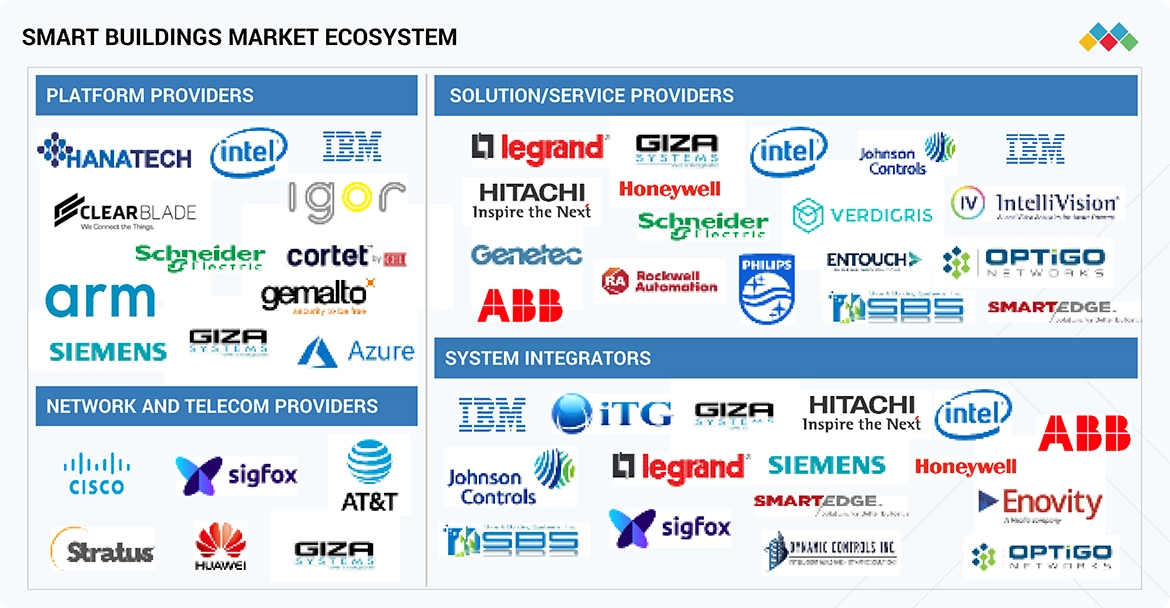
Logos and trademarks shown above are the property of their respective owners. Their use here is for informational and illustrative purposes only.
MARKET SEGMENTS
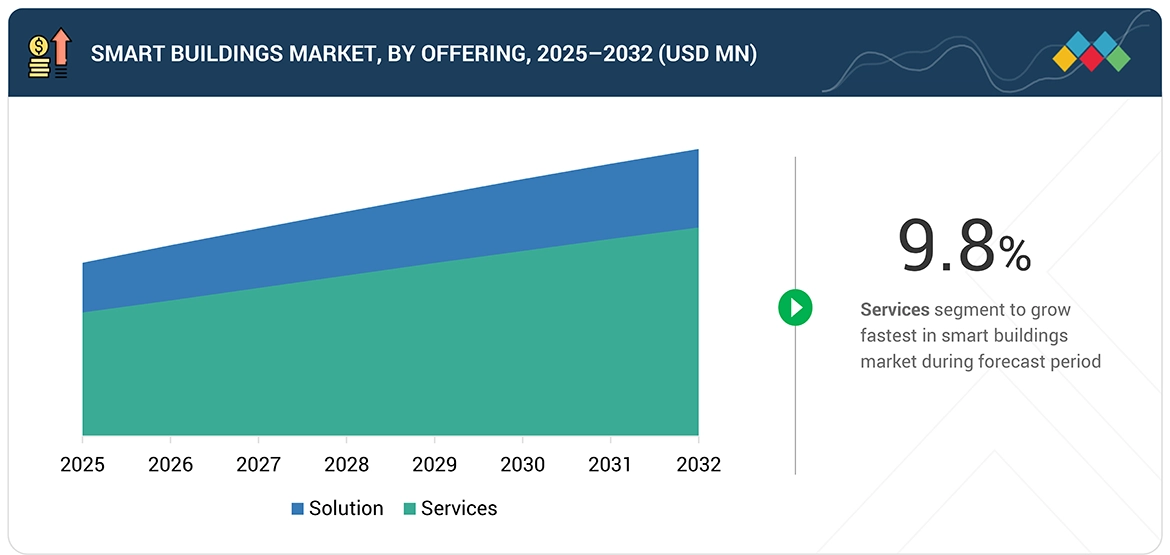
Source: Secondary Research, Interviews with Experts, MarketsandMarkets Analysis
Smart Building Market, By Solution
Smart building solutions are increasingly focused on optimizing energy management. Real-time energy management (RTEM) solutions are used to improve HVAC, lighting, and plug loads. Smart thermostats are part of RTEM solutions that help optimize energy use in facilities by using cloud-based systems that enable temperature adjustments based on occupancy. As decarbonization goals become more important, RTEM solutions are also applied to optimize infrastructure, especially in integrating renewable energy sources with battery storage systems.
Smart Building Market, By Technology
The Internet of Things (IoT) remains central to smart building technology because of its capacity to connect devices and deliver actionable data. Advanced sensors and data analytics enable a variety of functions, from tracking space utilization to automated fault detection and diagnostics. This technology not only monitors issues but also actively detects faults in building equipment and provides real-time recommendations. Additionally, as more building automation systems become connected, cybersecurity technologies have gained significant importance. Advanced defense systems and fault-tolerant controls have become essential components of smart building design, primarily because of their ability to prevent potential threats.
REGION
Asia Pacific to be fastest-growing region in global smart buildings market during forecast period
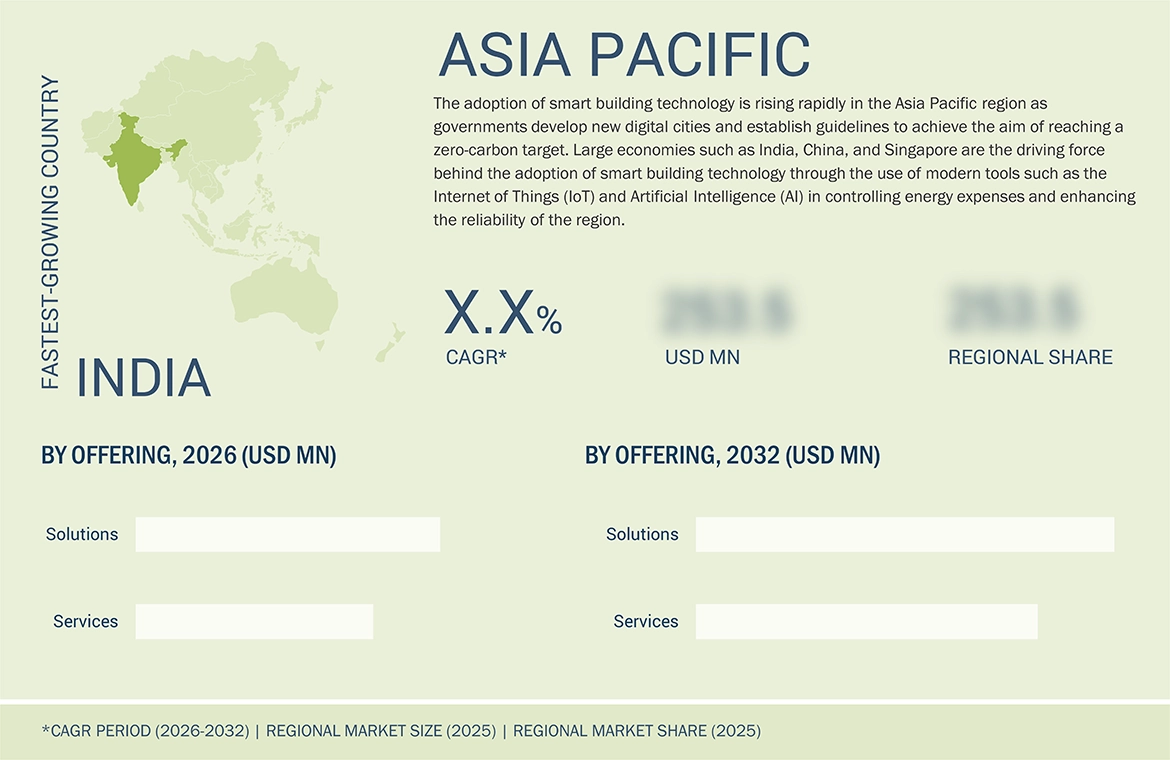
The market for smart buildings in Asia Pacific is expected to grow significantly due to ongoing urbanization and the region's focus on sustainability. The rising trend of integrating more Internet of Things (IoT) technology, increased demand for energy-efficient buildings, and greater adoption of intelligent technologies are driving higher demand for smart buildings in Asia Pacific. Additionally, the emphasis by developers and owners of commercial properties on incorporating more smart building solutions and increasing the level of integration is adding complexity to meeting the region's smart building needs, especially given the booming construction sector and the diverse range of building types.
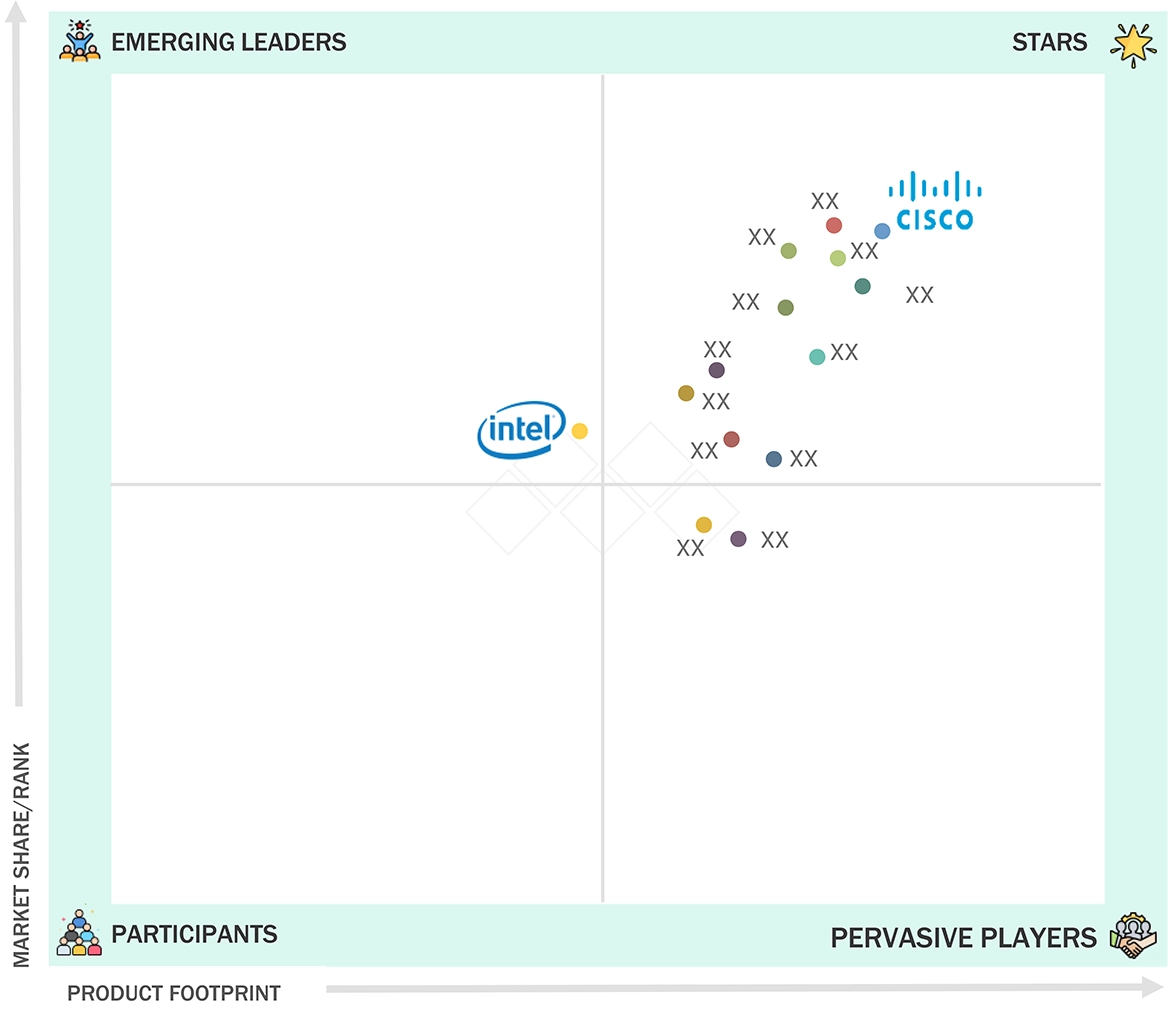
SMART BUILDINGS MARKET: COMPANY EVALUATION MATRIX
In the smart building market matrix, the two leaders are Honeywell and Siemens, which have extensive offerings in building automation, energy solutions, and integrated security solutions for large commercial and industrial infrastructure. Schneider is regarded as an emerging leader in the digital transformation of sustainable solutions, gaining significant traction in the market with its IoT-based solutions that include energy efficiency, decarbonization, and automation solutions, especially among net-zero-focused and smart city infrastructures.
Source: Secondary Research, Interviews with Experts, MarketsandMarkets Analysis
KEY MARKET PLAYERS
- Cisco (US)
- IBM (US)
- Honeywell (US)
- Siemens (Germany)
- Johnson Controls (Ireland)
- Huawei (China)
- Intel (US)
- PTC (US)
- ABB (Switzerland)
- Hitachi (Japan)
- Schneider Electric (France)
- Thales Group (France)
- Legrand (France)
- Bosch (Germany)
- KMC Controls (US)
- Verdigris Technologies (US)
- Infogrid (UK)
- 75F (US)
- mCloud Technologies (Canada)
- EnTouch (US)
- Gaia (India)
- Softdel (US)
- CopperTree Analytics (Canada)
- Spaceti (Czech Republic)
- eFACILITY (India)
- Spacewell (Belgium)
MARKET SCOPE
| REPORT METRIC | DETAILS |
|---|---|
| Market Size in 2025 (Value) | USD 121.57 Billion |
| Market Forecast in 2032 (Value) | USD 204.43 Billion |
| Growth Rate | CAGR of 9.0% from 2026-2032 |
| Years Considered | 2020-2032 |
| Base Year | 2025 |
| Forecast Period | 2026-2032 |
| Units Considered | Value (USD Billion) |
| Report Coverage | Revenue forecast, company ranking, competitive landscape, growth factors, and trends |
| Segments Covered |
|
| Regions Covered | North America, Europe, Asia Pacific, Middle East & Africa, Latin America |
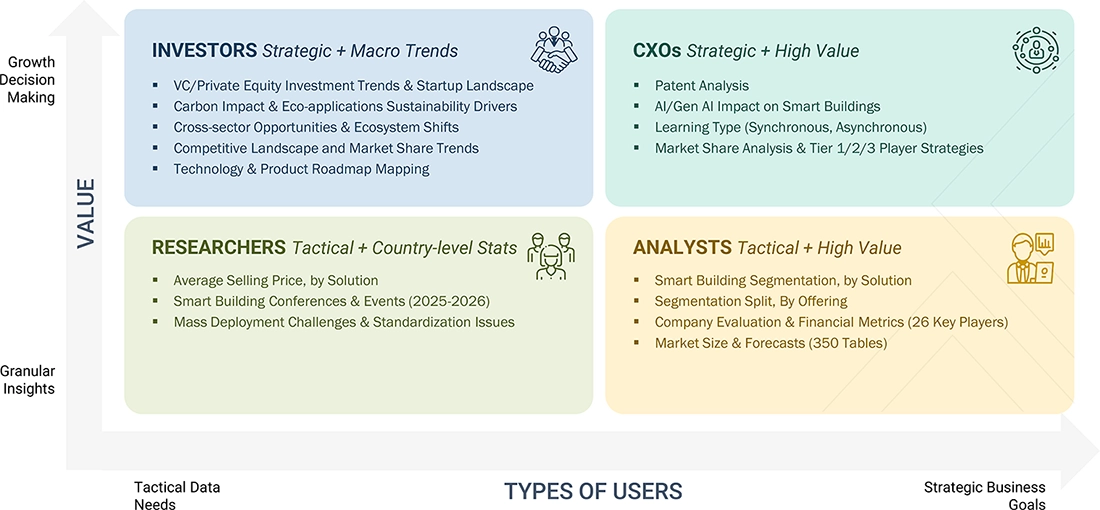
WHAT IS IN IT FOR YOU: SMART BUILDINGS MARKET REPORT CONTENT GUIDE
DELIVERED CUSTOMIZATIONS
We have successfully delivered the following deep-dive customizations:
| CLIENT REQUEST | CUSTOMIZATION DELIVERED | VALUE ADDS |
|---|---|---|
| Global Building Solutions Firm |
|
|
| Company Information | Detailed profiling and strategic analysis of emerging smart building hardware and software vendors (up to 5) |
|
RECENT DEVELOPMENTS
- March 2026 : Schneider Electric announced the availability of its new Altivar HVAC drives that are intended to boost the efficiency of buildings. The new range of drives offers over 30% savings in energy and can be integrated with the latest Building Management Systems (BMS).
- March 2026 : Siemens Smart Infrastructure has launched two new fire detectors, Sinteso Nova and Cerberus Nova, which are connected to the cloud. These detectors can transform conventional fire detection into smart, autonomous, and proactive safety solutions.
- January 2026 : Johnson Controls unveiled the latest in smart building and thermal management solutions at the AHR Expo. The company also introduced updates to the Metasys building management system that allow it to control more devices without needing costly hardware upgrades.
Table of Contents
 Exclusive indicates content/data unique to MarketsandMarkets and not available with any competitors.
Methodology
The study involved four major activities in estimating the current size of the Smart Buildings market. Exhaustive secondary research was done to collect information on the lending industry. The next step was to validate these findings, assumptions, and sizing with industry experts across the value chain using primary research. Both top-down and bottom-up approaches were employed to estimate the total market size. After that, the market breakup and data triangulation procedures were used to estimate the market size of the segments and sub segments of the market.
Secondary Research
In the secondary research process, various secondary sources were referred to obtain key information about industry insights, the market’s monetary chain, the overall pool of key players, market classification and segmentation, and key developments in the market. These secondary sources included annual reports, press releases, and investor presentations of companies, white papers, certified publications, and articles from recognized associations and government publishing sources.
Primary Research
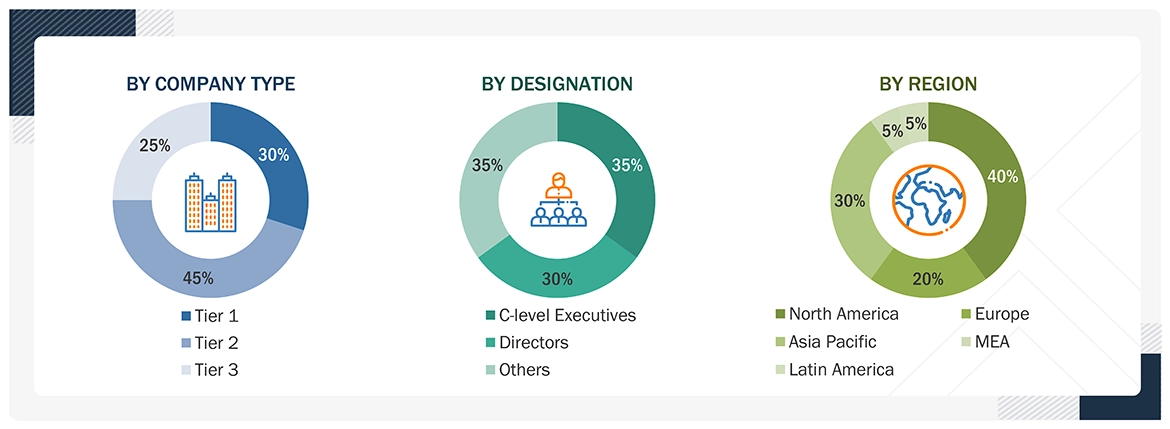
Primary sources were mainly industry experts from core and related industries, preferred system developers, service providers, System Integrators (SIs), resellers, partners, and organizations related to the various segments of the industry’s value chain. The primary sources from the supply side included industry experts, such as Chief Executive Officers (CEOs), Chief Technology Officers (CTOs), Chief Operating Officers (COOs), Vice Presidents (VPs), marketing directors, technology and innovation directors, and related key executives from various key companies and organizations operating in the Smart Buildings market. The primary sources from the demand side included Smart Buildings end users, network administrators/consultants/specialists, Chief Information Officers (CIOs) and subject-matter experts from enterprises and government associations.
To know about the assumptions considered for the study, download the pdf brochure
Market Size Estimation
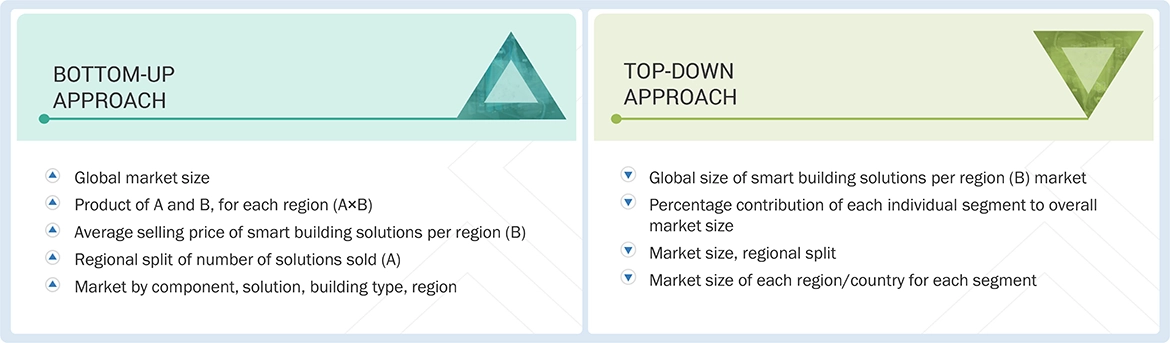
The top-down and bottom-up approaches were used to estimate and validate the size of the global Smart Buildings market and various other dependent submarkets in the overall market. An exhaustive list of all the vendors offering solutions and services in the market was prepared while using the top-down approach. The market share for all the vendors in the market was estimated through annual reports, press releases, funding, investor presentations, paid databases, and primary interviews. Each vendor was evaluated based on its offering (solutions and services). The aggregate of all companies’ revenues was extrapolated to reach the overall market size.
In the bottom-up approach, the key companies offering Smart Buildings solutions and services were identified. After confirming these companies through primary interviews with industry experts, their total revenue was estimated through annual reports, Securities and Exchange Commission (SEC) filings, and paid databases. The revenue of these companies from Business Units (BUs) that offer Smart Buildings was identified through similar sources. Then through primaries, the data on revenue generated through specific Smart Buildings components was collected.
Further, each subsegment was studied and analyzed for its global market size and regional penetration. The markets were triangulated through both primary and secondary research. The primary procedure included extensive interviews for key insights from the industry leaders, such as Chief Executive Officers (CEOs), Vice Presidents (VPs), directors, and managers.
Smart Buildings Market : Top-Down and Bottom-Up Approach
Data Triangulation
After arriving at the overall market size using the market size estimation processes as explained above, the market was split into several segments and subsegments. The data triangulation and market breakup procedures were employed, wherever applicable, to complete the overall market engineering process and arrive at the exact statistics of each market segment and subsegment. The data was triangulated by studying various factors and trends from both the demand and supply sides.
Report Objectives
- To describe and forecast the size of the Smart Buildings market by Component (solution, and services), building types, and regions, and analyze various macro and microeconomic factors that affect the market growth during the forecast period.
- To describe and forecast the size of the market segments with respect to five main regions: North America, Europe, Asia Pacific (APAC), Middle East and Africa (MEA), and the Latin America.
- To provide detailed information regarding drivers, restraints, opportunities, and challenges influencing the growth of the market.
- To analyze the impact of COVID-19 on the market.
- To analyze each submarket with respect to individual growth trends, prospects, and contributions to the total market.
- To analyze opportunities in the market for stakeholders by identifying the high-growth segments of the Smart Buildings market.
- To profile key market players, including top vendors and startups, provide comparative analysis based on business overviews, regional presence, product offerings, business strategies, and key financials, and provide a detailed competitive landscape of the market.
- To analyze competitive developments, such as Mergers and Acquisitions (M&A); new product launches and product enhancements; agreements, partnerships, and collaborations; expansions; and Research and Development (R&D) activities in the market.
Intelligent Building Market & Its impact on Smart Buildings Market:
Intelligent Building Market and Smart Buildings Market are closely related as they both refer to the use of technology to improve the efficiency and functionality of buildings. The terms are often used interchangeably, although some experts may draw distinctions between them.
Intelligent Building typically refers to the integration of various building systems, such as HVAC, lighting, security, and energy management, into a single, centralized control system that can be managed and monitored in real-time. This centralized system can leverage advanced analytics and automation to optimize building performance, reduce energy consumption, and improve occupant comfort and safety.
Smart Buildings, on the other hand, is a broader term that encompasses the use of various technologies, such as IoT sensors, data analytics, and machine learning, to optimize building performance and enhance the occupant experience. Smart Buildings can include Intelligent Building systems, but they can also include other technologies such as smart parking, indoor navigation, and mobile apps for building occupants.
The Intelligent Building market is poised to have a significant impact on the Smart Buildings market, as it represents a key component of the overall Smart Buildings ecosystem. Intelligent Buildings, which refer to the integration of various building systems into a single, centralized control system, can help to optimize building performance, reduce energy consumption, and improve occupant comfort and safety. This, in turn, can drive the adoption of Smart Buildings technologies, which are designed to enhance the overall functionality and efficiency of buildings.
Futuristic growth use-cases of Intelligent Building Market:
- Energy Management: Intelligent Building systems can help to optimize energy consumption by integrating various building systems, such as lighting, HVAC, and energy storage, into a single, centralized control system. This can help to reduce energy waste and lower energy costs.
- Predictive Maintenance: By leveraging advanced analytics and machine learning algorithms, Intelligent Building systems can predict when building equipment is likely to fail and schedule maintenance proactively. This can help to reduce downtime and extend the lifespan of building equipment.
- Occupant Comfort and Safety: Intelligent Building systems can monitor and adjust building conditions, such as temperature, lighting, and air quality, to ensure optimal comfort for occupants. They can also monitor building security and safety systems to detect potential threats and alert building managers in real-time.
- Space Optimization: Intelligent Building systems can monitor space usage and occupancy patterns to optimize space utilization and improve the overall efficiency of buildings. This can help to reduce costs associated with unused or underutilized space.
- Integration with Smart City Infrastructure: Intelligent Building systems can be integrated with smart city infrastructure, such as public transportation and energy grids, to optimize building operations and reduce energy consumption. This can help to create a more sustainable and connected urban environment.
Overall, the Intelligent Building Market is expected to play a key role in the development of smart cities and the transition to a more sustainable and efficient built environment.
Some of the top companies in Intelligent Building Market are Siemens AG, Honeywell International, Schneider Electric SE, Johnson Controls International plc, United Technologies Corporation, Cisco Systems, IBM Corporation, ABB, Legrand SA, Carrier Corporation.
New business opportunities in Intelligent Building Market:
- Integrated Building Management Systems (IBMS): IBMS is a system that integrates all building automation systems into one centralized platform, providing a holistic view of the building's performance. The IBMS market is expected to grow due to the increasing demand for energy-efficient and sustainable buildings.
- Smart Lighting Systems: Smart lighting systems use sensors and controls to adjust lighting levels based on occupancy and natural light availability. The market for smart lighting systems is expected to grow due to the increasing demand for energy-efficient and cost-effective lighting solutions.
- Energy Management Systems: Energy management systems are used to monitor, control, and optimize energy consumption in buildings. The market for energy management systems is expected to grow due to the increasing demand for energy-efficient buildings and the need to reduce carbon emissions.
- Building Analytics: Building analytics uses data analytics to optimize building performance and reduce energy consumption. The market for building analytics is expected to grow due to the increasing demand for energy-efficient buildings and the need to reduce operational costs.
- Internet of Things (IoT) in Building Automation: IoT is being integrated into building automation systems, allowing for remote monitoring and control of building systems. The market for IoT in building automation is expected to grow due to the increasing demand for smart buildings and the need for real-time monitoring and control of building systems.
- Building Information Modeling (BIM): BIM is a digital representation of a building that allows for improved collaboration and communication between building stakeholders. The market for BIM is expected to grow due to the increasing demand for sustainable and energy-efficient buildings.
Overall, the Intelligent Building Market presents a range of new business opportunities, including integrated building management systems, smart lighting systems, energy management systems, building analytics, IoT in building automation, and building information modeling.
Available Customizations
Along with the market data, MarketsandMarkets offers customizations as per the company’s specific needs. The following customization options are available for the report:
Product Analysis
- Product Matrix which gives a detailed comparison of the product portfolio of each company
Company Information
- Detailed analysis and profiling of additional market players (up to 5)
Need a Tailored Report?
Customize this report to your needs
Get 10% FREE Customization
Customize This ReportPersonalize This Research
- Triangulate with your Own Data
- Get Data as per your Format and Definition
- Gain a Deeper Dive on a Specific Application, Geography, Customer or Competitor
- Any level of Personalization
Let Us Help You
- What are the Known and Unknown Adjacencies Impacting the Smart Buildings Market
- What will your New Revenue Sources be?
- Who will be your Top Customer; what will make them switch?
- Defend your Market Share or Win Competitors
- Get a Scorecard for Target Partners

Custom Market Research Services
We Will Customise The Research For You, In Case The Report Listed Above Does Not Meet With Your Requirements
Get 10% Free CustomisationTESTIMONIALS
Growth opportunities and latent adjacency in Smart Buildings Market

Still Researching the
Smart Buildings Ecosystem?
See the competitors, opportunity evaluation, and growth signals shaping it - Instantly!
Generate 15+ consulting-grade strategic intelligence outputs - from competitor analysis to board-ready strategy decks, tailored to your Smart Buildings growth question.




sushil
Nov, 2018
Insights about the report on type of smart buildings in whcih market for open integrated platform vendors.
Dipak
Mar, 2016
Understand the dymanics and market trends of applications such as Solar Energy, particularly being in a tropical country..
Jeff
Jan, 2015
Market potential of Smart building within the Commercial building Plumbing and Water segment.
CY
Dec, 2015
understand the market dymnaics by Networking Technology especially in "wireless Technology" and market by Application especially in "Commercial Buildings"..
Clara
Aug, 2019
Understanding the role of sensors that are used in smart and connected buildings. .
Luis
Dec, 2014
Understand the SWOT analysis of vendors and insights about the BAS, BEMS, BCS in LATAM market. .
Luis
Dec, 2014
Understand the SWOT analysis of vendors and insights about the BAS, BEMS, BCS in LATAM market. .
Andreas
Sep, 2013
Insights on Wireless Technology by Type such as ZigBee, Z-Wave and EnOcean..
Luis
Jul, 2017
Understand the SWOT analysis of vendors and insights about the BAS, BEMS, BCS in LATAM market. .
Rian
Jan, 2015
Market potential from 2013 to 2018..
Koichi
Feb, 2017
Scope and defination of various segments such as Building energy management system, Physical security system, Building communication systems, Plumbing and water management system, Parking management systems, Elevators and escalators management system..
Katia
Oct, 2015
Understanding the market potential of Smart building along with trends, forecasts by countries in Europe (with a specific focus on France)..
Jenna
Jul, 2017
Market potential of smart buildimng market in Finland and Nordics countries. .
Giomar
Apr, 2016
Understanding about Energy Management for a customer with several buildings and integrated with security systems.
Abdul
Mar, 2022
Recent growth factors and market size specific to MEA Region for Smart Buildings Market.
Saif
Jan, 2019
Understanding the market potential of smart buildings .