Applicant Tracking System Market

Applicant Tracking System Market by Offering (Solutions & Services), Functionality (Job Distribution & Posting, Resume Parsing & Candidate Sourcing, Interview Management, Candidate Relationship Management, Reporting & Analytics) - Global Forecast to 2030




OVERVIEW
Source: Secondary Research, Interviews with Experts, MarketsandMarkets Analysis
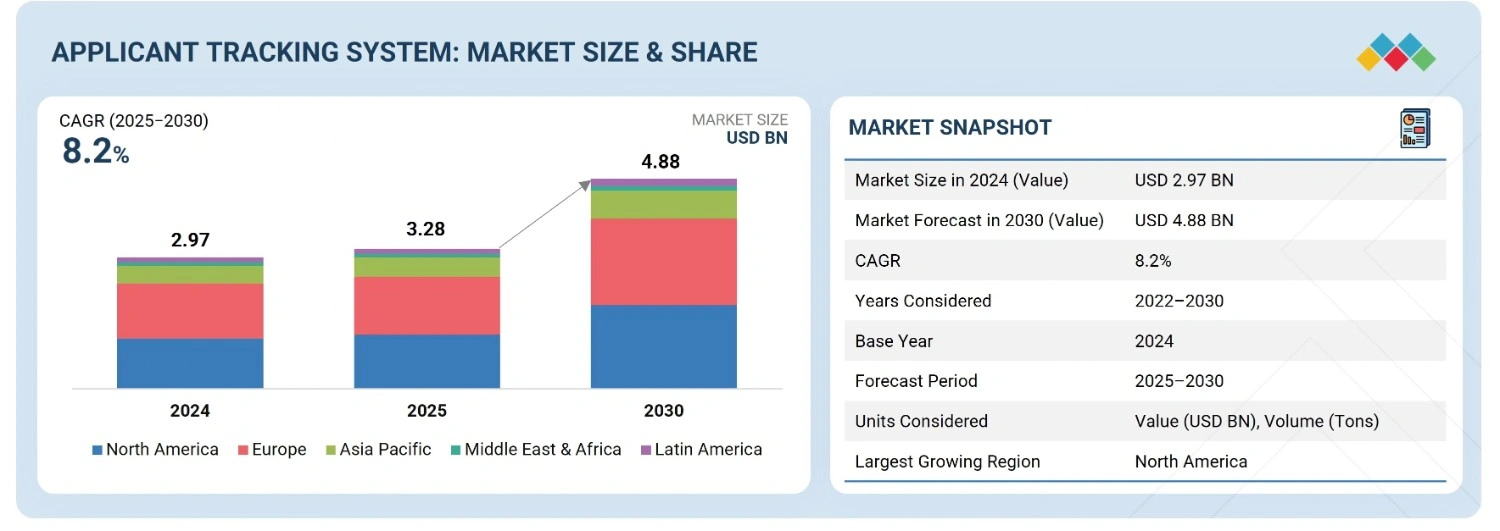
The applicant tracking system market is expanding rapidly, with the market size anticipated to rise from USD 3.28 billion in 2025 to USD 4.88 billion by 2030, registering a CAGR of 8.2% from 2025 to 2030. Improving candidate experience is a crucial factor fueling the demand for applicant tracking systems (ATS), as organizations increasingly seek solutions that boost engagement and hiring results. According to CareerPlug's 2025 Candidate Experience Report, 66% of job seekers accepted offers due to a positive hiring experience, 26% declined offers due to poor communication or unclear expectations, and 36% withdrew after a negative interview. These figures highlight the importance of structured, timely, and candidate-friendly recruitment processes.
Market Size and Forecast:
- Market Size Value in 2024: USD 2.97 billion
- Market Size Value in 2025: USD 3.28 billion
- Revenue Forecast in 2030: USD 4.88 billion
- Growth Rate: CAGR of 8.2% from 2025 to 2030
- Data available from 2022 to 2030
- Base year: 2024
- Forecast period: 2025-2030
- Fastest Growing Region: Asia Pacific
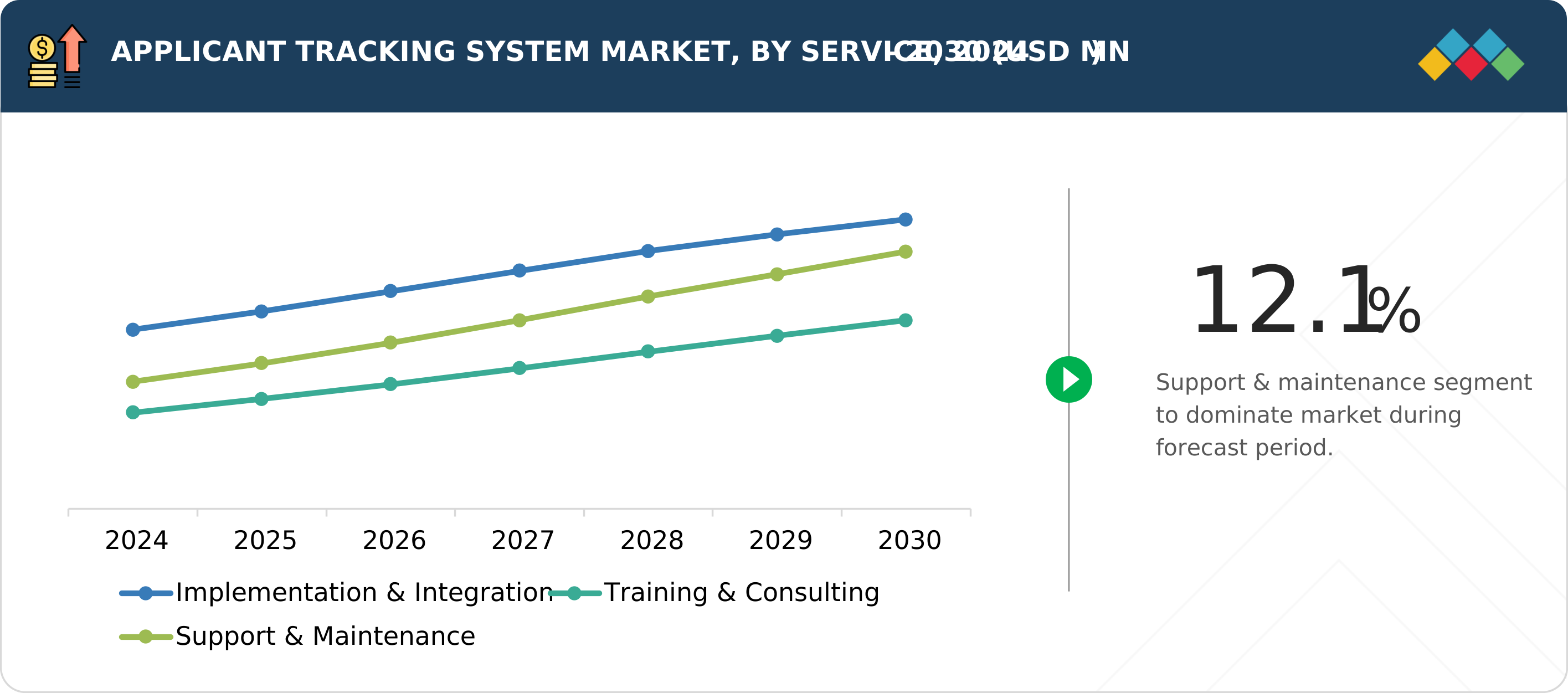
- Support & maintenance is projected to be the fastest-growing service segment at a CAGR of 12.1% through 2030.
Key Market Trends and Insights
- Growth Drivers: Talent shortages, remote hiring, and HR automation are accelerating ATS adoption.
-
Key Trends: AI-powered screening, resume parsing, cloud ATS, and predictive hiring are reshaping recruitment.
- Opportunities: SMB adoption, skills-based hiring, and AI recruitment assistants expand ATS demand.
- Generative AI Impact: AI automates candidate matching, resume screening, interview scheduling, and hiring workflows.
KEY TAKEAWAYS
-
BY OFFERINGATS solutions enhance the hiring process by automating job requisitions, candidate sourcing, resume parsing, and interview coordination. Powered by AI, analytics, and mobile access, these platforms help organizations reduce manual workload, accelerate time-to-hire, and improve candidate experience while ensuring scalability across diverse recruitment needs. ATS services support organizations in maximizing solution value through consulting, implementation, integration, and training. With ongoing support and managed services, enterprises achieve seamless platform adoption, optimized workflows, and long-term recruitment efficiency, ensuring measurable ROI from their ATS investments.
-
BY FUNCTIONALITYJob distribution and posting capabilities streamline recruitment by automating multi-channel job postings across career sites, job boards, and social platforms. These functions expand candidate reach, reduce manual effort, and enable recruiters to attract top talent efficiently. Reporting and analytics empower recruiters with real-time insights into hiring performance, pipeline health, and candidate quality. Leveraging dashboards and predictive metrics, organizations optimize recruitment strategies, ensure compliance, and improve overall decision-making in talent acquisition.
-
BY VERTICALIn the BFSI sector, ATS solutions streamline high-volume recruitment by automating screening, compliance checks, and background verifications. With AI-driven tools, financial institutions enhance candidate quality, reduce hiring risks, and meet strict regulatory requirements while improving recruiter productivity. In healthcare and life sciences, ATS platforms address the demand for specialized talent by accelerating candidate sourcing, credential verification, and role matching. These systems help providers and research organizations reduce hiring delays, ensure compliance, and maintain workforce readiness in critical care and innovation-driven environments.
-
BY REGIONAsia Pacific is expected to register the highest CAGR of 11.6%, driven by digital hiring adoption, a surge in startups, and large-scale workforce demands across IT, telecom, and manufacturing. Organizations are leveraging AI-enabled platforms for multilingual support, mobile recruitment, and campus hiring to meet diverse talent needs. Growing focus on automation, compliance, and candidate experience positions Asia Pacific as a high-growth region for next-generation ATS solutions.
-
COMPETITIVE LANDSCAPEThe major players in the ATS market have adopted both organic and inorganic strategies, including partnerships and investments. For instance, Oracle, ICIMS, SAP, and Bullhorn are entering into several agreements and partnerships to cater to the growing demand for ATS solutions across diverse enterprise applications.
ATS vendors that offer features such as real-time updates, intuitive application flows, and personalized communication are better positioned to support employers in attracting and retaining top talent. Additionally, with 70% of candidates preferring in-person interviews, there is a growing need for hybrid solutions that combine automation with human interaction. By addressing these expectations, ATS providers can enhance platform adoption, strengthen employer branding efforts, and contribute to overall market expansion.
TRENDS & DISRUPTIONS IMPACTING CUSTOMERS' CUSTOMERS
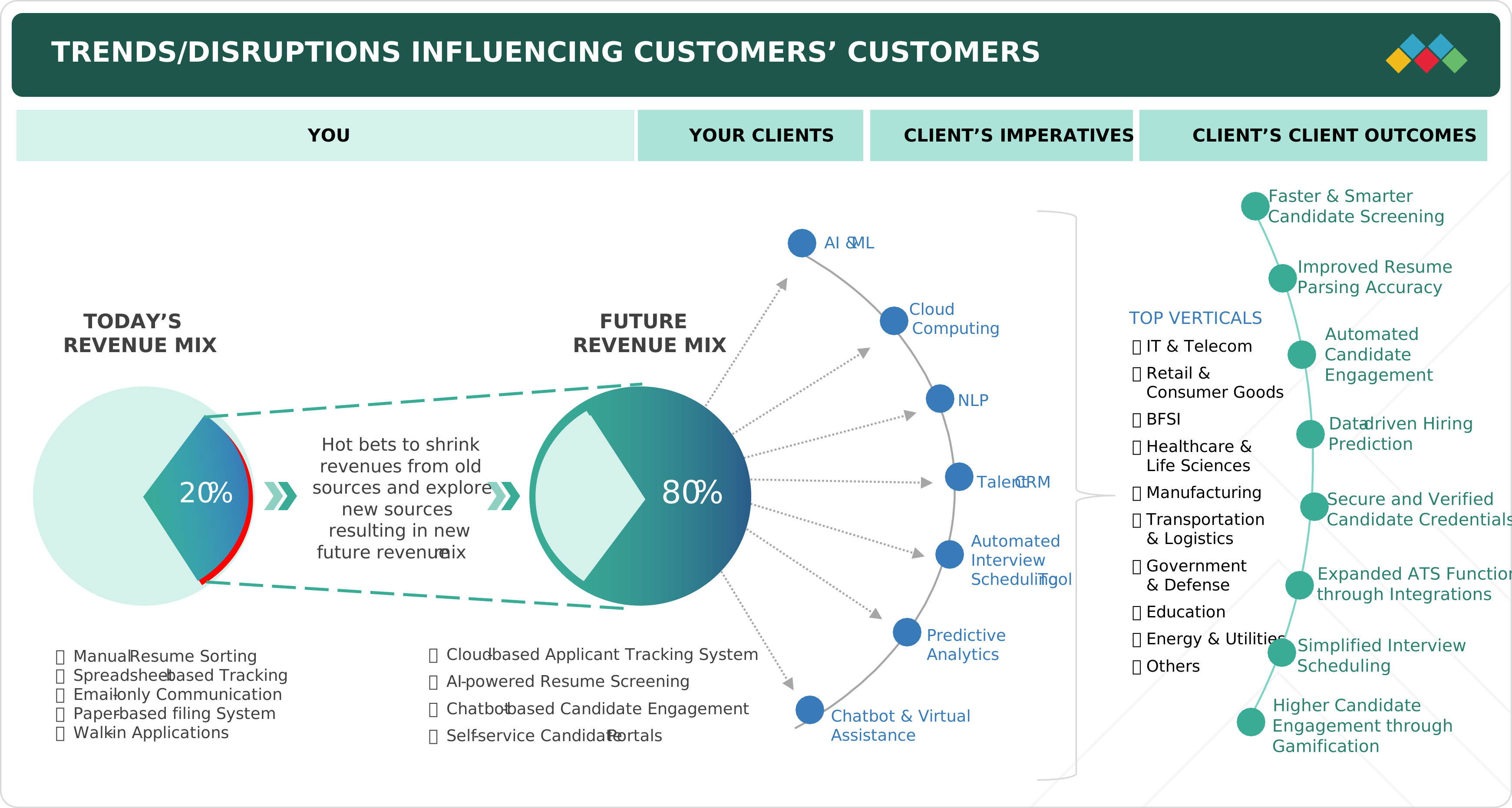
The section highlights the key trends and disruptions shaping the ATS market, focusing on how recruitment models are shifting toward AI-driven candidate matching, automation, and cloud-based platforms. It emphasizes the evolving priorities of core client segments such as BFSI, healthcare, and IT, linking their strategic imperatives to measurable outcomes like reduced time-to-hire, improved candidate quality, regulatory compliance, cost efficiency, and enhanced recruitment experience.
Source: Secondary Research, Interviews with Experts, MarketsandMarkets Analysis
MARKET DYNAMICS

Level
-
Automation of Recruitment Workflows Accelerates ATS Adoption

-
Rise in Remote Hiring & Global Talent Access


Level
-
Data Privacy & Compliance Constraints


Level
-
Global Gig-hiring Modules Unlock Regional & Emerging Market Growth

-
Cloud-native Architectures Enable Scalable, Global ATS Deployment


Level
-
Feature-sprawl Commoditization in Crowded Fields

-
Implementing ATS Solutions in Existing Infrastructure

Source: Secondary Research, Interviews with Experts, MarketsandMarkets Analysis
Driver: Automation of Recruitment Workflows Accelerates ATS Adoption
Automation is emerging as a key driver of the applicant tracking system (ATS) market, as enterprises seek faster, more efficient, and data-driven hiring processes. By streamlining core workflows such as screening, scheduling, offer management, and onboarding, automation reduces manual effort and accelerates outcomes evident in Paradox’s Workday-certified integration, which cut interview scheduling time by 90%. Conversational ATS solutions are also transforming high-volume hiring by automating over 90% of tasks, boosting recruiter productivity and candidate engagement. For vendors, embedding scalable low-code automation with real-time performance insights has become a vital differentiator, enabling them to showcase ROI and strengthen their competitive edge in the evolving ATS landscape.
Restraint: Data Privacy & Compliance Constraint
Tightening global regulations on data privacy and AI-driven hiring are increasing scrutiny on ATS, as non-compliance can lead to hefty fines and reputational risks. Examples include New York City's Local Law 144 and the EU’s AI Act, highlighting low compliance rates and high penalties. Enterprises now demand ATS platforms with built-in safeguards such as consent tracking, audit logs, explainable screening, and transparent evaluation criteria. Without these compliance features, adoption slows, deal sizes shrink, and buyer confidence drops. The ATS market must adapt to regulatory pressures to maintain growth, especially in highly regulated regions.
Opportunity: Global Gig-hiring Modules Unlock Regional & Emerging Market Growth
The rise of gig and on-demand hiring is creating new growth opportunities for the ATS market, as enterprises seek scalable solutions for managing high-volume, shift-based, and task-oriented workforces. ATS platforms are evolving beyond traditional full-time hiring to support contingent labor, particularly in sectors like e-commerce, logistics, and retail. Features such as shift matching, real-time credential verification, localized compliance, and integrated digital payments help manage complex, multi-region hiring while ensuring regulatory adherence. By catering to gig workforce needs, ATS platforms can boost adoption in emerging markets, increase platform value, and align with the long-term trend toward flexible labor models.
Challenge: Implementing ATS solutions in Existing Infrastructure
Integrating ATS into existing enterprise IT infrastructure is a key challenge as organizations modernize recruitment processes. Legacy networks and perimeter-based security models often struggle to support user- and application-centric ATS frameworks, leading to integration delays and IT complexities. Surveys show that a significant portion of IT teams face hurdles connecting ATS platforms to legacy systems, slowing adoption in large enterprises. Seamless deployment, compatibility with existing systems, and robust security are now essential, and solutions that simplify implementation and minimize disruption are more likely to gain traction and drive growth in the competitive ATS market.
Applicant Tracking System Market: COMMERCIAL USE CASES ACROSS INDUSTRIES
| COMPANY | USE CASE DESCRIPTION | BENEFITS |
|---|---|---|
 |
Growing HVAC Bullhorn to streamline candidate and client management, improve recruiter productivity, and scale operations. | Improved efficiency by reducing manual tasks, enhanced transparency with centralized candidate data, and strengthened collaboration. |
 |
Wistia, by adopting BambooHR, automated administrative tasks and empowered HR. | BambooHR enabled Wistia to centralize employee data, simplify onboarding, and improve reporting for strategic insights. |
 |
Shortlist Recruitment replaced slower ATS systems in favor of Zoho Recruit. | Zoho Recruit helped Shortlist speed up candidate search and categorization, deliver faster hiring responses, and scale operations globally with secure, cost-efficient, cloud-based access. |
 |
Manpower Malta implemented Manatal to streamline recruitment and improve accuracy. | Manatal improved efficiency with reliable parsing and candidate scoring, cut time-to-hire, and enhanced collaboration through clear ownership and streamlined workflows, driving better placements. |
 |
Managed Staffing used Ceipal’s ATS to stay agile. | Ceipal increased submissions by 10%, cut costs by 30%, and streamlined workflows with integrated search and VMS tools. |
Logos and trademarks shown above are the property of their respective owners. Their use here is for informational and illustrative purposes only.
MARKET ECOSYSTEM
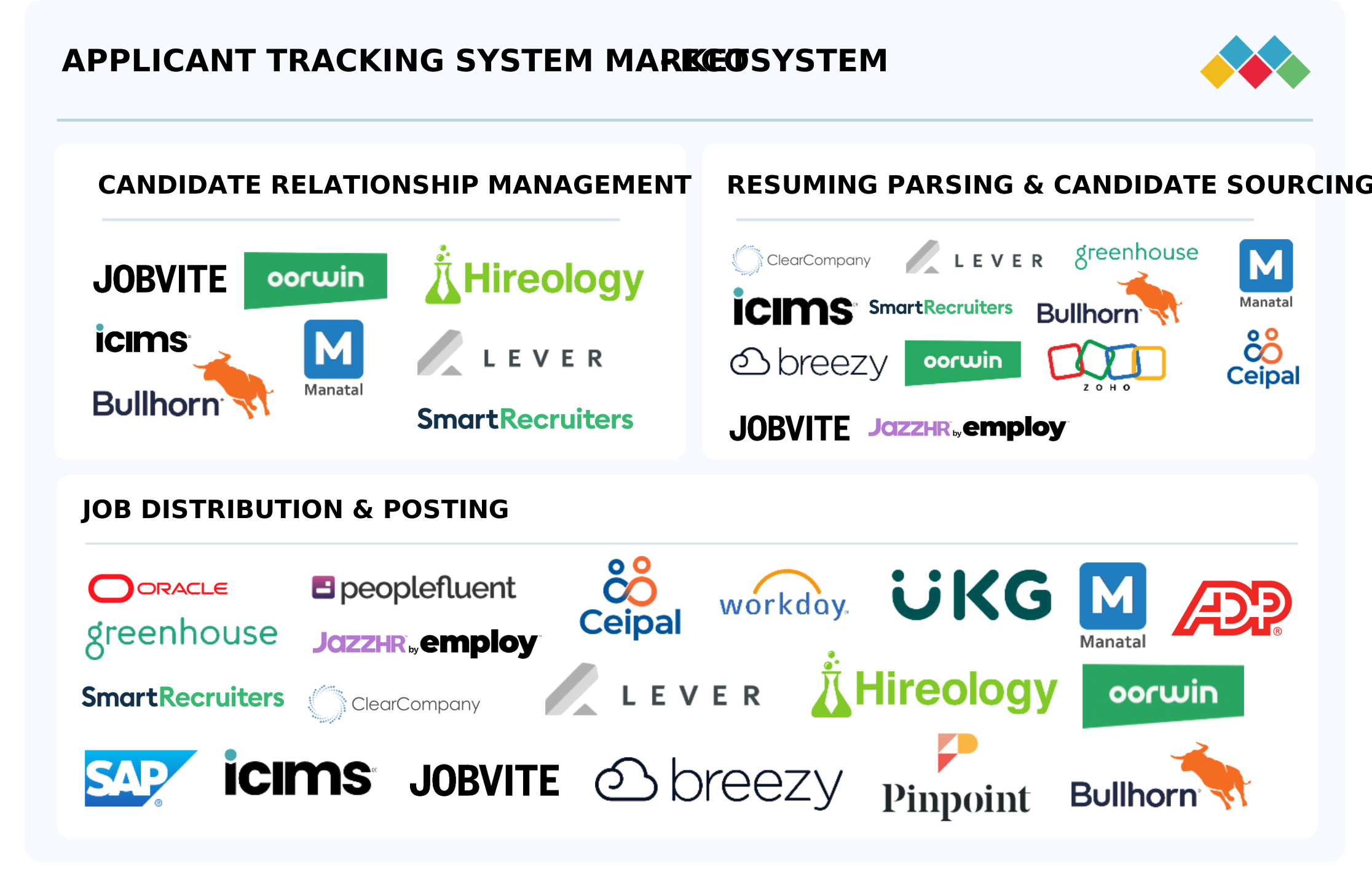
The ecosystem consists of end-to-end platforms and specialized tools supporting key functions such as job distribution, resume parsing, interview management, candidate relationship management, and recruitment analytics. ATS providers offer capabilities like automated job posting, AI-driven candidate sourcing, and real-time engagement to improve hiring efficiency and candidate experience. These solutions help organizations make informed, data-driven hiring decisions while streamlining workflows across the talent acquisition lifecycle.
Logos and trademarks shown above are the property of their respective owners. Their use here is for informational and illustrative purposes only.
MARKET SEGMENTS
Source: Secondary Research, Interviews with Experts, MarketsandMarkets Analysis
Applicant Tracking System Market, By Offering
The solutions segment is expected to capture the largest share of the ATS market, as enterprises prioritize comprehensive platforms that streamline end-to-end recruitment processes. ATS solutions offer core functionalities such as job posting, candidate tracking, interview scheduling, and onboarding, often enhanced with AI-driven automation and analytics. By providing integrated tools for high-volume and complex hiring, these solutions improve recruiter efficiency, enhance candidate experience, and ensure compliance. Their ability to deliver measurable ROI and scalable deployment makes the solutions segment the most widely adopted and strategically important in the ATS market.
Applicant Tracking System Market, By Functionality
The job distribution & posting segment is expected to hold the largest share of the ATS market, as organizations focus on efficiently reaching and attracting qualified candidates. This functionality enables automated job posting across multiple boards, social media channels, and internal portals, reducing manual effort and time-to-hire. Advanced features like targeted distribution, branded career pages, and real-time analytics further enhance visibility and candidate engagement. By streamlining talent sourcing and expanding reach, this segment plays a critical role in optimizing recruitment outcomes and driving widespread ATS adoption.
Applicant Tracking System Market, By Vertical
The BFSI (Banking, Financial Services, and Insurance) segment is expected to hold the largest share of the ATS market due to its high demand for efficient, compliant, and large-scale talent acquisition. Financial institutions handle complex hiring requirements, including strict regulatory compliance, risk management, and specialized skill sourcing, which drives adoption of advanced ATS platforms. Features such as automated screening, candidate tracking, and audit-ready reporting help BFSI organizations streamline recruitment, reduce operational costs, and maintain compliance. The need for secure, scalable, and data-driven solutions positions BFSI as a leading vertical in ATS adoption.
REGION
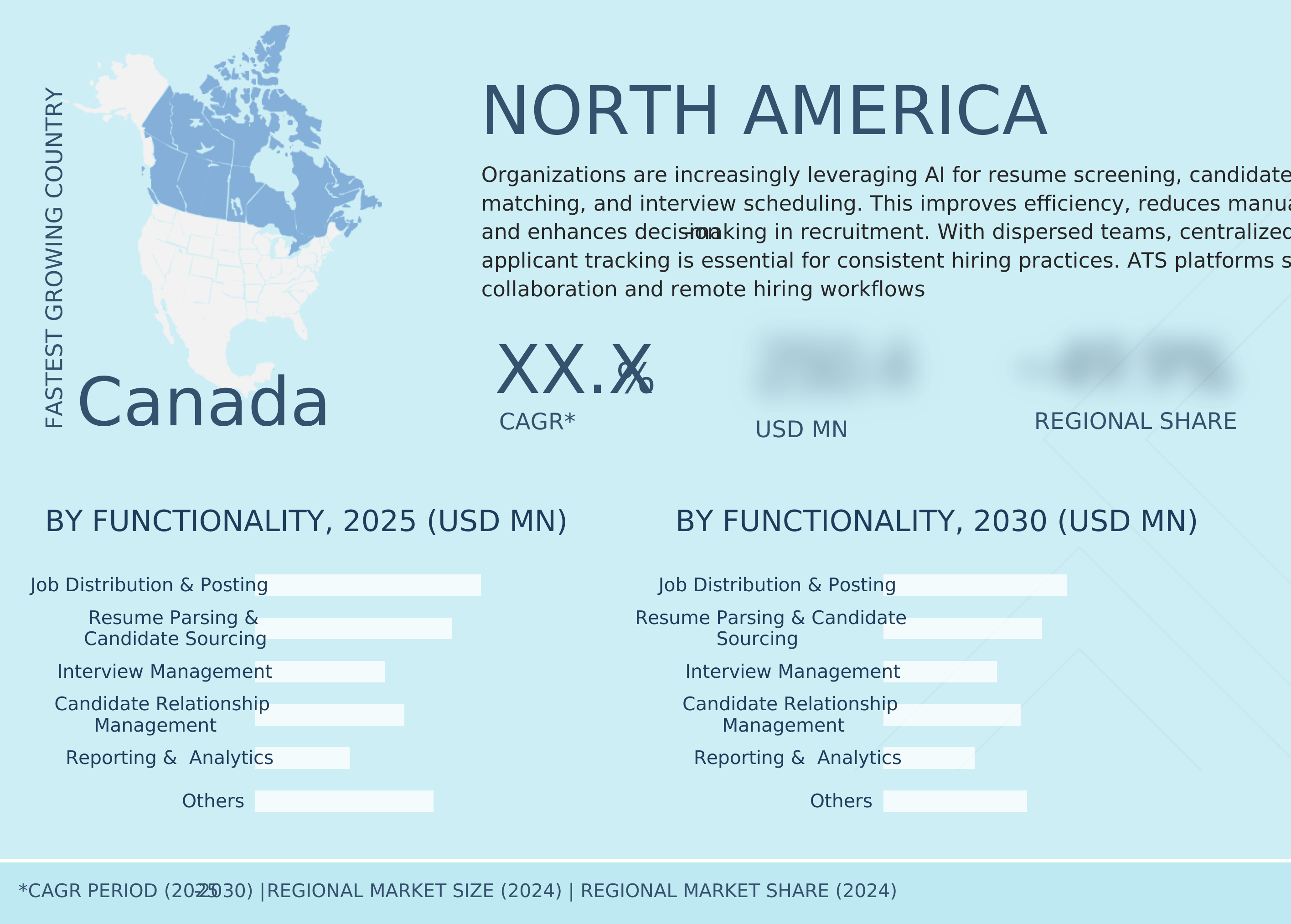
North America to be largest region in global applicant tracking system market during forecast period
North America is expected to dominate the ATS market, driven by the rapid adoption of AI-enabled, automated recruitment technologies and advanced cloud-based HR solutions. Leading vendors like Oracle, IBM, Workday, and iCIMS support widespread deployment, while strong IT infrastructure and initiatives promoting remote work, diversity, and workforce upskilling further boost demand. Recent acquisitions, such as Engagedly’s purchase of hiringtool.co and Bullhorn’s acquisition of Textkernel, highlight the growing need for AI-driven features like automated shortlisting and semantic search. Enterprises increasingly seek modular, configurable ATS platforms that integrate with broader HCM systems, offering end-to-end recruitment efficiency and compliance, solidifying North America as a key strategic market.
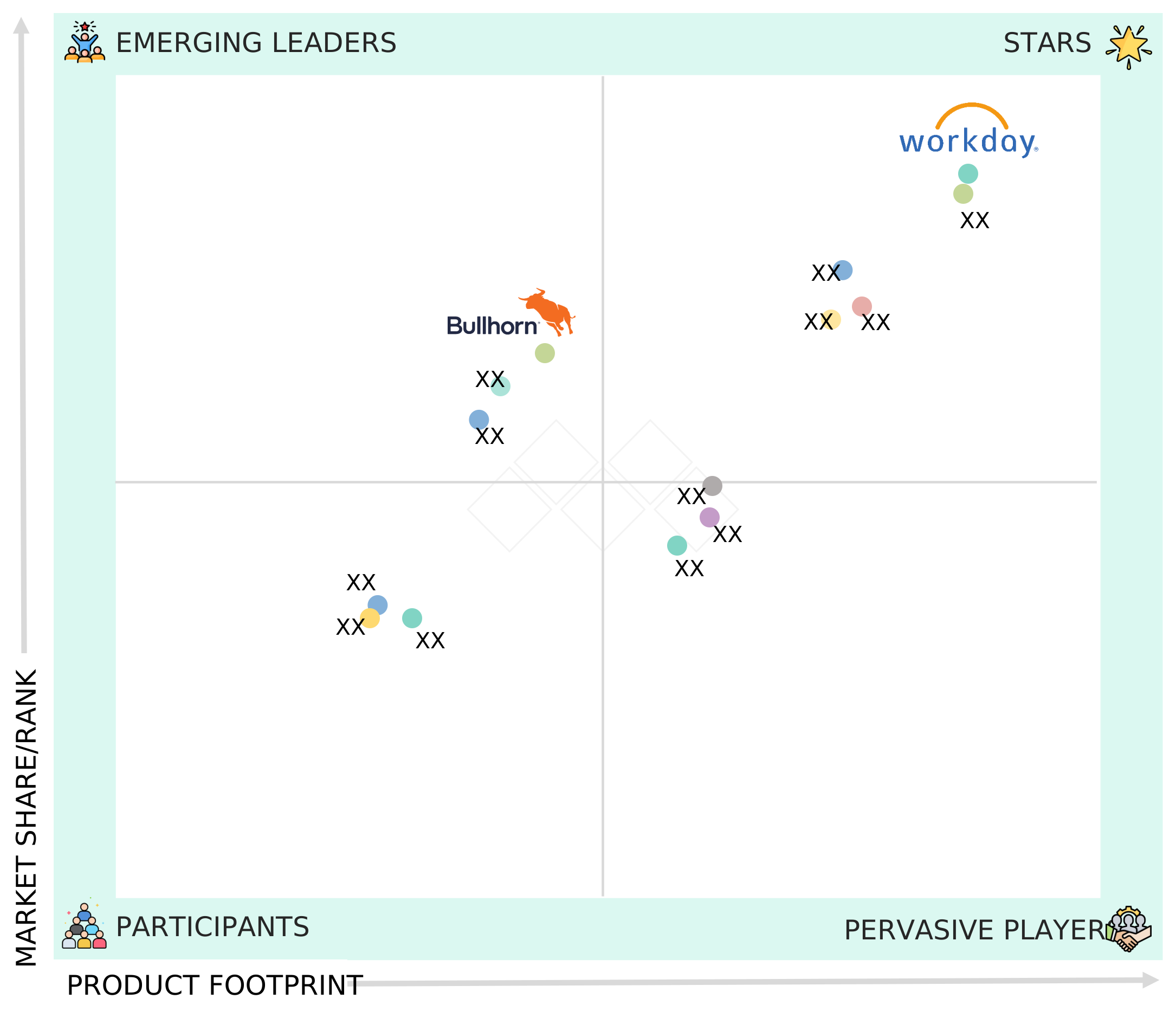
Applicant Tracking System Market: COMPANY EVALUATION MATRIX
In the ATS market matrix, Workday (Star) leads with a strong market presence and comprehensive recruitment suite, supporting large-scale adoption across industries such as BFSI, healthcare, and IT. Bullhorn (Emerging Leader) is gaining traction with scalable, data-driven ATS solutions tailored for staffing and recruitment agencies. While Workday dominates with enterprise reach and integrated HR capabilities, other providers like iCIMS and SmartRecruiters show strong growth potential to move toward the leaders’ quadrant.
Source: Secondary Research, Interviews with Experts, MarketsandMarkets Analysis
MARKET SCOPE
| REPORT METRIC | DETAILS |
|---|---|
| Market Size in 2024 (Value) | USD 2.97 BN |
| Market Forecast in 2030 (value) | USD 4.88 BN |
| Growth Rate | 8.2% |
| Years Considered | 2022–2030 |
| Base Year | 2024 |
| Forecast Period | 2025–2030 |
| Units Considered | Value (USD BN), Volume (Tons) |
| Report Coverage | Revenue forecast, company ranking, competitive landscape, growth factors, and trends. |
| Segments Covered |
|
| Regions Covered | North America, Asia Pacific, Europe, South America, Middle East & Africa |
WHAT IS IN IT FOR YOU: Applicant Tracking System Market REPORT CONTENT GUIDE
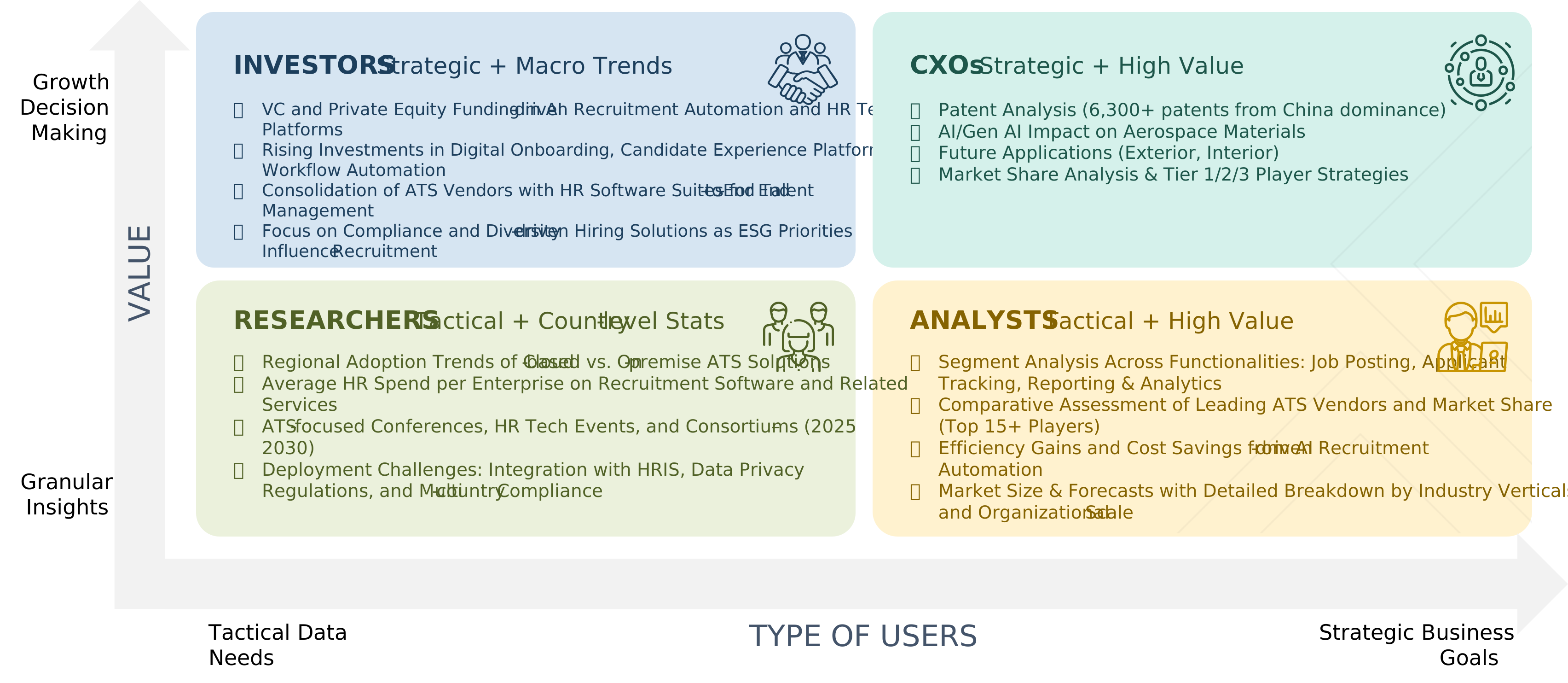
DELIVERED CUSTOMIZATIONS
We have successfully delivered the following deep-dive customizations:
| CLIENT REQUEST | CUSTOMIZATION DELIVERED | VALUE ADDS |
|---|
RECENT DEVELOPMENTS
- July 2025 : The iCIMS 2025 Summer Release showcased advanced functionalities within the core ATS. Features include AI-driven candidate search, SEO and translation assistants for global career sites, improved interview scheduling and feedback tools, plus growth in the iCIMS Apply Network. These upgrades enhance recruiting efficiency and candidate accessibility.
- June 2025 : Greenhouse launched Real Talent, an AI-powered solution integrated into its platform to combat rising spam, fraud, and cheating in hiring. It filters candidates based on skill alignment while detecting fake applications and interview misrepresentation. The tool helps recruiters manage overwhelming pipelines and improve hiring quality by highlighting genuine, qualified applicants.
- May 2025 : Bullhorn launched Amplify during Engage Boston, a suite of AI-powered agents designed to streamline sourcing, screening, outreach, and candidate submissions. This solution enables staffing firms to drive performance without increasing their headcount. Early users reported a 51% rise in job submissions, a 22% improvement in fill rates, and 85% candidate satisfaction.
- April 2025 : Bullhorn launched Amplify during Engage Boston, a suite of AI-powered agents designed to streamline sourcing, screening, outreach, and candidate submissions. This solution enables staffing firms to drive performance without increasing their headcount. Early users reported a 51% rise in job submissions, a 22% improvement in fill rates, and 85% candidate satisfaction.
- March 2025 : Workday rolled out its Spring 2025 Release, featuring over 350 product enhancements across HR and finance. Key updates in Workday Recruiting include AI-powered talent rediscovery, personalized onboarding experiences, and intelligent job recommendations to streamline hiring and boost employee engagement. These innovations aim to reduce costs, improve retention, and accelerate time-to-hire.
Table of Contents
 Exclusive indicates content/data unique to MarketsandMarkets and not available with any competitors.
Methodology
This research used extensive secondary sources, directories, and databases, such as D&B Hoovers, Bloomberg Businessweek, and Factiva, to identify and collect information for a technical, market-oriented, and commercial study of the applicant tracking system market. Other market-related reports and analyses published by various industry associations and consortia, such as the National Security Agency (NSA) and SC Magazine, were considered while conducting extensive secondary research. The primary sources were mainly industry experts from the core and related industries and preferred suppliers, manufacturers, distributors, service providers, technology developers, and technologists from companies and organizations related to all segments of this industry's value chain. In-depth interviews were conducted with primary respondents, including key industry participants, subject-matter experts, C-level executives of key market players, and industry consultants to obtain and verify critical qualitative and quantitative information and assess the prospects. The market was estimated by analyzing various driving factors, such as the need to improve compliance requirements within an organization, increasing emphasis on enhancing operational efficiency, and the requirement for simplified workflows to eliminate bottlenecks.
Secondary Research
The market size of companies offering applicant tracking systems was arrived at based on secondary data available through paid and unpaid sources, as well as by analyzing the product portfolios of major companies in the ecosystem and rating the companies based on their product capabilities and business strategies.
Various sources were used in the secondary research process to identify and collect information for the study. These sources included annual reports, press releases, investor presentations of companies, product data sheets, white papers, journals, certified publications, articles from recognized authors, government websites, directories, and databases.
Secondary research was mainly used to obtain key information about the industry's supply chain, the total pool of key players, market classification and segmentation according to industry trends to the bottom-most level, regional markets, and key developments from both market- and technology-oriented perspectives, all of which were further validated by primary sources.
Primary Research
In the primary research process, various sources from the supply and demand sides were interviewed to obtain qualitative and quantitative information for this report. The primary sources from the supply side included industry experts, such as chief executive officers (CEOs), vice presidents (VPs), marketing directors, technology and innovation directors, and related key executives from various key companies and organizations operating in the applicant tracking system market.
Primary interviews were conducted to gather insights, such as market statistics, the latest trends disrupting the market, new use cases implemented, data on revenue collected from products and services, market breakups, market size estimations, market forecasts, and data triangulation. Primary research also helped me understand various technology-related trends, segmentation types, industry trends, and regions. Demand-side stakeholders, such as chief information officers (CIOs), chief technology officers (CTOs), chief security officers (CSOs), the installation teams of governments/end users using applicant tracking system platforms, and digital initiatives project teams, were interviewed to understand the buyer's perspective on suppliers, products, service providers, and their current use of services, which would affect the overall applicant tracking system market.
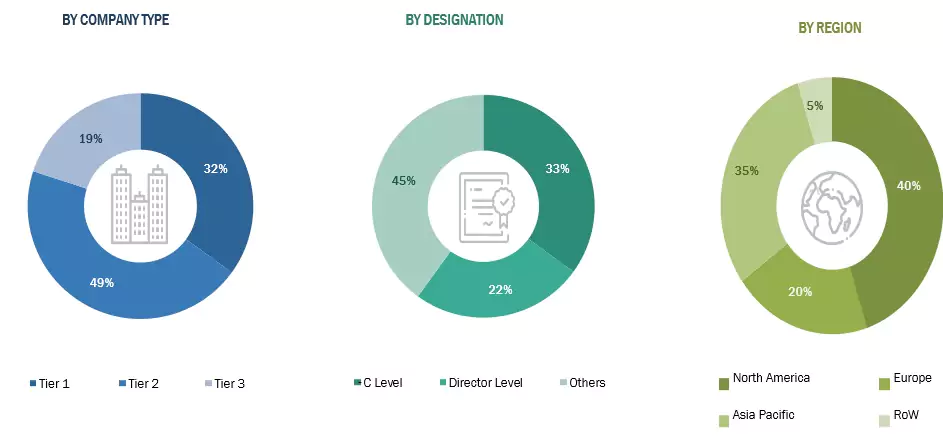
Note: Tier 1 companies have revenues greater than USD 10 billion; tier 2 companies' revenues range between USD
1 and 10 billion; and tier 3 companies' revenues range between USD 500 million and 1 billion. Other designations
include sales, marketing, and product managers.
Source: Secondary Research, Interviews with Experts, and MarketsandMarkets Analysis
To know about the assumptions considered for the study, download the pdf brochure
Market Size Estimation
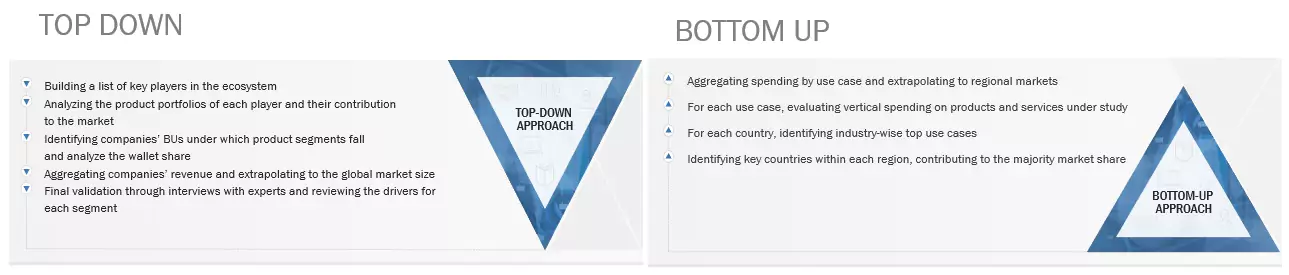
Multiple approaches were adopted to estimate and forecast the applicant tracking system market. The first approach involved estimating the market size by the summation of the companies' revenue generated through the sale of services.
The research methodology used to estimate the market size included the following.
- Primary and secondary research were conducted to assess the revenue contributions of major market participants in each country, with secondary research identifying these participants.
- Critical insights were obtained by conducting in-depth interviews with industry professionals, including directors, CEOs, VPs, and marketing executives, and by reading the annual and financial reports of the top firms in the market.
- Primary sources were used to verify all percentage splits and breakups, which were calculated using secondary sources.
Applicant Tracking System Market : Top-Down and Bottom-Up Approach
Data Triangulation
Once the overall market size was determined, the market was divided into segments and subsegments using the previously described market size estimation procedures. When required, market breakdown and data triangulation procedures were employed to complete the market engineering process and specify the exact figures for every market segment and subsegment. The data was triangulated by examining several variables and patterns from the government entities' supply and demand sides.
Market Definition
According to Oracle, "An applicant tracking system (ATS) is software for recruiters and employers to track candidates throughout the recruiting and hiring process. This software can come equipped with capabilities ranging from simple database functionality to a full-service suite of tools that make it easy for businesses of any size to filter, manage, and analyze candidates."
According to MarketsandMarkets, "An applicant tracking system (ATS) is a software solution that automates and manages the end-to-end recruitment process. It helps organizations post jobs, track applicants, screen resumes, and streamline candidate communication. ATS enhances hiring efficiency, ensures compliance, and centralizes candidate data."
Stakeholders
- HR and Recruitment Teams
- Hiring Managers
- IT Department
- Senior Management
- Finance/Procurement Teams
- Employees (Internal Users)
- Job Applicants
- Third-party System Integrators
Report Objectives
- To define, describe, and forecast the applicant tracking system market based on offering (solutions and services [training & consulting, implementation & integration, support & maintenance]), functionality (job creation & posting, resume parsing & candidate sourcing, interview management, candidate relationship management, reporting & analytics, others), deployment type (cloud-based ATS, on-premises ATS), organization size (large enterprises, medium enterprises, small enterprises), vertical (IT & telecom, BFSI, healthcare & life sciences, manufacturing, transport & logistics, government & defense, education, energy & utilities, others), and region.
- To forecast the market size of five major regional segments: North America, Europe, Asia Pacific, the Middle East & Africa, and Latin America.
- To strategically analyze the market subsegments concerning individual growth trends, prospects, and contributions to the total market.
- To provide detailed information on the significant factors influencing the market's growth (drivers, restraints, opportunities, and challenges).
- To strategically analyze macro and micro markets concerning growth trends, prospects, and their contributions to the overall market.
- To analyze industry trends, patents, innovations, and pricing data related to the market.
- To analyze the opportunities in the market for stakeholders and provide details of the competitive landscape for major players.
- To analyze the impact of AI/generative AI on the market.
- To profile key players in the market and comprehensively analyze their market share/ranking and core competencies.
- To track and analyze competitive developments such as mergers & acquisitions, product launches, and partnerships & collaborations in the market.
Available Customizations
MarketsandMarkets provides customizations based on the company's unique requirements using market data. The following customization options are available for the report.
Product Analysis
- The product matrix provides a detailed comparison of each company's portfolio.
Geographic Analysis as per Feasibility
- Further breakup of the applicant tracking system market
Company Information
- Detailed analysis and profiling of five additional market players
Key Questions Addressed by the Report
What is the applicant tracking system?
An applicant tracking system (ATS) is a software solution that automates and manages the end-to-end recruitment process. It helps organizations post jobs, track applicants, screen resumes, and streamline candidate communication. ATS enhances hiring efficiency, ensures compliance, and centralizes candidate data.
What are the different types of deployment modes for an applicant tracking system?
The ATS market is segmented into on-premises and cloud-based deployments. On-premises solutions offer high control over data and customization but require substantial IT resources and upfront costs, making them more suitable for large enterprises. In contrast, cloud-based ATS delivered via SaaS offers flexibility, real-time access, easier integration with other tools, and lower setup and maintenance costs. This model is ideal for SMEs and growing businesses, driving widespread adoption across industries.
What are the major factors driving the growth of the applicant tracking system industry?
The growth of the applicant tracking system (ATS) market is driven by the increasing need to automate and streamline recruitment processes, reduce time-to-hire, and improve hiring efficiency. Organizations are adopting cloud-based ATS solutions for scalability, cost-effectiveness, and remote accessibility. The rise in AI-driven recruitment, compliance requirements, and demand for better candidate experience further fuels adoption. The growing hiring volume and the need to manage talent pipelines effectively contribute to market expansion.
What challenges are hindering the widespread adoption of an applicant tracking system?
Adopting applicant tracking systems (ATS) is hindered by high implementation costs, especially for small and mid-sized businesses, and integration challenges with existing HR tools. Many organizations face resistance from users due to a lack of training, while concerns over data privacy and compliance also slow adoption. Additionally, limited customization, poor candidate experience, and inaccuracies in resume parsing affect the effectiveness of some ATS platforms.
Who are the key vendors in the applicant tracking system market?
The key vendors in the global applicant tracking system market include Oracle (US), iCIMS (US), SAP (Germany), Workday (US), Bullhorn (US), Greenhouse Software (US), Smartrecruiters (US), UKG Inc. (US), ADP (US), Jobvite (US), Peoplefluent (US), Paychex Inc. (US), Cornerstone (US), Clearcompany (US), BambooHR (US), Infor (US), Zoho Corporation (India), JazzHR (US), Ceipal (US), BrezzyHR (US), Lever (US), Oorwin (US), Skeeled (Luxembourg), Manatal (Thailand), Hirelogy (US), and Pinpoint (US).


Personalize This Research
- Triangulate with your Own Data
- Get Data as per your Format and Definition
- Gain a Deeper Dive on a Specific Application, Geography, Customer or Competitor
- Any level of Personalization
Let Us Help You
- What are the Known and Unknown Adjacencies Impacting the Applicant Tracking System Market
- What will your New Revenue Sources be?
- Who will be your Top Customer; what will make them switch?
- Defend your Market Share or Win Competitors
- Get a Scorecard for Target Partners

Custom Market Research Services
We Will Customise The Research For You, In Case The Report Listed Above Does Not Meet With Your Requirements
Get 10% Free CustomisationTESTIMONIALS
- Canada Applicant Tracking System Market
- US Applicant Tracking System Market
- UK Applicant Tracking System Market
- Germany Applicant Tracking System Market
- France Applicant Tracking System Market
- Italy Applicant Tracking System Market
- China Applicant Tracking System Market
- Japan Applicant Tracking System Market
- UAE Applicant Tracking System Market
- Saudi Arabia Applicant Tracking System Market
- South Africa Applicant Tracking System Market
- Brazil Applicant Tracking System Market
- Mexico Applicant Tracking System Market
- Rest Of Europe Applicant Tracking System Market
- Rest Of Asia Pacific Applicant Tracking System Market
- Rest Of Latin America Applicant Tracking System Market
- GCC Applicant Tracking System Market
- Rest Of Mea Applicant Tracking System Market
- Rest Of GCC Applicant Tracking System Market




Growth opportunities and latent adjacency in Applicant Tracking System Market