Smart Manufacturing Market Size, Share & Trends

Smart Manufacturing Market Size, Share & Trends by Edge Computing, Industrial 3D Printing, Robots, Sensor, Machine Vision, Artificial intelligence, Cybersecurity, Digital Twin, Private 5G, AGV, AMR, AR & VR, CAD, CAM, PLM, HMI, IPC, MES, WMS, and ERP - Global Forecast to 2032




SMART MANUFACTURING MARKET OVERVIEW
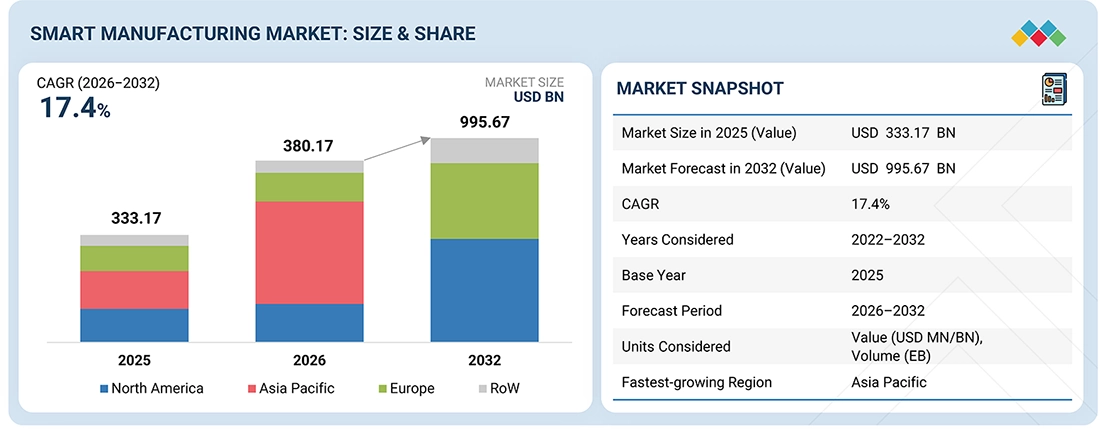
According to Marketsandmarkets, the global Smart Manufacturing Market Size was valued at USD 333.17 Billion in 2025 and is projected to reach USD 995.67 billion by 2030, growing at a CAGR of 17.4% from 2025 to 2032. The market is expected to witness strong growth, driven by the increasing adoption of Industry 4.0 technologies, rising demand for industrial automation, and growing investments in digital transformation across manufacturing industries. The rapid integration of industrial IoT (IIoT), artificial intelligence, robotics, cloud computing, and digital twin technologies is enabling manufacturers to enhance operational efficiency, reduce downtime, and optimize production processes. Additionally, the growing need for predictive maintenance, real-time monitoring, energy-efficient manufacturing operations, and resilient supply chains is accelerating the deployment of smart factory solutions globally. Advancements in edge computing, machine vision systems, autonomous robots, and advanced analytics platforms are further supporting scalable, connected, and intelligent manufacturing ecosystems across various industries.
REPORT SCOPE
| REPORT METRIC | DETAILS |
|---|---|
| Market Size in 2025 (Value) | USD 333.17 Billion |
| Market Size in 2026 (Value) | USD 380.21 Billion |
| Market Forecast in 2032 (Value) | USD 995.67 Billion |
| Growth Rate | CAGR of 17.4% from 2025-2032 |
| Years Considered | 2022-2032 |
| Base Year | 2025 |
| Forecast Period | 2026-2032 |
| Units Considered | Value (USD Million/Billion), Volume (EB) |
| Report Coverage | Revenue Forecast, Company Ranking, Competitive Landscape, Growth Factors, and Trends |
| Top Companies |
|
| Growth Drivers |
|
| Segments Covered |
|
| Regions Covered | North America, Europe, Asia Pacific, RoW |
SMART MANUFACTURING MARKET KEY TAKEAWAYS
-
By RegionNorth America is expected to hold a significant share during the forecast period, driven by rising Industry 4.0 investments, strong industrial automation adoption, expanding smart factory deployments, and advanced manufacturing ecosystems across the United States, Canada, and Mexico.
-
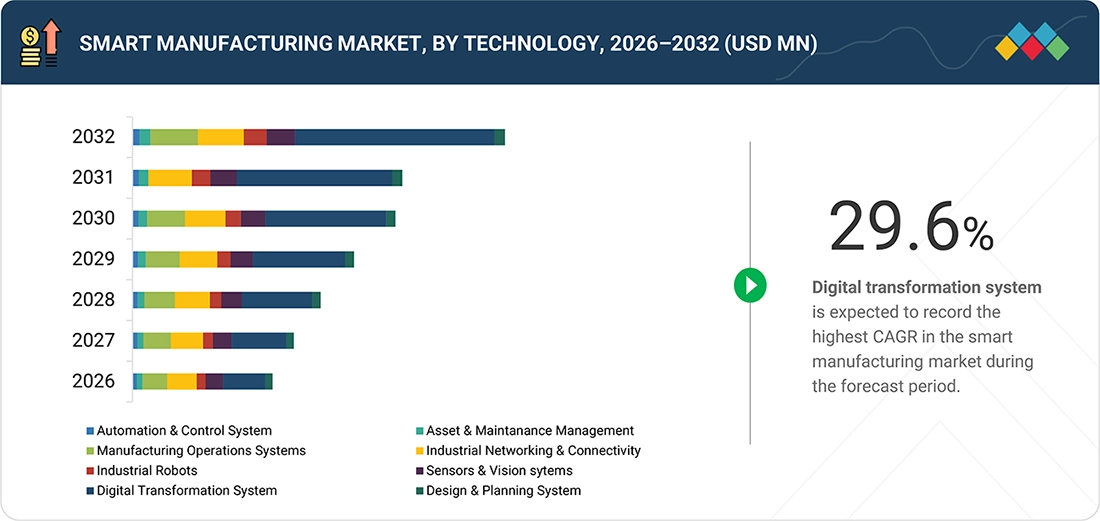
By TechnologyThe digital transformation segment is anticipated to witness the fastest growth at a CAGR of 29.6% throughout the forecast period, fueled by the rising shift toward intelligent production environments, integrated enterprise operations, and next-generation digital manufacturing frameworks.
-
By IndustryThe automotive segment is expected to account for the largest share of approximately 19% during the forecast period, driven by rising adoption of intelligent production systems, advanced robotics integration, and increasing investments in connected and highly automated manufacturing facilities.
-
Competitive LandscapeKey players in the smart manufacturing market include Siemens, ABB, Rockwell Automation, Schneider Electric, Mitsubishi Electric Corporation, Honeywell International Inc., Emerson Electric Co., and Fanuc Corporation, supported by strong investments in industrial AI, digital twin platforms, industrial IoT, robotics, and intelligent factory automation technologies.
The smart manufacturing industry is experiencing significant growth due to the increasing adoption of connected factory ecosystems, industrial automation platforms, and data-driven production strategies across manufacturing industries. Rising implementation of AI-enabled production systems, industrial robotics, and real-time process monitoring solutions is improving productivity, operational flexibility, and product quality across smart factory environments. In addition, growing focus on predictive maintenance, workforce optimization, and supply chain digitization is accelerating the deployment of advanced manufacturing technologies worldwide. Continuous advancements in digital twin platforms, machine vision systems, edge-enabled industrial networks, collaborative robots, and advanced industrial analytics are further supporting the transition toward intelligent, autonomous, and energy-efficient manufacturing operations globally.
Source: Secondary Research, Interviews with Experts, MarketsandMarkets Analysis
TRENDS & DISRUPTIONS IMPACTING CUSTOMERS' CUSTOMERS
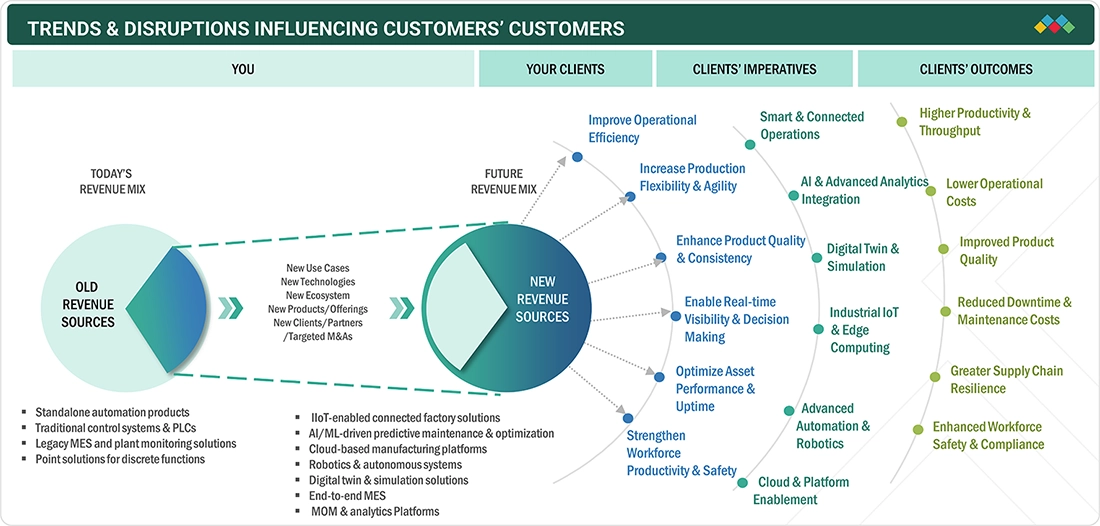
Trends in industrial automation adoption, AI-driven manufacturing, industrial IoT deployment, and factory digitalization are transforming production environments across global manufacturing industries. Manufacturers across automotive, electronics, pharmaceuticals, food & beverage, and aerospace sectors are increasingly implementing connected factory systems, intelligent robotics, and advanced analytics platforms to enhance operational visibility and production agility. These developments are accelerating demand for digital twin technologies, predictive maintenance solutions, cloud-enabled manufacturing platforms, and edge-connected industrial networks, enabling improved operational efficiency, higher production flexibility, reduced downtime, enhanced product quality, and optimized workforce productivity across modern smart manufacturing ecosystems.
Source: Secondary Research, Interviews with Experts, MarketsandMarkets Analysis
SMART MANUFACTURING MARKET DYNAMICS

Level
-
Increasing deployment of Industrial IoT (IIoT), AI, robotics, cloud computing, and digital twins

-
Government support for digital manufacturing initiatives


Level
-
Data Ownership and Industrial Privacy Concerns Across Connected Operations

-
Energy Consumption and Infrastructure Limitations in Advanced Manufacturing Facilities


Level
-
Growth of Smart and Connected Supply Chains

-
Emergence of Sustainable Manufacturing Solutions


Level
-
Managing Interoperability Across Multiple Platforms

-
Supply Chain Disruptions Affecting Automation Components

Source: Secondary Research, Interviews with Experts, MarketsandMarkets Analysis
Driver: Increasing deployment of Industrial IoT (IIoT), AI, robotics, cloud computing, and digital twins
Manufacturers are increasingly adopting advanced digital technologies to improve production efficiency, reduce operational costs, and enable real-time decision-making. Technologies such as IIoT sensors, AI-driven analytics, robotics, and digital twins are helping companies optimize factory operations, improve predictive maintenance, and enhance product quality. Cloud-based manufacturing platforms are also enabling seamless connectivity between machines, systems, and facilities. As industries focus on automation and smart factory transformation, demand for integrated smart manufacturing solutions continues to grow globally.
Restraint: Data Ownership and Industrial Privacy Concerns Across Connected Operations
The growing use of connected manufacturing systems generates massive volumes of operational and production data, creating concerns related to data ownership, cybersecurity, and industrial privacy. Many manufacturers remain cautious about sharing sensitive production information across cloud platforms and third-party networks due to risks of cyberattacks, intellectual property theft, and operational disruptions. Compliance with regional data protection regulations and industry-specific security standards further increases complexity for manufacturers. These concerns can slow down the adoption of fully connected smart manufacturing ecosystems.
Opportunity: Growth of Smart and Connected Supply Chains
Increasing focus on supply chain visibility, flexibility, and resilience is creating strong opportunities for smart manufacturing technologies. Manufacturers are investing in connected supply chain platforms that provide real-time tracking, inventory optimization, predictive demand analysis, and automated logistics management. Integration of AI, IIoT, and cloud technologies enables better coordination between suppliers, factories, warehouses, and distributors. As companies aim to reduce disruptions and improve operational responsiveness, the adoption of digitally connected supply chain solutions is expected to accelerate significantly.
Challenge: Managing Interoperability Across Multiple Platforms
One of the major challenges in smart manufacturing is ensuring smooth communication and integration across different machines, software platforms, and industrial systems. Many manufacturing facilities operate with a mix of legacy equipment and modern digital technologies that often use different communication standards and protocols. Integrating these diverse systems into a unified smart factory environment can be technically complex, time-consuming, and costly. Lack of standardization across industrial platforms also creates difficulties in achieving seamless data exchange and operational synchronization.
SMART MANUFACTURING MARKET SIZE, SHARE & ANALYSIS, 2032: COMMERCIAL USE CASES ACROSS INDUSTRIES
| COMPANY | USE CASE DESCRIPTION | BENEFITS |
|---|---|---|
 |
Deployment of digital twin and industrial IoT solutions for smart factories to enable real-time production monitoring, predictive maintenance, and connected manufacturing operations | Improved operational efficiency | Reduced downtime | Faster production optimization |
 |
Integration of AI-enabled robotics, automation systems, and industrial analytics platforms across automotive, electronics, and process manufacturing facilities | Enhanced production flexibility | Improved product quality | Increased workforce safety |
 |
Implementation of connected plant and process automation solutions using Honeywell Forge and Experion platforms for industrial performance optimization | Real-time operational visibility | Reduced maintenance costs | Higher asset reliability |
 |
Deployment of EcoStruxure-enabled smart factory solutions combining automation, energy management, and industrial software technologies | Energy-efficient manufacturing | Lower operational costs | Improved sustainability performance |
 |
Implementation of e-F@ctory smart manufacturing solutions integrating factory automation, AI analytics, and edge computing technologies | Higher production accuracy | Real-time process control | Improved manufacturing efficiency |
Logos and trademarks shown above are the property of their respective owners. Their use here is for informational and illustrative purposes only.
SMART MANUFACTURING MARKET ECOSYSTEM
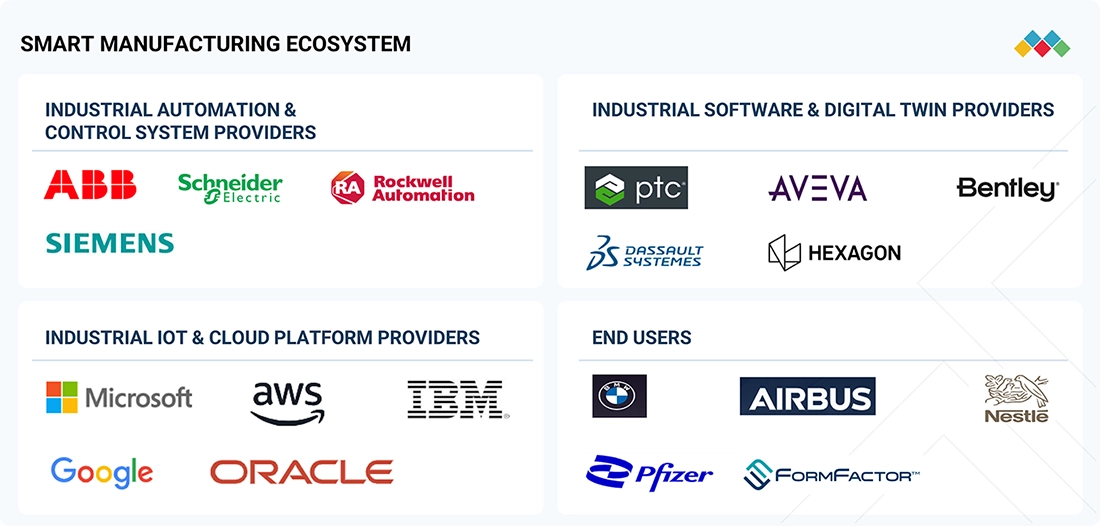
The smart manufacturing market growth ecosystem comprises industrial automation and control system providers, industrial software and digital twin vendors, industrial IoT and cloud platform providers, system integrators, robotics companies, and manufacturing end users. Industrial automation companies provide PLCs, SCADA systems, robotics, motion control systems, and factory automation solutions that enable intelligent and connected manufacturing operations. Industrial software and digital twin providers support simulation, predictive analytics, production optimization, and real-time operational visibility across manufacturing environments. Industrial IoT and cloud platform providers enable machine connectivity, data integration, edge computing, and cloud-based manufacturing management through advanced analytics and AI-enabled platforms. End users, including automotive, aerospace, electronics, pharmaceuticals, and food & beverage manufacturers, drive market adoption through increasing investments in smart factories, digital transformation initiatives, operational efficiency improvements, and connected production ecosystems.
Logos and trademarks shown above are the property of their respective owners. Their use here is for informational and illustrative purposes only.
SMART MANUFACTURING MARKET SEGMENTS
Source: Secondary Research, Interviews with Experts, MarketsandMarkets Analysis
Smart Manufacturing Market, by Technology
Digital transformation systems are expected to account for a significant share of the smart manufacturing market due to their ability to enhance operational visibility, production efficiency, and enterprise-wide connectivity across manufacturing environments. Meanwhile, AI-enabled manufacturing platforms and intelligent automation solutions are projected to register strong growth during the forecast period, driven by increasing adoption of smart factories, industrial analytics, and connected production ecosystems across global industries.
Smart Manufacturing Market, by Industry
The automotive industry is expected to account for a considerable share of the smart manufacturing market owing to rising investments in flexible production lines, connected assembly operations, and advanced quality management systems. The segment continues to witness strong technology adoption as vehicle manufacturers increasingly implement autonomous robotics, machine vision inspection, and real-time production intelligence to support high-volume and precision-driven manufacturing processes.
REGION
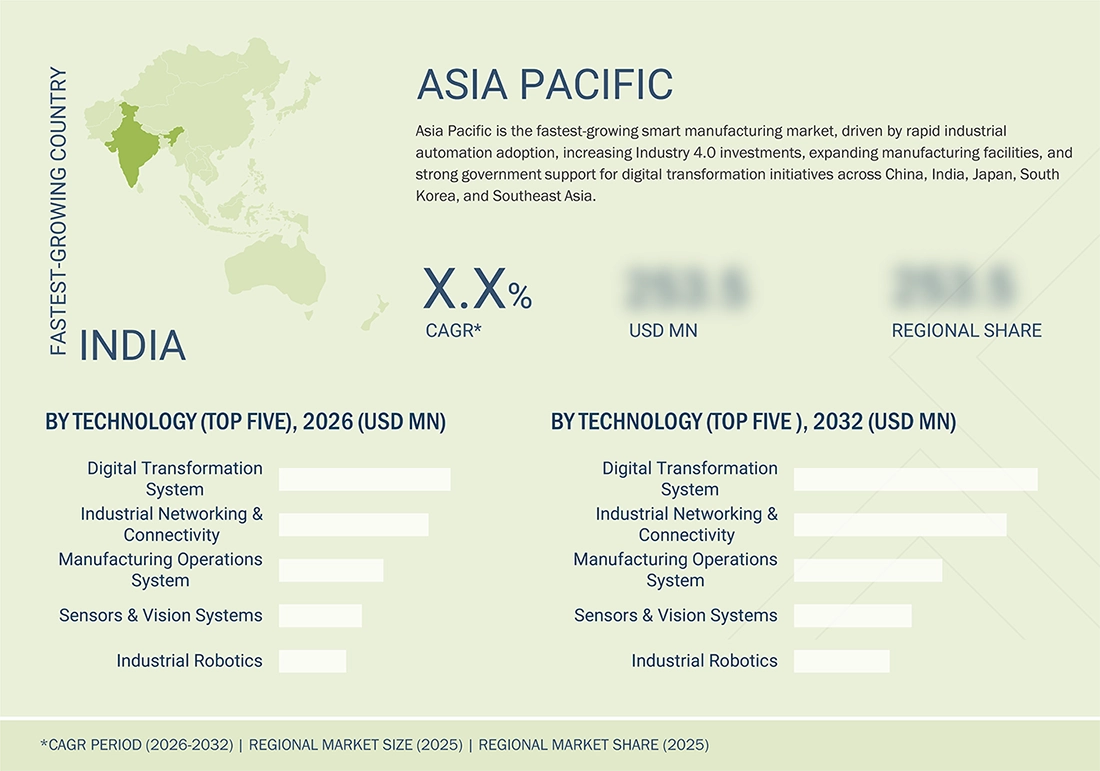
Asia Pacific projected to register highest growth rate in global smart manufacturing market during forecast period
Asia Pacific is anticipated to witness the fastest growth in the smart manufacturing market share throughout the forecast period, driven by accelerating factory modernization programs, rising adoption of intelligent production technologies, and expanding industrial automation investments across China, India, Japan, South Korea, and Southeast Asia. Increasing emphasis on advanced manufacturing capabilities, localized production expansion, and digitally integrated industrial operations is encouraging wider implementation of connected manufacturing solutions across the region. Furthermore, supportive government initiatives promoting industrial innovation, combined with growing investments in semiconductor, automotive, electronics, and pharmaceutical manufacturing facilities, are contributing to the rapid expansion of smart manufacturing deployments across Asia Pacific.
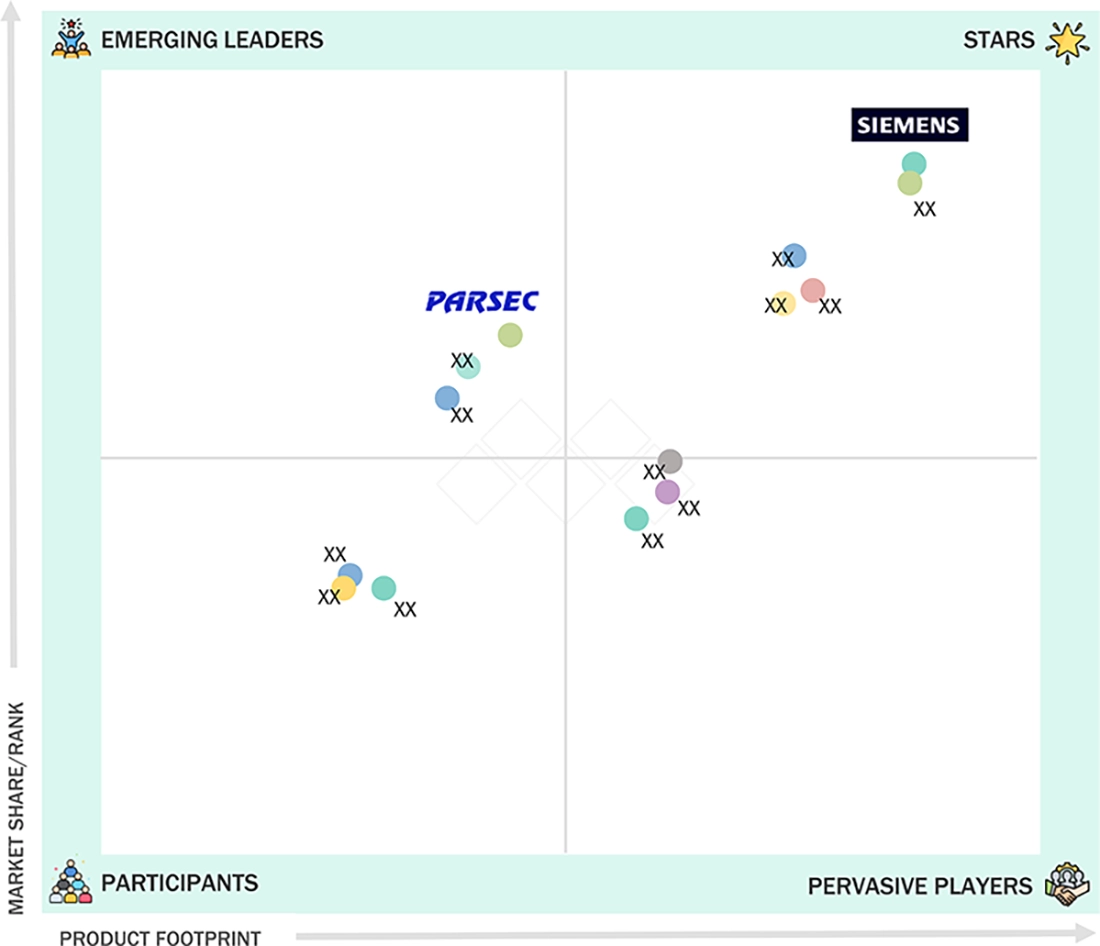
SMART MANUFACTURING MARKET SIZE, SHARE & ANALYSIS, 2032: COMPANY EVALUATION MATRIX
Within the smart manufacturing market trends, the Manufacturing Execution System (MES) segment plays a critical role in enabling real-time production monitoring, workflow optimization, quality management, and factory-wide operational visibility. In the MES market matrix, Siemens is positioned as a Star, supported by its strong digital manufacturing portfolio, integrated industrial software ecosystem, and extensive deployment of MES solutions across automotive, electronics, pharmaceuticals, and process industries. Meanwhile, Parsec is positioned as an Emerging Leader, driven by its focus on modular MES platforms, increasing adoption among mid-sized manufacturers, and growing capabilities in real-time analytics, production intelligence, and smart factory integration solutions.
Source: Secondary Research, Interviews with Experts, MarketsandMarkets Analysis
KEY MARKET PLAYERS
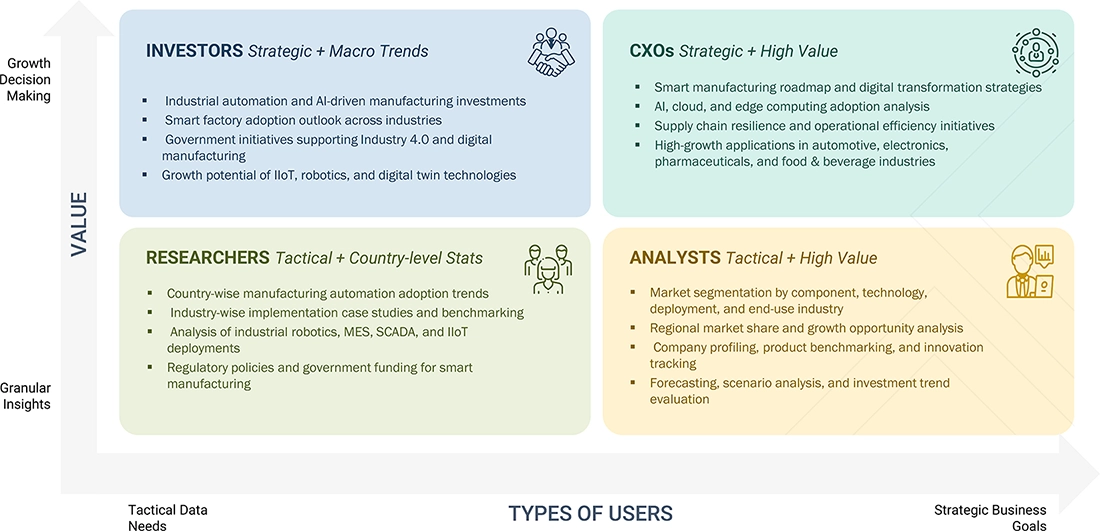
WHAT IS IN IT FOR YOU: SMART MANUFACTURING MARKET SIZE, SHARE & ANALYSIS, 2032 REPORT CONTENT GUIDE
DELIVERED CUSTOMIZATIONS
We have successfully delivered the following deep-dive customizations:
| CLIENT REQUEST | CUSTOMIZATION DELIVERED | VALUE ADDS |
|---|---|---|
| System Integrator / Engineering Service Provider |
|
|
| Robotics Manufacturer |
|
|
| Digital Twin & Simulation Provider |
|
|
| AI Infrastructure Provider |
|
|
| Industrial Automation Vendor |
|
|
| Logistics & Warehouse Operator |
|
|
RECENT DEVELOPMENTS
- August 2026 : Small and Medium Business Corporation (SBC) launched its 2026 Smart Manufacturing Workforce Development Program to train 600 specialists in smart-factory operations and manufacturing AI. The program covers PLC-based automation, manufacturing data analysis, virtual factories, machine learning, deep learning, and Vision AI. Participants receive free, practical training and a monthly allowance of up to KRW 400,000. Graduates will be matched with smart-manufacturing SMEs for internships of up to three months, with further employment support. The initiative strengthens the talent pipeline for Korea’s smart manufacturing and industrial AI ecosystem.
- August 2026 : TCL is advancing AI-native manufacturing with a nearly $294 million smart factory complex in Guangzhou featuring three lights-out factories and 10 intelligent production lines. The facility uses 32,000 IoT sensors and more than 2,000 AI agents for real-time production monitoring and inspection. AI-powered manufacturing enables automated quality checks, including refrigerant-leak detection and precision visual inspection. TCL is also applying AI to energy management, helping the facility achieve near-zero emissions across waste, exhaust, and water. The model is being positioned for global expansion, with new manufacturing bases in Thailand and Pakistan set to build on the AI-native factory approach.
- August 2026 : China led the development of the world’s first international standard for smart manufacturing in the iron and steel industry, providing a unified framework for digital transformation. The Guideline for Smart Manufacturing in Iron and Steel Industry covers smart production design, intelligent equipment, and smart production. It defines five equipment categories spanning production, testing, logistics, energy, and environmental protection. The standard provides implementation guidance across production planning, quality control, equipment maintenance, logistics, and energy management. The initiative strengthens China’s leadership in smart steel manufacturing and supports more efficient, intelligent, and standardized industrial operations.
- August 2026 : Xiaomi showcased its Smart Manufacturing capabilities at its Beijing EV factory, where more than 600 robots operate across a 718,000-square-meter production facility. The factory uses a 9,100-ton die-casting machine and produces a new electric vehicle every 76 seconds. Xiaomi’s Smart Manufacturing integrates robotics, automation, and intelligent production systems to deliver high-volume, precision manufacturing. The facility has produced 410,000 vehicles and recorded zero safety incidents since opening to visitors. The factory is positioning Xiaomi as a showcase for advanced, automated, and globally accessible smart manufacturing.
- August 2026 : Zhen Ding Technology and National Tsing Hua University (NTHU) showcased five Smart Manufacturing research projects at IEEE CASE 2026. The research covers production optimization, smart logistics, supply-chain resilience, raw-material risk management, and AI-enabled manufacturing. An AI-powered RF anomaly detection technology has already been validated on actual production lines, identifying defects and abnormal frequencies within seconds. The collaboration strengthens Zhen Ding’s smart-factory capabilities while advancing AI-driven PCB and semiconductor manufacturing.
Table of Contents
 Exclusive indicates content/data unique to MarketsandMarkets and not available with any competitors.
Methodology
The research study involved four major activities in estimating the size of the smart manufacturing market. Extensive secondary research was conducted to gather critical information related to the market and its associated industrial ecosystems. The findings, assumptions, and market estimations were further validated through primary research with industry experts across industrial automation, robotics, industrial software, IoT platforms, cloud manufacturing, and advanced manufacturing technologies. Both top-down and bottom-up approaches were utilized to estimate the overall market size. Subsequently, market breakdown and data triangulation techniques were applied to determine the sizes of various market segments and sub-segments.
Secondary Research
In the secondary research process, various secondary sources were referred to for identifying and collecting information required for this study. The secondary sources included annual reports, press releases, investor presentations of companies, white papers, certified publications, and articles from recognized industry experts. Secondary research was primarily conducted to obtain key information about the market value chain, the ecosystem of industrial automation providers, robotics companies, industrial software vendors, IoT platform providers, and smart factory solution developers, along with market segmentation based on technology trends, industrial adoption, regional developments, and manufacturing digitalization initiatives from both market and technology perspectives.
In the smart manufacturing market report, the global market size has been estimated using both top-down and bottom-up approaches, along with several dependent submarkets. Major companies operating in the market were identified through extensive secondary research, while their market positioning and offerings were validated through both primary and secondary research processes. All percentage shares, segment splits, and market breakdowns were determined using secondary information sources and further verified through primary interviews with industry participants and domain experts.
Primary Research
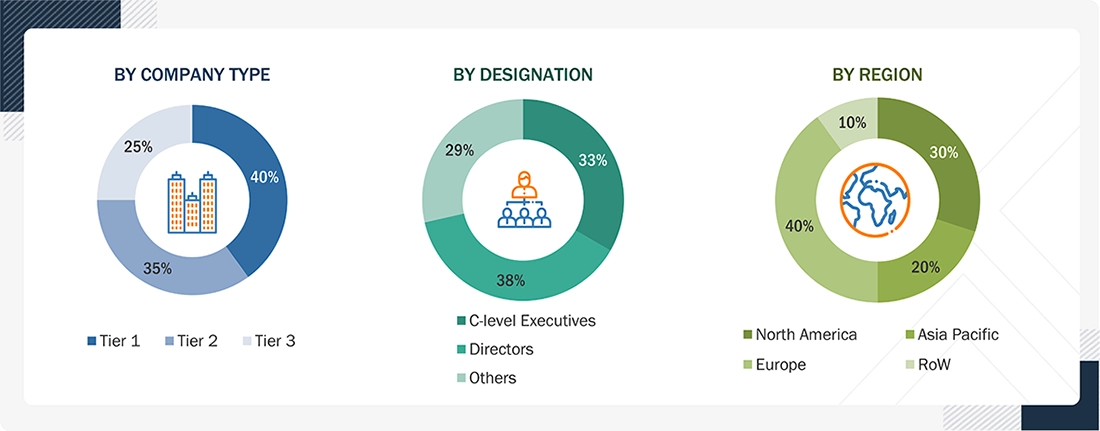
Extensive primary research has been conducted after understanding the smart manufacturing market scenario through secondary research. Several primary interviews have been conducted with key opinion leaders from both demand- and supply-side vendors across 4 major regions—Asia Pacific, North America, Europe, and RoW. Approximately 25% of the primary interviews have been conducted with the demand-side vendors and 70% with the supply-side vendors. Primary data has been collected mainly through telephone interviews, which consist of 80% of the total primary interviews; questionnaires and emails have also been used to collect the data.
After successful interaction with industry experts, brief sessions were conducted with highly experienced independent consultants to reinforce the findings of our primary research. This, along with the in-house subject matter experts’ opinions, has led us to the findings as described in the report. The breakdown of primary respondents is as follows:
To know about the assumptions considered for the study, download the pdf brochure
Market Size Estimation
In the market engineering process, both top-down and bottom-up approaches, along with data triangulation methods, have been used to estimate and validate the size of the smart manufacturing market and its dependent submarkets. The research methodology used to estimate the market sizes includes the following:
- Identifying top-line investments and spending across industrial automation, robotics, industrial software, IoT infrastructure, and digital manufacturing ecosystems, while considering segment-level splits and major industry developments
- Identifying different stakeholders in the smart manufacturing market that influence the overall ecosystem, including automation vendors, robotics providers, industrial software companies, cloud platform providers, system integrators, and manufacturing enterprises across the industrial value chain
- Analyzing major companies in the smart manufacturing ecosystem and studying their product portfolios, smart factory technologies, industrial automation capabilities, digital platforms, and R&D activities
- Assessing the adoption and deployment of connected manufacturing technologies across automotive, electronics, aerospace, pharmaceuticals, food & beverage, and energy & power industries globally
- Evaluating implementation trends of industrial IoT, AI-enabled manufacturing, robotics, digital twins, MES, and cloud-based manufacturing platforms across production facilities
- Estimating technology-wise market shares and value contribution of automation systems, industrial software, connected devices, and smart factory solutions across manufacturing environments
- Assessing revenue contribution and deployment patterns of industrial automation providers, software vendors, and digital manufacturing solution companies across regions
- Aggregating revenues generated from automation systems, industrial software, robotics, and digital manufacturing solutions to estimate the global smart manufacturing market size
- Segmenting the overall market into various categories, such as technology, industry, and region
- Analyzing regional and country-level splits and validating manufacturing digitalization trends across major industrial economies globally
- Tracking recent and upcoming market developments, including strategic partnerships, acquisitions, industrial modernization initiatives, technology launches, factory expansion projects, and investments influencing market growth
- Conducting multiple discussions with key opinion leaders to understand smart factory adoption trends, operational transformation strategies, and technological developments related to advanced manufacturing systems
- Validating the estimates at every level through discussions with industry experts, including chief executives (CXOs), directors, industrial automation specialists, production managers, digital transformation leaders, and domain experts across the manufacturing ecosystem.
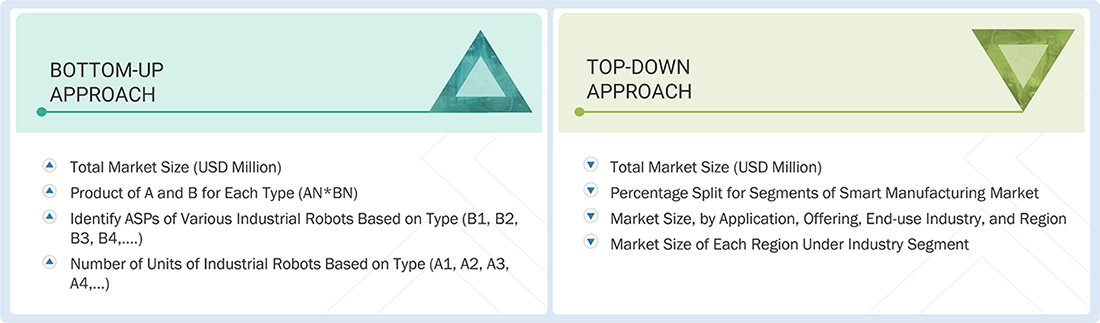
Data Triangulation
After arriving at the overall market size using the market size estimation processes as explained above, the market has been split into several segments and subsegments. To complete the entire market engineering process and arrive at the exact statistics of each market segment and subsegment, data triangulation and market breakdown procedures have been employed, wherever applicable. The data has been triangulated by studying various factors and trends from the demand and supply sides in the smart manufacturing market.
Market Definition
Smart manufacturing refers to the integration of advanced digital technologies, connected industrial systems, and intelligent automation solutions to enhance manufacturing operations, improve production efficiency, and enable data-driven decision-making across industrial environments. It combines technologies such as industrial IoT (IIoT), artificial intelligence (AI), robotics, cloud computing, digital twins, advanced analytics, and industrial software platforms to create highly connected, adaptive, and efficient manufacturing ecosystems. Smart manufacturing enables real-time monitoring, predictive maintenance, operational optimization, and seamless communication across machines, systems, and production facilities. It also supports greater manufacturing flexibility, improved product quality, reduced operational costs, enhanced supply chain coordination, and sustainable industrial operations across diverse end-use industries.
Key Stakeholders
- End users
- Government bodies, venture capitalists, and private equity firms
- Smart manufacturing manufacturers
- Smart manufacturing distributors
- Smart manufacturing industry associations
- Professional service/solution providers
- Research institutions and organizations
- Standards organizations and regulatory authorities
- System integrators
- Technology consultants
Report Objectives
- To describe and forecast the smart manufacturing market, in terms of value, based on technology and industry
- To forecast the size of the smart manufacturing market in terms of volume
- To forecast the market size, in terms of value, for four main regions—North America, Europe, Asia Pacific, and the RoW (Rest of the World)
- To provide detailed information regarding drivers, restraints, opportunities, and challenges influencing the market growth
- To provide a detailed overview of the value chain of the smart manufacturing ecosystem
- To strategically analyze micromarkets1 with respect to individual growth trends, prospects, and contributions to the total market
- To analyze the opportunities for stakeholders and details of the competitive landscape of the market
- To strategically profile the key players and comprehensively analyze their market positions in terms of ranking and core competencies2
- To analyze the major growth strategies implemented by key market players, such as agreements, acquisitions, product launches, expansions, and partnerships
- To study the impact of AI on the market under study, along with macroeconomic outlook for each region
Available customizations:
With the given market data, MarketsandMarkets offers customizations according to the specific requirements of companies. The following customization options are available for the report:
- Detailed analysis and profiling of additional market players (up to 5)
Key Questions Addressed by the Report
What is the current size of the Smart Manufacturing Market?
The market size is estimated at USD 380.21 billion in 2026 and was USD 333.17 billion in 2025.
What is the projected market size by 2032?
The Smart Manufacturing Market is projected to reach USD 995.67 billion by 2032.
What is the CAGR of the Smart Manufacturing Market?
The market is expected to grow at a CAGR of 17.4% from 2026 to 2032.
What are the key growth drivers of the market?
Growth is driven by Industry 4.0 adoption, AI, IIoT, robotics, cloud computing, and digital twin technologies improving efficiency and automation.
Which industries dominate the Smart Manufacturing Market?
The automotive industry holds a major share (~19%), followed by aerospace, electronics, and heavy machinery sectors.
What are the major technology trends in the market?
Key trends include digital transformation systems (fastest growing at ~29.6% CAGR), AI integration, edge computing, and machine vision systems.
Which regions lead the Smart Manufacturing Market?
North America holds a significant share due to advanced automation, while Asia Pacific is also a major growth region.
Who are the key companies in the Smart Manufacturing Market?
Major players include Siemens, ABB, Rockwell Automation, Schneider Electric, Honeywell, Emerson Electric, Mitsubishi Electric, and FANUC.
What are the key segments covered in the report?
The report covers segments by technology (robotics, IIoT, MES, AI), industry (automotive, energy, pharma), and region (North America, Europe, Asia Pacific).
What insights does the report provide?
The report includes market forecasts, competitive landscape, company rankings, trends, growth factors, and strategic analysis across 300 pages and 150 tables.


Personalize This Research
- Triangulate with your Own Data
- Get Data as per your Format and Definition
- Gain a Deeper Dive on a Specific Application, Geography, Customer or Competitor
- Any level of Personalization
Let Us Help You
- What are the Known and Unknown Adjacencies Impacting the Smart Manufacturing Market
- What will your New Revenue Sources be?
- Who will be your Top Customer; what will make them switch?
- Defend your Market Share or Win Competitors
- Get a Scorecard for Target Partners

Custom Market Research Services
We Will Customise The Research For You, In Case The Report Listed Above Does Not Meet With Your Requirements
Get 10% Free CustomisationTESTIMONIALS

Tetsuya Ohhira
Business Development Manager-Technology Business
Nikon Corporation,
Leading Japanese MNC specializing in optics and imaging productswww.nikon.com
MarketsandMarkets™ response
is quick. Their attitude is flexible and positive. Analyst Insights are globally considered and
significant. Client Services quickly respond to our inquiry and demand. Their wide range of global
surveys help us make our strategic plan.
We hope Knowledge Store will be easier to search
for a report.
VP - Marketing & Business Development
Leading Provider of Process Control Solutions
We engaged with MarketsandMarkets on a study to perform an analysis and recommend a Go-To-Market strategy for metrology and process control in the semiconductor market. The study was tailored to our targets and needs with well-defined milestones. Our overall experience with the MarketsandMarkets team was very good throughout the project in all aspects including the analysis methodologies used, the quality and depth of primary and secondary data sets, the professionalism and flexibility of the team and the ability to meet the target schedule and milestones. We want to thank MarketsandMarkets team for a job well done.
Growth opportunities and latent adjacency in Smart Manufacturing Market






Ekta
Jul, 2022
Smart manufacturing is a powerful disruptive force with the potential to restructure the current competitive landscape and produce a new set of market leaders. It is a combination of various technologies and solutions, which, if implemented in a manufacturing ecosystem, is termed smart manufacturing.This B2B Market study assists in understanding the market potential, Industry Trends, market size of each of the sub segments, and geographies with country level breakdown, Key players operating with their business and product overview and strategic development and a detailed competitor analysis along with a competitive intelligence in this industry..
Abhinav
Jul, 2022
The report provides the global(regional/country level) market size, trends and future growth potential statistics of Smart Manufacturing Market based on the different enabling technologies, information technologies and industries. These detailed 4 segmentations which covers all the offerings of ADLINK within the smart manufacturing space would give multi-dimensional analysis of the market space along with 25 key player insights, to validate the market understanding, estimates and trends to fulfil research and marketing strategies..