Drone Detection Market Size, Share, and Trends

Drone (UAV) Detection Market Size, Share, and Trends by Technology (Radar, RF Scanner, Optical), Application (Critical Infrastructure, Airport, Stadium, Prison, Power Plant, Oil & Gas, Border Security, Military), Type (Ground-Based, Handheld), Range and Region - Global Forecast to 2029




DRONE DETECTION MARKET SIZE, SHARE, AND TRENDS OVERVIEW
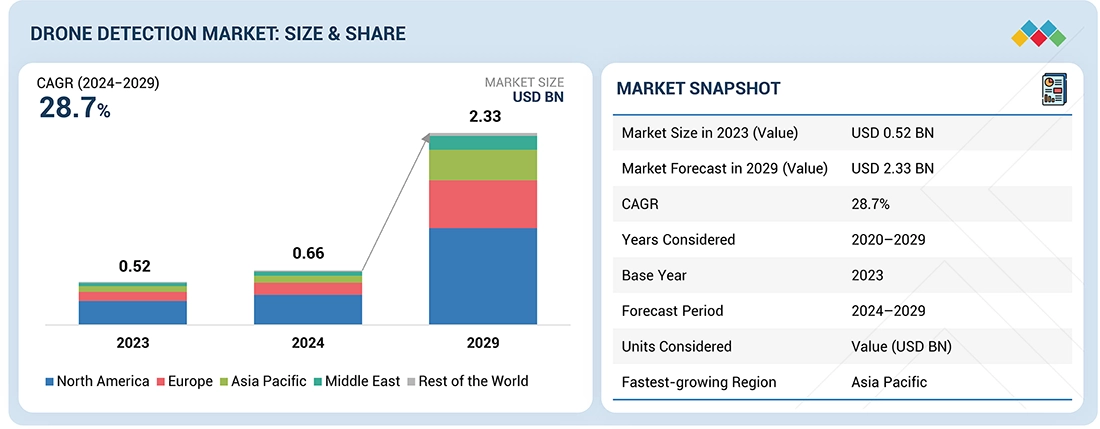
According to Marketsandmarkets, the Global Drone Detection Market Size was valued at USD 0.66 billion in 2024 and is projected to reach USD 2.33 billion by 2029, growing at a CAGR of 28.7% from 2024-2029. Growth is driven by the increasing use of drones across defense, security, and commercial sectors. Rising unauthorized drone activities like smuggling and surveillance are prompting investments in real-time monitoring and counter-drone technologies. Geopolitical tensions and the need to protect airports, defense bases, and industrial sites are further boosting adoption.
MARKET SNAPSHOT TABLE
| REPORT METRIC | DETAILS |
|---|---|
| Market Size in 2023 (Value) | USD 0.52 Billion |
| Market Forecast in 2030 (Value) | USD 2.33 Billion |
| Growth Rate | CAGR of 28.7% from 2024-2029 |
| Years Considered | 2020–2029 |
| Base Year | 2023 |
| Forecast Period | 2024-2029 |
| Units Considered | Value (USD Million/Billion) |
| Report Coverage | Revenue forecast, company ranking, competitive landscape, growth factors, and trends |
| Top Companies |
|
| Growth Drivers |
|
| Segments Covered |
|
| Regions Covered | North America, Asia Pacific, Europe, Middle East, Rest of the World |
Market Size & Forecast
• 2023 Market Size (Value): USD 0.52 Billion
• 2030 Market Forecast (Value): USD 2.33 Billion
• CAGR: 28.7% from 2024-2029
• North America: Accounted for a 55.4% Share
• Critical Infrastructure Segment: Fastest Growth Rate of 63.8%
KEY TAKEAWAYS
- North America accounted for a 55.4% share of the Drone Detection Industry in 2024.
- By application, the critical infrastructure segment is projected to grow at the fastest rate of 63.8%.
- By technology, the RF scanner segment is projected to grow at the fastest rate of 33.2%.
- By range, the >10 km segment is expected to account for the largest market share during the forecast period.
- RTX, Lockheed Martin Corporation, and Northrop Grumman were identified as star players in the drone detection market, given their strong market share and extensive product footprint.
- Dedrone, Drone Defence, and DeTect, Inc., among others, have distinguished themselves among startups and SMEs by securing strong footholds in specialized niche areas, underscoring their potential as emerging market leaders.
Market growth will be driven by AI, IoT, and sensor fusion technologies that enhance detection accuracy and automation. Advancements like AI-enabled radar, 3D tracking, and swarm detection will strengthen multi-drone defense capabilities. Expanding defense budgets and security modernization initiatives will make airspace protection systems more widespread across global markets.
Source: Secondary Research, Interviews with Experts, MarketsandMarkets Analysis
TRENDS & DISRUPTIONS IMPACTING CUSTOMERS' CUSTOMERS
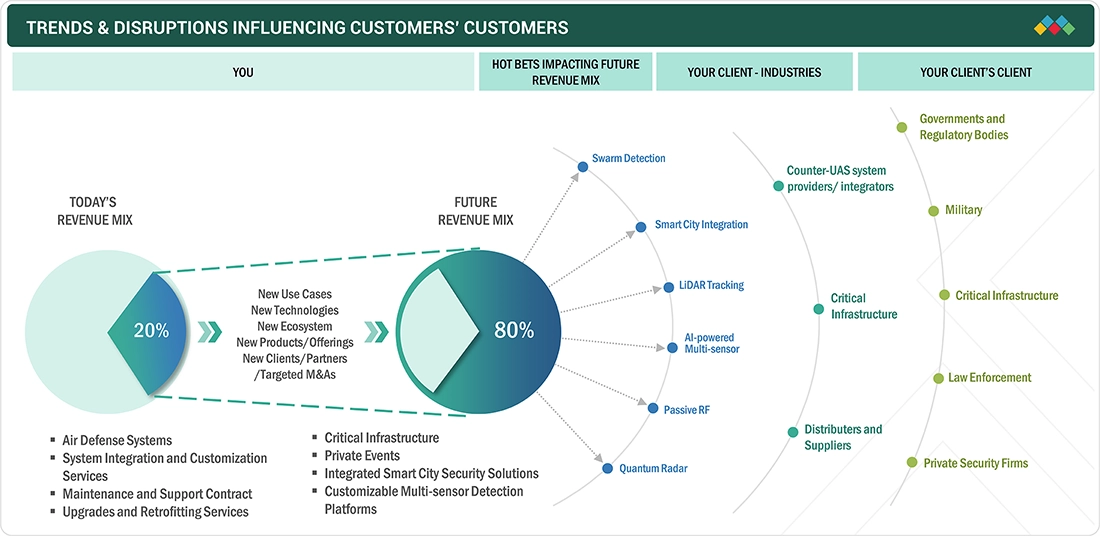
The impact on clients’ businesses stems from evolving detection technologies and market dynamics. Key players include counter-UAS integrators and multi-sensor system providers, with target applications across critical infrastructure, defense, and smart city security. Advances in AI-powered sensors, swarm detection, and quantum radar are transforming value chains and affecting revenues in government, law enforcement, and private security sectors, as well as among technology and equipment suppliers.
Source: Secondary Research, Interviews with Experts, MarketsandMarkets Analysis
MARKET DYNAMICS

Level
-
Rising unauthorized drone activities

-
Regional conflicts and geopolitical tensions


Level
-
Evolving regulatory frameworks

-
High initial deployment and operational costs


Level
-
Advancements in detection technologies

-
Expansion of IoT and AI in drone detection systems


Level
-
Cybersecurity risks in connected detection systems

-
Accuracy issues in complex environments

Source: Secondary Research, Interviews with Experts, MarketsandMarkets Analysis
Driver: Rising Unauthorized Drone Activities
The rise in unauthorized drone operations has increased security concerns at defense bases, airports, and industrial zones. Drones used for spying, smuggling, and illegal surveillance are boosting demand for advanced multi-sensor detection systems. AI-powered radar, RF scanners, and optical systems are being more widely used for real-time monitoring and automated threat responses, improving overall airspace security.
Restraint: Evolving Regulatory Frameworks
Varying regional rules on airspace, RF use, and privacy pose operational challenges for drone detection systems. Restrictions on signal interception and data collection limit technology deployment, especially in urban areas. Frequent policy updates and approval delays raise costs and create uncertainty, slowing market growth and making compliance harder for global manufacturers.
Opportunity: Advancements in Detection Technologies
Technological advances in radar, RF, and optical sensors are improving detection accuracy, range, and response time. AI-powered threat classification and multi-sensor fusion boost identification in complex airspace conditions. As industries seek scalable, automated, and high-performance systems, opportunities for next-generation detection solutions are quickly growing.
Challenge: Cybersecurity Risks in Connected Detection Systems
The increasing use of IoT and cloud connectivity exposes detection systems to cybersecurity risks such as hacking, jamming, and spoofing. Unauthorized access or data manipulation can weaken detection accuracy and system integrity. Implementing strong cybersecurity measures is essential to ensure operational reliability and protect sensitive infrastructure.
Drone (UAV) Detection, Tracking, and Identification Market: COMMERCIAL USE CASES ACROSS INDUSTRIES
| COMPANY | USE CASE DESCRIPTION | BENEFITS |
|---|---|---|
 |
Developed a low-cost drone air-traffic control system using small radar units to track low-altitude drones in congested airspace | Offered affordable, scalable real-time tracking and improved safety in populated or restricted zones |
 |
Provided its EnforceAir RF-based counter-drone system to an Asian government for managing unauthorized drone activity | Enabled safe, controlled drone neutralization while maintaining communication integrity and regulatory compliance |
 |
Supplied GM200 MM/A radar systems to the Brazilian Air Force for advanced airspace surveillance and defense | Delivered extended detection range, 15-minute deployment, 24-hour operation, and improved situational awareness |
 |
Deployed mobile radar stations to detect fiber-optic-guided drones resistant to conventional detection systems | Enhanced long-range detection and interception of stealth FPV drones, improving frontline defense |
Logos and trademarks shown above are the property of their respective owners. Their use here is for informational and illustrative purposes only.
MARKET ECOSYSTEM
The drone detection ecosystem includes established industry leaders, emerging technology firms, and various end users. Major players focus on research & development and system integration to improve next-generation detection capabilities, while smaller companies provide niche and customized solutions. Government agencies, defense organizations, and commercial enterprises drive demand, influence technology adoption, and fuel overall market growth.
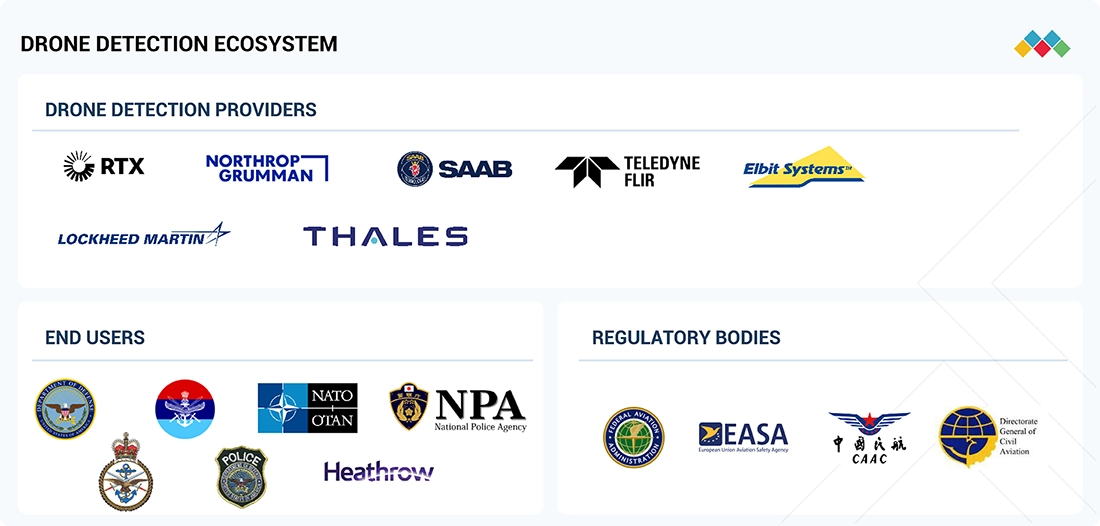
Logos and trademarks shown above are the property of their respective owners. Their use here is for informational and illustrative purposes only.
MARKET SEGMENTS
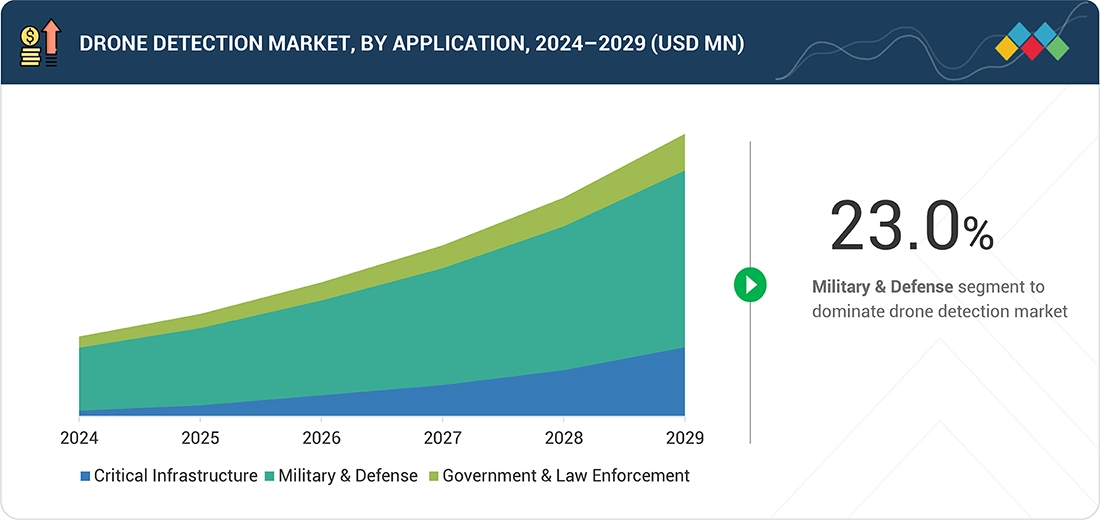
Source: Secondary Research, Interviews with Experts, MarketsandMarkets Analysis
Drone Detection Market, By Technology
Radar systems are the largest and most dominant segment because they can provide long-range, all-weather detection and accurate tracking of multiple drones. Their integration into defense, airport, and homeland security systems strengthens their leading market position.
Drone Detection Market, By Application
The military & defense sector remains the leading segment, driven by the critical need for airspace protection, early threat detection, and counter-UAV operations. Ongoing investments in advanced radar and RF-based systems are bolstering this segment’s dominance worldwide.
Drone Detection Market, By Range
The >10 km range is the largest segment, favored for its extensive surveillance coverage and suitability for border, battlefield, and strategic infrastructure protection. Its ability to detect threats early enhances national defense and situational awareness.
Drone Detection Market, By Type
Ground-based systems lead the market as the most established and widely deployed segment, offering superior accuracy, scalability, and multi-sensor integration. Their deployment across defense installations and critical infrastructure underscores their dominant role in drone detection networks.
REGION
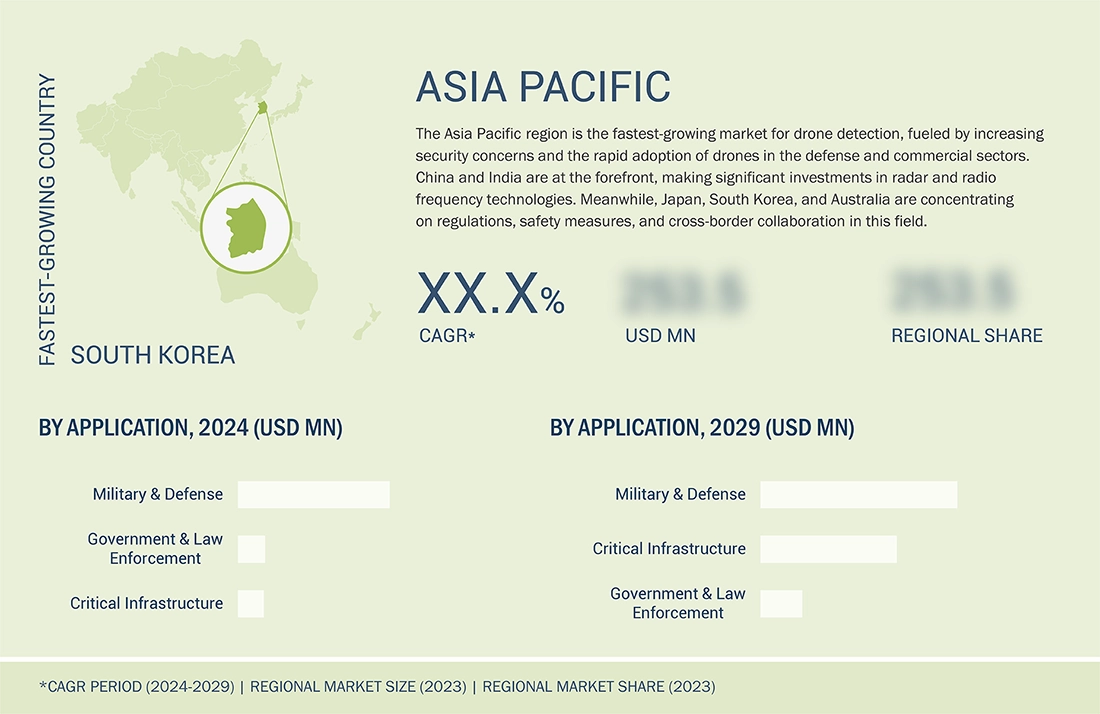
Asia Pacific to be fastest-growing region in global drone detection market during forecast period
The Asia Pacific drone detection market is expected to register the highest CAGR during the forecast period, driven by increasing security priorities and widespread drone adoption across defense and commercial domains. Significant radar and RF investments in China and India, coupled with regulatory and safety initiatives in Japan, South Korea, and Australia, are accelerating regional market expansion.
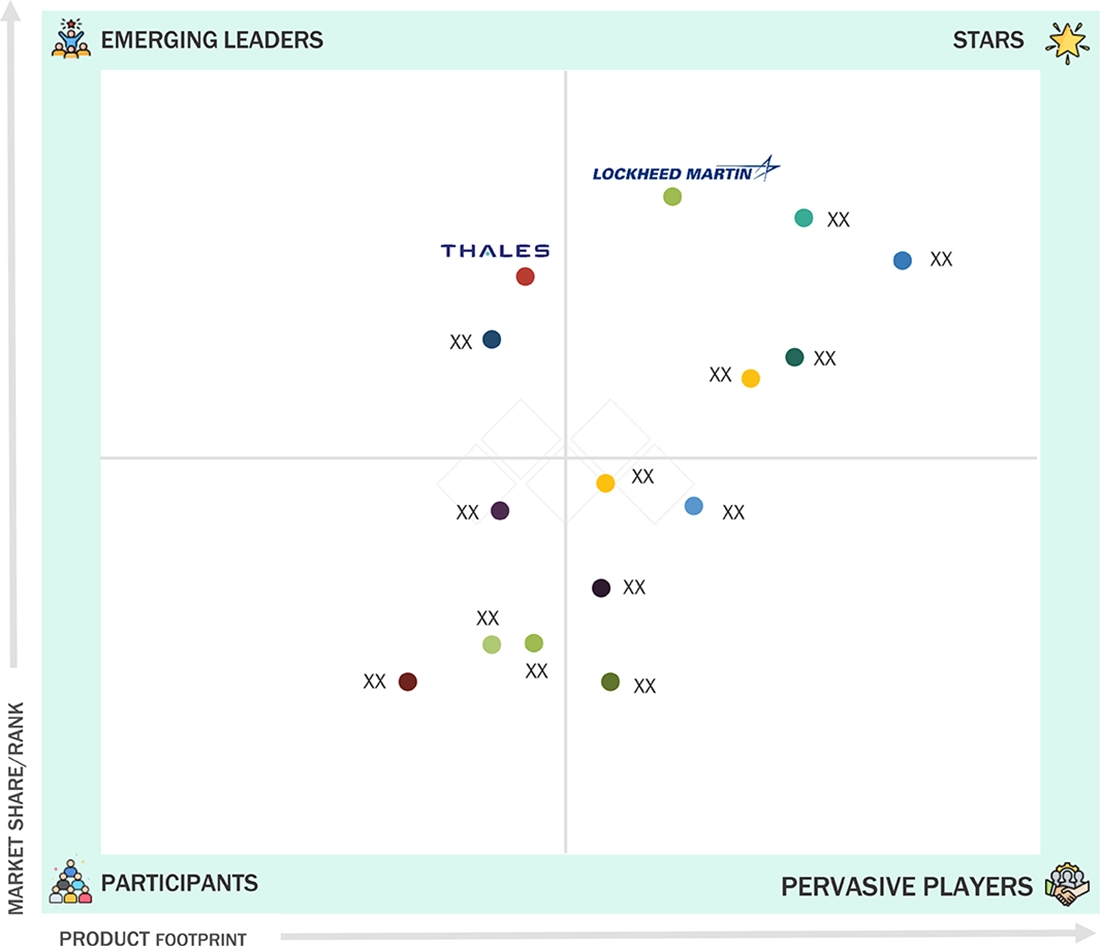
Drone (UAV) Detection, Tracking, and Identification Market: COMPANY EVALUATION MATRIX
The Company Evaluation Matrix for the drone detection market assesses players based on their product footprint and market share. It highlights their competitive position and ranks them by market strength and growth strategies. Lockheed Martin Corporation is seen as a leading player with a strong emphasis on advanced drone technologies, while Thales is recognized as an emerging leader in this market.
Source: Secondary Research, Interviews with Experts, MarketsandMarkets Analysis
KEY MARKET PLAYERS
List of Top Drone (UAV) Detection, Tracking, and Identification Market Companies
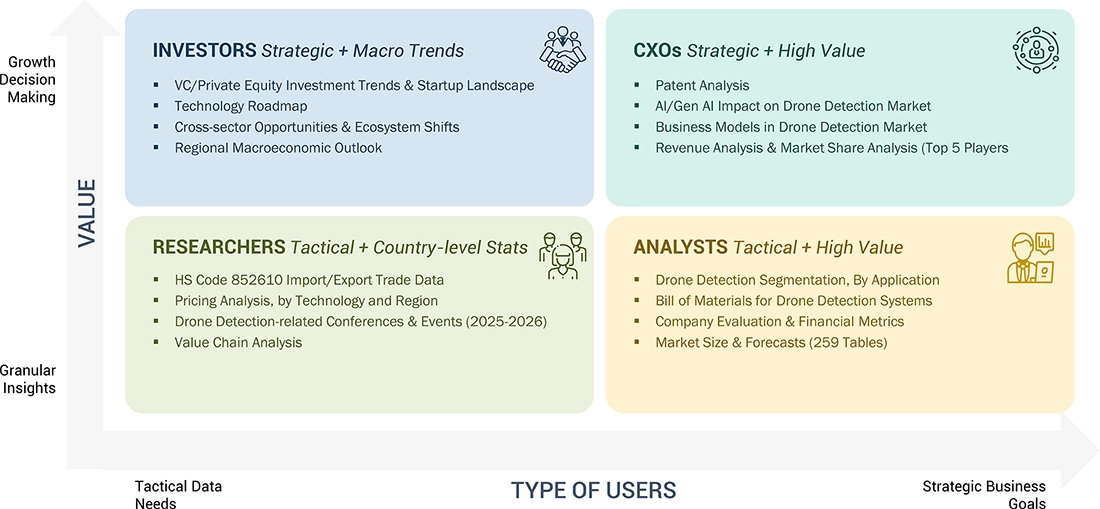
WHAT IS IN IT FOR YOU: Drone (UAV) Detection, Tracking, and Identification Market REPORT CONTENT GUIDE
DELIVERED CUSTOMIZATIONS
We have successfully delivered the following deep-dive customizations:
| CLIENT REQUEST | CUSTOMIZATION DELIVERED | VALUE ADDS |
|---|---|---|
| Leading Manufacturer | Additional segment breakdown for countries | Additional country-level market sizing tables for segments/subsegments covered at regional/global level to gain an understanding of market potential in each country |
| Emerging Leader | Additional company profiles | Competitive information on targeted players to gain granular insights on direct competition |
RECENT DEVELOPMENTS
- January 2025 : Elbit Systems Ltd. (Israel) secured a contract for USD 60 million to provide ReDrone multi-layered Counter-UAS solutions to a NATO European country over three years.
- December 2024 : Saab AB (Sweden) received a contract for USD 48 million from BAE Systems for multiple Giraffe 4A radar systems to support US Air Forces in Europe. The radar would provide long-range surveillance and airbase defense, with deliveries starting in 2027.
- October 2024 : Teledyne FLIR LLC (US) launched its Cerberus XL C-UAS platform at AUSA 2024.
- October 2024 : L3Harris Technologies, Inc. (US) collaborated with MatrixSpace (US) to demonstrate an advanced counter-UAS solution. The system integrates UAS TRACER, Chimera software, WESCAM MX EO/IR sensors, and MatrixSpace Radar, enhancing drone detection and tracking with rapid deployment capabilities for defense operations.
- September 2024 : Northrop Grumman (US) received a follow-on production contract worth over USD 161 million from the US Navy for the JCREW/DRAKE 2.0 systems.
Table of Contents
 Exclusive indicates content/data unique to MarketsandMarkets and not available with any competitors.
Methodology
The research study conducted on the drone detection market involved the extensive use of secondary sources, directories, and databases, such as D&B Hoovers, Bloomberg, and Factiva, to identify and collect relevant information. Primary sources included industry experts from the market as well as suppliers, manufacturers, solution providers, technology developers, alliances, and organizations related to all segments of the value chain of this industry. In-depth interviews of various primary respondents, including key industry participants, subject matter experts (SMEs), industry consultants, and C-level executives, were conducted to obtain and verify critical qualitative and quantitative information pertaining to the market as well as assess the growth prospects of the market. A deductive approach, also known as the bottom-up approach combined with the top-down approach, was used to forecast the market size of different market segments.
Secondary Research
The share of companies in the Drone detection market was determined based on secondary data made available through paid and unpaid sources and an analysis of the product portfolios of major companies. These companies were rated based on their performance and quality. These data points were further validated by primary sources. Secondary sources for this research study included corporate filings, such as annual reports, investor presentations, and financial statements from trade, business, and professional associations. The secondary data was collected and analyzed to arrive at the overall market size, which was further validated by primary respondents.
Primary Research
Extensive primary research was conducted after obtaining information about the current scenario of the Drone detection market through secondary research. Several primary interviews were conducted with market experts from both, the demand and supply sides across different regions. This primary data was collected through questionnaires, emails, and telephonic interviews.

Note: Tiers of companies are based on their revenue in 2023. Tier 1: company revenue greater than USD 1 billion; tier 2: company revenue between USD 100 million and USD 1 billion; and tier 3: company revenue less than USD 100 million.
To know about the assumptions considered for the study, download the pdf brochure
Market Size Estimation
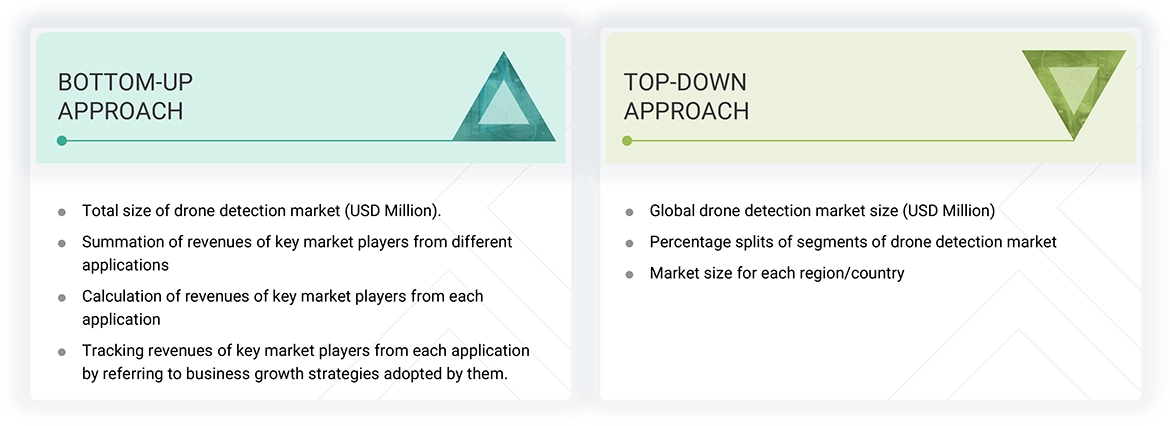
The top-down and bottom-up approaches were used to estimate and validate the size of the Drone detection market. The research methodology used to estimate the market size includes the following details.
Key players in the market were identified through secondary research, and their market share was determined through primary and secondary research. This included a study of the annual and financial reports of top market players and extensive interviews with industry stakeholders such as CEOs, technical advisors, military experts, and SMEs of leading companies operating in the Drone detection market.
All percentage shares, splits, and breakdowns were determined using secondary sources and verified through primary sources. All possible parameters that affect the markets covered in this research study were accounted for, viewed in extensive detail, verified through primary research, and analyzed to obtain the final quantitative and qualitative data on the Drone detection market. This data was consolidated, enhanced with detailed inputs, analyzed by MarketsandMarkets, and presented in this report.
Drone Detection Market : Top-Down and Bottom-Up Approach
Data Triangulation
After arriving at the overall size of the Drone detection market from the estimation process explained above, the total market was split into several segments and subsegments. The data triangulation and market breakdown procedures explained below were implemented, wherever applicable, to complete the overall market engineering process and arrive at the exact statistics for various market segments and subsegments. The data was triangulated by studying various factors and trends from the demand and supply sides. Along with this, the Drone detection market size was validated using the top-down and bottom-up approaches.
Market Definition
The drone detection market refers to the industry focused on technologies and systems that detect and identify unmanned aerial vehicles (UAVs), or drones. The market includes a wide range of solutions that aim to secure airspace, protect critical infrastructure, and prevent unauthorized drone activities, such as potential threats to national security, privacy violations, or smuggling operations. Drone detection technologies often use radar systems, radio frequency (RF) sensors, and optical sensors to monitor and detect drone activities in real-time. The market caters to several sectors, including defense and military applications, law enforcement, airports, critical infrastructure, public events, and industrial sites.
Key Stakeholders
- Government Agencies and Regulators
- Military and Defense Organizations
- Critical Infrastructure Operators
- Law Enforcement and Security Agencies
- Technology Providers and System Integrators
- Drone Detection System Manufacturers
- Service Providers and Maintenance Companies
- Private Security Firms
Report Objectives
- To define, describe, segment, and forecast the size of the drone detection market based on type, application, technology, range, and region.
- To forecast sizes of various segments of the market with respect to five major regions, namely, North America, Europe, Asia Pacific, Middle East, and the Rest of the World, along with major countries in each of these regions.
- To identify and analyze key drivers, restraints, opportunities, and challenges influencing the growth of the market across the globe.
- To identify industry trends, market trends, and technology trends that are currently prevailing in the market.
- To provide an overview of the regulatory landscape with respect to drone detection regulations across regions.
- To analyze micro markets with respect to individual growth trends, prospects, and their contribution to the overall market.
- To analyze opportunities in the market for stakeholders by identifying key market trends.
- To profile key market players and comprehensively analyze their market shares and core competencies.
- To analyze the degree of competition in the market by identifying key growth strategies, such as acquisitions, product launches, contracts, and partnerships, adopted by leading market players.
- To identify detailed financial positions, key products, and unique selling points of leading companies in the market.
- To provide a detailed competitive landscape of the market, along with market ranking analysis, market share analysis, and revenue analysis of key players.
Available Customizations
Along with the market data, MarketsandMarkets offers customizations as per the specific needs of companies. The following customization options are available for the report:
Product Analysis
- Product matrix, which gives a detailed comparison of the product portfolio of each company
Regional Analysis
- Further breakdown of the market segments at country-level
Company Information
- Detailed analysis and profiling of additional market players (up to 5)
Key Questions Addressed by the Report
How is the drone detection market expected to grow during the forecast period?
The global drone detection market is projected to increase from USD 0.66 billion in 2024 to USD 2.33 billion by 2029, registering a CAGR of 28.7% as security agencies and commercial operators strengthen airspace monitoring capabilities.
What factors are driving investments in drone detection technologies worldwide?
Rising unauthorized drone activities including smuggling, surveillance, and security breaches near airports, defense facilities, and industrial sites are increasing investments in real time monitoring and counter drone technologies.
Which region currently leads the drone detection market and what is its market share?
North America accounted for 55.4% of the global drone detection market in 2024, supported by strong defense spending, advanced security infrastructure, and widespread deployment of counter UAV systems.
Why is the critical infrastructure application segment growing so rapidly?
The critical infrastructure segment is projected to grow at a rate of 63.8% because operators of power plants, transportation hubs, government facilities, and industrial sites are increasingly deploying drone detection systems to prevent unauthorized aerial intrusions.
What technological segment is expected to experience the fastest growth in the market?
The RF scanner segment is projected to grow at a CAGR of 33.2% as organizations increasingly rely on radio frequency monitoring technologies for drone detection, identification, and threat assessment.
Which range category is expected to capture the largest share of the drone detection market?
The greater than 10 km range segment is expected to account for the largest market share due to its suitability for border surveillance, battlefield monitoring, and protection of strategic infrastructure assets.
How are AI and sensor fusion technologies transforming drone detection capabilities?
AI, IoT, and sensor fusion technologies are improving detection accuracy, automated threat classification, swarm drone identification, 3D tracking, and real time response capabilities across complex airspace environments.
What is the biggest regulatory challenge facing drone detection system providers?
Evolving regulations related to airspace management, privacy, radio frequency usage, and signal interception create compliance challenges that can delay deployments and increase operational costs for manufacturers and operators.
Which cybersecurity concerns are affecting the adoption of connected drone detection systems?
Connected detection systems face risks from hacking, spoofing, jamming, and unauthorized data access, making robust cybersecurity measures essential for maintaining system reliability and protecting critical infrastructure.
Which companies are recognized as leading participants in the drone detection market?
RTX, Lockheed Martin Corporation, and Northrop Grumman are recognized as leading market participants due to their strong market presence and extensive drone detection portfolios, while Dedrone, Drone Defence, and DeTect, Inc. are emerging players with specialized capabilities.


Personalize This Research
- Triangulate with your Own Data
- Get Data as per your Format and Definition
- Gain a Deeper Dive on a Specific Application, Geography, Customer or Competitor
- Any level of Personalization
Let Us Help You
- What are the Known and Unknown Adjacencies Impacting the Drone (UAV) Detection Market
- What will your New Revenue Sources be?
- Who will be your Top Customer; what will make them switch?
- Defend your Market Share or Win Competitors
- Get a Scorecard for Target Partners

Custom Market Research Services
We Will Customise The Research For You, In Case The Report Listed Above Does Not Meet With Your Requirements
Get 10% Free CustomisationTESTIMONIALS






Growth opportunities and latent adjacency in Drone (UAV) Detection Market