
Australia Ablation Technology Market (2026-2031)

The Australia Ablation Technology Market was valued at $269.32 Million in 2026 and projected to reach to $478.35 Million by 2031, representing a compound annual growth rate of 12.2%. Australia's ablation technology market is positioned for sustained expansion driven by rising prevalence of cardiac arrhythmias, increasing geriatric population, and growing healthcare expenditure.


| Market Size in | USD 26.32 MN |
| Market Forecast in | |
| CAGR | |
| Forecast Period | |
| Units Considered | Value (USD MN) |
Australia Ablation Technology Market Trends and Insights
- This 12.2% compound annual growth rate reflects Australia's advancing healthcare infrastructure and increasing adoption of minimally invasive surgical procedures.
- Australia's market expansion is driven by rising prevalence of cardiac arrhythmias, cancer, and chronic pain conditions, alongside growing investment in medical device innovation and healthcare modernization across the country. The Australian ablation technology sector benefits from strong regulatory frameworks, high healthcare spending, and a well-established medical device distribution network.
- Australia's aging population and increasing demand for outpatient procedures are accelerating market penetration of radiofrequency, microwave, and cryoablation technologies.
- Between 2026 and 2031, Australia is expected to see significant adoption in both hospital and ambulatory surgical centers, supported by favorable reimbursement policies and clinical evidence supporting ablation efficacy. Australia's position within the Asia Pacific region positions it as a key market for ablation technology manufacturers seeking to establish regional presence.
- The country's emphasis on healthcare quality and patient outcomes continues to drive investment in advanced ablation platforms and training infrastructure throughout 2026–2031..
Key Market Statistics
- CAGR (2026-2031) 12.2% CAGR
- Market Size, 2026 ~USD 269.32 Million
- Forecast, 2031 ~USD 478.35 Million
- Country Australia
Australia Ablation Technology Market Overview
Strong Market Valuation :
Australia's ablation technology market is valued at USD 269.32 million in 2026, demonstrating significant investment in advanced medical technologies and healthcare infrastructure development across the country.
Accelerated Growth Trajectory :
With a CAGR of 12.2% through 2031, Australia's market growth outpaces the global average of 11.2%, indicating strong regional demand and adoption of ablation procedures in clinical settings.
Minimally Invasive Procedure Adoption :
Australian healthcare providers are increasingly adopting minimally invasive surgical techniques, driving demand for ablation technologies in cardiac, oncology, and pain management applications.
Projected Market Expansion :
The market is forecast to reach USD 478.35 million by 2031, representing a 77.6% increase from 2026, reflecting growing healthcare spending and technological advancement in Australia.
Australia Ablation Technology Market Dynamics
- The country's advanced medical infrastructure and strong regulatory framework support rapid adoption of innovative ablation solutions.
- Healthcare facilities across major cities are investing in state-of-the-art ablation equipment to enhance treatment capabilities and patient outcomes. The market outlook remains positive with continued technological innovations, expanding clinical applications, and increasing awareness among healthcare professionals and patients.
- Government initiatives supporting healthcare modernization and private sector investments in medical technology will further accelerate market growth.
- Australia's focus on precision medicine and minimally invasive procedures positions the country as a key growth market in the Asia-Pacific region..
Market Ecosystem

ABLATION TECHNOLOGY MARKET: COMMERCIAL USE CASES ACROSS INDUSTRIES
| COMPANY | USE CASE DESCRIPTION | BENEFITS |
|---|---|---|
 |
Provides advanced non-thermal cardiac ablation solutions using pulsed electrical fields to selectively target abnormal heart tissue responsible for atrial fibrillation and other cardiac arrhythmias. These systems are primarily used in electrophysiology laboratories and cardiac centers requiring minimally invasive, tissue-selective treatment procedures with improved safety profiles. | Enhances procedural safety by minimizing damage to surrounding tissues such as the esophagus and phrenic nerves, improves treatment precision, reduces procedure times, supports faster patient recovery, lowers the risk of thermal complications, and increases efficiency in the treatment of complex cardiac arrhythmias |
 |
Provides catheter-based radiofrequency ablation systems designed to treat cardiac arrhythmias by delivering controlled thermal energy to abnormal electrical pathways within the heart. These systems are widely used in hospitals and specialty cardiac centers for minimally invasive electrophysiology procedures | Improves procedural accuracy and long-term rhythm control, reduces symptoms associated with atrial fibrillation and tachycardia, supports minimally invasive treatment approaches, shortens hospital stays, enhances patient recovery outcomes, and enables efficient integration with advanced cardiac mapping and navigation systems |
 |
Provides cryoablation technologies that use extreme cold to destroy abnormal cardiac tissue responsible for arrhythmias. These systems are commonly utilized in electrophysiology departments and cardiac treatment centers, performing minimally invasive cardiac ablation procedures | Offers precise tissue ablation with controlled lesion formation, minimizes damage to surrounding healthy structures, improves procedural safety, reduces post-procedural discomfort, supports shorter recovery periods, and delivers effective treatment outcomes for atrial fibrillation and related arrhythmias. |
 |
Provides radiofrequency generators used in electrophysiology and surgical ablation procedures to deliver controlled RF energy for tissue destruction and cardiac rhythm management. These systems are widely implemented in hospitals and specialized ablation centers, requiring reliable energy delivery during minimally invasive procedures | Ensures stable and precise energy output during ablation procedures, enhances procedural efficiency, supports accurate lesion creation, improves treatment consistency, integrates with advanced catheter and mapping systems, and contributes to improved patient safety and clinical outcomes |
 |
Provides surgical cryoablation probes designed to create controlled lesions through freezing technology during cardiac ablation procedures, particularly in the treatment of atrial fibrillation during open-heart or minimally invasive surgeries. These probes are commonly used in cardiac surgery centers and hospitals performing electrophysiology procedures | Supports effective treatment of cardiac arrhythmias through precise tissue freezing, minimizes collateral tissue damage, enhances surgical flexibility, improves procedural safety, enables durable lesion formation, and contributes to better long-term rhythm management and patient recovery outcomes |
Logos and trademarks shown above are the property of their respective owners. Their use here is for informational and illustrative purposes only.
Related Ecosystem
Medical Devices
- Polymerase Chain Reaction (PCR)
- Magnetic Resonance Imaging (MRI)
- Disposable Autoinjectors
- Pulse Oximeters
- Blood Pressure Monitors
- Medtronic plc
- Abbott Laboratories
- Stryker Corporation
- Becton, Dickinson and Company
- CONMED Corporation
Key Takeaways
- Australia's ablation technology market will grow from USD 269.32M (2026) to USD 478.35M (2031) at a 12.2% CAGR.
- Australia's aging population and rising chronic disease prevalence are primary drivers of ablation procedure demand.
- Australia's strong regulatory environment and high healthcare spending support adoption of advanced ablation technologies.
- Australia's ambulatory surgical centers and hospitals are increasingly investing in minimally invasive ablation platforms.
Ablation Technology Market Report Scope
| Report Metric | Details |
|---|---|
| Base Year | 2026 |
| Fastest Growing Segment | CVD TREATMENT (Application) |
| Forecast Period | 2026–2031 |
| Growth Rate | CAGR of 11.2% from 2026 to 2031 |
| Largest Segment | CONSUMABLES (Product) |
| Market Size Base Year (Billions) | ~USD 16.21 (2026) |
| Revenue Forecast (Billions) | ~USD 27.56 (2031) |
| Segments Covered | Type, Product, Application, End User |
Australia Ablation Technology Market Report Segmentation
4 segment dimensions are covered across the global market.
By Type
- Bipolar Rf Ablation Systems
- Co2 Laser Ablation Systems
- Cryoablation
- Cryoablation Systems
- Diode Laser Ablation Systems
- Excimer Laser Ablation Systems
- Hifu Ablation Systems
- Hydrothermal/
- Hydrothermal/ Hydromechanical Ablation
- Hydrothermal/ Hydromechanical Ablation Systems
- Hydrothermal/Hydromechanical Ablation
- Hydrothermal/Hydromechanical Ablation Systems
- Irrigated Rf Ablation Systems
- Laser/Light Ablation
- Laser/Light Ablation Systems
- Microwave Ablation
- Microwave Ablation Systems
- Mrgfus Ablation Systems
- Multi-Electrode Rf Ablation Systems
- Other Ablation Systems
- Other Ablation Technologies
- Other Laser/Light Ablation Systems
- Pulsed Field Ablation
- Pulsed Field Ablation Systems
- Radiofrequency Ablation
- Radiofrequency Ablation Systems
- Temperature-Controlled Rf Ablation Systems
- Ultrasound Ablation
- Ultrasound Ablation Systems
By Product
- Consumables
- Systems
By Application
- Cancer Treatment
- Cosmetic/Aesthetic Surgery
- Cvd Treatment
- Gynecological Treatment
- Ophthalmological Treatment
- Orthopedic Treatment
- Other Applications
- Pain Management
- Urological Treatment
By End User
- Ambulatory Surgery Centers
- Hospitals, Surgical Centers, And Ablation Centers
- Medical Spas And Aesthetic & Dermatology Clinics
- Other End Users
AUSTRALIA: ABLATION TECHNOLOGY MARKET, BY END USER, 2024–2031
| Segment | 2024 | 2025 | 2026 | 2027 | 2028 | 2029 | 2030 | 2031 | CAGR (%) |
|---|---|---|---|---|---|---|---|---|---|
| AMBULATORY SURGERY CENTERS | 41.24 | 46.52 | 52.59 | 59.56 | 67.59 | 76.87 | 87.62 | 100.09 | 13.7 |
| HOSPITALS, SURGICAL CENTERS, AND ABLATION CENTERS | 133.94 | 148.59 | 165.17 | 183.97 | 205.33 | 229.65 | 257.41 | 289.16 | 11.9 |
| MEDICAL SPAS AND AESTHETIC & DERMATOLOGY CLINICS | 23.25 | 25.95 | 29.02 | 32.52 | 36.52 | 41.09 | 46.34 | 52.37 | 12.5 |
| OTHER END USERS | 18.81 | 20.57 | 22.54 | 24.75 | 27.23 | 30.02 | 33.17 | 36.73 | 10.3 |
| TOTAL | 217.24 | 241.63 | 269.32 | 300.8 | 336.67 | 377.65 | 424.54 | 478.35 | 12.2 |
Target Audience
- Medical Device Manufacturers : Manufacturers need Australia-specific market data to develop localized product strategies, identify distribution partnerships, and optimize market entry timing in this high-growth healthcare market.
- Healthcare Investors : Investors require detailed Australian market forecasts and growth drivers to evaluate investment opportunities in ablation technology companies and healthcare infrastructure projects with strong regional potential.
- Hospital and Clinic Administrators : Healthcare facility leaders need market insights to make informed capital equipment purchasing decisions, budget allocation for ablation technology, and strategic planning for minimally invasive procedure expansion.
- Healthcare Consultants : Consultants advising healthcare organizations and medical device companies require Australia-specific market intelligence to provide evidence-based recommendations and competitive analysis for clients.
- Market Research Professionals : Researchers and analysts need comprehensive Australian market data to support competitive analysis, trend identification, and strategic recommendations for healthcare technology stakeholders.
Key Companies in the Australia Ablation Technology Market
| Company | HQ | Ownership | Strongest segments |
|---|---|---|---|
| JOHNSON & JOHNSON | United States | Public Company | Oncology and Immunology (Innovative Medicine),Neuroscience, Cardiovascular & Metabolism, Infectious Diseases,Surgery and Interventional (MedTech), |
| MEDTRONIC | Ireland | Public Company | Cardiovascular Portfolio,Neuroscience Portfolio,Medical Surgical Portfolio (incl. Diabetes), |
| BOSTON SCIENTIFIC CORPORATION | United States | Public Company | Cardiovascular (Interventional Cardiology, Structural Heart, CRM, Peripheral),MedSurg – Endoscopy (GI, Pancreaticobiliary, Infection Prevention),MedSurg – Urology and Pelvic Health, |
| ABBOTT LABORATORIES | United States | Public Company | Medical Devices,Diagnostic Products,Nutritional Products, |
| ATRICURE, INC. | United States | Public Company | Surgical RF ablation systems (Isolator Synergy, pens, linear devices),Cryoablation and nerve block (cryoICE, cryoSPHERE, cryoXT),LAA exclusion and soft-tissue closure (AtriClip, LARIAT), |
| ANGIODYNAMICS | United States | Public Company | Peripheral vascular and thrombus management (Auryon, AlphaVac, AngioVac, thrombolytic catheters),Interventional oncology and ablation (NanoKnife, Solero, related disposables),Vascular access, drainage, and ports (catheters, ports, microintroducer kits), |
| CONMED CORPORATION | United States | Public Company | Orthopedic and sports medicine (implants, Hall power tools, arthroscopy systems),General surgery (AirSeal, Buffalo Filter, endomechanical, electrosurgical systems),Endoscopic technologies (GI therapeutic and diagnostic devices), |
| OLYMPUS CORPORATION | Japan | Public Company | Gastrointestinal Solutions (endoscopes, devices, services),Urology (visualization, stone management, BPH, bladder cancer),Respiratory (bronchoscopy, lung cancer, COPD), |
| VARIAN MEDICAL SYSTEMS, INC. | United States | Private Company | Oncology Systems – Treatment Delivery Hardware (Linacs, Brachytherapy Afterloaders, Accessories),Oncology Systems – Software (Planning, Information Management, QA, AI-based Adaptive),Proton Solutions, |
| SMITH+NEPHEW | United Kingdom | Public Company | Orthopaedics (Knee, Hip, Trauma & Extremities, Other Reconstruction),Sports Medicine & ENT (Joint Repair, Arthroscopic Enabling Technologies, ENT Solutions),Advanced Wound Management – Advanced Wound Care, |
| STRYKER | United States | Public Company | MedSurg and Neurotechnology,Orthopaedics Implants and Robotics, |
| MICROPORT SCIENTIFIC CORPORATION | China | Public Company | Cardiovascular Devices (coronary stents, balloons, accessories),Orthopedics Devices (reconstructive joints, spine, trauma),Cardiac Rhythm Management, |
| MERIT MEDICAL SYSTEMS | United States | Public Company | Cardiovascular – access, hemostasis, fluid management, hemodynamic monitoring,Peripheral intervention – angiography, drainage, delivery systems, embolotherapy,Oncology and spine – soft tissue biopsy, vertebral augmentation, RF ablation, |
JOHNSON & JOHNSON
Johnson & Johnson is a publicly traded American healthcare conglomerate founded in 1886 with 138,200 employees.
MEDTRONIC
Medtronic is a publicly traded medical device company headquartered in Ireland, founded in 1949 with 95,000 employees.
BOSTON SCIENTIFIC CORPORATION
Boston Scientific Corporation is a publicly traded U.S. medical device manufacturer founded in 1979 with 59,000 employees.
ABBOTT LABORATORIES
Abbott Laboratories is a publicly traded American healthcare company founded in 1888 with 115,000 employees.
ATRICURE, INC.
AtriCure, Inc. is a publicly traded U.S. medical device company founded in 2000 with 1,350 employees.
ANGIODYNAMICS
AngioDynamics is a publicly traded U.S. medical device company founded in 1988 with 632 employees.
CONMED CORPORATION
CONMED Corporation is a publicly traded U.S. medical device and equipment manufacturer founded in 1970 with 3,900 employees.
OLYMPUS CORPORATION
Olympus Corporation is a publicly traded Japanese manufacturer founded in 1919 with 28,138 employees.
VARIAN MEDICAL SYSTEMS, INC.
Varian Medical Systems, Inc. is a privately held U.S. company founded in 1948 with 10,000 employees.
SMITH+NEPHEW
Smith+Nephew is a publicly traded British medical device and healthcare company founded in 1856 with 16,988 employees.
STRYKER
Stryker is a publicly traded U.S. medical device and surgical equipment company founded in 1941 with 56,000 employees.
MICROPORT SCIENTIFIC CORPORATION
MicroPort Scientific Corporation is a publicly traded Chinese medical device manufacturer founded in 1998 with 6,547 employees.
MERIT MEDICAL SYSTEMS
Merit Medical Systems is a publicly traded U.S. medical device company founded in 1987 with 7,500 employees.
Reasons to Buy this Report
- Market-Specific Growth Data : Access detailed Australian market valuation (USD 269.32M in 2026) and precise forecasts (USD 478.35M by 2031) with country-specific CAGR of 12.2% to inform strategic planning and investment decisions.
- Competitive Landscape Intelligence : Understand the competitive dynamics specific to Australia's ablation technology market, including key players, market share distribution, and regional competitive advantages for market positioning.
- Regulatory and Healthcare Infrastructure Insights : Gain comprehensive understanding of Australia's healthcare regulatory environment, reimbursement policies, and infrastructure capabilities that influence ablation technology adoption and market opportunities.
- Clinical Application Opportunities : Identify high-growth clinical segments in Australia including cardiac arrhythmia treatment, oncology applications, and pain management procedures driving demand for ablation technologies.
- Strategic Market Entry Planning : Develop targeted market entry strategies with country-specific insights on healthcare provider preferences, distribution channels, pricing dynamics, and partnership opportunities in Australia.
Frequently asked questions
What is the current size of Australia's ablation technology market?
Australia's ablation technology market is valued at USD 269.32 million in 2026 and is projected to reach USD 478.35 million by 2031.
What is the expected growth rate for ablation technology in Australia?
Australia's ablation technology market is expected to grow at a compound annual growth rate (CAGR) of 12.2% from 2026 to 2031.
What factors are driving ablation technology adoption in Australia?
Key drivers include Australia's aging population, rising prevalence of cardiac arrhythmias and cancer, strong healthcare infrastructure, favorable reimbursement policies, and increasing demand for minimally invasive procedures.
Which ablation technologies are most prevalent in Australia?
Radiofrequency, microwave, and cryoablation technologies are the most widely adopted ablation modalities across Australia's healthcare facilities.
How does Australia's market compare to the broader Asia Pacific region?
Australia represents a mature, high-value segment within Asia Pacific, characterized by advanced healthcare infrastructure, strong regulatory oversight, and higher adoption rates of premium ablation technologies compared to regional peers.
RESEARCH METHODOLOGY
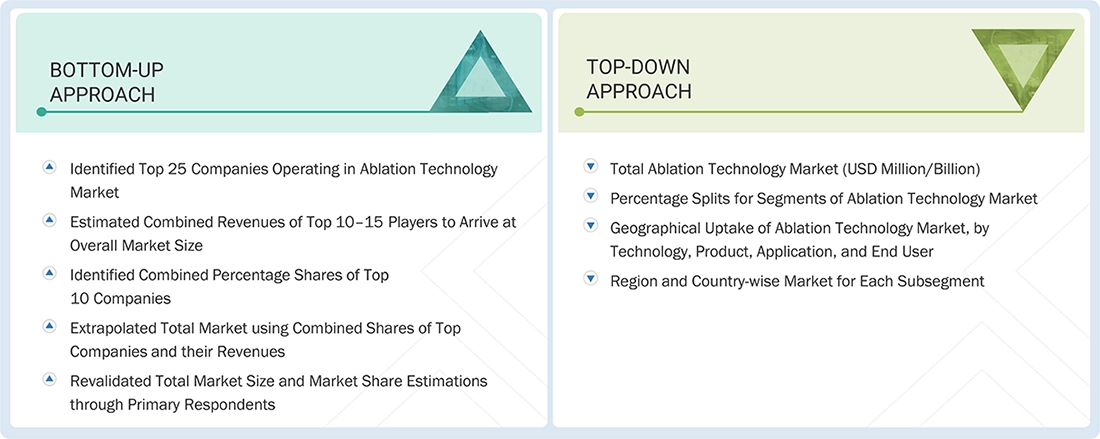
This study involved four major activities in estimating the current ablation technology market size. First, extensive secondary research was conducted to gather information on the market, including related and parent markets. The next step involved validating these findings, assumptions, and sizing with industry experts across the value chain through primary research. Both top-down and bottom-up approaches were employed to estimate the complete market size. After that, market breakdown and data triangulation were used to estimate the market size of segments and subsegments.
Secondary Research
The secondary research process involved the widespread use of secondary sources, directories, databases (such as Bloomberg Businessweek, Factiva, and D&B Hoovers), white papers, annual reports, company house documents, investor presentations, and SEC filings of companies. Secondary research was used to identify and collect information useful for the extensive, technical, market-oriented, and commercial study of the ablation technology market. It was also used to obtain important information about the key players and market classification and segmentation according to industry trends to the bottom-most level, and key developments related to market and technology perspectives. A database of the key industry leaders was also prepared using secondary research.
Primary Research
In the primary research process, various sources from both the supply and demand sides were interviewed to obtain qualitative and quantitative information for this report. The primary sources from the supply side include industry experts such as CEOs, vice presidents, marketing and sales directors, technology & innovation directors, and related key executives from various key companies and organizations operating in the ablation technology market. The primary sources from the demand side included industry experts, purchase & sales managers, doctors, and personnel from research organizations. Primary research was conducted to validate the market segmentation, identify key players in the market, and gather insights on key industry trends and key market dynamics.
A breakdown of the primary respondents for the ablation technology market is provided below:
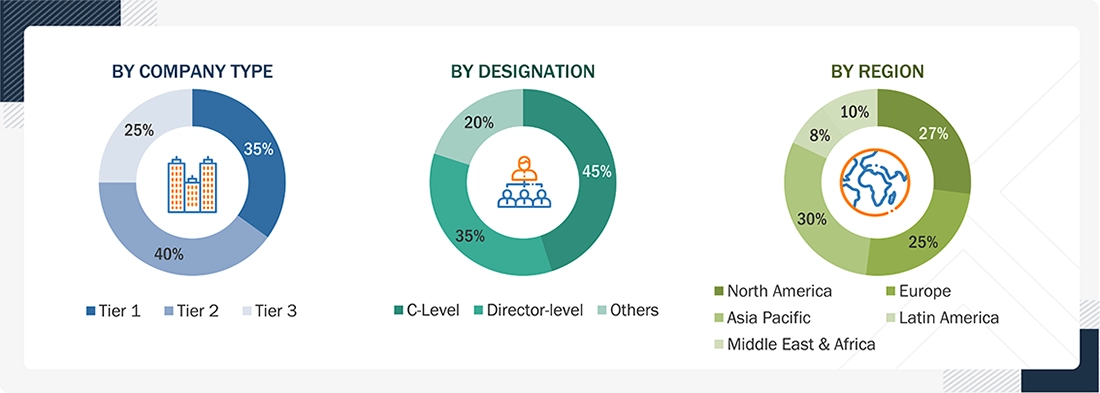
Note: Companies are classified into tiers based on their total revenue. Tier 1 = >USD 10.00 billion, Tier 2 = USD 1.00 billion to USD 10.00 billion, and Tier 3 = <USD 1.00 billion. C-level primaries include CEOs, CFOs, COOs, and VPs. Other designations include sales managers, marketing managers, business development managers, product managers, distributors, and suppliers.
Source: MarketsandMarkets Analysis
To know about the assumptions considered for the study, download the pdf brochure
Market Size Estimation
For the global market value, annual revenues were calculated based on the revenue mapping of major product manufacturers and OEMs active in the ablation technology market. All the major product manufacturers were identified at the global and/or country/regional level. Revenue mapping for the respective business segments/sub-segments was done for the major players. Also, the ablation technology market was split into various segments and subsegments based on:
- List of major players operating in the products market at the regional and/or country level
- Product mapping of various ablation technology manufacturers at the regional and/or country level
- Mapping of annual revenue generated by listed major players from ablation technology (or the nearest reported business unit/product category)
- Revenue mapping of major players to be covered
- Extrapolation of the revenue mapping of the listed major players to derive the global market value of the respective segments/subsegments
- Summation of the market value of all segments/subsegments to arrive at the ablation technology market
The above-mentioned data was consolidated and added with detailed inputs and analysis from MarketsandMarkets and presented in this report.
Ablation Technology Market : Top-Down and Bottom-Up Approach
Data Triangulation
After arriving at the overall size of the ablation technology market through the above-mentioned methodology, this market was split into several segments and subsegments. The data triangulation and market breakdown procedures were employed, wherever applicable, to complete the overall market engineering process and arrive at the exact market value data for the key segments and subsegments. The extrapolated market data was triangulated by studying various macro indicators and regional trends from both demand- and supply-side participants.
Market Definition
Ablation is the removal of unwanted growth of tissue by using extreme heat, cold, or lasers. The ablation products are utilized to treat a wide range of conditions, including various kinds of cancer such as lung, breast, kidney, prostate, orthopedic treatment, cosmetic surgery, pain management, gynecological treatment, urological treatment, ophthalmological treatment, and others. The primary end users of this market are hospitals and surgical centers, ablation centers, ambulatory surgery centers, medical spas, and aesthetic & dermatology clinics.
Key Stakeholders
- Ablation devices manufacturers, suppliers, and providers
- Academic & private research institutions
- R&D companies
- Academic institutions and private research institutions
- Regulatory agencies
- Contract manufacturing organizations (CMOs)
- Environmental & safety regulatory bodies
- Public & private research institutions
- Hospitals
- Radiologists
- Interventional radiologists
- Interventional cardiologists
- Surgeons
Report Objectives
- To define, describe, and forecast the ablation technology market by technology, product, application, end user, and region
- To provide detailed information regarding the major factors influencing the growth of the market (drivers, restraints, opportunities, and challenges)
- To analyze micro markets with respect to individual growth trends, prospects, and contributions to the total market
- To profile the key players in the market and comprehensively analyze their product portfolios, market positions, and core competencies
- To analyze opportunities in the market for stakeholders and provide details of the competitive landscape for market leaders
- To forecast the size of the market segments with respect to five regions: North America, Europe, Asia Pacific, Latin America, and the Middle East & Africa
- To profile key players, analyze their market shares, and analyze competitive developments such as product launches & approvals, agreements, expansions, and acquisitions.
- To benchmark players within the market using the proprietary “Company Evaluation Matrix” framework, which analyzes market players based on various parameters within the broad categories of business & product excellence strategy
Available customizations:
With the given market data, MarketsandMarkets offers customizations as per your company’s specific needs. The following customization options are available for the report:
Regional Analysis
- Further breakdown of the Rest of Europe ablation technology market into Russia, Switzerland, Denmark, Austria, and others
- Further breakdown of the Rest of Asia Pacific ablation technology market into South Korea, Taiwan, and others
- Further breakdown of the Rest of Latin America ablation technology market into Argentina, Colombia, Chile, Ecuador, and others
- Further breakdown of the Southeast Asia ablation technology market into Malaysia, Singapore, New Zealand, and others
Competitive Landscape Assesment
- Market share analysis, by region (North America and Europe), which provides market shares of the top 3-5 key players in the ablation technology market
- Competitive leadership mapping for established players in the US
Get the Full Ablation Technology Market Report
Full forecast, segment splits, and company analysis for all Ablation Technology Market.
- Rest Of Europe Ablation Technology Market
- Rest Of Asia Pacific Ablation Technology Market
- US Ablation Technology Market
- Canada Ablation Technology Market
- Germany Ablation Technology Market
- France Ablation Technology Market
- UK Ablation Technology Market
- Italy Ablation Technology Market
- Spain Ablation Technology Market
- Japan Ablation Technology Market
- China Ablation Technology Market
- India Ablation Technology Market
- South Korea Ablation Technology Market
- Brazil Ablation Technology Market
- Mexico Ablation Technology Market
Need a Tailored Report?
Customize this report to your needs
Get 10% FREE Customization
Customize This Report
