
Russia Automotive Interior Materials Market (2024-2029)

The Russia Automotive Interior Materials Market was valued at $107.6 Million in 2024 and projected to reach to $110.4 Million by 2029, representing a compound annual growth rate of 1.23%. Russia's automotive interior materials market is expected to experience gradual expansion through 2029, driven by sustained domestic vehicle production and growing aftermarket refurbishment activities.


| Market Size in | USD 26.32 MN |
| Market Forecast in | |
| CAGR | |
| Forecast Period | |
| Units Considered | Value (USD MN) |
Russia Automotive Interior Materials Market Trends and Insights
- Russia's market growth reflects moderate demand driven by domestic vehicle production and aftermarket refurbishment activities, though geopolitical factors and supply chain constraints have tempered expansion.
- The Russian automotive sector's reliance on interior material innovations—including textiles, polymers, and composites—remains steady despite macroeconomic headwinds affecting the broader automotive industry in Russia. During the 2024–2029 forecast period, Russia's automotive interior materials market will experience subdued but consistent growth, with manufacturers focusing on cost-effective solutions and localized production capabilities.
- Russia's market dynamics are shaped by domestic OEM requirements, repair and maintenance demand, and gradual shifts toward sustainable material alternatives.
- The relatively low CAGR of 1.23% in Russia contrasts with global growth of 3.52%, reflecting the country's unique market conditions and limited exposure to premium vehicle segments that typically drive higher material consumption..
Key Market Statistics
- CAGR (2024-2029) 1.23% CAGR
- Market Size, 2024 ~USD 107.6 Million
- Forecast, 2029 ~USD 110.4 Million
- Country Russia
Russia Automotive Interior Materials Market Overview
Market Valuation :
Russia's automotive interior materials market was valued at USD 107.6 million in 2024, with a projected value of USD 110.4 million by 2029, representing steady but modest growth in the regional market.
Domestic Production Driver :
Growth is primarily fueled by domestic vehicle production and local manufacturing activities, as Russian automakers continue to develop indigenous supply chains independent of international sources.
Aftermarket Refurbishment Demand :
Significant demand stems from aftermarket refurbishment and vehicle restoration activities, as consumers extend vehicle lifecycles due to economic constraints and limited new vehicle availability.
Geopolitical Headwinds :
Supply chain disruptions and geopolitical sanctions have constrained market expansion, limiting access to premium materials and advanced manufacturing technologies that would otherwise accelerate growth.
Russia Automotive Interior Materials Market Dynamics
- The 1.23% CAGR reflects a maturing market navigating significant structural challenges, including supply chain constraints and limited access to international suppliers due to geopolitical factors. Looking ahead, the market will likely depend on the resilience of domestic automotive manufacturing and consumer spending on vehicle maintenance and upgrades.
- Opportunities exist in developing locally-sourced material alternatives and strengthening regional supply chains.
- However, continued geopolitical uncertainty and economic pressures may limit aggressive market expansion compared to global growth rates..
Market Ecosystem
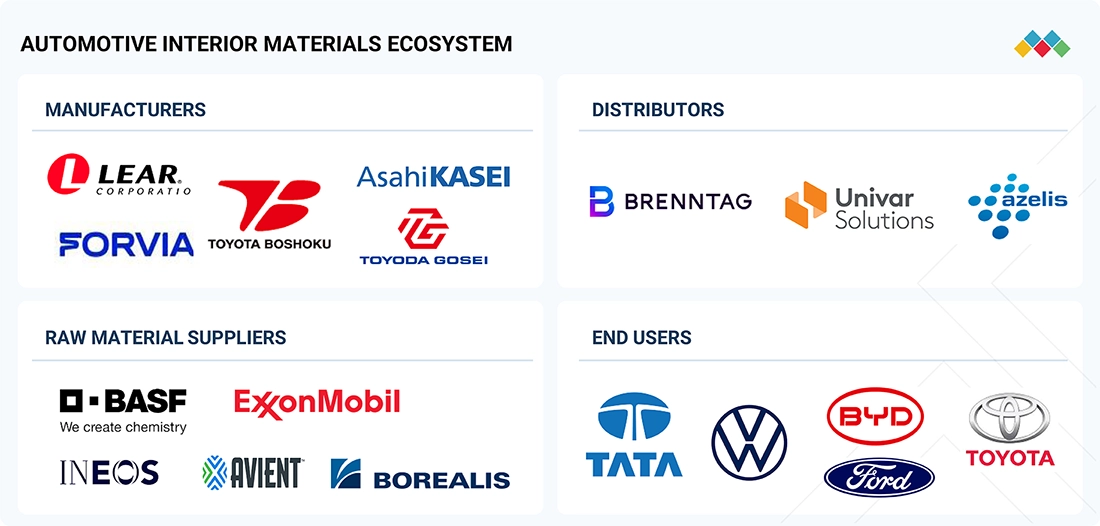
AUTOMOTIVE INTERIOR MATERIALS MARKET: COMMERCIAL USE CASES ACROSS INDUSTRIES
| COMPANY | USE CASE DESCRIPTION | BENEFITS |
|---|---|---|
 |
Adoption of lightweight polymer composites for dashboards and door panels in electric vehicle models. | Enhances energy efficiency through weight reduction, provides superior thermal stability, and maintains premium interior aesthetics. |
 |
Integration of bio-based synthetic leathers in seat covers and trim applications for hybrid and electric vehicles. | Reduces environmental footprint, improves passenger comfort, and supports brand sustainability goals. |
 |
Utilization of thermoplastic polyolefins (TPO) for soft-touch surfaces and instrument panels in luxury sedans. | Delivers a refined tactile experience, superior scratch resistance, and long-term durability under temperature variations. |
 |
Implementation of recycled fabric blends and natural fiber reinforcements for interior linings and flooring. | Promotes circular material usage, lowers production emissions, and enhances cabin air quality with low-VOC materials. |
Logos and trademarks shown above are the property of their respective owners. Their use here is for informational and illustrative purposes only.
Related Ecosystem
Resins And Polymers
- Polycarbonate
- Acrylonitrile Butadiene Styrene (ABS)
- Epoxy Resin
- Light Commercial Vehicles (LCVs)
- Polypropylene (PP)
- Basf se
- DOW CHEMICAL COMPANY
- Solvay sa
- Saudi arabia basic industries corporation (sabic)
- DuPont de Nemours, Inc.
Key Takeaways
- Russia's automotive interior materials market is valued at USD 107.6 million in 2024 and will grow to USD 110.4 million by 2029 at a modest 1.23% CAGR.
- Russia's market growth is constrained by geopolitical factors, supply chain disruptions, and limited premium vehicle demand compared to global markets.
- Russia's domestic OEM production and aftermarket repair segments remain the primary drivers of interior material consumption.
- Russia's market expansion lags the global 3.52% CAGR, reflecting structural challenges and reduced international automotive investment in the region.
Automotive Interior Materials Market Report Scope
| Report Metric | Details |
|---|---|
| Base Year | 2024 |
| Fastest Growing Segment | SAFETY COMPONENTS (Application) |
| Forecast Period | 2024–2029 |
| Growth Rate | CAGR of 3.52% from 2024 to 2029 |
| Largest Segment | PASSENGER CARS (Vehicle Type) |
| Market Size Base Year (Billions) | ~USD 53.03 (2024) |
| Revenue Forecast (Billions) | ~USD 65.26 (2029) |
| Segments Covered | Type, Vehicle Type, Application |
Russia Automotive Interior Materials Market Report Segmentation
3 segment dimensions are covered across the global market.
By Type
- Composites
- Fabric
- Genuine Leather
- Metals
- Other Types
- Polymer
- Polymers
- Synthetic Leather
- Thermoplastic Olefin (Tpo)
- Tpo
- –Pu
- –Pvc
By Vehicle Type
- Buses & Coaches
- Hcvs
- Lcvs
- Passenger Cars
- Passenger Vehicle
By Application
- Adhesives & Tapes
- Center Consoles
- Dashboards
- Door Panels
- Floor Carpets
- Head-Up Displays
- Headliners
- Interior Lighting
- Other Applications
- Rear Seat Entertainment
- Safety Components
- Seats
Target Audience
- Automotive OEM Suppliers : Suppliers to Russian vehicle manufacturers need localized market data to optimize production planning, material sourcing, and capacity investments aligned with domestic demand forecasts.
- Interior Material Manufacturers : Producers of automotive interior materials require Russia-specific insights to identify growth opportunities, assess competitive positioning, and develop products suited to local manufacturing standards and consumer preferences.
- Aftermarket Distributors & Retailers : Aftermarket businesses operating in Russia need detailed market analysis to forecast demand for interior refurbishment materials, optimize inventory management, and capitalize on the growing vehicle restoration segment.
- Strategic Investors & PE Firms : Investment professionals evaluating opportunities in Russia's automotive sector require comprehensive market data to assess growth potential, competitive dynamics, and risk factors for informed capital allocation decisions.
- Market Research & Consulting Firms : Research organizations and consultants serving automotive clients need Russia-specific market cutouts to provide clients with localized insights, competitive analysis, and strategic recommendations for regional operations.
Key Companies in the Russia Automotive Interior Materials Market
| Company | HQ | Ownership | Strongest segments |
|---|---|---|---|
| KANEKA CORPORATION | Japan | Public Company | Polymer-based interior materials (PVC, crosslinked PVC, specialty polymers, foams),Additives and modifiers for interior polymers,Advanced films and specialty resins for interior electronics and trim, |
| NITRO QUIMICA | Brazil | Private Company | Polymer-related chemistries for seats and dashboards,Leather auxiliaries and coatings,Fabric treatment and safety-component additives, |
| SOLVAY SA | Belgium | Public Company | Polymer-based interior materials,Functional additives and chemicals for interiors,EV and electronics-related interior applications, |
| BOREALIS AG | United States | Private Company | Polymer – Passenger Car Dashboards & Trim,Polymer – Seat Structures & Seat Backs,Polymer – Safety Components & Interior Functional Parts, |
| LEAR CORPORATION | United States | Public Company | Polymer-based interior materials (seat structures, trims, foam systems),Fabric seat and interior materials,Genuine leather and premium surface materials, |
| ASAHI KASEI CORPORATION | Japan | Public Company | Fabric (Dinamica, Bemberg/Bemliese-based interiors),Polymer-based interior materials,Genuine leather (indirect/limited exposure), |
| TOYOTA BOSHOKU CORPORATION | Japan | Public Company | Polymer-based interior materials (dashboards, door trims, headliners, floor carpets, exterior plastics),Fabric-based materials (seat fabrics, seatbelt webbings, straps, interior textiles),Genuine leather and premium coverings for seats and touchpoints, |
| FORVIA | France | ||
| SEIREN CO., LTD. | Japan | Public Company | Fabric (seat and interior textiles),Polymer-based interior materials,Genuine leather and leather-alternative composites, |
| GRAMMER AG | Germany | Public Company | Polymer-based interior components,Fabric seating systems,Genuine leather seating and trim, |
KANEKA CORPORATION
Kaneka Corporation is a Japanese public company founded in 1949 with 11,762 employees, operating as a major industrial enterprise.
NITRO QUIMICA
Nitro Quimica is a Brazilian private company established in 1935 with 400 employees, serving the chemical industry.
SOLVAY SA
Solvay SA is a Belgian public company founded in 1863 with 8,400 employees, operating as a long-established industrial corporation.
BOREALIS AG
Borealis AG is a United States-based private company founded in 1994 with 5,887 employees.
LEAR CORPORATION
Lear Corporation is a United States public company founded in 1917 with 164,300 employees, operating as a major industrial enterprise.
ASAHI KASEI CORPORATION
Asahi Kasei Corporation is a Japanese public company founded in 1922 with 47,895 employees, serving as a large diversified manufacturer.
TOYOTA BOSHOKU CORPORATION
Toyota Boshoku Corporation is a Japanese public company founded in 1918 with 45,521 employees, operating as a major industrial supplier.
FORVIA
Insufficient data provided for company description.
SEIREN CO., LTD.
Seiren Co., Ltd. is a Japanese public company founded in 1889 with 6,506 employees, operating as an established textile and industrial manufacturer.
GRAMMER AG
Grammer AG is a German public company founded in 1880 with 11,400 employees, operating as a long-established industrial enterprise.
Reasons to Buy this Report
- Localized Market Intelligence : Gain deep insights specific to Russia's automotive interior materials landscape, including domestic production dynamics, local consumer preferences, and regional supply chain structures that differ from global markets.
- Geopolitical Risk Assessment : Understand how sanctions, supply chain disruptions, and geopolitical factors uniquely impact Russia's market, enabling informed strategic decisions and risk mitigation for operations in this region.
- Aftermarket Opportunity Identification : Identify high-growth segments within Russia's aftermarket refurbishment sector, where extended vehicle lifecycles create sustained demand for interior material upgrades and replacements.
- Competitive Positioning Strategy : Benchmark against regional competitors and understand local manufacturing capabilities, pricing dynamics, and material preferences to develop effective market entry or expansion strategies in Russia.
- Forecast-Driven Planning : Leverage accurate 2024-2029 projections and CAGR data to align inventory, production capacity, and investment decisions with realistic market growth expectations specific to the Russian market.
Frequently asked questions
What is the current size of Russia's automotive interior materials market?
Russia's automotive interior materials market was estimated at USD 107.6 million in 2024 and is forecast to reach USD 110.4 million by 2029.
What is the CAGR for Russia's automotive interior materials market?
Russia's automotive interior materials market is projected to grow at a CAGR of 1.23% from 2024 to 2029, significantly lower than the global CAGR of 3.52%.
What factors are driving growth in Russia's automotive interior materials market?
Russia's market growth is driven by domestic vehicle production, aftermarket repair and maintenance demand, and gradual adoption of cost-effective interior material solutions.
Why is Russia's market growth slower than the global average?
Russia's 1.23% CAGR reflects geopolitical constraints, supply chain disruptions, limited premium vehicle segments, and reduced international automotive investment in the region.
Which material types dominate Russia's automotive interior market?
Russia's automotive interior materials market is primarily composed of textiles, polymers, and composites, with emphasis on cost-effective and locally-sourced solutions.
RESEARCH METHODOLOGY
The study involved four major activities in estimating the market size for the automotive interior materials market. Exhaustive secondary research was done to collect information on the market, the peer market, and the parent market. The next step was to validate these findings, assumptions, and sizing with industry experts across the value chain through primary research. Both top-down and bottom-up approaches were employed to estimate the complete market size. After that, the market breakdown and data triangulation procedures were used to estimate the market size of the segments and subsegments.
Secondary Research
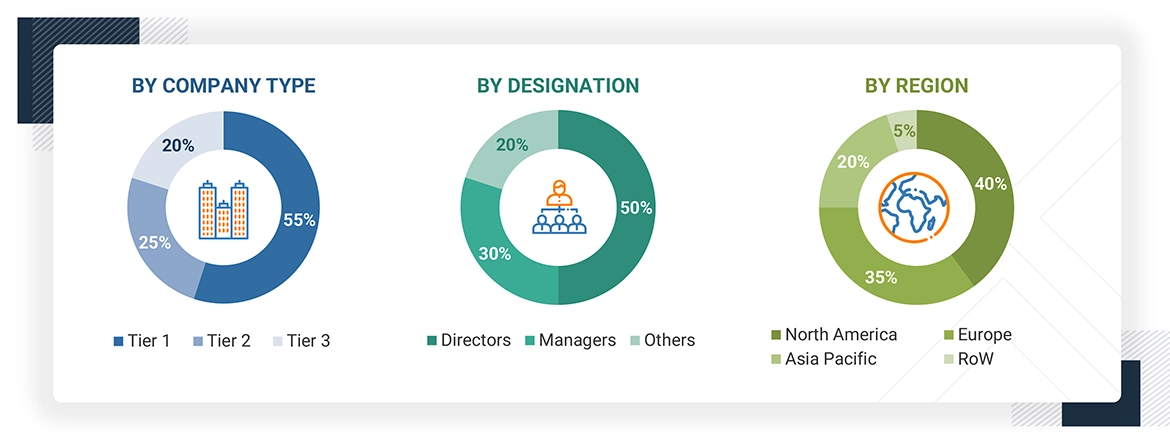
Secondary sources used in this study included annual reports, press releases, and investor presentations of companies; white papers; certified publications; articles from recognized authors; and gold standard & silver standard websites such as Factiva, ICIS, Bloomberg, and others. The findings of this study were verified through primary research by conducting extensive interviews with key officials such as CEOs, VPs, directors, and other executives. The breakdown of profiles of the primary interviewees is illustrated in the figure below:
Primary Research
The automotive interior materials market comprises several stakeholders, such as raw material suppliers, end-product manufacturers, and regulatory organizations in the supply chain. The demand side of this market is characterized by key opinion leaders in various applications for the automotive interior materials market. The supply side is characterized by advancements in technology and diverse application industries. Various primary sources from both the supply and demand sides of the market were interviewed to obtain qualitative and quantitative information.
Breakdown of Primary Participants
To know about the assumptions considered for the study, download the pdf brochure
| COMPANY NAME | DESIGNATION | |
|---|---|---|
| Toyoda Gosei Corporation | Senior Manager | |
| Grupo Antolín-Irausa, S.A.U. | Innovation Manager | |
| DK Leather Seats Sdn. Bhd. | Vice-President | |
| Asahi Kasei Corporation | Production Supervisor | |
| Yanfeng Automotive Interior | Sales Manager | |
Market Size Estimation
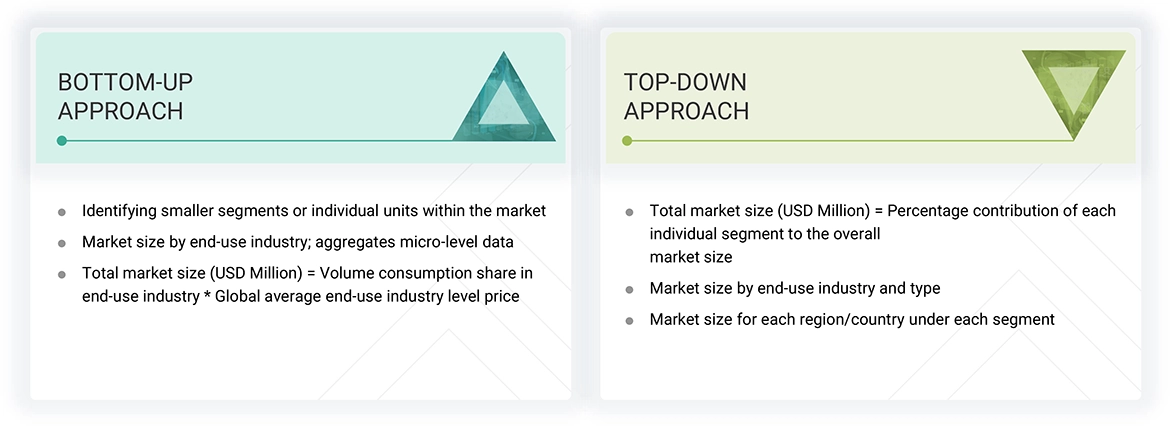
Both top-down and bottom-up approaches were used to estimate and validate the total size of the automotive interior materials market. These methods were also used extensively to estimate the size of various subsegments in the market. The research methodology used to estimate the market size includes the following:
- The key players in the industry have been identified through extensive secondary research.
- The supply chain of the industry has been determined through primary and secondary research.
- All percentage shares, splits, and breakdowns have been determined using secondary sources and verified through primary sources.
- All possible parameters that affect the markets covered in this research study have been accounted for, viewed in extensive detail, verified through primary research, and analyzed to obtain the final quantitative and qualitative data.
Automotive Interior Materials Market: Bottom-Up and Top-Down Approach
Data Triangulation
After arriving at the overall market size—using the market size estimation processes as explained above—the market was split into several segments and subsegments. To complete the overall market engineering process and arrive at the exact statistics of each market segment and subsegment, data triangulation, and market breakdown procedures were employed, wherever applicable. The data was triangulated by studying various factors and trends from both the demand and supply sides in the automotive interior materials industry.
Market Definition
The automotive interior materials market encompasses the production, development, and application of various materials used in manufacturing interior components of vehicles. These materials include polymers, fabrics, leather (both genuine and synthetic), thermoplastic olefins (TPO), and others, which are utilized in components such as dashboards, door panels, seats, headliners, floor carpets, and interior trims. The market serves a broad spectrum of vehicle categories, including passenger cars, light commercial vehicles, and heavy commercial vehicles. Driven by growing consumer expectations for comfort, aesthetic appeal, safety, and sustainability, interior materials are critical in enhancing the overall driving experience. Key market trends include advancements in lightweight material technologies, adopting eco-friendly and recycled materials, and integrating smart surface technologies. These innovations are central to the market’s evolution, as manufacturers seek to meet regulatory requirements and address the shifting demands of next-generation mobility.
Stakeholders
- Automotive Interior Material Manufacturers
- Automotive Interior Material Distributors
- Raw Material Suppliers
- Service Providers
- automotive Manufacturers
- Government and Research Organizations
Report Objectives
- To analyze and forecast the size of the global automotive interior materials market in terms of value and volume
- To provide detailed information about the important drivers, restraints, challenges, and opportunities influencing market growth
- To define, describe, and segment the market based on type, application, vehicle type, and region
- To forecast the size of the market segments based on regions such as Asia Pacific, North America, Europe, the Middle East & Africa, and South America
- To strategically analyze the segmented markets with respect to individual growth trends, prospects, and contributions to the overall market
- To identify and analyze opportunities for stakeholders in the market
- To analyze competitive developments such as expansions, partnerships & collaborations, mergers & acquisitions, agreements, and product launches in the market
- To strategically profile the key companies and comprehensively analyze their core competencies
Get the Full Automotive Interior Materials Market Report
Full forecast, segment splits, and company analysis for all Automotive Interior Materials Market.
- China Automotive Interior Materials Market
- Japan Automotive Interior Materials Market
- India Automotive Interior Materials Market
- South Korea Automotive Interior Materials Market
- Thailand Automotive Interior Materials Market
- Germany Automotive Interior Materials Market
- Spain Automotive Interior Materials Market
- France Automotive Interior Materials Market
- UK Automotive Interior Materials Market
- Italy Automotive Interior Materials Market
- Canada Automotive Interior Materials Market
- Mexico Automotive Interior Materials Market
- US Automotive Interior Materials Market
- Iran Automotive Interior Materials Market
- South Africa Automotive Interior Materials Market
- Brazil Automotive Interior Materials Market
- Argentina Automotive Interior Materials Market
- Rest Of Europe Automotive Interior Materials Market
- Rest Of Sa Automotive Interior Materials Market
Need a Tailored Report?
Customize this report to your needs
Get 10% FREE Customization
Customize This Report
