
Spain Biopreservation Market (2024-2029)

The Spain Biopreservation Market was valued at $52.1 Million in 2024 and projected to reach to $72.7 Million by 2029, representing a compound annual growth rate of 6.9%. Spain's biopreservation market is poised for sustained growth through 2029, driven by increasing healthcare modernization and regenerative medicine adoption.


| Market Size in | USD 26.32 MN |
| Market Forecast in | |
| CAGR | |
| Forecast Period | |
| Units Considered | Value (USD MN) |
Spain Biopreservation Market Trends and Insights
- This growth trajectory reflects Spain's increasing investment in advanced healthcare infrastructure and regenerative medicine capabilities.
- Spain is positioning itself as a key player in European biopreservation, driven by rising demand for cell and tissue preservation technologies across clinical and research applications. The Spanish biopreservation sector benefits from strong regulatory frameworks and growing adoption of cryopreservation solutions in hospitals and research institutions.
- Spain's healthcare system continues to modernize, with biopreservation technologies becoming integral to stem cell research, organ transplantation, and personalized medicine initiatives.
- Between 2024 and 2029, Spain is expected to see accelerated market penetration as healthcare providers invest in preservation infrastructure to support emerging therapeutic modalities..
Key Market Statistics
- CAGR (2024-2029) 6.9% CAGR
- Market Size, 2024 ~USD 52.1 Million
- Forecast, 2029 ~USD 72.7 Million
- Country Spain
Spain Biopreservation Market Overview
Market Valuation Growth :
Spain's biopreservation market is valued at $52.1 million in 2024, with a projected CAGR of 6.9% through 2029, reaching $72.7 million. This steady expansion outpaces many European counterparts and reflects Spain's commitment to advanced healthcare technologies.
Regenerative Medicine Expansion :
Spain is experiencing increased demand for cell and tissue preservation solutions, driven by growing investments in regenerative medicine research and clinical applications. Spanish healthcare institutions are increasingly adopting biopreservation technologies for therapeutic development.
Healthcare Infrastructure Investment :
Spain's healthcare sector is modernizing with significant capital allocation toward advanced biopreservation infrastructure. Public and private healthcare providers are upgrading facilities to support cutting-edge preservation and storage capabilities for biological materials.
European Market Positioning :
Spain is establishing itself as a key European biopreservation hub, leveraging its strategic location, skilled workforce, and regulatory framework. The country's position strengthens opportunities for biotech companies and research institutions across the continent.
Spain Biopreservation Market Dynamics
- Spanish hospitals and research centers are investing in advanced cryopreservation and biobanking infrastructure to support cell therapy development and clinical applications.
- The market benefits from Spain's robust healthcare system and growing biotech ecosystem. Key growth drivers include rising demand for personalized medicine, expansion of stem cell research programs, and increased collaboration between Spanish healthcare institutions and international biotech firms.
- Government support for life sciences innovation and EU funding initiatives further accelerate market development.
- Spain's competitive positioning in European biopreservation is expected to attract continued investment and partnerships through the forecast period..
Market Ecosystem
Related Ecosystem
Biotechnology
- Reagents
- Polymerase Chain Reaction (PCR)
- Stem Cells
- Assay Kits
- Flow Cytometers
- Thermo Fisher Scientific Inc.
- Merck KGaA
- Danaher Corporation
- Agilent Technologies, Inc.
- Bio-Rad Laboratories, Inc.
Key Takeaways
- Spain's biopreservation market is valued at $52.1 million in 2024 and will reach $72.7 million by 2029, representing a 6.9% CAGR.
- Spain is leveraging advanced healthcare infrastructure and regulatory support to drive adoption of cryopreservation and cell preservation technologies.
- Regenerative medicine and stem cell research initiatives in Spain are key growth drivers for biopreservation market expansion.
- Spain's healthcare modernization efforts position the country as an emerging hub for biopreservation innovation in Europe through 2029.
Biopreservation Market Report Scope
| Report Metric | Details |
|---|---|
| Base Year | 2024 |
| Fastest Growing Segment | BIOPRESERVATION EQUIPMENT (Product) |
| Forecast Period | 2024-2029 |
| Growth Rate | CAGR of 9.8% from 2024 to 2029 |
| Largest Segment | BIOPRESERVATION MEDIA (Product) |
| Market Size Base Year (Billions) | ~USD 4.45 (2024) |
| Revenue Forecast (Billions) | ~USD 7.1 (2029) |
| Segments Covered | Product, Type, Biospecimen, Application, End User, Transplant Type |
Spain Biopreservation Market Report Segmentation
6 segment dimensions are covered across the global market.
By Product
- Biopreservation Accessories
- Biopreservation Equipment
- Biopreservation Media
By Type
- Alarm Monitoring Systems
- Centrifuges
- Cryogenic Storage Systems
- Cryopreservation Media
- Freezers
- Hypothermic Preservation Media
- Incubators
- Other Biopreservation Equipment
- Other Equipment
- Refrigerators
- Temperature Control Systems
- Thawing Equipment
By Biospecimen
- Human Tissue Samples
- Organs
- Other Biospecimens
- Stem Cells
By Application
- Other Applications
- Research Applications
- Therapeutic Applications
By End User
- Biobanks
- Gene Banks
- Hospitals
- Other End Users
By Transplant Type
- Cord Blood Transplants
- Organ Transplants
SPAIN: BIOPRESERVATION MARKET, BY END USER, 2022–2029
| Segment | 2022 | 2023 | 2024 | 2025 | 2026 | 2027 | 2028 | 2029 | CAGR (%) |
|---|---|---|---|---|---|---|---|---|---|
| BIOBANKS | 40.35 | 42.54 | 46.05 | 49.12 | 53.81 | 57.16 | 62.37 | 67.67 | 8 |
| GENE BANKS | 20 | 22 | 23 | 25 | 27 | 29 | 31 | 33 | 7.5 |
| HOSPITALS | 15 | 17 | 18 | 19 | 20 | 22 | 23 | 25 | 6.8 |
| OTHER END USERS | 9 | 10 | 11 | 12 | 12 | 13 | 14 | 15 | 6.4 |
| TOTAL | 84.35 | 91.54 | 98.05 | 105.12 | 112.81 | 121.16 | 130.37 | 140.67 | 7.5 |
Target Audience
- Biopreservation Equipment Manufacturers : Manufacturers need Spain-specific market data to assess demand for cryopreservation systems, biobanking equipment, and storage solutions. Understanding Spain's healthcare infrastructure investments helps identify sales opportunities and facility upgrade cycles.
- Regenerative Medicine Companies : Cell therapy and tissue engineering firms require insights into Spain's market growth, clinical adoption rates, and healthcare provider partnerships. Spain-specific data supports market entry strategies and collaboration opportunities with Spanish research institutions.
- Healthcare Facility Operators : Spanish hospitals, clinics, and biobanks need market intelligence to justify biopreservation technology investments and understand competitive positioning. Regional data helps optimize facility planning and service offerings aligned with market demand.
- Investment & Private Equity Firms : Investors evaluating biotech and healthcare opportunities in Spain require detailed market sizing and growth projections. Spain-specific CAGR analysis and forecast data support investment decision-making and portfolio strategy development.
- Research Institutions & Universities : Spanish academic and research organizations need market data to secure funding, plan research programs, and identify collaboration opportunities. Understanding Spain's biopreservation market growth supports grant applications and institutional strategy alignment.
Reasons to Buy this Report
- Spain-Specific Market Sizing : Obtain precise valuation data for Spain's biopreservation market with detailed historical analysis and 5-year forecasts. Understand market size dynamics specific to Spanish healthcare infrastructure and regional demand patterns.
- Competitive Landscape Intelligence : Identify key Spanish and international biopreservation providers operating in the market. Analyze competitive positioning, market share distribution, and strategic initiatives specific to Spain's healthcare ecosystem.
- Growth Driver Analysis : Understand Spain-specific factors driving 6.9% CAGR growth, including healthcare investment trends, regenerative medicine adoption rates, and regulatory developments. Benchmark against global 9.8% CAGR to identify Spain's unique opportunities.
- Investment & Partnership Opportunities : Discover expansion opportunities in Spain's biopreservation sector, including facility development, technology partnerships, and collaboration potential with Spanish research institutions and healthcare providers.
- Regulatory & Market Entry Guidance : Access Spain-specific regulatory requirements, reimbursement frameworks, and market entry strategies. Understand compliance pathways and healthcare system dynamics essential for successful market penetration in Spain.
Frequently asked questions
What is the current size of Spain's biopreservation market?
Spain's biopreservation market was valued at $52.1 million in 2024 and is expected to grow to $72.7 million by 2029.
What is the growth rate of Spain's biopreservation market?
Spain's biopreservation market is growing at a compound annual growth rate (CAGR) of 6.9% from 2024 to 2029.
What are the main drivers of biopreservation growth in Spain?
Key drivers include Spain's investment in regenerative medicine, stem cell research initiatives, modernization of healthcare infrastructure, and increasing adoption of cryopreservation technologies in clinical and research settings.
Which applications are driving Spain's biopreservation market?
Primary applications in Spain include organ transplantation support, stem cell preservation, tissue banking, and personalized medicine research across hospitals and research institutions.
How does Spain's biopreservation market compare to Europe?
Spain represents a significant segment of the European biopreservation market, with steady growth driven by healthcare modernization and strong regulatory frameworks supporting advanced preservation technologies.
RESEARCH METHODOLOGY
The objective of the study is to analyze the key market dynamics, such as drivers, opportunities, challenges, restraints, and key player strategies. To track company developments such as acquisitions, product launches, expansions, collaborations, agreements, and partnerships of the leading players, the competitive landscape of the Biopreservation market to analyze market players on various parameters within the broad categories of business and product strategy. Top-down and bottom-up approaches were used to estimate the market size. To estimate the market size of segments and subsegments, the market breakdown and data triangulation were used.
The four steps involved in estimating the market size are:
Collecting Secondary Data
The secondary research data collection process involves the usage of secondary sources, directories, databases (such as Bloomberg Businessweek, Factiva, and D&B), annual reports, investor presentations, and SEC filings of companies. Secondary research was used to identify and collect information useful for the extensive, technical, market-oriented, and commercial study of the Biopreservation market. A database of the key industry leaders was also prepared using secondary research.
Collecting Primary Data
The primary research data was conducted after acquiring knowledge about the Biopreservation market scenario through secondary research. A significant number of primary interviews were conducted with stakeholders from both the demand side (such as biobanks, gene banks, hospitals, and academic research institute) and supply side (such as included various industry experts, such as Directors, Chief X Officers (CXOs), Vice Presidents (VPs) from business development, marketing, and product development teams, product manufacturers, wholesalers, channel partners, and distributors) across major countries of North America, Europe, Asia Pacific, the Middle East & Africa, Latin America, and GCC. Approximately 40% of the primary interviews were conducted with stakeholders from the demand side, while those from the supply side accounted for the remaining 60%. Primary data for this report was collected through questionnaires, emails, and telephonic interviews.
A breakdown of the primary respondents is provided below:
Breakdown of Primary Participants:
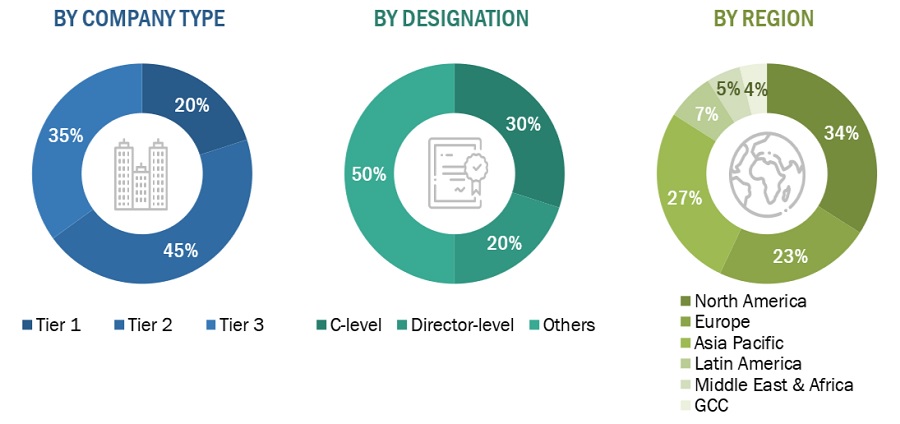
Note 1: *Others include sales managers, marketing managers, and product managers.
Note 2: Tiers are defined based on a company’s total revenue as of 2023: Tier 1=> USD 1 billion, Tier 2 = USD 500 million to USD 1 billion, and Tier 3=< USD 500 million.
To know about the assumptions considered for the study, download the pdf brochure
Market Size Estimation
All major product manufacturers offering various Biopreservation were identified at the global/regional level. Revenue mapping was done for the major players and was extrapolated to arrive at the global market value of each type of segment. The market value Biopreservation market was also split into various segments and subsegments at the region and country level based on:
- Product mapping of various manufacturers for each type of Biopreservation market at the regional and country-level
- Relative adoption pattern of each Biopreservation market among key application segments at the regional and/or country-level
- Detailed primary research to gather qualitative and quantitative information related to segments and subsegments at the regional and/or country level.
- Detailed secondary research to gauge the prevailing market trends at the regional and/or country-level
Global Biopreservation Market Size: Top Down Approach
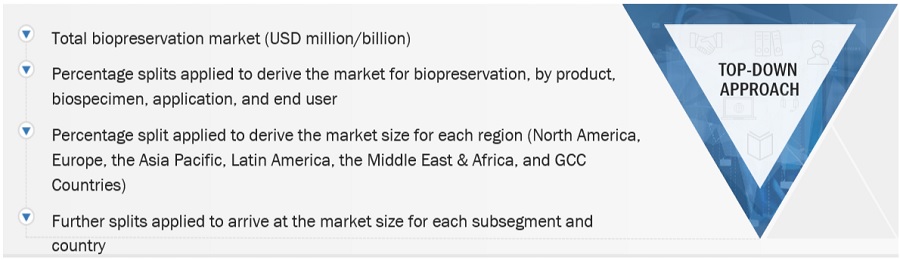
To know about the assumptions considered for the study, Request for Free Sample Report
Global Biopreservation Market Size: Bottom-Up Approach
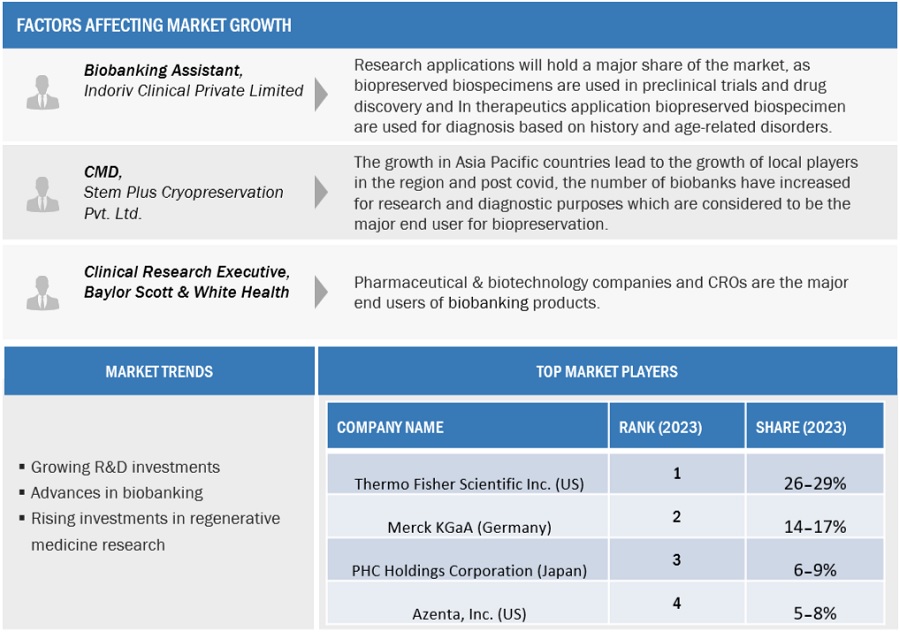
Data Triangulation
After arriving at the overall market size—using the market size estimation processes—the market was split into several segments and subsegments. To complete the overall market engineering process and arrive at the exact statistics of each market segment and subsegment, data triangulation and market breakdown procedures were employed, wherever applicable. The data was triangulated by studying various factors and trends from both the demand and supply sides in the Biopreservation industry.
Market Definition
Biopreservation is a technique used for the storage of cells and tissues in a hypothermic or chemical environment to preserve biological samples with sustained integrity. The different types of biospecimen stored include human tissue samples, stem cells, and organs, which are majorly used in therapeutic and research applications. These high-yielding cell lines need to be preserved in order to provide optimum yield, viability, and productivity, which can be achieved by cryopreservation and vitrification in a hypothermic storage environment. Biopreservation is a rapidly emerging field of specimen procurement, processing, preservation and banking which requires a close collaboration between clinicians, engineers and scientists coming from academia, small private enterprises or huge industrial companies.
Key Stakeholders
- Senior Management
- Finance/Procurement Department
- Doctors/HCPs
- Researchers
- Lab Managers/Technicians
- End Users/Operators
Report Objectives
- To provide detailed information about the factors influencing the market growth (such as drivers, restraints, opportunities, and challenges)
- To define, describe, segment, and forecast the Biopreservation market by product, biospecimen, application, end user, and region.
- To analyze market opportunities for stakeholders and provide details of the competitive landscape for key players
- To analyze micro markets with respect to individual growth trends, prospects, and contributions to the overall Biopreservation market
- To forecast the size of the Biopreservation market in five main regions along with their respective key countries, namely, North America, Europe, the Asia Pacific, Latin America, Middle East & Africa, and GCC.
- To profile key players in the Biopreservation market and comprehensively analyze their core competencies and market shares
- To track and analyze competitive developments, such as acquisitions; product launches; expansions; collaborations, agreements, & partnerships; and R&D activities of the leading players in the Biopreservation market.
- To benchmark players within the Biopreservation market using the Competitive Leadership Mapping framework, which analyzes market players on various parameters within the broad categories of business and product strategy
Available Customizations
MarketsandMarkets offers the following customizations for this market report:
- Additional country-level analysis of the Biopreservation market
- Profiling of additional market players (up to 5)
Product Analysis
- Product matrix, which provides a detailed comparison of the product portfolio of each company in the Biopreservation Market
Get the Full Biopreservation Market Report
Full forecast, segment splits, and company analysis for all Biopreservation Market.
- Canada Biopreservation Market
- US Biopreservation Market
- Germany Biopreservation Market
- UK Biopreservation Market
- France Biopreservation Market
- Italy Biopreservation Market
- China Biopreservation Market
- Japan Biopreservation Market
- India Biopreservation Market
- Brazil Biopreservation Market
- Mexico Biopreservation Market
- Rest Of Europe Biopreservation Market
- Rest Of Asia Pacific Biopreservation Market
- Rest Of Latin America Biopreservation Market
Need a Tailored Report?
Customize this report to your needs
Get 10% FREE Customization
Customize This Report
