
Rest Of Asia Pacific Biopharmaceutical Contract Manufacturing Market (2025-2030)

The Rest Of Asia Pacific Biopharmaceutical Contract Manufacturing Market was valued at $583 Million in 2025 and projected to reach to $913.3 Million by 2030, representing a compound annual growth rate of 9.4%. Rest Of Asia Pacific is positioned as a critical growth engine within the global biopharmaceutical contract manufacturing landscape.


| Market Size in | USD 26.32 MN |
| Market Forecast in | |
| CAGR | |
| Forecast Period | |
| Units Considered | Value (USD MN) |
Rest Of Asia Pacific Biopharmaceutical Contract Manufacturing Market Trends and Insights
- Valued at USD 583.0 million in 2025, Rest Of Asia Pacific is projected to grow substantially to USD 913.3 million by 2030, reflecting a compound annual growth rate (CAGR) of 9.4%.
- This robust expansion in Rest Of Asia Pacific is driven by increasing pharmaceutical outsourcing, rising demand for biologics manufacturing, and growing investments in healthcare infrastructure across emerging economies within the region. The biopharmaceutical contract manufacturing market in Rest Of Asia Pacific is characterized by heightened competition, technological advancement, and strategic partnerships among key industry players.
- Rest Of Asia Pacific benefits from cost-effective manufacturing capabilities, a skilled workforce, and favorable regulatory environments that attract multinational pharmaceutical companies seeking to establish or expand their production footprint.
- Between 2025 and 2030, Rest Of Asia Pacific is expected to capture significant market share as companies prioritize supply chain diversification and nearshoring strategies to mitigate global manufacturing risks..
Key Market Statistics
- CAGR (2025-2030) 9.4% CAGR
- Market Size, 2025 ~USD 583 Million
- Forecast, 2030 ~USD 913.3 Million
- Country Rest Of Asia Pacific
Rest Of Asia Pacific Biopharmaceutical Contract Manufacturing Market Overview
Rapid Market Expansion :
Rest Of Asia Pacific's biopharmaceutical contract manufacturing market is experiencing accelerated growth, expanding from USD 583.0 million in 2025 to USD 913.3 million by 2030, significantly outpacing the global CAGR of 8.8% with a regional CAGR of 9.4%.
Strategic Outsourcing Adoption :
Pharmaceutical companies are increasingly outsourcing manufacturing operations to Rest Of Asia Pacific due to cost advantages, regulatory improvements, and growing technical capabilities in emerging economies across the region.
Infrastructure Development :
Rest Of Asia Pacific countries are investing heavily in GMP-compliant manufacturing facilities, advanced biotechnology infrastructure, and skilled workforce development to attract global biopharmaceutical contracts.
Emerging Market Opportunities :
Rising domestic pharmaceutical demand, government support for biotech industries, and increasing foreign direct investment in Rest Of Asia Pacific create substantial opportunities for contract manufacturing service providers.
Rest Of Asia Pacific Biopharmaceutical Contract Manufacturing Market Dynamics
- The region's 9.4% CAGR reflects strong demand from multinational pharmaceutical companies seeking cost-effective manufacturing solutions without compromising quality standards.
- Government initiatives promoting pharmaceutical innovation, coupled with improving regulatory frameworks, are enhancing the region's competitive positioning. The forecast growth to USD 913.3 million by 2030 underscores increasing confidence in Rest Of Asia Pacific's manufacturing capabilities.
- Key drivers include rising healthcare expenditure, expanding biopharmaceutical R&D activities, and the region's strategic geographic location.
- Contract manufacturers in Rest Of Asia Pacific are expected to capture greater market share as they enhance technical expertise, invest in advanced technologies, and establish stronger partnerships with global pharmaceutical enterprises..
Market Ecosystem
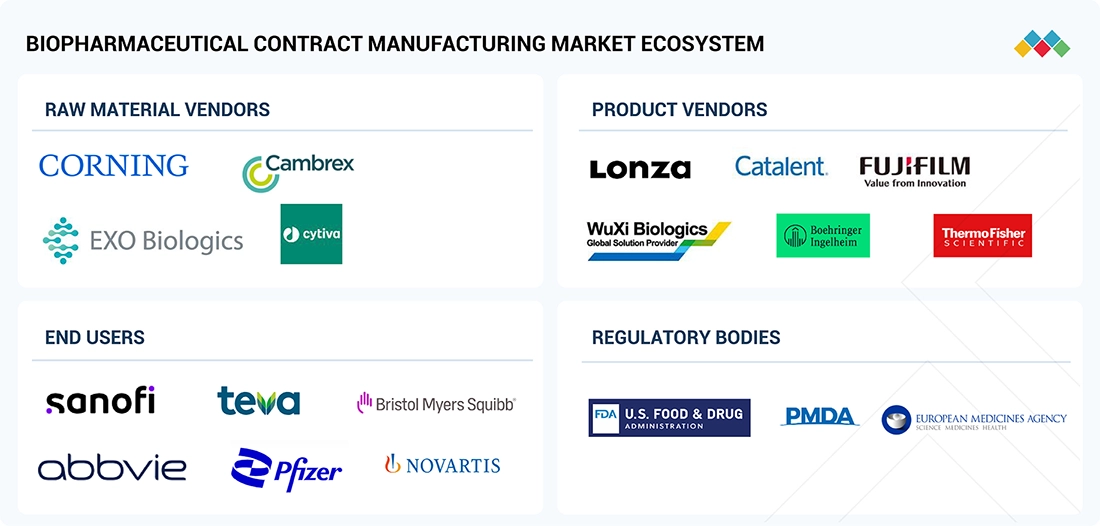
Biopharmaceutical Contract Manufacturing Market: COMMERCIAL USE CASES ACROSS INDUSTRIES
| COMPANY | USE CASE DESCRIPTION | BENEFITS |
|---|---|---|
 |
Moderna collaborated CDMOs like Lonza and Thermo Fisher for large-scale mRNA drug substance manufacturing for COVID-19 vaccine and subsequent mRNA pipeline and fill-finish/packaging for commercial supply. | Rapid global scale-up, de-risked capacity via multi-site network, faster lot release and launch readiness. |
 |
AstraZeneca partnered with Catalent, a biologics CDMO service Provider for sterile fill-finish and packaging of AZD1222 vaccine across regions to meet surge demand. | Speed to market via established aseptic capacity, device/packaging integration, and global cold-chain. |
 |
In collaboration with ACG biologics Novartis expanded its AAV vector manufacturing capacity for commercial gene therapy (Zolgensma) supply. | Added AAV capacity and redundancy; tech-transfer into a specialized CGT network to stabilize supply. |
 |
Sarepta Therapeutics and Catalent (Paragon) developed AAV viral-vector DS/DP for Duchenne gene therapy programs (clinical to launch prep). | Access to high-intensity AAV suites and experienced analytics; shortened clinical material lead times. |
 |
Amgen has partnered with biologics CDMOs like Boehringer Ingelheim (BioXcellence) and Fujifilm Diosynth for Microbial & mammalian DS overflow and lifecycle support for commercial biologics. | Cost-efficient lifecycle manufacturing, dual-sourcing resilience, and proven inspection track record. |
Logos and trademarks shown above are the property of their respective owners. Their use here is for informational and illustrative purposes only.
Related Ecosystem
Biotechnology
- Reagents
- Polymerase Chain Reaction (PCR)
- Stem Cells
- Assay Kits
- Flow Cytometers
- Thermo Fisher Scientific Inc.
- Merck KGaA
- Danaher Corporation
- Agilent Technologies, Inc.
- Bio-Rad Laboratories, Inc.
Pharmaceuticals
- Bioreactors
- Analytical Testing
- Bioanalytical Testing Services
- Cell Counters
- Data Management Services
- Thermo Fisher Scientific Inc.
- Merck KGaA
- SANOFI
- Pfizer Inc.
- NOVARTIS
Key Takeaways
- Rest Of Asia Pacific's biopharmaceutical contract manufacturing market is valued at USD 583.0 million in 2025 and is forecast to reach USD 913.3 million by 2030.
- Rest Of Asia Pacific is experiencing accelerated growth at a 9.4% CAGR, outpacing global average expansion driven by increased outsourcing and biologics demand.
- Rest Of Asia Pacific's competitive advantages include cost-effective manufacturing, skilled workforce availability, and improving regulatory frameworks that attract global pharmaceutical investments.
- Rest Of Asia Pacific is positioned as a key hub for supply chain diversification as multinational companies seek nearshoring and risk mitigation strategies through 2030.
Biopharmaceutical Contract Manufacturing Market Report Scope
| Report Metric | Details |
|---|---|
| Base Year | 2025 |
| Fastest Growing Segment | CELL & GENE THERAPY (Molecule Type) |
| Forecast Period | 2025-2030 |
| Growth Rate | CAGR of 8.8% from 2025 to 2030 |
| Largest Segment | MAMMALIAN EXPRESSION SYSTEMS (Source) |
| Market Size Base Year (Billions) | ~USD 22.4 (2025) |
| Revenue Forecast (Billions) | ~USD 34.15 (2030) |
| Segments Covered | Service, Type, Scale Of Operation, Source, Molecule Type, Therapeutic Area |
Rest Of Asia Pacific Biopharmaceutical Contract Manufacturing Market Report Segmentation
6 segment dimensions are covered across the global market.
By Service
- Formulation & Fill-Finish
- Manufacturing
- Other Services
- Packaging & Labeling
By Type
- Biologic Drug Product Manufacturing
- Biologic Drug Substance Manufacturing
By Scale Of Operation
- Clinical Operations
- Commercial Operations
By Source
- Mammalian Expression Systems
- Non-Mammalian Expression Systems
By Molecule Type
- Antibody-Drug Conjugates
- Cell & Gene Therapy
- Monoclonal Antibodies
- Other Molecules
- Therapeutic Peptides & Proteins
- Vaccines
By Therapeutic Area
- Autoimmune Diseases
- Cardiovascular Diseases
- Infectious Diseases
- Metabolic Diseases
- Neurology
- Oncology
- Other Therapeutic Areas
Target Audience
- Pharmaceutical & Biotech Companies : Manufacturers seeking to expand outsourcing operations in Rest Of Asia Pacific need detailed market intelligence to identify reliable contract manufacturing partners, assess capacity availability, and optimize production costs.
- Contract Manufacturing Organizations (CMOs) : CMOs operating in or expanding into Rest Of Asia Pacific require market data to benchmark competitive positioning, identify growth opportunities, and develop targeted business development strategies for regional pharmaceutical clients.
- Private Equity & Investment Firms : Investors evaluating acquisition targets or portfolio companies in Rest Of Asia Pacific's biopharmaceutical manufacturing sector need comprehensive market analysis to assess growth potential and valuation benchmarks.
- Healthcare Consultants & Advisors : Consulting firms advising pharmaceutical clients on manufacturing strategy, supply chain optimization, and geographic expansion require Rest Of Asia Pacific-specific market data to support client recommendations.
- Government & Regulatory Bodies : Policy makers and regulatory agencies in Rest Of Asia Pacific need market intelligence to develop supportive frameworks, attract foreign investment, and strengthen the region's biopharmaceutical manufacturing competitiveness.
Reasons to Buy this Report
- Market Size & Growth Validation : Obtain precise market valuation data for Rest Of Asia Pacific (USD 583.0M in 2025) with verified 9.4% CAGR projections through 2030, enabling accurate financial forecasting and investment decision-making specific to this high-growth region.
- Regional Competitive Intelligence : Understand Rest Of Asia Pacific's competitive positioning relative to global markets, identify emerging players, and assess regional advantages in cost structure, regulatory compliance, and manufacturing capabilities.
- Strategic Market Entry Planning : Leverage detailed Rest Of Asia Pacific insights to develop targeted market entry strategies, identify partnership opportunities with local contract manufacturers, and optimize resource allocation across the region's diverse markets.
- Investment & Expansion Decisions : Make informed capital allocation decisions for Rest Of Asia Pacific operations with comprehensive market data, growth trajectory analysis, and identification of high-potential sub-markets within the region.
- Risk Assessment & Mitigation : Evaluate regulatory, operational, and market risks specific to Rest Of Asia Pacific's biopharmaceutical manufacturing sector, enabling proactive strategy development and supply chain resilience planning.
Frequently asked questions
What is the market size of biopharmaceutical contract manufacturing in Rest Of Asia Pacific?
Rest Of Asia Pacific's biopharmaceutical contract manufacturing market was valued at USD 583.0 million in 2025 and is projected to reach USD 913.3 million by 2030.
What is the growth rate for Rest Of Asia Pacific's biopharmaceutical contract manufacturing market?
Rest Of Asia Pacific is expected to grow at a compound annual growth rate (CAGR) of 9.4% from 2025 to 2030.
What factors are driving growth in Rest Of Asia Pacific's contract manufacturing sector?
Rest Of Asia Pacific's growth is driven by increased pharmaceutical outsourcing, rising demand for biologics manufacturing, cost-effective production capabilities, and expanding healthcare infrastructure investments.
Why is Rest Of Asia Pacific attractive for biopharmaceutical contract manufacturing?
Rest Of Asia Pacific offers competitive advantages including lower manufacturing costs, a skilled workforce, improving regulatory compliance frameworks, and strategic geographic positioning for supply chain diversification.
How does Rest Of Asia Pacific's growth compare to the global market?
Rest Of Asia Pacific's 9.4% CAGR exceeds the global biopharmaceutical contract manufacturing CAGR of 8.8%, indicating faster regional expansion and increasing market significance.
RESEARCH METHODOLOGY
This research study extensively utilized secondary sources, directories, and databases to gather valuable information for analyzing the global biopharmaceutical contract manufacturing market. In-depth interviews were conducted with a variety of primary respondents, including key industry participants, subject-matter experts (SMEs), C-level executives from major market players, and industry consultants. These interviews were essential for obtaining and verifying critical qualitative and quantitative information, as well as assessing the growth prospects of the market. The global market size estimated through secondary research was then validated and refined using inputs from primary research to determine the final market size.
Secondary Research
Secondary research was primarily utilized to gather information for a comprehensive study focused on the biopharmaceutical contract manufacturing market, emphasizing technical and commercial aspects. The sources consulted for this research included Pharmaceutical Research and Manufacturers of America (PhRMA), European Federation of Pharmaceutical Industries and Associations (EFPIA), Bioprocess and Biosystems Engineering, Bioprocess International, PLOS Biology, European Medicines Agency (EMA), Pharma & Biopharma Outsourcing Association (PBOA), Generics and Biosimilars Initiative (GaBI), Parenteral Drug Association (PDA), American Association of Pharmaceutical Scientists (AAPS), Global Cancer Observatory, American Chemical Society, National Center for Biotechnology Information (NCBI), Food and Drug Administration (FDA), Biotechnology and Biological Sciences Research Council (BBSRC), and World Journal of Pharmaceutical Sciences.
In addition to these sources, the study also included corporate and regulatory filings such as annual reports, SEC filings, investor presentations, and financial statements. Other resources included business magazines, research journals, press releases, and information from trade, business, and professional associations, along with analyses from MarketsandMarkets. These sources were instrumental in acquiring essential information about key market players, classifications, and segmentation based on industry trends, regional and country-level markets, market developments, and technological perspectives.
Primary Research
After conducting an initial assessment of the global biopharmaceutical contract manufacturing market through secondary research, we carried out comprehensive primary research. This involved conducting in-depth interviews with experts from the demand side, including stakeholders from pharmaceutical and biotechnology companies, contract research organizations (CROs), contract manufacturing organizations (CMOs), and academic and research institutions.
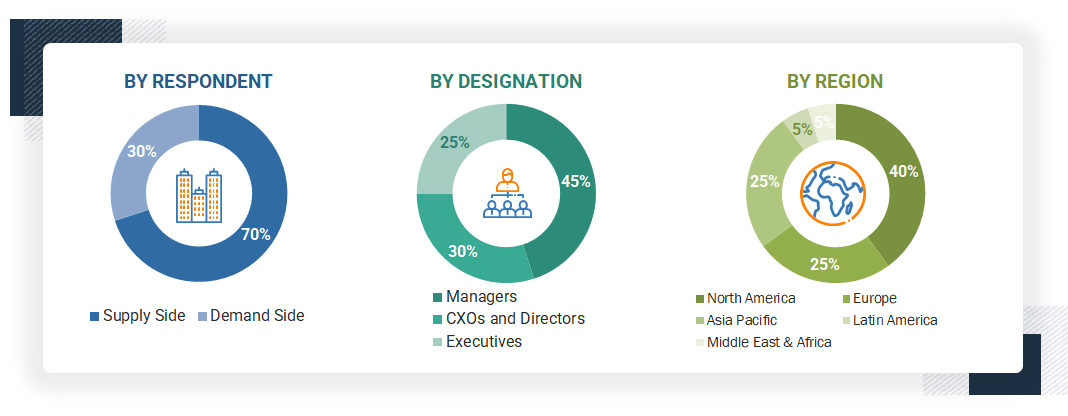
Additionally, we interviewed key supply-side participants, such as C-suite executives, senior executives, product managers, and marketing and sales leaders from leading manufacturers, distributors, and channel partners. Our research focused on six major geographical regions: North America, Europe, Asia Pacific, Latin America, the Middle East, and Africa. Approximately 70% of the primary interviews were conducted with supply-side participants, while 30% involved demand-side experts.
Data collection methods included structured questionnaires, email correspondence, online surveys, personal interviews, and telephone discussions to gain a comprehensive understanding of the market dynamics.
The following is a breakdown of the primary respondents:
To know about the assumptions considered for the study, download the pdf brochure
Market Size Estimation
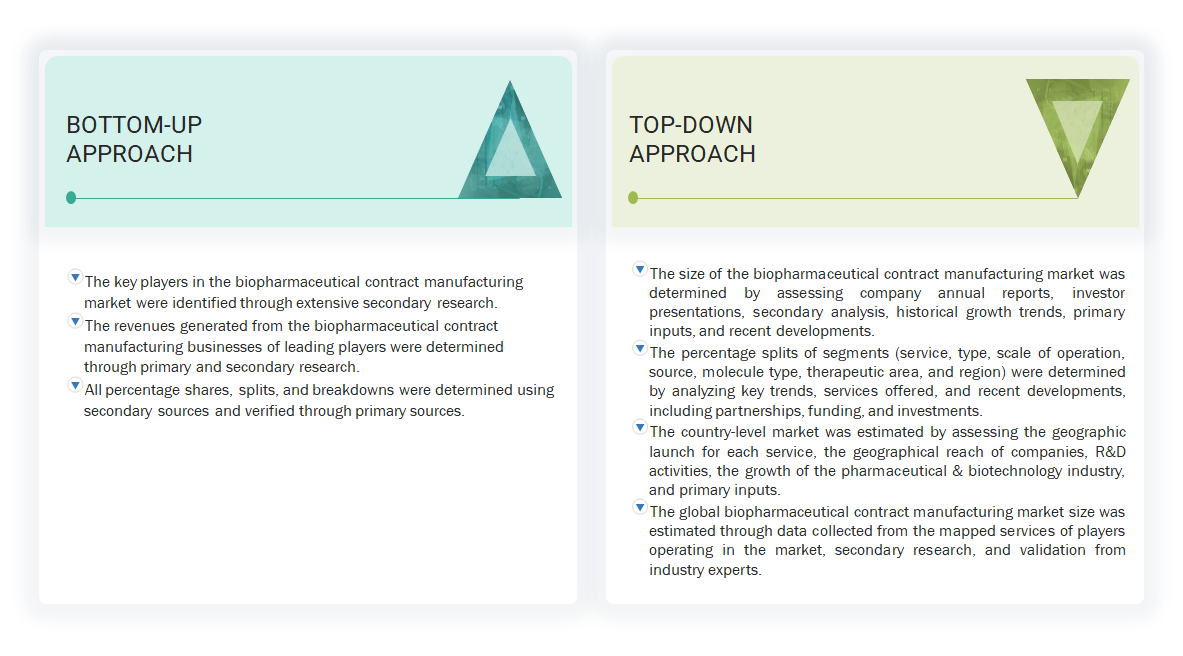
Both bottom-up and top-down approaches were used to estimate and validate the total size of the biopharmaceutical contract manufacturing market. These methods were also used extensively to estimate the size of various subsegments in the market. The research methodology used to estimate the market size includes the following:
- A list of the major global players operating in the biopharmaceutical contract manufacturing market was generated.
- The revenues generated from their services have been determined through annual reports and secondary sources (including paid databases).
- The services were mapped according to market segments. Percentage shares and splits were determined based on the revenue contributed to each segment. This was verified using secondary sources and industry experts.
- All assumptions, approaches, and individual shares/revenue estimates were validated through expert interviews.
Global Biopharmaceutical Contract Manufacturing Market Size: Bottom-up and Top-down Approach
Data Triangulation
After estimating the total market size, it was divided into several segments and subsegments. To refine the overall market analysis and obtain accurate statistics for each segment and subsegment, we employed data triangulation and market breakdown procedures wherever applicable. This involved studying various factors and trends from both the demand and supply sides to validate the findings.
Market Definition
Biopharmaceutical contract manufacturing involves outsourcing biological manufacturing services to specialized organizations known as contract manufacturing organizations (CMOs). Biologics are intricate pharmaceutical products derived from living organisms, including proteins, peptides, nucleic acids, cells or tissues, and other molecules produced through biotechnology. The market study encompasses an assessment of various services, sources, types, scales of operation, molecules, and therapeutic areas within the field of biopharmaceutical contract manufacturing.
Stakeholders
- Pharmaceutical and Biotechnology Companies
- Research and Consulting Firms
- Academic Medical Centers
- Government Research Organizations
- Clinical Research Institutes
- Contract Research Organizations
- Pharmaceutical Distributors and Suppliers
- Corporate Entities
- Contract Development and Manufacturing Organizations
Report Objectives
- To define, describe, and forecast the biopharmaceutical contract manufacturing market based on service, type, source, scale of operation, molecule type, therapeutic area, and region
- To provide detailed information regarding the major factors influencing market growth (such as drivers, restraints, opportunities, and challenges)
- To strategically analyze micromarkets concerning individual growth trends, prospects, and contributions to the biopharmaceutical contract manufacturing market
- To analyze the opportunities in the market for stakeholders and provide details of the competitive landscape for market leaders
- To forecast the size of the market segments concerning six main regions—North America, Europe, the Asia Pacific, Latin America, the Middle East, and Africa
- To profile the key players in the global biopharmaceutical contract manufacturing market and comprehensively analyze their service portfolios, market positions, and core competencies
- To track and analyze competitive developments such as service launches, expansions, agreements, and collaborations in the biopharmaceutical contract manufacturing market
- To benchmark players within the biopharmaceutical contract manufacturing market using the company evaluation matrix framework, which analyzes market players based on various parameters within the broad categories of business and service strategy
Get the Full Biopharmaceutical Contract Manufacturing Market Report
Full forecast, segment splits, and company analysis for all Biopharmaceutical Contract Manufacturing Market.
- US Biopharmaceutical Contract Manufacturing Market
- Canada Biopharmaceutical Contract Manufacturing Market
- Germany Biopharmaceutical Contract Manufacturing Market
- UK Biopharmaceutical Contract Manufacturing Market
- France Biopharmaceutical Contract Manufacturing Market
- Italy Biopharmaceutical Contract Manufacturing Market
- Spain Biopharmaceutical Contract Manufacturing Market
- Switzerland Biopharmaceutical Contract Manufacturing Market
- Ireland Biopharmaceutical Contract Manufacturing Market
- China Biopharmaceutical Contract Manufacturing Market
- Japan Biopharmaceutical Contract Manufacturing Market
- India Biopharmaceutical Contract Manufacturing Market
- South Korea Biopharmaceutical Contract Manufacturing Market
- Brazil Biopharmaceutical Contract Manufacturing Market
- Mexico Biopharmaceutical Contract Manufacturing Market
- Rest Of Europe Biopharmaceutical Contract Manufacturing Market
- Rest Of Latin America Biopharmaceutical Contract Manufacturing Market
Need a Tailored Report?
Customize this report to your needs
Get 10% FREE Customization
Customize This Report
