Medical Device Contract Manufacturing Market

Medical Device Contract Manufacturing Market by Device (IVD, Drug Delivery, Surgical, Orthopedic Implants), Class of Device (Class I, II, III), and Service (QMS, Process Development, Device & Component Manufacturing, Packaging) – Global Forecast to 2031


MEDICAL DEVICE CONTRACT MANUFACTURING MARKET SIZE, SHARE & GROWTH SNAPSHOT
Source: Secondary Research, Interviews with Experts, MarketsandMarkets Analysis
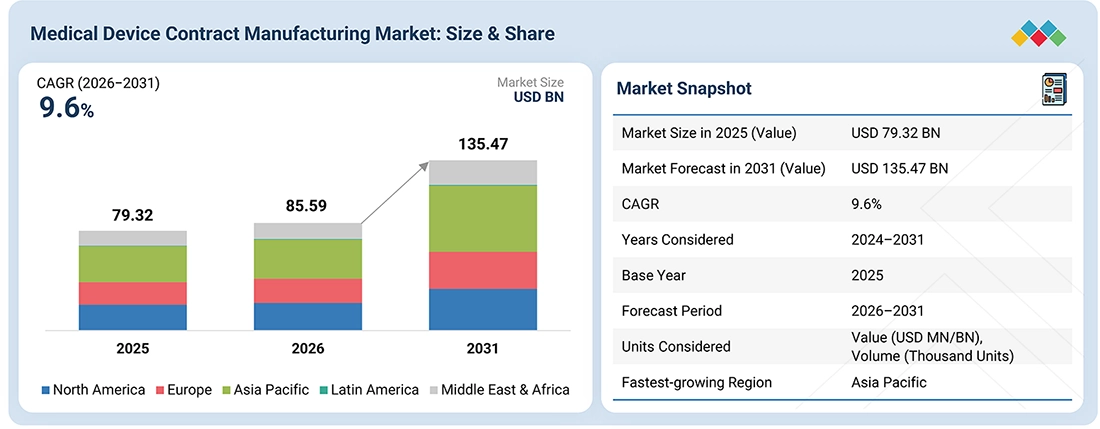
The global medical device contract manufacturing market is projected to grow from USD 85.59 billion in 2026 to USD 135.47 billion by 2031, at a CAGR of 9.6% during the forecast period. The market was valued at USD 79.32 billion in 2025. Demand is rising as device makers in developing countries expand production and as new device modalities call for specialized tooling, materials and process control. Higher healthcare spending, growing awareness of care options and a larger geriatric population add to that pull. OEMs increasingly hand design, validation and high-precision production to outside partners rather than build the capacity themselves. Alongside this, advanced automation, digital manufacturing and integrated design-to-manufacturing offerings are changing what contract manufacturers sell and how they win programs.
KEY TAKEAWAYS
-
MARKET SNAPSHOT:
Base Year Market Size (2025): USD 79.32 Billion
Current Market Size (2026): USD 85.59 Billion
Forecast Market Size (2031): USD 135.47 Billion
CAGR (2026–2031): 9.6% -
SEGMENT LEADERSHIP:
Fastest-Growing Region: Asia Pacific is projected to grow at the highest CAGR of 11.0% from 2026 to 2031.
Device Type Leader: IVD devices accounted for the largest share of 19.2% in 2025.
Device Class Leader: Class I devices accounted for the largest share of 60.7% in 2025.
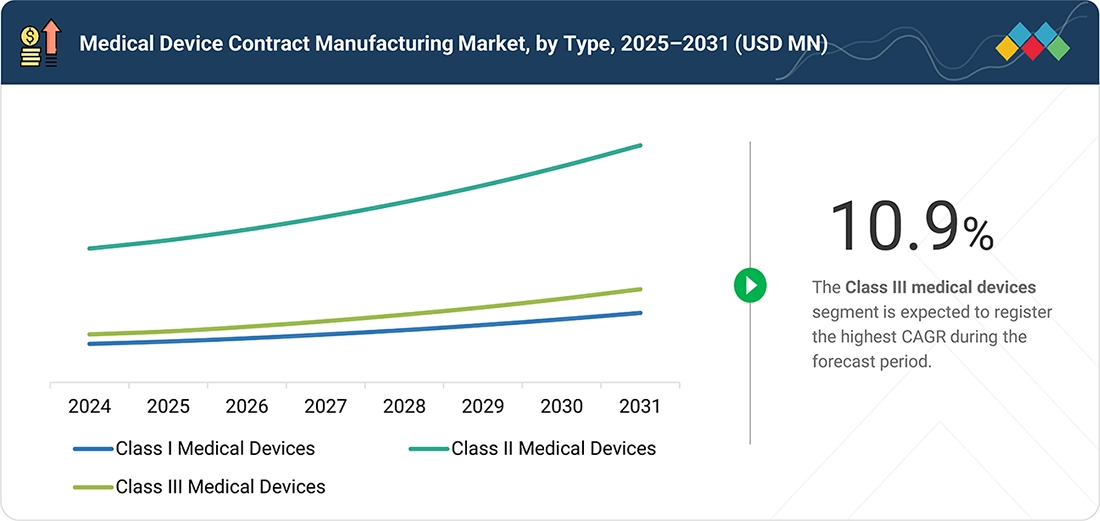
Fastest-Growing Device Class: Class III devices are projected to grow at the highest CAGR of 10.9% from 2026 to 2031.
Service Leader: Device development & manufacturing services accounted for a share of 69.1% in 2025. -
MARKET OUTLOOK & COMPETITIVE LANDSCAPE:
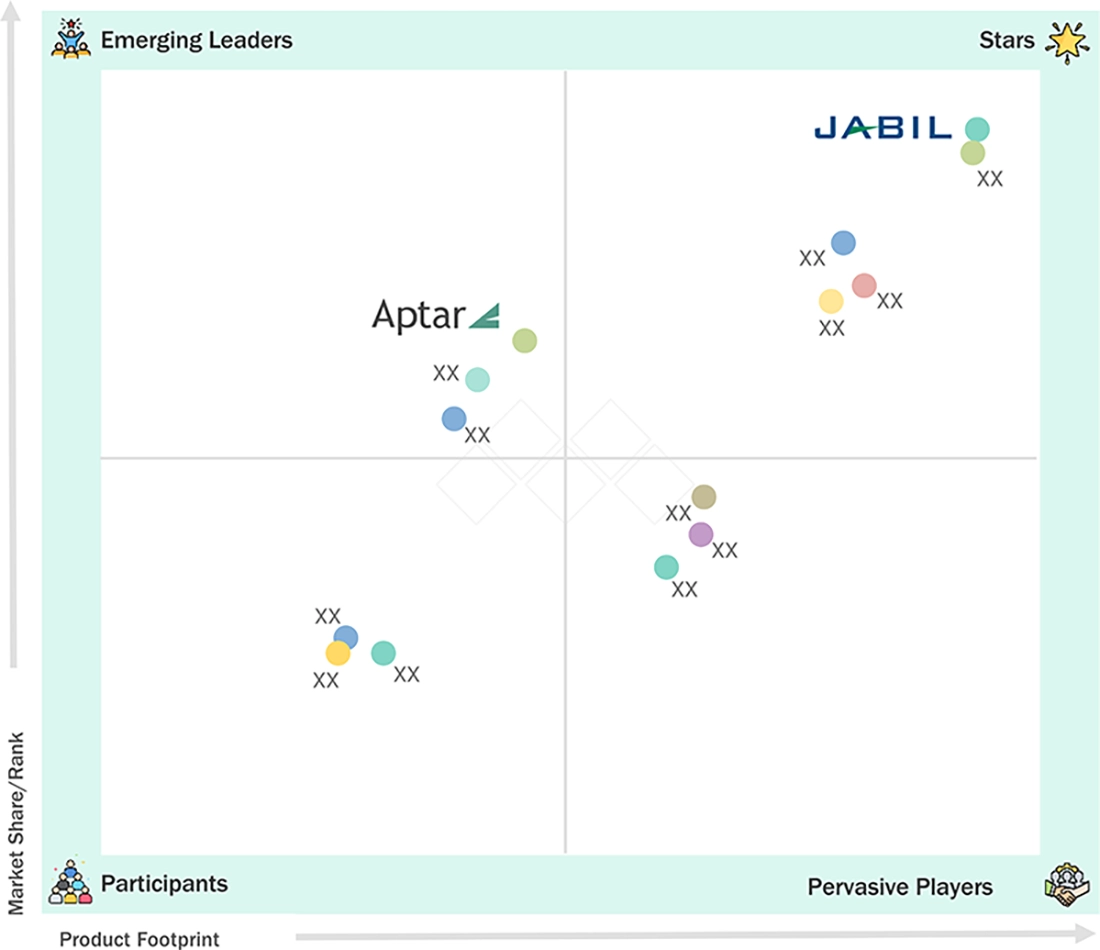
Jabil sits in the Stars quadrant of the evaluation matrix. Flex, Integer, Sanmina, and Plexus are the other leaders, backed by broad capabilities from design through high-volume assembly.
Mehow and Cirtec Medical compete by specializing more narrowly, serving niche device programs with flexible production.
The medical device contract manufacturing market is expanding steadily, driven by medical device and healthcare companies increasingly outsourcing design, development, manufacturing, assembly, and lifecycle services to reduce manufacturing complexity and accelerate commercialization. The market is increasingly shifting toward integrated, end-to-end contract manufacturing solutions, supported by advancements in automation, precision manufacturing, injection molding, electronics integration, and digital supply-chain management. Growth through 2031 rests on OEMs outsourcing more of the device lifecycle, higher-class and higher-complexity devices gaining weight, and production moving toward Asia Pacific. Contract manufacturers that pair regulatory know-how with automation and end-to-end supply chain control are best placed to convert that demand into long-term programs.
TRENDS & DISRUPTIONS IMPACTING CUSTOMERS' CUSTOMERS
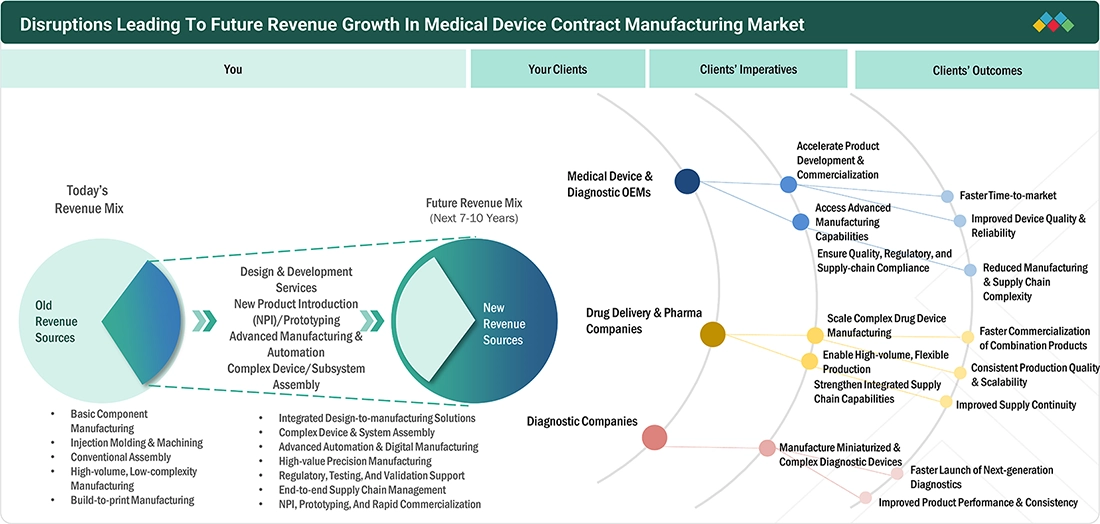
Contract manufacturers are moving away from build-to-print work toward higher-value revenue. Basic component manufacturing, injection molding and machining, conventional assembly and high-volume, low-complexity production are giving way to integrated design-to-manufacturing, complex device and system assembly, and advanced automation and digital manufacturing. Precision manufacturing, regulatory, testing and validation support, end-to-end supply chain management and new product introduction (NPI), prototyping and rapid commercialization are also growing in importance. New use cases, emerging technologies, a widening ecosystem of partners and clients, and M&A activity are driving the change. The shift reaches the clients that depend on these suppliers. Medical device and diagnostic OEMs want faster development cycles and dependable regulatory support. Drug delivery and pharma companies need precision components and assembly that meet strict quality requirements. Diagnostic companies look for scalable, cost-controlled production as test volumes grow. Contract manufacturers that can meet these needs from one integrated platform gain a clear advantage.
Source: Secondary Research, Interviews with Experts, MarketsandMarkets Analysis
MARKET DYNAMICS

Level
-
Growing medical devices market in developing countries

-
Technological advancements in medical device modalities


Level
-
Intellectual property and confidentiality concerns

-
Pricing pressure from OEM customers


Level
-
Increasing healthcare expenditure, infrastructure, and awareness in developing economies

-
Rising geriatric population and increasing incidence of associated diseases


Level
-
Lack of constant innovation to balance technological capabilities against costs

-
Balancing cost reduction with quality

Source: Secondary Research, Interviews with Experts, MarketsandMarkets Analysis
Driver: Technological advancements in medical device modalities
Newer device types, including connected diagnostics, minimally invasive tools and combination products, need precision molding, micro-assembly, electronics integration and sterile handling. Few OEMs maintain all of these in-house. Contract partners with advanced automation and validation depth can take on these programs, which also earn higher margins than commodity work.
Restraint: Intellectual property and confidentiality concerns
OEMs hesitate to share proprietary designs and process know-how with outside manufacturers. Fear of leakage, copying or dependence on a single supplier can push firms to keep critical work in-house or split it across several vendors. Contract manufacturers counter with strict data controls, segregated production lines and clear contractual protections, but the concern still slows some outsourcing decisions.
Opportunity: Increasing healthcare expenditure, infrastructure, and awareness in developing economies
Higher public and private spending, along with new hospitals and diagnostic centers, expands the need for devices. Rising awareness of screening and chronic disease management adds demand for diagnostics and therapeutic devices. Providers that set up regional sites or partner locally can capture this volume early.
Challenge: Balancing cost reduction with quality
Regulators expect consistent quality and full traceability, while customers press for lower costs. Cutting costs without weakening validation, inspection, or documentation is a constant trade-off. A single quality failure can trigger recalls and damage relationships, which makes this a high-impact challenge.
MEDICAL DEVICE CONTRACT MANUFACTURING MARKET: COMMERCIAL USE CASES ACROSS INDUSTRIES
| COMPANY | USE CASE DESCRIPTION | BENEFITS |
|---|---|---|
 |
End-to-end CDMO for regulated devices leveraging ISO 13485 medical sites and 14 FDA-registered facilities to execute complex injection molding, precision plastics, electronics integration, and automated assembly at global scale. | Accelerates time-to-market with vertically integrated plastics, PCBA, systems build, and digital supply chain that de-risks components across thousands of suppliers and millions of parts, enabling rapid scale-up with compliance built in. |
 |
Contract development and manufacturing for Class II/III devices, instruments, and capital equipment with design engineering and lifecycle services across medical devices, orthopedics, and diagnostics. | Reduces cost and complexity through vertically integrated manufacturing and global execution, supporting complex catheter, RAS, and chronic care products while maintaining a patient-focused quality culture. |
 |
Specialized medical device outsourcing with design-through-manufacture of interventional, cardiovascular, and neuromodulation devices plus batteries and catheters for OEM programs. | Enhances program success through deep domain know-how and vertically integrated capabilities that minimize risk and speed product transfers for high-reliability implantables and minimally invasive platforms. |
 |
Turnkey design, build, and service of complete medical systems including imaging, diagnostics, surgical robotics, and high-volume disposables via ISO 13485 network with FDA-registered sites and NPI facilities worldwide. | Improves reliability and uptime with integrated PCB/PCBA, systems assembly, testing, and global repair/refurbishment, enabling lifecycle support and rapid regional transfers under validated processes. |
 |
Concept-to-market outsourcing with proven FDA Class II/III experience, providing product development, regulatory, manufacturing, and aftermarket services for complex devices across imaging, monitoring, and therapeutics. | Shortens commercialization cycles via full value-stream solutions, robust transition teams, and global compliance to scale efficiently while mitigating supply risks. |
Logos and trademarks shown above are the property of their respective owners. Their use here is for informational and illustrative purposes only.
MARKET ECOSYSTEM
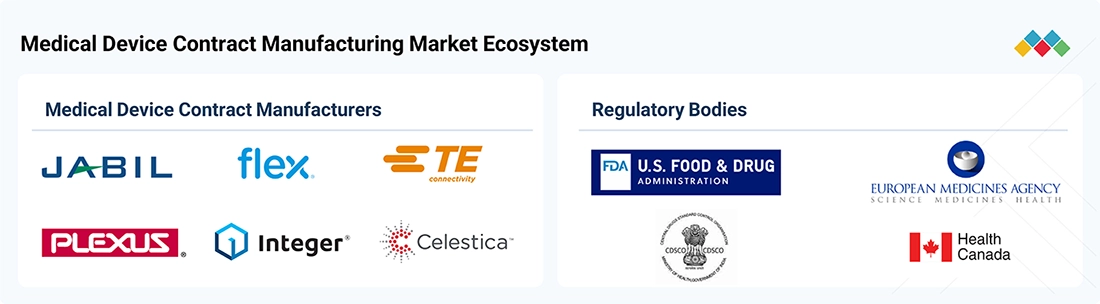
The medical device contract manufacturing ecosystem links the manufacturers that build devices and components, the regulators that set the rules, and the end users that commission the work. Each group shapes what a contract manufacturer must offer. The leading key players tier includes Jabil, Flex, Sanmina, Celestica, TE Connectivity, Plexus and Integer, which combine global footprints with broad engineering and supply chain capabilities. Gerresheimer adds a strong position in drug delivery and plastic-based medical components. A specialist tier covers precision molding, packaging and niche device programs. The US FDA classifies devices, sets quality system and manufacturing requirements, and inspects facilities. The European Medicines Agency (EMA) oversees the European framework, including its role for drug-device combination products. India's Central Drugs Standard Control Organization (CDSCO) regulates device import, manufacture and sale in India. Health Canada licenses devices and sets quality expectations for the Canadian market. Contract manufacturers must meet each body's requirements in the regions they supply. Medical device and diagnostic OEMs seek design support, regulatory know-how and scalable production. Drug delivery and pharma companies require precision components, cleanliness and strict validation for combination products. Diagnostic companies want cost-efficient, high-volume assembly that can scale with test demand.
Logos and trademarks shown above are the property of their respective owners. Their use here is for informational and illustrative purposes only.
MARKET SEGMENTS
Source: Secondary Research, Interviews with Experts, MarketsandMarkets Analysis
Medical Device Contract Manufacturing Market, By Device
IVD accounted for the largest share, at 19.2% in 2025. IVD products are high-volume, consumable-heavy and tightly regulated, which suits outsourced precision molding and assembly. Steady testing demand keeps programs running at scale. Diabetes Care is projected to grow fastest, at a CAGR of 11.2% from 2026 to 2031. Growth there follows the rising prevalence of diabetes and wider use of injectable and wearable delivery and monitoring devices.
Medical Device Contract Manufacturing Market, By Class of Device
Class II accounted for the largest share, at 60.7% in 2025, valued at USD 48.18 billion. Class II covers moderate-risk devices, which make up a large part of the product mix in diagnostics, imaging, drug delivery, surgical and monitoring categories. These devices are made in high volumes and need controlled, well-documented processes rather than the most intensive implant-level validation. That profile suits contract manufacturers with mature quality systems and scalable production.
Medical Device Contract Manufacturing Market, By Service
Device development & manufacturing services accounted for the largest share, at 69.1% in 2025. The segment covers the work OEMs most often outsource: design support, prototyping, tooling, NPI and full-scale production of components and finished devices. It dominates because contract partners add the most value here. Few OEMs want to fund precision molding, micro-assembly, electronics integration and cleanroom capacity on their own, especially as devices grow more complex. Bundling development with manufacturing also shortens the path from concept to launch, since one partner carries a program through design transfer, validation and volume ramp.
REGION
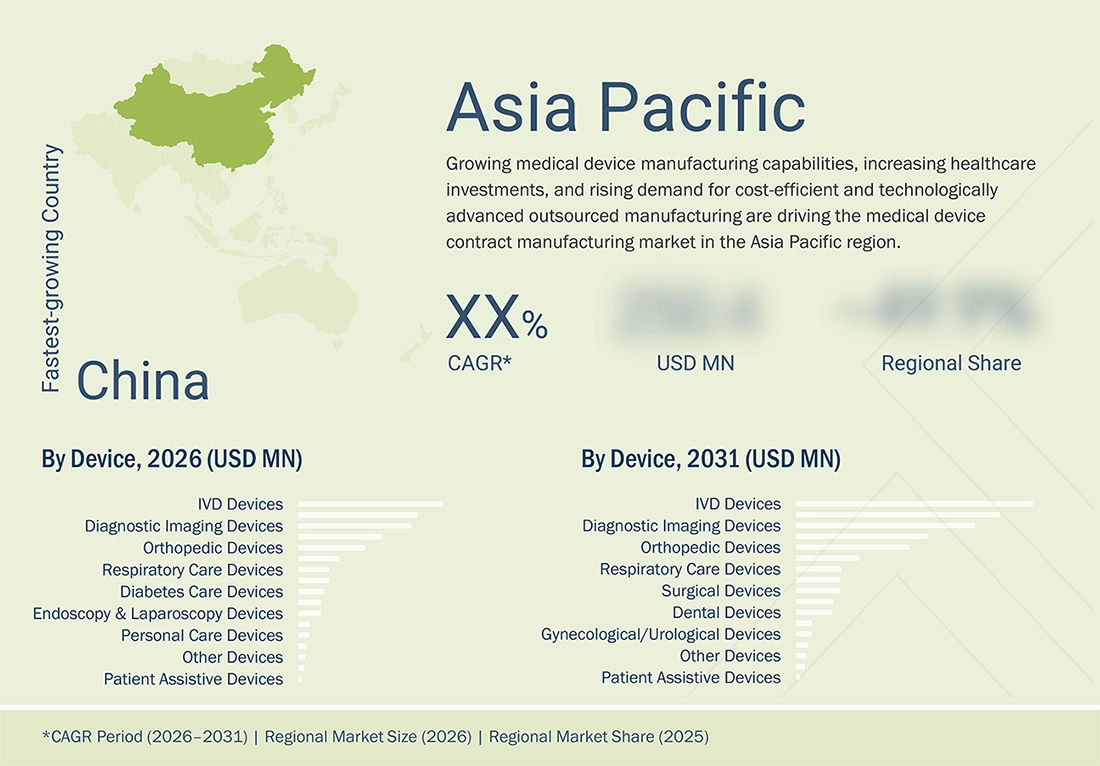
Asia Pacific to be fastest-growing region in global medical device contract manufacturing market during forecast period
Asia Pacific was valued at USD 28.59 billion in 2025 and is projected to reach USD 52.58 billion by 2031, at a 11.0% CAGR from 2026 to 2031. China is the region's fastest-growing country. Its large manufacturing base, government backing for domestic device makers and growing healthcare spending draw both local and global OEMs. Expanding hospital infrastructure, a rising middle class, an aging population and wider access to diagnostics add to demand across the region. Competitive labor and production costs, together with improving regulatory frameworks and a deepening supplier base, make the region attractive for outsourced production.
MEDICAL DEVICE CONTRACT MANUFACTURING MARKET: COMPANY EVALUATION MATRIX
Jabil is positioned in the Stars quadrant of the 2025 evaluation matrix. The company combines a broad healthcare portfolio with design-to-manufacturing capability, precision molding, advanced automation and a wide global footprint. Continued capacity investment, including new healthcare facilities in the US, supports its position. Aptar (Aptar Pharma) is positioned among the Emerging Leaders. Its focus on drug delivery systems and precision dispensing components gives it a specialized offering, and its growing programs with pharma customers point to rising influence as combination products expand.
Source: Secondary Research, Interviews with Experts, MarketsandMarkets Analysis
KEY MARKET PLAYERS
- Jabil Inc. (US)
- Flex Ltd. (Singapore)
- Plexus Corp. (US)
- Sanmina Corporation (US)
- Integer Holdings Corporation (US)
- Celestica Inc. (Canada)
- TE Connectivity Ltd. (Switzerland)
- West Pharmaceutical Services, Inc. (US)
- Benchmark Electronics Inc. (US)
- AptarGroup, Inc. (Aptar Pharma) (US)
- Gerresheimer AG (Germany)
- Kimball Electronics, Inc. (US)
- Nortech Systems, Inc. (US)
- Carclo plc (UK)
- Nolato GW, Inc., a part of Nolato AB (Sweden)
- Nemera (France)
- Viant Medical Holdings, Inc. (US)
- Tecomet, Inc. (US)
- Phillips-Medisize Corporation (US)
- Cirtec Medical (US)
MARKET SCOPE
| REPORT METRIC | DETAILS |
|---|---|
| Market Size in 2025 (Value) | USD 79.32 Billion |
| Market Forecast in 2026 (Value) | USD 85.59 Billion |
| Market Forecast in 2031 (Value) | USD 135.47 Billion |
| Growth Rate | CAGR of 9.6% from 2026–2031 |
| Years Considered | 2024–2031 |
| Base Year | 2025 |
| Forecast Period | 2026–2031 |
| Units Considered | Value (USD Million/Billion), Volume (Thousand Units) |
| Report Coverage | Revenue Forecast, Company Ranking, Competitive Landscape, Growth Factors, and Trends |
| Segments Covered |
|
| Regions Covered | North America, Europe, Asia Pacific, Latin America, Middle East & Africa |
WHAT IS IN IT FOR YOU: MEDICAL DEVICE CONTRACT MANUFACTURING MARKET REPORT CONTENT GUIDE
DELIVERED CUSTOMIZATIONS
We have successfully delivered the following deep-dive customizations:
| CLIENT REQUEST | CUSTOMIZATION DELIVERED | VALUE ADDS |
|---|---|---|
| Product Analysis | Comparative analysis of device categories (IVD, cardiovascular, drug delivery, orthopedic, diabetes care) covering outsourcing intensity, growth outlook, and service mix. | Helps the client rank device categories by attractiveness and focus capacity investment. |
| Company Information | Profiles of Jabil, Flex, Plexus, Sanmina, and Integer, covering their service portfolios, regional footprints, recent expansions, and strategic moves. | Supports benchmarking, partner selection, and competitor tracking. |
| Geographic Analysis | Country-level drill-down of the Rest of Asia Pacific, covering demand drivers, regulatory environment, and manufacturing cost factors. | Identifies priority countries for sourcing, site selection, and market entry. |
RECENT DEVELOPMENTS
- April 2026 : Jabil entered into a non-exclusive strategic collaboration with Switzerland-based HSE•AG to support the development and scalable manufacturing of laboratory instrumentation and diagnostic devices. The partnership combines HSE’s diagnostic engineering expertise with Jabil’s healthcare manufacturing capabilities, focusing on manufacturability, supply-chain optimization, and faster time-to-market.
- March 2025 : Flex announced the opening of its new product introduction (NPI) center near Boston, Mass., serving healthcare customers. The center serves as a gateway to manufacturing, supporting end-to-end product development from prototype to preclinical builds, design verification, and production transfer, helping customers bring products to market faster, at scale, and with less risk.
- February 2025 : Integer acquired substantially all of the assets of Precision Coating, a privately held manufacturer specializing in high-value surface coating technology platforms, including fluoropolymer, anodic coatings, ion treatment solutions and laser processing, on Jan. 7, 2025, for USD 152 million, subject to adjustment for additional contingent consideration.
Table of Contents
 Exclusive indicates content/data unique to MarketsandMarkets and not available with any competitors.
Methodology
This research study extensively utilized both primary and secondary sources. It involved analyzing various factors influencing the industry to identify segmentation types, industry trends, key players, the competitive landscape, key market dynamics, and strategies employed by key players.
Secondary Research
This research study utilized a variety of comprehensive secondary sources, including directories, databases such as Bloomberg Business, Factiva, and Dun & Bradstreet, white papers, annual reports, company house documents, investor presentations, and SEC filings from various companies. Secondary research was employed to gather information crucial for an in-depth, technical, market-oriented, and commercial analysis of the medical device contract manufacturing market. This approach also helped identify key industry players and enabled classification and segmentation based on emerging trends at the most detailed level. Furthermore, significant developments from both market and technological perspectives were documented. A database of primary industry leaders was created as part of this secondary research.
Primary Research
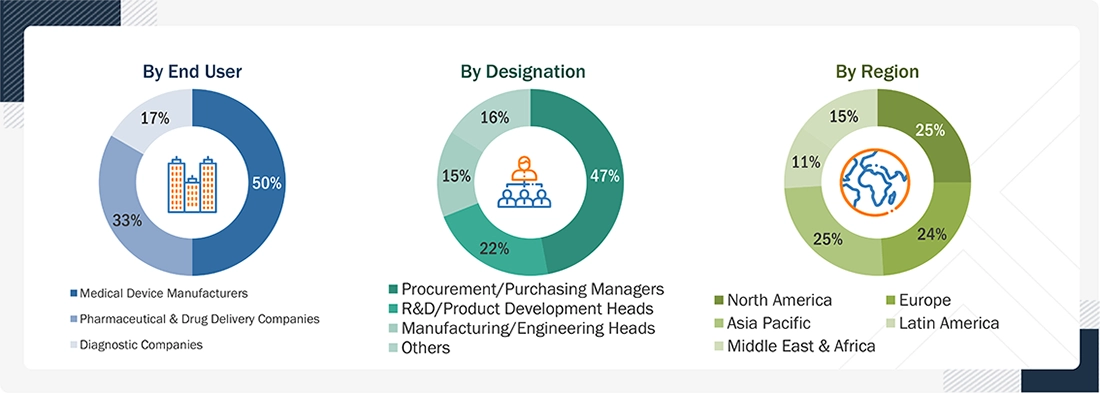
In the primary research process, a range of sources from both the supply and demand sides were interviewed to gather qualitative and quantitative information for this report. Primary sources from the supply side included project/sales/marketing/business development managers; presidents; CEOs; vice presidents; chairpersons; chief operating officers; chief strategy officers; directors; chief information officers; and chief medical information officers in the medical device contract manufacturing market.
A breakdown of the primary respondents is provided below:
BREAKDOWN OF PRIMARY INTERVIEWS: SUPPLY-SIDE PARTICIPANTS, BY COMPANY TYPE, DESIGNATION, AND REGION
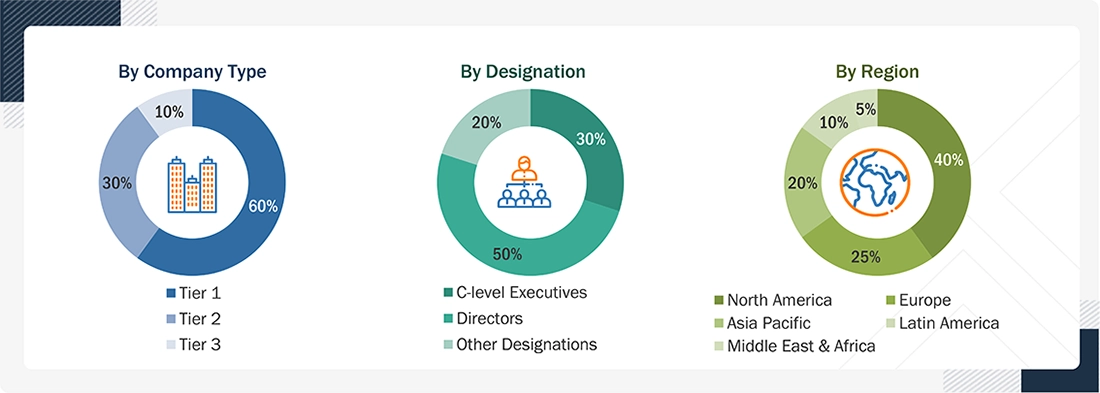
Note 1: Tiers are defined based on a company’s total revenue. As of 2025: Tier 1 = >USD 1 billion, Tier 2 = USD 500 million to USD 1 billion, and Tier 3 = <USD 500 million.
Note 2: C-level executives include CEOs, COOs, CTOs, and VPs. Other designations include sales, marketing, and product managers.
BREAKDOWN OF PRIMARY INTERVIEWS: DEMAND-SIDE PARTICIPANTS, BY END USER, DESIGNATION, AND REGION
To know about the assumptions considered for the study, download the pdf brochure
Market Size Estimation
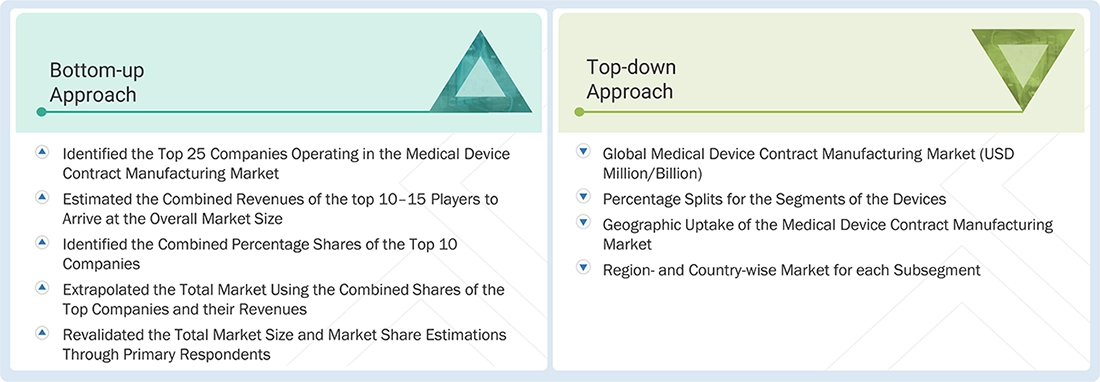
We determined the total size of the medical device contract manufacturing market by triangulating data from three approaches, as described below. After each approach, we calculated a weighted average of the three approaches based on the level of assumptions used in each approach.
Medical Device Contract Manufacturing Market: Top-Down and Bottom-Up Approach
Data Triangulation
After arriving at the market size, the total market was divided into several segments and subsegments. Data triangulation and market breakdown procedures were used, where applicable, to complete the overall market engineering process and arrive at exact statistics for all segments and subsegments.
Market Definition
The medical device contract manufacturing market refers to the outsourcing of medical device-related activities, including design and development, prototyping, component manufacturing, assembly, testing, packaging, and other value-added manufacturing services, to specialized third-party contract manufacturers by medical device OEMs, pharmaceutical and drug delivery companies, diagnostic companies, and other healthcare companies.
Key Stakeholders
- Medical device OEMs and medtech start-ups
- Pharmaceutical and biotech companies developing combination products
- Medical device contract manufacturers and CDMOs
- Component, raw material, and resin suppliers
- Packaging, labeling, and sterilization service providers
- Testing and validation laboratories
- Hospitals, clinics, and diagnostic laboratories
- Distributors and group purchasing organizations
- Venture capitalists and investors
- Market research and consulting firms
- Government associations
Report Objectives
- To define, describe, and forecast the medical device contract manufacturing market by device type, device class, service, and region
- To provide detailed information about the factors influencing market growth (such as drivers, restraints, opportunities, and challenges)
- To analyze micromarkets with respect to individual growth trends, prospects, and contributions to the overall market
- To analyze market opportunities for stakeholders and provide details of the competitive landscape for key players
- To forecast the size of the market in five main regions (along with their respective key countries): North America, Europe, Asia Pacific, Latin America, and the Middle East & Africa
- To profile the key players in the market and comprehensively analyze their core competencies and market shares
- To track and analyze competitive developments such as acquisitions, product launches, expansions, collaborations, agreements, and partnerships
Available customizations:
With the given market data, MarketsandMarkets offers customizations to meet your company’s specific needs. The following customization options are available for the report:
Company Information
-
Detailed analysis and profiling of additional market players (up to 5)
Geographic Analysis
-
Further breakdown of the Rest of Europe market into Ireland, Switzerland, Poland, Belgium, Austria, and Sweden; the Rest of Asia Pacific market into Singapore, Malaysia, Taiwan, Thailand, Vietnam, and Indonesia; and the Rest of Latin America market into Argentina, Colombia, Chile, and Costa Rica.
Competitive Landscape Assesment
-
Market share analysis for North America and Europe, which provides market shares of the top 3–5 key players in the medical device contract manufacturing market
Key Questions Addressed by the Report
Which is the largest segment of the medical device contract manufacturing market, by device type?
Based on device type, IVD devices are the largest segment of the medical device contract manufacturing market. IVD tests can deliver results in minutes or hours, compared to traditional methods that may take days or even weeks, which is expected to drive the segment's growth.
Which is the largest segment of the medical device contract manufacturing market, by class of device?
On the basis of the class of device, Class III is the largest segment of the medical device contract manufacturing market. The class III devices ensure greater reliability and effectiveness compared to devices in lower classifications, which is expected to drive the segment growth.
Which is the largest segment of the medical device contract manufacturing market, by service?
Based on the service, the segment is segmented into device development and manufacturing services, quality management services, packaging & assembly services, and other services. The packaging & assembly services have the largest share in the medical device contract manufacturing market, as effective packaging and assembly processes are fundamental for ensuring the safety and efficacy of medical devices, which is expected to drive the segment growth.
Which country/region occupies the largest share of the medical device contract manufacturing market globally?
The Asia Pacific occupied the largest share of the market in 2024. This is due to several factors, such as rising technological advancements and a growing geriatric population in the Asia Pacific region.
What is the impact of the recession on the medical device contract manufacturing market?
The negative impacts can occur during economic downturns, when individuals and governments tend to tighten their budgets, potentially leading to decreased expenditure on elective medical procedures. This can translate to lower demand for certain medical devices, and hospitals might face budget constraints, leading them to delay or reduce purchases of non-essential medical equipment.


Personalize This Research
- Triangulate with your Own Data
- Get Data as per your Format and Definition
- Gain a Deeper Dive on a Specific Application, Geography, Customer or Competitor
- Any level of Personalization
Let Us Help You
- What are the Known and Unknown Adjacencies Impacting the Medical Device Contract Manufacturing Market
- What will your New Revenue Sources be?
- Who will be your Top Customer; what will make them switch?
- Defend your Market Share or Win Competitors
- Get a Scorecard for Target Partners

Custom Market Research Services
We Will Customise The Research For You, In Case The Report Listed Above Does Not Meet With Your Requirements
Get 10% Free CustomisationTESTIMONIALS

JAYANT RAJPUROHIT
Director of Market Insights, Data and Analytics
SFI Health,
Leading Pharmaceutical Companywww.sfihealth.com/

We at SFI Health approached MarketsandMarkets for an Opportunity Assessment on "Incidence and Prevalence of Focus Indications" as we wanted to know the most attractive HCPs like Physician, Functional MD, Naturopath and Pharmacist. The project was critical for us to ensure our focus on the right target which would enable sustainable growth and profitability for SFI Health. The business insights provided exceeded our expectations and we were extremely impressed. The team at MarketsandMarkets is highly professional and detail oriented and very well understood our business needs. MarketsandMarkets offers a unique combination of expertise and dedicated engagement model. We identified 2 new products to be launched in coming months, based on the research findings provided by MarketsandMarkets. We are happy with the services and would strongly recommend MarketsandMarkets to my peers in the industry.

BEATRIZ DE LA CALLE
Head of Commercial Analytics
Qualicaps,
Leading Pharmaceutical Companywww.qualicaps.com/

We partnered with MarketsandMarkets for an assessment study on hard empty capsules. The team was extremely professional in understanding our business requirements and we received timely responses to all our queries. The market intelligence and the recommendations has met our business requirements. We were extremely impressed to see the final study results; it really exceeded our expectations. The market intelligence offered by MarketsandMarkets, and clarity on next steps will help us achieve our business objective for the Year 2021. We are happy with the services and would strongly recommend MarketsandMarkets to my peers in the industry.

Bob Williams,
Senior Director Business Development & Innovation
Bracco Diagnostics Inc.,
Italian Multinational in life sciences sector and a World Leader in imaging diagnosticsimaging.bracco.com/us-en
We were pleased with targeted insights that MarketsandMarkets identified from a custom study on the 'Radiation Dose Management Solutions Market'. Your team identified and characterized the market participants as well as underlying trends accurately. This study was useful to Bracco in formulating business strategies for our dose monitoring product lines and we thank MarketsandMarkets for the job well done.
Cody Coonradt,
Market Development and Strategy Manager
3M Health Information Systems,
Leader in Health care Coding, Payment & Analytics Solutions.www.3m.com/3M/en_US/health-information-systems-us
The value for our organization comes from three things: depth of research, specificity of segments and being easy to work with. As important as the first two are, the third can't be underestimated. MarketsandMarkets, maybe more than any other research vendor, wants to know what is top of mind for our team and what big questions we are grappling to answer.
Their customer first approach and high value engagement model, have given us great analysis and excellent value for money
- China Medical Device Contract Manufacturing Market
- India Medical Device Contract Manufacturing Market
- Japan Medical Device Contract Manufacturing Market
- Malaysia Medical Device Contract Manufacturing Market
- Thailand Medical Device Contract Manufacturing Market
- South Korea Medical Device Contract Manufacturing Market
- Australia Medical Device Contract Manufacturing Market
- Philippines Medical Device Contract Manufacturing Market
- Singapore Medical Device Contract Manufacturing Market
- New Zealand Medical Device Contract Manufacturing Market
- Germany Medical Device Contract Manufacturing Market
- UK Medical Device Contract Manufacturing Market
- France Medical Device Contract Manufacturing Market
- Spain Medical Device Contract Manufacturing Market
- Italy Medical Device Contract Manufacturing Market
- Canada Medical Device Contract Manufacturing Market
- US Medical Device Contract Manufacturing Market
- Brazil Medical Device Contract Manufacturing Market
- Mexico Medical Device Contract Manufacturing Market
- UAE Medical Device Contract Manufacturing Market
- Rest Of Europe Medical Device Contract Manufacturing Market
- Rest Of Asia Pacific Medical Device Contract Manufacturing Market
- Rest Of Latin America Medical Device Contract Manufacturing Market
- Ksa Medical Device Contract Manufacturing Market
- Rest Of GCC Countries Medical Device Contract Manufacturing Market
Growth opportunities and latent adjacency in Medical Device Contract Manufacturing Market



Christine
Mar, 2022
How the emerging trends in the Medical Device Contract Manufacturing Market are benefiting the global Medical Deices industry?.
Rachel
Mar, 2022
I need detailed information on the geographical segmentation of the Global Medical Device Contract Manufacturing Market.
Jamie
Mar, 2022
Can you please elaborate on the recent developments in the Global Medical Device Contract Manufacturing Market?.