
Japan Blood Culture Tests Market (2026-2031)

The Japan Blood Culture Tests Market was valued at $303.1 Million in 2026 and projected to reach to $443.6 Million by 2031, representing a compound annual growth rate of 7.9%. Japan's blood culture tests market is poised for sustained expansion through 2031, driven by the nation's aging population and heightened focus on rapid diagnostic solutions in clinical settings.


| Market Size in | USD 26.32 MN |
| Market Forecast in | |
| CAGR | |
| Forecast Period | |
| Units Considered | Value (USD MN) |
Japan Blood Culture Tests Market Trends and Insights
- This 7.9% compound annual growth rate reflects Japan's advanced healthcare infrastructure and increasing demand for rapid diagnostic solutions in clinical microbiology.
- Japan's aging population and rising prevalence of bloodstream infections drive adoption of blood culture testing across hospitals and diagnostic laboratories. The Japanese market benefits from strong regulatory frameworks, high healthcare spending, and widespread adoption of automated culture systems.
- Japan's emphasis on infection prevention and control in healthcare settings accelerates the uptake of blood culture diagnostics.
- Between 2026 and 2031, Japan is expected to see increased investment in laboratory automation and point-of-care testing technologies, positioning the country as a key growth market within the Asia Pacific region..
Key Market Statistics
- CAGR (2026-2031) 7.9% CAGR
- Market Size, 2026 ~USD 303.1 Million
- Forecast, 2031 ~USD 443.6 Million
- Country Japan
Japan Blood Culture Tests Market Overview
Market Valuation Growth :
Japan's blood culture tests market is valued at USD 303.1 million in 2026 and is projected to reach USD 443.6 million by 2031, representing a robust 7.9% CAGR—outpacing the global average of 6.1%.
Aging Population Impact :
Japan's rapidly aging demographic is driving increased demand for blood culture testing, as elderly patients face higher susceptibility to bloodstream infections and sepsis, necessitating advanced diagnostic capabilities.
Advanced Healthcare Infrastructure :
Japan's sophisticated healthcare system and high adoption of rapid diagnostic technologies position the country as a leader in clinical microbiology innovation and automated blood culture testing solutions.
Rising Infection Prevalence :
Increasing prevalence of healthcare-associated infections and bloodstream infections in Japanese hospitals is driving demand for faster, more accurate blood culture diagnostic methods to improve patient outcomes.
Japan Blood Culture Tests Market Dynamics
- The 7.9% CAGR reflects strong investment in healthcare infrastructure modernization and the adoption of automated, high-throughput testing platforms across Japanese hospitals and diagnostic laboratories. Key growth drivers include increasing prevalence of nosocomial infections, rising healthcare expenditure, and Japan's commitment to reducing sepsis-related mortality rates.
- The market will benefit from technological advancements in microbial identification systems and growing awareness among healthcare providers regarding the critical importance of early bloodstream infection detection for patient survival and reduced hospital stays..
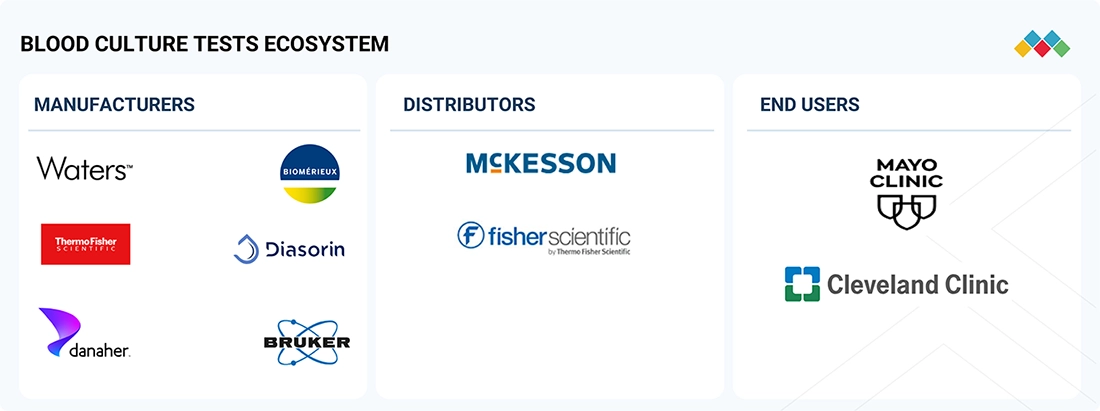
Market Ecosystem
BLOOD CULTURE TESTS MARKET: COMMERCIAL USE CASES ACROSS INDUSTRIES
| COMPANY | USE CASE DESCRIPTION | BENEFITS |
|---|---|---|
 |
Provides BD BACTEC automated blood culture systems and culture media/bottles for detecting bacterial and fungal bloodstream infections across hospital and clinical microbiology laboratories | Enables continuous automated monitoring | Supports earlier detection of microbial growth | Improves laboratory workflow efficiency | Supports pathogen identification and subsequent AST workflows |
 |
Provides BACT/ALERT blood culture systems and culture bottles for automated detection of bloodstream infections, complemented by microbial identification and antimicrobial susceptibility testing solutions | Enables automated detection of bloodstream pathogens | Supports integrated microbiology workflows | Facilitates faster organism identification and susceptibility testing | Supports antimicrobial stewardship |
 |
Provides Oxoid blood culture and microbiology solutions, including culture media and related products used for cultivation, isolation, and subsequent characterization of microorganisms associated with bloodstream infections | Supports recovery and isolation of bloodstream pathogens | Provides broad microbiology workflow support | Enables downstream microbial identification and susceptibility testing | Supports routine clinical laboratory testing |
 |
Provides molecular diagnostic solutions through Luminex technology, including multiplex assays that can support rapid identification of pathogens and resistance markers associated with bloodstream infections, including testing from positive blood cultures where applicable | Accelerates pathogen identification | Enables multiplex detection of clinically relevant targets | Supports earlier treatment optimization | Complements conventional culture-based workflows |
 |
Through Beckman Coulter Diagnostics, provides microbiology solutions supporting microbial identification and antimicrobial susceptibility testing, complementing blood culture workflows after microbial growth is detected | Supports identification of bloodstream isolates | Enables antimicrobial susceptibility assessment | Improves laboratory workflow efficiency | Supports targeted antimicrobial treatment decisions |
Logos and trademarks shown above are the property of their respective owners. Their use here is for informational and illustrative purposes only.
Related Ecosystem
Key Takeaways
- Japan's blood culture tests market will grow from USD 303.1M (2026) to USD 443.6M (2031) at a 7.9% CAGR.
- Japan's aging demographic and high healthcare expenditure support sustained demand for advanced diagnostic testing.
- Japan leads Asia Pacific in adoption of automated and rapid blood culture technologies.
- Japan's stringent infection control protocols and regulatory environment drive market expansion through 2031.
Blood Culture Tests Market Report Scope
| Report Metric | Details |
|---|---|
| Base Year | 2026 |
| Fastest Growing Segment | REFERENCE LABORATORIES (End User) |
| Forecast Period | 2026-2031 |
| Growth Rate | CAGR of 6.1% from 2026 to 2031 |
| Largest Segment | BACTEREMIA (Application) |
| Market Size Base Year (Billions) | ~USD 6.65 (2026) |
| Revenue Forecast (Billions) | ~USD 8.94 (2031) |
| Segments Covered | Offering, Type, Method, Technology, Application, End User |
Japan Blood Culture Tests Market Report Segmentation
6 segment dimensions are covered across the global market.
By Offering
- Consumables
- Instruments
- Software & Services
By Type
- Aerobic Blood Culture Media
- Anaerobic Blood Culture Media
- Assay Kits & Reagents
- Automated Blood Culture Systems
- Blood Culture Accessories
- Blood Culture Media
- Colony Counters
- Fungi/Yeast Blood Culture Media
- Gram Stainers
- Incubators
- Microarrays
- Microscopes
- Mycobacterial Blood Culture Media
- Other Supporting Equipment
- Pcr
- Pediatric Aerobic Blood Culture Media
- Pna-Fish
- Supporting Laboratory Equipment
By Method
- Automated Blood Cultures
- Conventional/Manual Blood Cultures
By Technology
- Culture-Based Technologies
- Molecular Technologies
- Other Technologies
By Application
- Bacteremia
- Fungemia
- Mycobacterial Detection
By End User
- Academic & Research Laboratories
- Hospital Laboratories
- Other End Users
- Reference Laboratories
Target Audience
- In Vitro Diagnostics Manufacturers : IVD companies need Japan-specific market data to develop localized product strategies, understand pricing dynamics, and identify opportunities for blood culture testing system expansion in this high-growth market.
- Hospital Laboratory Directors : Laboratory leaders require market insights to justify capital investments in automated blood culture platforms, benchmark operational efficiency against Japanese peers, and optimize diagnostic workflows.
- Healthcare Investment Firms : Private equity and venture capital investors need comprehensive Japan market analysis to evaluate acquisition targets, assess growth potential, and make informed investment decisions in diagnostic companies.
- Medical Device Distributors : Distributors operating in Japan need market segmentation data, growth forecasts, and competitive intelligence to optimize inventory, identify high-potential customer segments, and plan sales strategies.
- Healthcare Policy Makers : Government health officials and policy advisors require market data to inform healthcare infrastructure planning, infection control initiatives, and reimbursement policies for blood culture diagnostics in Japan.
Reasons to Buy this Report
- Japan-Specific Market Sizing : Access precise valuation data for Japan's blood culture tests market with verified figures for 2026 (USD 303.1M) and 2031 (USD 443.6M), enabling accurate financial forecasting and investment planning.
- Competitive Landscape Intelligence : Understand Japan's unique competitive dynamics, including local and international players, market consolidation trends, and strategic positioning specific to the Japanese healthcare regulatory environment.
- Demographic-Driven Growth Insights : Leverage detailed analysis of Japan's aging population impact on blood culture testing demand, including age-stratified infection rates and hospital utilization patterns specific to Japanese healthcare facilities.
- Technology Adoption Trends : Identify Japan-specific adoption rates for automated blood culture systems, rapid diagnostic platforms, and microbial identification technologies driving market expansion in Japanese clinical laboratories.
- Regulatory and Reimbursement Framework : Gain insights into Japan's healthcare reimbursement policies, regulatory approvals, and clinical guidelines governing blood culture testing, essential for market entry and product commercialization strategies.
Frequently asked questions
What is the current size of Japan's blood culture tests market?
Japan's blood culture tests market was valued at USD 303.1 million in 2026 and is expected to reach USD 443.6 million by 2031.
What is the projected growth rate for blood culture tests in Japan?
Japan's blood culture tests market is projected to grow at a compound annual growth rate (CAGR) of 7.9% from 2026 to 2031.
What factors are driving growth in Japan's blood culture tests market?
Key drivers include Japan's aging population, rising prevalence of bloodstream infections, advanced healthcare infrastructure, high healthcare spending, and strong infection prevention protocols.
Which technologies are gaining adoption in Japan's blood culture market?
Japan is seeing increased adoption of automated culture systems, rapid diagnostic technologies, and point-of-care testing solutions in hospitals and diagnostic laboratories.
How does Japan's market compare to other Asia Pacific countries?
Japan leads the Asia Pacific region in blood culture test adoption due to its advanced healthcare system, regulatory rigor, and high diagnostic spending per capita.
RESEARCH METHODOLOGY
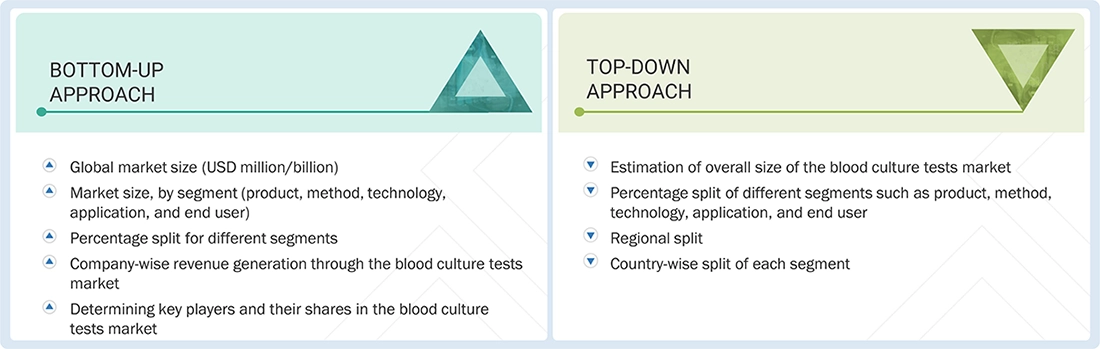
The objective of this study is to analyze key market dynamics, including drivers, opportunities, restraints, and challenges, as well as the strategies of major players. It aims to monitor developments across leading players, including acquisitions, product launches, expansions, agreements, and partnerships. Additionally, the study will examine the competitive landscape of the blood culture tests market by evaluating market participants based on various criteria within the overarching categories of business and product strategy. To estimate the market size, both top-down and bottom-up approaches were employed. The market breakdown and data triangulation methods were used to assess segment and subsegment sizes.
Secondary Research
In the secondary research process, various secondary sources such as annual reports, press releases, and investor presentations of companies; white papers; certified publications; articles by recognized authors; gold- and silver-standard websites; regulatory bodies; and databases (such as D&B Hoovers, Bloomberg Business, and Factiva) were referred to identify and collect information for this study.
Primary Research
In the primary research process, various sources from the supply and demand sides were interviewed to obtain qualitative and quantitative information for this report. Primary sources were industry experts from core and related industries, as well as preferred suppliers, manufacturers, distributors, technology developers, researchers, and organizations across all segments of this industry’s value chain. In-depth interviews were conducted with various primary respondents, including key industry participants, subject-matter experts, C-level executives of key market players, and industry consultants, to obtain and verify critical qualitative and quantitative information as well as assess prospects.
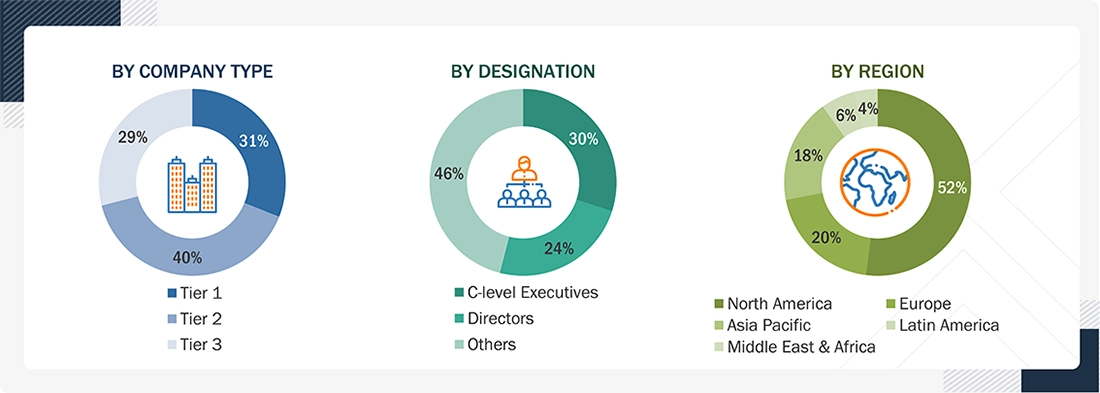
Note: C-level executives include Chief Executive Officers (CEOs), Chief Financial Officers (CFOs), Chief Operating Officers (COOs), and Vice Presidents (VPs).
Other designations include sales managers, marketing managers, business development managers, product managers, distributors, and suppliers.
Companies are classified into tiers based on their total revenue as of 2025. The tiers are as follows: Tier 1 = >USD 10 billion, Tier 2 = USD 1 billion to USD 10 billion, and Tier 3 = <USD 1 billion.
To know about the assumptions considered for the study, download the pdf brochure
Market Size Estimation
For the global market value, annual revenue figures were calculated using revenue mapping for major product manufacturers and OEMs active in the global blood culture tests market. All major product manufacturers were identified at the global and/or country-/regional level. Revenue mapping for the respective business segments/subsegments was done for the major players. Additionally, the global market was split into various segments and subsegments:
- List of major players in the product market by region or country
- Product mapping of various blood culture product manufacturers at the regional and/or country level
- Mapping of annual revenue generated by listed major players from blood culture test products (or the nearest reported business unit/product category)
- Extrapolation of the revenue mapping of the listed major players to derive the global market size of the respective business segments, in terms of value
- Summation of revenue of all companies to arrive at the global blood culture tests market size
The data mentioned above was consolidated and added with detailed inputs and analysis from MarketsandMarkets and presented in this report.
Data Triangulation
After determining the overall size of the global blood culture tests market using the methodology described above, the market was segmented into several segments and subsegments. The data triangulation and market breakdown procedures were employed, as applicable, to complete the overall market engineering process and obtain exact market value data for the key segments and subsegments. The extrapolated market-related data was triangulated by studying various macro indicators and regional trends from demand- and supply-side participants.
Market Definition
Blood culture testing detects the presence of microbes such as bacteria, yeast, and other microorganisms in a blood specimen. This type of testing determines the nature and severity of blood infections, identifies the causative organisms of blood infections, and helps prevent adverse consequences.
Key Stakeholders
- Molecular diagnostics companies
- Clinical microbiology instrument and consumable manufacturers
- Research and consulting firms
- Clinical diagnostic laboratories
- Healthcare institutions (hospitals, medical schools, group practices, individual surgeons, and
- governing bodies)
- Medical device vendors/service providers
- Research institutes
- Venture capitalists and investors
Report Objectives
- To describe, segment, and forecast the blood culture tests market, by product, method, technology, application, and end user, in terms of value
- To forecast the size of the blood culture tests market in five main regions (along with their respective key countries): North America, Europe, the Asia Pacific, Latin America, and the Middle East & Africa, in terms of value
- To provide detailed information about the factors (drivers, restraints, opportunities, and challenges) influencing market growth
- To analyze micromarkets with respect to individual growth trends, prospects, and contributions to the overall blood culture tests market
- To analyze market opportunities for stakeholders and provide details of the competitive landscape for key players
- To profile the key players in the blood culture tests market and comprehensively analyze their core competencies and market shares
- To analyze competitive developments such as acquisitions, product launches, expansions, collaborations, agreements, partnerships, and R&D activities of the leading players in the market
- To benchmark players within the blood culture tests market using the Company Evaluation Matrix framework, which analyzes market players on various parameters within the broad categories of business strategy, market share, and product offerings
Available customizations:
Based on the given market data, MarketsandMarkets offers customizations tailored to your company’s specific needs. The following customization options are available for the report:
GEOGRAPHIC ANALYSIS
- Further breakdown of the Rest of European blood culture tests market into Russia, Switzerland, Denmark, Austria, and others
- Further breakdown of the Rest of Asia Pacific blood culture tests market into Hong Kong, Taiwan, and others
- Further breakdown of the Rest of Latin American blood culture tests market into Argentina, Colombia, Chile, Ecuador, and others
- Further breakdown of the Southeast Asian blood culture tests market into Malaysia, Singapore, Australia, New Zealand, and others
COMPETITIVE LANDSCAPE ASSESSMENT
- Market Share Analysis, by region (North America and Europe), which provides the details about the share of the top 3 to 5 key players in the blood culture tests market
- Competitive leadership mapping for established players in the US
Get the Full Blood Culture Tests Market Report
Full forecast, segment splits, and company analysis for all Blood Culture Tests Market.
- Canada Blood Culture Tests Market
- US Blood Culture Tests Market
- Germany Blood Culture Tests Market
- UK Blood Culture Tests Market
- France Blood Culture Tests Market
- Italy Blood Culture Tests Market
- Spain Blood Culture Tests Market
- China Blood Culture Tests Market
- India Blood Culture Tests Market
- Brazil Blood Culture Tests Market
- Mexico Blood Culture Tests Market
- Rest Of Europe Blood Culture Tests Market
- Rest Of Asia Pacific Blood Culture Tests Market
- Rest Of Latin America Blood Culture Tests Market
Need a Tailored Report?
Customize this report to your needs
Get 10% FREE Customization
Customize This Report
