
Brazil Chemiluminescence Immunoassay Market (2026-2031)

The Brazil Chemiluminescence Immunoassay Market was valued at $325.4 Million in 2026 and projected to reach to $474.1 Million by 2031, representing a compound annual growth rate of 7.8%. Brazil's chemiluminescence immunoassay market is positioned as a critical growth engine within Latin America's diagnostic sector.


| Market Size in | USD 26.32 MN |
| Market Forecast in | |
| CAGR | |
| Forecast Period | |
| Units Considered | Value (USD MN) |
Brazil Chemiluminescence Immunoassay Market Trends and Insights
- Valued at USD 325.4 million in 2026, Brazil is expected to expand to USD 474.1 million by 2031, reflecting a compound annual growth rate of 7.8%.
- This expansion is underpinned by rising healthcare expenditure, increasing prevalence of chronic diseases, and growing adoption of automated diagnostic platforms across Brazilian clinical laboratories and hospitals. The Brazilian market benefits from a large population base and improving healthcare infrastructure, particularly in urban centers.
- Brazil's regulatory environment and investment in laboratory modernization are accelerating the uptake of chemiluminescence immunoassay technologies.
- Between 2026 and 2031, Brazil is anticipated to capture significant market share as private and public healthcare institutions upgrade their diagnostic capabilities to meet rising demand for rapid, accurate immunoassay testing. Brazil's position as Latin America's largest economy strengthens its role as a regional hub for diagnostic innovation.
- The country's growing middle class and expanding insurance coverage are expected to sustain demand for advanced immunoassay solutions throughout the forecast period..
Key Market Statistics
- CAGR (2026-2031) 7.8% CAGR
- Market Size, 2026 ~USD 325.4 Million
- Forecast, 2031 ~USD 474.1 Million
- Country Brazil
Brazil Chemiluminescence Immunoassay Market Overview
Market Valuation Growth :
Brazil's chemiluminescence immunoassay market is valued at USD 325.4 million in 2026 and is projected to reach USD 474.1 million by 2031, representing significant expansion opportunities in Latin America's largest healthcare economy.
Strong CAGR Performance :
Brazil's market is growing at a 7.8% CAGR from 2026-2031, outpacing the global average of 7.2%, indicating accelerated adoption and investment in advanced diagnostic technologies within the country.
Healthcare Expenditure Drivers :
Rising healthcare spending in Brazil, coupled with increasing prevalence of chronic diseases such as diabetes, cardiovascular conditions, and infectious diseases, is fueling demand for reliable immunoassay diagnostic solutions.
Diagnostic Infrastructure Expansion :
Growing adoption of chemiluminescence immunoassay technology across Brazilian hospitals, diagnostic laboratories, and clinical centers reflects modernization of the country's healthcare infrastructure and diagnostic capabilities.
Brazil Chemiluminescence Immunoassay Market Dynamics
- The country's expanding healthcare infrastructure, combined with rising chronic disease prevalence and increased healthcare investment, creates substantial opportunities for market expansion through 2031.
- Government initiatives promoting diagnostic accessibility and private sector growth in clinical laboratories are accelerating technology adoption. The 7.8% CAGR reflects Brazil's commitment to modernizing its healthcare diagnostic capabilities.
- Key drivers include growing awareness of early disease detection, rising disposable incomes enabling healthcare spending, and increasing partnerships between international diagnostic manufacturers and Brazilian healthcare providers.
- This trajectory positions Brazil as a strategic market for immunoassay technology providers seeking Latin American expansion..
Market Ecosystem
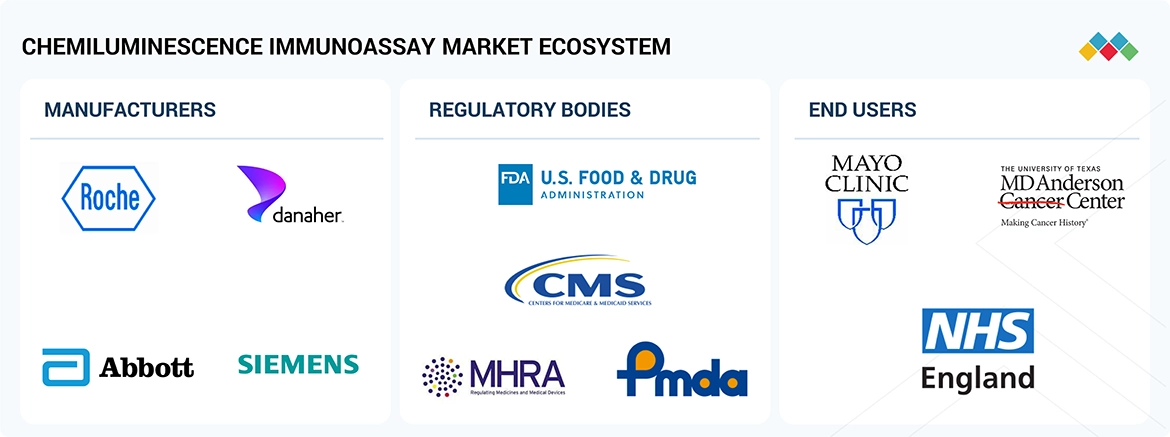
CHEMILUMINESCENCE IMMUNOASSAY MARKET: COMMERCIAL USE CASES ACROSS INDUSTRIES
| COMPANY | USE CASE DESCRIPTION | BENEFITS |
|---|---|---|
 |
Roche provides high-throughput CLIA platforms through its cobas e series system, which performs immunoassay testing for oncology, cardiology, infectious diseases, and endocrine disorders. The systems enable laboratories to run automated processes while testing a wide range of tests. | High sensitivity and specificity enable early disease detection and reliable monitoring. The combination of automation and standardized reagents with scalable throughput enables laboratories to achieve efficient testing operations and faster results in high-volume testing environments. |
 |
Danaher supplies CLIA-based immunoassay analyzers through its subsidiary, Beckman Coulter Diagnostics, including the Access and DxI series analyzers that detect cardiac markers and hormones, infectious diseases, and therapeutic drug levels. | Fast processing, combined with integrated automation systems, increases laboratory capacity, helping doctors make medical decisions. Advanced assay precision supports critical care diagnostics, while workflow integration reduces manual intervention and operational errors. |
 |
The Abbott ARCHITECT and Alinity i CLIA platforms provide immunoassay testing for infectious diseases, oncology markers, fertility, thyroid function, and cardiac biomarkers, supporting both standard and advanced diagnostic procedures. | The broad assay menu provides testing capabilities that cover all required tests through one testing system. The laboratory achieves greater operational efficiency through high-throughput capabilities and dependable system performance, which, combined with its strict quality control measures and standardized processes, deliver reliable clinical outcomes and better patient treatment management. |
 |
Siemens Healthineers offers CLIA-based systems through its ADVIA Centaur and Atellica IM analyzers, which provide automated immunoassay testing capabilities for endocrine, cardiac, infectious disease, allergy, and oncology testing applications. | Laboratory workflows become more efficient through the use of complete automation systems and digital network connections. The diagnostic process relies on analytical tests that deliver precise results, enabling medical professionals to determine a patient's health conditions. |
 |
DiaSorin provides CLIA testing services through its LIAISON platform, which offers testing for infectious diseases, autoimmune disorders, vitamin D levels, and specialized tests at both decentralized and expert laboratories. | The company's specialized testing abilities have helped develop high-value diagnostic tests for specific medical needs. The testing system allows for flexible operations because it can perform random-access tests and deliver accurate results for infectious diseases and autoimmune disorders, which helps doctors make clinical decisions. |
Logos and trademarks shown above are the property of their respective owners. Their use here is for informational and illustrative purposes only.
Related Ecosystem
Medical Devices
- Polymerase Chain Reaction (PCR)
- Magnetic Resonance Imaging (MRI)
- Disposable Autoinjectors
- Pulse Oximeters
- Blood Pressure Monitors
- Medtronic plc
- Abbott Laboratories
- Stryker Corporation
- Becton, Dickinson and Company
- CONMED Corporation
Key Takeaways
- Brazil's chemiluminescence immunoassay market is valued at USD 325.4 million in 2026 and is projected to reach USD 474.1 million by 2031.
- Brazil is experiencing a 7.8% CAGR, outpacing the global average of 7.2%, driven by healthcare modernization and rising diagnostic demand.
- Brazil's large population and expanding middle class are fueling adoption of automated immunoassay platforms in both private and public healthcare settings.
- Brazil's regulatory framework and laboratory infrastructure investments position the country as Latin America's leading market for chemiluminescence immunoassay technologies.
Chemiluminescence Immunoassay Market Report Scope
| Report Metric | Details |
|---|---|
| Base Year | 2026 |
| Fastest Growing Segment | ONCOLOGY (Application) |
| Forecast Period | 2026–2031 |
| Growth Rate | CAGR of 7.2% from 2026 to 2031 |
| Largest Segment | CONSUMABLES (Product Type) |
| Market Size Base Year (Billions) | ~USD 11.58 (2026) |
| Revenue Forecast (Billions) | ~USD 16.39 (2031) |
| Segments Covered | Product Type, Technology, Sample Type, Application, End User |
Brazil Chemiluminescence Immunoassay Market Report Segmentation
5 segment dimensions are covered across the global market.
By Product Type
- Consumables
- Instruments
By Technology
- Chemiluminescence Enzyme Immunoassays (Cleia)
- Electrochemiluminescence Immunoassays (Ecli)
- Microparticle Chemiluminescence Immunoassays
By Sample Type
- Blood
- Other Sample Types
- Saliva
- Urine
By Application
- Allergy Diagnostics
- Autoimmune Disorders
- Blood Screening
- Bone & Mineral Disorders
- Cardiology
- Endocrinology
- Gastroenterology
- Infectious Diseases
- Metabolic Disorders
- Neurology
- Newborn Screening
- Oncology
- Other Applications
- Respiratory Diseases
- Therapeutic Drug Monitoring
- Toxicology
By End User
- Clinical Laboratories
- Hospitals
- Other End Users
- Pharmaceutical & Biotechnology Companies And Cros
BRAZIL: CHEMILUMINESCENCE IMMUNOASSAY MARKET, BY END USER, 2024–2031
| Segment | 2024 | 2025 | 2026 | 2027 | 2028 | 2029 | 2030 | 2031 | CAGR (%) |
|---|---|---|---|---|---|---|---|---|---|
| CLINICAL LABORATORIES | 108.8 | 115.5 | 123.1 | 131.6 | 140.9 | 151.3 | 162.9 | 175.8 | 7.4 |
| HOSPITALS | 171.4 | 182.6 | 195.3 | 209.4 | 225 | 242.5 | 261.9 | 283.6 | 7.7 |
| OTHER END USERS | 30.6 | 32.2 | 34.1 | 36.1 | 38.4 | 40.9 | 43.7 | 46.8 | 6.6 |
| PHARMACEUTICAL & BIOTECHNOLOGY COMPANIES AND CROS | 35.8 | 37.9 | 40.3 | 42.9 | 45.8 | 49 | 52.6 | 56.6 | 7 |
| TOTAL | 346.7 | 368.3 | 392.8 | 420 | 450.1 | 483.7 | 521.1 | 562.8 | 7.5 |
Target Audience
- Diagnostic Equipment Manufacturers : Manufacturers of chemiluminescence immunoassay analyzers and reagents need Brazil-specific market data to assess market potential, identify distribution partnerships, and develop localized product strategies for Latin America's largest economy.
- Healthcare Investors & Private Equity : Investment firms evaluating opportunities in Brazilian healthcare diagnostics require detailed market sizing and growth forecasts to assess ROI potential, identify acquisition targets, and plan capital deployment in the expanding diagnostic sector.
- Clinical Laboratory Operators : Laboratory networks and diagnostic service providers in Brazil need market intelligence to guide technology investments, capacity planning, and service expansion decisions aligned with market growth trends and competitive dynamics.
- Healthcare Consultants & Advisors : Management consulting firms and healthcare advisors serving Brazilian healthcare clients require market data to support strategic planning, competitive analysis, and market entry recommendations for diagnostic technology providers.
- Regulatory & Policy Bodies : Brazilian healthcare regulatory agencies and policy makers benefit from market insights to inform healthcare infrastructure planning, diagnostic technology standards development, and healthcare accessibility initiatives across the country.
Key Companies in the Brazil Chemiluminescence Immunoassay Market
| Company | HQ | Ownership | Strongest segments |
|---|---|---|---|
| ABBOTT | United States | Public Company | Diagnostic Products,Medical Devices,Nutritional Products, |
| SIEMENS HEALTHINEERS AG | Germany | Public Company | Imaging,Diagnostics,Varian (Oncology), |
| DANAHER CORPORATION | United States | Public Company | Biotechnology (bioprocessing and bioproduction solutions),Life Sciences (instruments, genomics, and research tools),Diagnostics (clinical instruments and consumables), |
| DIASORIN S.P.A. | Italy | Public Company | LIAISON XL / LIAISON XS immunodiagnostics,Molecular diagnostics (Simplexa, congenital CMV, LIAISON PLEX assays),xMAP technology platform and related IVD solutions, |
| QUIDELORTHO CORPORATION | United States | Public Company | Labs (clinical chemistry and immunoassay),Point of Care,Transfusion Medicine, |
| SYSMEX CORPORATION | Japan | Public Company | Hematology analyzers & reagents (XN-Series, XN-V, ProCyte Dx),Coagulation systems & reagents,Blood gas / electrolyte / urinalysis, |
| SHENZHEN NEW INDUSTRIES BIOMEDICAL ENGINEERING CO., LTD. | China | Public Company | Immunoassay analyzers and reagents,Biochemistry/Electrolyte systems and reagents,Integrated systems and lab automation, |
| TOSOH CORPORATION | Japan | Public Company | Basic chemicals and chlor-alkali (caustic soda, sodium bicarbonate, related),Vinyls, PVC chain, and petrochemicals (VCM, ethylene, propylene, aromatics),Advanced materials (battery materials, quartzware, silica glass, thin films, zeolites, zirconia, beads), |
| BIO-RAD LABORATORIES, INC. | United States | Public Company | Clinical Diagnostics,Life Science Research Instruments and Consumables,Informatics and Software, |
| SHENZHEN MINDRAY BIO-MEDICAL ELECTRONICS CO., LTD. | China | Public Company | Patient monitoring & life support (incl. ventilators, anesthesia, defibrillation, infusion),Ultrasound & medical imaging (incl. radiology, emergency ultrasound, endoscope camera systems),In-vitro diagnostics (CLIA, chemistry, hematology), |
ABBOTT
Abbott is a United States-based public company founded in 1888 with 115,000 employees, operating in the healthcare and pharmaceutical sectors.
SIEMENS HEALTHINEERS AG
Siemens Healthineers AG is a German public company founded in 1896 with 72,369 employees, specializing in medical technology and diagnostics.
DANAHER CORPORATION
Danaher Corporation is a United States-based public company founded in 1969 with 59,000 employees operating across diversified industrial and life sciences sectors.
DIASORIN S.P.A.
DiaSorin S.p.A. is an Italian public company founded in 1968 with 3,242 employees engaged in in vitro diagnostics and molecular diagnostics.
QUIDELORTHO CORPORATION
QuidelOrtho Corporation is a United States-based public company founded in 1979 with 6,500 employees specializing in diagnostic solutions.
SYSMEX CORPORATION
Sysmex Corporation is a Japanese public company founded in 1968 with 10,861 employees focused on in vitro diagnostics and hematology systems.
SHENZHEN NEW INDUSTRIES BIOMEDICAL ENGINEERING CO., LTD.
Shenzhen New Industries Biomedical Engineering Co., Ltd. is a Chinese public company founded in 1995 with 2,785 employees operating in the biomedical diagnostics sector.
TOSOH CORPORATION
Tosoh Corporation is a Japanese public company founded in 1935 with 14,850 employees engaged in specialty chemicals and diagnostics.
BIO-RAD LABORATORIES, INC.
Bio-Rad Laboratories, Inc. is a United States-based public company founded in 1952 with 7,450 employees providing life science research and clinical diagnostics products.
SHENZHEN MINDRAY BIO-MEDICAL ELECTRONICS CO., LTD.
Shenzhen Mindray Bio-Medical Electronics Co., Ltd. is a Chinese public company founded in 1991 with 21,288 employees manufacturing medical devices and diagnostics equipment.
Reasons to Buy this Report
- Market Size & Growth Validation : Obtain precise market valuation data for Brazil (USD 325.4M in 2026, USD 474.1M in 2031) to validate investment decisions and competitive positioning strategies in Latin America's largest healthcare market.
- Competitive Landscape Intelligence : Understand Brazil-specific market dynamics, key players, and competitive strategies to identify partnership opportunities, market entry points, and differentiation strategies for diagnostic manufacturers and distributors.
- Growth Driver Analysis : Access detailed insights into Brazil's unique growth catalysts including healthcare expenditure trends, chronic disease prevalence, regulatory environment, and technology adoption patterns specific to the Brazilian market.
- Strategic Market Positioning : Leverage Brazil's 7.8% CAGR performance data to benchmark against global trends (7.2%), identify outperformance factors, and develop targeted go-to-market strategies for the Brazilian healthcare sector.
- Investment & Expansion Planning : Make informed decisions on market entry, facility expansion, and resource allocation in Brazil by understanding market maturity, growth trajectory, and regional healthcare infrastructure development through 2031.
Frequently asked questions
What is the current market size of chemiluminescence immunoassay in Brazil?
Brazil's chemiluminescence immunoassay market was valued at USD 325.4 million in 2026 and is expected to grow to USD 474.1 million by 2031.
What is the projected growth rate for Brazil's chemiluminescence immunoassay market?
Brazil's market is projected to grow at a compound annual growth rate (CAGR) of 7.8% from 2026 to 2031, exceeding the global average.
What factors are driving growth in Brazil's chemiluminescence immunoassay market?
Key drivers include rising healthcare expenditure, increasing chronic disease prevalence, laboratory modernization, expanding insurance coverage, and growing adoption of automated diagnostic platforms across Brazil.
How does Brazil's market compare to the global chemiluminescence immunoassay market?
Brazil's 7.8% CAGR outpaces the global CAGR of 7.2%, reflecting stronger regional demand and healthcare infrastructure investments specific to Brazil.
Which healthcare segments in Brazil are driving chemiluminescence immunoassay adoption?
Both private and public healthcare institutions in Brazil are upgrading diagnostic capabilities, with particular growth in urban clinical laboratories and hospital-based testing centers.
RESEARCH METHODOLOGY
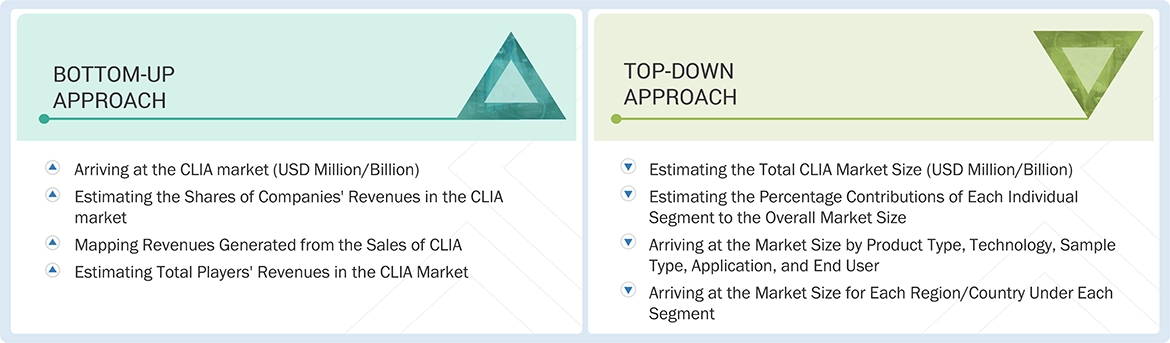
This study involved four major activities in estimating the size of the CLIA market. Exhaustive secondary research was done to collect information on the market, peer market, and parent market. The next step was to validate these findings, assumptions, and sizing with industry experts across value chains through primary research. The bottom-up approach was employed to estimate the overall market size. After that, market breakdown and data triangulation were used to estimate the market size of segments and sub-segments.
Secondary Research
The secondary research process involved the widespread use of secondary sources, directories, databases (such as Bloomberg Businessweek, Factiva, and D&B Hoovers), white papers, annual reports, company house documents, investor presentations, and companies' SEC filings. Secondary research was used to identify and collect information useful for the extensive, technical, market-oriented, and commercial study of the CLIA market. It was also used to obtain important information on key players, market classification, and segmentation aligned with industry trends to the bottom-most level, and key developments from market and technology perspectives. A database of the key industry leaders was also prepared using secondary research.
Primary Research
Extensive primary research was conducted after secondary research provided information on the CLIA market. Several primary interviews were conducted with market experts from both the demand and supply sides across major countries of North America, Europe, Asia Pacific, Latin America, and the Middle East & Africa. Primary data was collected through questionnaires, emails, and telephonic interviews. The primary sources from the supply side included various industry experts, such as Chief Executive Officers (CXOs), Vice Presidents (VPs), Directors from business development, marketing, and product development/innovation teams, as well as related key executives from manufacturers and distributors operating in the CLIA market.; and key opinion leaders.
Primary interviews were conducted to gather insights into market statistics, revenue from products and services, market breakdowns, market size estimates, market forecasting, and data triangulation. Primary research also helped in understanding the various trends in technology, applications, verticals, and regions. Stakeholders from the demand side, customers/end users who are using infection control products, were interviewed to understand the buyer’s perspective on the suppliers, products, and their current usage and the future outlook of their business, which will affect the overall market.
The following is a breakdown of the primary respondents:
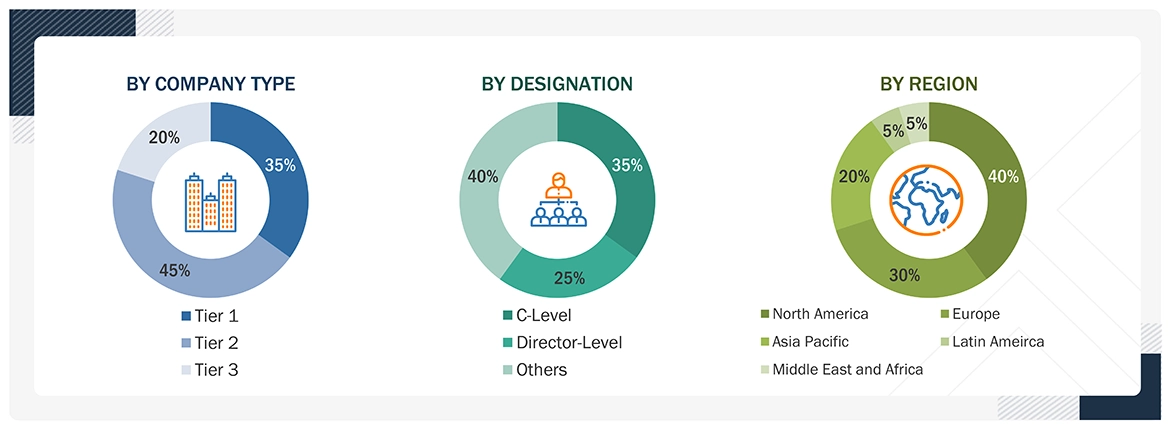
Note 1: C-level primaries include CEOs, COOs, CTOs, and VPs.
Note 2: Other primaries include sales managers, marketing managers, and product managers.
Note 3: Companies are classified into tiers based on their total revenue.
As of 2023: Tier 1=>USD 1 billion, Tier 2 = USD 500 million to USD 1 billion, Tier 3=<USD 500 million.
To know about the assumptions considered for the study, download the pdf brochure
Market Size Estimation
The research methodology used to estimate the size of the CLIA market includes the following details.
The market sizing was conducted on a global basis.
Country-level Analysis: The size of the CLIA market was obtained from the annual presentations of leading players and secondary data available in the public domain. The share of products in the overall CLIA market was obtained from secondary data and validated by primary participants to arrive at the total CLIA market. Primary participants further validated the numbers.
Geographic market assessment (by region & country): The geographic assessment was done using the following approaches:
Approach 1: Geographic revenue contributions/splits of leading players in the market (wherever available) and respective growth trends
Approach 2: Geographic adoption trends for individual product segments by end user and growth prospects for each of the segments (assumptions and indicative estimates validated from primary interviews)
At each point, the assumptions and approaches were validated through industry experts contacted during primary research. Considering the limitations of data available from secondary research, revenue estimates for individual companies (for the overall CLIA market and geographic market assessment) were ascertained based on a detailed analysis of their respective product offerings, geographic reach/strength (direct or through distributors or suppliers), and the shares of the leading players in a particular region or country.
Global Chemiluminescence Immunoassay Market : Top-Down and Bottom-Up Approach
Data Triangulation
The market was split into several segments and subsegments after determining the overall market size, using the market sizing processes. Data triangulation and market breakdown procedures were employed to complete the overall market engineering process and determine the exact statistics for each market segment and subsegment. The data was triangulated by examining various factors and trends on both the demand and supply sides of the CLIA market.
Market Definition
Chemiluminescent immunoassay (CLIA) is an immunoassay technique in which the label, i.e., the indicator of the analytical reaction, is a luminescent molecule. CLIA is a variation of the standard enzyme immunoassay (EIA), a biochemical technique used in immunology. This variation technique can be used for medical diagnosis and in several other industries for various applications. In recent years, CLIA has attracted increasing attention across fields such as clinical diagnosis, life sciences, food safety, environmental monitoring, and pharmaceutical analysis, due to its high specificity, high sensitivity, broad applicability, simple instrumentation, and wide linear range.
Key Stakeholders
- CLIA manufacturers and distributors
- CLIA analyzers & consumables manufacturers
- Healthcare institutions (hospitals, medical schools, group practices, individual surgeons, and governing bodies)
- Healthcare institutions (hospitals and outpatient clinics)
- Distributors and suppliers
- Research institutes
- Health insurance payers
- World Health Organization (WHO)
- Organisation for Economic Co-operation and Development (OECD)
- National Institutes of Health (NIH)
- Centers for Disease Control and Prevention (CDC)
- Annual Reports/SEC Filings, Investor Presentations, and Press Releases of Key Players
- White Papers, Journals/Magazines, and News Articles
- Paid Databases, such as Factiva, D&B Hoovers, and Bloomberg Business
Report Objectives
- To define, describe, segment, and forecast the global CLIA market by product type, technology, sample type, application, end user, and region.
- To provide detailed information about the factors influencing market growth (such as drivers, restraints, opportunities, and challenges)
- To analyze micromarkets concerning individual growth trends, prospects, and contributions to the overall CLIA market.
- To analyze market opportunities for stakeholders and provide details of the competitive landscape for key players.
- To forecast the size of the CLIA market in five main regions, along with their respective key countries, namely, North America, Europe, the Asia Pacific, Latin America, and the Middle East & Africa
- To profile key players in the global CLIA market and comprehensively analyze their core competencies and market shares.
- To track and analyze competitive developments such as acquisitions, expansions, partnerships, agreements, and collaborations; and product launches and approvals.
- To benchmark players within the CLIA market using the "Competitive Leadership Mapping" framework, which analyzes market players on various parameters within the broad categories of business and product strategy.
Available customizations:
Based on the given market data, MarketsandMarkets offers customizations tailored to the company’s specific needs. The following customization options are available for the report:
Geographic Analysis
- Further breakdown of the Rest of Asia Pacific CLIA market into Thailand, Indonesia, Philippines, Vietnam, Hong Kong, and other countries
- Further breakdown of the Rest of Europe CLIA market into Belgium, Russia, the Netherlands, Switzerland, and other countries.
- Further breakdown of the Rest of Latin America CLIA market into Argentina, Peru, and other countries.
Get the Full Chemiluminescence Immunoassay Market Report
Full forecast, segment splits, and company analysis for all Chemiluminescence Immunoassay Market.
- US Chemiluminescence Immunoassay Market
- Canada Chemiluminescence Immunoassay Market
- Germany Chemiluminescence Immunoassay Market
- France Chemiluminescence Immunoassay Market
- UK Chemiluminescence Immunoassay Market
- Italy Chemiluminescence Immunoassay Market
- Spain Chemiluminescence Immunoassay Market
- China Chemiluminescence Immunoassay Market
- Japan Chemiluminescence Immunoassay Market
- India Chemiluminescence Immunoassay Market
- South Korea Chemiluminescence Immunoassay Market
- Australia Chemiluminescence Immunoassay Market
- Mexico Chemiluminescence Immunoassay Market
- Rest Of Europe Chemiluminescence Immunoassay Market
- Rest Of Asia Pacific Chemiluminescence Immunoassay Market
- Rest Of Latin America Chemiluminescence Immunoassay Market
Need a Tailored Report?
Customize this report to your needs
Get 10% FREE Customization
Customize This Report
