
China Cleanroom Lighting Market (2024-2029)

The China Cleanroom Lighting Market was valued at $105.7 Million in 2024 and projected to reach to $151.4 Million by 2029, representing a compound annual growth rate of 7.5%. China's cleanroom lighting market is poised for sustained expansion driven by the country's strategic focus on semiconductor self-sufficiency and advanced electronics manufacturing.


| Market Size in | USD 26.32 MN |
| Market Forecast in | |
| CAGR | |
| Forecast Period | |
| Units Considered | Value (USD MN) |
China Cleanroom Lighting Market Trends and Insights
- This expansion reflects China's dominant position in semiconductor manufacturing and electronics production, where stringent contamination control requirements drive demand for specialized lighting solutions.
- China's rapid industrialization and investment in advanced fabrication facilities have positioned the country as a critical hub for cleanroom technology adoption. The 7.5% compound annual growth rate in China significantly outpaces the global average of 5.4%, underscoring the country's accelerating need for high-performance cleanroom environments.
- China's semiconductor sector, supported by government initiatives and substantial capital expenditure, continues to fuel demand for precision lighting systems that meet ISO cleanroom standards.
- Between 2024 and 2029, China's market is expected to capture increasing share of Asia Pacific cleanroom lighting investments, driven by capacity expansions in microelectronics, pharmaceuticals, and biotechnology manufacturing. China's competitive advantage in electronics manufacturing, combined with rising quality standards and regulatory compliance requirements, ensures sustained momentum for cleanroom lighting solutions throughout the forecast period..
Key Market Statistics
- CAGR (2024-2029) 7.5% CAGR
- Market Size, 2024 ~USD 105.7 Million
- Forecast, 2029 ~USD 151.4 Million
- Country China
China Cleanroom Lighting Market Overview
Market Size & Growth :
China's cleanroom lighting market reached USD 105.7 million in 2024, with a robust 7.5% CAGR projected through 2029, outpacing the global growth rate of 5.4%.
Semiconductor Manufacturing Dominance :
China's position as a global semiconductor manufacturing hub drives substantial demand for advanced cleanroom lighting solutions to meet stringent contamination control standards.
Industrial Expansion :
Rapid industrialization and capacity expansion in electronics production facilities across China's manufacturing zones are accelerating investments in specialized lighting infrastructure.
Forecast Growth Trajectory :
The market is anticipated to reach USD 151.4 million by 2029, representing a 43% increase from 2024, reflecting sustained demand from expanding cleanroom facilities.
China Cleanroom Lighting Market Dynamics
- Government initiatives supporting domestic chip production and the establishment of new fabrication plants across multiple regions are creating significant demand for high-performance cleanroom lighting systems.
- The market benefits from China's competitive manufacturing ecosystem and increasing adoption of ISO-compliant cleanroom standards across pharmaceutical, biotechnology, and microelectronics sectors. Looking ahead, technological advancements in LED-based cleanroom lighting and energy-efficient solutions will further accelerate market penetration.
- Rising labor costs and automation investments are prompting manufacturers to upgrade facility infrastructure, including lighting systems.
- Additionally, China's growing export-oriented electronics industry and foreign direct investment in advanced manufacturing will sustain long-term growth momentum through 2029..
Market Ecosystem
Related Ecosystem
Industrial Automation
- Sensors
- Image Sensors
- Manufacturing Execution System (MES)
- Actuators
- Flow Sensors
- Siemens ag
- ABB India Limited
- Emerson Electric Co.
- HONEYWELL INTERNATIONAL INC.
- SCHNEIDER ELECTRIC SE
Smart Lighting
- Fiber Laser
- Fluorescent Lighting
- Gas Lasers
- Sensors
- 3D Sensors
- Zumtobel group ag
- Nedap n.v.
- Acuity Brands, Inc.
- OSRAM Licht AG
- Philips
Key Takeaways
- China's cleanroom lighting market will grow from USD 105.7M (2024) to USD 151.4M (2029) at a 7.5% CAGR, outpacing global growth.
- China's semiconductor and electronics manufacturing dominance drives persistent demand for ISO-compliant cleanroom lighting systems.
- Government-backed industrial policies and fab capacity expansions in China accelerate adoption of advanced lighting technologies.
- China's market growth rate exceeds the global average, reflecting the country's strategic importance in global electronics supply chains.
Cleanroom Lighting Market Report Scope
| Report Metric | Details |
|---|---|
| Base Year | 2024 |
| Fastest Growing Segment | FOOD & BEVERAGES COMPANIES (End User) |
| Forecast Period | 2024-2029 |
| Growth Rate | CAGR of 5.4% from 2024 to 2029 |
| Largest Segment | LED LIGHTING (Lighting Technology) |
| Market Size Base Year (Billions) | ~USD 0.85 (2024) |
| Revenue Forecast (Billions) | ~USD 1.1 (2029) |
| Segments Covered | Offering, Lighting Technology, Mounting Type, End User |
China Cleanroom Lighting Market Report Segmentation
4 segment dimensions are covered across the global market.
By Offering
- Hardware
- Services
- Software
By Lighting Technology
- Fluorescent Lighting
- Led Lighting
By Mounting Type
- Recessed
- Recessed Mounted
- Surface-Mounted
By End User
- Food & Beverage Companies
- Food & Beverages Companies
- Healthcare & Life Sciences Facilities
- Industrial Manufacturing Firms
Target Audience
- Semiconductor Manufacturers : Chinese and international semiconductor fabs require detailed market insights to optimize cleanroom lighting investments and maintain competitive manufacturing standards.
- Lighting Equipment Suppliers : Manufacturers and distributors of cleanroom lighting systems need China-specific market data to identify growth opportunities and develop localized product strategies.
- Electronics Contract Manufacturers : EMS providers operating in China require market intelligence to upgrade facility infrastructure and meet customer contamination control requirements cost-effectively.
- Private Equity & Investors : Investment firms evaluating opportunities in China's semiconductor and electronics sectors need market-specific data to assess cleanroom technology investment potential.
- Facility Planners & Engineers : Engineering teams designing new cleanroom facilities in China require detailed market insights on lighting technologies, compliance standards, and cost benchmarks.
Reasons to Buy this Report
- Market-Specific Sizing & Forecasts : Access precise valuation data for China's cleanroom lighting market with country-specific CAGR (7.5%) and detailed projections through 2029 to inform strategic planning.
- Competitive Landscape Intelligence : Understand China's unique competitive dynamics, local manufacturer strategies, and market consolidation trends specific to the region's semiconductor and electronics sectors.
- Regulatory & Compliance Insights : Gain detailed knowledge of China's cleanroom standards, ISO compliance requirements, and government policies driving demand for specialized lighting solutions.
- Investment & Expansion Opportunities : Identify high-growth sub-segments and geographic hotspots within China where cleanroom facility expansion and modernization investments are concentrated.
- Supply Chain & Sourcing Strategy : Develop informed sourcing and partnership strategies by understanding China's manufacturing capabilities, local supplier ecosystem, and cost-competitive advantages.
Frequently asked questions
What is the current size of China's cleanroom lighting market?
China's cleanroom lighting market was valued at USD 105.7 million in 2024 and is expected to reach USD 151.4 million by 2029.
What is the growth rate for cleanroom lighting in China?
China's cleanroom lighting market is projected to grow at a compound annual growth rate (CAGR) of 7.5% from 2024 to 2029.
Why is China's cleanroom lighting market growing faster than the global average?
China's 7.5% CAGR exceeds the global 5.4% rate due to the country's dominant semiconductor manufacturing sector, government industrial policies, and massive investments in advanced fabrication facilities.
Which industries in China drive demand for cleanroom lighting?
China's semiconductor manufacturing, electronics production, pharmaceuticals, and biotechnology sectors are the primary drivers of cleanroom lighting demand.
What standards must cleanroom lighting in China meet?
Cleanroom lighting systems in China must comply with ISO cleanroom standards and stringent contamination control requirements mandated by regulatory bodies and industry best practices.
RESEARCH METHODOLOGY
This research elucidates the approach used to compile this report on Cleanroom Lighting market. The study employs two fundamental information sources, secondary and primary sources, which collectively provide a comprehensive, technical, and commercial analysis of Cleanroom Lighting market. Secondary sources encompass data derived from sources like company websites, publications, industry associations, and databases such as OneSource, Factiva, and Bloomberg. Additionally, primary sources were tapped, including insights from key opinion leaders spanning various sectors, experts from governmental entities and associations, preferred suppliers, cleanroom lighting manufacturers, distributors, technology experts, subject matter specialists (SMEs), C-level executives of prominent firms, and industry consultants. These interviews were instrumental in acquiring, validating, and comprehending crucial information and in gauging the future prospects and trends within the Cleanroom Lighting market. Key market players were identified through secondary research, and their market positioning was assessed via a combination of primary and secondary research methods. Furthermore, this research integrated an examination of the annual reports of market participants to pinpoint the leading players in the Cleanroom Lighting market.
Secondary Research
In the secondary research phase, we referred to a variety of secondary sources to identify and collect pertinent information for this Cleanroom Lighting market study. These secondary sources encompassed materials such as companies' annual reports, press releases, and investor presentations, as well as white papers, accredited publications, and articles authored by recognized experts. We also consulted directories and databases. The global size of the Cleanroom Lighting market was determined through secondary data obtained from both paid and freely available sources. This involved evaluating the product portfolios of leading companies and assessing the quality of their offerings. The secondary research process was instrumental in gathering essential data related to the industry's supply chain, the financial aspects of the market, the total count of major market players, and the segmentation of the market in alignment with industry trends down to the most granular level, including geographic markets. Furthermore, this phase allowed for the identification and examination of industry trends and significant developments from both market and technology perspectives.
Primary Research
In the primary research phase, we conducted interviews with a range of primary sources to acquire both qualitative and quantitative data concerning the market in four primary regions: Asia Pacific, North America, Europe, and the Rest of the World (Middle East, Africa, and South America). On the supply side, primary sources included industry experts occupying various roles, such as CEOs, vice presidents, marketing directors, technology directors, and other key executives from major companies and organizations operating within the Cleanroom Lighting market or closely related sectors. This primary research was instrumental in gathering, verifying, and validating critical data that had been sourced from other channels following the market engineering phase.
Primary research also served to identify various market segments, industry trends, key players, the competitive landscape, and the pivotal market dynamics, encompassing factors such as drivers, constraints, opportunities, and challenges, as well as the key strategies adopted by market players. The majority of the primary interviews focused on engaging with the supply side of the market, and the collection of this primary data was carried out through questionnaires, email correspondence, and telephonic interviews.
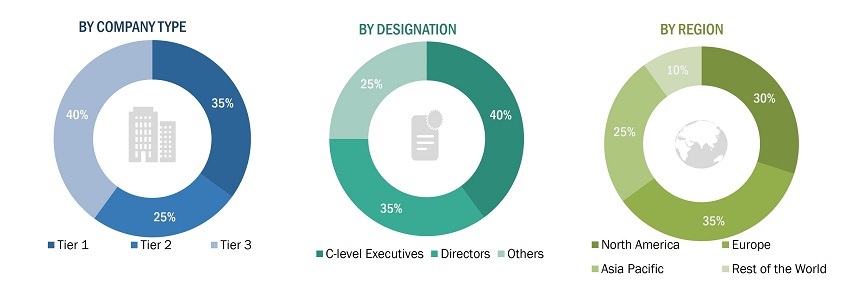
To know about the assumptions considered for the study, download the pdf brochure
Market Size Estimation
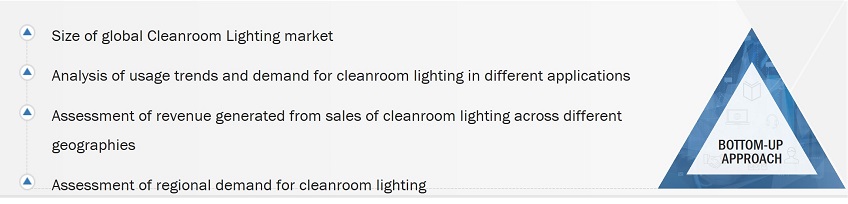
Both the top-down and bottom-up approaches were used extensively in the market engineering process. This entire research methodology includes the study of annual and financial reports of top players, as well as interviews with experts (such as CEOs, VPs, directors, and marketing executives) for key insights (both quantitative and qualitative). The key players in the cleanroom lighting market have been identified through secondary research, and their market share in the respective regions has been determined through primary and secondary research. All percentage shares, splits, and breakdowns have been determined using secondary sources and verified through primary sources. Several data triangulation methods were also used to perform market forecasting and market estimation for the overall market segments and sub-segments in the report. Multiple qualitative and quantitative analyses were performed on the market engineering process to gain key insights throughout the report. All the possible parameters that affect the markets covered in this research have been accounted for, viewed in detail, verified through primary research, and analyzed to obtain the final quantitative and qualitative data. This data was consolidated and supplemented with detailed inputs and analysis from MarketsandMarkets and presented in this report. The following figures depict the overall market size estimation process employed for the purpose of this study.
The revenues were identified geographically as well as market segment-wise, using financial statements and analyzing annual reports of the key market players. Interviews with CEOs, VPs, directors, and marketing executives were also conducted to gain insights on the key players and the cleanroom lighting market. All the market shares were estimated using secondary and primary research. This data was consolidated, supplemented with detailed inputs and analysis from MarketsandMarkets, and presented in this report.
Global Cleanroom Lighting Market Size: Bottom-Up Approach
Global Cleanroom Lighting Market Size: Top-down Approach

Data Triangulation
Following the determination of the comprehensive market size through the previously described market size estimation process, the entire market was subsequently divided into multiple segments and sub-segments. To accomplish this and attain precise statistical data for all segments and sub-segments, the market engineering process employed a data triangulation method. This triangulation involved a thorough examination of diverse factors and trends originating from both the demand and supply aspects of the market. In addition to this, the market's accuracy and reliability were substantiated through a combination of both top-down and bottom-up approaches.
Market Definition
The cleanroom lighting market refers to the industry involved in the design, manufacturing, and distribution of specialized lighting solutions tailored for cleanroom environments. Cleanrooms are controlled spaces where the concentration of airborne particles, temperature, humidity, and other environmental factors are regulated to meet specific cleanliness standards. Cleanroom lighting plays a critical role in these environments by providing illumination while minimizing the risk of particle contamination. These lighting solutions are designed to comply with strict industry standards and regulations governing cleanliness, safety, and performance in sectors such as pharmaceuticals, biotechnology, semiconductor manufacturing, healthcare, and other industries where maintaining a controlled and sterile environment is crucial.
Stakeholders
- Cleanroom product manufacturers
- Cleanroom construction companies
- Biotechnology companies
- Medical device manufacturers
- Pharmaceuticals manufacturers
- Hospitals, research laboratories, and clinical laboratories
- Solution integrators
- Technology providers
- Research organizations and consulting companies
- Associations, organizations, forums, and alliances related to cleanroom lighting
- Government bodies such as regulatory authorities and policymakers
- Venture capitalists, private equity firms, and startups
Study Objectives
- To estimate, segment, and forecast the overall size of the Cleanroom Lighting market, by mounting type, offering, light source, and region, in terms of value.
- To forecast the market size, in terms of value, for Cleanroom Lighting market with regard to four main regions—North America, Europe, Asia Pacific, and the Rest of the World (RoW)
- To describe and forecast the cleanroom lighting market, in terms of volume, by light source
- To provide detailed information regarding the drivers, restraints, opportunities, and challenges influencing the growth of the market
- To analyze the value chain of Cleanroom Lighting market
- To strategically analyze macro and micromarkets1 with respect to individual growth trends, prospects, and contributions to the overall market
- To analyze industry trends, pricing data, patents and innovations, and trade data (export and import data) in the Cleanroom Lighting market
- To analyze opportunities in the market for stakeholders and provide a detailed competitive landscape
- To study technology analysis, key buying criteria, and key conferences (2024 -2025)
- To strategically profile the key players and comprehensively analyze their market position in terms of their ranking and core competencies2, and to provide detailed information about the competitive landscape of the market
- To analyze the annual revenues generated by key players in Cleanroom Lighting market
- To analyze growth strategies such as product developments, agreements, expansion, and mergers and acquisitions in the cleanroom lighting market
- To analyze competitive developments, such as product launches & developments, collaborations, contracts, partnerships, acquisitions, and expansions, in the Cleanroom Lighting market
- To analyze the overall, as well as regional impact of the recession on the market
Available Customizations
With the given market data, MarketsandMarkets offers customizations based on the specific requirements of companies. The following customization options are available for the report:
Company Information
- Market size based on different subsegments of the Cleanroom Lighting Market
- Detailed analysis and profiling of additional market players (up to five)
Get the Full Cleanroom Lighting Market Report
Full forecast, segment splits, and company analysis for all Cleanroom Lighting Market.
- US Cleanroom Lighting Market
- Canada Cleanroom Lighting Market
- Mexico Cleanroom Lighting Market
- Germany Cleanroom Lighting Market
- UK Cleanroom Lighting Market
- France Cleanroom Lighting Market
- Japan Cleanroom Lighting Market
- South Korea Cleanroom Lighting Market
- Rest Of Europe Cleanroom Lighting Market
- Rest Of Asia Pacific Cleanroom Lighting Market
- GCC Countries Cleanroom Lighting Market
- Rest Of Middle East Cleanroom Lighting Market
Need a Tailored Report?
Customize this report to your needs
Get 10% FREE Customization
Customize This Report
