
Japan Clinical Decision Support Systems (CDSS) Market (2025-2030)

The Japan Clinical Decision Support Systems (CDSS) Market was valued at $86.5 Million in 2025 and projected to reach to $144.5 Million by 2030, representing a compound annual growth rate of 10.8%. Japan's Clinical Decision Support Systems market is positioned for sustained growth through 2030, driven by the nation's aging population and the healthcare sector's urgent need to optimize clinical decision-making.


| Market Size in | USD 26.32 MN |
| Market Forecast in | |
| CAGR | |
| Forecast Period | |
| Units Considered | Value (USD MN) |
Japan Clinical Decision Support Systems (CDSS) Market Trends and Insights
- Japan's healthcare sector is increasingly adopting CDSS solutions to enhance diagnostic accuracy and streamline clinical workflows amid an aging population and rising healthcare costs.
- The 10.8% compound annual growth rate reflects Japan's commitment to digital health transformation and integration of artificial intelligence in medical practice. Japan's CDSS adoption is driven by regulatory support, advanced healthcare infrastructure, and strong demand from hospitals and diagnostic centers seeking to improve patient outcomes.
- Japan's aging demographics and prevalence of chronic diseases create urgent need for decision support tools that optimize resource allocation and clinical efficiency.
- Between 2025 and 2030, Japan is expected to see accelerated vendor investment and localized solution development tailored to Japanese clinical standards and language requirements..
Key Market Statistics
- CAGR (2025-2030) 10.8% CAGR
- Market Size, 2025 ~USD 86.5 Million
- Forecast, 2030 ~USD 144.5 Million
- Country Japan
Japan Clinical Decision Support Systems (CDSS) Market Overview
Market Valuation Growth :
Japan's CDSS market is valued at $86.5 million in 2025 and is projected to reach $144.5 million by 2030, representing a robust 10.8% CAGR, outpacing the global average of 9.6%.
Aging Population Driver :
Japan's rapidly aging demographic is accelerating CDSS adoption as healthcare providers seek to improve diagnostic accuracy and clinical efficiency while managing increased patient volumes with limited medical resources.
Healthcare Cost Pressures :
Rising healthcare expenditures and labor shortages in Japan are compelling hospitals and clinics to implement CDSS solutions to optimize clinical workflows, reduce medical errors, and enhance operational efficiency.
Digital Health Integration :
Japan's healthcare sector is increasingly integrating CDSS with electronic health records and digital health platforms, driven by government initiatives to modernize healthcare infrastructure and improve patient outcomes.
Japan Clinical Decision Support Systems (CDSS) Market Dynamics
- Hospitals and medical institutions are increasingly recognizing CDSS as essential tools to enhance diagnostic accuracy, reduce clinical variability, and improve patient safety outcomes.
- The 10.8% CAGR reflects strong institutional investment in digital health technologies and government support for healthcare modernization initiatives. Key growth catalysts include Japan's shortage of healthcare professionals, rising demand for precision medicine, and regulatory emphasis on quality improvement.
- Major healthcare providers are prioritizing CDSS implementation to streamline workflows and manage chronic disease management more effectively.
- As interoperability standards improve and AI-powered diagnostic capabilities advance, adoption rates are expected to accelerate across primary care, specialty hospitals, and diagnostic centers throughout Japan..
Market Ecosystem
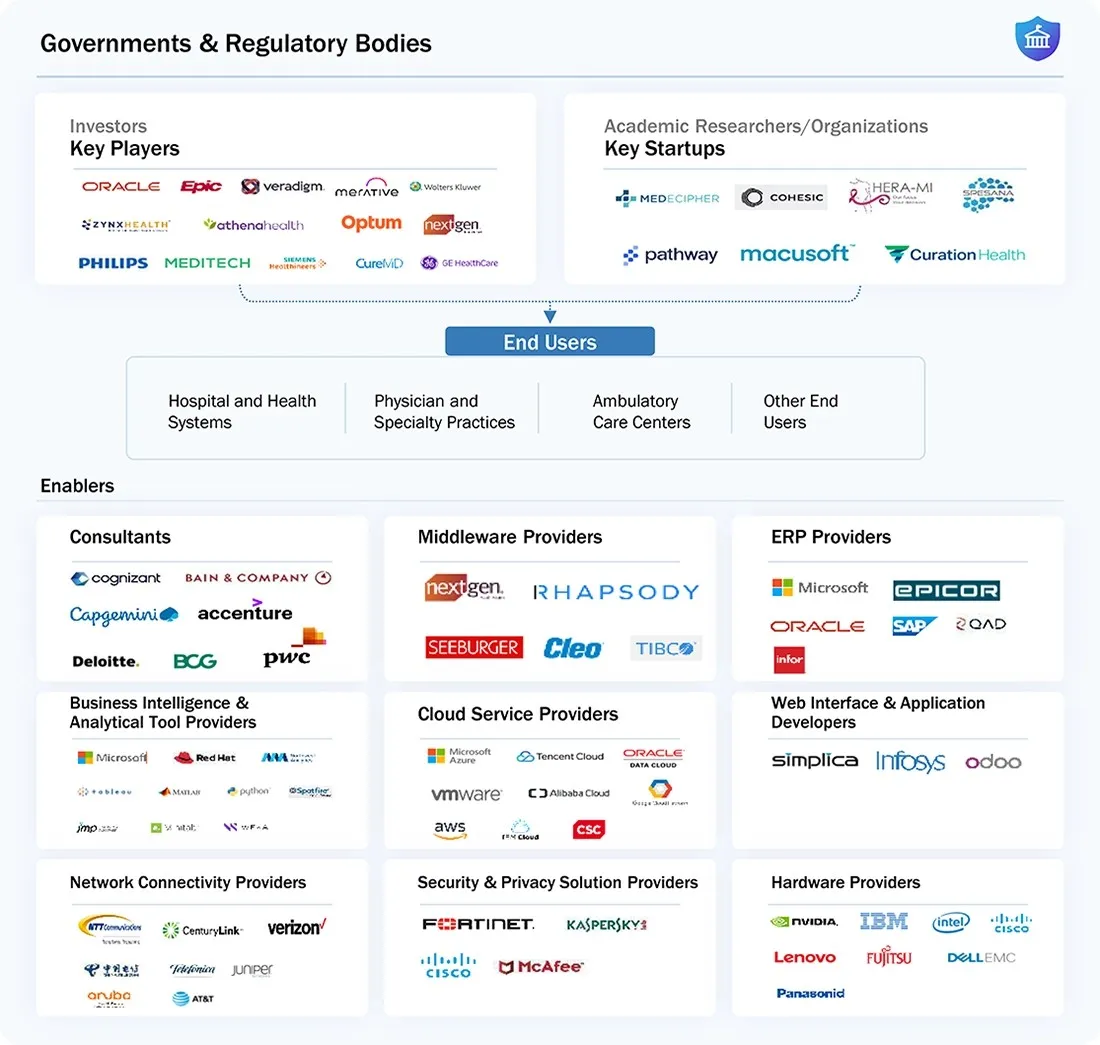
CLINICAL DECISION SUPPORT SYSTEMS MARKET: COMMERCIAL USE CASES ACROSS INDUSTRIES
| COMPANY | USE CASE DESCRIPTION | BENEFITS |
|---|---|---|
 |
Offers integrated clinical decision-support capabilities embedded within EHR workflows, including Best Practice Advisories (BPAs), medication management, predictive analytics, interoperability, and AI-assisted clinical workflows | Enhanced clinical decision-making, reduced medication errors, enhanced clinician productivity, streamlined workflows, automation and better care coordination |
 |
Provides evidence-based clinical decision-support solutions through UpToDate, UpToDate Lexidrug, and AI-enabled clinical intelligence tools supporting diagnosis, medication safety, and physician decision-making workflows | Improved evidence-based care delivery, enhanced clinical accuracy, reduced medication errors, faster point-of-care decision-making, and improved patient outcomes |
 |
Delivers AI-enabled and EHR-integrated clinical decision-support solutions to support physician workflows, care coordination, interoperability, clinical documentation, and enterprise healthcare operations through Oracle Health Clinical Suite and Clinical AI Agent | Enterprise-wide clinical visibility, improved interoperability, optimized workflow automation, enhanced operational efficiency, and scalable healthcare intelligence |
 |
Provides AI-enabled clinical decision support, population health management, and healthcare analytics solutions through integrated healthcare data platforms and evidence-based care intelligence tools | Improved clinical outcomes, enhanced care coordination, data-driven clinical decisions, and support for value-based healthcare delivery |
 |
Offers advanced predictive analytics, population health management, risk assessment, payer-provider intelligence, and operational decision-support solutions via integrated healthcare data and analytics platforms | Smooth financial operations, accurate insights, seamless operational workflows, improved care quality, enhanced population health outcomes |
Logos and trademarks shown above are the property of their respective owners. Their use here is for informational and illustrative purposes only.
Related Ecosystem
Healthcare It
- Computed Tomography (CT)
- Machine Learning
- Magnetic Resonance Imaging (MRI)
- Natural Language Processing (NLP)
- Predictive Analytics
- CERNER CORPORATION
- PHILIPS HEALTHCARE
- Oracle Corporation
- GE HealthCare Technologies Inc.
- Siemens healthineers
Key Takeaways
- Japan's CDSS market will grow from $86.5M (2025) to $144.5M (2030) at a 10.8% CAGR, outpacing global growth rates.
- Japan's aging population and chronic disease burden are primary drivers accelerating CDSS adoption across healthcare institutions.
- Japan's regulatory environment and advanced IT infrastructure support rapid digital health transformation and vendor competition.
- Japan's market will see increased localization of CDSS solutions to meet specific clinical workflows and language requirements by 2030.
Clinical Decision Support Systems (CDSS) Market Report Scope
| Report Metric | Details |
|---|---|
| Base Year | 2025 |
| Fastest Growing Segment | AMBULATORY CARE SETTINGS (Setting) |
| Forecast Period | 2025–2030 |
| Growth Rate | CAGR of 9.6% from 2025 to 2030 |
| Largest Segment | INPATIENT SETTINGS (Setting) |
| Market Size Base Year (Billions) | ~USD 2.46 (2025) |
| Revenue Forecast (Billions) | ~USD 3.89 (2030) |
| Segments Covered | Component, Product, Type, Model, Delivery Mode, Application, Interactivity Level, Setting |
Japan Clinical Decision Support Systems (CDSS) Market Report Segmentation
8 segment dimensions are covered across the global market.
By Component
- Hardware
- Services
- Software
By Product
- Integrated Cdss
- Standalone Cdss
By Type
- Diagnostic Cdss
- Therapeutic Cdss
By Model
- Knowledge-Based Cdss
- Non-Knowledge-Based Cdss
- Non-Knowledge-Based Dss
By Delivery Mode
- Cloud-Based Cdss
- On-Premise Cdss
By Application
- Advanced Cdss
- Conventional Cdss
By Interactivity Level
- Active Cdss
- Passive Cdss
By Setting
- Ambulatory Care Settings
- Inpatient Settings
JAPAN: CLINICAL DECISION SUPPORT SYSTEMS MARKET, BY APPLICATION, 2023–2030
| Segment | 2023 | 2024 | 2025 | 2026 | 2027 | 2028 | 2030 | CAGR (%) |
|---|---|---|---|---|---|---|---|---|
| ADVANCED CDSS | 47.6 | 53.3 | 59.8 | 67.2 | 75.6 | 85.1 | 108.6 | 12.7 |
| CONVENTIONAL CDSS | 65.4 | 71.2 | 77.6 | 84.7 | 92.6 | 101.3 | 122 | 9.5 |
| TOTAL | 113 | 124.5 | 137.4 | 151.8 | 168.1 | 186.5 | 230.7 | 10.9 |
Target Audience
- Healthcare IT Vendors : CDSS solution providers and healthcare technology companies need Japan-specific market data to develop localized products, establish distribution partnerships, and capture market share in this high-growth Asian healthcare market.
- Hospital & Clinic Administrators : Japanese healthcare facility leaders require market insights to justify CDSS investments, benchmark adoption rates against peers, and understand implementation best practices for improving diagnostic accuracy and operational efficiency.
- Investment & Private Equity Firms : Investors targeting healthcare technology need detailed Japan market analysis to evaluate investment opportunities, assess growth potential, and identify acquisition targets within the expanding CDSS sector.
- Healthcare Consultants & Analysts : Management consultants and healthcare strategists need Japan-specific CDSS market data to advise clients on digital transformation initiatives, technology adoption strategies, and competitive positioning in the Japanese healthcare landscape.
- Government & Policy Makers : Japanese healthcare policymakers and government agencies require market intelligence to inform digital health initiatives, funding decisions, and regulatory frameworks that support CDSS adoption and healthcare modernization goals.
Key Companies in the Japan Clinical Decision Support Systems (CDSS) Market
| Company | HQ | Ownership | Strongest segments |
|---|---|---|---|
| BIOMERIEUX S.A. | France | Public Company | Microbiology (culture media, VITEK 2, VITEK MS, BACT/ALERT, ETEST, API, CHEMUNEX, TEMPO, BIOBALL),Molecular diagnostics (BIOFIRE, BIOFIRE SPOTFIRE, ARGENE, EMAG/NUCLISENS, GENE-UP, VERIFLOW),Immunoassays and CLIA (VIDAS, Hybiome), |
| CONVERGYS | United States | Private Company | Customer care and technical support,Analytics and performance management,Collections and revenue cycle, |
| HILL-ROM HOLDINGS, INC. | United States | Private Company | Patient Support Systems (beds, surfaces, mobility),Front Line Care (monitoring, diagnostics, respiratory),Surgical Solutions (tables, lights, pendants, positioning), |
| IBM CORPORATION | United States | Public Company | Software (Hybrid Cloud & AI Platforms, Data, Automation),Consulting (Strategy, Technology Services, Intelligent Operations),Infrastructure (Servers, Storage, Hybrid Cloud Infrastructure Services), |
| WOLTERS KLUWER N.V. | Netherlands | Public Company | Health (clinical and GenAI solutions),Tax & Accounting (AI-powered software and research),Financial & Corporate Compliance, |
| ORACLE | United States | Public Company | Cloud applications (Fusion, NetSuite, Oracle Health, CX),Cloud infrastructure and database (OCI, Autonomous DB, MySQL),License support and on-premise licenses, |
| VERADIGM LLC | United States | Public Company | Ambulatory EHR and Practice Management (incl. ePrescribe, Practice Fusion, Veradigm EHR),Revenue Cycle, Clearinghouse, and Coding Services (Payerpath, RCM, Coding),Payer and Risk Adjustment Analytics (Health Equity, Risk Mitigator, Utilization Analytics), |
| ATHENAHEALTH | United States | Private Company | athenaOne (EHR + practice management + patient engagement),athenaIDX and broader revenue cycle management services,Payer solutions and advisory services, |
| KONINKLIJKE PHILIPS N.V. | Netherlands | Public Company | Diagnostic Imaging (MR, CT, Diagnostic X-ray, Ultrasound),Image Guided Therapy (Systems and Devices),Connected Care (Monitoring, Enterprise Informatics, Sleep & Respiratory Care), |
| MEDICAL INFORMATION TECHNOLOGY, INC. | United States | Private Company | Core acute-care EHR platforms,Laboratory and clinical department software,Financials, billing, and accounting, |
| NEXTGEN HEALTHCARE, INC. | United States | Private Company | Enterprise EHR (NextGen Enterprise EHR),Enterprise Practice Management (NextGen Enterprise PM),RCM and Managed Services, |
| SIEMENS HEALTHINEERS AG | Germany | Public Company | Imaging,Diagnostics,Varian (Oncology), |
BIOMERIEUX S.A.
BIOMERIEUX S.A. is a French public company founded in 1963 that employs 14,894 people. The company operates in the healthcare and diagnostics sector.
CONVERGYS
CONVERGYS is a United States-based private company founded in 1998 with 110,000 employees. The company provides business services and customer management solutions.
HILL-ROM HOLDINGS, INC.
HILL-ROM HOLDINGS, INC. is a United States-based private company founded in 1915 with 10,000 employees. The company operates in the medical device and healthcare equipment industry.
IBM CORPORATION
IBM CORPORATION is a United States-based public company founded in 1911 with 264,300 employees. The company is a global leader in information technology, software, and business services.
WOLTERS KLUWER N.V.
WOLTERS KLUWER N.V. is a Netherlands-based public company founded in 1836 with 19,812 employees. The company provides professional information, software solutions, and services for healthcare, legal, and business sectors.
ORACLE
ORACLE is a United States-based public company founded in 1977 with 141,000 employees. The company is a global leader in database software, cloud computing, and enterprise solutions.
VERADIGM LLC
VERADIGM LLC is a United States-based public company founded in 1986 with 2,300 employees. The company provides healthcare data and analytics solutions.
ATHENAHEALTH
ATHENAHEALTH is a United States-based private company founded in 1997 with 5,156 employees. The company provides cloud-based healthcare software and services for medical practices and hospitals.
KONINKLIJKE PHILIPS N.V.
KONINKLIJKE PHILIPS N.V. is a Netherlands-based public company founded in 1891 with 64,317 employees. The company is a global leader in healthcare technology, consumer electronics, and lighting solutions.
MEDICAL INFORMATION TECHNOLOGY, INC.
MEDICAL INFORMATION TECHNOLOGY, INC. is a United States-based private company founded in 1968 with 3,531 employees. The company develops healthcare information technology and electronic health record systems.
NEXTGEN HEALTHCARE, INC.
NEXTGEN HEALTHCARE, INC. is a United States-based private company founded in 1974 with 2,783 employees. The company provides healthcare IT software and services for medical practices and healthcare organizations.
SIEMENS HEALTHINEERS AG
SIEMENS HEALTHINEERS AG is a Germany-based public company founded in 1896 with 72,369 employees. The company is a global leader in medical imaging, diagnostics, and healthcare technology solutions.
Reasons to Buy this Report
- Market Size & Growth Validation : Obtain precise valuation data for Japan's CDSS market ($86.5M in 2025) with verified 10.8% CAGR projections through 2030, enabling accurate financial forecasting and investment decision-making specific to the Japanese healthcare sector.
- Competitive Landscape Intelligence : Understand Japan-specific market dynamics, key players, and competitive positioning within the CDSS sector to identify partnership opportunities, market entry strategies, and differentiation approaches for healthcare technology vendors.
- Demographic & Healthcare Insights : Access detailed analysis of Japan's aging population impact on CDSS demand, healthcare cost pressures, and clinical workflow optimization needs to align product development and marketing strategies with local market drivers.
- Regulatory & Implementation Trends : Gain insights into Japan-specific healthcare regulations, digital health initiatives, and institutional adoption patterns to navigate compliance requirements and accelerate market penetration in Japanese hospitals and medical facilities.
- Strategic Growth Opportunities : Identify high-potential segments, emerging use cases, and geographic hotspots within Japan's CDSS market to prioritize resource allocation, develop targeted go-to-market strategies, and maximize ROI on healthcare technology investments.
Frequently asked questions
What is the current size of Japan's CDSS market?
Japan's Clinical Decision Support Systems market was valued at $86.5 million in 2025 and is projected to grow to $144.5 million by 2030.
What is the growth rate for CDSS in Japan?
Japan's CDSS market is growing at a compound annual growth rate (CAGR) of 10.8% from 2025 to 2030, exceeding the global average.
What factors are driving CDSS adoption in Japan?
Japan's aging population, rising healthcare costs, chronic disease prevalence, regulatory support, and advanced healthcare infrastructure are key drivers of CDSS adoption.
Which healthcare segments in Japan are adopting CDSS most rapidly?
Japan's hospitals, diagnostic centers, and specialty clinics are leading CDSS adoption to improve diagnostic accuracy and optimize clinical workflows.
How is Japan's CDSS market expected to evolve by 2030?
Japan's market will see increased vendor investment, localized solution development, AI integration, and expanded adoption across primary and secondary care settings by 2030.
RESEARCH METHODOLOGY
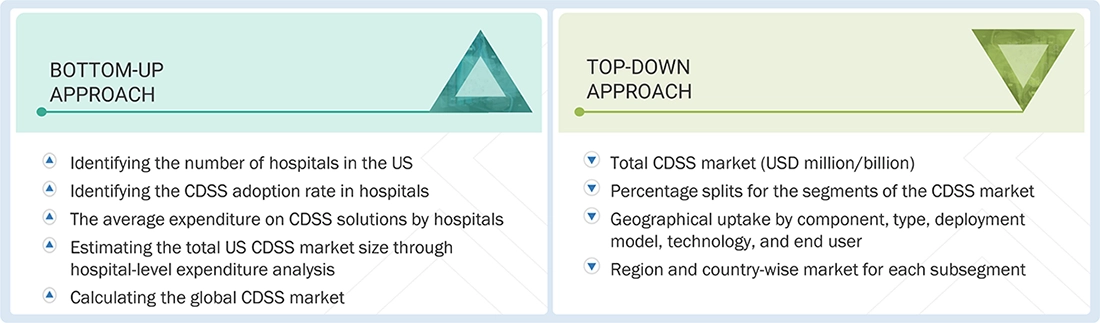
The study involved five major activities to estimate the current size of the clinical decision support systems (CDSS) market. Exhaustive secondary research was conducted to collect information on the market and its subsegments. The next step was to validate these findings, assumptions, and sizing with industry experts across the value chain through primary research. Both top-down and bottom-up approaches were employed to estimate the total market size. Thereafter, market breakdown and data triangulation procedures were used to estimate the market size of the segments and subsegments.
Secondary Research
This research study relied extensively on secondary sources, including directories, databases such as Bloomberg Business, Factiva, and Dun & Bradstreet, white papers, annual reports, company house documents, investor presentations, and SEC filings. Secondary research was used to identify and collect valuable information for this study. It was also used to obtain important information about the key players, market classification and segmentation according to industry trends down to the bottom-most level, and key market & technology developments. A database of the key industry leaders was also prepared using secondary research.
Some of the key secondary sources referred to for this study include:
- Healthcare Information and Management Systems Society (HIMSS)
- American Medical Informatics Association (AMIA)
- Agency for Healthcare Research and Quality (AHRQ)
- American Association of Healthcare Administrative Management (AAHAM)
- Organization for Economic Co-operation and Development (OECD)
- World Health Organization (WHO)
- Centers for Disease Control and Prevention (CDC)
- Institute for Health Technology Transformation (iHT2)
- American Medical Group Association (AMGA)
- International Association of Health Policy (IAHP)
- Institute of Population and Public Health (IPPH)
- Public Health Agency of Canada
- European Federation for Medical Informatics (EFMI)
- Australian Healthcare and Hospitals Association
- Investor Presentations, SEC Filings, and Company Annual Reports
- White Papers, Journals/Magazines, and News Articles
- Paid Databases, such as Factiva, D&B Hoovers, and Bloomberg Business
Primary Research
Extensive primary research was conducted after acquiring basic knowledge of the global CDSS market through secondary research. Several primary interviews were conducted with market experts from both the demand side (hospital directors, hospital vice presidents, department heads, and critical care specialists) and the supply side (C- and D-level executives, technology experts, product managers, marketing and sales managers, among others) across five major regions—North America, Europe, the Asia-Pacific, Latin America, the Middle East, and Africa. This primary data was collected through questionnaires, emails, online surveys, personal interviews, and telephone interviews. In the primary research process, various supply and demand sources were interviewed to obtain qualitative and quantitative information for this report. Primary sources are mainly industry experts from core and related industries, solution providers, technology vendors, system integrators, researchers, and organizations related to all segments of this industry’s value chain. In-depth interviews were conducted with various primary respondents, including key industry participants, subject-matter experts (SMEs), C-level executives of key market players, and industry consultants, among others, to obtain and verify critical qualitative and quantitative information and assess prospects. Primary research was conducted to identify segmentation types, industry trends, key players, and key market dynamics such as drivers, restraints, opportunities, challenges, and strategies adopted by key players.
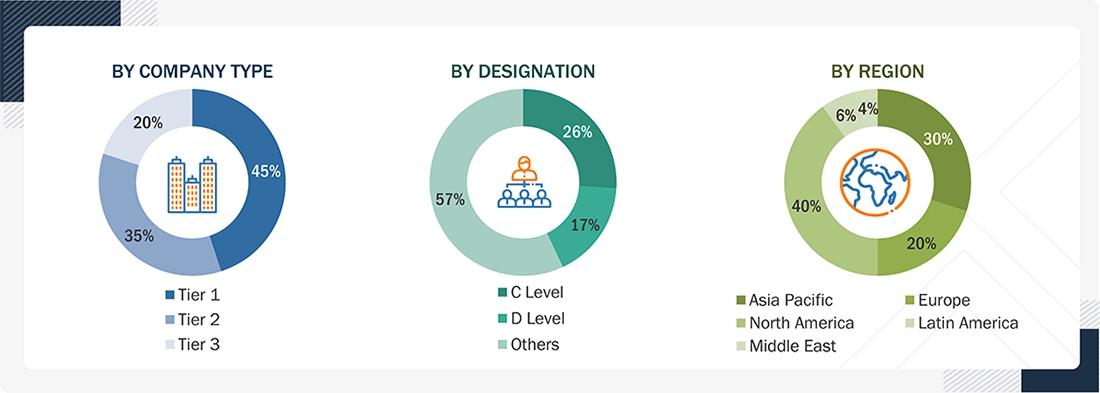
Note 1: C-level primaries include CEOs, CFOs, and CoOs.
Note 2: Others include sales managers, marketing managers, business development managers, product managers, distributors, and suppliers.
Note 3: Companies are classified into tiers based on their total revenues. As of 2024, Tier 1 = >USD 2 billion, Tier 2 = USD 50 million to USD 2 billion, and Tier 3 = <USD 50 million.
To know about the assumptions considered for the study, download the pdf brochure
Market Size Estimation
Both top-down and bottom-up approaches were used to estimate and validate the total size of the CDSS market. These methods were also used extensively to estimate the size of various market subsegments.
Data Triangulation
After determining the overall market size using the market size estimation processes, the market was split into several segments and subsegments. To complete the overall market engineering process and arrive at the exact statistics for each market segment and subsegment, data triangulation and market breakdown procedures were employed wherever applicable. The data was triangulated by studying various factors and trends from both, the demand and supply sides in the CDSS market.
Market Definition
Clinical decision support systems are designed to enhance clinical decision-making and improve healthcare outcomes. These Healthcare Information Technology (HCIT) systems provide timely, patient-specific information to healthcare providers, enabling appropriate clinical decisions based on the circumstances. These platforms help ensure that healthcare professionals provide evidence-based, high-value care to patients.
Key Stakeholders
- CDSS and CDSS-related Solution Provider Companies
- Venture Capitalists
- Healthcare Startups
- Hospitals (Public and Private)
- Ambulatory Surgery Centers (ASCs)
- Surgeons, Physicians, and Operating Room Staff
- Academic Medical Institutes
Report Objectives
- To define, describe, and forecast the global CDSS market based on component, type, technology, deployment, function, indication, end user, and region
- To provide detailed information regarding the major factors (such as drivers, restraints, opportunities, and challenges) influencing market growth
- To strategically analyze micromarkets with respect to individual growth trends, prospects, and contributions to the overall CDSS market
- To analyze opportunities in the market for stakeholders and provide details of the competitive landscape for market leaders
- To strategically analyze the market structure profile of the key players of the CDSS market and comprehensively analyze their core competencies
- To forecast the size of the market segments with respect to five regions, namely, North America, Europe, Asia Pacific, Latin America, and the Middle East & Africa.
- To track and analyze competitive developments such as product launches & enhancements, investments, partnerships, collaborations, acquisitions, expansions, agreements, sales contracts, and alliances in the CDSS market during the forecast period
Available customizations:
With the given market data, MarketsandMarkets offers customizations as per the company’s specific needs. The following customization options are available for the report:
- Product Analysis: Product matrix, which gives a detailed comparison of the product portfolios of each company.
- Geographic Analysis: Further breakdown of the Latin American CDSS into specific countries, the Middle East & Africa CDSS into specific countries, and further breakdown of the European CDSS into specific countries.
Get the Full Clinical Decision Support Systems (CDSS) Market Report
Full forecast, segment splits, and company analysis for all Clinical Decision Support Systems (CDSS) Market.
- China Clinical Decision Support Systems (CDSS) Market
- India Clinical Decision Support Systems (CDSS) Market
- Brazil Clinical Decision Support Systems (CDSS) Market
- Mexico Clinical Decision Support Systems (CDSS) Market
- US Clinical Decision Support Systems (CDSS) Market
- Canada Clinical Decision Support Systems (CDSS) Market
- Germany Clinical Decision Support Systems (CDSS) Market
- UK Clinical Decision Support Systems (CDSS) Market
- France Clinical Decision Support Systems (CDSS) Market
- Italy Clinical Decision Support Systems (CDSS) Market
- Spain Clinical Decision Support Systems (CDSS) Market
Need a Tailored Report?
Customize this report to your needs
Get 10% FREE Customization
Customize This Report
