
Latin America Clinical Decision Support Systems (CDSS) Market (2025-2030)

The Latin America Clinical Decision Support Systems (CDSS) Market was valued at $95.8 Million in 2025 and projected to reach to $146.8 Million by 2030, representing a compound annual growth rate of 8.9%.
Latin America Clinical Decision Support Systems (CDSS) Market Trends and Insights
- This 8.9% compound annual growth rate reflects Latin America's increasing adoption of digital health technologies and healthcare digitalization initiatives across the region.
- Latin America is witnessing growing investment in healthcare infrastructure modernization, driven by rising demand for improved clinical outcomes and operational efficiency in hospitals and medical facilities. The Latin America CDSS market is being shaped by regulatory reforms, expanding healthcare coverage, and the region's commitment to reducing diagnostic errors and enhancing patient safety.
- Latin America's healthcare providers are increasingly recognizing the value of data-driven clinical decision-making to optimize resource allocation and improve care quality.
- Between 2025 and 2030, Latin America is expected to see accelerated adoption of AI-powered diagnostic tools and integrated EHR systems, positioning the region as a growing hub for healthcare technology innovation..
Key Market Statistics
- CAGR (2025-2030) : 8.9% CAGR
- Market Size, 2025 : ~USD 95.8
- Forecast, 2030 : ~USD 146.8
- Region : Latin America
Latin America Clinical Decision Support Systems (CDSS) Market Overview
Market Valuation & Growth :
Latin America's CDSS market is valued at $95.8 million in 2025, with a projected CAGR of 8.9% through 2030, reaching $146.8 million. This growth outpaces many emerging markets and reflects strong regional momentum in healthcare digitalization.
Brazil's Market Leadership :
Brazil dominates Latin America's CDSS market with $43.2 million in market size, representing the largest healthcare IT investment in the region. The country's advanced healthcare infrastructure and regulatory framework drive adoption of clinical decision support technologies.
Digital Health Transformation :
Latin America is experiencing accelerated healthcare digitalization driven by government initiatives, increased telemedicine adoption post-pandemic, and growing investment in electronic health records (EHR) integration with decision support capabilities.
Emerging Market Opportunities :
Mexico and other Latin American nations show significant growth potential with $17.1 million and $53.3 million respectively in market size. Rising healthcare spending and regulatory modernization create expansion opportunities for CDSS vendors across the region.
Latin America Clinical Decision Support Systems (CDSS) Market Dynamics
Latin America's Clinical Decision Support Systems market is positioned for sustained growth as healthcare providers increasingly recognize the value of data-driven clinical decision-making. Government healthcare digitalization programs, coupled with rising adoption of electronic health records, are creating favorable conditions for CDSS implementation across hospitals, clinics, and primary care facilities throughout the region. The market's 8.9% CAGR reflects Latin America's commitment to improving healthcare quality and operational efficiency. Key drivers include growing physician demand for evidence-based decision tools, regulatory pressures to standardize care protocols, and investments in healthcare IT infrastructure. As Latin American healthcare systems mature and integrate advanced technologies, CDSS solutions will become increasingly essential for competitive differentiation and patient outcome improvement.
Related Ecosystem
Healthcare It
- Computed Tomography (CT)
- Machine Learning
- Magnetic Resonance Imaging (MRI)
- Natural Language Processing (NLP)
- Predictive Analytics
- CERNER CORPORATION
- PHILIPS HEALTHCARE
- Oracle Corporation
- GE HealthCare Technologies Inc.
-
Siemens healthineers
Key Takeaways
- Latin America's CDSS market is valued at $95.8 million in 2025 and will grow to $146.8 million by 2030, representing an 8.9% CAGR.
- Latin America is experiencing increased healthcare digitalization driven by regulatory reforms and expanding healthcare coverage across the region.
- Latin America's adoption of AI-powered diagnostic tools and integrated EHR systems is accelerating clinical decision support implementation.
- Latin America's healthcare providers are prioritizing patient safety and operational efficiency through data-driven clinical decision-making solutions.
Latin America Clinical Decision Support Systems (CDSS) Market Report Scope
| Report Metric | Details |
|---|---|
| Base Year | 2025 |
| Fastest Growing Segment | ACTIVE CDSS (Interactivity Level) |
| Forecast Period | 2025–2039 |
| Growth Rate | CAGR of 9.6% from 2025 to 2039 |
| Largest Segment | INTEGRATED CDSS (Product) |
| Market Size Base Year | 2.46 (2025) |
| Revenue Forecast | 3.89 (2039) |
| Segments Covered | Component, Product, Type, Model, Delivery Mode, Application, Interactivity Level, Setting |
Latin America Clinical Decision Support Systems (CDSS) Market Report Segmentation
8 segment dimensions are covered across the global market.
By Component
- Hardware
- Services
- Software
By Product
- Integrated Cdss
- Standalone Cdss
By Type
- Diagnostic Cdss
- Therapeutic Cdss
By Model
- Knowledge-Based Cdss
- Non-Knowledge-Based Cdss
- Non-Knowledge-Based Dss
By Delivery Mode
- Cloud-Based Cdss
- On-Premise Cdss
By Application
- Advanced Cdss
- Conventional Cdss
By Interactivity Level
- Active Cdss
- Passive Cdss
By Setting
- Ambulatory Care Settings
- Inpatient Settings
Target Audience
- Healthcare IT Vendors : CDSS software providers and healthcare IT companies need Latin America market data to develop regional go-to-market strategies, localize solutions for regulatory compliance, and identify partnership opportunities with local healthcare providers and distributors.
- Healthcare Providers & Hospital Networks : Hospital administrators, healthcare networks, and clinic operators require market insights to evaluate CDSS solutions, benchmark implementation costs, and understand adoption trends among peer institutions across Latin America.
- Investment & Private Equity Firms : Investors evaluating healthcare IT opportunities in Latin America need market sizing, growth projections, and competitive landscape analysis to assess investment potential and identify acquisition targets in the CDSS sector.
- Healthcare Consultants & Systems Integrators : Consulting firms and IT integrators serving Latin American healthcare clients require detailed market data to advise on CDSS implementation strategies, vendor selection, and technology roadmap planning aligned with regional market trends.
- Government & Healthcare Policy Makers : Latin American health ministries and regulatory bodies need market intelligence to inform healthcare digitalization policies, procurement strategies, and technology standards that drive CDSS adoption across public and private healthcare systems.
Key Companies in the Latin America Clinical Decision Support Systems (CDSS) Market
| Company | HQ | rev. share | Strongest segments |
|---|---|---|---|
| SIEMENS HEALTHINEERS AGPublic Company | Germany | 23066 |
SIEMENS HEALTHINEERS AG
Siemens Healthineers AG is a German multinational medical technology company founded in 1896 that develops and manufactures diagnostic imaging systems, laboratory diagnostics, and healthcare IT solutions. With approximately 72,369 employees, the company serves hospitals and healthcare providers worldwide as a publicly traded company.
Countries within Latin America - compare and drill down
| Country | 2025 size (native) |
|---|---|
| Brazil | USD 43.2 Million |
| Mexico | USD 17.1 Million |
| Rest Of Latin America | USD 53.3 Million |
Country market size visualization
Reasons to Buy this Report
- Regional Market Intelligence : Gain comprehensive insights into Latin America's $95.8 million CDSS market with country-level breakdowns for Brazil, Mexico, and emerging markets. Understand regional growth drivers and competitive dynamics specific to Latin American healthcare systems.
- Strategic Expansion Planning : Identify high-growth opportunities across Latin America with 8.9% CAGR projections through 2030. Leverage country-specific market data to prioritize market entry strategies and resource allocation in the region's most promising healthcare IT segments.
- Competitive Positioning : Benchmark your CDSS solutions against regional market trends and competitor activities in Latin America. Understand how Brazil's market leadership and Mexico's emerging potential shape competitive strategies and pricing models across the region.
- Regulatory & Implementation Insights : Navigate Latin America's diverse healthcare regulatory environments with detailed analysis of digitalization initiatives, EHR integration requirements, and government-mandated clinical standards driving CDSS adoption across countries.
- Investment Decision Support : Make informed investment and partnership decisions with validated market sizing, growth forecasts, and opportunity assessments for Latin America's healthcare IT sector. Understand which countries and segments offer the strongest ROI potential.
Frequently asked questions
What is the current market size of CDSS in Latin America?
Latin America's Clinical Decision Support Systems market was valued at $95.8 million in 2025 and is projected to reach $146.8 million by 2030.
What is the growth rate of the CDSS market in Latin America?
Latin America's CDSS market is growing at a compound annual growth rate (CAGR) of 8.9% from 2025 to 2030.
What factors are driving CDSS adoption in Latin America?
Latin America's CDSS adoption is driven by healthcare digitalization initiatives, regulatory reforms, expanding healthcare coverage, and the need to improve patient safety and clinical outcomes.
Which technologies are gaining traction in Latin America's CDSS market?
Latin America is seeing increased adoption of AI-powered diagnostic tools, integrated electronic health record (EHR) systems, and data-driven clinical decision-making platforms.
How much will the Latin America CDSS market grow by 2030?
Latin America's CDSS market is expected to grow by $51 million from 2025 to 2030, increasing from $95.8 million to $146.8 million.
RESEARCH METHODOLOGY
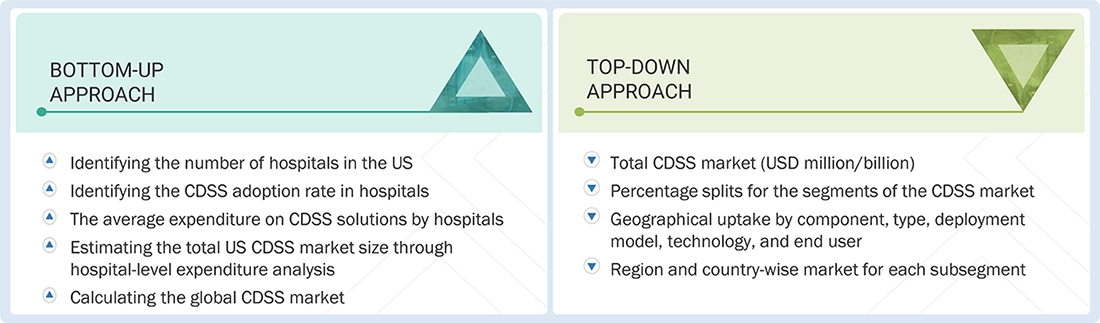
The study involved five major activities to estimate the current size of the clinical decision support systems (CDSS) market. Exhaustive secondary research was conducted to collect information on the market and its subsegments. The next step was to validate these findings, assumptions, and sizing with industry experts across the value chain through primary research. Both top-down and bottom-up approaches were employed to estimate the total market size. Thereafter, market breakdown and data triangulation procedures were used to estimate the market size of the segments and subsegments.
Secondary Research
This research study relied extensively on secondary sources, including directories, databases such as Bloomberg Business, Factiva, and Dun & Bradstreet, white papers, annual reports, company house documents, investor presentations, and SEC filings. Secondary research was used to identify and collect valuable information for this study. It was also used to obtain important information about the key players, market classification and segmentation according to industry trends down to the bottom-most level, and key market & technology developments. A database of the key industry leaders was also prepared using secondary research.
Some of the key secondary sources referred to for this study include:
- Healthcare Information and Management Systems Society (HIMSS)
- American Medical Informatics Association (AMIA)
- Agency for Healthcare Research and Quality (AHRQ)
- American Association of Healthcare Administrative Management (AAHAM)
- Organization for Economic Co-operation and Development (OECD)
- World Health Organization (WHO)
- Centers for Disease Control and Prevention (CDC)
- Institute for Health Technology Transformation (iHT2)
- American Medical Group Association (AMGA)
- International Association of Health Policy (IAHP)
- Institute of Population and Public Health (IPPH)
- Public Health Agency of Canada
- European Federation for Medical Informatics (EFMI)
- Australian Healthcare and Hospitals Association
- Investor Presentations, SEC Filings, and Company Annual Reports
- White Papers, Journals/Magazines, and News Articles
- Paid Databases, such as Factiva, D&B Hoovers, and Bloomberg Business
Primary Research
Extensive primary research was conducted after acquiring basic knowledge of the global CDSS market through secondary research. Several primary interviews were conducted with market experts from both the demand side (hospital directors, hospital vice presidents, department heads, and critical care specialists) and the supply side (C- and D-level executives, technology experts, product managers, marketing and sales managers, among others) across five major regions—North America, Europe, the Asia-Pacific, Latin America, the Middle East, and Africa. This primary data was collected through questionnaires, emails, online surveys, personal interviews, and telephone interviews. In the primary research process, various supply and demand sources were interviewed to obtain qualitative and quantitative information for this report. Primary sources are mainly industry experts from core and related industries, solution providers, technology vendors, system integrators, researchers, and organizations related to all segments of this industry’s value chain. In-depth interviews were conducted with various primary respondents, including key industry participants, subject-matter experts (SMEs), C-level executives of key market players, and industry consultants, among others, to obtain and verify critical qualitative and quantitative information and assess prospects. Primary research was conducted to identify segmentation types, industry trends, key players, and key market dynamics such as drivers, restraints, opportunities, challenges, and strategies adopted by key players.
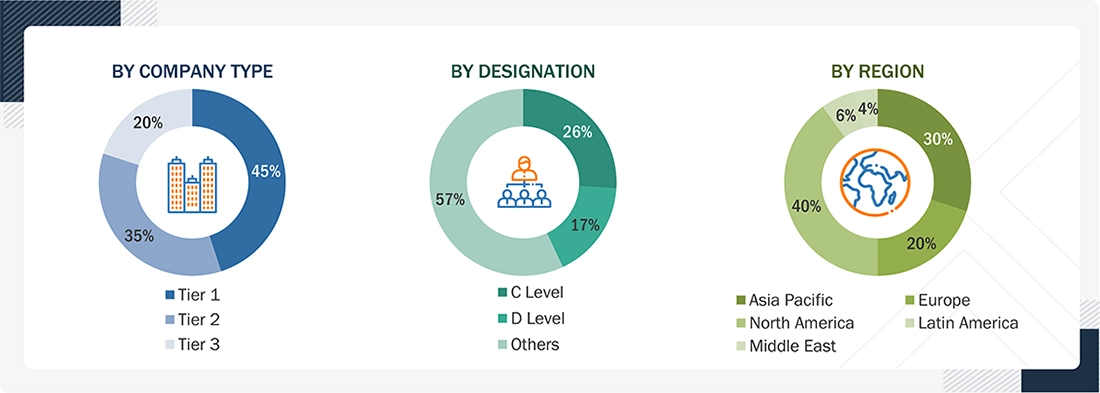
Note 1: C-level primaries include CEOs, CFOs, and CoOs.
Note 2: Others include sales managers, marketing managers, business development managers, product managers, distributors, and suppliers.
Note 3: Companies are classified into tiers based on their total revenues. As of 2024, Tier 1 = >USD 2 billion, Tier 2 = USD 50 million to USD 2 billion, and Tier 3 = <USD 50 million.
To know about the assumptions considered for the study, download the pdf brochure
Market Size Estimation
Both top-down and bottom-up approaches were used to estimate and validate the total size of the CDSS market. These methods were also used extensively to estimate the size of various market subsegments.
Data Triangulation
After determining the overall market size using the market size estimation processes, the market was split into several segments and subsegments. To complete the overall market engineering process and arrive at the exact statistics for each market segment and subsegment, data triangulation and market breakdown procedures were employed wherever applicable. The data was triangulated by studying various factors and trends from both, the demand and supply sides in the CDSS market.
Market Definition
Clinical decision support systems are designed to enhance clinical decision-making and improve healthcare outcomes. These Healthcare Information Technology (HCIT) systems provide timely, patient-specific information to healthcare providers, enabling appropriate clinical decisions based on the circumstances. These platforms help ensure that healthcare professionals provide evidence-based, high-value care to patients.
Key Stakeholders
- CDSS and CDSS-related Solution Provider Companies
- Venture Capitalists
- Healthcare Startups
- Hospitals (Public and Private)
- Ambulatory Surgery Centers (ASCs)
- Surgeons, Physicians, and Operating Room Staff
- Academic Medical Institutes
Report Objectives
- To define, describe, and forecast the global CDSS market based on component, type, technology, deployment, function, indication, end user, and region
- To provide detailed information regarding the major factors (such as drivers, restraints, opportunities, and challenges) influencing market growth
- To strategically analyze micromarkets with respect to individual growth trends, prospects, and contributions to the overall CDSS market
- To analyze opportunities in the market for stakeholders and provide details of the competitive landscape for market leaders
- To strategically analyze the market structure profile of the key players of the CDSS market and comprehensively analyze their core competencies
- To forecast the size of the market segments with respect to five regions, namely, North America, Europe, Asia Pacific, Latin America, and the Middle East & Africa.
- To track and analyze competitive developments such as product launches & enhancements, investments, partnerships, collaborations, acquisitions, expansions, agreements, sales contracts, and alliances in the CDSS market during the forecast period
Available customizations:
With the given market data, MarketsandMarkets offers customizations as per the company’s specific needs. The following customization options are available for the report:
- Product Analysis: Product matrix, which gives a detailed comparison of the product portfolios of each company.
- Geographic Analysis: Further breakdown of the Latin American CDSS into specific countries, the Middle East & Africa CDSS into specific countries, and further breakdown of the European CDSS into specific countries.
Get the Full Clinical Decision Support Systems (CDSS) Market Report
Full forecast, segment splits, and company analysis for all Clinical Decision Support Systems (CDSS) Market.
- US Clinical Decision Support Systems (CDSS) Market
- Canada Clinical Decision Support Systems (CDSS) Market
- Germany Clinical Decision Support Systems (CDSS) Market
- UK Clinical Decision Support Systems (CDSS) Market
- France Clinical Decision Support Systems (CDSS) Market
- Italy Clinical Decision Support Systems (CDSS) Market
- Spain Clinical Decision Support Systems (CDSS) Market
- China Clinical Decision Support Systems (CDSS) Market
- Japan Clinical Decision Support Systems (CDSS) Market
- India Clinical Decision Support Systems (CDSS) Market
- Brazil Clinical Decision Support Systems (CDSS) Market
- Mexico Clinical Decision Support Systems (CDSS) Market
- Rest Of Europe Clinical Decision Support Systems (CDSS) Market
- Rest Of Asia Pacific Clinical Decision Support Systems (CDSS) Market
- Rest Of Latin America Clinical Decision Support Systems (CDSS) Market
Need a Tailored Report?
Customize this report to your needs
Get 10% FREE Customization
Customize This Report