
Italy Diabetes Care Devices Market (2025-2030)

The Italy Diabetes Care Devices Market was valued at $1146.9 Million in 2025 and projected to reach to $1888.8 Million by 2030, representing a compound annual growth rate of 10.5%. Italy's diabetes care devices market is positioned for sustained growth driven by demographic pressures and technological advancement.


| Market Size in | USD 26.32 MN |
| Market Forecast in | |
| CAGR | |
| Forecast Period | |
| Units Considered | Value (USD MN) |
Italy Diabetes Care Devices Market Trends and Insights
- This represents a compound annual growth rate (CAGR) of 10.5%, reflecting increasing adoption of advanced monitoring and insulin delivery technologies across Italy's healthcare system.
- Italy's aging population and rising diabetes prevalence are driving demand for innovative glucose monitoring systems, insulin pumps, and connected devices that improve patient outcomes and quality of life. The Italian market benefits from strong healthcare infrastructure, reimbursement policies supporting diabetes management, and growing patient awareness of preventive care.
- Italy's position within the European healthcare landscape positions it as a key market for diabetes care device manufacturers seeking to expand their regional presence.
- Between 2025 and 2030, Italy is expected to see accelerated adoption of continuous glucose monitoring (CGM) systems and automated insulin delivery solutions, driven by both clinical evidence and patient preference for non-invasive, user-friendly devices. Key market participants are investing in Italy to capture growth opportunities in this expanding segment, with emphasis on digital integration and remote monitoring capabilities that align with modern healthcare delivery models..
Key Market Statistics
- CAGR (2025-2030) 10.5% CAGR
- Market Size, 2025 ~USD 1146.9 Million
- Forecast, 2030 ~USD 1888.8 Million
- Country Italy
Italy Diabetes Care Devices Market Overview
Market Valuation Growth :
Italy's diabetes care devices market is valued at USD 1,146.9 million in 2025, with projections reaching USD 1,888.8 million by 2030, demonstrating robust expansion opportunities in Southern Europe's healthcare sector.
Aging Population Dynamics :
Italy's demographic shift toward an older population is driving increased diabetes prevalence, creating sustained demand for continuous glucose monitoring systems, insulin pumps, and connected diabetes management devices.
Technology Adoption Acceleration :
Italian healthcare providers are increasingly integrating advanced monitoring and insulin delivery technologies into clinical practice, supported by favorable reimbursement policies and growing patient awareness of digital health solutions.
Regional Growth Trajectory :
With a CAGR of 10.5% through 2030, Italy's market growth outpaces many European peers, reflecting strong healthcare infrastructure investment and rising adoption of innovative diabetes management solutions among Italian patients.
Italy Diabetes Care Devices Market Dynamics
- The country's aging population, combined with increasing diabetes prevalence rates, creates a favorable environment for device manufacturers and healthcare providers.
- Italian healthcare institutions are progressively adopting advanced monitoring technologies and insulin delivery systems, supported by robust reimbursement frameworks and growing patient demand for personalized diabetes management solutions. Looking ahead to 2030, Italy's market expansion will be fueled by continued innovation in connected devices, integration of artificial intelligence in glucose monitoring, and enhanced digital health ecosystems.
- Strategic partnerships between device manufacturers and Italian healthcare providers, coupled with increased investment in diabetes education programs, will further accelerate market penetration and improve patient outcomes across the country..
Market Ecosystem
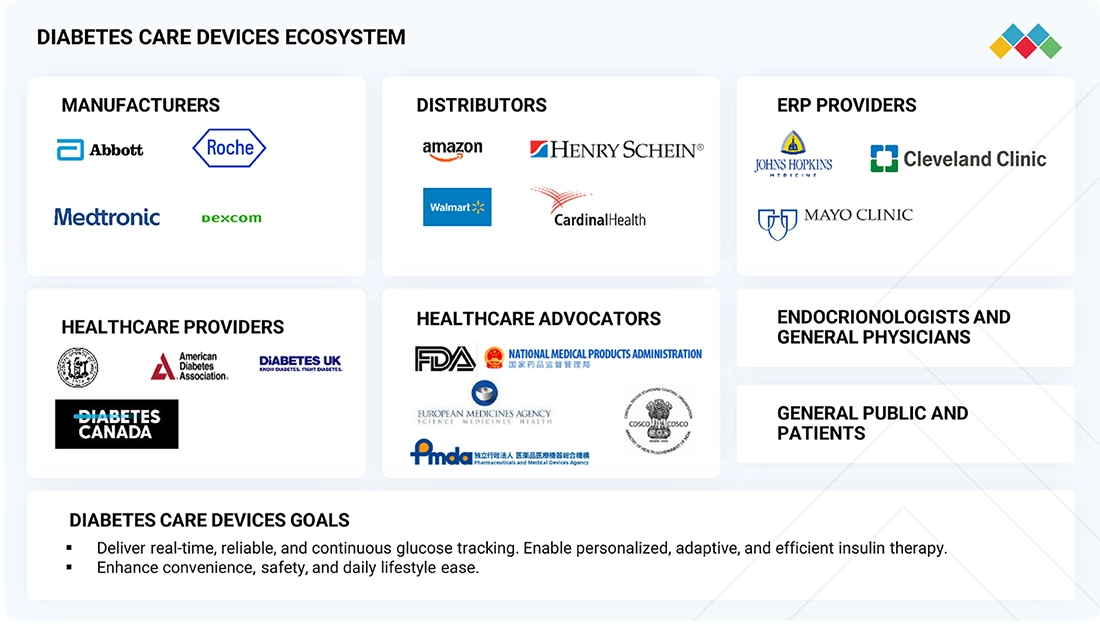
Diabetes Care Devices Market: COMMERCIAL USE CASES ACROSS INDUSTRIES
| COMPANY | USE CASE DESCRIPTION | BENEFITS |
|---|---|---|
 |
Continuous glucose monitoring (CGM) systems for real-time glucose tracking | Eliminates routine finger-pricks, provides continuous readings, improves diabetes control, and supports better lifestyle management |
 |
Automated insulin delivery (AID) systems integrating insulin pumps with CGM | Closed-loop insulin delivery, reduces hypoglycemia risk, customizable insulin dosing, improves time-in-range |
 |
Real-time CGM devices with smartphone connectivity for proactive diabetes management | High accuracy, seamless smartphone integration, customizable alerts, enables remote monitoring by caregivers |
 |
Tubeless insulin pump technology for discreet, wearable insulin delivery | Wireless and needle-free operation, flexible lifestyle integration, reduces injection burden, and enhances convenience |
 |
Blood glucose monitoring systems and digital diabetes management solutions | Reliable glucose testing, user-friendly meters, connectivity with apps for personalized insights, and cost-effective monitoring |
Logos and trademarks shown above are the property of their respective owners. Their use here is for informational and illustrative purposes only.
Related Ecosystem
Medical Devices
- Polymerase Chain Reaction (PCR)
- Magnetic Resonance Imaging (MRI)
- Disposable Autoinjectors
- Pulse Oximeters
- Blood Pressure Monitors
- Medtronic plc
- Abbott Laboratories
- Stryker Corporation
- Becton, Dickinson and Company
- JOHNSON & JOHNSON
Key Takeaways
- Italy's diabetes care devices market will grow from USD 1,146.9M (2025) to USD 1,888.8M (2030) at a 10.5% CAGR.
- Italy's aging demographic and rising diabetes prevalence are primary drivers of sustained market expansion through 2030.
- Continuous glucose monitoring and automated insulin delivery systems are gaining significant traction in Italy's healthcare ecosystem.
- Italy's robust reimbursement framework and healthcare infrastructure support accelerated adoption of advanced diabetes care technologies.
Diabetes Care Devices Market Report Scope
| Report Metric | Details |
|---|---|
| Base Year | 2025 |
| Fastest Growing Segment | DIABETES MANAGEMENT MOBILE APPLICATIONS (Product Type) |
| Forecast Period | 2025-2030 |
| Growth Rate | CAGR of 12.3% from 2025 to 2030 |
| Largest Segment | TYPE 2 DIABETES (Disease Type) |
| Market Size Base Year (Billions) | ~USD 34.27 (2025) |
| Revenue Forecast (Billions) | ~USD 61.2 (2030) |
| Segments Covered | Product Type, Type, Disease Type, Patient Care Settings |
Italy Diabetes Care Devices Market Report Segmentation
4 segment dimensions are covered across the global market.
By Product Type
- Blood Glucose Monitoring System
- Blood Glucose Monitoring Systems
- Diabetes Management Mobile Applications
- Insulin Delivery Devices
By Type
- Continuous Glucose Monitoring Systems
- Disposable Insulin Pens
- Insulin Pens
- Insulin Pumps & Accessories
- Insulin Syringes & Needles
- Lancets/Lancing Devices
- Other Insulin Delivery Devices
- Pen Needles
- Reusable Insulin Pens
- Self-Monitoring Blood Glucose Systems
- Test Strips/ Test Papers
- Test Strips/Test Papers
- Tethered Insulin Pumps
- Tubeless Insulin Pumps
By Disease Type
- Type 1 Diabetes
- Type 2 Diabetes
By Patient Care Settings
- Hospitals & Diabetes Specialty Clinics
- Self/ Home Healthcare
- Self/Home Healthcare
Target Audience
- Medical Device Manufacturers : Device companies seeking to expand or establish operations in Italy need market-specific data on demand drivers, competitive landscape, and regulatory pathways to optimize product launches and market penetration strategies.
- Healthcare Providers & Hospital Networks : Italian hospitals and healthcare systems require insights into emerging device technologies, procurement trends, and patient outcomes data to make informed purchasing decisions and improve diabetes care delivery.
- Investment & Private Equity Firms : Investors evaluating opportunities in Italy's healthcare sector need comprehensive market analysis, growth projections, and competitive intelligence to assess investment viability and identify high-potential acquisition targets.
- Pharmaceutical & Biotech Companies : Companies developing diabetes treatments and complementary devices need Italy-specific market data to understand device adoption rates, patient preferences, and partnership opportunities with device manufacturers.
- Healthcare Consultants & Analysts : Consulting firms and research organizations require detailed Italy market intelligence to support client advisory services, competitive benchmarking, and strategic planning in the diabetes care devices sector.
Reasons to Buy this Report
- Market Entry Strategy Development : Gain comprehensive insights into Italy's specific regulatory environment, reimbursement landscape, and competitive dynamics to develop targeted market entry strategies and identify optimal distribution channels for diabetes care devices.
- Investment Decision Support : Access detailed financial projections and growth forecasts specific to Italy's market, enabling informed investment decisions and resource allocation for healthcare companies and venture capital firms targeting Southern European expansion.
- Competitive Positioning Analysis : Understand Italy's unique market segmentation, key player strategies, and unmet patient needs to identify competitive advantages and differentiation opportunities within the Italian diabetes care devices sector.
- Healthcare Policy Alignment : Stay informed on Italy's healthcare policies, reimbursement trends, and regulatory requirements specific to diabetes devices, ensuring compliance and optimizing commercial strategies for the Italian market.
- Patient Demographics Insights : Leverage detailed demographic and epidemiological data on Italy's diabetic population to tailor product development, marketing campaigns, and patient engagement strategies for maximum market relevance and adoption.
Frequently asked questions
What is the current size of Italy's diabetes care devices market?
Italy's diabetes care devices market is valued at USD 1,146.9 million in 2025 and is expected to grow to USD 1,888.8 million by 2030.
What is the projected growth rate for Italy's diabetes care devices market?
Italy's diabetes care devices market is projected to grow at a compound annual growth rate (CAGR) of 10.5% from 2025 to 2030.
What are the main drivers of growth in Italy's diabetes care devices market?
Key growth drivers in Italy include an aging population, rising diabetes prevalence, increasing adoption of continuous glucose monitoring systems, improved reimbursement policies, and growing patient demand for connected and user-friendly devices.
Which diabetes care devices are most in demand in Italy?
Italy is experiencing strong demand for continuous glucose monitoring (CGM) systems, insulin pumps, automated insulin delivery solutions, and connected glucose monitoring devices that integrate with digital health platforms.
How does Italy's healthcare system support diabetes care device adoption?
Italy's strong healthcare infrastructure, established reimbursement policies for diabetes management devices, and emphasis on preventive care create a favorable environment for adoption of advanced diabetes care technologies.
RESEARCH METHODOLOGY
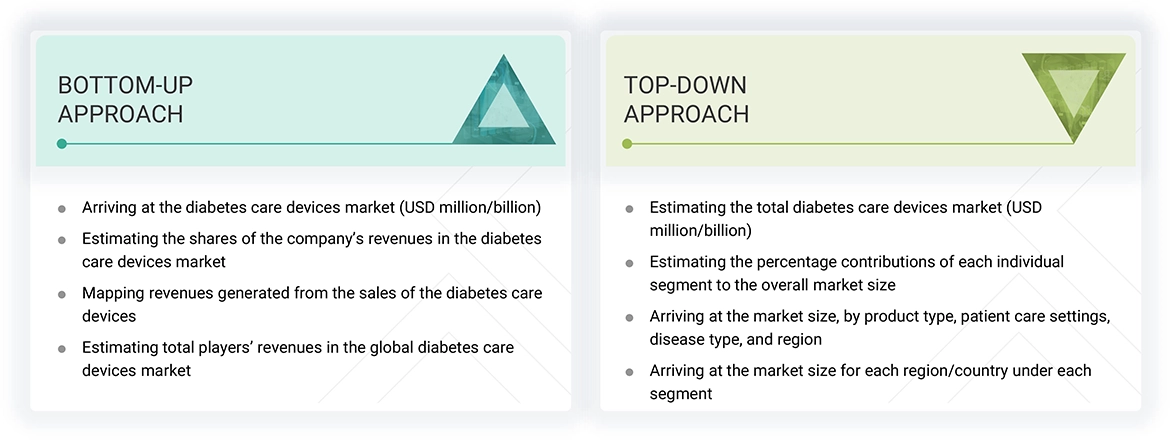
The study involved four main activities to estimate the current size of the diabetes care devices market. First, extensive secondary research was conducted to gather information about the market, including related and parent markets. The next step was validating these findings, assumptions, and market size estimates through primary research with industry experts across the value chain. Both top-down and bottom-up methods were used to develop a comprehensive estimate of the overall market size. Lastly, market segmentation and data triangulation techniques were employed to determine the sizes of segments and subsegments within the market.
Secondary Research
The secondary research process involved extensive use of various sources, including directories, databases like Bloomberg Business, Factiva, and D&B Hoovers, as well as white papers, annual reports, company house documents, investor presentations, and SEC filings. This research was conducted to gather information valuable for a comprehensive, technical, market-oriented, and commercial study of the diabetes care devices market. It also helped obtain critical insights about key industry players, market classification, and segmentation based on current industry trends, down to the finest details. Additionally, a database of leading industry players was created through this secondary research.
Primary Research
In the primary research process, we conducted interviews with various sources from both the supply and demand sides to gather qualitative and quantitative information for this report. On the supply side, industry experts, including CEOs, vice presidents, marketing and sales directors, technology and innovation directors, and other key executives from prominent companies and organizations involved in the diabetes care devices market, were interviewed. For the demand side, engagement with industry experts, purchase and sales managers, doctors, and personnel from research organizations was done. This primary research was essential to validate market segmentation, identify key players in the industry, and gather insights on important industry trends and market dynamics.
A breakdown of the primary respondents for the diabetes care devices market is provided below:
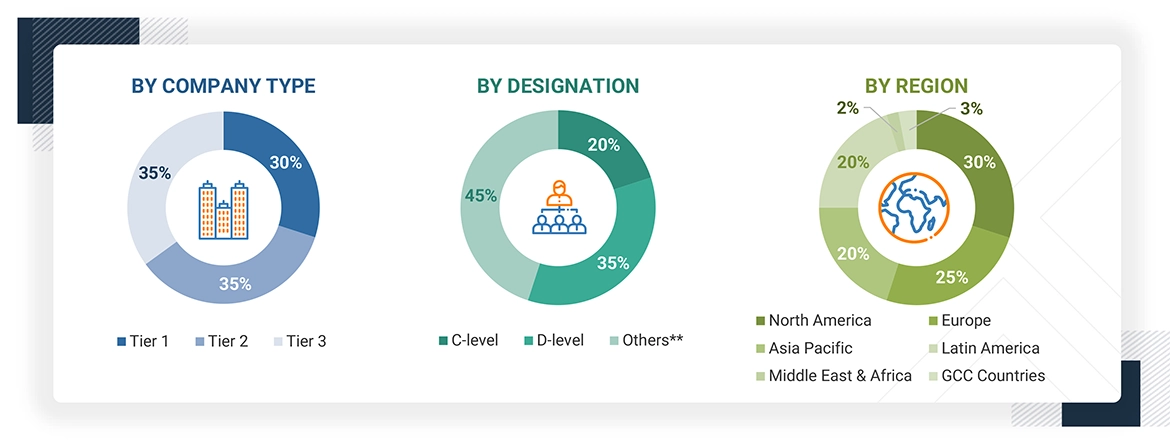
Note 1: C-level executives include CEOs, COOs, CTOs, and VPs.
Note 2: Others include sales, marketing, and product managers.
Note 3: Companies are classified into tiers based on their total revenue. As of 2024: Tier 1=>USD 1 billion, Tier 2 = USD 500 million to USD 1 billion, and Tier 3 = < USD 500 million.
To know about the assumptions considered for the study, download the pdf brochure
Market Size Estimation
The research methodology used to estimate the size of the diabetes care devices market includes the following details.
The market sizing was undertaken from the global side.
Country-level Analysis: The size of the diabetes care devices market was determined from annual presentations by leading companies and publicly available secondary data. The share of products and services within the overall diabetes care devices market was calculated using secondary data and verified by primary participants to arrive at the total market size. Primary participants also further validated the data numbers.
Geographic Market Assessment (By Region & Country): The geographic assessment was done using the following approaches:
Approach 1: Geographic revenue contributions/splits of leading players in the market (wherever available) and respective growth trends
Approach 2: Geographic adoption trends for individual product segments by end users and growth prospects for each of the segments (assumptions and indicative estimates validated from primary interviews)
At each stage, the assumptions and approaches were verified with industry experts contacted during primary research. Due to limitations in the data from secondary research, revenue estimates for individual companies (covering the overall diabetes care devices market and geographic market assessment) were determined based on a detailed analysis of their product offerings, geographic reach or strength (whether direct or through distributors or suppliers), and the market shares of leading players in specific regions and countries.
Global Diabetes Care Devices Market Size: Bottom-up and Top-down Approach
Data Triangulation
After determining the overall size from the market size estimation process described above, the total market was divided into several segments and subsegments. The data triangulation and market breakdown procedures outlined below were applied, where appropriate, to complete the overall market analysis and obtain precise statistics for various segments. The data was triangulated by examining different factors and trends from both demand and supply perspectives. Additionally, the market size was validated using both the top-down and bottom-up approaches.
Market Definition
The diabetes care devices includes medical technologies and tools used for monitoring, managing, and treating diabetes. It features blood glucose monitoring systems (such as glucometers, continuous glucose monitors, test strips, and lancets), insulin delivery devices (including insulin pens, pumps, syringes, and automated delivery systems), and related accessories. These devices help track glucose accurately, deliver insulin effectively, and improve patient outcomes by enabling better disease control, reducing complications, and enhancing quality of life. The market serves patients, healthcare providers, and caregivers and is driven by technological innovations, the rising prevalence of diabetes, and increasing demand for connected, user-friendly solutions.
Stakeholders
- Diabetes Care Devices’ Manufacturing Companies
- Contract Manufacturers
- Distributors, Suppliers, and Channel Partners of Diabetes Care Devices
- Senior Management
- Finance Department
- Procurement Department
- Hospitals & Clinics
- E-commerce and Digital Platforms
- Retail Pharmacies and Supermarkets
- Academic & Research Institutes
- Trade Associations and Industry Bodies
- Regulatory Bodies and Government Agencies
- Business Research and Consulting Service Providers
- Market Research and Consulting Firms
- Venture Capitalists and Investors
Report Objectives
- To define, describe, segment, analyse, and forecast the global diabetes care devices market by product type, disease type, patient care settings, and region
- To provide detailed information about the factors influencing market growth (drivers, restraints, opportunities, and challenges)
- To analyze micro markets concerning individual growth trends, prospects, and contributions to the overall market
- To analyze market opportunities for stakeholders and provide details of the competitive landscape for key players
- To forecast the size of the diabetes care devices market in North America, Europe, the Asia Pacific, Latin America, the Middle East & Africa, and the GCC countries
- To profile the key players in the diabetes care devices market and comprehensively analyze their core competencies
- To track and analyze competitive developments such as agreements, collaborations, and partnerships; expansions; acquisitions; and product launches & approvals in the diabetes care devices market
Get the Full Diabetes Care Devices Market Report
Full forecast, segment splits, and company analysis for all Diabetes Care Devices Market.
- Canada Diabetes Care Devices Market
- US Diabetes Care Devices Market
- Germany Diabetes Care Devices Market
- UK Diabetes Care Devices Market
- France Diabetes Care Devices Market
- Spain Diabetes Care Devices Market
- China Diabetes Care Devices Market
- Japan Diabetes Care Devices Market
- India Diabetes Care Devices Market
- Australia Diabetes Care Devices Market
- South Korea Diabetes Care Devices Market
- Brazil Diabetes Care Devices Market
- Mexico Diabetes Care Devices Market
- GCC Countries Diabetes Care Devices Market
- Rest Of Europe Diabetes Care Devices Market
- Rest Of Asia Pacific Diabetes Care Devices Market
- Rest Of Latin America Diabetes Care Devices Market
Need a Tailored Report?
Customize this report to your needs
Get 10% FREE Customization
Customize This Report
