
Rest Of GCC Digital Health Market (2025-2030)

The Rest Of GCC Digital Health Market was valued at $563.7 Million in 2025 and projected to reach to $1378.2 Million by 2030, representing a compound annual growth rate of 19.6%. The Rest Of GCC digital health market is positioned for sustained growth through 2030, driven by strategic government investments in healthcare infrastructure modernization and digital transformation programs.


| Market Size in | USD 26.32 MN |
| Market Forecast in | |
| CAGR | |
| Forecast Period | |
| Units Considered | Value (USD MN) |
Rest Of GCC Digital Health Market Trends and Insights
- Rest Of GCC is witnessing accelerated adoption of telehealth platforms, electronic health records, and mobile health applications driven by government healthcare digitalization initiatives and rising smartphone penetration.
- Rest Of GCC's digital health ecosystem is strengthened by increasing healthcare expenditure and a growing focus on preventive care solutions. Rest Of GCC demonstrates significant growth potential with a compound annual growth rate of 19.6% over the forecast period.
- Rest Of GCC's market expansion is supported by regulatory frameworks promoting digital health adoption and partnerships between public and private healthcare providers.
- Rest Of GCC's younger demographic and tech-savvy population are accelerating the uptake of digital health solutions, positioning the region as a key growth market within the broader GCC healthcare landscape..
Key Market Statistics
- CAGR (2025-2030) 19.6% CAGR
- Market Size, 2025 ~USD 563.7 Million
- Forecast, 2030 ~USD 1378.2 Million
- Country Rest Of GCC
Rest Of GCC Digital Health Market Overview
Market Valuation Growth :
Rest Of GCC digital health market valued at $563.7 million in 2025, expanding to $1,378.2 million by 2030, representing a robust 19.6% CAGR over the forecast period.
Telehealth Platform Adoption :
Accelerated deployment of telehealth solutions across Rest Of GCC driven by government healthcare digitalization mandates and increasing patient preference for remote consultation services.
Mobile Health Penetration :
Rising smartphone penetration in Rest Of GCC enabling widespread adoption of mobile health applications, supporting preventive care and chronic disease management initiatives.
Digital Infrastructure Investment :
Government-backed healthcare digitalization initiatives in Rest Of GCC countries fostering electronic health records implementation and interoperable health information systems.
Rest Of GCC Digital Health Market Dynamics
- Key catalysts include mandatory EHR adoption policies, expanding telehealth reimbursement frameworks, and increasing healthcare provider digitalization.
- The region's young, tech-savvy population and rising healthcare expenditure create favorable conditions for digital health solution penetration.
- However, regulatory harmonization across GCC nations and cybersecurity standardization remain critical implementation challenges.
- Market players must navigate diverse healthcare governance structures while addressing data privacy compliance requirements specific to each Rest Of GCC country..
Market Ecosystem
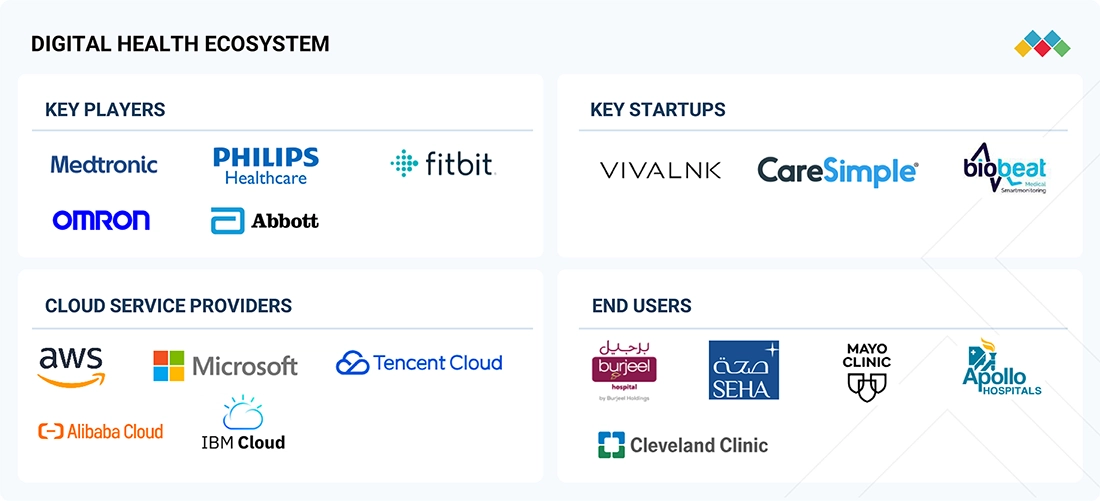
Digital Health Market: COMMERCIAL USE CASES ACROSS INDUSTRIES
| COMPANY | USE CASE DESCRIPTION | BENEFITS |
|---|---|---|
 |
Remote patient monitoring devices and digital care management platforms enabling continuous health data collection | Improved chronic disease outcomes, reduced hospital readmissions, enhanced patient engagement |
 |
Connected glucose monitors and wearable biosensors for real-time patient data sharing via mobile apps | Better therapy adherence, timely adjustments based on real-world data, and improved patient-provider communication |
 |
Continuous glucose monitoring (CGM) systems integrated with smartphones and digital health apps, enabling real-time remote tracking | Real-time intervention possible, better management of glucose levels, increased patient safety |
 |
Comprehensive telehealth solutions including RPM platforms, virtual care delivery, and integrated health data analytics to support hospital-at-home models | Greater access to care, lower healthcare costs, efficient resource utilization, improved patient satisfaction |
 |
Wearable fitness and health tracking devices providing real-time monitoring of activity, sleep, heart rate, and integration with RPM and telemedicine services | Early detection of health risks, better self-management, higher fitness adherence, integration with telehealth services |
Logos and trademarks shown above are the property of their respective owners. Their use here is for informational and illustrative purposes only.
Related Ecosystem
Healthcare Analytics
- Machine Learning
- Natural Language Processing (NLP)
- Blood Pressure Monitors
- Computed Tomography (CT)
- Magnetic Resonance Imaging (MRI)
- Oracle Corporation
- PHILIPS HEALTHCARE
- Siemens healthineers
- Zensar Technologies Limited
- EPIC SYSTEMS CORPORATION
Healthcare It
- Computed Tomography (CT)
- Machine Learning
- Magnetic Resonance Imaging (MRI)
- Natural Language Processing (NLP)
- Predictive Analytics
- CERNER CORPORATION
- PHILIPS HEALTHCARE
- Oracle Corporation
- GE HealthCare Technologies Inc.
- Siemens healthineers
Key Takeaways
- Rest Of GCC's digital health market will more than double from $563.7M (2025) to $1,378.2M (2030), reflecting strong regional demand.
- Rest Of GCC is achieving a 19.6% CAGR, driven by government digitalization initiatives and increasing healthcare technology investments.
- Rest Of GCC's telehealth and mobile health segments are expanding rapidly due to high smartphone adoption and younger population demographics.
- Rest Of GCC's market growth is supported by regulatory frameworks and public-private partnerships strengthening digital health infrastructure.
Digital Health Market Report Scope
| Report Metric | Details |
|---|---|
| Base Year | 2025 |
| Fastest Growing Segment | MENTAL HEALTH & BEHAVIORAL HEALTH (Disease) |
| Forecast Period | 2025–2030 |
| Growth Rate | CAGR of 23.6% from 2025 to 2030 |
| Largest Segment | SOLUTIONS/ APPLICATIONS (Offering) |
| Market Size Base Year (Billions) | ~USD 198.82 (2025) |
| Revenue Forecast (Billions) | ~USD 573.53 (2030) |
| Segments Covered | Offering, Type, Disease, Use Case, End User |
Rest Of GCC Digital Health Market Report Segmentation
5 segment dimensions are covered across the global market.
By Offering
- Hardware
- Solutions/ Applications
- Solutions/Application
- Solutions/Applications
By Type
- Clinical-Grade Wearable Healthcare Devices
- Clinics & Other Outpatient Settings
- Consumer-Graded Wearable Healthcare Devices
- Digital Diagnostics & At-Home Testing
- Digital Pharmacy & Medication Access
- Digital Therapeutics (Dtx)
- Handheld & Portable Devices
- Hospitals
- Implantable Devices
- Mhealth
- Other Digital Health Solutions/ Applications
- Other Healthcare Providers
- Other Solutions/ Applications
- Other Solutions/Applications
- Patient Portals
- Private Payers
- Public Payers
- Remote Patient Monitoring (Rpm)
- Stationary Devices
- Telehealthcare /Telemedicine
- Telehealthcare/ Telemedicine
- Telehealthcare/Telemedicine
- Virtual Care & Video Consultation
- Virtual Sitting & Nursing Platforms
- Wearables
By Disease
- Cardiology
- Diabetes
- Lifestyle & Wellness Improvement
- Mental Health & Behavioral Health
- Musculoskeletal Disorders/Pain Management
- Neurology
- Oncology
- Other Diseases
- Respiratory Disorders
- Women'S Health & Reproductive Health
By Use Case
- Diagnosis
- Other Use Cases
- Patient Monitoring
- Preventive Care & Wellness
- Rehabilitation & Recovery
- Treatment
By End User
- Healthcare Payers
- Healthcare Providers
- Other End User
- Other End Users
- Patients & Consumers
- Pharmaceutical, Biotechnology, & Medtech Companies
- Pharmaceutical, Biotechnology, And Medtech Companies
Target Audience
- Healthcare Technology Investors : Require Rest Of GCC-specific market sizing and growth forecasts to evaluate investment opportunities in digital health startups and established healthcare technology providers operating in the region.
- Digital Health Solution Providers : Need detailed Rest Of GCC market analysis to develop localized product strategies, identify adoption barriers, and prioritize market entry across individual GCC nations.
- Healthcare System Administrators : Seek Rest Of GCC benchmarking data on telehealth, EHR, and mobile health implementations to guide digital transformation roadmaps and technology procurement decisions.
- Government Health Policy Makers : Require market intelligence on Rest Of GCC digital health adoption trends and international best practices to inform healthcare digitalization policies and regulatory frameworks.
- Management Consulting Firms : Need Rest Of GCC-specific market data and regional insights to support client advisory engagements in healthcare digital transformation and market entry strategy development.
Key Companies in the Rest Of GCC Digital Health Market
| Company | HQ | Ownership | Strongest segments |
|---|---|---|---|
| ELEVANCE HEALTH | United States | Public Company | Digital Health – Telehealth & Virtual Care (incl. RPM),Digital Health – Pharmacy Apps & Platforms,Digital Health – Data, Analytics, and HealthOS Platform, |
| MEDTRONIC | Ireland | Public Company | Hardware – Implants (cardiac, neuro, other connected devices),Hardware – Wearables and sensors (CGM, external monitors),Apps – Telehealth / RPM platforms, |
| ABBOTT | United States | Public Company | Hardware – Wearables (e.g., glucose monitoring, connected CVS devices),Hardware – Implants (e.g., structural heart, neuromodulation, implantable CVS devices),Apps – Telehealth (RPM-focused around Abbott devices), |
| DEXCOM, INC. | United States | Public Company | Hardware – CGM wearables and sensors (Dexcom G7, G7 15 Day, G6, Dexcom ONE+),Apps and digital services (Dexcom Share, Dexcom Follow, telehealth/RPM integrations, Stelo biosensor ecosystem), |
| KONINKLIJKE PHILIPS N.V. | Netherlands | Public Company | Hardware – Wearables,Hardware – Implants,Apps – Telehealth (RPM), |
| APPLE, INC. | United States | Public Company | Hardware – Wearables (Apple Watch and related devices),Apps & Services – Health, Fitness+, and App Store health apps,Hardware – Other devices (iPhone, iPad, Vision Pro used in health), |
| BOSTON SCIENTIFIC CORPORATION | United States | Public Company | Hardware – Implants (cardiac, neuromodulation, urology with connectivity/RPM),Hardware – Wearables and external monitoring systems,Apps – Telehealth (RPM platforms and clinician dashboards), |
| MASIMO | United States | Private Company | Hardware – Wearables and Professional Monitors,Hardware – Implants and Specialized Sensors,Apps – Telehealth (RPM) and Connectivity Platforms, |
| TELADOC HEALTH, INC. | United States | Public Company | Telehealth & Integrated Care (general and specialty medical, enterprise telehealth, RPM-enabled programs),BetterHelp Mental Health Platform (apps, web, phone, text-based counseling),Hardware & Devices (RPM peripherals, connected wearables and implants enablement), |
| AMERICAN WELL | United States | Public Company | Apps – Telehealth (RPM) and Hybrid Care Platform (Amwell Platform, Converge),Apps – Behavioral Health, DTx-like Specialty Programs, Patient Portals,Hardware – Carepoint Carts, Device Enablement (Wearables/Implants Integration Points), |
| HIMS & HERS HEALTH, INC. | United States | Public Company | Apps – Telehealth (RPM) and Medical Consultation,Apps – Pharmacy and Patient Portals,Apps – DTx and Mental Health Programs, |
ELEVANCE HEALTH
Elevance Health is a United States-based public company founded in 2001 that operates as a major health insurance and managed care organization. With 96,615 employees, the company provides health insurance plans and related healthcare services to millions of members across the country.
MEDTRONIC
Medtronic is a publicly traded medical technology company founded in 1949 and headquartered in Ireland. With approximately 95,000 employees, the company develops and manufactures medical devices and therapies across cardiology, neuroscience, oncology, and other therapeutic areas.
ABBOTT
Abbott is a diversified healthcare company founded in the United States in 1888 and operates as a public company. With 115,000 employees, Abbott manufactures and sells pharmaceuticals, medical devices, diagnostics, and nutritional products globally.
DEXCOM, INC.
Dexcom, Inc. is a United States-based public company founded in 1999 that specializes in continuous glucose monitoring systems for diabetes management. With 11,050 employees, the company develops and commercializes real-time glucose monitoring technology.
KONINKLIJKE PHILIPS N.V.
Koninklijke Philips N.V. is a Dutch multinational public company founded in 1891 that operates in healthcare, consumer lifestyle, and lighting sectors. With 63,670 employees, Philips manufactures medical devices, diagnostic imaging systems, and health-related consumer products.
APPLE, INC.
Apple, Inc. is a United States-based technology company founded in 1976 that operates as a public company with 166,000 employees. While primarily known for consumer electronics, Apple has expanded into health and wellness through wearable devices like the Apple Watch.
BOSTON SCIENTIFIC CORPORATION
Boston Scientific Corporation is a United States-based public company founded in 1979 with 59,000 employees that develops and manufactures medical devices. The company specializes in interventional medical devices for cardiology, gastroenterology, oncology, and other therapeutic areas.
MASIMO
Masimo is a United States-based private company founded in 1989 with 2,200 employees that develops noninvasive monitoring technologies. The company specializes in pulse oximetry, capnography, and other patient monitoring solutions for hospitals and home care settings.
TELADOC HEALTH, INC.
Teladoc Health, Inc. is a United States-based public company founded in 2002 with 5,124 employees that provides virtual healthcare services. The company operates a telehealth platform connecting patients with physicians and specialists for remote medical consultations.
AMERICAN WELL
American Well is a United States-based public company founded in 2006 with 562 employees that operates a digital healthcare platform. The company provides telehealth solutions enabling patients to access virtual care from healthcare providers.
HIMS & HERS HEALTH, INC.
Hims & Hers Health, Inc. is a United States-based public company with 2,442 employees that provides direct-to-consumer telehealth and prescription services. The company offers virtual consultations and home delivery of medications for various health conditions.
Reasons to Buy this Report
- Market-Specific Growth Projections : Access precise valuation data and CAGR forecasts exclusive to Rest Of GCC, enabling accurate investment planning and resource allocation decisions tailored to regional market dynamics.
- Competitive Landscape Intelligence : Identify market entry opportunities and competitive positioning strategies specific to Rest Of GCC's unique healthcare regulatory environment and digital adoption patterns.
- Government Initiative Tracking : Understand country-specific healthcare digitalization mandates and policy drivers across Rest Of GCC nations influencing telehealth, EHR, and mobile health implementation timelines.
- Regional Adoption Benchmarks : Benchmark digital health solution adoption rates and smartphone penetration metrics specific to Rest Of GCC populations for targeted market expansion strategies.
- Investment Risk Assessment : Evaluate regulatory compliance requirements, cybersecurity standards, and data privacy frameworks specific to Rest Of GCC countries to mitigate market entry and operational risks.
Frequently asked questions
What is the current size of the digital health market in Rest Of GCC?
Rest Of GCC's digital health market is valued at $563.7 million in 2025 and is expected to grow significantly through 2030.
What is the projected market size for Rest Of GCC by 2030?
Rest Of GCC's digital health market is forecasted to reach $1,378.2 million by 2030, representing substantial growth over the five-year period.
What is the CAGR for Rest Of GCC's digital health market?
Rest Of GCC's digital health market is growing at a compound annual growth rate of 19.6% from 2025 to 2030.
What are the primary drivers of growth in Rest Of GCC's digital health market?
Rest Of GCC's growth is driven by government healthcare digitalization initiatives, rising smartphone penetration, increasing healthcare expenditure, and a tech-savvy younger population.
Which digital health segments are growing fastest in Rest Of GCC?
Rest Of GCC is experiencing rapid expansion in telehealth platforms, electronic health records, and mobile health applications, supported by regulatory frameworks and public-private partnerships.
RESEARCH METHODOLOGY
The study involved several key activities to estimate the current size of the digital health market. Extensive secondary research was conducted to gather information on this market. The next step was to validate the findings, assumptions, and size estimates by consulting industry experts throughout the value chain through primary research. Various methods, including top-down and bottom-up approaches, were employed to estimate the overall market size. Following this, market segmentation and data triangulation techniques were used to determine the size of specific segments and subsegments within the digital healthcare market.
Secondary Research
This research study involved the wide use of secondary sources, directories, and databases such as Dun & Bradstreet, Bloomberg Business, and Factiva; white papers, annual reports, and companies’ house documents; investor presentations; and the SEC filings of companies. The market for companies providing digital healthcare solutions is assessed using secondary data from both paid and free sources. This involves analyzing the product portfolios of major players in the industry and evaluating these companies based on their performance and quality. Various resources were utilized in the secondary research process to gather information for this study. The sources include annual reports, press releases, investor presentations, white papers, academic journals, certified publications, articles by recognized authors, directories, and databases.
Secondary research was used to identify and collect information useful for the extensive, technical, market-oriented, and commercial study of the digital healthcare market. It was also used to obtain important information about the key players and market classification and segmentation according to industry trends to the bottom-most level, and key developments related to market and technology perspectives. A database of the key industry leaders was also prepared using secondary research.
Primary Research
In the primary research process, various primary sources from both the supply and demand sides were interviewed to obtain qualitative and quantitative information for this report. Primary sources are mainly industry experts from the core and related industries and preferred suppliers, manufacturers, distributors, technology developers, researchers, and organizations related to all segments of this industry’s value chain. In-depth interviews were conducted with various primary respondents, including key industry participants, subject-matter experts, C-level executives of key market players, and industry consultants, among other experts, to obtain and verify the critical qualitative and quantitative information as well as assess prospects.
Primary research was conducted to identify segmentation types, industry trends, key players, and key market dynamics such as drivers, restraints, opportunities, challenges, and strategies adopted by key players.
After completing the market engineering process, which includes calculations for market statistics, market breakdown, size estimations, forecasting, and data triangulation, extensive primary research was conducted. This research aimed to gather information and verify the critical numbers obtained during the market analysis. Additionally, primary research was conducted to identify different types of market segmentation, analyze industry trends, evaluate the competitive landscape of digital healthcare offered by various players, and understand key market dynamics such as drivers, restraints, opportunities, challenges, industry trends, and strategies employed by key market participants.
In the complete market engineering process, the top-down and bottom-up approaches and several data triangulation methods were extensively used to perform the market estimation and market forecasting for the overall market segments and subsegments listed in this report. Extensive qualitative and quantitative analysis was performed on the complete market engineering process to list the key information/insights throughout the report.
A breakdown of the primary respondents:
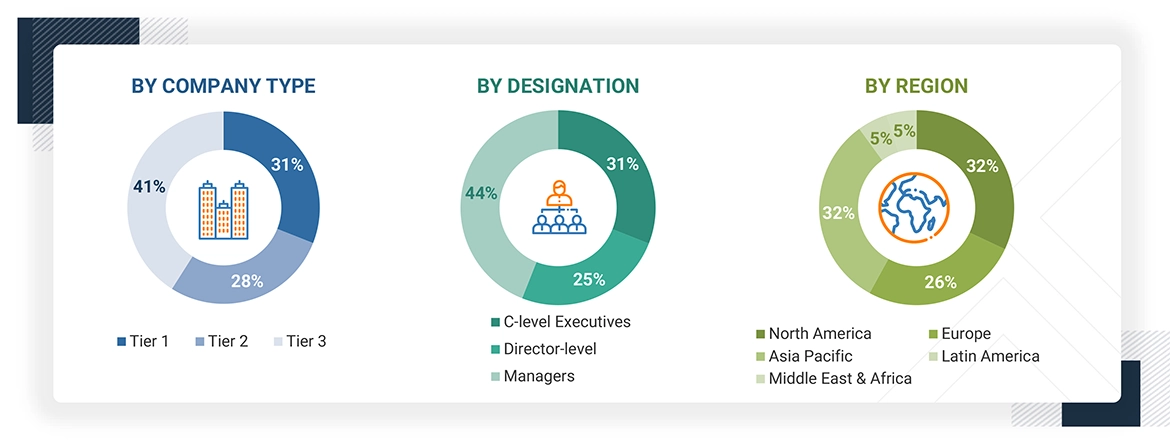
Others include sales, marketing, and product managers.
Note: Tiers are defined based on a company’s total revenue, as of 2024: Tier 1 = >USD 1 billion, Tier 2 = USD 500 million to USD 1 billion, and Tier 3 = < USD 500 million.
To know about the assumptions considered for the study, download the pdf brochure
Market Size Estimation
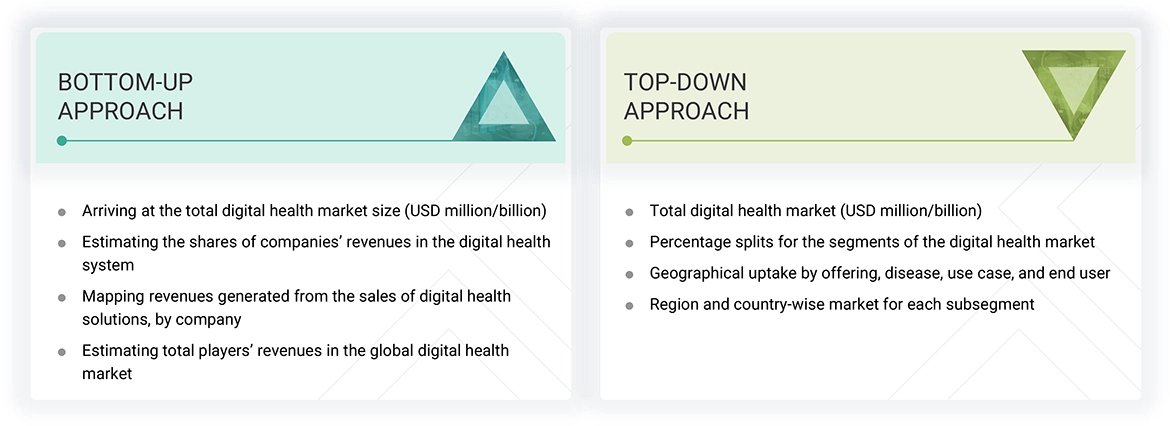
The market size estimates and forecasts provided in this study are derived through a mix of the bottom-up approach (revenue share analysis of leading players) and top-down approach (assessment of utilization/adoption/penetration trends, by offering, disease, use case, end user, and region).
Market Definition
The digital health market covers hardware, software, and services that use technology to improve healthcare delivery, patient outcomes, and system efficiency. It includes consumer-facing wellness, self-management applications, regulated medical software and device solutions, interoperable platforms, connectivity tools, and embedded sensor systems. Its applications span preventive care, diagnosis, treatment, patient engagement, remote monitoring, and health system management, driving more personalized, efficient, and data-driven healthcare.
Stakeholders
- Healthcare Providers
- Digital Health Providers
- Healthcare Payers
- Healthcare Consumers
- Academic Research Institutes
- Pharmaceutical and Biotechnology Companies
- Medical Device Companies
- Telehealth & Virtual Care Providers
- Government Institutions
- Market Research and Consulting Firms
- Venture Capitalists and Investors
Report Objectives
- To define, describe, and forecast the global digital health market based on offering, disease, use case, end user, and region
- To provide detailed information regarding the factors influencing the growth of the market (such as drivers, restraints, opportunities, and challenges)
- To strategically analyze micromarkets with respect to individual growth trends, prospects, and contributions to the overall digital health market
- To analyze market opportunities for stakeholders and provide details of the competitive landscape for market leaders
- To forecast the size of the digital health market in five main regions (along with their respective key countries): North America, Europe, the Asia Pacific, Latin America, and the Middle East & Africa
- To profile key players and comprehensively analyze their product portfolios, market positions, and core competencies in the market
- To track and analyze competitive developments such as product & service launches, expansions, partnerships, agreements, and collaborations, and acquisitions in the digital health market
- To benchmark players within the digital health market using the Company Evaluation Matrix framework, which analyzes market players on various parameters within the broad categories of business strategy, market share, and product offering
Get the Full Digital Health Market Report
Full forecast, segment splits, and company analysis for all Digital Health Market.
- Australia Digital Health Market
- Brazil Digital Health Market
- Canada Digital Health Market
- China Digital Health Market
- France Digital Health Market
- GCC Digital Health Market
- Germany Digital Health Market
- India Digital Health Market
- Italy Digital Health Market
- Japan Digital Health Market
- Mexico Digital Health Market
- Rest Of Asia Pacific Digital Health Market
- Rest Of Europe Digital Health Market
- Rest Of Latin America Digital Health Market
- Rest Of The Middle East And Africa Digital Health Market
- Saudi Arabia Digital Health Market
- South Africa Digital Health Market
- South Korea Digital Health Market
- Spain Digital Health Market
- UAE Digital Health Market
- UK Digital Health Market
- US Digital Health Market
Need a Tailored Report?
Customize this report to your needs
Get 10% FREE Customization
Customize This Report