
Rest Of The Middle East And Africa Digital Health Market (2025-2030)

The Rest Of The Middle East And Africa Digital Health Market was valued at $767.8 Million in 2025 and projected to reach to $1815.3 Million by 2030, representing a compound annual growth rate of 18.8%. Rest Of The Middle East And Africa's digital health market is positioned for substantial growth through 2030, driven by increasing healthcare accessibility demands, rising chronic disease prevalence, and government initiatives promoting healthcare digitalization.


| Market Size in | USD 26.32 MN |
| Market Forecast in | |
| CAGR | |
| Forecast Period | |
| Units Considered | Value (USD MN) |
Rest Of The Middle East And Africa Digital Health Market Trends and Insights
- This represents an 18.8% compound annual growth rate, reflecting strong regional adoption of telehealth, electronic health records, and mobile health solutions.
- Rest Of The Middle East And Africa is capitalizing on increasing healthcare digitalization initiatives and rising smartphone penetration to modernize healthcare delivery systems. Rest Of The Middle East And Africa's digital health sector is driven by government investments in healthcare infrastructure and growing demand for remote patient monitoring solutions.
- The region's market expansion is supported by a young, tech-savvy population and improving internet connectivity across urban and emerging markets.
- Rest Of The Middle East And Africa is positioning itself as a key growth hub within the broader Middle East and Africa region, with significant opportunities in cloud-based health platforms and AI-enabled diagnostic tools through 2030..
Key Market Statistics
- CAGR (2025-2030) 18.8% CAGR
- Market Size, 2025 ~USD 767.8 Million
- Forecast, 2030 ~USD 1815.3 Million
- Country Rest Of The Middle East And Africa
Rest Of The Middle East And Africa Digital Health Market Overview
Strong Regional Growth Trajectory :
Rest Of The Middle East And Africa's digital health market is expanding at 18.8% CAGR, growing from USD 767.8 million in 2025 to USD 1,815.3 million by 2030, demonstrating accelerating healthcare digitalization across diverse economies.
Telehealth and Mobile Health Adoption :
The region is rapidly adopting telehealth platforms and mobile health solutions, driven by increasing smartphone penetration, improving internet infrastructure, and growing demand for accessible healthcare services in underserved areas.
Electronic Health Records Implementation :
Healthcare providers across Rest Of The Middle East And Africa are increasingly implementing EHR systems to improve patient data management, clinical efficiency, and interoperability, supported by government healthcare digitalization initiatives.
Investment in Healthcare Infrastructure :
Rising healthcare expenditures and government support for digital transformation are creating favorable conditions for digital health vendors, with emerging markets showing particular momentum in cloud-based and AI-enabled healthcare solutions.
Rest Of The Middle East And Africa Digital Health Market Dynamics
- The region's young, tech-savvy population and expanding middle class are accelerating adoption of digital health solutions across urban and emerging markets. Key growth drivers include improving broadband connectivity, smartphone proliferation, and healthcare provider investments in digital infrastructure.
- Telehealth platforms and mobile health applications are addressing geographical healthcare disparities, while EHR implementations enhance clinical outcomes.
- Strategic partnerships between regional healthcare providers and global digital health vendors are expected to accelerate market penetration and innovation throughout the forecast period..
Market Ecosystem
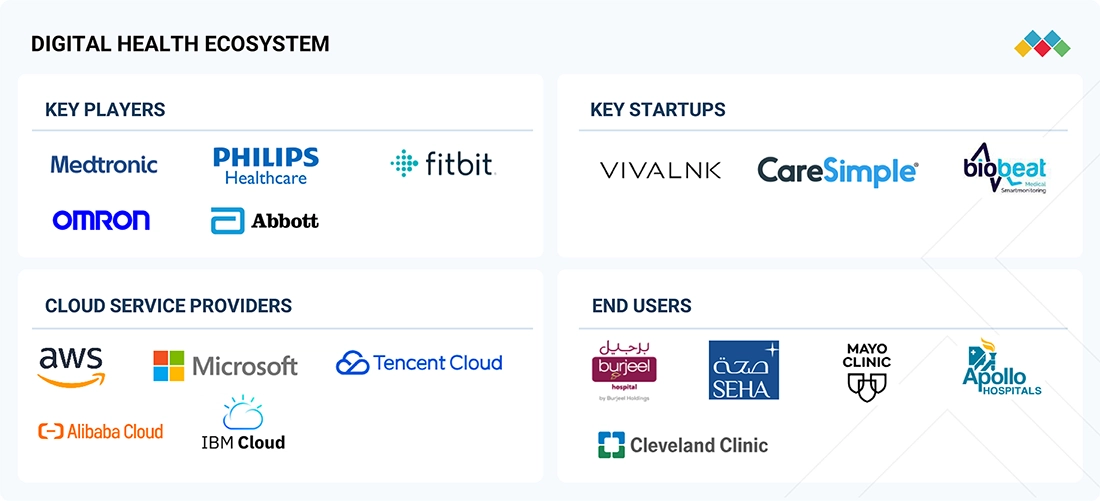
Digital Health Market: COMMERCIAL USE CASES ACROSS INDUSTRIES
| COMPANY | USE CASE DESCRIPTION | BENEFITS |
|---|---|---|
 |
Remote patient monitoring devices and digital care management platforms enabling continuous health data collection | Improved chronic disease outcomes, reduced hospital readmissions, enhanced patient engagement |
 |
Connected glucose monitors and wearable biosensors for real-time patient data sharing via mobile apps | Better therapy adherence, timely adjustments based on real-world data, and improved patient-provider communication |
 |
Continuous glucose monitoring (CGM) systems integrated with smartphones and digital health apps, enabling real-time remote tracking | Real-time intervention possible, better management of glucose levels, increased patient safety |
 |
Comprehensive telehealth solutions including RPM platforms, virtual care delivery, and integrated health data analytics to support hospital-at-home models | Greater access to care, lower healthcare costs, efficient resource utilization, improved patient satisfaction |
 |
Wearable fitness and health tracking devices providing real-time monitoring of activity, sleep, heart rate, and integration with RPM and telemedicine services | Early detection of health risks, better self-management, higher fitness adherence, integration with telehealth services |
Logos and trademarks shown above are the property of their respective owners. Their use here is for informational and illustrative purposes only.
Related Ecosystem
Healthcare Analytics
- Machine Learning
- Natural Language Processing (NLP)
- Blood Pressure Monitors
- Computed Tomography (CT)
- Magnetic Resonance Imaging (MRI)
- Oracle Corporation
- PHILIPS HEALTHCARE
- Siemens healthineers
- Zensar Technologies Limited
- EPIC SYSTEMS CORPORATION
Healthcare It
- Computed Tomography (CT)
- Machine Learning
- Magnetic Resonance Imaging (MRI)
- Natural Language Processing (NLP)
- Predictive Analytics
- CERNER CORPORATION
- PHILIPS HEALTHCARE
- Oracle Corporation
- GE HealthCare Technologies Inc.
- Siemens healthineers
Key Takeaways
- Rest Of The Middle East And Africa's digital health market will more than double from USD 767.8M (2025) to USD 1,815.3M (2030), growing at 18.8% CAGR.
- Rest Of The Middle East And Africa is leveraging government healthcare digitalization initiatives and rising smartphone adoption to accelerate digital health penetration.
- Rest Of The Middle East And Africa's young demographic and improving connectivity create strong demand for telehealth and remote monitoring solutions.
- Rest Of The Middle East And Africa represents a high-growth opportunity within the Middle East and Africa region for digital health vendors and investors.
Digital Health Market Report Scope
| Report Metric | Details |
|---|---|
| Base Year | 2025 |
| Fastest Growing Segment | MENTAL HEALTH & BEHAVIORAL HEALTH (Disease) |
| Forecast Period | 2025–2030 |
| Growth Rate | CAGR of 23.6% from 2025 to 2030 |
| Largest Segment | SOLUTIONS/ APPLICATIONS (Offering) |
| Market Size Base Year (Billions) | ~USD 198.82 (2025) |
| Revenue Forecast (Billions) | ~USD 573.53 (2030) |
| Segments Covered | Offering, Type, Disease, Use Case, End User |
Rest Of The Middle East And Africa Digital Health Market Report Segmentation
5 segment dimensions are covered across the global market.
By Offering
- Hardware
- Solutions/ Applications
- Solutions/Application
- Solutions/Applications
By Type
- Clinical-Grade Wearable Healthcare Devices
- Clinics & Other Outpatient Settings
- Consumer-Graded Wearable Healthcare Devices
- Digital Diagnostics & At-Home Testing
- Digital Pharmacy & Medication Access
- Digital Therapeutics (Dtx)
- Handheld & Portable Devices
- Hospitals
- Implantable Devices
- Mhealth
- Other Digital Health Solutions/ Applications
- Other Healthcare Providers
- Other Solutions/ Applications
- Other Solutions/Applications
- Patient Portals
- Private Payers
- Public Payers
- Remote Patient Monitoring (Rpm)
- Stationary Devices
- Telehealthcare /Telemedicine
- Telehealthcare/ Telemedicine
- Telehealthcare/Telemedicine
- Virtual Care & Video Consultation
- Virtual Sitting & Nursing Platforms
- Wearables
By Disease
- Cardiology
- Diabetes
- Lifestyle & Wellness Improvement
- Mental Health & Behavioral Health
- Musculoskeletal Disorders/Pain Management
- Neurology
- Oncology
- Other Diseases
- Respiratory Disorders
- Women'S Health & Reproductive Health
By Use Case
- Diagnosis
- Other Use Cases
- Patient Monitoring
- Preventive Care & Wellness
- Rehabilitation & Recovery
- Treatment
By End User
- Healthcare Payers
- Healthcare Providers
- Other End User
- Other End Users
- Patients & Consumers
- Pharmaceutical, Biotechnology, & Medtech Companies
- Pharmaceutical, Biotechnology, And Medtech Companies
Target Audience
- Digital Health Solution Providers : Vendors offering telehealth platforms, EHR systems, and mobile health applications need region-specific market data to identify growth opportunities, tailor product offerings, and develop localized go-to-market strategies for Rest Of The Middle East And Africa.
- Healthcare Providers and Hospital Networks : Hospital systems and healthcare organizations across Rest Of The Middle East And Africa require market intelligence to benchmark digital health investments, evaluate vendor solutions, and align digitalization strategies with regional growth trends.
- Private Equity and Investment Firms : Investors targeting healthcare technology in Rest Of The Middle East And Africa need comprehensive market analysis to identify acquisition targets, assess portfolio company growth potential, and evaluate regional market attractiveness and ROI prospects.
- Government and Healthcare Policy Makers : Government agencies and health ministries in Rest Of The Middle East And Africa utilize market data to inform healthcare digitalization policies, allocate resources effectively, and establish regulatory frameworks supporting sustainable digital health ecosystem development.
- Management Consulting and Strategy Firms : Consultants advising healthcare clients on digital transformation strategies require region-specific market insights to develop evidence-based recommendations, competitive analyses, and implementation roadmaps for Rest Of The Middle East And Africa operations.
Key Companies in the Rest Of The Middle East And Africa Digital Health Market
| Company | HQ | Ownership | Strongest segments |
|---|---|---|---|
| ELEVANCE HEALTH | United States | Public Company | Digital Health – Telehealth & Virtual Care (incl. RPM),Digital Health – Pharmacy Apps & Platforms,Digital Health – Data, Analytics, and HealthOS Platform, |
| MEDTRONIC | Ireland | Public Company | Hardware – Implants (cardiac, neuro, other connected devices),Hardware – Wearables and sensors (CGM, external monitors),Apps – Telehealth / RPM platforms, |
| ABBOTT | United States | Public Company | Hardware – Wearables (e.g., glucose monitoring, connected CVS devices),Hardware – Implants (e.g., structural heart, neuromodulation, implantable CVS devices),Apps – Telehealth (RPM-focused around Abbott devices), |
| DEXCOM, INC. | United States | Public Company | Hardware – CGM wearables and sensors (Dexcom G7, G7 15 Day, G6, Dexcom ONE+),Apps and digital services (Dexcom Share, Dexcom Follow, telehealth/RPM integrations, Stelo biosensor ecosystem), |
| KONINKLIJKE PHILIPS N.V. | Netherlands | Public Company | Hardware – Wearables,Hardware – Implants,Apps – Telehealth (RPM), |
| APPLE, INC. | United States | Public Company | Hardware – Wearables (Apple Watch and related devices),Apps & Services – Health, Fitness+, and App Store health apps,Hardware – Other devices (iPhone, iPad, Vision Pro used in health), |
| BOSTON SCIENTIFIC CORPORATION | United States | Public Company | Hardware – Implants (cardiac, neuromodulation, urology with connectivity/RPM),Hardware – Wearables and external monitoring systems,Apps – Telehealth (RPM platforms and clinician dashboards), |
| MASIMO | United States | Private Company | Hardware – Wearables and Professional Monitors,Hardware – Implants and Specialized Sensors,Apps – Telehealth (RPM) and Connectivity Platforms, |
| TELADOC HEALTH, INC. | United States | Public Company | Telehealth & Integrated Care (general and specialty medical, enterprise telehealth, RPM-enabled programs),BetterHelp Mental Health Platform (apps, web, phone, text-based counseling),Hardware & Devices (RPM peripherals, connected wearables and implants enablement), |
| AMERICAN WELL | United States | Public Company | Apps – Telehealth (RPM) and Hybrid Care Platform (Amwell Platform, Converge),Apps – Behavioral Health, DTx-like Specialty Programs, Patient Portals,Hardware – Carepoint Carts, Device Enablement (Wearables/Implants Integration Points), |
| HIMS & HERS HEALTH, INC. | United States | Public Company | Apps – Telehealth (RPM) and Medical Consultation,Apps – Pharmacy and Patient Portals,Apps – DTx and Mental Health Programs, |
ELEVANCE HEALTH
Elevance Health is a United States-based public company founded in 2001 that operates as a major health insurance and managed care organization. With 96,615 employees, the company provides health insurance plans and related healthcare services to millions of members across the country.
MEDTRONIC
Medtronic is a publicly traded medical technology company founded in 1949 and headquartered in Ireland. With approximately 95,000 employees, the company develops and manufactures medical devices and therapies across cardiology, neuroscience, oncology, and other therapeutic areas.
ABBOTT
Abbott is a diversified healthcare company founded in the United States in 1888 and operates as a public company. With 115,000 employees, Abbott manufactures and sells pharmaceuticals, medical devices, diagnostics, and nutritional products globally.
DEXCOM, INC.
Dexcom, Inc. is a United States-based public company founded in 1999 that specializes in continuous glucose monitoring systems for diabetes management. With 11,050 employees, the company develops and commercializes real-time glucose monitoring technology.
KONINKLIJKE PHILIPS N.V.
Koninklijke Philips N.V. is a Dutch multinational public company founded in 1891 that operates in healthcare, consumer lifestyle, and lighting sectors. With 63,670 employees, Philips manufactures medical devices, diagnostic imaging systems, and health-related consumer products.
APPLE, INC.
Apple, Inc. is a United States-based technology company founded in 1976 that operates as a public company with 166,000 employees. While primarily known for consumer electronics, Apple has expanded into health and wellness through wearable devices like the Apple Watch.
BOSTON SCIENTIFIC CORPORATION
Boston Scientific Corporation is a United States-based public company founded in 1979 with 59,000 employees that develops and manufactures medical devices. The company specializes in interventional medical devices for cardiology, gastroenterology, oncology, and other therapeutic areas.
MASIMO
Masimo is a United States-based private company founded in 1989 with 2,200 employees that develops noninvasive monitoring technologies. The company specializes in pulse oximetry, capnography, and other patient monitoring solutions for hospitals and home care settings.
TELADOC HEALTH, INC.
Teladoc Health, Inc. is a United States-based public company founded in 2002 with 5,124 employees that provides virtual healthcare services. The company operates a telehealth platform connecting patients with physicians and specialists for remote medical consultations.
AMERICAN WELL
American Well is a United States-based public company founded in 2006 with 562 employees that operates a digital healthcare platform. The company provides telehealth solutions enabling patients to access virtual care from healthcare providers.
HIMS & HERS HEALTH, INC.
Hims & Hers Health, Inc. is a United States-based public company with 2,442 employees that provides direct-to-consumer telehealth and prescription services. The company offers virtual consultations and home delivery of medications for various health conditions.
Reasons to Buy this Report
- Market-Specific Growth Intelligence : Gain detailed insights into Rest Of The Middle East And Africa's 18.8% CAGR trajectory with precise market sizing, enabling accurate forecasting and strategic planning tailored to regional dynamics and growth opportunities.
- Competitive Landscape Analysis : Understand regional market players, competitive positioning, and emerging vendors specific to Rest Of The Middle East And Africa's digital health ecosystem, identifying partnership and investment opportunities.
- Segment-Specific Opportunity Mapping : Access detailed breakdowns of telehealth, EHR, and mobile health segments within Rest Of The Middle East And Africa, revealing high-growth subsectors and underserved market niches for targeted expansion.
- Regulatory and Implementation Insights : Obtain region-specific regulatory frameworks, healthcare digitalization policies, and implementation barriers across Rest Of The Middle East And Africa countries, reducing market entry risks and accelerating go-to-market strategies.
- Investment and Partnership Strategy : Identify key stakeholders, government initiatives, and investment trends specific to Rest Of The Middle East And Africa's digital health sector, supporting informed M&A, partnership, and capital allocation decisions.
Frequently asked questions
What is the market size of digital health in Rest Of The Middle East And Africa?
Rest Of The Middle East And Africa's digital health market is valued at USD 767.8 million in 2025 and is forecast to reach USD 1,815.3 million by 2030.
What is the growth rate for digital health in Rest Of The Middle East And Africa?
Rest Of The Middle East And Africa's digital health market is expected to grow at a compound annual growth rate (CAGR) of 18.8% from 2025 to 2030.
What are the main drivers of digital health growth in Rest Of The Middle East And Africa?
Rest Of The Middle East And Africa's digital health growth is driven by government healthcare digitalization investments, rising smartphone penetration, a young tech-savvy population, and increasing demand for telehealth and remote monitoring solutions.
Which digital health segments are growing fastest in Rest Of The Middle East And Africa?
Rest Of The Middle East And Africa is experiencing strong growth in telehealth platforms, electronic health records, mobile health applications, cloud-based health solutions, and AI-enabled diagnostic tools.
How does Rest Of The Middle East And Africa compare to the global digital health market?
Rest Of The Middle East And Africa's 18.8% CAGR is competitive with the global market's 23.6% CAGR, positioning the region as a significant growth market within the Middle East and Africa segment.
RESEARCH METHODOLOGY
The study involved several key activities to estimate the current size of the digital health market. Extensive secondary research was conducted to gather information on this market. The next step was to validate the findings, assumptions, and size estimates by consulting industry experts throughout the value chain through primary research. Various methods, including top-down and bottom-up approaches, were employed to estimate the overall market size. Following this, market segmentation and data triangulation techniques were used to determine the size of specific segments and subsegments within the digital healthcare market.
Secondary Research
This research study involved the wide use of secondary sources, directories, and databases such as Dun & Bradstreet, Bloomberg Business, and Factiva; white papers, annual reports, and companies’ house documents; investor presentations; and the SEC filings of companies. The market for companies providing digital healthcare solutions is assessed using secondary data from both paid and free sources. This involves analyzing the product portfolios of major players in the industry and evaluating these companies based on their performance and quality. Various resources were utilized in the secondary research process to gather information for this study. The sources include annual reports, press releases, investor presentations, white papers, academic journals, certified publications, articles by recognized authors, directories, and databases.
Secondary research was used to identify and collect information useful for the extensive, technical, market-oriented, and commercial study of the digital healthcare market. It was also used to obtain important information about the key players and market classification and segmentation according to industry trends to the bottom-most level, and key developments related to market and technology perspectives. A database of the key industry leaders was also prepared using secondary research.
Primary Research
In the primary research process, various primary sources from both the supply and demand sides were interviewed to obtain qualitative and quantitative information for this report. Primary sources are mainly industry experts from the core and related industries and preferred suppliers, manufacturers, distributors, technology developers, researchers, and organizations related to all segments of this industry’s value chain. In-depth interviews were conducted with various primary respondents, including key industry participants, subject-matter experts, C-level executives of key market players, and industry consultants, among other experts, to obtain and verify the critical qualitative and quantitative information as well as assess prospects.
Primary research was conducted to identify segmentation types, industry trends, key players, and key market dynamics such as drivers, restraints, opportunities, challenges, and strategies adopted by key players.
After completing the market engineering process, which includes calculations for market statistics, market breakdown, size estimations, forecasting, and data triangulation, extensive primary research was conducted. This research aimed to gather information and verify the critical numbers obtained during the market analysis. Additionally, primary research was conducted to identify different types of market segmentation, analyze industry trends, evaluate the competitive landscape of digital healthcare offered by various players, and understand key market dynamics such as drivers, restraints, opportunities, challenges, industry trends, and strategies employed by key market participants.
In the complete market engineering process, the top-down and bottom-up approaches and several data triangulation methods were extensively used to perform the market estimation and market forecasting for the overall market segments and subsegments listed in this report. Extensive qualitative and quantitative analysis was performed on the complete market engineering process to list the key information/insights throughout the report.
A breakdown of the primary respondents:
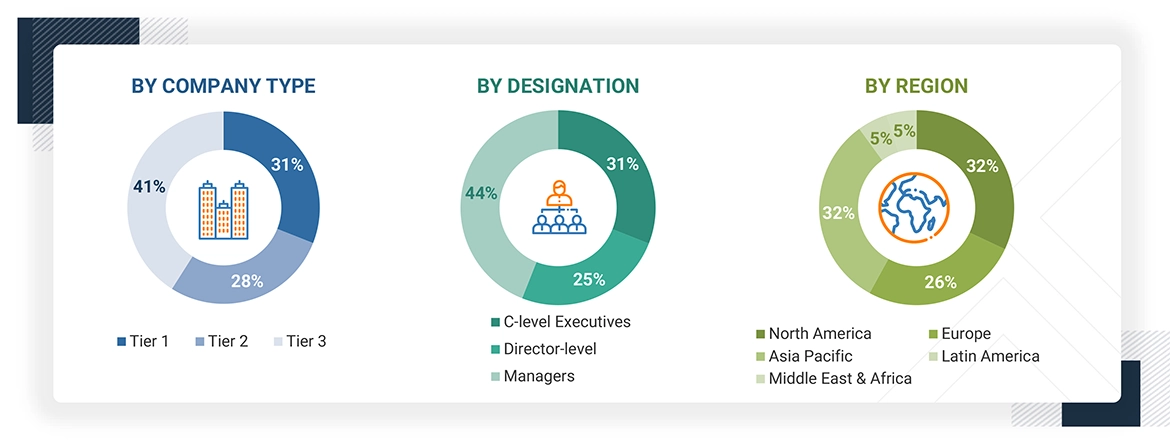
Others include sales, marketing, and product managers.
Note: Tiers are defined based on a company’s total revenue, as of 2024: Tier 1 = >USD 1 billion, Tier 2 = USD 500 million to USD 1 billion, and Tier 3 = < USD 500 million.
To know about the assumptions considered for the study, download the pdf brochure
Market Size Estimation
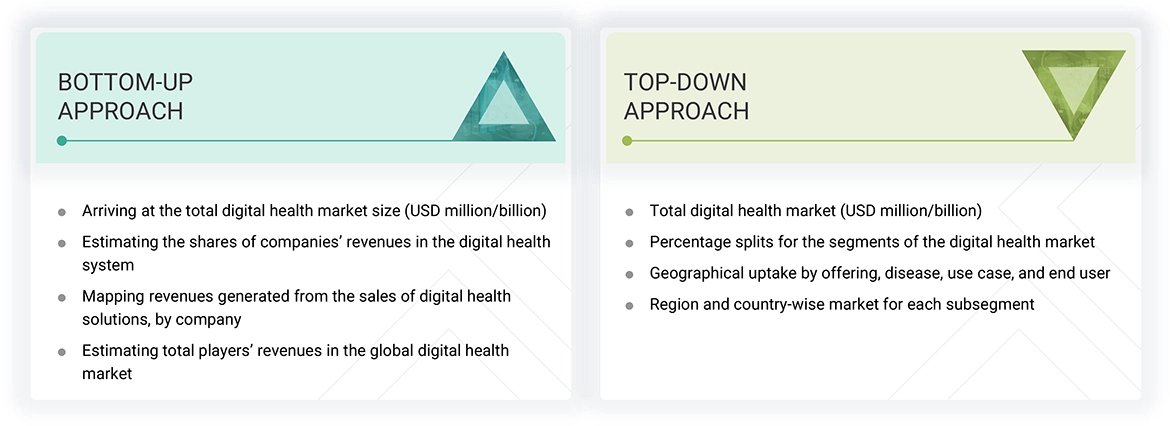
The market size estimates and forecasts provided in this study are derived through a mix of the bottom-up approach (revenue share analysis of leading players) and top-down approach (assessment of utilization/adoption/penetration trends, by offering, disease, use case, end user, and region).
Market Definition
The digital health market covers hardware, software, and services that use technology to improve healthcare delivery, patient outcomes, and system efficiency. It includes consumer-facing wellness, self-management applications, regulated medical software and device solutions, interoperable platforms, connectivity tools, and embedded sensor systems. Its applications span preventive care, diagnosis, treatment, patient engagement, remote monitoring, and health system management, driving more personalized, efficient, and data-driven healthcare.
Stakeholders
- Healthcare Providers
- Digital Health Providers
- Healthcare Payers
- Healthcare Consumers
- Academic Research Institutes
- Pharmaceutical and Biotechnology Companies
- Medical Device Companies
- Telehealth & Virtual Care Providers
- Government Institutions
- Market Research and Consulting Firms
- Venture Capitalists and Investors
Report Objectives
- To define, describe, and forecast the global digital health market based on offering, disease, use case, end user, and region
- To provide detailed information regarding the factors influencing the growth of the market (such as drivers, restraints, opportunities, and challenges)
- To strategically analyze micromarkets with respect to individual growth trends, prospects, and contributions to the overall digital health market
- To analyze market opportunities for stakeholders and provide details of the competitive landscape for market leaders
- To forecast the size of the digital health market in five main regions (along with their respective key countries): North America, Europe, the Asia Pacific, Latin America, and the Middle East & Africa
- To profile key players and comprehensively analyze their product portfolios, market positions, and core competencies in the market
- To track and analyze competitive developments such as product & service launches, expansions, partnerships, agreements, and collaborations, and acquisitions in the digital health market
- To benchmark players within the digital health market using the Company Evaluation Matrix framework, which analyzes market players on various parameters within the broad categories of business strategy, market share, and product offering
Get the Full Digital Health Market Report
Full forecast, segment splits, and company analysis for all Digital Health Market.
- Australia Digital Health Market
- Brazil Digital Health Market
- Canada Digital Health Market
- China Digital Health Market
- France Digital Health Market
- GCC Digital Health Market
- Germany Digital Health Market
- India Digital Health Market
- Italy Digital Health Market
- Japan Digital Health Market
- Mexico Digital Health Market
- Rest Of Asia Pacific Digital Health Market
- Rest Of Europe Digital Health Market
- Rest Of GCC Digital Health Market
- Rest Of Latin America Digital Health Market
- Saudi Arabia Digital Health Market
- South Africa Digital Health Market
- South Korea Digital Health Market
- Spain Digital Health Market
- UAE Digital Health Market
- UK Digital Health Market
- US Digital Health Market
Need a Tailored Report?
Customize this report to your needs
Get 10% FREE Customization
Customize This Report
