
Oman District Cooling Market (2024-2029)

The Oman District Cooling Market was valued at $1.6 Million in 2024 and projected to reach to $2.2 Million by 2029, representing a compound annual growth rate of 6.4%. Oman's district cooling market is positioned for sustained growth through 2029, driven by increasing urbanization, rising temperatures, and government initiatives promoting energy-efficient infrastructure.


| Market Size in | USD 26.32 MN |
| Market Forecast in | |
| CAGR | |
| Forecast Period | |
| Units Considered | Value (USD MN) |
Oman District Cooling Market Trends and Insights
- This expansion reflects Oman's increasing focus on energy-efficient cooling solutions across commercial and residential sectors, driven by rising urbanization and climate pressures.
- Oman's district cooling infrastructure development aligns with regional sustainability initiatives and the nation's commitment to reducing energy consumption in high-density urban areas. The 6.4% compound annual growth rate (CAGR) positions Oman as a growing market within the GCC region, outpacing global averages.
- Oman's strategic investments in smart city projects and commercial real estate development are catalyzing demand for centralized cooling systems.
- Between 2024 and 2029, Oman is expected to see increased adoption of district cooling in major metropolitan zones, supported by government incentives and private sector participation in energy infrastructure modernization..
Key Market Statistics
- CAGR (2024-2029) 6.4% CAGR
- Market Size, 2024 ~USD 1.6 Million
- Forecast, 2029 ~USD 2.2 Million
- Country Oman
Oman District Cooling Market Overview
Strong CAGR Growth :
Oman's district cooling market is growing at 6.4% CAGR from 2024-2029, significantly outpacing the global average of 3.6%, indicating accelerated adoption in the region.
Market Valuation Expansion :
The market is projected to grow from USD 1.6 million in 2024 to USD 2.2 million by 2029, representing a 37.5% increase driven by urbanization and energy efficiency demands.
Energy Efficiency Focus :
Oman is prioritizing sustainable cooling solutions across commercial and residential sectors, aligning with regional climate adaptation strategies and reducing energy consumption.
Infrastructure Development :
Rising urbanization in Oman is catalyzing district cooling infrastructure investments, particularly in major cities and commercial hubs, supporting long-term market expansion.
Oman District Cooling Market Dynamics
- The market's 6.4% CAGR reflects growing adoption among commercial developers and residential complexes seeking cost-effective cooling solutions.
- Investment in district cooling systems aligns with Oman's broader sustainability goals and Vision 2040 economic diversification strategy. The expansion is supported by rising commercial construction activity, particularly in Muscat and other urban centers, where district cooling offers operational efficiency and reduced carbon footprints.
- As energy costs rise and climate pressures intensify, stakeholders across real estate, hospitality, and industrial sectors are increasingly recognizing district cooling as a viable alternative to traditional HVAC systems, positioning Oman as an emerging market with significant growth potential..
Market Ecosystem
Related Ecosystem
Equipment Machine And Tooling
- Wastewater Treatment
- Air Cooled Heat Exchangers
- Diaphragm Pumps
- Fiberglass
- HVAC System
- Alfa Laval Corporate AB
- Johnson Controls International plc
- Veolia
- Daikin Industries,Ltd.
- Carrier Global Corporation
Industrial Equipment
- HVAC System
- Fiberglass
- Actuators
- Cartridge Filters
- Electrostatic Precipitators
- Siemens ag
- GRUNDFOS GROUP
- ABB India Limited
- SCHNEIDER ELECTRIC SE
- Eaton Corporation plc
Key Takeaways
- Oman's district cooling market is valued at USD 1.6 million in 2024 with a projected value of USD 2.2 million by 2029.
- Oman demonstrates a 6.4% CAGR, outperforming the global market average of 3.6% during the forecast period.
- Oman's growth is driven by urbanization, smart city initiatives, and government sustainability commitments.
- Oman's district cooling adoption is concentrated in commercial and high-density residential developments across major urban centers.
District Cooling Market Report Scope
| Report Metric | Details |
|---|---|
| Base Year | 2024 |
| Fastest Growing Segment | OTHER SOURCES (Source) |
| Forecast Period | 2024-2029 |
| Growth Rate | CAGR of 3.6% from 2024 to 2029 |
| Largest Segment | FOSSIL FUELS (Source) |
| Market Size Base Year (Billions) | ~USD 1.09 (2024) |
| Revenue Forecast (Billions) | ~USD 1.3 (2029) |
| Segments Covered | Production Technique, Source, Application, Commercial Application |
Oman District Cooling Market Report Segmentation
4 segment dimensions are covered across the global market.
By Production Technique
- Absorption Cooling
- Electric Chillers
- Free Cooling
By Source
- Fossil Fuels
- Other Sources
- Renewable Energy
By Application
- Commercial
- Industrial
- Residential
By Commercial Application
- Airports
- Educational Institutes
- Government Buildings
- Hospitals
- Offices
- Retail Stores
OMAN: DISTRICT COOLING MARKET, BY APPLICATION, 2024–2029
| Segment | 2024 | 2025 | 2026 | 2027 | 2028 | 2029 | CAGR (%) |
|---|---|---|---|---|---|---|---|
| COMMERCIAL | 0.67 | 0.71 | 0.76 | 0.81 | 0.86 | 0.92 | 6.5 |
| INDUSTRIAL | 0.37 | 0.4 | 0.42 | 0.45 | 0.48 | 0.51 | 6.3 |
| RESIDENTIAL | 0.54 | 0.58 | 0.61 | 0.65 | 0.69 | 0.74 | 6.4 |
| TOTAL | 1.58 | 1.69 | 1.79 | 1.91 | 2.03 | 2.16 | 6.4 |
Target Audience
- Real Estate Developers : Developers in Oman need market data to evaluate district cooling integration in new commercial and residential projects, assess ROI, and meet sustainability requirements.
- Energy & Utilities Companies : Utilities and energy providers require Oman-specific market insights to identify district cooling expansion opportunities, assess demand trends, and plan infrastructure investments.
- HVAC & Cooling System Providers : Equipment manufacturers and service providers need Oman market intelligence to develop localized product strategies, identify customer segments, and plan market entry.
- Government & Policy Makers : Oman's government agencies and regulators use market data to inform energy efficiency policies, sustainability initiatives, and infrastructure development planning aligned with Vision 2040.
- Investment & Consulting Firms : Investors and consultants require Oman market analysis to evaluate project viability, assess growth potential, and provide strategic recommendations to clients in the cooling sector.
Reasons to Buy this Report
- Market-Specific Sizing & Forecasts : Access precise valuation data for Oman's district cooling market (USD 1.6M in 2024, USD 2.2M by 2029) with country-specific CAGR analysis to inform investment and expansion decisions.
- Competitive Landscape Intelligence : Understand Oman-specific market dynamics, key players, and competitive positioning to identify partnership opportunities and market entry strategies tailored to local conditions.
- Sector Growth Drivers : Gain insights into Oman's urbanization trends, climate pressures, and regulatory environment driving district cooling adoption in commercial and residential segments.
- Investment Decision Support : Leverage country-level market data to evaluate feasibility of district cooling projects, infrastructure investments, and business development initiatives in Oman.
- Strategic Planning & Forecasting : Utilize 5-year projections and growth trajectory analysis to develop long-term strategies, resource allocation plans, and market penetration roadmaps specific to Oman.
Frequently asked questions
What is the current size of Oman's district cooling market?
Oman's district cooling market was valued at USD 1.6 million in 2024, according to verified market data.
What is the projected market size for Oman's district cooling sector by 2029?
Oman's district cooling market is forecast to reach USD 2.2 million by 2029, representing significant growth over the five-year period.
What is Oman's district cooling market CAGR?
Oman's district cooling market is expected to grow at a compound annual growth rate of 6.4% from 2024 to 2029.
How does Oman's district cooling market compare to global trends?
Oman's 6.4% CAGR significantly outpaces the global district cooling market CAGR of 3.6%, indicating stronger regional demand and investment.
What sectors are driving district cooling adoption in Oman?
Oman's district cooling growth is primarily driven by commercial real estate, smart city projects, and high-density residential developments seeking energy-efficient cooling solutions.
RESEARCH METHODOLOGY
This research study involves the use of extensive secondary sources, directories, and databases, such as Hoovers, Bloomberg L.P., Factiva, ICIS, and OneSource, to identify and collect information useful for this technical, market-oriented, and commercial study of the global District cooling market. Primary sources are mainly industry experts from core and related industries, preferred suppliers, manufacturers, distributors, service providers, and organizations related to all segments of the value chain of this industry. In-depth interviews were conducted with various primary respondents, including key industry participants, subject matter experts (SMEs), C-level executives of key market players, and industry consultants, among other experts, to obtain and verify critical qualitative and quantitative information as well as assess growth prospects of the market.
Secondary Research
Secondary sources include annual reports, press releases, and investor presentations of companies; directories and databases, which include D&B, Bloomberg, and Factiva, white papers and articles from recognized authors, and publications and databases from associations, such as the BP Statistical Review of World Energy, Energy Information Administration, and Department of Energy. Secondary research has been used to obtain important information about the key players and market classification & segmentation according to industry trends to the bottom-most level and key developments related to market and technology perspectives. A database of the key industry leaders has also been prepared using secondary research.
Primary Research
In the primary research process, various sources from both the supply and demand sides have been interviewed to obtain and verify qualitative and quantitative information for this report as well as analyze prospects. Primary sources from the supply side include industry experts such as CEOs, vice presidents, marketing directors, technology and innovation directors, and related executives from various leading companies and organizations operating in the district cooling market. Primary sources from the demand side include experts and key persons from the application segment.
After the complete market engineering process (which includes calculations of market statistics, market breakdown, market size estimations, market forecasts, and data triangulation), extensive primary research has been conducted to gather information and verify and validate the critical numbers arrived at. Primary research has also been conducted to identify the segmentation, applications, Porter’s Five Forces, key players, competitive landscape, and key market dynamics such as drivers, opportunities, challenges, industry trends, and strategies adopted by key players.
Following is the breakdown of primary respondents:
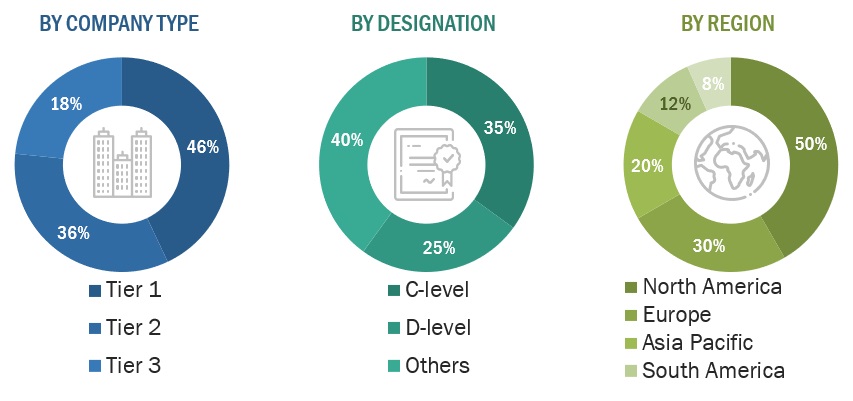
To know about the assumptions considered for the study, download the pdf brochure
Market Size Estimation
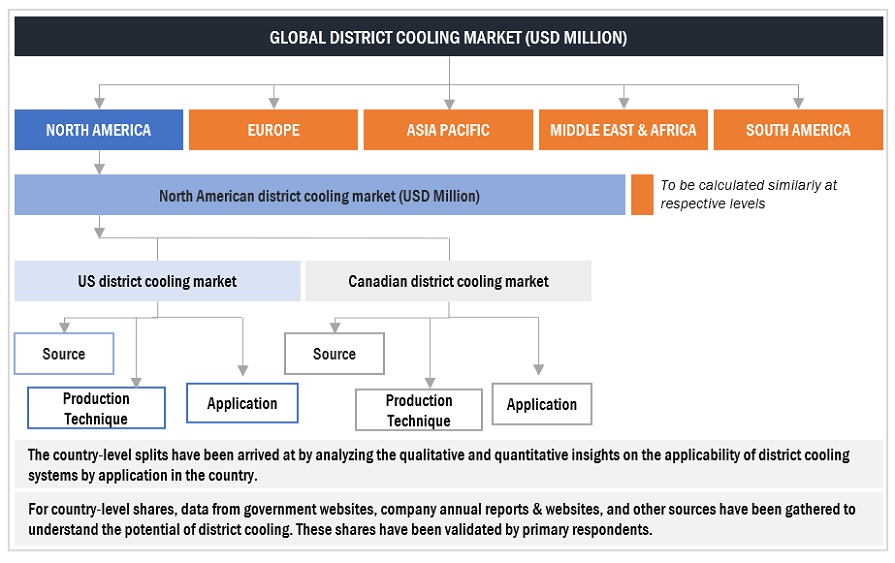
In the complete market engineering process, both top-down and bottom-up approaches have been extensively used along with several data triangulation methods to estimate and forecast the overall market segments listed in this report.
Top-down and bottom-up approaches have been used to estimate and validate the market size of district cooling for various applications in each region. The key players in the market have been identified through secondary research, and their market share in respective regions has been determined through primary and secondary research. This entire procedure includes the study of annual and financial reports of the key market players and extensive interviews for insights from industry leaders such as CEOs, vice presidents, directors, and marketing executives. All percentage shares, splits, and breakdowns have been determined using secondary sources and verified through primary sources.
Global District cooling Market Size: Bottom Up Approach
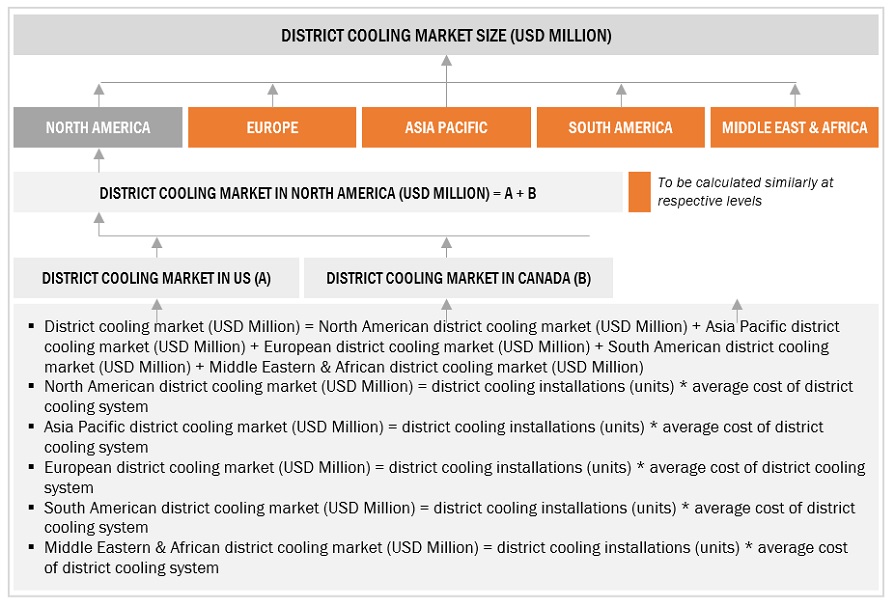
To know about the assumptions considered for the study, Request for Free Sample Report
Global District cooling Market Size: Top-down Approach
Data Triangulation
After arriving at the overall market size from the estimation process explained above, the total market has been split into several segments and sub-segments. Data triangulation and market breakdown procedures have been used wherever applicable to complete the overall market engineering process and to arrive at the exact statistics for all segments and sub-segments. The data has been triangulated by studying various factors and trends from both the demand and supply sides. The market has been validated using both the top-down and bottom-up approaches. Then, it was verified through primary interviews. Hence, for every data segment, there are three sources—the top-down approach, the bottom-up approach, and expert interviews. When the values arrived at from the three points matched, the data was assumed to be correct.
Market Definition.
District cooling market encompasses the district cooling system that centralizes cooling energy production and distribution via chilled water from a central plant to multiple buildings through underground pipelines. It eliminates individual building cooling systems, enhancing efficiency and sustainability. Serving diverse sectors like commercial, residential, and industrial, district cooling reduces energy consumption and greenhouse gas emissions. Users purchase cooling services from providers, benefiting from shared infrastructure and operational cost savings. Scalable and adaptable, these systems support urban development with efficient cooling solutions, making them pivotal in modern urban planning for energy efficiency and environmental sustainability.
Key Stakeholders
- District cooling equipment manufacturers
- District cooling manufacturers
- District cooling distributors and suppliers
- Consumers and Building Owners
- Research institutes and companies.
- Industry, energy, and environmental associations
- Renewable energy advocates
- Government and research organizations
Report Objectives
- To describe and forecast the district cooling market based on source, production technique, and application in terms of value
- To describe and forecast the market based on application and region in terms of volume
- To describe and forecast the market size of various segments across five key regions: North America, South America, Europe, Asia Pacific, and the Middle East & Africa
- To provide detailed information regarding the drivers, restraints, opportunities, and challenges influencing the market growth
- To strategically analyze the micromarkets1 with respect to individual growth trends, prospects, and contributions to the overall market size
- To analyze market opportunities for stakeholders and provide a detailed competitive landscape for market leaders
- To study the trends and disruptions impacting customers’ businesses, value chain analysis, ecosystem analysis, case study analysis, technology analysis, trade analysis, patent analysis, key conferences and events, investment and funding scenario, regulatory landscape, tariff, standards, Porter’s five forces, and key stakeholders and buying criteria, pertaining to the market
- To strategically profile the key players and comprehensively analyze their market ranking and core competencies2
- To analyze competitive developments in the market, such as product launches, contracts, expansions, and mergers & acquisitions.
Note: 1. Micromarkets are defined as the further segments and subsegments of the market included in the report.
2. Core competencies of companies are captured in terms of their key developments and product portfolios, as well as key strategies adopted to sustain their position in the market.
Available Customizations
MarketsandMarkets offers customizations according to the specific needs of the companies with the given market data.
The following customization options are available for the report:
Product Analysis
- Product matrix, which gives a detailed comparison of the product portfolio of each company
Regional Analysis
- Further breakdown of the district cooling market, by country
Company Information
- Detailed analysis and profiling of additional market players (up to five)
Get the Full District Cooling Market Report
Full forecast, segment splits, and company analysis for all District Cooling Market.
- US District Cooling Market
- Canada District Cooling Market
- China District Cooling Market
- Japan District Cooling Market
- South Korea District Cooling Market
- Singapore District Cooling Market
- Malaysia District Cooling Market
- Sweden District Cooling Market
- France District Cooling Market
- Germany District Cooling Market
- Finland District Cooling Market
- Norway District Cooling Market
- Italy District Cooling Market
- Saudi Arabia District Cooling Market
- UAE District Cooling Market
- Qatar District Cooling Market
- Kuwait District Cooling Market
- Bahrain District Cooling Market
- Egypt District Cooling Market
- Brazil District Cooling Market
- Argentina District Cooling Market
- Rest Of Europe District Cooling Market
- Rest Of Asia Pacific District Cooling Market
- GCC District Cooling Market
- Rest Of South America District Cooling Market
Need a Tailored Report?
Customize this report to your needs
Get 10% FREE Customization
Customize This Report
