
South Korea Drug Screening Market (2025-2030)

The South Korea Drug Screening Market was valued at $80.8 Million in 2025 and projected to reach to $165.1 Million by 2030, representing a compound annual growth rate of 15.4%. South Korea's drug screening market is positioned for sustained growth through 2030, supported by evolving regulatory frameworks and heightened corporate responsibility standards.


| Market Size in | USD 26.32 MN |
| Market Forecast in | |
| CAGR | |
| Forecast Period | |
| Units Considered | Value (USD MN) |
South Korea Drug Screening Market Trends and Insights
- This growth trajectory reflects South Korea's advanced healthcare infrastructure, stringent regulatory requirements, and increasing adoption of workplace and clinical drug screening protocols.
- South Korea's pharmaceutical and occupational health sectors are driving demand for comprehensive screening solutions across both public and private institutions. The South Korea drug screening market benefits from the country's high healthcare spending, technological innovation, and strong emphasis on employee wellness programs.
- South Korea's regulatory framework mandates drug screening in various sectors, including transportation, manufacturing, and healthcare, creating sustained market demand.
- Between 2025 and 2030, South Korea is expected to see accelerated adoption of rapid testing technologies and laboratory automation, positioning the nation as a key growth market within the Asia Pacific region..
Key Market Statistics
- CAGR (2025-2030) 15.4% CAGR
- Market Size, 2025 ~USD 80.8 Million
- Forecast, 2030 ~USD 165.1 Million
- Country South Korea
South Korea Drug Screening Market Overview
Rapid Market Expansion :
South Korea's drug screening market is projected to grow from $80.8 million in 2025 to $165.1 million by 2030, representing a robust 15.4% CAGR, driven by stringent regulatory compliance and workplace safety mandates.
Advanced Healthcare Infrastructure :
South Korea's sophisticated healthcare system and high digital adoption rates enable rapid integration of advanced drug screening technologies, including automated testing platforms and AI-powered result analysis.
Regulatory Compliance Drivers :
Stringent occupational health regulations and mandatory drug screening protocols in South Korea's manufacturing, transportation, and healthcare sectors are primary growth catalysts for market expansion.
Workplace Safety Focus :
Increasing corporate emphasis on employee wellness programs and government-mandated workplace drug testing initiatives are accelerating adoption of comprehensive screening solutions across South Korean enterprises.
South Korea Drug Screening Market Dynamics
- The nation's advanced healthcare infrastructure and technological capabilities facilitate rapid adoption of innovative screening methodologies, including point-of-care testing and laboratory automation.
- Workplace safety regulations and occupational health standards continue to strengthen, creating consistent demand across industrial and corporate sectors.
- Additionally, South Korea's pharmaceutical sector expansion and clinical trial activities drive laboratory-based screening requirements, further supporting market growth trajectories aligned with the projected 15.4% CAGR..
Market Ecosystem
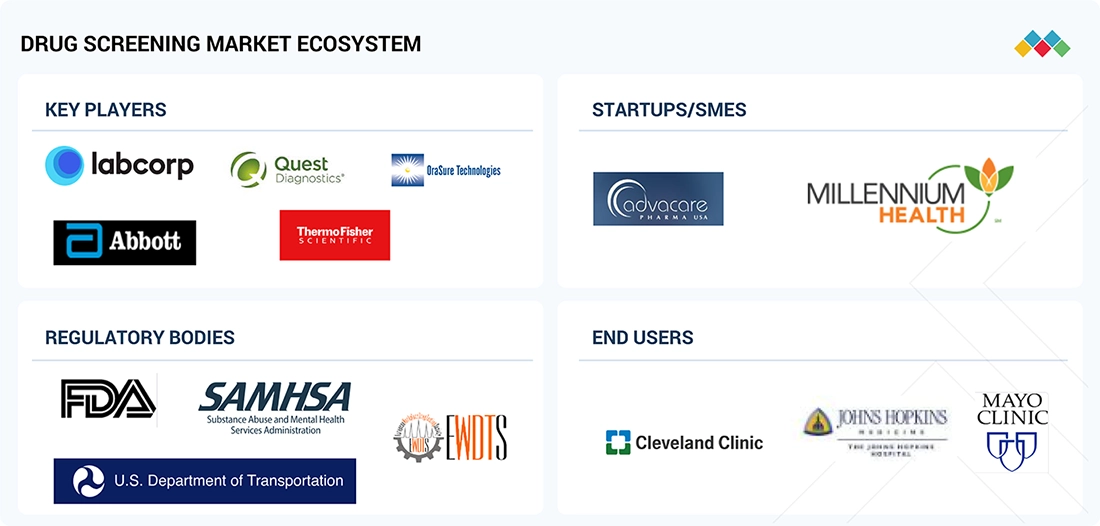
DRUG SCREENING MARKET: COMMERCIAL USE CASES ACROSS INDUSTRIES
| COMPANY | USE CASE DESCRIPTION | BENEFITS |
|---|---|---|
 |
Comprehensive drug screening + confirmatory testing services supporting workplace compliance and clinical monitoring | Broad test menu, consistent chain-of-custody, improved compliance readiness |
 |
Large-scale drug testing services for employers, healthcare providers, and government agencies (pre-employment, random, post-accident) | Nationwide access, reliable reporting, scalable testing volumes |
 |
Rapid drug-of-abuse screening solutions used in emergency departments, clinics, and workplace programs for quick preliminary detection | Faster decision-making, immediate triage support, reduced delays in care and safety actions |
 |
Oral fluid-based collection devices and screening solutions for workplace and forensic testing | Non-invasive collection, reduced tampering, easier on-site sample capture |
 |
LC-MS/MS confirmatory drug testing platforms for forensic and clinical toxicology labs (high sensitivity drug identification) | Higher specificity, reduced false positives, legally defensible results |
Logos and trademarks shown above are the property of their respective owners. Their use here is for informational and illustrative purposes only.
Related Ecosystem
In Vitro Diagnostics
- Polymerase Chain Reaction (PCR)
- Enzyme-Linked Immunosorbent Assay (ELISA)
- Dna Microarrays
- Assay Kits
- Microarrays
- ROCHE HOLDINGS AG
- Thermo Fisher Scientific Inc.
- Danaher Corporation
- Abbott Laboratories
- Biomerieux s.a.
Medical Devices
- Polymerase Chain Reaction (PCR)
- Magnetic Resonance Imaging (MRI)
- Disposable Autoinjectors
- Pulse Oximeters
- Blood Pressure Monitors
- Medtronic plc
- Abbott Laboratories
- Stryker Corporation
- Becton, Dickinson and Company
- JOHNSON & JOHNSON
Key Takeaways
- South Korea's drug screening market is valued at $80.8 million in 2025 and is forecast to double to $165.1 million by 2030, representing a 15.4% CAGR.
- South Korea's stringent regulatory mandates across transportation, manufacturing, and healthcare sectors drive consistent demand for drug screening services.
- South Korea's advanced healthcare infrastructure and high healthcare spending support adoption of innovative screening technologies and laboratory automation.
- South Korea is positioned as a key growth market within Asia Pacific, driven by workplace wellness initiatives and occupational health compliance requirements.
Drug Screening Market Report Scope
| Report Metric | Details |
|---|---|
| Base Year | 2025 |
| Fastest Growing Segment | ON-SITE TESTING SERVICES (Type) |
| Forecast Period | 2025–2030 |
| Growth Rate | CAGR of 15.5% from 2025 to 2030 |
| Largest Segment | SERVICES (Offering) |
| Market Size Base Year (Billions) | ~USD 10.36 (2025) |
| Revenue Forecast (Billions) | ~USD 21.29 (2030) |
| Segments Covered | Offering, Type, Modality |
South Korea Drug Screening Market Report Segmentation
3 segment dimensions are covered across the global market.
By Offering
- Products
- Services
By Type
- Analytical Instruments
- Assay Kits
- Breathalyzers
- Calibrators & Controls
- Chromatography Instruments
- Consumables
- Dip Cards
- Drug Testing Cassettes
- Drug Testing Cups
- Fuel-Cell Breathalyzers
- Immunoassay Analyzers
- Laboratory Testing Services
- On-Site Testing Services
- Oral Fluid Testing Devices
- Other Breathalyzers
- Other Consumables
- Rapid Testing Devices
- Sample Collection Devices
- Semiconductor Breathalyzers
- Urine Testing Devices
By Modality
- Benchtop Breathalyzers
- Handheld Breathalyzers
Target Audience
- Drug Screening Solution Providers : Manufacturers and vendors of drug screening equipment, reagents, and software platforms need South Korea-specific market data to identify growth opportunities and develop localized product strategies.
- Healthcare and Diagnostic Companies : Clinical laboratories and diagnostic service providers require insights into South Korea's regulatory environment and market demand to expand service offerings and capture growing screening volumes.
- Corporate Occupational Health Programs : Large South Korean enterprises and multinational corporations operating in Korea need market intelligence to optimize workplace drug screening programs and ensure regulatory compliance.
- Investment and Private Equity Firms : Investors evaluating opportunities in South Korea's healthcare sector require detailed market forecasts and growth drivers to assess portfolio companies and identify acquisition targets.
- Government and Regulatory Bodies : South Korean health authorities and occupational safety regulators use market data to inform policy development, enforcement strategies, and public health initiatives related to drug screening.
Key Companies in the South Korea Drug Screening Market
| Company | HQ | Ownership | Strongest segments |
|---|---|---|---|
| UNILABS | Switzerland | Private Company | Laboratory Testing (Core & Specialised),Medical Imaging,Pathology & Centres of Excellence, |
| EIKEN CHEMICAL CO., LTD. | Japan | Public Company | Fecal immunochemical test (FIT) reagents for colorectal cancer screening,Microbiological reagents and media (clinical),Urinalysis test strips, |
| LABCORP | United States | Public Company | Routine and specialty diagnostics (core lab, women’s health, chronic disease programs),Gene-based, esoteric, and advanced disease-targeted testing,Biopharma Laboratory Services (pharma, biotech, device, CRO clients), |
| QUEST DIAGNOSTICS INCORPORATED | United States | Public Company | Routine and non-routine clinical testing,Advanced diagnostics and anatomic pathology,Life insurance risk assessment and workplace drug testing, |
| ABBOTT | United States | Public Company | Diagnostic Products,Medical Devices,Nutritional Products, |
| ORASURE TECHNOLOGIES INC. | United States | Public Company | Rapid infectious disease tests (HIV, HCV, syphilis, Ebola, COVID-19, SickleSCAN),Genomic saliva collection (Oragene, ORAcollect),Microbiome collection (OMNIgene GUT, SALIVA, Dx), |
| THERMO FISHER SCIENTIFIC INC. | United States | Public Company | Life Sciences Solutions,Analytical Instruments,Specialty Diagnostics, |
| DRäGERWERK AG & CO. KGAA | Germany | Public Company | Acute-care capital equipment (ventilators, anaesthesia, monitoring, lights, pendants),Neonatal care and perinatal systems,Medical infrastructure, gas pipeline systems, and hospital planning, |
| LIFELOC TECHNOLOGIES, INC. | United States | Public Company | Hand-held fuel-cell breathalyzers (professional),Fixed and zero-tolerance screening stations (Sentinel, R.A.D.A.R.),Calibration systems, supplies, and accessories (EASYCAL, consumables), |
| MPD INC. | Australia | Private Company | Liquid milk & cream,Cheese (block, shredded, specialty),Butter, spreads & fats, |
| PSYCHEMEDICS CORPORATION | United States | Public Company | Employer job applicant and employee hair drug testing,Law enforcement and court-mandated testing,Schools and educational institutions, |
| SHIMADZU CORPORATION | Japan | Public Company | Analytical and Measuring Instruments,Medical Systems,Vacuum and Industrial Machinery, |
| SIEMENS HEALTHINEERS AG | Germany | Public Company | Imaging,Diagnostics,Varian (Oncology), |
UNILABS
UNILABS is a Swiss private laboratory services company established in 1987 with 1,897 employees.
EIKEN CHEMICAL CO., LTD.
Eiken Chemical Co., Ltd. is a Japanese public company founded in 1939 with 696 employees engaged in chemical manufacturing.
LABCORP
LabCorp is a United States-based public clinical laboratory company founded in 1995 with 66,385 employees providing diagnostic testing services.
QUEST DIAGNOSTICS INCORPORATED
Quest Diagnostics Incorporated is a publicly traded American diagnostic testing company established in 1967 with 51,500 employees.
ABBOTT
Abbott is a multinational American public company founded in 1888 with 115,000 employees operating in healthcare and diagnostics.
ORASURE TECHNOLOGIES INC.
OraSure Technologies Inc. is a United States public company founded in 1987 with 500 employees specializing in diagnostic testing products.
THERMO FISHER SCIENTIFIC INC.
Thermo Fisher Scientific Inc. is a large American public company founded in 1956 with 125,000 employees providing scientific and laboratory services.
DRäGERWERK AG & CO. KGAA
Drägerwerk AG & Co. KGaA is a German public company founded in 1889 with 16,033 employees specializing in medical and safety technology.
LIFELOC TECHNOLOGIES, INC.
LifeLoc Technologies, Inc. is a United States public company founded in 1983 with 37 employees.
MPD INC.
MPD Inc. is an Australian private company founded in 1977 with 40 employees.
PSYCHEMEDICS CORPORATION
PsycheMedics Corporation is a publicly traded American company founded in 1986 with 101 employees.
SHIMADZU CORPORATION
Shimadzu Corporation is a Japanese public company founded in 1875 with 14,649 employees manufacturing analytical and scientific instruments.
SIEMENS HEALTHINEERS AG
Siemens Healthineers AG is a German public healthcare technology company founded in 1896 with 72,369 employees.
Reasons to Buy this Report
- Market-Specific Growth Projections : Access detailed South Korea market forecasts with 15.4% CAGR through 2030, enabling precise investment planning and resource allocation for market entry or expansion strategies.
- Regulatory Landscape Intelligence : Understand South Korea's stringent occupational health regulations and compliance requirements that drive market demand, ensuring your solutions align with local mandates and standards.
- Competitive Positioning Analysis : Identify market opportunities and competitive gaps specific to South Korea's healthcare and corporate sectors, supporting strategic positioning against local and international competitors.
- Sector-Specific Demand Insights : Gain insights into South Korea's manufacturing, transportation, pharmaceutical, and clinical sectors' drug screening adoption patterns and future requirements for targeted market strategies.
- Investment Decision Support : Leverage comprehensive South Korea market data to validate business cases, secure stakeholder buy-in, and make informed decisions on market entry, partnerships, or product development investments.
Frequently asked questions
What is the current size of South Korea's drug screening market?
South Korea's drug screening market is valued at $80.8 million in 2025 and is projected to reach $165.1 million by 2030.
What is the growth rate of South Korea's drug screening market?
South Korea's drug screening market is growing at a compound annual growth rate (CAGR) of 15.4% from 2025 to 2030.
What sectors drive drug screening demand in South Korea?
South Korea's transportation, manufacturing, healthcare, and occupational health sectors are primary drivers of drug screening demand due to regulatory mandates and workplace wellness programs.
What technologies are emerging in South Korea's drug screening market?
South Korea's drug screening market is seeing increased adoption of rapid testing technologies, laboratory automation, and advanced diagnostic solutions to meet regulatory and occupational health requirements.
How does South Korea compare to other Asia Pacific markets?
South Korea is positioned as a key growth market within Asia Pacific, driven by advanced healthcare infrastructure, high healthcare spending, and stringent regulatory frameworks that exceed many regional peers.
RESEARCH METHODOLOGY
The study involved five major activities to estimate the current size of the drug screening market. Exhaustive secondary research was done to collect information on the market and its different subsegments. The next step was to validate these findings, assumptions, and sizing with industry experts across the value chain through primary research. Both top-down and bottom-up approaches were employed to estimate the complete market size. Thereafter, market breakdown and data triangulation procedures were used to estimate the market size of the segments and subsegments.
Secondary Research
In the secondary research process, various secondary sources such as annual reports, press releases & investor presentations of companies, white papers, certified publications, articles by recognized authors, gold-standard & silver-standard websites, regulatory bodies, and databases (such as D&B Hoovers, Bloomberg Business, and Factiva) were referred to identify and collect information for the study of the drug screening market. It was also used to obtain important information about the top players, market classification, and segmentation according to industry trends to the bottom-most level, geographic markets, and key developments related to the market. A database of the key industry leaders was also prepared using secondary research.
Primary Research
Extensive primary research was conducted after acquiring basic knowledge about the global drug screening market scenario through secondary research. Several primary interviews were conducted with market experts from both the demand side (Hospital directors, Hospital Vice Presidents, Department heads, and Critical care specialists ) and supply side (such as C-level and D-level executives, technology experts, product managers, marketing and sales managers, among others) across five major regions North America, Europe, the Asia Pacific, Latin America, Middle East, and Africa. This primary data was collected through questionnaires, e-mails, online surveys, personal interviews, and telephonic interviews.
The following is a breakdown of the primary respondents:
BREAKDOWN OF PRIMARY PARTICIPANTS:
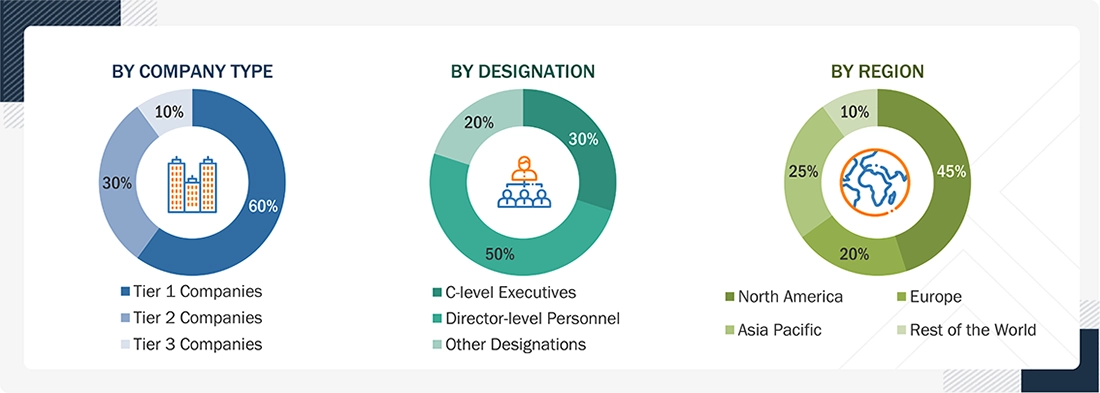
Note 1: Others include sales managers, marketing managers, and product managers.
Note 2: Tiers of companies are defined on the basis of their total revenues in 2023. Tier 1 = >USD 1 billion, Tier 2 = USD 500 million to USD 1 billion, and Tier 3 = <USD 500 million.
To know about the assumptions considered for the study, download the pdf brochure
Market Size Estimation
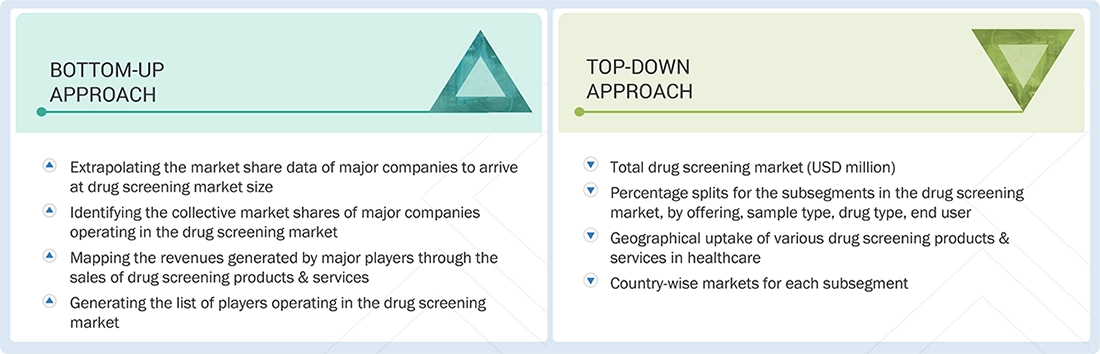
Both top-down and bottom-up approaches were used to estimate and validate the total size of the drug screening market. These methods were also used extensively to estimate the size of various subsegments in the market.
The research methodology used to estimate the market size includes the following:
Data Triangulation
After arriving at the overall market size using the market size estimation processes, the market was split into several segments and subsegments. To complete the overall market engineering process and arrive at the exact statistics of each market segment and sub-segment, data triangulation and market breakdown procedures were employed, wherever applicable. The data was triangulated by studying various factors and trends from both the demand and supply sides in the drug screening market.
Market Definition
Drug and alcohol testing or drug screening refers to testing individuals for illegal abuse of drugs (including legal drugs such as prescription drugs) through the use of biological samples, such as urine, oral fluids/saliva, hair, blood, and sweat.
Key Stakeholders
- Drug screening product & solution providers (Including immunoassay kit manufacturers, confirmatory testing technology providers, breathalyzer and oral fluid testing device developers, rapid test and POCT vendors)
- Drug screening service providers (including Clinical laboratories, reference labs, forensic toxicology labs, workplace testing providers, on-site/mobile testing service companies)
- Healthcare providers (Hospitals, emergency departments, trauma centers, outpatient clinics, rehabilitation centers, pain management clinics, mental health and addiction treatment facilities)
- Workplace & employer organizations
- Law enforcement & public safety agencies
- Research & development (R&D) companies
- Judicial & legal system stakeholders
- Government & regulatory authorities
- Sports organizations & anti-doping agencies
- Payers & insurers
- Patients, employees & tested individuals
- Substance abuse treatment & rehabilitation providers
- Research & development (R&D) organizations
- Venture capitalists & private equity firms
- Advocacy groups & professional associations
- Investors & financial institutions
- Medical research laboratories & clinical trial organizations
- Academic institutions & training centers
- Technology & instrumentation providers
- Laboratory information & data management providers
- Sample collection & logistics providers
- Quality assurance, accreditation & certification bodies
- Consulting, training & compliance service provider
- Data analytics & emerging technology developers
Report Objectives
- To define, describe, and forecast the global drug screening market based on offering, sample type, drug type, end user, and region
- To provide detailed information regarding the major factors (such as drivers, restraints, opportunities, and challenges) influencing market growth
- To strategically analyze micro-markets with respect to individual growth trends, prospects, and contributions to the overall drug screening market
- To analyze opportunities in the market for stakeholders and provide details of the competitive landscape for market leaders
- To strategically analyze the market structure profile of the key players of the drug screening market and comprehensively analyze their core competencies
- To forecast the size of the market segments with respect to five regions: North America, Europe, Asia Pacific, Latin America, and the Middle East & Africa
- To track and analyze competitive developments such as product launches and enhancements, investments, partnerships, collaborations, acquisitions, expansions, product approval, and alliances in the drug screening market during the forecast period.
Available customizations:
With the given market data, MarketsandMarkets offers customizations as per the company’s specific needs. The following customization options are available for the report:- Product Analysis: Product matrix, which gives a detailed comparison of the product portfolios of each company.
- Geographic Analysis: Further breakdown of Latin America, Europe, and the Middle East & Africa drug screening into specific countries
Get the Full Drug Screening Market Report
Full forecast, segment splits, and company analysis for all Drug Screening Market.
- US Drug Screening Market
- Canada Drug Screening Market
- Germany Drug Screening Market
- France Drug Screening Market
- UK Drug Screening Market
- Italy Drug Screening Market
- Spain Drug Screening Market
- China Drug Screening Market
- Japan Drug Screening Market
- India Drug Screening Market
- Australia Drug Screening Market
- Brazil Drug Screening Market
- Mexico Drug Screening Market
- Saudi Arabia Drug Screening Market
- UAE Drug Screening Market
- South Africa Drug Screening Market
Need a Tailored Report?
Customize this report to your needs
Get 10% FREE Customization
Customize This Report
