
Belgium Electric Scooter Motor Market (2024-2029)

The Belgium Electric Scooter Motor Market was valued at $22 Million in 2024 and projected to reach to $42 Million by 2029, representing a compound annual growth rate of 10.9%. Belgium's electric scooter motor market is poised for significant expansion as urban centers prioritize sustainable transportation solutions.


| Market Size in | USD 26.32 MN |
| Market Forecast in | |
| CAGR | |
| Forecast Period | |
| Units Considered | Value (USD MN) |
Belgium Electric Scooter Motor Market Trends and Insights
- Belgium's urban mobility landscape is increasingly embracing micro-mobility solutions, with electric scooters becoming a preferred last-mile transportation option in cities like Brussels, Antwerp, and Ghent.
- The expansion reflects Belgium's commitment to sustainable urban transport and the rising adoption of shared mobility services across the country. The Belgian market benefits from strong regulatory frameworks supporting clean transportation and dense urban populations seeking convenient alternatives to traditional commuting.
- Belgium's investment in cycling infrastructure and pedestrian-friendly city planning creates an ideal ecosystem for electric scooter adoption.
- Between 2024 and 2029, Belgium is expected to see accelerated demand driven by technological improvements in motor efficiency, declining battery costs, and increased consumer awareness of environmental benefits. Belgium's position within the European Union also facilitates access to advanced motor technologies and cross-border supply chains, enhancing market competitiveness.
- The country's relatively small geographic size and well-developed urban centers make it particularly suited for scooter-based mobility solutions, positioning Belgium as a growing hub for electric scooter motor innovation and deployment..
Key Market Statistics
- CAGR (2024-2029) 10.9% CAGR
- Market Size, 2024 ~USD 22 Million
- Forecast, 2029 ~USD 42 Million
- Country Belgium
Belgium Electric Scooter Motor Market Overview
Market Valuation :
Belgium's electric scooter motor market is valued at $22.0 million in 2024, with strong growth trajectory positioning it as a key micro-mobility hub in Western Europe.
Urban Adoption Centers :
Major Belgian cities including Brussels, Antwerp, and Ghent are driving adoption of electric scooters as last-mile transportation solutions, supported by favorable urban infrastructure and regulatory frameworks.
Growth Momentum :
Belgium's market is expanding at a 10.9% CAGR through 2029, outpacing many European peers and reflecting strong consumer demand for sustainable urban mobility alternatives.
Forecast Expansion :
The market is projected to nearly double to $42.0 million by 2029, driven by increasing environmental awareness, government incentives, and expanding micro-mobility infrastructure across Belgian cities.
Belgium Electric Scooter Motor Market Dynamics
- The country's compact geography, dense city populations, and strong environmental policies create ideal conditions for micro-mobility adoption.
- Government support through subsidies and dedicated scooter lanes in Brussels and other major cities is accelerating market penetration. Looking ahead to 2029, Belgium's market will benefit from technological advancements in motor efficiency, battery performance, and smart connectivity features.
- Increasing collaboration between local authorities and scooter-sharing companies, combined with growing consumer preference for eco-friendly commuting options, will drive sustained demand for high-performance electric scooter motors throughout the forecast period..
Market Ecosystem
Related Ecosystem
Automotive Electronics And Electrical Equipment
- Battery Electric Vehicle (BEV)
- Light Commercial Vehicles (LCVs)
- Fuel Cell Electric Vehicle (FCEV)
- Sensors
- Hybrid Electric Vehicle (HEV)
- BOSCH LIMITED
- DENSO Corporation
- Continental ag
- Panasonic Holdings Corporation
- Texas Instruments Incorporated
Electric Hybrid Vehicles
- Battery Electric Vehicle (BEV)
- Fuel Cell Electric Vehicle (FCEV)
- Light Commercial Vehicles (LCVs)
- Hybrid Electric Vehicle (HEV)
- Agricultural Tractors
- Visteon Corporation
- Byd company ltd.
- BOSCH LIMITED
- Tesla, Inc.
- FORD MOTOR COMPANY
Key Takeaways
- Belgium's electric scooter motor market is valued at $22.0 million in 2024 and is forecast to nearly double to $42.0 million by 2029.
- Belgium's 10.9% CAGR reflects strong urban adoption of micro-mobility solutions in major cities including Brussels, Antwerp, and Ghent.
- Belgium's EU membership and advanced infrastructure provide competitive advantages in accessing motor technologies and supply chain networks.
- Regulatory support for clean transportation and dense urban populations position Belgium as a key growth market for electric scooter motors through 2029.
Electric Scooter Motor Market Report Scope
| Report Metric | Details |
|---|---|
| Base Year | 2024 |
| Fastest Growing Segment | MID-DRIVE MOTOR (Positioning) |
| Forecast Period | 2024-2029 |
| Growth Rate | CAGR of 19.3% from 2024 to 2029 |
| Largest Segment | E-SCOOTER/MOPED (Vehicle Type) |
| Market Size Base Year (Billions) | ~USD 0.42 (2024) |
| Revenue Forecast (Billions) | ~USD 1.01 (2029) |
| Segments Covered | Vehicle Type, Drive Type, Motor Power, Motor Type, Positioning |
Belgium Electric Scooter Motor Market Report Segmentation
5 segment dimensions are covered across the global market.
By Vehicle Type
- E-Motorcycle
- E-Scooter/Moped
- E-Scooter/Mopeds
- E-Scooters/Moped
By Drive Type
- Belt Drive
- Chain Drive
By Motor Power
- 1.5-3 Kw
- Above 3 Kw
- Less Than 1.5 Kw
By Motor Type
- Bldc
- Pmsm
By Positioning
- Hub Motor
- Mid-Drive Motor
Target Audience
- Electric Motor Manufacturers : Manufacturers need Belgium-specific demand forecasts and technical specifications to develop products tailored to local scooter designs and performance requirements.
- Scooter-Sharing Companies : Operators require market sizing and city-level adoption data to optimize fleet deployment, motor specifications, and expansion strategies across Belgian urban centers.
- Investment & Private Equity Firms : Investors need detailed Belgium market analysis to evaluate funding opportunities, assess growth potential, and identify acquisition targets in the country's micro-mobility sector.
- Government & Urban Planners : Policy makers require market insights to develop infrastructure, set regulations, and allocate resources for sustainable micro-mobility integration in Belgian cities.
- Supply Chain & Logistics Providers : Distributors and logistics companies need Belgium market forecasts to plan inventory, establish distribution networks, and optimize supply chain operations for motor components.
Reasons to Buy this Report
- Localized Market Intelligence : Gain Belgium-specific insights on market size, growth rates, and competitive dynamics that differ significantly from global trends, enabling targeted business strategies for the Belgian market.
- City-Level Opportunity Analysis : Understand demand patterns across Brussels, Antwerp, Ghent, and other key Belgian cities to identify high-potential deployment zones and optimize distribution strategies.
- Regulatory & Policy Landscape : Access detailed analysis of Belgium's unique regulatory environment, government incentives, and urban planning initiatives that directly impact motor market growth and investment opportunities.
- Competitive Positioning : Benchmark your products and strategies against local and regional competitors operating in Belgium's micro-mobility ecosystem with actionable competitive intelligence.
- Investment & Expansion Planning : Make data-driven decisions on market entry, partnership development, and resource allocation in Belgium with comprehensive forecasts through 2029 and growth trajectory analysis.
Frequently asked questions
What is the current size of Belgium's electric scooter motor market?
Belgium's electric scooter motor market was valued at $22.0 million in 2024 and is expected to grow to $42.0 million by 2029.
What is the growth rate for Belgium's electric scooter motor market?
Belgium's electric scooter motor market is growing at a compound annual growth rate (CAGR) of 10.9% from 2024 to 2029.
Which cities in Belgium are driving electric scooter adoption?
Major Belgian cities including Brussels, Antwerp, and Ghent are leading the adoption of electric scooters as part of their urban mobility strategies.
What factors are supporting growth in Belgium's electric scooter motor market?
Belgium's growth is driven by regulatory support for clean transportation, dense urban populations, EU supply chain access, and investment in cycling infrastructure.
How does Belgium's market compare to the global electric scooter motor market?
Belgium's 10.9% CAGR is below the global average of 19.3%, reflecting a more mature but steady market with strong regulatory frameworks and established urban mobility infrastructure.
RESEARCH METHODOLOGY
This research study involved the extensive use of secondary sources, such as company annual reports/presentations, industry association publications, automotive magazine articles, directories, technical handbooks, the World Economic Outlook, trade websites, technical articles, and databases, to identify and collect information on the Electric Scooter Motor market. In-depth interviews were conducted with various primary respondents, including key industry participants, subject-matter experts (SMEs), C-level executives of key market players (electric scooter motor manufacturers and suppliers), and industry consultants, among other experts, to obtain and verify critical qualitative and quantitative information and assess market prospects.
Secondary Research
In the secondary research process, various secondary sources were used to identify and collect information on the electric scooter motor market for this study. Secondary sources include annual reports, press releases, and investor presentations of companies; whitepapers, certified publications, and articles from recognized authors; directories; databases; and articles from recognized associations and government publishing sources.
Primary Research
Extensive primary research was conducted after understanding the electric scooter motor market scenario through secondary research. Several primary interviews were conducted with market experts from both demand-side vehicle manufacturers [(in terms of component supply) country-level government associations and trade associations] and supply-side OEMs and component manufacturers across three major regions, namely, North America, Europe, and Asia Pacific. Approximately 30% and 70% of primary interviews were conducted from the demand and supply sides, respectively. Primary data was collected through questionnaires, emails, and telephonic interviews. In the canvassing of primaries, various departments within organizations, such as sales, operations, and administration, were covered to provide a holistic viewpoint in the report.
In the canvassing of primaries, various departments within organizations, such as sales, operations, and marketing, were covered to provide a holistic viewpoint in the report. After interacting with industry experts, brief sessions were conducted with highly experienced independent consultants to reinforce the findings from primaries. This, along with the opinions of in-house subject matter experts, led to the findings, as described in the remainder of this report.
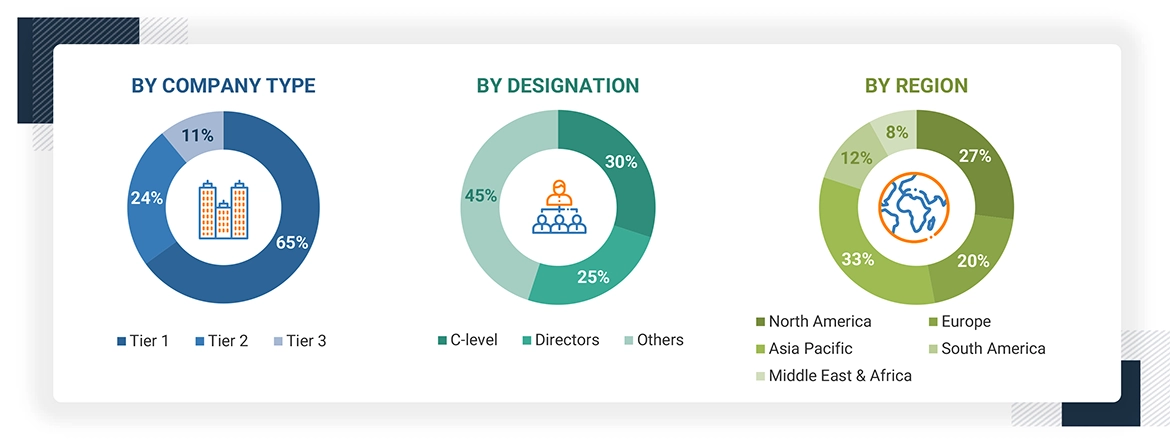
Note: The tiers of companies are based on the value chain of the electric scooter motor market. Tier I companies
are the largest or the most technically capable companies in the supply chain, and Tier II companies are small or
medium companies in the supply chain of the electric scooter motor market. Other designations include design
engineers, manufacturing engineers, operational heads, and sales executives.
To know about the assumptions considered for the study, download the pdf brochure
Market Size Estimation
A detailed market estimation approach has been followed to estimate and validate the value and volume of the electric scooter motor market and other dependent submarkets, as mentioned below:
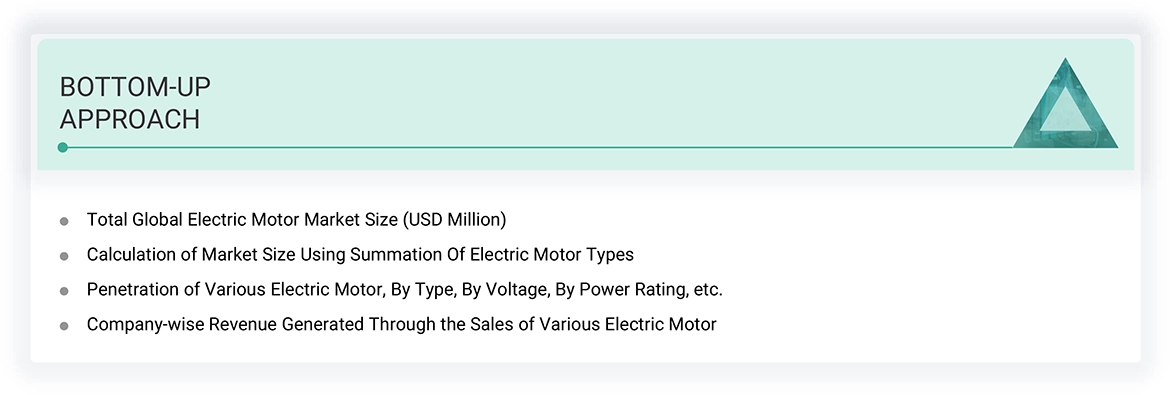
The market size has been derived by collecting sales of electric two-wheelers (electric scooters/mopeds and electric motorcycles) through associations and paid databases. This data has then been multiplied by the number of motors in each vehicle type to derive the market size for electric scooter motor market.
Key players in the electric scooter motor market have been identified through secondary research, and their global market share has been determined through primary and secondary research.
The research methodology includes the study of annual and quarterly financial reports, regulatory filings of major market players, and interviews with industry experts to gain detailed market insights.
All major penetration rates, percentage shares, splits, and breakdowns for the electric scooter motor market have been determined through secondary sources and verified through primary sources.
All key macro indicators affecting the revenue growth of the market segments and subsegments have been accounted for, viewed in extensive detail, verified through primary research, and analyzed to get the validated and verified quantitative and qualitative data.
Electric Scooter Motor Market : Top-Down and Bottom-Up Approach
Data Triangulation
All percentage shares, splits, and breakdowns have been determined using secondary sources and verified by primary sources. All parameters that affect the markets covered in this research study have been accounted for, viewed in extensive detail, and analyzed to obtain the final quantitative and qualitative data. This data has been consolidated, enhanced with detailed inputs and analysis from MarketsandMarkets, and presented in the report. The following figure is an illustrative representation of the overall market size estimation process employed for this study.
Market Definition
An electric scooter motor is the power source that converts electrical energy from the battery into mechanical energy, which powers the e-scooter and e-motorcycle. The motor is a critical component that determines its performance, including:
- Acceleration: How quickly the scooter can accelerate
- Top speed: The maximum speed the scooter can reach
- Hill-climbing ability: How well the scooter can climb hills
- Power consumption: How much power the scooter uses
Stakeholders
- Associations, Forums, and Alliances of Electric Scooter and Motorcycle Motor Manufacturers
- Automobile Manufacturers
- Automotive Component Manufacturers
- Automotive Investors
- Distributors and Retailers of Electric Two-wheeler Motors
- Electric Battery Manufacturers
- Government Agencies and Policymakers
- Manufacturers of Electric Two-wheeler Motors
- Manufacturers of Electric Two-wheelers
- Manufacturers of Electric Two-wheeler Components
- Motor Controller Manufacturers
Report Objectives
- To segment and forecast the electric scooter (e-scooter) motor market in terms of volume (thousand units) and value (USD million)
-
To define, describe, and forecast the market based on vehicle type, positioning, motor type, motor power, drive type, component, and region
- To segment and forecast the market by vehicle type (e-scooter/moped and e-motorcycle)
- To segment and forecast the market by motor type (PMSM and BLDC)
- To segment and forecast the market by positioning (hub motor and mid-drive motor)
- To segment and forecast the market by motor power (less than 1.5 kW, 1.5–3 kW, and above 3 kW)
- To segment and forecast the market by drive type (belt drive and chain drive)
- To segment the market by component (rotor, stator, shaft, and others)
- To forecast the market size with respect to key regions: North America, Europe, and Asia Pacific
- To provide detailed information regarding the major factors influencing the market growth (drivers, challenges, restraints, and opportunities)
- To analyze technological developments impacting the market
- To analyze opportunities for stakeholders and the competitive landscape for market leaders in the market
- To strategically analyze markets with respect to individual growth trends, prospects, and contributions to the total market
- To strategically profile key players and comprehensively analyze their market shares and their core competencies
- To track and analyze competitive developments such as product launches/developments, deals, and expansions undertaken by the key industry participants
Available Customizations
With the given market data, MarketsandMarkets offers customizations in accordance with the company’s specific needs.
- Electric scooter motor market, by positioning at country level (for countries covered in the report)
- Profiling of additional market players (up to 5)
Get the Full Electric Scooter Motor Market Report
Full forecast, segment splits, and company analysis for all Electric Scooter Motor Market.
- China Electric Scooter Motor Market
- Japan Electric Scooter Motor Market
- India Electric Scooter Motor Market
- South Korea Electric Scooter Motor Market
- Taiwan Electric Scooter Motor Market
- Thailand Electric Scooter Motor Market
- Indonesia Electric Scooter Motor Market
- Malaysia Electric Scooter Motor Market
- Philippines Electric Scooter Motor Market
- Vietnam Electric Scooter Motor Market
- France Electric Scooter Motor Market
- Germany Electric Scooter Motor Market
- Spain Electric Scooter Motor Market
- Austria Electric Scooter Motor Market
- UK Electric Scooter Motor Market
- Italy Electric Scooter Motor Market
- Netherlands Electric Scooter Motor Market
- Poland Electric Scooter Motor Market
- Denmark Electric Scooter Motor Market
- Canada Electric Scooter Motor Market
- US Electric Scooter Motor Market
Need a Tailored Report?
Customize this report to your needs
Get 10% FREE Customization
Customize This Report
