
Europe Electrophysiology Market (2025-2030)

The Europe Electrophysiology Market was valued at $3206.1 Million in 2025 and projected to reach to $5583 Million by 2030, representing a compound annual growth rate of 11.7%. Europe's electrophysiology market is poised for sustained expansion through 2030, supported by an aging population with rising cardiac arrhythmia prevalence and advanced healthcare infrastructure.


| Market Size in | USD 26.32 MN |
| Market Forecast in | |
| CAGR | |
| Forecast Period | |
| Units Considered | Value (USD MN) |
Europe Electrophysiology Market Trends and Insights
- This expansion reflects Europe's advanced healthcare infrastructure, aging population, and increasing prevalence of cardiac arrhythmias across the region.
- Europe maintains a strong position in the global electrophysiology landscape, driven by technological innovation and established reimbursement frameworks that support device adoption. The European market benefits from high healthcare spending, regulatory support through CE marking, and a concentration of leading medical device manufacturers.
- Europe's electrophysiology sector is characterized by strong demand for ablation catheters, mapping systems, and implantable devices.
- The 11.7% compound annual growth rate through 2030 underscores Europe's commitment to advancing cardiac care and improving patient outcomes across the continent. Key European markets including Germany, France, and the United Kingdom are driving regional growth through increased procedural volumes and adoption of minimally invasive techniques.
- Europe's electrophysiology market reflects the region's focus on precision medicine and personalized cardiac treatment strategies..
Key Market Statistics
- CAGR (2025-2030) 11.7% CAGR
- Market Size, 2025 ~USD 3206.1 Million
- Forecast, 2030 ~USD 5583 Million
- Geography Europe
Europe Electrophysiology Market Overview
Market Valuation & Growth :
Europe's electrophysiology market is valued at $3,206.1 million in 2025, with a robust CAGR of 11.7% projected through 2030, reaching $5,583.0 million. This growth trajectory outpaces many global regions, driven by sustained investment in cardiac care infrastructure.
Aging Population & Disease Prevalence :
Europe's aging demographic significantly drives electrophysiology demand, with increasing prevalence of atrial fibrillation and other cardiac arrhythmias. The region's elderly population requires advanced diagnostic and interventional electrophysiology procedures, supporting market expansion.
Advanced Healthcare Infrastructure :
Europe maintains world-class healthcare systems with high adoption rates of cutting-edge electrophysiology technologies. Strong regulatory frameworks, reimbursement policies, and clinical expertise position the region as a leader in cardiac electrophysiology innovation and patient care.
Key Market Leaders :
Germany leads Europe's market at $450.5 million, followed by France ($325.6 million) and the UK ($208.9 million). These countries drive technological advancement and set clinical standards that influence electrophysiology practices across the entire European region.
Europe Electrophysiology Market Dynamics
- Increasing adoption of minimally invasive procedures, technological innovations in catheter ablation, and strong reimbursement frameworks across major European economies will continue to fuel market growth.
- Healthcare providers are investing heavily in electrophysiology capabilities to meet growing patient demand. Regulatory support and clinical evidence backing electrophysiology interventions strengthen market fundamentals across Europe.
- Strategic partnerships between medical device manufacturers and healthcare institutions, combined with physician training initiatives, will enhance procedure adoption rates.
- The region's commitment to cardiac care excellence and patient outcomes ensures electrophysiology remains a priority investment area for healthcare systems through the forecast period..
Market Ecosystem

Electrophysiology Market: COMMERCIAL USE CASES ACROSS INDUSTRIES
| COMPANY | USE CASE DESCRIPTION | BENEFITS |
|---|---|---|
 |
Utilizes TactiCath Contact Force Ablation Catheter with integrated force sensing for atrial fibrillation procedures. | Enables precise lesion formation, reduces recurrence rates, and improves procedural safety. |
 |
CARTO 3 System for advanced 3D electroanatomical cardiac mapping. | Provides real-time visualization, enhances navigation accuracy, and minimizes fluoroscopy exposure. |
 |
AcQMap High-Resolution Imaging and Mapping System using ultrasound and charge density mapping. | Enables comprehensive visualization of arrhythmia patterns and improves treatment precision. |
 |
Farapulse Pulsed Field Ablation (PFA) System for atrial fibrillation (AF) treatment. | Offers precise tissue ablation with minimal collateral damage, reducing procedure time and enhancing safety. |
 |
PulseSelect PFA System for AF ablation. | Provides targeted energy delivery, improving procedural efficiency and patient outcomes. |
Logos and trademarks shown above are the property of their respective owners. Their use here is for informational and illustrative purposes only.
Related Ecosystem
Medical Devices
- Polymerase Chain Reaction (PCR)
- Magnetic Resonance Imaging (MRI)
- Disposable Autoinjectors
- Pulse Oximeters
- Blood Pressure Monitors
- Medtronic plc
- Abbott Laboratories
- Stryker Corporation
- Becton, Dickinson and Company
- JOHNSON & JOHNSON
Key Takeaways
- Europe's electrophysiology market will grow from $3,206.1M (2025) to $5,583.0M (2030) at an 11.7% CAGR, reflecting strong regional demand for cardiac interventions.
- Europe's advanced healthcare infrastructure and aging demographics are primary drivers of electrophysiology adoption across the continent.
- Regulatory support and established reimbursement pathways in Europe facilitate rapid adoption of innovative ablation and mapping technologies.
- Europe's electrophysiology market is concentrated in developed nations with high procedural volumes and strong physician expertise in cardiac electrophysiology.
Electrophysiology Market Report Scope
| Report Metric | Details |
|---|---|
| Base Year | 2025 |
| Fastest Growing Segment | REMOTE MAGNETIC & ROBOTIC NAVIGATION SYSTEMS (Type) |
| Forecast Period | 2025-2030 |
| Growth Rate | CAGR of 11.6% from 2025 to 2030 |
| Largest Segment | HOSPITALS & CARDIAC CENTERS (End User) |
| Market Size Base Year (Billions) | ~USD 12.55 (2025) |
| Revenue Forecast (Billions) | ~USD 21.72 (2030) |
| Segments Covered | Product, Type, Indication, End User, Volume |
Europe Electrophysiology Market Report Segmentation
5 segment dimensions are covered across the global market.
By Product
- Electrophysiology Ablation Catheters
- Electrophysiology Access Devices
- Electrophysiology Diagnostic Catheters
- Electrophysiology Laboratory Devices
- Other Electrophysiology Products
By Type
- 3D Mapping Systems
- Advanced Electrophysiology Diagnostic Catheters
- Conventional Electrophysiology Diagnostic Catheters
- Cryoablation Catheters
- Electrophysiology Recording Systems
- Electrophysiology X-Ray Systems
- Intra-Cardiac Echocardiography (ICE) Ultrasound Imaging Systems
- Intracardiac Echocardiography (ICE) Ultrasound Imaging Systems
- Laser Ablation Catheters
- Microwave Ablation (Mwa) Catheters
- Radiofrequency (Rf) Ablation Catheters
- Radiofrequency (Rf) Ablation Systems
- Remote Magnetic & Robotic Navigation Systems
- Ultrasound Electrophysiology Diagnostic Catheters
By Indication
- Atrial Fibrillation
- Atrial Flutter
- Atrioventricular Nodal Reentry Tachycardia (Avnrt)
- Other Indications
- Wolff-Parkinson-White (Wpw) Syndrome
By End User
- Ambulatory Surgery Centers
- Hospitals & Cardiac Centers
- Other End Users
By Volume
- 3D Mapping Systems
- Electrophysiology Recording Systems
- Electrophysiology X-Ray Systems
- Intracardiac Echocardiography (ICE) Ultrasound Imaging Systems
- Radiofrequency (Rf) Ablation Systems
- Remote Magnetic & Robotic Navigation Systems
EUROPE: ELECTROPHYSIOLOGY MARKET, BY END USER, 2023–2030
| Segment | 2023 | 2024 | 2025 | 2026 | 2027 | 2028 | 2029 | 2030 | CAGR (%) |
|---|---|---|---|---|---|---|---|---|---|
| AMBULATORY SURGERY CENTERS | 275.4 | 302 | 335.6 | 374.9 | 420.2 | 473.6 | 535.3 | 609.1 | 12.7 |
| HOSPITALS & CARDIAC CENTERS | 2295.6 | 2517.3 | 2773.1 | 3072.1 | 3413.2 | 3814.7 | 4275.1 | 4823.3 | 11.7 |
| OTHER END USERS | 82.5 | 90.5 | 97.4 | 105.4 | 114.4 | 124.8 | 136.7 | 150.6 | 9.1 |
| TOTAL | 2653.6 | 2909.8 | 3206.1 | 3552.4 | 3947.7 | 4413.2 | 4947.1 | 5583 | 11.7 |
REST OF EUROPE: ELECTROPHYSIOLOGY MARKET, BY END USER, 2023–2030
| Segment | 2023 | 2024 | 2025 | 2026 | 2027 | 2028 | 2029 | 2030 | CAGR (%) |
|---|---|---|---|---|---|---|---|---|---|
| AMBULATORY SURGERY CENTERS | 66.7 | 73.1 | 81.3 | 90.9 | 101.9 | 115 | 130.1 | 148.1 | 12.7 |
| HOSPITALS & CARDIAC CENTERS | 555.5 | 609.2 | 671.7 | 744.8 | 828.2 | 926.2 | 1038.7 | 1172.5 | 11.8 |
| OTHER END USERS | 20 | 21.9 | 23.6 | 25.5 | 27.7 | 30.3 | 33.2 | 36.6 | 9.2 |
| TOTAL | 642.2 | 704.2 | 776.6 | 861.2 | 957.8 | 1071.5 | 1201.9 | 1357.2 | 11.8 |
Target Audience
- Medical Device Manufacturers : Electrophysiology device companies need Europe-specific market data to develop regional product strategies, identify growth opportunities in key markets like Germany and France, and optimize market entry approaches aligned with European regulatory and reimbursement requirements.
- Healthcare Providers & Hospitals : European hospitals and cardiac centers require market insights to justify electrophysiology program investments, benchmark against peer institutions, and plan capital equipment purchases. Regional data supports strategic planning for cardiac care service expansion.
- Investment & Private Equity Firms : Investors evaluating opportunities in European healthcare need comprehensive market sizing and growth projections. Europe's 11.7% CAGR and aging population demographics present attractive investment thesis for electrophysiology-focused companies and healthcare infrastructure funds.
- Healthcare Consultants & Analysts : Consulting firms advising healthcare organizations, medical device companies, and investors require detailed European market analysis. Country-level data and growth forecasts enable credible strategic recommendations and competitive positioning assessments across the region.
- Regulatory & Policy Organizations : European health authorities and policy makers benefit from market intelligence to understand electrophysiology adoption trends, assess healthcare resource allocation, and develop evidence-based policies supporting cardiac care innovation and patient access across member states.
Countries within Europe - compare and drill down
| Country | 2025 size (native) |
|---|---|
| Germany | USD 450.5 Million |
| UK | USD 208.9 Million |
| France | USD 325.6 Million |
| Italy | USD 93.9 Million |
| Spain | USD 138.6 Million |
| Rest Of Europe | USD 383.5 Million |
Country market size visualization
Reasons to Buy this Report
- Regional Market Segmentation : Gain detailed insights into Europe's electrophysiology market with country-level breakdowns including Germany, France, UK, Italy, and Spain. Understand regional variations in market dynamics, reimbursement structures, and clinical adoption patterns specific to European healthcare systems.
- Growth Trajectory & Forecasting : Access comprehensive market projections showing Europe's electrophysiology expansion from $3,206.1 million (2025) to $5,583.0 million (2030) at 11.7% CAGR. Make informed strategic decisions based on reliable forecasting data tailored to European market conditions.
- Competitive Landscape Analysis : Identify leading markets and key players across Europe's electrophysiology sector. Understand competitive positioning in major economies like Germany and France, enabling targeted market entry and partnership strategies for medical device manufacturers and healthcare providers.
- Healthcare Infrastructure Insights : Leverage analysis of Europe's advanced healthcare systems, regulatory environments, and reimbursement policies. Understand how healthcare infrastructure drives electrophysiology adoption and shapes market opportunities across different European countries.
- Strategic Investment Planning : Support capital allocation and business development decisions with Europe-specific market intelligence. Identify high-growth opportunities, emerging trends in cardiac care, and regional priorities for electrophysiology technology adoption and clinical implementation.
Frequently asked questions
What is the projected size of Europe's electrophysiology market by 2030?
Europe's electrophysiology market is projected to reach $5,583.0 million by 2030, growing from $3,206.1 million in 2025.
What is the CAGR for Europe's electrophysiology market?
Europe's electrophysiology market is expected to grow at a compound annual growth rate of 11.7% between 2025 and 2030.
What factors are driving growth in Europe's electrophysiology market?
Europe's electrophysiology market growth is driven by an aging population, increasing cardiac arrhythmia prevalence, advanced healthcare infrastructure, and strong reimbursement support across the region.
Which European countries lead the electrophysiology market?
Germany, France, and the United Kingdom are among Europe's leading electrophysiology markets, characterized by high procedural volumes and advanced medical device adoption.
What products dominate Europe's electrophysiology market?
Europe's electrophysiology market is dominated by ablation catheters, cardiac mapping systems, and implantable cardioverter-defibrillators, reflecting demand for minimally invasive cardiac interventions.
RESEARCH METHODOLOGY
This study involved the extensive use of both primary and secondary sources. The research process involved the study of various factors affecting the industry to identify the segmentation types, industry trends, key players, competitive landscape, fundamental market dynamics, and key player strategies.
Secondary Research
This research study used widespread secondary sources, such as directories, databases such as Dun & Bradstreet, Bloomberg BusinessWeek, and Factiva, white papers, annual reports, and companies’ house documents. Secondary research was used to identify and collect information for this extensive, technical, market-oriented, and commercial study of the global pulse oximeters market. It was also used to obtain important information about the top players, market classification, and segmentation according to industry trends, to the bottom-most level, geographic markets, and key developments related to the market and technology perspectives. A database of the key industry leaders was also prepared using secondary research.
Primary Research
In the primary research process, various supply and demand sources were interviewed to obtain qualitative and quantitative information for this report. The primary sources from the supply side include industry experts such as CEOs, vice presidents, marketing and sales directors, technology and innovation directors, and related key executives from various key companies and organizations operating in the pulse oximeters market. The primary sources from the demand side include key executives from hospitals, physicians, clinicians, and research institutes.
A breakdown of the primary respondents is provided below:
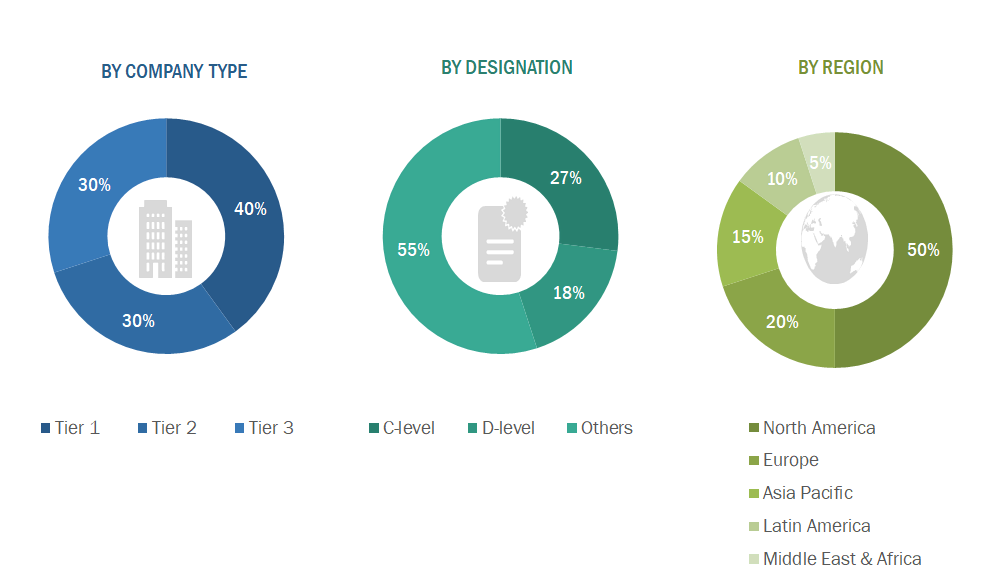
Note 1: C-level primaries include CEOs, CFOs, COOs, and VPs.
Note 2: Others include sales managers, marketing managers, business development managers, product managers, distributors, and suppliers.
Note 3: Companies are classified into tiers based on their total revenue. As of 2024, Tier 1 = >USD 10.00 billion, Tier 2 = USD 1.00 billion to USD 10.00 billion, and Tier 3 = < USD 1.00 billion.
To know about the assumptions considered for the study, download the pdf brochure
Market Size Estimation
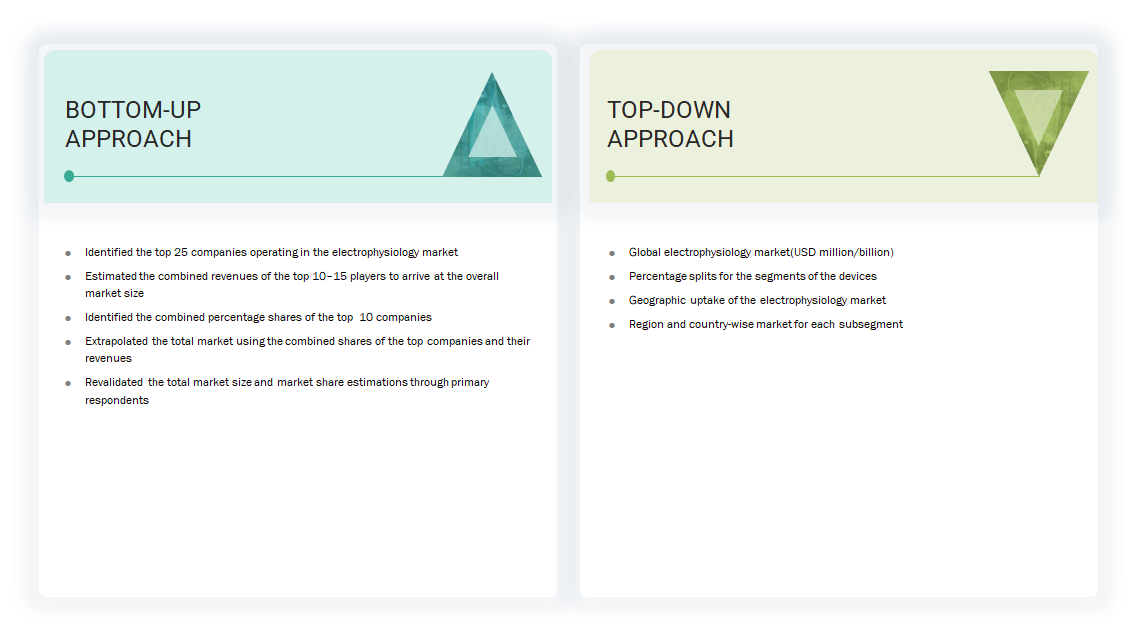
In this report, the electrophysiology market size was determined using the revenue share analysis of leading players. For this purpose, key players in the market were identified, and their revenues from the electrophysiology market business were determined through various insights gathered during the primary and secondary research phases. Secondary research included the study of the annual and financial reports of the top market players. In contrast, primary research included extensive interviews with key opinion leaders, such as CEOs, directors, and key marketing executives.
Segmental revenues were calculated based on the revenue mapping of major solution/service providers to calculate the global market value. This process involved the following steps:
- Generating a list of major global players operating in the electrophysiology market.
- Mapping annual revenues generated by major global players from the Electrophysiology market(or nearest reported business unit/product category)
- Revenue mapping of key players to cover a major share of the global market, as of 2024
- Extrapolating the global value of the electrophysiology market
Global Electrophysiology Market Size: Top-Down & Bottom-Up Approach
Data Triangulation
After arriving at the overall market size from the market size estimation process explained above, the Electrophysiology market was split into segments and subsegments. Data triangulation and market breakdown procedures were employed to complete the overall market engineering process and arrive at the exact statistics for all segments and subsegments. The data was triangulated by studying various factors and trends from both the demand and supply sides. Additionally, the electrophysiology market was validated using both top-down and bottom-up approaches.
Market Definition
An electrophysiology (EP) test is performed to examine the electrical activities and pathways of the patient’s heart in order to diagnose and treat complex cardiac conditions. It helps electrophysiologists identify the causes of heart rhythm disorders and determine the appropriate treatment. Electrophysiology (EP) refers to the study of the heart’s electrical system to analyze and diagnose its electrical functions. Cardiac electrophysiology studies the phenomena by recording the electrical activities of the heart with an invasive catheter. This testing is useful for evaluating complex arrhythmias or heart rhythm problems.
Stakeholders
- Electrophysiology devices manufacturing companies
- Suppliers and distributors of electrophysiology products
- Third-party refurbishers/suppliers
- Hospitals
- Cardiac Centers
- Ambulatory surgery centers
- Group purchasing organizations (GPOs)
- Medical research laboratories
- Academic medical centers and universities
- Venture capitalists
- Government bodies
- Corporate entities
- Market research and consulting firms
- Accountable care organizations
- Community centers
- Regulatory authorities.
- Business research and consulting service providers
- Raw material suppliers
Report Objectives
- To provide detailed information about the factors influencing the market growth (such as drivers, restraints, opportunities, and challenges)
- To define, describe, segment, and forecast the electrophysiology market by product, indication, end user, and region
- To analyze market opportunities for stakeholders and provide details of the competitive landscape for key players
- To analyze micro markets concerning individual growth trends, prospects, and contributions to the overall electrophysiology market.
- To forecast the size of the electrophysiology market in five main regions, along with their respective key countries, namely, North America, Europe, the Asia Pacific, Latin America, and the Middle East & Africa
- To profile key players in the electrophysiology market and comprehensively analyze their core competencies and market shares
- To track and analyze competitive developments, such as acquisitions; product launches; expansions; collaborations, agreements, & partnerships; and R&D activities of the leading players in the electrophysiology market
- To benchmark players within the electrophysiology market using the competitive leadership mapping framework, which analyzes market players on various parameters within the broad categories of business and product strategy
Get the Full Electrophysiology Market Report
Full forecast, segment splits, and company analysis for all Electrophysiology Market.
- Canada Electrophysiology Market
- US Electrophysiology Market
- Germany Electrophysiology Market
- UK Electrophysiology Market
- France Electrophysiology Market
- Italy Electrophysiology Market
- Spain Electrophysiology Market
- Japan Electrophysiology Market
- China Electrophysiology Market
- India Electrophysiology Market
- Australia Electrophysiology Market
- South Korea Electrophysiology Market
- Brazil Electrophysiology Market
- Mexico Electrophysiology Market
- UAE Electrophysiology Market
- Rest Of Europe Electrophysiology Market
- Rest Of Asia Pacific Electrophysiology Market
- Rest Of Latin America Electrophysiology Market
- Kingdom Of Saudi Arabia Electrophysiology Market
- Rest Of GCC Countries Electrophysiology Market
Need a Tailored Report?
Customize this report to your needs
Get 10% FREE Customization
Customize This Report
