
North America Enteral Feeding Devices Market (2025-2030)

The North America Enteral Feeding Devices Market was valued at $5.7 Million in 2025 and projected to reach to $7.4 Million by 2030, representing a compound annual growth rate of CAGR 3.9%. North America's enteral feeding devices market is positioned for steady growth driven by demographic shifts, including an aging population requiring long-term nutritional support and rising incidence of conditions necessitating enteral feeding such as cancer, neurological disorders, and gastrointestinal complications.


| Market Size in | USD 26.32 MN |
| Market Forecast in | |
| CAGR | |
| Forecast Period | |
| Units Considered | Value (USD MN) |
North America Enteral Feeding Devices Market Trends and Insights
- Rest Of GCC Countries represents a developing segment within the broader oncology nutrition support landscape, where enteral feeding solutions address critical nutritional needs for cancer patients undergoing treatment.
- The market in Rest Of GCC Countries is driven by increasing healthcare infrastructure investments and growing awareness of nutritional support in oncology care. Rest Of GCC Countries is experiencing gradual adoption of advanced enteral feeding technologies as healthcare providers recognize the clinical benefits of early nutritional intervention in oncology patients.
- The forecast period through 2030 indicates steady market expansion in Rest Of GCC Countries, supported by rising incidence of cancer-related malnutrition and improved access to specialized feeding devices.
- Rest Of GCC Countries healthcare systems are increasingly integrating enteral nutrition protocols into standard oncology treatment pathways, positioning the region for sustained growth in this therapeutic category..
Key Market Statistics
- CAGR (2025-2030) CAGR 3.9%
- Market Size, 2025 ~USD 5.7 Million
- Forecast, 2030 ~USD 7.4 Million
- Geography North America
North America Enteral Feeding Devices Market Overview
Dominant US Market Leadership :
The US commands the North American enteral feeding devices market with USD 746.2 million in market size, representing over 90% of the regional market and driving innovation in tube feeding technologies and nutritional support solutions.
Steady Regional Growth Trajectory :
North America's enteral feeding devices market is projected to expand at a 3.9% CAGR from 2025 to 2030, supported by aging populations, increased prevalence of chronic diseases, and advanced healthcare infrastructure across the region.
Canada's Growing Contribution :
Canada represents a significant secondary market with USD 82.1 million in market size, benefiting from universal healthcare coverage, rising geriatric populations, and increasing adoption of home-based enteral nutrition therapies.
Advanced Healthcare Infrastructure Advantage :
North America's sophisticated medical device ecosystem, stringent regulatory standards, and high healthcare spending create favorable conditions for premium enteral feeding device adoption and technological advancement.
North America Enteral Feeding Devices Market Dynamics
- The region's advanced healthcare infrastructure, robust reimbursement frameworks, and strong emphasis on patient outcomes support market expansion. Key growth catalysts include increasing home healthcare adoption, technological innovations in feeding tube design and delivery systems, and growing awareness among healthcare providers regarding enteral nutrition benefits.
- The US market's maturity combined with Canada's expanding healthcare investments ensures sustained regional demand through 2030, though growth rates remain moderate compared to emerging markets..
Market Ecosystem
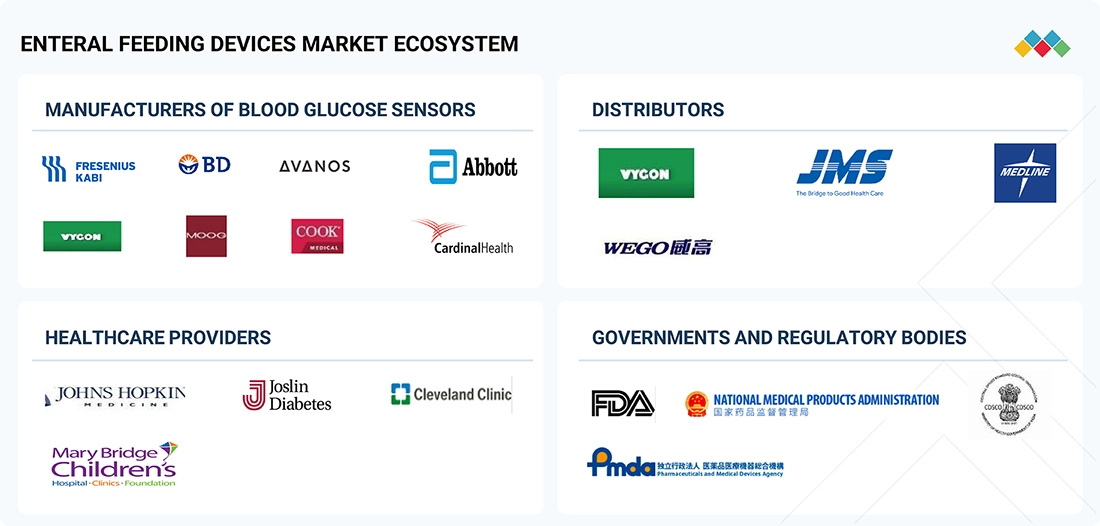
enteral-feeding-device-market1: COMMERCIAL USE CASES ACROSS INDUSTRIES
| COMPANY | USE CASE DESCRIPTION | BENEFITS |
|---|---|---|
 |
Manufactures full range of enteral feeding pumps, tubes, and nutrition formulas for hospital and home care settings, ensuring safe enteral delivery for critically ill and long-term patients | Reliable nutritional support, reduced feeding interruptions, and enhanced patient recovery outcomes through integrated feeding systems |
 |
Provides enteral feeding tubes, extension sets, and accessories, designed for precise feeding and medication delivery in both acute and home environments | Accurate flow control, reduced risk of misconnections via ENFit technology, and enhanced patient comfort and safety |
 |
Offers enteral access devices that support safe tube placement and long-term enteral nutrition for adult and pediatric populations | Improved placement accuracy, lower complication rates, and long-term usability promoting patient mobility and quality of care |
 |
Supplies specialized medical nutrition products enteral tubes designed for disease-specific conditions including oncology, neurology, and geriatrics | Supports better clinical outcomes, maintains nutritional status, and complements enteral feeding hardware for complete nutritional therapy |
 |
Develops enteral feeding syringes, pumps, tubes, and administration sets under the, optimized for precision and hygiene in intensive care and home care setups | Enhanced dosing accuracy, robust build for hospital-grade use, and improved infection prevention with closed feeding systems |
Logos and trademarks shown above are the property of their respective owners. Their use here is for informational and illustrative purposes only.
Related Ecosystem
Key Takeaways
- Rest Of GCC Countries enteral feeding devices market valued at USD 5.7 million in 2025 with projected growth to USD 7.4 million by 2030.
- Rest Of GCC Countries market expanding at a 3.9% CAGR, reflecting steady adoption of nutritional support technologies in oncology care.
- Rest Of GCC Countries healthcare providers increasingly integrating enteral feeding protocols into standard cancer treatment pathways.
- Rest Of GCC Countries growth driven by rising cancer-related malnutrition awareness and improved access to specialized feeding devices.
Enteral Feeding Devices Market Report Scope
| Report Metric | Details |
|---|---|
| Base Year | 2025 |
| Fastest Growing Segment | CONSUMABLES AND ACCESSORIES (Product) |
| Forecast Period | 2025–2030 |
| Growth Rate | CAGR of 5.5% from 2025 to 2030 |
| Largest Segment | TRANSNASAL, TRANSORAL, AND PERCUTANEOUS ENDOSCOPIC INSERTION (Insertion Method) |
| Market Size Base Year (Billions) | ~USD 3.27 (2025) |
| Revenue Forecast (Billions) | ~USD 4.28 (2030) |
| Segments Covered | Product, Type, Age Group, Insertion Method, Application, End User |
North America Enteral Feeding Devices Market Report Segmentation
6 segment dimensions are covered across the global market.
By Product
- Administration Sets
- Consumables And Accessories
- Enteral Feeding Pumps
- Enteral Feeding Tubes
- Enteral Syringes
By Type
- Administration Sets
- Connectors/Caps/
- Connectors/Caps/Adapters
- Consumables & Accessories
- Enteral Feeding Pumps
- Enteral Feeding Tubes
- Enteral Syringes
- Esophageal Cancer
- Flush/Irrigation Accessories
- Gastric/ Gastrostomy Tubes
- Gastric/Gastrostomy Tubes
- Gastrostomy-Jejunostomy Tubes
- Head & Neck Cancers
- Jejunostomy Tubes
- Liver Cancer
- Low-Profile Gastrostomy Tubes
- Low-Profile Gastrostomy-Jejunostomy Tubes
- Low-Profile Jejunostomy Tubes
- Nasal Feeding Tubes
- Nasoduodenal Tubes
- Nasogastric Tubes
- Nasojejunal Tubes
- Oral Feeding Tubes
- Oroenteric Tubes
- Orogastric Tubes
- Other Accessories
- Other Cancers
- Pancreatic Cancer
- Portable Enteral Feeding Pumps
- Private Hospitals
- Public Hospitals
- Standard Gastrostomy Tubes
- Standard Gastrostomy-Jejunostomy Tubes
- Standard Jejunostomy Tubes
- Stationary Enteral Feeding Pumps
- Stomach & Gi Cancers
- Stopcocks
- Tube Stabilizers/Fixation Devices
By Age Group
- Adult Patients
- Geriatric Pateints
- Neonatal Patients
- Pediatric Patients
By Insertion Method
- Radiological Insertion
- Radiological Insertion (Rig/Rij)
- Surgical Insertion
- Transnasal, Transoral, And Percutaneous Endoscopic Insertion
By Application
- Cardiovascular Disorders
- Gastrointestinal Disorders
- Hypermetabolism
- Neurological Disorders
- Oncology
- Other Applications
- Respiratory Disorders
By End User
- Ambulatory Care Settings
- Home Care Settings
- Hospitals
- Other End Users
Target Audience
- Medical Device Manufacturers : Manufacturers need North America market data to develop region-specific product portfolios, understand competitive dynamics in the US and Canada, and identify opportunities for innovation in enteral feeding technologies.
- Healthcare Providers & Hospital Systems : Hospital networks and clinics require market insights to optimize procurement strategies, evaluate supplier performance, and ensure cost-effective sourcing of enteral feeding devices for patient care programs.
- Investors & Private Equity Firms : Investment professionals need comprehensive market sizing and growth forecasts for North America to evaluate acquisition targets, assess portfolio company performance, and identify emerging opportunities in the enteral nutrition sector.
- Regulatory & Compliance Consultants : Consultants advising medical device companies require detailed regional market data to navigate FDA regulations, reimbursement policies, and market access strategies specific to the US and Canadian markets.
- Healthcare Payers & Insurance Companies : Payers need market intelligence to establish reimbursement policies, negotiate pricing with device suppliers, and understand utilization trends in enteral feeding across North American healthcare systems.
Key Companies in the North America Enteral Feeding Devices Market
| Company | HQ | Ownership | Strongest segments |
|---|---|---|---|
| WILO SE | Germany | Private Company | Building Services Residential,Building Services Commercial,Original Equipment Manufacturers, |
| FRESENIUS SE & CO. KGAA | Germany | Public Company | Helios hospitals and care delivery,Injectable generics and IV fluids,Clinical nutrition (enteral and parenteral), |
| CARDINAL HEALTH | United States | Public Company | Branded and generic pharmaceutical distribution,Specialty pharmaceutical and manufacturer services,Medical, surgical, and laboratory products (Cardinal brand and national brands), |
| NESTLÉ S.A. | Switzerland | Public Company | Ambient and chilled food (culinary, frozen, chilled, dairy, ice cream),Beverages and coffee (Nescafé, Nespresso, Starbucks At Home, water, drinks),Confectionery and cereals, |
| AVANOS MEDICAL, INC. | United States | Public Company | Digestive health (Mic-Key, Corpak, NeoMed),Non-opioid surgical pain and recovery (ON-Q, ambIT, Game Ready),Interventional pain solutions (COOLIEF, Trident, Esentec RFA), |
| DANONE S.A. | France | Public Company | Essential Dairy & Plant-Based,Specialized Nutrition (Infant & Medical),Waters & Beverages, |
| BOSTON SCIENTIFIC CORPORATION | United States | Public Company | Cardiovascular (structural heart, rhythm management, peripheral),MedSurg Endoscopy (GI, pancreaticobiliary, infection prevention),Urology and Pelvic Health, |
| BECTON, DICKINSON AND COMPANY | United States | Public Company | Medical Essentials (needles, syringes, catheters, sharps, basic disposables),Connected Care (infusion, IV medication safety, dispensing, pharmacy automation, informatics),BioPharma Systems (prefillable drug delivery systems and related solutions), |
| B. BRAUN MELSUNGEN AG | Germany | Private Company | Infusion therapy and smart infusion management,Sterile processing, OR supply, and surgical asset management,Pharma and drug delivery systems (components, systems, clinical trial supplies), |
| CONMED CORPORATION | United States | Public Company | Sports medicine and orthopedic surgery (implants, resection, visualization),Powered instruments (Hall large and small bone systems),General surgery (AirSeal, Buffalo Filter, endomechanical), |
| BAXTER INTERNATIONAL INC. | United States | Public Company | Sterile IV solutions and infusion systems,Generic and specialty injectable pharmaceuticals,Parenteral nutrition and respiratory therapies, |
| ABBOTT | United States | Public Company | Diagnostic Products,Medical Devices,Nutritional Products, |
| MOOG, INC. | United States | Public Company | Space and Defense,Military Aircraft,Commercial Aircraft, |
| TERUMO CORPORATION | Japan | Public Company | Cardiac and Vascular Company,Medical Care Solutions Company,Blood and Cell Technologies Company, |
WILO SE
Wilo SE is a German private company established in 1872 with 8,442 employees, specializing in pump and motor technology.
FRESENIUS SE & CO. KGAA
Fresenius SE & Co. KGaA is a German public company founded in 1912 with 177,783 employees, operating in healthcare and pharmaceutical sectors.
CARDINAL HEALTH
Cardinal Health is a United States public company founded in 1979 with 55,392 employees, serving the healthcare industry.
NESTLÉ S.A.
Nestlé S.A. is a Swiss public company established in 1866 with 271,000 employees, operating as a global food and beverage manufacturer.
AVANOS MEDICAL, INC.
Avanos Medical, Inc. is a United States public company founded in 2014 with 2,287 employees in the medical device sector.
DANONE S.A.
Danone S.A. is a French public company established in 1899 with 88,670 employees, specializing in food and beverage products.
BOSTON SCIENTIFIC CORPORATION
Boston Scientific Corporation is a United States public company founded in 1979 with 59,000 employees, developing medical devices and technologies.
BECTON, DICKINSON AND COMPANY
Becton, Dickinson and Company is a United States public company established in 1897 with 72,000 employees, manufacturing medical devices and diagnostic products.
B. BRAUN MELSUNGEN AG
B. Braun Melsungen AG is a German private company founded in 1839 with 61,583 employees, operating in the medical and pharmaceutical industries.
CONMED CORPORATION
Conmed Corporation is a United States public company founded in 1970 with 3,900 employees, specializing in surgical and patient monitoring equipment.
BAXTER INTERNATIONAL INC.
Baxter International Inc. is a United States public company established in 1931 with 37,500 employees, producing medical devices and pharmaceuticals.
ABBOTT
Abbott is a United States public company founded in 1888 with 115,000 employees, operating in diagnostics, medical devices, and pharmaceuticals.
MOOG, INC.
Moog, Inc. is a United States public company established in 1951 with 13,500 employees, manufacturing motion control and aerospace components.
TERUMO CORPORATION
Terumo Corporation is a Japanese public company established in 1921 with 30,591 employees, manufacturing medical devices and blood products.
Countries within North America - compare and drill down
| Country | 2025 size (native) |
|---|---|
| US | USD 746.2 Million |
| Canada | USD 82.1 Million |
Country market size visualization
Reasons to Buy this Report
- Comprehensive Regional Market Sizing : Access detailed market valuations for the US (USD 746.2M) and Canada (USD 82.1M), enabling precise market opportunity assessment and competitive positioning within North America's enteral feeding landscape.
- Growth Trajectory & CAGR Analysis : Understand the 3.9% CAGR expansion through 2030 with country-level forecasts, helping stakeholders identify growth pockets and allocate resources strategically across the North American region.
- Regulatory & Reimbursement Insights : Gain intelligence on North America's advanced healthcare infrastructure, FDA approval pathways, and insurance coverage dynamics that influence enteral device adoption and market penetration rates.
- Competitive Landscape Intelligence : Benchmark against regional market leaders and identify white-space opportunities in the US and Canadian markets, supporting product development and market entry strategies.
- Demographic & Clinical Trend Analysis : Leverage insights on aging populations, chronic disease prevalence, and home healthcare adoption trends specific to North America to forecast demand and optimize commercial strategies.
Frequently asked questions
What is the current market size of enteral feeding devices in Rest Of GCC Countries?
The enteral feeding devices market in Rest Of GCC Countries is estimated at USD 5.7 million in 2025.
What is the projected market size for Rest Of GCC Countries by 2030?
Rest Of GCC Countries enteral feeding devices market is forecasted to reach USD 7.4 million by 2030.
What is the CAGR for the enteral feeding devices market in Rest Of GCC Countries?
The enteral feeding devices market in Rest Of GCC Countries is expected to grow at a CAGR of 3.9% from 2025 to 2030.
What factors are driving growth in Rest Of GCC Countries enteral feeding devices market?
Rest Of GCC Countries market growth is driven by increasing healthcare infrastructure investments, rising cancer incidence, growing awareness of nutritional support in oncology, and improved access to specialized feeding devices.
How is Rest Of GCC Countries integrating enteral feeding into oncology care?
Rest Of GCC Countries healthcare systems are increasingly adopting enteral nutrition protocols as standard components of cancer treatment pathways to address malnutrition in oncology patients.
RESEARCH METHODOLOGY
This study involved the extensive use of both primary and secondary sources. The research process involved the study of various factors affecting the industry to identify the segmentation types, industry trends, key players, competitive landscape, market dynamics, and key player strategies.
Secondary Research
The secondary research process involves the comprehensive use of secondary sources, directories, databases (such as Factiva, Bloomberg Businessweek, and D&B Hoovers), white papers, annual reports, company house documents, investor presentations, and SEC filings of companies. Secondary research was used to identify and collect information useful for the extensive, technical, market-oriented, and commercial study of the enteral feeding devices market. It was also used to obtain important information about the key players and market classification & segmentation according to industry trends to the bottom-most level and key developments related to market and technology perspectives. Moreover, a database of the key industry leaders was prepared using secondary research.
Primary Research
In the primary research process, various sources from the supply and demand sides were interviewed to obtain qualitative and quantitative information for this report. The primary sources from the supply side include industry experts such as CEOs, vice presidents, marketing & sales directors, technology & innovation directors, and related key executives from various companies and organizations in enteral feeding devices market. The primary sources from the demand side include medical OEMs, analytical instrument OEMs, CDMOs, and service providers. Primary research was conducted to validate the market segmentation, identify key players, and gather insights on industry trends & market dynamics.
A breakdown of the primary respondents is provided below:
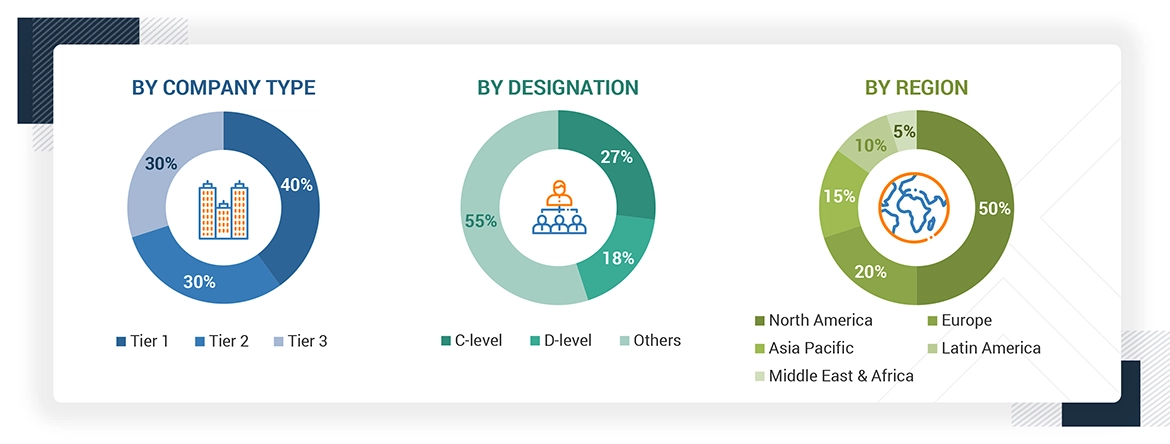
Note: Companies are classified into tiers based on their total revenue. As of 2024, Tier 1 = >USD 2 billion, Tier 2 = USD 50 million to USD 2 billion, and Tier 3 = < USD 50 million.
Others include sales managers, marketing managers, business development managers, product managers, distributors, and suppliers.
To know about the assumptions considered for the study, download the pdf brochure
Market Size Estimation
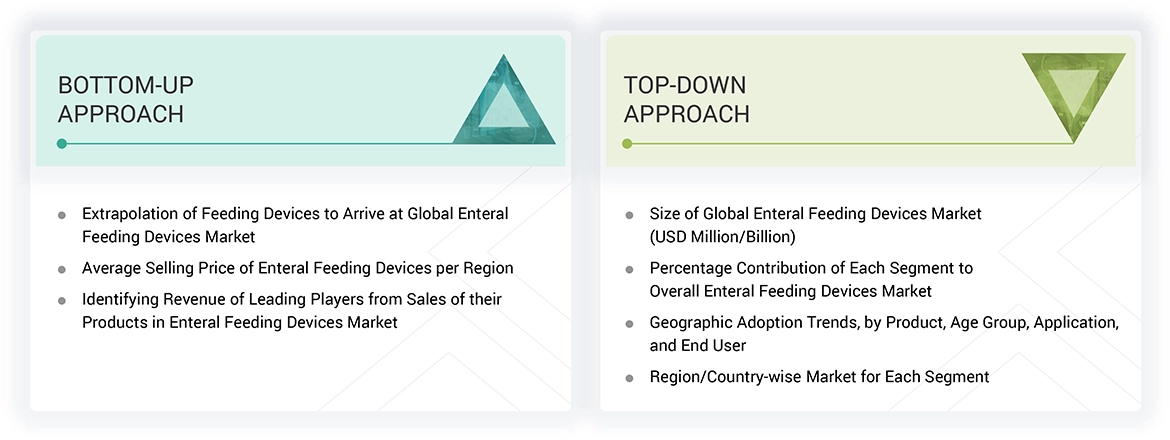
In this report, the size of the enteral feeding devices market was determined using revenue analysis of leading players. For this purpose, key players in the market were identified, and their revenues from the enteral feeding device business were determined through various insights gathered during the primary and secondary research phases. Secondary research included the study of the annual and financial reports of the top market players. Meanwhile, primary research included extensive interviews with key opinion leaders, such as CEOs, directors, and marketing executives.
Segmental revenues were calculated based on the revenue mapping of major solution/service providers to calculate the global market value. This process involved the following steps:
- Generating a list of major global players operating in the enteral feeding devices market
- Mapping annual revenues generated by major global players from the enteral feeding devices market (or nearest reported business unit/product category)
- Revenue mapping of key players to cover a major share of the global market as of 2024
- Extrapolating the global value of the enteral feeding devices market
Data Triangulation
After arriving at the overall market size from the market size estimation process explained above, the enteral feeding devices market was split into segments and subsegments. Data triangulation and market breakdown procedures were employed to complete the overall market engineering process and arrive at the exact statistics for all segments and subsegments. The data was triangulated by studying various factors and trends from both the demand and supply sides. Additionally, the enteral feeding devices market was validated using top-down and bottom-up approaches.
Market Definition
Enteral feeding devices are instruments and configurations designed for nutrition administration directly into the gastrointestinal tract, bypassing the mouth. These devices serve medically challenged patients who cannot eat food orally due to swallowing disorders, severe illnesses, or surgical interferences. Enteral feeding can be accomplished through the insertion of tubes from the nose or mouth, which are then placed into the stomach or small intestine to deliver nutrients.
Stakeholders
- Manufacturers and Distributors of Enteral Feeding Devices
- Ambulatory Surgical Centers
- Home Care Facilities
- Healthcare Institutions (Hospitals and Cardiac Centers)
- Research Institutions
- Research and Consulting Firms
- Contract Research Organizations (CROS) and Contract Manufacturing Organizations (CMOS)
- Academic Medical Centers and Universities
- Market Research and Consulting Firms
- Clinical Research Organizations
- Group Purchasing Organizations (GPOs)
- Academic Medical Centers and Universities
- Accountable Care Organizations (ACOs)
Report Objectives
- To define, describe, and forecast the enteral feeding devices market on product, age group, application, and end user
- To identify and analyze drivers, restraints, opportunities, and challenges influencing market growth
- To strategically analyze micro markets concerning individual growth trends, prospects, and contributions to the total market
- To analyze opportunities in the market for stakeholders and provide details of the competitive landscape for market leaders
- To profile key market players and comprehensively analyze their market shares and core competencies
- To forecast the revenue of market segments concerning five regions, namely North America (US and Canada), Europe (Germany, France, UK, Italy, Spain, and Rest of Europe), Asia Pacific (China, Japan, India, South Korea, Australia, and Rest of Asia Pacific), Latin America (Brazil, Mexico, and Rest of Latin America), and Middle East & Africa (GCC and Rest of Middle East & Africa)
- To analyze competitive developments such as acquisitions, agreements, collaborations, expansions, partnerships, and product launches/approvals in the enteral feeding devices market
Get the Full Enteral Feeding Devices Market Report
Full forecast, segment splits, and company analysis for all Enteral Feeding Devices Market.
- Canada Enteral Feeding Devices Market
- US Enteral Feeding Devices Market
- Germany Enteral Feeding Devices Market
- France Enteral Feeding Devices Market
- UK Enteral Feeding Devices Market
- Italy Enteral Feeding Devices Market
- Spain Enteral Feeding Devices Market
- Netherlands Enteral Feeding Devices Market
- China Enteral Feeding Devices Market
- Japan Enteral Feeding Devices Market
- India Enteral Feeding Devices Market
- Australia Enteral Feeding Devices Market
- South Korea Enteral Feeding Devices Market
- Thailand Enteral Feeding Devices Market
- Vietnam Enteral Feeding Devices Market
- Brazil Enteral Feeding Devices Market
- Mexico Enteral Feeding Devices Market
- UAE Enteral Feeding Devices Market
- South Africa Enteral Feeding Devices Market
- Rest Of Europe Enteral Feeding Devices Market
- Kingdom Of Saudi Arabia Enteral Feeding Devices Market
- Rest Of Asia Pacific Enteral Feeding Devices Market
- Rest Of GCC Countries Enteral Feeding Devices Market
- Rest Of Latin America Enteral Feeding Devices Market
- United Arab Emirates Enteral Feeding Devices Market
Need a Tailored Report?
Customize this report to your needs
Get 10% FREE Customization
Customize This Report
