
Taiwan Ethylene Carbonate Market (2025-2030)

The Taiwan Ethylene Carbonate Market was valued at $172.3 Million in 2025 and projected to reach to $429.7 Million by 2030, representing a compound annual growth rate of CAGR 13.9%. Taiwan's ethylene carbonate market is poised for accelerated expansion driven by the country's thriving electronics and battery manufacturing sectors.


| Market Size in | USD 26.32 MN |
| Market Forecast in | |
| CAGR | |
| Forecast Period | |
| Units Considered | Value (USD MN) |
Taiwan Ethylene Carbonate Market Trends and Insights
- This represents a compound annual growth rate (CAGR) of 13.9%, significantly outpacing global trends.
- Taiwan's strategic position as a chemical manufacturing hub and its strong electronics and battery industries are driving demand for ethylene carbonate, a critical solvent in lithium-ion battery electrolytes. The forecast period from 2025 to 2030 reflects Taiwan's increasing role in the global energy storage and semiconductor sectors.
- Taiwan's investment in advanced manufacturing capabilities and green energy initiatives is accelerating ethylene carbonate consumption across multiple end-use applications.
- The market growth in Taiwan is underpinned by rising demand from battery manufacturers, pharmaceutical companies, and specialty chemical producers operating within the island's industrial ecosystem. Taiwan's ethylene carbonate market dynamics are shaped by regional supply chain integration, technological innovation, and the transition toward sustainable battery technologies.
- As Taiwan continues to strengthen its position in the global battery supply chain, ethylene carbonate demand is expected to remain on an upward trajectory through 2030..
Key Market Statistics
- CAGR (2025-2030) CAGR 13.9%
- Market Size, 2025 ~USD 172.3 Million
- Forecast, 2030 ~USD 429.7 Million
- Country Taiwan
Taiwan Ethylene Carbonate Market Overview
Exceptional Growth Trajectory :
Taiwan's ethylene carbonate market is projected to grow from USD 172.3 million in 2025 to USD 429.7 million by 2030, representing a 13.9% CAGR that significantly exceeds the global average of 11%.
Electronics & Battery Industry Catalyst :
Taiwan's dominant position in semiconductor and electronics manufacturing, combined with its expanding battery production sector, creates substantial demand for ethylene carbonate as a critical electrolyte solvent.
Chemical Manufacturing Hub Status :
As a strategic chemical manufacturing center in Asia-Pacific, Taiwan benefits from established supply chains, technical expertise, and proximity to major end-user industries driving ethylene carbonate consumption.
Regional Market Leadership :
Taiwan's ethylene carbonate market growth rate outpaces regional competitors, positioning the country as a key growth engine within Asia-Pacific chemical markets through 2030.
Taiwan Ethylene Carbonate Market Dynamics
- The 13.9% CAGR reflects strong demand from lithium-ion battery producers and semiconductor-related applications, supported by Taiwan's established chemical infrastructure and technical capabilities.
- Government initiatives promoting green energy and electric vehicle adoption further bolster market prospects.
- By 2030, the market is expected to nearly triple in value, reaching USD 429.7 million, as manufacturers increasingly localize production to meet regional demand and reduce supply chain vulnerabilities..
Market Ecosystem
Related Ecosystem
Automotive Materials
- Light Commercial Vehicles (LCVs)
- Battery Electric Vehicle (BEV)
- Hybrid Electric Vehicle (HEV)
- Fuel Cell Electric Vehicle (FCEV)
- Agricultural Tractors
- GORKOVSKY AVTOMOBILNY ZAVOD
- AISIN CORPORATION
- Continental ag
- Basf se
- BOSCH LIMITED
Paints And Coatings
- Polyurethane Resin
- Alkyd Resins
- Epoxy Resin
- Polyester Resin
- Acrylics
- Basf se
- JOTUN
- PPG Industries, Inc.
- DOW CHEMICAL COMPANY
- Akzonobel n.v.
Speciality Chemicals
- Corrosion Inhibitors
- Polyetheretherketone (PEEK)
- Acrylonitrile Butadiene Styrene (ABS)
- Epoxy Resin
- Polycarbonate
- Basf se
- DOW CHEMICAL COMPANY
- Evonik industries ag
- Clariant ag.
- Solvay sa
Key Takeaways
- Taiwan's ethylene carbonate market is valued at USD 172.3 million in 2025 and is forecast to reach USD 429.7 million by 2030, representing a 13.9% CAGR.
- Taiwan's robust electronics and battery manufacturing sectors are primary drivers of ethylene carbonate demand as a key electrolyte solvent.
- Taiwan's strategic supply chain position in Asia Pacific and investment in green energy technologies support sustained market growth through 2030.
- Taiwan's ethylene carbonate market growth outpaces global averages, reflecting the island's critical role in advanced battery and semiconductor production.
Ethylene Carbonate Market Report Scope
| Report Metric | Details |
|---|---|
| Base Year | 2025 |
| Fastest Growing Segment | LITHIUM BATTERY ELECTROLYTES (Application) |
| Forecast Period | 2025-2030 |
| Growth Rate | CAGR of 11% from 2025 to 2030 |
| Largest Segment | AUTOMOTIVE (End-Use Industry) |
| Market Size Base Year (Billions) | ~USD 1.03 (2025) |
| Revenue Forecast (Billions) | ~USD 1.74 (2030) |
| Segments Covered | Application, End-Use Industry |
Taiwan Ethylene Carbonate Market Report Segmentation
2 segment dimensions are covered across the global market.
By Application
- Lithium Battery Electrolytes
- Lubricants
- Other Applications
- Plasticizers
- Surface Coatings
By End-Use Industry
- Automotive
- Industrial
- Medical
- Oil & Gas
- Other End-Use Industries
- Personal Care & Hygiene
TAIWAN: ETHYLENE CARBONATE MARKET, BY APPLICATION, 2025–2032
| Segment | 2025 | 2026 | 2028 | 2030 | 2031 | 2032 | CAGR (%) |
|---|---|---|---|---|---|---|---|
| LITHIUM BATTERY ELECTROLYTES | 79.1 | 95.7 | 139 | 199.2 | 237.3 | 281.8 | 19.9 |
| LUBRICANTS | 58.2 | 62.8 | 72.4 | 82.5 | 87.6 | 92.7 | 6.9 |
| OTHER APPLICATIONS | 13.6 | 14.6 | 16.5 | 18.5 | 19.5 | 20.4 | 6 |
| PLASTICIZERS | 15.8 | 17.1 | 19.7 | 22.5 | 23.9 | 25.4 | 7 |
| SURFACE COATINGS | 5.7 | 6.2 | 7.2 | 8.3 | 8.9 | 9.4 | 7.6 |
| TOTAL | 172.3 | 196.4 | 254.9 | 331 | 377.1 | 429.7 | 13.9 |
Target Audience
- Chemical Manufacturers & Suppliers : Producers and distributors of ethylene carbonate need Taiwan-specific market data to assess production capacity requirements, pricing strategies, and distribution partnerships in this high-growth market.
- Battery & Energy Companies : Lithium-ion battery manufacturers and EV component suppliers require detailed insights into Taiwan's ethylene carbonate availability and pricing to secure reliable supply chains for electrolyte production.
- Electronics & Semiconductor Firms : Semiconductor and electronics manufacturers using ethylene carbonate in production processes need market forecasts to plan procurement strategies and negotiate supplier contracts in Taiwan.
- Investment & Private Equity Firms : Investors evaluating opportunities in Taiwan's chemical sector require comprehensive market analysis, growth projections, and competitive insights to make informed investment decisions.
- Market Research & Consulting Professionals : Analysts and consultants serving chemical, battery, and electronics industries need Taiwan-specific data to support client advisory services and strategic planning initiatives.
Reasons to Buy this Report
- Localized Market Intelligence : Gain Taiwan-specific insights into market dynamics, competitive landscape, and growth drivers that differ from global trends, enabling targeted business strategies for this high-growth market.
- Investment Decision Support : Access detailed forecasts and valuation data (2025-2030) to evaluate investment opportunities in Taiwan's ethylene carbonate sector with confidence in market sizing and growth projections.
- Supply Chain Optimization : Understand Taiwan's role as a chemical manufacturing hub and identify opportunities to establish or expand production facilities to serve the region's booming electronics and battery industries.
- Competitive Positioning : Benchmark your business against Taiwan market trends and identify gaps in the supply chain to develop competitive advantages in this rapidly expanding 13.9% CAGR market.
- End-User Demand Mapping : Identify key customer segments in Taiwan's semiconductor, electronics, and battery sectors to prioritize sales efforts and develop tailored product offerings for high-growth applications.
Frequently asked questions
What is the current market size of ethylene carbonate in Taiwan?
Taiwan's ethylene carbonate market was valued at USD 172.3 million in 2025 and is expected to grow to USD 429.7 million by 2030.
What is the projected growth rate for Taiwan's ethylene carbonate market?
Taiwan's ethylene carbonate market is projected to grow at a compound annual growth rate (CAGR) of 13.9% from 2025 to 2030.
What are the primary applications of ethylene carbonate in Taiwan?
In Taiwan, ethylene carbonate is primarily used as a solvent in lithium-ion battery electrolytes, pharmaceutical formulations, and specialty chemical manufacturing.
Which industries are driving ethylene carbonate demand in Taiwan?
Taiwan's electronics, battery manufacturing, semiconductor, and pharmaceutical industries are the primary drivers of ethylene carbonate demand.
How does Taiwan's ethylene carbonate market growth compare to global trends?
Taiwan's ethylene carbonate market CAGR of 13.9% significantly exceeds the global CAGR of 11%, reflecting Taiwan's strategic importance in battery and electronics manufacturing.
RESEARCH METHODOLOGY
The study involved four major activities in estimating the current size of the ethylene carbonate market: comprehensive secondary research gathered information on the market, related markets, and parent markets. The next step was to validate these findings, assumptions, and measurements with industry experts across the ethylene carbonate value chain through primary research. Both top-down and bottom-up approaches were used to estimate the total market size. Then, market segmentation and data triangulation helped estimate the size of segments and subsegments.
Secondary Research
Secondary sources for this research include annual reports, press releases, investor presentations, white papers, certified publications, articles by recognized authors, reputable websites, Ethylene carbonate manufacturing companies, regulatory agencies, trade directories, and databases. The secondary research was mainly used to gather key information about the industry’s supply chain, major players, market classification, and segmentation based on industry trends, down to the regional level. It also provided insights into key developments from a market-focused perspective.
Primary Research
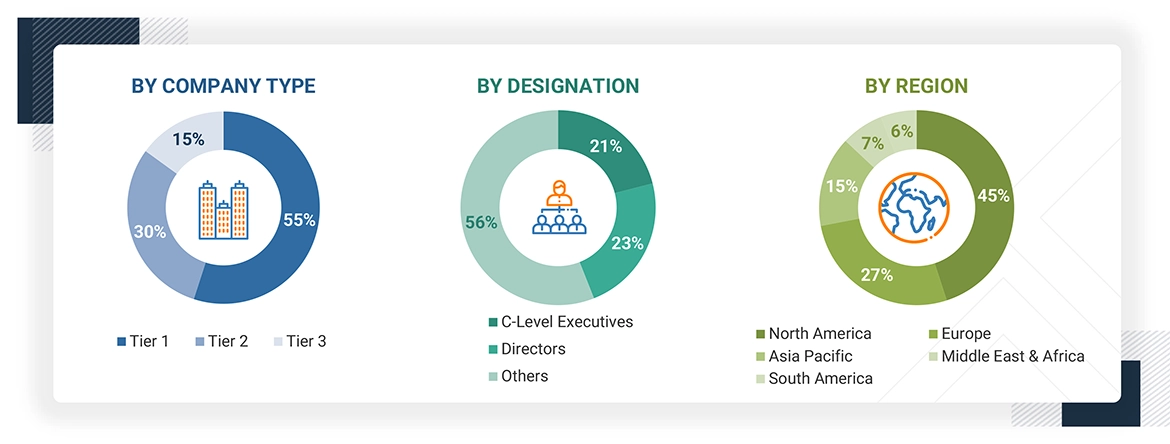
The ethylene carbonate market includes various stakeholders such as raw material suppliers, technology support providers, ethylene carbonate manufacturers, and regulatory organizations involved in the supply chain. To gather both qualitative and quantitative data, interviews were conducted with primary sources from both the supply and demand sides of the market. On the supply side, these sources included industry experts like chief executive officers (CEOs), vice presidents, marketing directors, technology and innovation directors, and other key executives from different companies and organizations operating within the ethylene carbonate market. On the demand side, primary sources included directors, marketing heads, and purchase managers from various sourcing industries.
The following is a breakdown of the primary respondents.
To know about the assumptions considered for the study, download the pdf brochure
Market Size Estimation
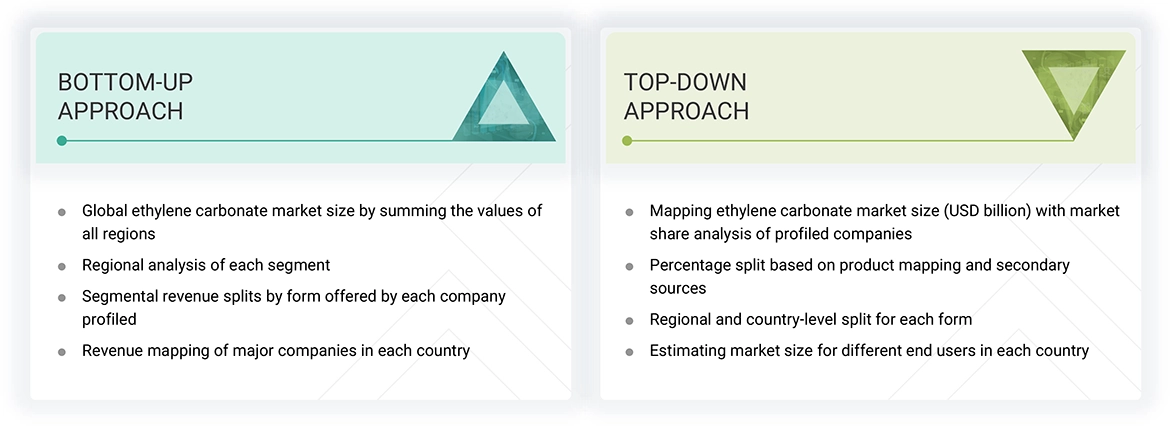
The top-down and bottom-up approaches have been used to estimate and validate the total size of the ethylene carbonate market. These methods have also been widely used to determine the size of various related market subsegments. The research methodology employed to estimate the market size included the following:
The following segments provide details about the overall market size estimation process employed in this study:
- The key players in the market were identified through secondary research.
- The market share in the respective regions was identified through primary and secondary research.
- Primary and secondary research determined the ethylene carbonate market's value chain and market size in terms of value and volume.
- All percentage shares, splits, and breakdowns were determined using secondary sources and verified through primary sources.
- All possible parameters that affect the market covered in this research study were accounted for, viewed in extensive detail, verified through primary research, and analyzed to obtain the final quantitative and qualitative data.
- The research included studying the annual and financial reports of the top market players and interviewing industry experts, such as CEOs, VPs, directors, sales managers, and marketing executives, for key quantitative and qualitative insights.
Global Ethylene Carbonate Market Size: Bottom-up Approach and Top-down Approach
Data Triangulation
After estimating the overall market size using the methods described above, the market was divided into several segments and sub-segments. To complete the market engineering process and determine the precise statistics for each segment and subsegment, data triangulation and market breakdown procedures were used where applicable. The data was triangulated by examining various factors and trends from both the demand and supply sides in the oil & gas sector.
Market Definition
Ethylene carbonate is an organic compound with the formula (CH2O)2CO. It is classified as the carbonate ester of ethylene glycol and carbonic acid. In the market, ethylene carbonate is available in both liquid and solid forms. It primarily serves as a raw material for producing lubricants and polycarbonates and as an electrolyte in lithium-ion batteries. Additionally, ethylene carbonate is used as a solvent in various polymer resins, plasticizers, adhesives, sealants, and other chemical applications. Key factors affecting the ethylene carbonate market include supply and demand dynamics, pricing trends, regulatory frameworks, technological advancements, and global trade flows.
Stakeholders
- Manufacturers of ethylene carbonate
- Traders, distributors, and suppliers of ethylene carbonate
- Government and research organizations
- Associations and industrial bodies
- Research and consulting firms
- R&D institutions
- Environment support agencies
- Investment banks and private equity firms
Report Objectives
- To analyze and forecast the market size of the ethylene carbonate market in terms of value and volume
- To provide detailed information regarding the major factors (drivers, restraints, challenges, and opportunities) influencing the regional market
- To analyze and forecast the global ethylene carbonate market based on form, application, end-use industry, and region
- To analyze the opportunities in the market for stakeholders and provide details of a competitive landscape for market leaders
- To forecast the size of various market segments based on five major regions: Asia Pacific, Europe, North America, South America, and the Middle East & Africa, along with their respective key countries
- To analyze the competitive developments, such as partnerships and expansions, in the market
- To strategically profile the key players and comprehensively analyze their market share and core competencies
Get the Full Ethylene Carbonate Market Report
Full forecast, segment splits, and company analysis for all Ethylene Carbonate Market.
- Rest Of Europe Ethylene Carbonate Market
- Rest Of Asia Pacific Ethylene Carbonate Market
- Rest Of GCC Countries Ethylene Carbonate Market
- Rest Of South America Ethylene Carbonate Market
- China Ethylene Carbonate Market
- Japan Ethylene Carbonate Market
- South Korea Ethylene Carbonate Market
- Canada Ethylene Carbonate Market
- Mexico Ethylene Carbonate Market
- US Ethylene Carbonate Market
- Germany Ethylene Carbonate Market
- UK Ethylene Carbonate Market
- France Ethylene Carbonate Market
- Italy Ethylene Carbonate Market
- Turkey Ethylene Carbonate Market
- Russia Ethylene Carbonate Market
- UAE Ethylene Carbonate Market
- Saudi Arabia Ethylene Carbonate Market
- South Africa Ethylene Carbonate Market
- Brazil Ethylene Carbonate Market
- Argentina Ethylene Carbonate Market
Need a Tailored Report?
Customize this report to your needs
Get 10% FREE Customization
Customize This Report
