
Brazil Exosome Research Market (2025-2030)

The Brazil Exosome Research Market was valued at $1.01 Million in 2025 and projected to reach to $1.79 Million by 2030, representing a compound annual growth rate of 12.1%. Brazil's exosome research market is poised for steady expansion through 2030, driven by increasing institutional investment in biotechnology and regenerative medicine sectors.


| Market Size in | USD 26.32 MN |
| Market Forecast in | |
| CAGR | |
| Forecast Period | |
| Units Considered | Value (USD MN) |
Brazil Exosome Research Market Trends and Insights
- This 12.1% compound annual growth rate reflects Brazil's increasing investment in advanced biomedical research and regenerative medicine applications.
- Brazil is positioning itself as a regional hub for exosome-based therapeutic development, driven by growing healthcare infrastructure and academic research initiatives. The Brazilian exosome research sector benefits from rising government funding for life sciences and expanding collaboration between universities and private research institutions.
- Brazil's pharmaceutical and biotechnology sectors are increasingly exploring exosome applications in diagnostics and therapeutics, supporting market expansion through 2030.
- Strategic partnerships and clinical trial activities in Brazil are expected to accelerate adoption of exosome technologies across the healthcare landscape..
Key Market Statistics
- CAGR (2025-2030) 12.1% CAGR
- Market Size, 2025 ~USD 1.01 Million
- Forecast, 2030 ~USD 1.79 Million
- Country Brazil
Brazil Exosome Research Market Overview
Market Valuation Growth :
Brazil's exosome research market is valued at $1.01 million in 2025, with projections reaching $1.79 million by 2030, representing a robust 12.1% CAGR over the forecast period.
Regional Leadership Position :
Brazil is emerging as a regional hub for exosome-based therapeutic development in Latin America, leveraging its advanced biomedical research infrastructure and growing regenerative medicine capabilities.
Investment in Biomedical Innovation :
Increasing government and private sector investment in advanced biomedical research is driving Brazil's exosome market expansion, with focus on therapeutic applications and clinical translation.
Regenerative Medicine Focus :
Brazil's exosome research is heavily concentrated on regenerative medicine applications, positioning the country as a key player in developing next-generation therapeutic solutions for chronic diseases.
Brazil Exosome Research Market Dynamics
- The country's growing research capabilities and favorable regulatory environment are attracting both domestic and international biotech companies seeking to establish Latin American operations.
- Government initiatives supporting life sciences innovation and partnerships between academic institutions and private enterprises are accelerating market development. The 12.1% CAGR reflects Brazil's strategic positioning within the global exosome market, which grows at 17.5% annually.
- As clinical applications mature and manufacturing capabilities scale, Brazil is expected to capture greater market share in therapeutic exosome development.
- Continued investment in research infrastructure and talent development will be critical to sustaining this growth trajectory and establishing Brazil as a competitive player in the global exosome therapeutics landscape..
Market Ecosystem
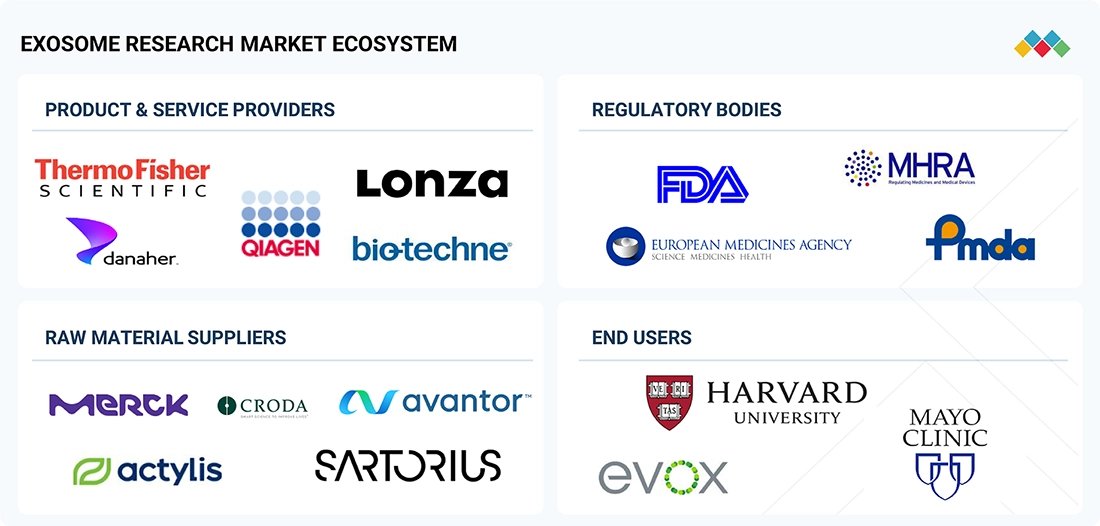
exosome-research-product-market: COMMERCIAL USE CASES ACROSS INDUSTRIES
| COMPANY | USE CASE DESCRIPTION | BENEFITS |
|---|---|---|
 |
Thermo Fisher partnered with RoosterBio to provide an integrated pathway for cell- and exosome-therapy manufacturing. This collaboration targets accelerating timelines from process/analytical development to clinical material supply. | Faster time-to-clinic, standardized upstream/downstream workflows, reproducible analytical quality, and access to global GMP capacity. |
 |
FUJIFILM Diosynth and RoosterBio established an end-to-end collaboration enabling tech-transfer from RoosterBio’s process and analytical development into FUJIFILM’s advanced-therapies GMP manufacturing. The scope covers process development, analytics, scale-up and GMP clinical supply for MSC- and exosome-based therapeutics. | Seamless scale-up into cGMP, regulatory readiness, reduced transfer risk, and a single CDMO path from process development to clinical supply. |
 |
Lonza entered into collaborative agreement with Exogenus Therapeutics (Exo-101) to develop a GMP-compliant manufacturing process for Exogenus’ Exo-101, leveraging Lonza’s cell culture, characterization and clinical-supply capabilities (Siena, Italy site referenced for scale-up). Lonza offers process definition, analytics, and clinical-supply manufacturing for exosome modalities. | Robust GMP process development, reduced time and risk to IND/CTA, clinical supply reliability and access to established analytical platforms. |
 |
Exopharm’s LEAP purification platform (patented) is being trialed/licensed with industrial partners (e.g., Showa Denko) to validate large-scale, high-purity exosome isolation and integration into partner manufacturing workflows. Agreements typically begin with feasibility studies to evaluate LEAP at partner sites and progress to licensing/scale-up terms. | Improved purity and yield at scale, enabling commercial-scale manufacturing pathways and reduced downstream impurity burden for therapeutic exosome products. |
Logos and trademarks shown above are the property of their respective owners. Their use here is for informational and illustrative purposes only.
Related Ecosystem
Biotechnology
- Reagents
- Polymerase Chain Reaction (PCR)
- Stem Cells
- Assay Kits
- Flow Cytometers
- Thermo Fisher Scientific Inc.
- Merck KGaA
- Danaher Corporation
- Agilent Technologies, Inc.
- Bio-Rad Laboratories, Inc.
Key Takeaways
- Brazil's exosome research market is valued at $1.01 million in 2025 and is forecast to reach $1.79 million by 2030, representing a 12.1% CAGR.
- Brazil is emerging as a regional leader in exosome research within Latin America, supported by government funding and academic-industry partnerships.
- Growing pharmaceutical and biotechnology sectors in Brazil are driving demand for exosome-based diagnostic and therapeutic applications.
- Brazil's expanding healthcare infrastructure and clinical trial capabilities are expected to accelerate exosome technology adoption through 2030.
Exosome Research Market Report Scope
| Report Metric | Details |
|---|---|
| Base Year | 2025 |
| Fastest Growing Segment | DENDRITIC CELL-DERIVED EXOSOME MANUFACTURING SERVICES (Manufacturing Service) |
| Forecast Period | 2025–2030 |
| Growth Rate | CAGR of 17.5% from 2025 to 2030 |
| Largest Segment | KITS & REAGENTS (Offering) |
| Market Size Base Year (Billions) | ~USD 0.21 (2025) |
| Revenue Forecast (Billions) | ~USD 0.48 (2030) |
| Segments Covered | Offering, Type, Indication, Application, Manufacturing Service, End User |
Brazil Exosome Research Market Report Segmentation
6 segment dimensions are covered across the global market.
By Offering
- Instruments
- Kits & Reagents
- Services
By Type
- Antibodies
- Breast Cancer
- Colorectal Cancer
- Isolation, Purification, And Quantitation Kits & Reagents
- Lung Cancer
- Other Cancers
- Other Kits & Reagents
- Prostate Cancer
By Indication
- Cancer
- Cardiovascular Diseases
- Infectious Diseases
- Neurodegenerative Diseases
- Other Indications
By Application
- Biomarkers
- Other Applications
- Tissue Regeneration
- Vaccine Development
By Manufacturing Service
- Dendritic Cell-Derived Exosome Manufacturing Services
- Other Manufacturing Services
- Stem Cell-Derived Exosome Manufacturing Services
By End User
- Academic & Research Institutes
- Hospitals & Clinical Testing Laboratories
- Pharmaceutical & Biotechnology Companies
BRAZIL: EXOSOME RESEARCH MARKET, BY END USER, 2023–2030
| Segment | 2023 | 2024 | 2025 | 2026 | 2027 | 2028 | 2029 | 2030 | CAGR (%) |
|---|---|---|---|---|---|---|---|---|---|
| ACADEMIC & RESEARCH INSTITUTES | 0.84 | 0.91 | 0.98 | 1.08 | 1.21 | 1.36 | 1.52 | 1.7 | 11.6 |
| HOSPITALS & CLINICAL TESTING LABORATORIES | 0.18 | 0.19 | 0.2 | 0.21 | 0.24 | 0.26 | 0.28 | 0.31 | 8.9 |
| PHARMACEUTICAL & BIOTECHNOLOGY COMPANIES | 0.64 | 0.69 | 0.74 | 0.8 | 0.89 | 0.99 | 1.1 | 1.22 | 10.7 |
| TOTAL | 1.66 | 1.78 | 1.92 | 2.1 | 2.34 | 2.61 | 2.9 | 3.23 | 11 |
Target Audience
- Biotech Companies : Biotech firms seeking to expand operations in Latin America need detailed Brazil market data to assess market potential, identify local partnerships, and plan therapeutic development strategies.
- Pharmaceutical Manufacturers : Large pharma companies evaluating exosome-based therapeutic portfolios require Brazil-specific market intelligence to guide R&D investments and commercialization timelines in the region.
- Research Institutions : Academic and research organizations in Brazil need market insights to secure funding, identify collaboration opportunities, and align research initiatives with commercial market demands.
- Investment Firms : Venture capital and private equity investors focused on healthcare innovation require Brazil market data to evaluate investment opportunities and assess growth potential in the exosome sector.
- Government and Policy Makers : Brazilian government agencies and policy makers need market analysis to inform biotech development strategies, allocate research funding, and establish supportive regulatory frameworks.
Key Companies in the Brazil Exosome Research Market
| Company | HQ | Ownership | Strongest segments |
|---|---|---|---|
| PFIZER | United States | ||
| THERMO FISHER SCIENTIFIC INC. | United States | ||
| QIAGEN | Netherlands | ||
| LONZA | Switzerland | ||
| DANAHER | United States | ||
| BIO-TECHNE | United States | ||
| CREATIVE MEDICAL TECHNOLOGIES HOLDINGS, INC. | United States | Public Company | Stem cell manufacturing services,Immunotherapy platforms (ImmCelz and related),Urology and sexual health procedures (CaverStem, FemCelz), |
| SPECTRIS | United Kingdom | Private Company | Instruments,Reagents (Antibodies, Isolation, Purification),Kits, |
PFIZER
Pfizer is a multinational pharmaceutical company headquartered in the United States that develops, manufactures, and distributes prescription medicines, vaccines, and consumer healthcare products globally.
THERMO FISHER SCIENTIFIC INC.
Thermo Fisher Scientific Inc. is a United States-based life sciences company providing laboratory equipment, reagents, software, and services to research, clinical, and industrial customers worldwide.
QIAGEN
QIAGEN is a Netherlands-based molecular diagnostics and life sciences company specializing in sample preparation, assay technologies, and bioinformatics solutions for research and clinical applications.
LONZA
Lonza is a Switzerland-based company offering contract manufacturing, cell and gene therapy services, and specialty chemicals for the pharmaceutical, biotech, and healthcare industries.
DANAHER
Danaher is a United States conglomerate operating across life sciences, diagnostics, environmental and applied solutions, and product identification segments serving diverse industrial and scientific markets.
BIO-TECHNE
Bio-Techne is a United States-based life sciences company providing protein reagents, antibodies, assays, and instruments for research and clinical diagnostics applications.
CREATIVE MEDICAL TECHNOLOGIES HOLDINGS, INC.
Creative Medical Technologies Holdings, Inc. is a United States public company with four employees engaged in medical technology development.
SPECTRIS
Spectris is a United Kingdom-based private company founded in 1986 with 7,400 employees providing precision measurement and monitoring instruments and software.
Reasons to Buy this Report
- Market Entry Strategy : Gain comprehensive insights into Brazil's exosome market dynamics to develop targeted market entry strategies and identify partnership opportunities with local research institutions and biotech firms.
- Investment Decision Support : Access detailed market sizing, growth projections, and regional competitive analysis to support investment decisions in Brazil's emerging exosome research and therapeutic development sectors.
- Competitive Landscape Analysis : Understand Brazil's position within the global exosome market, identify key players, and assess competitive advantages in regenerative medicine applications specific to the Brazilian market.
- Regulatory and Infrastructure Insights : Obtain critical information on Brazil's regulatory environment, research infrastructure, and government support mechanisms that influence exosome research commercialization and clinical translation.
- Growth Opportunity Identification : Identify high-potential therapeutic applications and market segments within Brazil's exosome research landscape to prioritize resource allocation and maximize return on investment.
Frequently asked questions
What is the current size of Brazil's exosome research market?
Brazil's exosome research market was valued at $1.01 million in 2025 and is expected to grow to $1.79 million by 2030.
What is the projected growth rate for Brazil's exosome research market?
Brazil's exosome research market is projected to grow at a compound annual growth rate (CAGR) of 12.1% from 2025 to 2030.
What factors are driving growth in Brazil's exosome research sector?
Growth in Brazil is driven by increased government funding for life sciences, expanding academic-industry collaborations, and rising pharmaceutical sector interest in exosome-based therapeutics and diagnostics.
How does Brazil's exosome market compare to the global market?
Brazil's 12.1% CAGR is lower than the global 17.5% CAGR, reflecting Brazil's emerging position in exosome research relative to more established markets.
What applications are driving exosome research demand in Brazil?
Brazil's exosome research is primarily driven by applications in regenerative medicine, diagnostics, and therapeutic development within the pharmaceutical and biotechnology sectors.
RESEARCH METHODOLOGY
This research study extensively used secondary sources, directories, and databases to identify and collect valuable information to analyze the global exosome research market. In-depth interviews were conducted with various primary respondents, including key industry participants, subject-matter experts (SMEs), C-level executives of key market players, and industry consultants, to obtain and verify critical qualitative and quantitative information and assess the growth prospects of the market. The global market size estimated through secondary research was then triangulated with inputs from primary research to arrive at the final market size.
Secondary Research
Secondary research was used mainly to identify and collect information for the extensive, technical, market-oriented, and commercial study of the exosome research market. The secondary sources used for this study include the International Chromosome and Genome Society (ICGS), the National Human Genome Research Institute (NHGRI), the Asia Pacific Society of Human Genetics (APSHG), Genetics Society of America (GSA), the European Society of Human Genetics (ESHG), Centers for Common Disease Genomics (CDDG), Center for Cellular and Molecular Biology (CCMB) (India), the Department of Biotechnology (DBT) (India), World Health Organization (WHO), United States Food & Drug Administration (US FDA). Scientist Magazine, ScienceDirect, research journals, corporate filings such as annual reports, SEC filings, investor presentations, financial statements, press releases, trade, business, professional associations, and others are also pivotal sources. These sources also obtained key information about major players, market classification, and segmentation according to industry trends, regional/country-level markets, market developments, and technology perspectives.
Primary Research
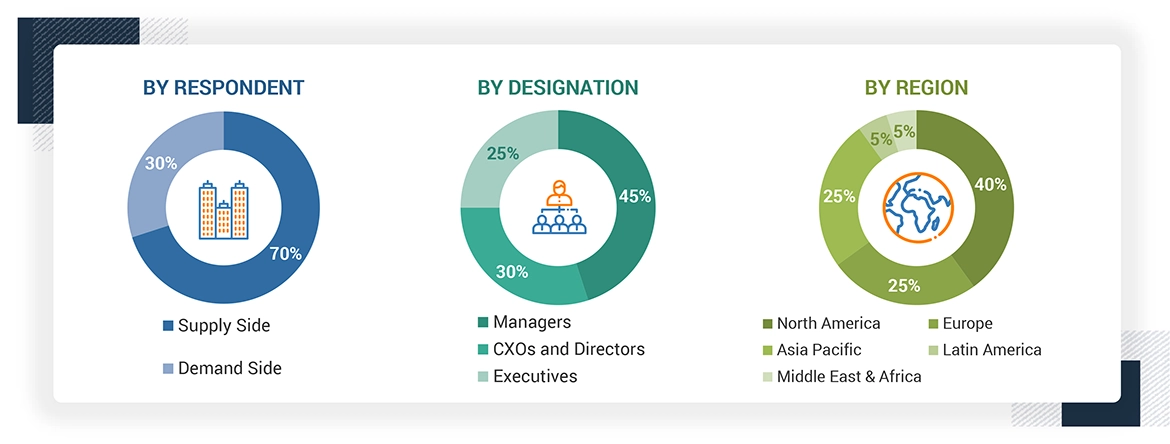
Comprehensive primary research was undertaken following an initial assessment of the global exosome research market landscape through secondary research. This involved conducting in-depth interviews with market experts from the demand side, including stakeholders from pharmaceutical & biotechnology firms, CROs, CMOs, and academic and research institutions. Additionally, interviews were held with key supply-side participants, such as C-suite and senior executives, product managers, and marketing and sales leaders from prominent manufacturers, distributors, and channel partners. The research covered six major geographical regions: North America, Europe, the Asia Pacific, Latin America, and the Middle East & Africa. Approximately 70% of the primary interviews were conducted with supply-side participants, while 30% involved demand-side experts. Data collection methods included structured questionnaires, email correspondence, online surveys, personal interviews, and telephonic discussions to understand the market dynamics comprehensively.
The following is a breakdown of the primary respondents:
To know about the assumptions considered for the study, download the pdf brochure
Market Size Estimation
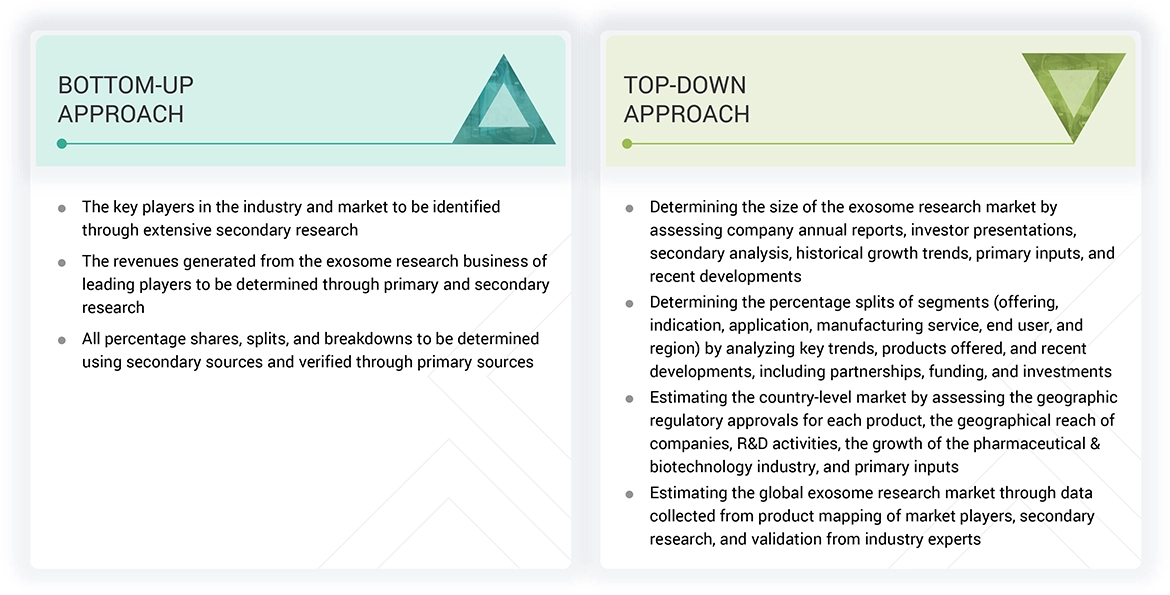
Both bottom-up and top-down approaches were used to estimate and validate the total size of the exosome research market. These methods were also used extensively to estimate the size of various subsegments in the market. The research methodology used to estimate the market size includes the following:
- A list of the major global players operating in the exosome research market was generated.
- The revenues generated from their exosome research product have been determined through annual reports and secondary sources (including paid databases)
- The products were mapped according to the segments of the market. Percentage shares and splits were determined based on the revenue contributed to each segment; this was verified using secondary sources and by industry experts.
- All assumptions, approaches, and individual shares/revenue estimates were validated through expert interviews.
Global Exosome Research Market Size: Bottom-up and Top-down Approach
Data Triangulation
After arriving at the market size from the estimation process explained above, the total market was divided into several segments and subsegments. To complete the overall market engineering process and arrive at the exact statistics for all segments and subsegments, data triangulation and market breakdown procedures were employed, wherever applicable. The data was triangulated by studying various factors and trends from both the demand and supply sides.
Market Definition
Exosomes are biomembrane-like vesicles containing protein, miRNA, and lipids that can be delivered to the extracellular milieu (ECM). Exosomes are naturally produced within the body and could be utilized in cell-to-cell communication, molecular therapy for cancer treatment, and the diagnosis of skeletal disorders. They have several advantages in cell-based treatment, which has brought attention to R&D in this field.
Stakeholders
- Manufacturers and distributors of exosome research products
- Pharmaceutical and biotechnology companies
- Contract research organizations (CROs)
- Contract development & manufacturing organizations (CDMOs)
- Market research and consulting firms
- R&D centers
- Academic & research institutes
- Regulatory agencies
- Health insurers and payers
- Venture capitalists
- Government organizations
- Industry associations & professional societies
- Private & government funding organizations
Report Objectives
To define, describe, and forecast the exosome research market based on offering, indication, application, manufacturing service, end user, and region
- To provide detailed information regarding the major factors influencing market growth (such as drivers, restraints, opportunities, and challenges)
- To strategically analyze micromarkets concerning individual growth trends, prospects, and contributions to the exosome research market
- To analyze the opportunities in the market for stakeholders and provide details of the competitive landscape for market leaders
- To forecast the size of the market segments concerning five main regions—North America, Europe, the Asia Pacific, Latin America, and the Middle East & Africa
- To profile the key players in the global exosome research market and comprehensively analyze their product portfolios, market positions, and core competencies
- To track and analyze competitive developments such as product approvals and launches, expansions, agreements, and collaborations in the exosome research market
- To benchmark players within the exosome research market using the company evaluation matrix framework, which analyzes market players based on various parameters within the broad categories of business and service strategy
Get the Full Exosome Research Market Report
Full forecast, segment splits, and company analysis for all Exosome Research Market.
- US Exosome Research Market
- Canada Exosome Research Market
- Germany Exosome Research Market
- UK Exosome Research Market
- France Exosome Research Market
- Italy Exosome Research Market
- Spain Exosome Research Market
- China Exosome Research Market
- Japan Exosome Research Market
- India Exosome Research Market
- Australia Exosome Research Market
- South Korea Exosome Research Market
- Mexico Exosome Research Market
- Rest Of Europe Exosome Research Market
- Rest Of Asia Pacific Exosome Research Market
- Rest Of Latin America Exosome Research Market
Need a Tailored Report?
Customize this report to your needs
Get 10% FREE Customization
Customize This Report
