
North America Flame Retardants Market (2025-2030)

The North America Flame Retardants Market was valued at $1670.1 Million in 2025 and projected to reach to $2128.3 Million by 2030, representing a compound annual growth rate of 4.97%. The North America flame retardants market is positioned for steady growth through 2030, driven by persistent regulatory requirements and industrial safety standards.


| Market Size in | USD 26.32 MN |
| Market Forecast in | |
| CAGR | |
| Forecast Period | |
| Units Considered | Value (USD MN) |
North America Flame Retardants Market Trends and Insights
- North America's demand for flame retardants is driven by stringent fire safety regulations across construction, automotive, and electronics sectors.
- The region's mature industrial base and emphasis on building codes and consumer safety standards continue to support steady market expansion through 2030. North America's flame retardants market benefits from robust regulatory frameworks and high awareness of fire safety in residential and commercial applications.
- The region's construction and transportation industries remain key end-use segments, with North America maintaining strong compliance with international fire safety standards.
- Between 2025 and 2030, North America is expected to see increased adoption of halogen-free and eco-friendly flame retardant formulations, reflecting growing environmental consciousness and regulatory pressure..
Key Market Statistics
- CAGR (2025-2030) 4.97% CAGR
- Market Size, 2025 ~USD 1670.1 Million
- Forecast, 2030 ~USD 2128.3 Million
- Geography North America
North America Flame Retardants Market Overview
Regulatory Compliance Driving Growth :
North America's stringent fire safety regulations, including NFPA standards and building codes, mandate flame retardant materials across construction, automotive, and electronics sectors, creating sustained demand for compliant solutions.
Construction Sector Leadership :
The region's robust construction industry, particularly in the US, drives significant flame retardant adoption in insulation materials, foams, and structural components for residential and commercial buildings.
Automotive & Electronics Innovation :
North America's advanced automotive and electronics manufacturing sectors require high-performance flame retardants for vehicle interiors, wiring, and consumer electronics, supporting premium product demand.
Sustainable Alternatives Expansion :
Growing environmental concerns and regulatory shifts toward halogen-free flame retardants are accelerating innovation and market diversification across North American manufacturers and end-users.
North America Flame Retardants Market Dynamics
- The US dominates the regional market, supported by Canada and Mexico's growing industrial bases.
- Construction and automotive sectors remain primary growth engines, with increasing adoption of advanced, environmentally-friendly formulations.
- Market expansion is tempered by regulatory scrutiny on certain chemical compounds and shifting consumer preferences toward sustainable alternatives.
- Innovation in halogen-free and bio-based flame retardants presents significant opportunities for market participants to differentiate and capture emerging demand segments..
Market Ecosystem
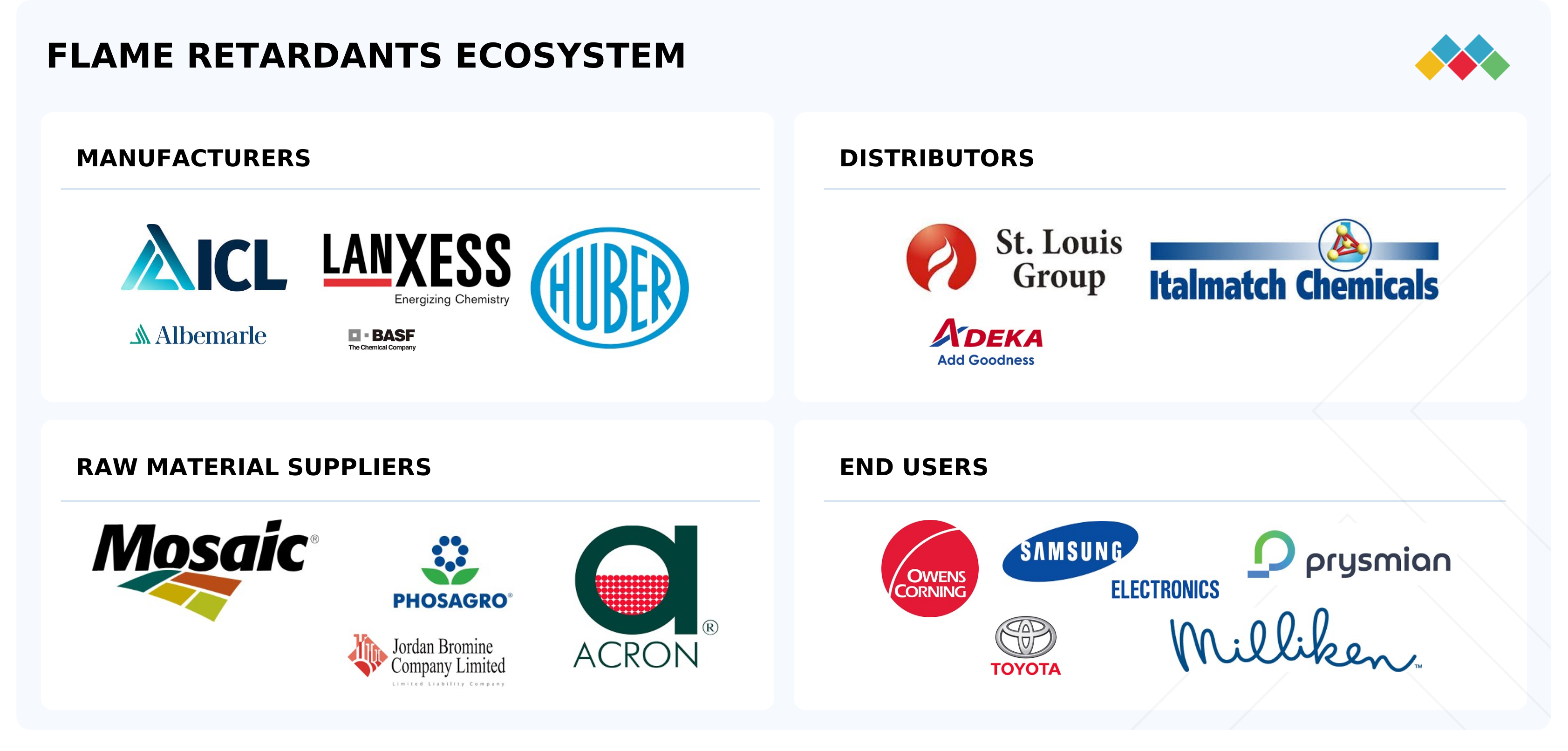
Flame Retardants Market: COMMERCIAL USE CASES ACROSS INDUSTRIES
| COMPANY | USE CASE DESCRIPTION | BENEFITS |
|---|---|---|
 |
Use of flame-retardant plastics in interior panels, seats, and wiring | Enhances passenger safety by reducing fire risks in vehicles |
 |
Incorporation of flame-retardant components in appliances and circuit boards | Protects devices from fire hazards, ensuring consumer safety and regulatory compliance |
 |
Flame-retardant coatings and plastics in industrial equipment and electrical panels | Prevents fire incidents, enhances equipment safety, and extends lifespan |
 |
Flame-retardant fabrics and polymers in vehicle interiors and wiring harnesses | Improves safety of passengers by minimizing fire risk in case of accidents |
 |
Use of flame-retardant plastics and PCB materials in consumer electronics | Reduces risk of device fires, ensures product safety, and meets regulatory requirements |
Logos and trademarks shown above are the property of their respective owners. Their use here is for informational and illustrative purposes only.
Related Ecosystem
Speciality Chemicals
- Corrosion Inhibitors
- Polyetheretherketone (PEEK)
- Acrylonitrile Butadiene Styrene (ABS)
- Epoxy Resin
- Polycarbonate
- Basf se
- DOW CHEMICAL COMPANY
- Evonik industries ag
- Clariant ag.
- Solvay sa
Key Takeaways
- North America's flame retardants market is valued at USD 1,670.1 million in 2025 and will reach USD 2,128.3 million by 2030.
- North America maintains a 4.97% CAGR, driven by strict fire safety regulations and building code compliance.
- North America's construction and automotive sectors are primary demand drivers for flame retardant materials.
- North America is shifting toward halogen-free and sustainable flame retardant solutions due to environmental regulations.
Flame Retardants Market Report Scope
| Report Metric | Details |
|---|---|
| Base Year | 2025 |
| Fastest Growing Segment | NITROGEN (Type) |
| Forecast Period | 2025-2030 |
| Growth Rate | CAGR of 5.32% from 2025 to 2030 |
| Largest Segment | PHOSPHORUS (Type) |
| Market Size Base Year (Billions) | ~USD 8.12 (2025) |
| Revenue Forecast (Billions) | ~USD 10.52 (2030) |
| Segments Covered | Type, Application, End-Use Industry |
North America Flame Retardants Market Report Segmentation
3 segment dimensions are covered across the global market.
By Type
- Aluminum Trihydrate
- Antimony Oxides
- Brominated
- Chlorinated
- Nitrogen
- Other Types
- Phosphorus
By Application
- Abs & Blends
- Epoxy
- Other Applications
- Polyolefins
- Polystyrene
- Polyurethane
- Polyvinyl Chloride
- Unsaturated Polyesters
By End-Use Industry
- Automotive & Transportation
- Building & Construction
- Electronics & Appliances
- Other End-Use Industries
- Textiles
- Wire & Cables
Target Audience
- Chemical Manufacturers : Flame retardant producers need North America-specific market data to optimize production capacity, identify growth segments, and develop region-compliant product portfolios.
- Construction & Building Material Companies : Building material suppliers require insights into North American fire safety regulations and construction sector demand to source appropriate flame retardant additives and materials.
- Automotive OEMs & Suppliers : Vehicle manufacturers and component suppliers need regional market intelligence to meet North American safety standards and consumer preferences for flame-retardant interior materials.
- Electronics & Appliance Manufacturers : Electronics producers require North America-specific regulatory compliance data and market trends to select suitable flame retardant solutions for consumer products.
- Investment & Strategy Consultants : Private equity, venture capital, and strategic consultants use regional market forecasts to evaluate acquisition targets, investment opportunities, and growth potential in North America's flame retardant sector.
Countries within North America - compare and drill down
| Country | 2025 size (native) |
|---|---|
| US | USD 1675.3 Million |
| Canada | USD 232.6 Million |
| Mexico | USD 220.3 Million |
Country market size visualization
Reasons to Buy this Report
- Country-Level Market Breakdown : Access detailed market sizing for US, Canada, and Mexico with individual growth trajectories, enabling precise market entry strategies and regional investment decisions.
- Regulatory Intelligence : Comprehensive analysis of North American fire safety standards, building codes, and compliance requirements across jurisdictions to inform product development and market positioning.
- Sector-Specific Insights : Detailed demand analysis by construction, automotive, electronics, and other end-use sectors specific to North America's industrial landscape and growth drivers.
- Competitive Landscape Mapping : Identify key market players, their regional strategies, and competitive positioning within North America's mature and consolidated flame retardant market.
- Sustainability Trend Analysis : Track the shift toward halogen-free and eco-friendly flame retardants in North America, identifying emerging opportunities and market disruption risks.
Frequently asked questions
What is the current size of the North America flame retardants market?
The North America flame retardants market is estimated at USD 1,670.1 million in 2025.
What is the projected market size for North America by 2030?
North America's flame retardants market is forecasted to reach USD 2,128.3 million by 2030.
What is the CAGR for North America's flame retardants market?
North America's flame retardants market is expected to grow at a CAGR of 4.97% from 2025 to 2030.
Which industries drive demand for flame retardants in North America?
North America's primary demand drivers include construction, automotive, electronics, and furniture industries, all subject to strict fire safety regulations.
What trends are shaping North America's flame retardants market?
North America is experiencing increased adoption of halogen-free and eco-friendly flame retardants due to environmental regulations and consumer demand for safer, sustainable products.
RESEARCH METHODOLOGY
The study involved four major activities in estimating the market size for flame retardants market. Exhaustive secondary research was done to collect information on the market, the peer market, and the parent market. The next step was to validate these findings, assumptions, and sizing with industry experts across the value chain through primary research. Both top-down and bottom-up approaches were employed to estimate the complete market size. After that, the market breakdown and data triangulation procedures were used to estimate the market size of the segments and subsegments.
Secondary Research
Secondary sources used in this study included annual reports, press releases, and investor presentations of companies; white papers; certified publications; articles from recognized authors; and gold standard & silver standard websites such as Factiva, ICIS, Bloomberg, and others. The findings of this study were verified through primary research by conducting extensive interviews with key officials such as CEOs, VPs, directors, and other executives. The breakdown of profiles of the primary interviewees is illustrated in the figure below:
Primary Research
The flame retardants market comprises several stakeholders, such as raw material suppliers, end-product manufacturers, and regulatory organizations in the supply chain. The demand side of this market is characterized by key opinion leaders in various applications for the flame retardants market. The supply side is characterized by advancements in technology and diverse application industries. Various primary sources from both the supply and demand sides of the market were interviewed to obtain qualitative and quantitative information.
The following is a breakdown of the primary respondents:
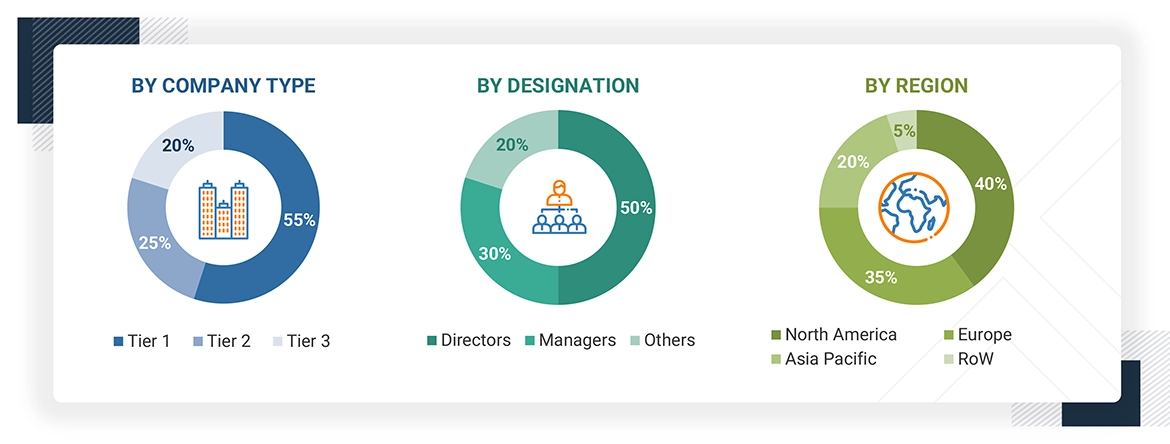
Note: Tier 1, Tier 2, and Tier 3 companies are classified based on their market revenue in 2023/2024, available in the public domain, product portfolios, and geographical presence.
Other designations include consultants and sales, marketing, and procurement managers.
To know about the assumptions considered for the study, download the pdf brochure
| COMPANY NAME | DESIGNATION | |
|---|---|---|
| Albemarle Corporation | Senior Manager | |
| ICL Group Ltd. | Innovation Manager | |
| LANXESS AG | Vice-President | |
| J.M. Huber Corporation | Production Supervisor | |
| Nabaltec AG | Sales Manager | |
Market Size Estimation
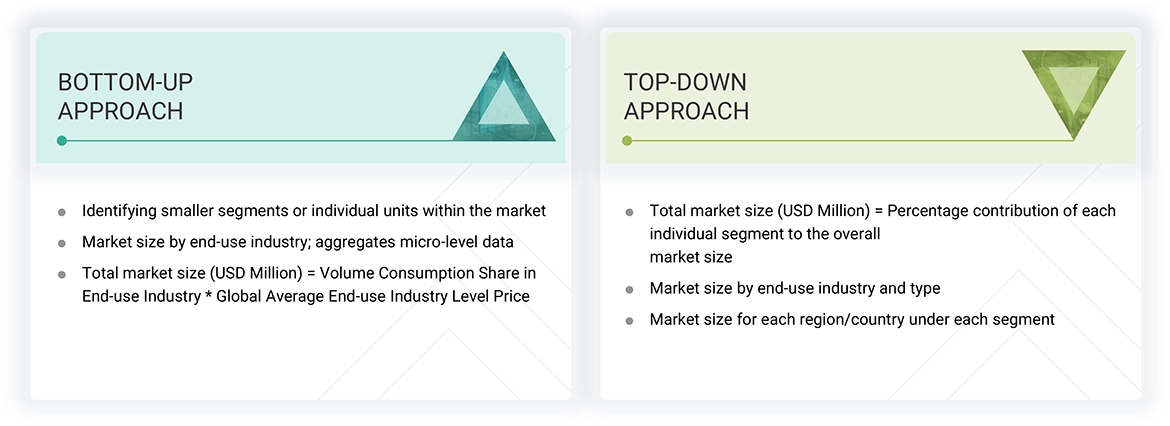
Both top-down and bottom-up approaches were used to estimate and validate the total size of the flame retardants market. These methods were also used extensively to estimate the size of various subsegments in the market. The research methodology used to estimate the market size includes the following:
- The key players in the industry have been identified through extensive secondary research.
- The supply chain of the industry has been determined through primary and secondary research.
- All percentage shares, splits, and breakdowns have been determined using secondary sources and verified through primary sources.
- All possible parameters that affect the markets covered in this research study have been accounted for, viewed in extensive detail, verified through primary research, and analyzed to obtain the final quantitative and qualitative data.
Data Triangulation
After arriving at the overall market size—using the market size estimation processes as explained above—the market was split into several segments and subsegments. To complete the overall market engineering process and arrive at the exact statistics of each market segment and subsegment, data triangulation, and market breakdown procedures were employed, wherever applicable. The data was triangulated by studying various factors and trends from both the demand and supply sides in the flame retardants industry.
Market Definition
According to the PINFA (Phosphorus, Inorganic, and Nitrogen Flame Retardant) Association, “Flame retardants are key components in reducing the devastating effect of fire mishaps on people, property, and the environment. The most common elements used as flame retardants are bromine, chlorine, and phosphorus. The compounds of these elements are added to treat potentially flammable materials. Flame retardants stop the fire by interacting with the fire cycle in the gaseous phase and stop the chemical chain reaction. They act in two ways - they either prevent the fire from starting or slow it down significantly. They are added to plastics, among other materials, and do not alter the properties of the parent material.”
Stakeholders
- Flame retardant manufacturers
- Flame retardant distributors
- Raw material suppliers
- Government and research organizations
- Investment banks and private equity firms
Report Objectives
- To analyze and forecast the size of the global flame retardants market in terms of value and volume
- To provide detailed information about the important drivers, restraints, challenges, and opportunities influencing market growth
- To define, describe, and segment the market based on type, application, end-use industry, and region
- To forecast the size of the market segments based on regions such as Asia Pacific, North America, Western Europe, Central & Eastern Europe, the Middle East & Africa, and South America
- To strategically analyze the segmented markets with respect to individual growth trends, prospects, and contributions to the overall market
- To identify and analyze opportunities for stakeholders in the market
- To analyze competitive developments such as expansions, partnerships & collaborations, mergers & acquisitions, agreements, and product launches in the market
- To strategically profile the key companies and comprehensively analyze their core competencies
Get the Full Flame Retardants Market Report
Full forecast, segment splits, and company analysis for all Flame Retardants Market.
- Rest Of Western Europe Flame Retardants Market
- Rest Of South America Flame Retardants Market
- China Flame Retardants Market
- Japan Flame Retardants Market
- India Flame Retardants Market
- South Korea Flame Retardants Market
- Canada Flame Retardants Market
- Mexico Flame Retardants Market
- US Flame Retardants Market
- Germany Flame Retardants Market
- France Flame Retardants Market
- UK Flame Retardants Market
- Spain Flame Retardants Market
- Italy Flame Retardants Market
- Turkey Flame Retardants Market
- Russia Flame Retardants Market
- Saudi Arabia Flame Retardants Market
- Israel Flame Retardants Market
- Brazil Flame Retardants Market
- Argentina Flame Retardants Market
- Rest Of Europe Flame Retardants Market
- Rest Of Asia Pacific Flame Retardants Market
Need a Tailored Report?
Customize this report to your needs
Get 10% FREE Customization
Customize This Report
