
UAE Gas Engine Market (2024-2029)

The UAE Gas Engine Market was valued at $75.9 Million in 2024 and projected to reach to $93.3 Million by 2029, representing a compound annual growth rate of 4.2%. The UAE gas engine market is poised for sustained growth through 2029, driven by the nation's role as a regional energy leader and its diversified industrial base.


| Market Size in | USD 26.32 MN |
| Market Forecast in | |
| CAGR | |
| Forecast Period | |
| Units Considered | Value (USD MN) |
UAE Gas Engine Market Trends and Insights
- The UAE's strategic position as a regional energy hub and its diversified industrial base are driving demand for efficient gas engine solutions across power generation, oil and gas, and manufacturing sectors.
- The UAE's commitment to optimizing energy infrastructure and reducing operational costs continues to support market expansion through 2029. In 2024, the UAE gas engine market reflects strong fundamentals supported by the nation's robust industrial activity and energy sector investments.
- The forecasted growth to $93.3 million by 2029 underscores the UAE's increasing reliance on gas engines for distributed power generation and backup systems.
- The UAE's regulatory environment and focus on energy efficiency standards are expected to accelerate adoption of advanced gas engine technologies, positioning the market for sustained expansion over the forecast period..
Key Market Statistics
- CAGR (2024-2029) 4.2% CAGR
- Market Size, 2024 ~USD 75.9 Million
- Forecast, 2029 ~USD 93.3 Million
- Country UAE
UAE Gas Engine Market Overview
Market Size & Growth :
The UAE gas engine market is valued at $75.9 million in 2024, with a projected CAGR of 4.2% through 2029, reaching $93.3 million. This steady growth reflects the nation's expanding industrial infrastructure and energy diversification initiatives.
Regional Energy Hub Status :
UAE's strategic position as a Middle Eastern energy hub drives significant demand for gas engine solutions. The country's advanced infrastructure and investment in power generation technologies position it as a key market for efficient engine systems.
Sector Diversification :
Gas engines are increasingly deployed across UAE's power generation, oil and gas operations, and manufacturing sectors. This diversification reduces market dependency on single industries and creates multiple growth opportunities for engine manufacturers and suppliers.
Sustainability Commitments :
UAE's commitment to sustainable energy solutions and Vision 2030 initiatives are driving adoption of efficient gas engine technologies. The nation's focus on reducing carbon emissions while maintaining energy security supports long-term market expansion.
UAE Gas Engine Market Dynamics
- Increasing investments in power generation infrastructure, coupled with the oil and gas sector's modernization efforts, will continue to fuel demand for advanced gas engine solutions.
- The UAE's strategic focus on energy efficiency and sustainability aligns with global trends, positioning the market for consistent expansion. Manufacturers and suppliers targeting the UAE market should emphasize fuel efficiency, emissions reduction, and reliability features.
- The country's robust regulatory environment and commitment to technological advancement create favorable conditions for premium engine solutions.
- As UAE continues to diversify its economy beyond traditional energy sectors, emerging applications in manufacturing and industrial processes will present additional growth avenues for market participants..
Market Ecosystem
Related Ecosystem
Engines And Gensets
- Fuel Cell
- Agricultural Tractors
- Analytics Software
- Biometric Systems
- Cogeneration
- General Electric Company
- Wartsila
- Siemens ag
- Cummins Inc.
- UNIPER GLOBAL COMMODITIES SE
Power Infrastructure
- Geographical Information System (GIS)
- Cogeneration
- Battery Electric Vehicle (BEV)
- Cellular Network
- Fuel Cell
- ABB India Limited
- Siemens ag
- SCHNEIDER ELECTRIC SE
- General Electric Company
- Eaton Corporation plc
Key Takeaways
- The UAE gas engine market is valued at $75.9 million in 2024 and is projected to grow to $93.3 million by 2029.
- The UAE's market is expanding at a 4.2% CAGR, driven by industrial diversification and energy infrastructure investments.
- The UAE's focus on energy efficiency and regulatory compliance is accelerating adoption of advanced gas engine solutions.
- The UAE's strategic role as a regional energy hub supports sustained demand for gas engines across multiple industrial sectors.
Gas Engine Market Report Scope
| Report Metric | Details |
|---|---|
| Base Year | 2024 |
| Fastest Growing Segment | UTILITIES (End-Use Industry) |
| Forecast Period | 2024-2029 |
| Growth Rate | CAGR of 4.5% from 2024 to 2029 |
| Largest Segment | NATURAL GAS (Fuel Type) |
| Market Size Base Year (Billions) | ~USD 5.06 (2024) |
| Revenue Forecast (Billions) | ~USD 6.3 (2029) |
| Segments Covered | Fuel Type, Power Output, Application, End-Use Industry |
UAE Gas Engine Market Report Segmentation
4 segment dimensions are covered across the global market.
By Fuel Type
- Natural Gas
- Special Gas
By Power Output
- 0.5-1 Mw
- 1.1.-2 Mw
- 1.1-2 Mw
- 2.1-5 Mw
- 5.1-15 Mw
- Above 15 Mw
- S0.5-1 Mw
By Application
- Cogeneration
- Mechanical Drive
- Power Generation
By End-Use Industry
- Manufacturing
- Marine
- Oil & Gas
- Utilities
Target Audience
- Gas Engine Manufacturers : Manufacturers need UAE-specific market data to assess market entry feasibility, identify growth segments, and develop localized product strategies that meet regional demand across power generation and industrial applications.
- Energy & Power Companies : UAE-based and regional energy operators require detailed market insights to optimize capital allocation, evaluate competitive positioning, and identify opportunities for gas engine deployment across their operational portfolios.
- Oil & Gas Operators : Oil and gas companies operating in UAE need market intelligence to forecast gas engine demand, plan equipment procurement, and align technology investments with sector growth trends and regulatory requirements.
- Industrial Equipment Distributors : Distributors and resellers targeting UAE's industrial sector require market sizing and forecast data to plan inventory, negotiate supplier agreements, and identify emerging customer segments within manufacturing and power generation.
- Investment & Strategy Consultants : Consultants advising clients on UAE market entry, expansion, or M&A activities need country-specific market data to develop credible business cases, competitive analyses, and long-term strategic recommendations.
Reasons to Buy this Report
- Market-Specific Sizing & Forecasts : Access precise UAE market valuations ($75.9M in 2024, $93.3M by 2029) with country-specific CAGR of 4.2%. Make informed investment and expansion decisions based on localized data rather than global averages.
- Sector-Level Demand Insights : Understand gas engine demand patterns across UAE's power generation, oil and gas, and manufacturing sectors. Identify which industries offer the highest growth potential and tailor your product offerings accordingly.
- Competitive Positioning Strategy : Benchmark your offerings against market trends specific to UAE's energy hub status and regulatory environment. Develop targeted go-to-market strategies that address regional preferences and compliance requirements.
- Investment & Partnership Opportunities : Identify high-potential segments and partnerships within UAE's diversified industrial base. Leverage market intelligence to negotiate better terms with local distributors, manufacturers, and energy sector stakeholders.
- Sustainability & Compliance Alignment : Align your business strategy with UAE's Vision 2030 sustainability commitments and emissions reduction targets. Understand regulatory drivers shaping the market to ensure long-term viability and competitive advantage.
Frequently asked questions
What is the current size of the UAE gas engine market?
The UAE gas engine market is estimated at $75.9 million in 2024, with verified data confirming this valuation based on comprehensive market analysis.
What is the projected market size for the UAE gas engine market by 2029?
The UAE gas engine market is forecasted to reach $93.3 million by 2029, representing growth from the 2024 baseline.
What is the CAGR for the UAE gas engine market?
The UAE gas engine market is expected to grow at a compound annual growth rate (CAGR) of 4.2% between 2024 and 2029.
What factors are driving growth in the UAE gas engine market?
Growth in the UAE gas engine market is driven by industrial diversification, energy infrastructure investments, regulatory focus on efficiency, and demand for distributed power generation solutions.
Which sectors are the primary consumers of gas engines in the UAE?
Primary sectors consuming gas engines in the UAE include power generation, oil and gas operations, manufacturing, and industrial facilities requiring backup power systems.
RESEARCH METHODOLOGY
This study undertook extensive efforts to determine the current size of the gas engine market. It began with a thorough secondary research phase aimed at gathering data on the market, related markets, and the broader industry landscape. Subsequently, the collected data, assumptions, and calculations underwent meticulous validation through primary research, which involved consultations with industry experts across the entire value chain. The assessment of the overall market size was conducted through a tailored analysis for each country. Following this, a detailed examination of the market occurred, and the data was cross-referenced to estimate the sizes of various segments and sub-segments within the market. This two-phased approach, incorporating both secondary and primary research methodologies, enhances the reliability and accuracy of the study's findings.
Secondary Research
Throughout this research study, an extensive range of secondary sources was utilized, comprising directories, databases, and respected references such as Hoover's, Bloomberg BusinessWeek, Factiva, World Bank, the US Department of Energy (DOE), and the International Energy Agency (IEA). These sources played a crucial role in gathering valuable data essential for conducting a thorough analysis of the global gas engine market. Covering technical, market-oriented, and commercial aspects, these secondary sources significantly contributed to the breadth and depth of the study. Furthermore, additional secondary sources included annual reports, press releases, investor presentations, whitepapers, authoritative publications, articles authored by reputable experts, information from industry associations, trade directories, and various database resources. The wide array of secondary sources utilized ensures a robust and well-informed foundation for the research study.
Primary Research
The gas engine market involves multiple stakeholders throughout its supply chain, including component manufacturers, product manufacturers/assemblers, service providers, distributors, and end-users. Industrial end-users primarily drive market demand, with increasing requirements from transmission and distribution utilities also contributing significantly to market growth. On the supply side, a noticeable trend is the heightened demand for contracts from the industrial sector, alongside a notable prevalence of mergers and acquisitions among major industry players. To gain a comprehensive understanding of the market, both qualitatively and quantitatively, a variety of primary sources from both the supply and demand sides were interviewed. The breakdown below outlines the primary respondents who played a crucial role in providing insights for the research study.
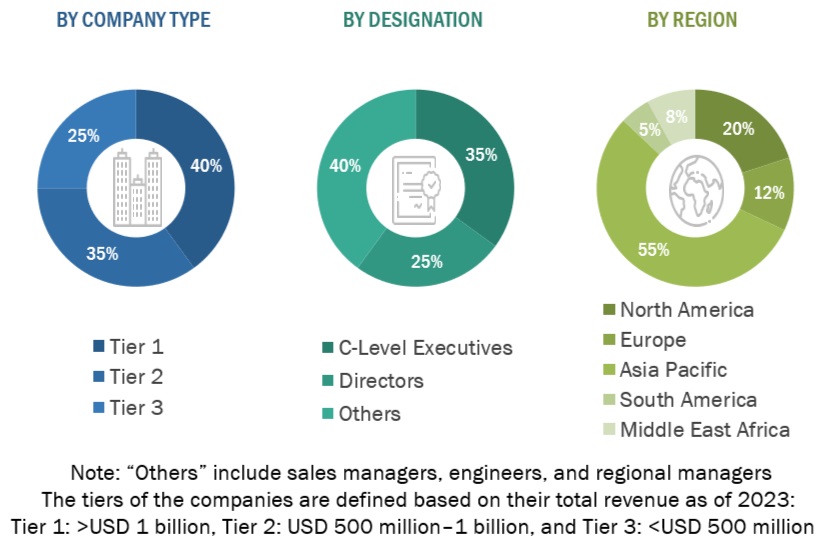
To know about the assumptions considered for the study, download the pdf brochure
Market Size Estimation
The gas engine market size was meticulously estimated and validated using a bottom-up approach. This method was rigorously used to determine the dimensions of various market subsegments. The research process includes the following key stages.
- This approach looked at national and regional production figures for all types of gas engines.
- Extensive secondary and primary research was conducted to gain a comprehensive understanding of the global market environment for various types of engines.
- Several primary interviews were conducted with leading gas engine system development experts, including major OEMs and Tier I suppliers.
- When estimating and projecting market size, qualitative factors such as market drivers, constraints, opportunities, and challenges are taken into account.
Global Gas Engine Market Size: Bottom-Up Approach
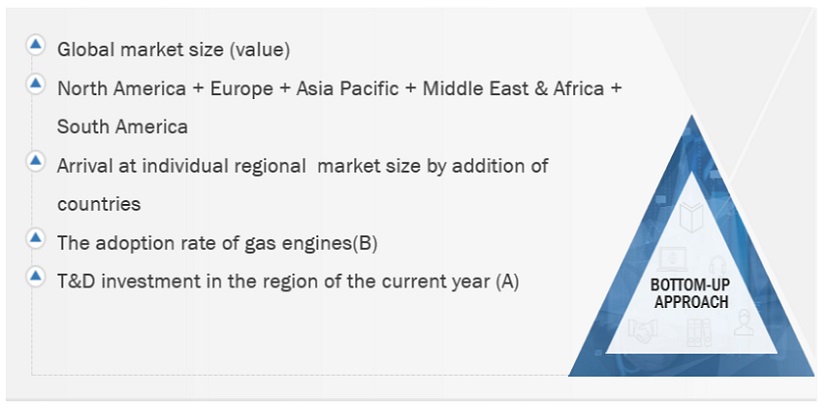
To know about the assumptions considered for the study, Request for Free Sample Report
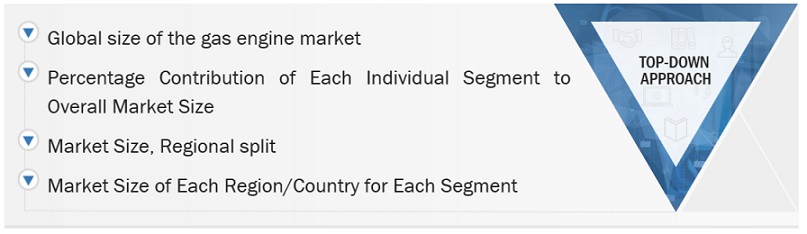
Global Gas Engine Market Size: Top-Down Approach
Data Triangulation
The process of establishing the overall market size involved employing the methodologies described earlier, which included segmenting the market into various segments and subsegments. To conclude the comprehensive market analysis and obtain accurate statistics for each market segment and subsegment, data triangulation and market segmentation techniques were applied as deemed suitable. Data triangulation entailed a thorough assessment of diverse factors and trends from both the demand and supply perspectives within the ecosystem of the gas engines market.
Market Definition
A gas engine, also known as a combustion engine or reciprocating engine, is a type of internal combustion engine that operates on a gaseous fuel, such as natural gas, propane, or biogas. Gas engines convert the chemical energy of the fuel into mechanical energy through a series of controlled explosions within cylinders. This mechanical energy is then utilized to power various applications, including electricity generation, mechanical drive systems, and transportation. Gas engines are renowned for their versatility, reliability, and efficiency, making them widely utilized in industries ranging from power generation and manufacturing to transportation and agriculture. They offer advantages such as lower emissions, reduced fuel costs, and greater fuel flexibility compared to traditional diesel engines, making them an attractive choice for applications requiring clean and efficient power solutions.
Key Stakeholders
- Government Utility Providers
- Independent Power Producers
- Engine manufacturers
- Power equipment and garden tool manufacturers
- Consulting companies in the energy & power sector
- Distribution utilities
- Government and research organizations
- Organizations, forums, and associations
- Raw material suppliers
- State and national regulatory authorities
- Engine manufacturers, distributors, and suppliers
- Engines original equipment manufacturers (OEMs)
Objectives of the Study
- The gas engine market will be defined, characterised, segmented, and projected using parameters such as fuel type, power output, application, and end user.
- To forecast market sizes in North America, South America, Europe, Asia Pacific, the Middle East, and Africa, as well as the major countries in each of these five regions.
- To provide comprehensive insights into the factors driving market drivers, restraints, opportunities, and challenges unique to the industry.
- To strategically examine each subsegment's growth trends, future potential, and overall market share.
- To evaluate market prospects for potential buyers and the competitive landscape for industry leaders.
- To thoroughly examine the market shares and core competencies of the major players and create strategic profiles for them.
- To monitor and evaluate competitive developments in the gas engines market, such as partnerships, agreements, sales contracts, new product launches, acquisitions, joint ventures, contracts, expansions, and investments.
- The market for gas engines is evaluated in this report.
Available Customization
With the given market data, MarketsandMarkets offers customizations based on the company’s specific needs. The following customization options are available for the report:
Product Analysis
- Product Matrix, which provides a detailed comparison of the product portfolio of each company
Company Information
- Detailed analyses and profiling of additional market players (up to 5)
Get the Full Gas Engine Market Report
Full forecast, segment splits, and company analysis for all Gas Engine Market.
- China Gas Engine Market
- India Gas Engine Market
- Japan Gas Engine Market
- Germany Gas Engine Market
- UK Gas Engine Market
- Russia Gas Engine Market
- Italy Gas Engine Market
- France Gas Engine Market
- Canada Gas Engine Market
- Mexico Gas Engine Market
- US Gas Engine Market
- Brazil Gas Engine Market
- Argentina Gas Engine Market
- Saudi Arabia Gas Engine Market
- Egypt Gas Engine Market
- Nigeria Gas Engine Market
- Rest Of Europe Gas Engine Market
- Rest Of Asia Pacific Gas Engine Market
- GCC Countries Gas Engine Market
- Rest Of GCC Gas Engine Market
- Rest Of South America Gas Engine Market
Need a Tailored Report?
Customize this report to your needs
Get 10% FREE Customization
Customize This Report
