
Japan Peripheral Vascular Devices Market (2026-2031)

The Japan Peripheral Vascular Devices Market was valued at $157.54 Million in 2026 and projected to reach to $229.56 Million by 2031, representing a compound annual growth rate of 7.8%. Japan's peripheral vascular devices market is positioned for substantial growth, driven by demographic shifts and rising cardiovascular disease prevalence.


| Market Size in | USD 26.32 MN |
| Market Forecast in | |
| CAGR | |
| Forecast Period | |
| Units Considered | Value (USD MN) |
Japan Peripheral Vascular Devices Market Trends and Insights
- Japan's aging population and rising prevalence of peripheral arterial disease are driving demand for advanced vascular intervention solutions.
- Japan's healthcare infrastructure and strong adoption of minimally invasive technologies position the country as a key market within the Asia Pacific region. The growth trajectory in Japan reflects increasing investment in vascular care facilities and a shift toward catheter-based interventions over traditional surgical approaches.
- Japan's regulatory environment and reimbursement policies support the adoption of innovative peripheral vascular devices.
- Between 2026 and 2031, Japan is expected to experience sustained market expansion driven by demographic trends, clinical innovation, and improved patient access to treatment options..
Key Market Statistics
- CAGR (2026-2031) 7.8% CAGR
- Market Size, 2026 ~USD 157.54 Million
- Forecast, 2031 ~USD 229.56 Million
- Country Japan
Japan Peripheral Vascular Devices Market Overview
Aging Population Driving Growth :
Japan's rapidly aging demographic, with over 29% of the population aged 65+, significantly increases the prevalence of peripheral arterial disease and vascular conditions, creating sustained demand for peripheral vascular devices.
Strong Healthcare Infrastructure :
Japan's advanced healthcare system and high healthcare spending per capita enable rapid adoption of innovative vascular intervention technologies and cutting-edge peripheral vascular device solutions.
Robust Market Expansion :
The market is projected to grow from USD 157.54 million in 2026 to USD 229.56 million by 2031, with a CAGR of 7.8%, outpacing the global growth rate of 5.7%.
Rising Disease Prevalence :
Increasing incidence of diabetes, hypertension, and lifestyle-related vascular diseases in Japan is accelerating the need for advanced peripheral vascular intervention devices and treatment options.
Japan Peripheral Vascular Devices Market Dynamics
- The aging population combined with improved diagnostic capabilities is expanding the patient base requiring vascular interventions.
- Healthcare providers are increasingly investing in advanced endovascular technologies and minimally invasive solutions to address peripheral arterial disease.
- Japan's strong regulatory framework and emphasis on healthcare innovation support the adoption of next-generation devices.
- Market expansion will be further supported by increasing reimbursement coverage and growing awareness of vascular disease management among healthcare professionals and patients..
Market Ecosystem
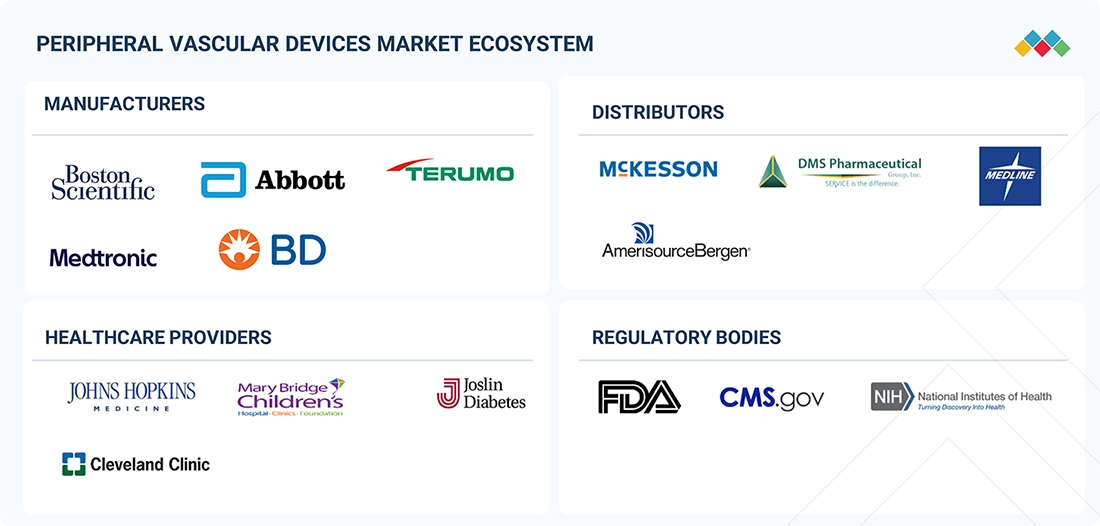
PERIPHERAL VASCULAR DEVICES MARKET: COMMERCIAL USE CASES ACROSS INDUSTRIES
| COMPANY | USE CASE DESCRIPTION | BENEFITS |
|---|---|---|
 |
Boston Scientific has a vast worldwide footprint in the peripheral vascular devices market, offering a wide range of products, including peripheral stents, drug-coated balloons, atherectomy systems, thrombectomy devices, embolic protection devices, and guidewires. The company's products are frequently used in the treatment of complex cases of peripheral artery disease (PAD), including below-the-knee and chronic total occlusion (CTO) cases, as well as calcified-lesion types of PAD, in both hospital cath labs and ASCs. Moreover, the firm is actively broadening its clinical application areas through its robust clinical trials and non-invasive, peripheral-intervention-focused innovations. | Boston Scientific's peripheral devices facilitate precise lesion management, minimize restenosis, and enhance long-term vessel patency. These devices are compatible with existing cath lab infrastructure and are backed by strong clinical evidence. They are user-friendly, allowing physicians to efficiently address complex cases. As a result, patients experience quicker recoveries and lower treatment costs. |
 |
Medtronic offers a comprehensive range of peripheral vascular devices, including drug-coated balloons, peripheral stents, endovascular grafts, and catheter-based delivery systems for both arterial and venous interventions. These products aid in the treatment of peripheral artery disease (PAD), venous thromboembolism, and complex peripheral lesions across a diverse patient population, from standard cases to high-risk individuals. Medtronic's solutions are increasingly recognized and utilized in outpatient and minimally invasive treatment settings. | Medtronic's peripheral technologies play a vital role in improving procedural safety, treatment durability, and overall process efficiency. The company's significant investments in innovation, physician training, and long-term clinical outcomes enable healthcare providers to perform effective revascularization while significantly reducing complication rates. As a result, Medtronic's devices are ideal for value-based and cost-sensitive healthcare systems. |
 |
Abbott has established a strong presence in peripheral vascular interventions through its extensive portfolio of vascular devices. This portfolio includes vessel closure systems, peripheral stents, and endovascular therapy solutions used to treat peripheral artery disease (PAD) and to perform complex peripheral procedures in catheterization laboratories and vascular centers. Additionally, the company provides support for lesion assessment and procedural planning through integrated solutions that enhance the overall treatment workflow. | Abbott's products enable efficient and controlled peripheral interventions by improving access area management, reducing procedure time, and ensuring safer vascular closure. This leads to more reliable device performance and ultimately better clinical outcomes. Its product range enhances hospital efficiency during procedures and supports faster patient recovery, making treatment pathways more cost-effective. |
 |
BD plays a crucial role in peripheral vascular care through its range of vascular access and intervention devices, including IV catheters, access systems, and imaging-guided procedural tools. These solutions not only support peripheral interventions but also enhance related therapies. BD's products have become standard practice in hospitals and ambulatory settings, enabling easier access to procedures, improving overall process effectiveness, and meeting the diverse interventional needs in vascular disease management. | BD’s portfolio improves clinical workflows and enhances procedure safety by providing reliable vascular access and reducing complications such as infiltration and needlestick injuries. Additionally, it facilitates quicker readiness for interventions. This approach not only supports hospitals in implementing universal access protocols and more efficient use but also minimizes procedural delays, ultimately leading to a better patient experience. |
 |
Terumo plays a crucial role in peripheral vascular interventions with its comprehensive range of guidewires, sheaths, catheters, and endovascular therapy devices for both peripheral artery disease (PAD) and complex cases. The company’s innovations are present in diagnostic angiography and therapeutic interventions, enabling navigation through challenging anatomical areas and facilitating treatment for both standard- and high-risk patients. | With the exception of the artificial intelligence line-up, Terumo’s devices are known for their excellent trackability, superior grip, and procedural accuracy. These features enable doctors to perform complex procedures with improved device deliverability and stability. Additionally, these devices facilitate achieving intervention goals, reduce the risk of complications, and enhance workflow. Therefore, they are ideal for busy catheterization laboratories and advanced peripheral intervention units. |
Logos and trademarks shown above are the property of their respective owners. Their use here is for informational and illustrative purposes only.
Related Ecosystem
Cardiovascular Devices
- External Defibrillators
- Implantable Cardioverter Defibrillators
- Pulse Oximeters
- Robotic Systems
- 3-Lead ECG Leadwires
- Medtronic plc
- Boston Scientific Corporation
- Abbott Laboratories
- KONINKLIJKE PHILIPS N.V.
- Terumo Corporation
Medical Devices
- Polymerase Chain Reaction (PCR)
- Magnetic Resonance Imaging (MRI)
- Disposable Autoinjectors
- Pulse Oximeters
- Blood Pressure Monitors
- Medtronic plc
- Abbott Laboratories
- Stryker Corporation
- Becton, Dickinson and Company
- CONMED Corporation
Key Takeaways
- Japan's peripheral vascular devices market is valued at USD 157.54 million in 2026 and will reach USD 229.56 million by 2031 at a 7.8% CAGR.
- Japan's aging demographic and high prevalence of peripheral arterial disease are primary growth catalysts for the market.
- Japan's advanced healthcare infrastructure and preference for minimally invasive procedures support rapid device adoption.
- Japan's favorable regulatory environment and reimbursement policies create a stable foundation for market expansion through 2031.
Peripheral Vascular Devices Market Report Scope
| Report Metric | Details |
|---|---|
| Base Year | 2026 |
| Fastest Growing Segment | HEMODYNAMIC FLOW ALTERATION DEVICES (Type) |
| Forecast Period | 2026–2031 |
| Growth Rate | CAGR of 5.7% from 2026 to 2031 |
| Largest Segment | HOSPITALS (End User) |
| Market Size Base Year (Billions) | ~USD 10.02 (2026) |
| Revenue Forecast (Billions) | ~USD 13.22 (2031) |
| Segments Covered | Type, Delivery Platform, End User, Product Type |
Japan Peripheral Vascular Devices Market Report Segmentation
4 segment dimensions are covered across the global market.
By Type
- Abdominal Aortic Aneurysm Stent Grafts
- Abdominal Aortic Aneurysm Stent-Grafts
- Angiography Catheters
- Angioplasty Balloons
- Angioplasty Stents
- Atherectomy Devices
- Ballon Inflation Devices
- Balloon Inflation Devices
- Balloon-Expandable Stents
- Bare Metal Stents
- Bare-Metal Stents
- Catheters
- Chronic Total Occlusion Devices
- Cutting & Scoring Balloons
- Cutting And Scoring Ballons
- Cutting And Scoring Balloons
- Drug Eluting Balloons
- Drug-Eluting Balloons
- Drug-Eluting Stents
- Embolic Protection Devices
- Endovascular Aneurysm Repair Stent Grafts
- Guidewires
- Guiding Catheters
- Hemodynamic Flow Alteration Devices
- Inferior Vena Cava Filters
- Introducer Sheaths
- Ivus/Oct Catheters
- Large Chain Hospitals
- Old/Normal Balloons
- Other Peripheral Vascular Devices
- Permanent Filters
- Plaque Modification Devices
- Retrievable Filters
- Self-Expandable Stents
- Standalone Hospital Facilities
- Thoracic Aortic Aneurysm Stent Grafts
- Thoracic Aortic Aneurysm Stent-Grafts
- Thrombectomy Devices
- Vascular Closure Devices
By Delivery Platform
- Balloon-Expandable Stents
- Self-Expandable Stents
By End User
- Ambulatory Surgical Centers
- Hospitals
- Other End Users
By Product Type
- Angioplasty Balloons
- Angioplasty Stents
- Catheters
- Endovascular Aneurysm Repair (Evar) Stent Grafts
- Hemodynamic Flow Alteration Devices
- Inferior Vena Cava Filters
- Other Peripheral Vascular Devices
- Plaque Modification Devices
JAPAN: PERIPHERAL VASCULAR DEVICES MARKET, BY END USER, 2024–2031
| Segment | 2024 | 2025 | 2026 | 2027 | 2028 | 2029 | 2030 | 2031 | CAGR (%) |
|---|---|---|---|---|---|---|---|---|---|
| AMBULATORY SURGICAL CENTERS | 75.2 | 78.2 | 83.8 | 90.3 | 97.5 | 105.3 | 113.9 | 123.4 | 8 |
| HOSPITALS | 462.6 | 484.7 | 523.4 | 568.1 | 617.5 | 672.3 | 732.2 | 799 | 8.8 |
| OTHER END USERS | 41.1 | 42.4 | 45.1 | 48.2 | 51.5 | 55.2 | 59.2 | 63.6 | 7.1 |
| TOTAL | 578.9 | 605.3 | 652.3 | 706.6 | 766.4 | 832.8 | 905.2 | 985.9 | 8.6 |
Target Audience
- Medical Device Manufacturers : Manufacturers need Japan-specific market data to develop localized product strategies, understand regulatory requirements, and identify growth opportunities in this high-value, aging-population market.
- Healthcare Investors & PE Firms : Investors require detailed Japan market analysis to evaluate investment opportunities, assess market growth potential, and make informed decisions on healthcare device companies operating in Japan.
- Hospital & Healthcare Providers : Healthcare institutions need market insights to plan procurement strategies, budget for vascular device acquisitions, and understand emerging technologies and treatment trends in Japan.
- Market Research & Consulting Firms : Research organizations require Japan-specific data to support client advisory services, competitive analysis, and strategic recommendations for healthcare and medical device sectors.
- Regulatory & Government Bodies : Regulatory agencies and health ministries need market intelligence to inform policy decisions, reimbursement strategies, and healthcare infrastructure planning for vascular disease management in Japan.
Key Companies in the Japan Peripheral Vascular Devices Market
| Company | HQ | Ownership | Strongest segments |
|---|---|---|---|
| STENTYS | France | Private Company | Angioplasty Balloon & Angioplasty Stent,Catheters (IVUS/OCT),Plaque Modification, |
| NOLATO | Sweden | Public Company | Angioplasty Balloon & Angioplasty Stent (components and subassemblies),Catheters (IVUS/OCT and diagnostic/guide catheters components),Plaque Modification (atherectomy and specialty balloon components), |
| SANOFI | France | Public Company | Angioplasty Balloon & Angioplasty Stent,Catheters (IVUS/OCT),Plaque Modification, |
| CONMED CORPORATION | United States | Public Company | Angioplasty Balloon & Angioplasty Stent,Catheters (IVUS/OCT),Plaque Modification, |
| BOSTON SCIENTIFIC CORPORATION | United States | Public Company | Angioplasty Balloon & Angioplasty Stent,Catheters (IVUS/OCT),Plaque Modification, |
| BECTON, DICKINSON AND COMPANY | United States | Public Company | Angioplasty Balloon & Angioplasty Stent,Catheters (IVUS/OCT and Peripheral Access/Intervention),Plaque Modification Devices, |
| ABBOTT LABORATORIES | United States | Public Company | Angioplasty Balloon & Angioplasty Stent,Catheters (IVUS/OCT),Plaque Modification, |
| CARDINAL HEALTH, INC. | United States | Public Company | Angioplasty Balloon & Angioplasty Stent,Catheters (IVUS/OCT and diagnostic/guide),Plaque Modification Devices, |
| KONINKLIJKE PHILIPS N.V. | Netherlands | Public Company | Catheters (IVUS/OCT),Plaque Modification,Angioplasty Balloon & Angioplasty Stent, |
| TERUMO CORPORATION | Japan | Public Company | Angioplasty Balloon & Angioplasty Stent,Catheters (IVUS/OCT),Vascular Closure Devices, |
| MERIT MEDICAL SYSTEMS, INC. | United States | Public Company | Angioplasty Balloon & Angioplasty Stent,Catheters (IVUS/OCT and other peripheral catheters),Plaque Modification, |
| MEDTRONIC | Ireland | Public Company | Angioplasty Balloon & Angioplasty Stent,Catheters (IVUS/OCT),Plaque Modification, |
| PENUMBRA, INC. | United States | Public Company | Catheters (IVUS/OCT and aspiration/access catheters),Plaque Modification,Angioplasty Balloon & Angioplasty Stent, |
| STRYKER CORPORATION | United States | Public Company | Angioplasty Balloon & Angioplasty Stent,Catheters (IVUS/OCT),Plaque Modification, |
| CORDIS | United States | Private Company | Angioplasty Balloon & Angioplasty Stent,Catheters (IVUS/OCT),Plaque Modification, |
| COOK | United States | Public Company | Angioplasty Balloon & Angioplasty Stent,Catheters (IVUS/OCT),Plaque Modification, |
| BIOSENSORS INTERNATIONAL GROUP, LTD. | Singapore | Private Company | Angioplasty Balloon & Angioplasty Stent,Catheters (IVUS/OCT),Plaque Modification, |
STENTYS
STENTYS is a French private company founded in 2006 that employs 26 people. The company operates in the medical device sector.
NOLATO
NOLATO is a Swedish public company founded in 1938 with 5,607 employees. The company is a major player in polymer-based solutions and medical devices.
SANOFI
SANOFI is a French public pharmaceutical company founded in 1994 with 74,846 employees. The company is a global leader in healthcare and pharmaceutical products.
CONMED CORPORATION
CONMED CORPORATION is a United States public company founded in 1970 with 3,900 employees. The company specializes in medical technology and surgical equipment.
BOSTON SCIENTIFIC CORPORATION
BOSTON SCIENTIFIC CORPORATION is a United States public company founded in 1979 with 59,000 employees. The company is a leading manufacturer of medical devices and equipment.
BECTON, DICKINSON AND COMPANY
BECTON, DICKINSON AND COMPANY is a United States public company founded in 1897 with 72,000 employees. The company is a global medical technology manufacturer specializing in diagnostics and drug delivery.
ABBOTT LABORATORIES
ABBOTT LABORATORIES is a United States public company founded in 1888 with 115,000 employees. The company is a diversified healthcare company with operations in pharmaceuticals, diagnostics, and medical devices.
CARDINAL HEALTH, INC.
CARDINAL HEALTH, INC. is a United States public company founded in 1979 with 55,392 employees. The company is a leading healthcare services and products distributor.
KONINKLIJKE PHILIPS N.V.
KONINKLIJKE PHILIPS N.V. is a Netherlands public company founded in 1891 with 64,317 employees. The company is a global leader in health technology and electronics.
TERUMO CORPORATION
TERUMO CORPORATION is a Japanese public company founded in 1921 with 30,591 employees. The company manufactures medical devices and blood management solutions.
MERIT MEDICAL SYSTEMS, INC.
MERIT MEDICAL SYSTEMS, INC. is a United States public company founded in 1987 with 7,500 employees. The company develops and manufactures minimally invasive medical devices.
MEDTRONIC
MEDTRONIC is an Ireland-based public company founded in 1949 with 95,000 employees. The company is a global leader in medical technology, services, and solutions.
PENUMBRA, INC.
PENUMBRA, INC. is a United States public company founded in 2004 with 4,700 employees. The company specializes in minimally invasive medical devices for vascular and neurovascular interventions.
STRYKER CORPORATION
STRYKER CORPORATION is a United States public company founded in 1941 with 56,000 employees. The company is a leading manufacturer of medical devices and surgical equipment.
CORDIS
CORDIS is a United States private company founded in 1957 with 3,620 employees. The company manufactures cardiovascular and endovascular medical devices.
COOK
COOK is a United States public company founded in 1987 with 433 employees. The company operates in the medical device industry.
BIOSENSORS INTERNATIONAL GROUP, LTD.
BIOSENSORS INTERNATIONAL GROUP, LTD. is a Singapore private company founded in 1990 with 312 employees. The company develops and manufactures cardiovascular medical devices.
Reasons to Buy this Report
- Japan-Specific Market Sizing : Access precise market valuations for Japan (USD 157.54M in 2026, USD 229.56M in 2031) with detailed CAGR analysis at 7.8%, enabling accurate financial forecasting and investment planning.
- Demographic Insights & Disease Trends : Understand Japan's unique aging population dynamics and rising peripheral arterial disease prevalence, critical for identifying target patient populations and market opportunities.
- Competitive Landscape Analysis : Gain intelligence on Japan's healthcare infrastructure, regulatory environment, and device adoption patterns to benchmark against competitors and identify market entry strategies.
- Growth Trajectory Comparison : Compare Japan's 7.8% CAGR against the global 5.7% rate to understand regional outperformance drivers and capitalize on faster-growing market segments.
- Strategic Business Planning : Leverage Japan-focused market data for product development, market expansion, partnership identification, and resource allocation decisions in the peripheral vascular devices sector.
Frequently asked questions
What is the current size of Japan's peripheral vascular devices market?
Japan's peripheral vascular devices market is estimated at USD 157.54 million in 2026.
What is the projected market size for Japan by 2031?
Japan's peripheral vascular devices market is forecast to reach USD 229.56 million by 2031.
What is the CAGR for Japan's peripheral vascular devices market?
Japan's peripheral vascular devices market is expected to grow at a compound annual growth rate (CAGR) of 7.8% from 2026 to 2031.
What factors are driving growth in Japan's peripheral vascular devices market?
Japan's market growth is driven by an aging population, rising prevalence of peripheral arterial disease, advanced healthcare infrastructure, and strong adoption of minimally invasive technologies.
How does Japan's market compare to the global peripheral vascular devices market?
Japan's 7.8% CAGR outpaces the global market CAGR of 5.7%, reflecting stronger regional demand and demographic tailwinds specific to Japan.
RESEARCH METHODOLOGY
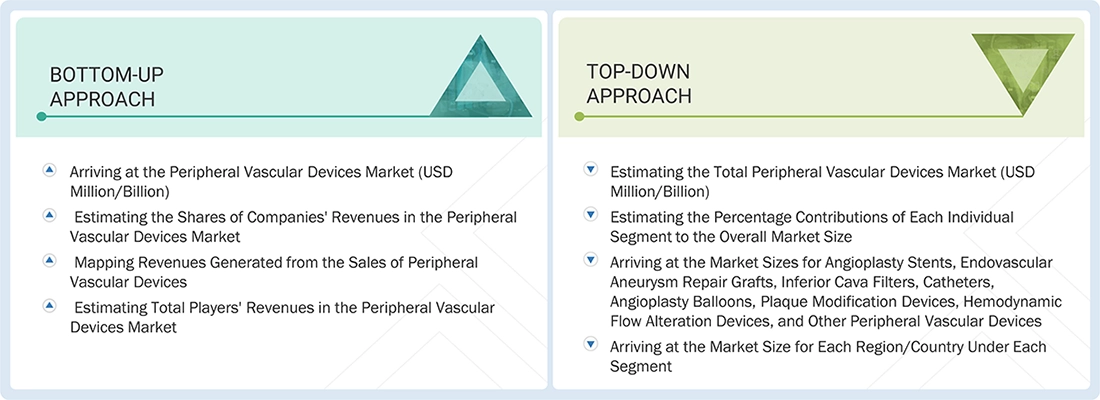
This study involved four major activities in estimating the size of the peripheral vascular devices market. Exhaustive secondary research was done to collect information on the market, peer market, and parent market. The next step was to validate these findings, assumptions, and sizing estimates with industry experts across value chains through primary research. The bottom-up approach was employed to estimate the overall market size. After that, market breakdown and data triangulation were used to estimate the market size of segments and subsegments.
Secondary Research
The secondary research process involved the widespread use of secondary sources, directories, databases (such as Bloomberg Businessweek, Factiva, and D&B Hoovers), white papers, annual reports, company house documents, investor presentations, and SEC filings of companies. Secondary research was used to identify and collect information useful for the extensive, technical, market-oriented, and commercial study of the peripheral vascular devices market. The information was used to identify key players in the market and to classify and segment it at a detailed level, in line with industry trends. Additionally, important developments related to market and technology perspectives were noted. A database of the leading industry figures was created through secondary research.
Primary Research
Extensive primary research was conducted after obtaining secondary research on the peripheral vascular devices market. Several primary interviews were conducted with market experts from both the demand and supply sides across major countries in North America, Europe, Asia Pacific, Latin America, and the Middle East & Africa. Primary data was collected through questionnaires, emails, and telephonic interviews. The primary sources from the supply side included a range of industry experts, such as Chief X Officers (CXOs), vice presidents (VPs), directors from business development, marketing, and product development or innovation teams, along with other key executives from manufacturers and distributors operating in the peripheral vascular devices market, as well as key opinion leaders.
Primary interviews were conducted to gather insights into market statistics, revenue from products and services, market breakdowns, market size estimates, market forecasting, and data triangulation. Primary research also helped in understanding the various trends in technology, applications, verticals, and regions. Stakeholders from the demand side were interviewed to understand the buyer’s perspective on the suppliers, products, and their current usage, and the future outlook of their business, which will affect the overall market.
The following is a breakdown of the primary respondents:
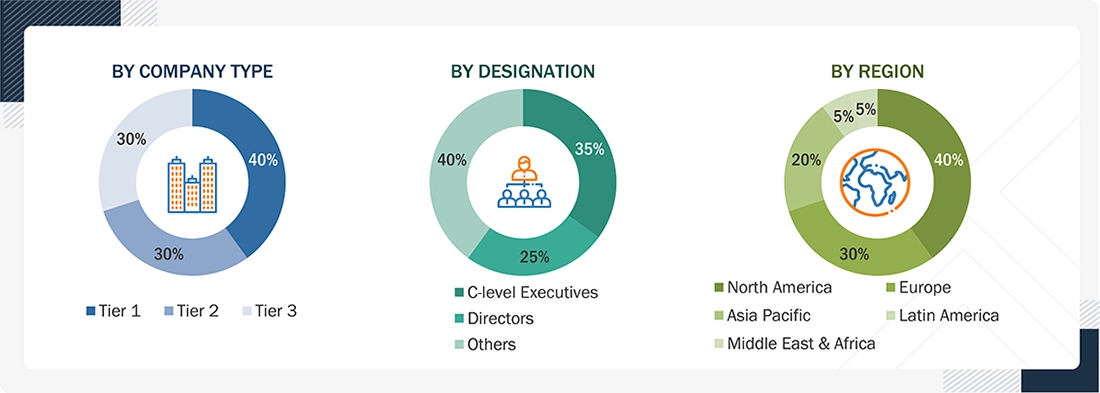
Note 1: C-level executives include CEOs, COOs, CTOs, and VPs.
Note 2: Others include sales, marketing, and product managers.
Note 3: Companies are classified into tiers based on their total revenue. As of 2025: Tier 1=>USD 1 billion, Tier 2 = USD 500 million to USD 1 billion, Tier 3=<USD 500 million.
To know about the assumptions considered for the study, download the pdf brochure
Market Size Estimation
The research methodology used to estimate the size of the peripheral vascular devices market includes the following details.
The market sizing of the market was undertaken from the global side.
Country-level Analysis: The size of the peripheral vascular devices market was obtained from the annual presentations of leading players and secondary data available in the public domain. The share of products in the overall peripheral vascular devices market was obtained from secondary data and validated by primary participants to arrive at the total peripheral vascular devices market. Primary participants further validated the numbers.
Geographic Market Assessment (by Region & Country): The geographic assessment was done using the following approaches:
Approach 1: Geographic revenue contributions/splits of leading players in the market (wherever available) and respective growth trends
Approach 2: Geographic adoption trends for individual product segments by end users and growth prospects for each of the segments (assumptions and indicative estimates validated from primary interviews)
At each point, the assumptions and approaches were validated through industry experts contacted during primary research. Considering the limitations of data available from secondary research, revenue estimates for individual companies (for the overall peripheral vascular devices market and geographic market assessment) were ascertained based on a detailed analysis of their respective product offerings, geographic reach/strength (direct or through distributors or suppliers), and the shares of the leading players in a particular region or country.
Global Peripheral Vascular Devices Market Size: Top-down and Bottom-up Approach
Data Triangulation
The market was split into several segments and subsegments after determining the overall market size, using the market sizing processes. Data triangulation and market breakdown procedures were employed to complete the overall market engineering process and determine the exact statistics for each market segment and subsegment. The data was triangulated by examining various factors and trends on both the demand and supply sides of the peripheral vascular devices market.
Market Definition
Peripheral vascular devices are medical equipment and instruments used to diagnose, treat, or manage peripheral vascular diseases in patients. It pertains to diseases or disorders involving the arteries, veins, and lymphatic vessels outside the heart and brain. The overall application of peripheral vascular devices is to treat PAD, DVT, and other vascular disorders. It facilitates procedures that are intended to restore normal blood flow, remove clots, and keep the vessel open. Examples include balloon catheters, stents, guidewires, atherectomy devices, and vascular grafts.
Stakeholders
- Medical Device Manufacturers
- Interventional Cardiologists and Vascular Surgeons
- Hospitals and Ambulatory Surgical Centers (ASCs)
- Healthcare Institutions (Hospitals and Outpatient Clinics)
- Distributors and Suppliers
- Research Institutes
- Health Insurance Payers
- World Health Organization (WHO)
- Organisation for Economic Co-operation and Development (OECD)
- National Institutes of Health (NIH)
- Centers for Disease Control and Prevention (CDC)
- Annual Reports/SEC Filings, Investor Presentations, and Press Releases of Key Players
- White Papers, Journals/Magazines, and News Articles
- Paid Databases, such as Factiva, D&B Hoovers, and Bloomberg Business
Report Objectives
- To define, describe, segment, and forecast the global peripheral vascular devices market by type (angioplasty stents, endovascular aneurysm repair stent grafts, inferior cava filters, catheters, angioplasty balloons, plaque modification devices, hemodynamic flow alteration devices, and other devices), end user, and region
- To provide detailed information about the factors influencing market growth (such as drivers, restraints, opportunities, and challenges)
- To analyze micromarkets concerning individual growth trends, prospects, and contributions to the overall peripheral vascular devices market
- To analyze market opportunities for stakeholders and provide details of the competitive landscape for key players
- To forecast the size of the peripheral vascular devices market in five main regions along with their respective key countries: North America, Europe, the Asia Pacific, Latin America, and the Middle East & Africa
- To profile key players in the global peripheral vascular devices market and comprehensively analyze their core competencies and market shares
- To track and analyze competitive developments such as acquisitions, expansions, partnerships, agreements, collaborations, and product launches & approvals
- To benchmark players within the peripheral vascular devices market using the "Company Evaluation Matrix" framework, which analyzes market players on various parameters within the broad categories of business and product strategy
Get the Full Peripheral Vascular Devices Market Report
Full forecast, segment splits, and company analysis for all Peripheral Vascular Devices Market.
- Canada Peripheral Vascular Devices Market
- US Peripheral Vascular Devices Market
- Germany Peripheral Vascular Devices Market
- France Peripheral Vascular Devices Market
- UK Peripheral Vascular Devices Market
- Spain Peripheral Vascular Devices Market
- Italy Peripheral Vascular Devices Market
- China Peripheral Vascular Devices Market
- India Peripheral Vascular Devices Market
- Australia Peripheral Vascular Devices Market
- South Korea Peripheral Vascular Devices Market
- Brazil Peripheral Vascular Devices Market
- Mexico Peripheral Vascular Devices Market
- Colombia Peripheral Vascular Devices Market
- Argentina Peripheral Vascular Devices Market
- Rest Of Europe Peripheral Vascular Devices Market
Need a Tailored Report?
Customize this report to your needs
Get 10% FREE Customization
Customize This Report
