
China Large Format Printer Market (2025-2030)

The China Large Format Printer Market was valued at $398 Million in 2025 and projected to reach to $296 Million by 2030, representing a compound annual growth rate of -5.8%. China's Large Format Printer market, specifically the Toner-Based (Laser) segment, faces sustained headwinds through 2030 as enterprises increasingly migrate toward inkjet and digital printing technologies.


| Market Size in | USD 26.32 MN |
| Market Forecast in | |
| CAGR | |
| Forecast Period | |
| Units Considered | Value (USD MN) |
China Large Format Printer Market Trends and Insights
- Toner-Based (Laser) technology faces headwinds as enterprises increasingly shift toward inkjet and digital printing solutions that offer superior cost efficiency and environmental benefits.
- This decline reflects broader industry trends where Toner-Based (Laser) systems struggle to compete on operational expenses and maintenance requirements compared to emerging alternatives. Despite the overall market contraction, Toner-Based (Laser) remains relevant in specialized applications requiring high-speed, high-volume output and archival-quality prints.
- The segment's erosion through 2030 underscores the need for manufacturers to innovate within Toner-Based (Laser) technology or pivot toward hybrid solutions.
- Organizations currently invested in Toner-Based (Laser) infrastructure should evaluate transition strategies to maintain competitive positioning in an evolving large format printing landscape..
Key Market Statistics
- CAGR (2025-2030) -5.8%
- Market Size, 2025 ~USD 398 Million
- Forecast, 2030 ~USD 296 Million
- Country China
China Large Format Printer Market Overview
Declining Market Contraction :
China's Large Format Printer market is experiencing significant contraction, with the Toner-Based (Laser) segment declining from $398.0 million in 2025 to $296.0 million by 2030, representing a -5.8% CAGR, substantially underperforming the global growth rate of 5.5%.
Technology Shift Away from Laser :
Chinese enterprises are rapidly transitioning from toner-based laser printing to inkjet and digital printing solutions, driven by superior cost efficiency, lower operational expenses, and reduced maintenance requirements in manufacturing and design sectors.
Market Headwinds in Manufacturing :
China's manufacturing sector, traditionally a major consumer of large format laser printers, is adopting alternative printing technologies that better align with Industry 4.0 initiatives and digital transformation strategies.
Regional Performance Gap :
China's negative growth trajectory contrasts sharply with global market expansion, indicating localized market saturation and accelerated technology obsolescence in the toner-based printing segment within the country.
China Large Format Printer Market Dynamics
- The -5.8% CAGR reflects structural shifts in printing preferences driven by cost pressures and operational efficiency demands across manufacturing, design, and engineering sectors.
- This contraction is particularly pronounced given China's position as a global manufacturing hub, where printing technology adoption directly influences production economics. The divergence between China's declining market and the global 5.5% CAGR suggests that Chinese businesses are leading the transition away from laser-based solutions.
- Market recovery appears unlikely without significant technological innovation or repositioning of toner-based systems toward niche applications.
- Stakeholders should anticipate continued market consolidation and potential exit strategies from traditional laser printer manufacturers operating in China..
Market Ecosystem
Large Format Printer Market: COMMERCIAL USE CASES ACROSS INDUSTRIES
| COMPANY | USE CASE DESCRIPTION | BENEFITS |
|---|---|---|
 |
OK To Colour, a UK-based print services provider, upgraded its operations with the Canon Colorado M3W printer developed by Canon Inc. (Japan) and supplied by CMYUK (UK). The roll-to-roll UVgel printer offered automation, low maintenance, and consistent high-quality output, helping the company enhance production speed and meet increasing market demand efficiently. | The Canon Colorado M3W improved OK To Colour’s workflow efficiency, reduced turnaround times, and delivered superior print quality with accurate color and sharp graphics. Its reliable, low-maintenance design minimized downtime, enabling the company to handle larger volumes confidently. This investment enhanced OK To Colour’s service capabilities and positioned it for sustainable growth. |
 |
Simpsons Printing, facing increased demand for large-format banners, struggled with high outsourcing costs and limited control over production schedules. To bring production in-house and improve operational efficiency, the company adopted the Fujifilm Acuity Prime LED flatbed printer, made by Fujifilm Holdings Corporation (Japan). This printer offered advanced substrate handling, reliable printheads, and durable ink technology, allowing Simpsons Printing to handle high-volume orders and support long-term growth in the competitive large-format printing market. | The adoption of the Fujifilm Acuity Prime enabled Simpsons Printing to cut outsourcing costs while expanding its service offerings. The printer’s versatility supported higher production rates and handled a broader range of substrates. Reliable performance and advanced technology improved operational control, efficiency, and print quality, positioning the company for sustainable growth and increased competitiveness. |
 |
Wedneshurx Commercial and Car Ltd (WCC), a UK-based print and signage company, aimed to expand into the vehicle graphics segment to meet growing demand for high-quality, durable, and visually striking wraps. To achieve this, WCC invested in the Mimaki JV300-160plus, an advanced large-format eco-solvent printer developed by Mimaki Engineering Co., Ltd. (Japan). The printer enabled in-house production, consistent results across various materials, and faster turnaround, supporting WCC’s strategic growth in the automotive and signage markets. | The Mimaki JV300-160plus helped WCC cut outsourcing costs, speed up turnaround times, and produce high-quality, vibrant prints for vehicle graphics. It enabled the launch of a dedicated vehicle graphics division, expanded service offerings, attracted new clients, and boosted the company’s competitiveness in the signage and automotive graphics market. The investment improved operational control and positioned WCC for sustainable growth. |
Logos and trademarks shown above are the property of their respective owners. Their use here is for informational and illustrative purposes only.
Related Ecosystem
Electronics System And Components
- Sensors
- Temperature Sensors
- Pressure Sensors
- Actuators
- Image Sensors
- Lenovo
- Samsung
- Texas Instruments Incorporated
- HONEYWELL INTERNATIONAL INC.
- Teledyne Technologies Incorporated
Key Takeaways
- Toner-Based (Laser) market contracts at -5.8% CAGR, declining from $398M (2025) to $296M (2030)
- Toner-Based (Laser) technology loses market share to cost-effective inkjet and digital alternatives
- Toner-Based (Laser) remains viable for high-speed, high-volume, and archival-quality printing applications
- Manufacturers of Toner-Based (Laser) systems must innovate or transition to hybrid solutions to remain competitive
Large Format Printer Market Report Scope
| Report Metric | Details |
|---|---|
| Base Year | 2025 |
| Fastest Growing Segment | DECOR (Application) |
| Forecast Period | 2025–2030 |
| Growth Rate | CAGR of 5.5% from 2025 to 2030 |
| Largest Segment | PRINTERS (Offering) |
| Market Size Base Year (Billions) | ~USD 7.93 (2025) |
| Revenue Forecast (Billions) | ~USD 10.36 (2030) |
| Segments Covered | Offering, Connectivity, Technology, Print Width, Ink Type, Application |
China Large Format Printer Market Report Segmentation
6 segment dimensions are covered across the global market.
By Offering
- After-Sales Services
- Printers
- Rip Software
By Connectivity
- Wired
- Wireless
By Technology
- Ink-Based
- Ink-Based (Inkjet)
- Toner-Based
- Toner-Based (Laser)
By Print Width
- 17–24”
- 24–36”
- 36–44”
- 44–60”
- 60–72”
- 72” And Above
By Ink Type
- Aqueous
- Dye Sublimation
- Latex
- Solvent
- Uv-Cured
By Application
- Apparel & Textile
- Cad & Technical Printing
- Decor
- Signage & Advertising
Target Audience
- Printer Manufacturers & OEMs : Manufacturers need this data to understand declining demand for toner-based systems in China, guide R&D investments toward alternative technologies, and adjust production capacity and market strategies accordingly.
- Distributor & Channel Partners : Distributors require market forecasts to manage inventory levels, negotiate supplier terms, and transition product portfolios away from declining laser printer segments toward growing inkjet and digital solutions.
- Enterprise Procurement Teams : Corporate buyers need insights into technology trends and market dynamics to validate their shift toward inkjet printing, benchmark costs, and justify capital expenditure decisions for large format printing infrastructure.
- Technology Investors & PE Firms : Investment professionals need this analysis to assess portfolio company exposure to declining segments, identify acquisition targets in growth areas, and evaluate exit strategies for legacy printing technology investments.
- Market Consultants & Analysts : Consulting firms and research analysts require granular China-specific data to support client advisory work, validate market hypotheses, and provide evidence-based recommendations for printing technology strategy.
Key Companies in the China Large Format Printer Market
| Company | HQ | Ownership | Strongest segments |
|---|---|---|---|
| HP | United States | Public Company | Ink-based large format printers (aqueous, latex, solvent),Toner-based large format printers,Supplies (inks, printheads, maintenance kits), |
| KORNIT DIGITAL LTD | Israel | Public Company | Direct-to-garment (DTG) printing systems,Direct-to-fabric and home décor systems,NeoPigment ink and other consumables, |
| CANON INC. | Japan | Public Company | Aqueous ink-based technical and CAD/GIS printers,UV/UVgel roll-to-roll and hybrid graphics printers,Photo and fine-art large format printers, |
| SEIKO EPSON CORPORATION | Japan | Public Company | Aqueous graphics & photo LFP (ink-based),Solvent & eco-solvent signage LFP,Latex & UV-cured LFP, |
| BROTHER INDUSTRIES, LTD. | Japan | Public Company | Ink-based large format (aqueous/latex/solvent),Textile and dye-sublimation large format,Industrial and coding-related large format (Domino), |
| MIMAKI ENGINEERING CO., LTD. | Japan | Public Company | Roll-to-roll and print-and-cut inkjet printers,Flatbed and hybrid UV inkjet printers,Textile, DTF, and dye-sublimation printers, |
| RICOH | Japan | Public Company | Ink-based large format printers (aqueous, latex, solvent),Toner-based large format printers,Industrial and specialty inkjet (UV-cured, dye-sublimation, components), |
| XEROX CORPORATION | United States | Public Company | Toner-based large format (technical/production),Ink-based large format (aqueous/other),Services and supplies tied to large format, |
| KONICA MINOLTA, INC. | Japan | Public Company | Ink-based large format printers (aqueous/UV/latex/solvent),Toner-based large format printers,Consumables (ink, toner, media) for large format, |
| AGFA-GEVAERT GROUP | Belgium | Public Company | |
| ELECTRONICS FOR IMAGING, INC. | United States | Private Company | |
| KYOCERA CORPORATION | Japan | Public Company | |
| LEXMARK INTERNATIONAL, INC. | United States | Private Company | |
| FUJIFILM HOLDINGS CORPORATION | Japan | Public Company |
HP
HP is a United States-based public company founded in 1939 that employs 67,000 people. The company is a major technology and printing solutions provider.
KORNIT DIGITAL LTD
Kornit Digital Ltd is an Israeli public company founded in 2002 with 633 employees. The company specializes in digital printing technology and solutions.
CANON INC.
Canon Inc. is a Japanese public company founded in 1933 that employs 165,547 people. The company is a global leader in imaging and optical products.
SEIKO EPSON CORPORATION
Seiko Epson Corporation is a Japanese public company founded in 1942 with 74,619 employees. The company manufactures printers, imaging devices, and related technologies.
BROTHER INDUSTRIES, LTD.
Brother Industries, Ltd. is a Japanese public company founded in 1908 with 39,495 employees. The company produces printers, sewing machines, and industrial equipment.
MIMAKI ENGINEERING CO., LTD.
Mimaki Engineering Co., Ltd. is a Japanese public company founded in 1975 with 2,152 employees. The company specializes in digital printing and cutting solutions.
RICOH
Ricoh is a Japanese public company founded in 1936 with 75,635 employees. The company provides imaging, printing, and document management solutions.
XEROX CORPORATION
Xerox Corporation is a United States-based public company founded in 1903 with 22,900 employees. The company is a provider of printing, imaging, and document management solutions.
KONICA MINOLTA, INC.
Konica Minolta, Inc. is a Japanese public company founded in 1873 with 34,363 employees. The company manufactures imaging and printing equipment and solutions.
AGFA-GEVAERT GROUP
Agfa-Gevaert Group is a Belgian public company founded in 1867 with 4,211 employees. The company operates in imaging technology and printing solutions.
ELECTRONICS FOR IMAGING, INC.
Electronics for Imaging, Inc. is a United States-based private company founded in 1988 with 3,400 employees. The company develops digital printing software and solutions.
KYOCERA CORPORATION
Kyocera Corporation is a Japanese public company founded in 1946 with 73,856 employees. The company manufactures printers, imaging devices, and advanced ceramics.
LEXMARK INTERNATIONAL, INC.
Lexmark International, Inc. is a United States-based private company founded in 1990 with 14,000 employees. The company provides printing and imaging solutions.
FUJIFILM HOLDINGS CORPORATION
Fujifilm Holdings Corporation is a Japanese public company founded in 1934 with 73,526 employees. The company operates in imaging, printing, and digital technology sectors.
Reasons to Buy this Report
- Identify Market Exit Opportunities : Understand the structural decline in China's toner-based printer segment to make informed decisions about market exit timing, asset liquidation, or strategic repositioning before further value erosion occurs.
- Competitive Intelligence for Inkjet Providers : Gain detailed insights into the technology migration patterns driving Chinese enterprises away from laser printing, enabling inkjet and digital printing solution providers to capitalize on market share gains.
- Supply Chain Optimization : Analyze declining demand patterns in China to optimize inventory management, reduce overstock risks, and reallocate resources toward higher-growth printing technology segments and geographic markets.
- Strategic Partnership Assessment : Evaluate partnership viability with Chinese printer manufacturers and distributors by understanding market contraction dynamics, helping identify stable partners versus those facing sustainability challenges.
- Investment Risk Mitigation : Make data-driven investment decisions regarding China's printing technology sector by quantifying market decline risks, protecting capital allocation, and identifying alternative growth opportunities within the region.
Frequently asked questions
Why is Toner-Based (Laser) declining in the large format printer market?
Toner-Based (Laser) technology faces declining demand due to higher operational costs, maintenance complexity, and competition from more cost-efficient inkjet and digital printing solutions that offer comparable quality with lower total cost of ownership.
What is the projected market size for Toner-Based (Laser) in 2030?
Toner-Based (Laser) is projected to reach $296.0 million by 2030, down from $398.0 million in 2025, reflecting a -5.8% CAGR over the forecast period.
Where is Toner-Based (Laser) still competitive in large format printing?
Toner-Based (Laser) remains competitive in applications requiring high-speed production, high-volume output, and archival-quality prints where speed and longevity are critical business requirements.
Should businesses transition away from Toner-Based (Laser) technology?
Organizations should evaluate their specific printing needs; while Toner-Based (Laser) is declining overall, it remains suitable for high-volume, speed-critical applications, though hybrid or inkjet solutions may offer better long-term value.
What alternatives are replacing Toner-Based (Laser) in the market?
Inkjet and digital printing technologies are the primary alternatives replacing Toner-Based (Laser), offering lower consumable costs, reduced maintenance, and improved environmental sustainability while maintaining acceptable print quality.
RESEARCH METHODOLOGY
The study involved major activities in estimating the current size of the large format printer market. Exhaustive secondary research has been done to collect information on the market, peer market, and parent market. To validate these findings, assumptions, and sizing with industry experts across the supply chain through primary research has been the next step. Both top-down and bottom-up approaches have been employed to estimate the complete market size. After that, the data triangulation method has been used to estimate the market size of segments and subsegments. Secondary and primary sources have been used to identify and collect information for an extensive technical and commercial study of the large format printer market.
Secondary Research
Secondary research for this study involved gathering information from various credible sources such as company reports, white papers, journals, and industry publications. This process helped understand the supply and value chains, identify key players, analyze market segmentation and regional trends, and track major market and technology developments. The data collected was used to estimate the overall market size, which was later validated through primary research.
Primary Research
Extensive primary research was conducted after gaining knowledge about the current scenario of the large format printer market through secondary research. Several primary interviews were conducted with experts from the demand and supply sides across four major regions: North America, Europe, Asia Pacific, and RoW. This primary data was collected through questionnaires, emails, and telephone interviews.
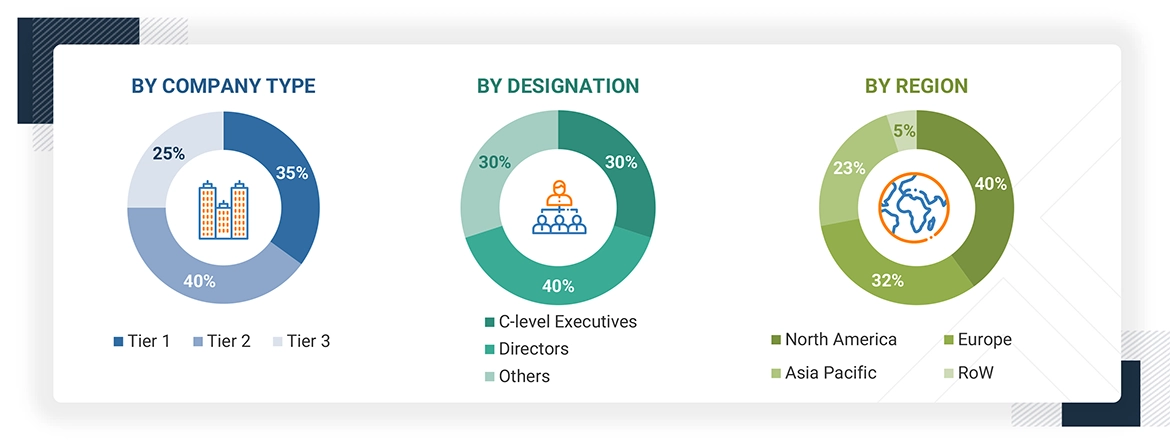
Notes: RoW mainly comprises the Middle East, Africa, and South America.
Other designations include product managers, sales managers, and marketing managers.
Three tiers of companies have been defined based on their total revenue as of 2024: tier 3: revenue less than USD 500 million; tier 2: revenue between USD 500 million and 1 billion; and tier 1: revenue more than USD 1 billion
To know about the assumptions considered for the study, download the pdf brochure
Market Size Estimation
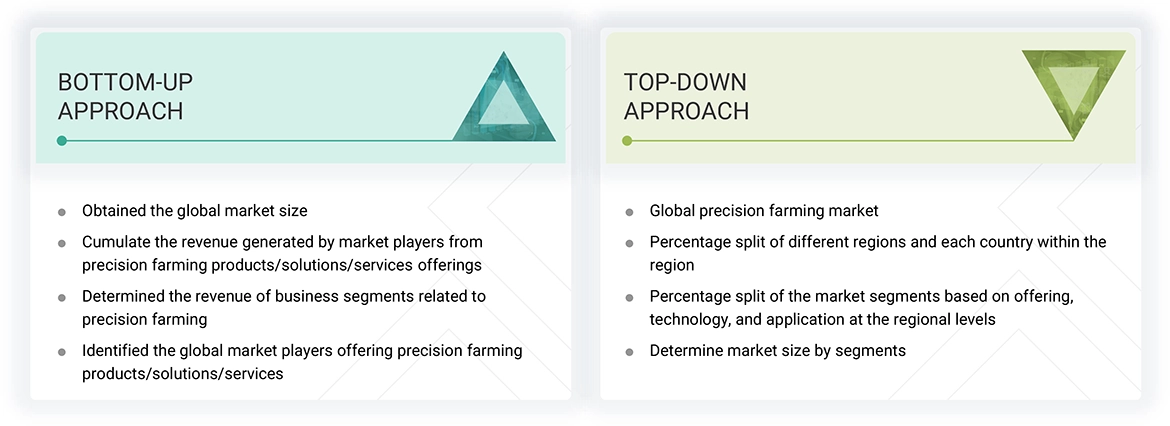
The bottom-up procedure has been employed to arrive at the overall size of the large format printer market.
- Identifying applications that are either used or are expected to use large format printers
- Analyzing major providers of large format printers and original equipment manufacturers (OEMs), as well as studying their portfolios and understanding different technologies used
- Analyzing historical and current data pertaining to the market, in terms of volume, for each technology used in large format printers
- Analyzing the average selling price of large format printers based on different technologies used in other applications
- Arriving at the market estimates by analyzing the revenue of companies and then combining these figures to arrive at the overall market size
- Studying various paid and unpaid sources, such as annual reports, press releases, white papers, and databases, to gather the required information
- Tracking the ongoing developments and identifying the upcoming ones in the market that include research and development activities, product launches, collaborations, and partnerships undertaken, as well as forecasting the market based on these developments and other critical parameters
- Carrying out multiple discussions with the key opinion leaders to understand the large format printer technologies and related raw materials, as well as products designed and developed to analyze the break-up of the scope of work carried out by key companies manufacturing printers
- Verifying and cross-checking the estimate at every level through discussions with key opinion leaders such as chief experience officers (CXOs), directors, and operation managers, and finally with the domain experts in MarketsandMarkets
The top-down approach has been used to estimate and validate the total size of the large format printer market.
- Focusing initially on the investments and expenditures made in the ecosystems of various applications
- Calculating the market size considering revenues generated by major players through the cost of the large format printers
- Segmenting each application of large format printer in each region and deriving the global market size based on region
- Acquiring and analyzing information related to revenues generated by players through their key offerings
- Conducting multiple on-field discussions with key opinion leaders involved in the development of large format printers based on different technologies and a wide variety of applications of such printers
- Estimating the geographic split using secondary sources based on various factors, such as the number of players in a specific country and region, and the technologies used in large format printers that are used in apparel & textile, signage & advertising, décor, CAD & technical printing applications
Large Format Printer Market : Top-Down and Bottom-Up Approach
Data Triangulation
After arriving at the overall market size using the market size estimation processes as explained above, the market has been split into several segments and subsegments. To complete the entire market engineering process and arrive at the exact statistics of each market segment and subsegment, data triangulation and market breakdown procedures have been employed, wherever applicable. The data has been triangulated by studying various factors and trends from the demand and supply sides in the large format printer market.
Market Definition
Large format printing, also referred to as wide-format printing, is a specialized segment of the printing industry that involves the production of high-resolution, large-scale graphics and technical documents using printers capable of handling media widths greater than standard sizes, typically from 17” to 72” and above. It focuses on delivering high-quality output for visual communication across applications such as apparel & textile, signage & advertisement, décor, and CAD & technical printing. Technologies such as ink-based and toner-based printing, utilizing ink types including aqueous, latex, UV-cured, solvent, and dye sublimation, enable compatibility with diverse substrates like canvas, fabric, and film. These printers meet commercial and industrial demands by ensuring precision, media versatility, and efficient output across advertising, design, and engineering environments.
Key Stakeholders
- Large format printing material and component suppliers
- Manufacturing equipment suppliers
- System integrators
- Technology/IP developers
- End users of printers, printing service providers, and printing presses
- Investors (private equity, venture capital, and others)
- Original equipment manufacturers (OEMs)
- Large format printing and material-related associations, organizations, forums, and alliances
- Venture capitalists and startups
- Research institutes and organizations
- Market research and consulting firms
- Distributors and resellers
Report Objectives
- To define, describe, and forecast the large format printer market size, by offering, connectivity, print width, printing material, ink type, technology, and application, in terms of value
- To forecast the large format printer market size for the technology segment, in terms of volume
- To estimate and forecast the market size, in terms of value, for various segments across four regions—North America, Europe, Asia Pacific (APAC), and Rest of the World (RoW)
- To provide detailed information regarding drivers, restraints, opportunities, and challenges influencing the growth of the market
- To provide a detailed overview of the value chain pertaining to the large format printer ecosystem, along with the average selling prices of different types of large format printers
- To strategically analyze trends/disruptions impacting customer business, pricing analysis, technology analysis, key stakeholders & buying criteria, case study analysis, trade analysis, patent analysis, Porter’s five forces, key conferences & events, AI impact, impact of 2025 US tariff, and regulations related to the large format printer market
- To analyze the manufacturers of large format printers, their strategies, and new production plans to evaluate the large format printer ecosystem/supply chain, which consists of suppliers of materials and components, and product manufacturers
- To strategically analyze micromarkets with respect to individual growth trends, prospects, and contributions to the overall market
- To analyze opportunities in the market for stakeholders by identifying high-growth segments of the market and providing a detailed competitive landscape for market leaders
- To strategically profile key players and comprehensively analyze their market share and ranking, as well as core competencies
- To analyze competitive developments, such as collaborations, contracts, partnerships, acquisitions, and product launches and developments, in the large format printer market
Available customizations:
With the given market data, MarketsandMarkets offers customizations according to the company‘s specific needs. The following customization options are available for the report.
Company Information:
- Detailed analysis and profiling of additional market players (up to five)
Get the Full Large Format Printer Market Report
Full forecast, segment splits, and company analysis for all Large Format Printer Market.
- US Large Format Printer Market
- Canada Large Format Printer Market
- Mexico Large Format Printer Market
- Germany Large Format Printer Market
- UK Large Format Printer Market
- France Large Format Printer Market
- Italy Large Format Printer Market
- Japan Large Format Printer Market
- India Large Format Printer Market
- Australia Large Format Printer Market
Need a Tailored Report?
Customize this report to your needs
Get 10% FREE Customization
Customize This Report
