
Canada Marine Vessels Market (2024-2029)

The Canada Marine Vessels Market was valued at $740 Million in 2024 and projected to reach to $819 Million by 2029, representing a compound annual growth rate of 1.7%. Canada's marine vessels market is poised for measured growth through 2029, supported by ongoing defence spending on naval modernization and Arctic patrol capabilities.


| Market Size in | USD 26.32 MN |
| Market Forecast in | |
| CAGR | |
| Forecast Period | |
| Units Considered | Value (USD MN) |
Canada Marine Vessels Market Trends and Insights
- This modest but steady expansion reflects Canada's strategic position in North America's maritime defence and commercial shipping sectors.
- Canada's marine vessel industry benefits from its extensive coastlines, established shipbuilding capabilities, and defence procurement initiatives aligned with NATO commitments. The Canadian marine vessels market is characterized by a focus on naval modernization, coast guard operations, and commercial vessel construction.
- Between 2024 and 2029, Canada is expected to maintain consistent demand driven by aging fleet replacement cycles and increased investment in Arctic maritime capabilities.
- Canada's participation in regional security frameworks and domestic infrastructure development will support incremental market growth throughout the forecast period. Canada's marine sector remains competitive within North America, with domestic shipyards and international partnerships supporting both defence and civilian applications.
- The 1.7% CAGR reflects Canada's balanced approach to maritime investment, balancing defence modernization with commercial shipping demands..
Key Market Statistics
- CAGR (2024-2029) 1.7% CAGR
- Market Size, 2024 ~USD 740 Million
- Forecast, 2029 ~USD 819 Million
- Country Canada
Canada Marine Vessels Market Overview
Market Valuation :
Canada's marine vessels market is valued at $740.0 million in 2024, with projected growth to $819.0 million by 2029, driven by defence modernization and commercial shipping demands.
Steady Growth Trajectory :
The Canadian market exhibits a CAGR of 1.7% through 2029, reflecting conservative but consistent expansion compared to the global rate of 3.1%, indicating stable domestic demand.
Strategic Maritime Position :
Canada's extensive Atlantic and Pacific coastlines, combined with Arctic sovereignty concerns, position the nation as a key player in North American maritime defence and naval modernization initiatives.
Shipbuilding Infrastructure :
Canada maintains established shipbuilding capabilities and repair facilities, supporting both domestic naval fleet requirements and commercial vessel construction for regional markets.
Canada Marine Vessels Market Dynamics
- Government investments in replacing aging naval assets and enhancing coastal security will drive demand for advanced marine vessels.
- The commercial shipping sector will benefit from increased trade activity and infrastructure development across Canadian ports. However, growth remains constrained by budget limitations, supply chain complexities, and competition from international shipbuilders.
- The market will likely see consolidation among domestic manufacturers and increased partnerships with global defence contractors.
- Strategic focus on indigenous shipbuilding capacity and technology transfer will shape the competitive landscape..
Market Ecosystem
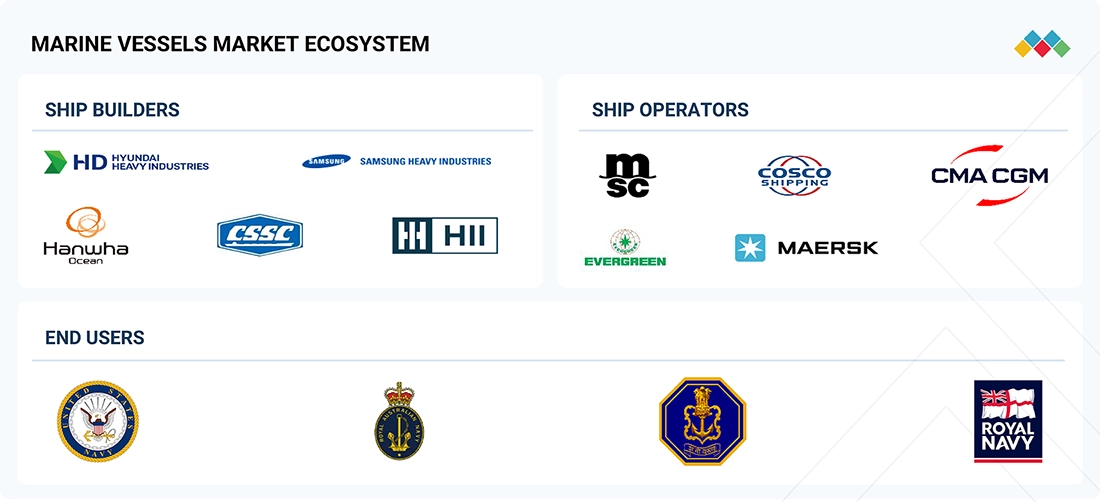
MARINE VESSELS MARKET SIZE, SHARE & ANALYSIS: COMMERCIAL USE CASES ACROSS INDUSTRIES
| COMPANY | USE CASE DESCRIPTION | BENEFITS |
|---|---|---|
 |
Digital shipyard transformation using Siemens PLM to manage design and operations | Improved productivity, reduced errors, enhanced design data management |
 |
Energy transition with LNG, hydrogen, digital twins, and eco-design principles | Improved efficiency, lower emissions, enhanced sustainability |
 |
PLM-based turbocharger lifecycle optimization and production efficiency | Reduced design time, better aftermarket support, improved efficiency |
 |
Adopted best practices from commercial shipbuilding to enhance shipbuilding efficiency | Shorter delivery timelines, cost reduction, improved operational readiness |
 |
Used mixed reality and digital twin for ferry design and collaboration | Increased design accuracy, reduced iterations, enhanced stakeholder collaboration |
Logos and trademarks shown above are the property of their respective owners. Their use here is for informational and illustrative purposes only.
Related Ecosystem
Marine
- Tankers
- Fuel Cell
- HVAC System
- Navigation Systems
- Sensors
- Wartsila
- Kongsberg Gruppen ASA
- L3Harris Technologies, Inc.
- ABB India Limited
- Thales group
Key Takeaways
- Canada's marine vessels market reaches $740.0 million in 2024 with projected growth to $819.0 million by 2029.
- Canada maintains a 1.7% CAGR, reflecting steady but moderate expansion driven by defence modernization and fleet replacement.
- Canada's Arctic maritime capabilities and NATO commitments are key growth drivers for the marine vessels sector.
- Canada's established shipbuilding infrastructure and domestic yards support both defence and commercial vessel demand.
Marine Vessels Market Report Scope
| Report Metric | Details |
|---|---|
| Base Year | 2024 |
| Fastest Growing Segment | 100-500 DWT (Tonnage) |
| Forecast Period | 2024-2029 |
| Growth Rate | CAGR of 3.1% from 2024 to 2029 |
| Largest Segment | COMMERCIAL (Ship Type) |
| Market Size Base Year (Billions) | ~USD 111.26 (2024) |
| Revenue Forecast (Billions) | ~USD 129.61 (2029) |
| Segments Covered | Operation, Tonnage, Ship Type, Military Ship Type, Commercial Ship Type |
Canada Marine Vessels Market Report Segmentation
5 segment dimensions are covered across the global market.
By Operation
- Inland
- Seafaring
By Tonnage
- 100-500 Dwt
- 5,000-15,000 Dwt
- 500-5,000 Dwt
- >15,000 Dwt
By Ship Type
- Commercial
- Military
By Military Ship Type
- Aircraft Carriers
- Corvette
- Destroyer
- Frigates
- Mine Warfare
- Patrol Vessel
By Commercial Ship Type
- Cargo Vessels
- Passenger Vessels
Target Audience
- Defence Contractors & Shipbuilders : Canadian and international defence companies need market intelligence to bid on naval contracts, understand procurement cycles, and identify partnership opportunities with domestic shipyards.
- Government & Military Agencies : Department of National Defence and Canadian Armed Forces require market analysis to inform fleet modernization strategies, budget allocation, and domestic shipbuilding capacity planning.
- Commercial Shipping Companies : Maritime operators and shipping firms need insights into vessel demand trends, regulatory changes, and domestic manufacturing capabilities for commercial fleet expansion and replacement.
- Investment & Private Equity Firms : Investors evaluating opportunities in Canadian maritime and defence sectors require detailed market sizing, growth projections, and competitive dynamics to assess portfolio potential.
- Supply Chain & Component Manufacturers : Suppliers of marine vessel components and systems need market forecasts and shipbuilder activity data to plan production capacity and identify growth opportunities in the Canadian market.
Reasons to Buy this Report
- Defence Procurement Intelligence : Gain critical insights into Canadian Department of National Defence spending patterns, naval modernization timelines, and procurement strategies for Arctic and coastal defence vessels.
- Competitive Market Analysis : Understand the competitive landscape of Canadian shipbuilders, identify key players, market share distribution, and strategic partnerships shaping the domestic marine vessel sector.
- Growth Opportunity Assessment : Evaluate expansion opportunities in Canada's $819M projected market by 2029, including commercial shipping demand, government contracts, and emerging Arctic maritime requirements.
- Supply Chain & Manufacturing Insights : Access detailed information on Canadian shipbuilding infrastructure, manufacturing capabilities, supply chain networks, and technology requirements for marine vessel production.
- Strategic Investment Planning : Make informed investment and partnership decisions with comprehensive data on market trends, regulatory environment, government incentives, and long-term growth drivers specific to Canada.
Frequently asked questions
What is the current size of Canada's marine vessels market?
Canada's marine vessels market is valued at $740.0 million in 2024 and is expected to reach $819.0 million by 2029.
What is the growth rate for Canada's marine vessels market?
Canada's marine vessels market is growing at a compound annual growth rate (CAGR) of 1.7% from 2024 to 2029.
What drives demand in Canada's marine vessels market?
Canada's marine vessels market is driven by naval modernization, coast guard fleet renewal, Arctic maritime capabilities, NATO defence commitments, and commercial shipping requirements.
Which sectors contribute to Canada's marine vessels market?
Canada's marine vessels market encompasses defence and military vessels, coast guard operations, commercial shipping, and specialized maritime infrastructure applications.
How does Canada's market compare to North America?
Canada represents a significant portion of North America's marine vessels market, with established shipbuilding capabilities and strategic maritime positioning supporting steady regional demand.
RESEARCH METHODOLOGY
The research study conducted on the Marine vessels market involved extensive use of secondary sources, including directories, databases of articles, journals on marine vessels, company newsletters, and information portals such as International Maritime Organization (IMO), Bloomberg, and Factiva to identify and collect information useful for this extensive, technical, market-oriented, and commercial study of the marine vessels market. Primary sources are several industry experts from the core and related industries, alliances, organizations, Original Equipment Manufacturers (OEMs), vendors, suppliers, and technology developers. These sources relate to all segments of the value chain of the marine vessels industry. In-depth interviews were conducted with various primary respondents, including key industry participants, subject-matter experts, C-level executives of key market players, and industry consultants, among others, to obtain and verify critical qualitative and quantitative information and to assess future prospects of the market.
Secondary Research
In the secondary research process, various secondary sources were referred to identify and collect information for this study on the marine vessels market. Secondary sources included annual reports, press releases, and investor presentations of companies; white papers and certified publications; articles from recognized authors; manufacturer's associations; directories; and databases. Secondary research was mainly used to obtain key information about the supply chain of the marine vessels industry, the monetary chain of the market, the total pool of key players, market classification and segmentation according to the industry trends to the bottom-most level, regional markets, and key developments from both market- and technology-oriented perspectives.
Primary Research
Extensive primary research has been conducted after obtaining information regarding the marine vessels market scenario through secondary research. Several primary interviews have been conducted with market experts from both the demand and supply sides across major countries of North America, Europe, Asia Pacific, the Middle East, and Rest of the world. Primary data has been collected through questionnaires, emails, and telephonic interviews. These interviews have been conducted to gather insights such as market statistics, data on revenue collected from the products and services, market breakdowns, market size estimations, market size forecasting, and data triangulation. It has also helped analyze the ship type, tonnage, and operation segments of the market for five key regions.
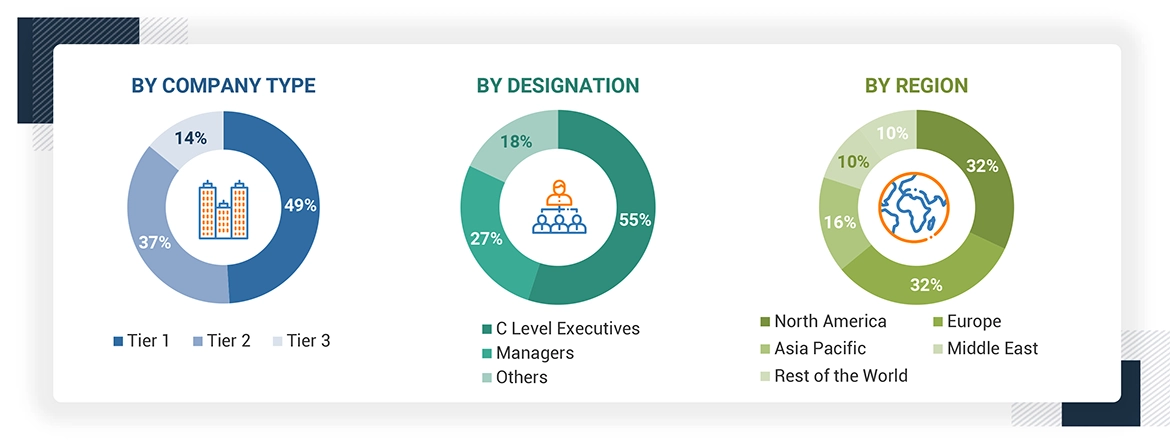
Note: Others include Sales Managers, Marketing Managers, Product Managers, production managers, engineers, and installation teams. Tiers of companies are based on their revenue in 2023. Tier 1: company revenue greater than USD 1 billion; tier 2: company revenue between USD 100 million and USD 1 billion; and tier 3: company revenue less than USD 100 million.
About the assumptions considered for the study, To know download the pdf brochure
Market Size Estimation
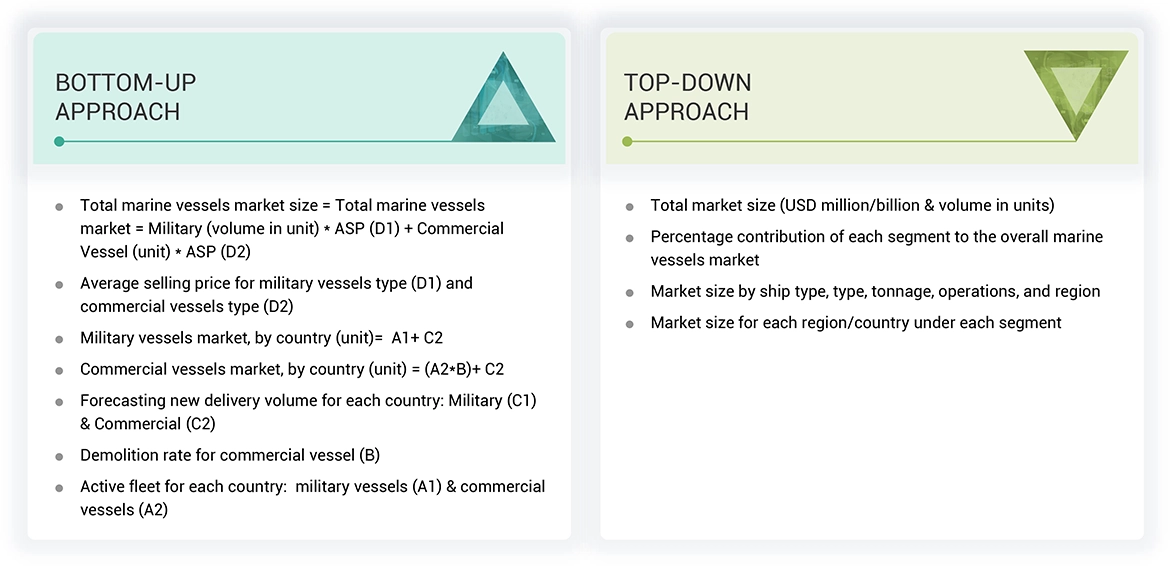
Both top-down and bottom-up approaches were used to estimate and validate the size of the marine vessel market. The research methodology used to estimate the market size includes the following details:
- Key players were identified through secondary research, and their market ranking was determined through primary and secondary research. This included a study of annual and financial reports of the top market players and extensive interviews of leaders, including CEOs, directors, and marketing executives.
- All percentage shares, splits, and breakdowns were determined using secondary sources and verified through primary sources. All possible parameters that affect the markets covered in this research study were accounted for, viewed in extensive detail, verified through primary research, and analyzed to obtain the final quantitative and qualitative data. This data was consolidated, enhanced with detailed inputs, analyzed by MarketsandMarkets, and presented in this report.
Marine Vessels Market : Top-Down and Bottom-Up Approach
Data Triangulation
After arriving at the overall size of the marine vessels market from the market size estimation process explained above, the total market was split into several segments and subsegments. To complete the overall market engineering process and arrive at the exact statistics for various market segments and subsegments, the data triangulation and market breakdown procedures explained below were implemented, wherever applicable. The data was triangulated by studying various factors and trends from both the demand and supply sides. The market size was also validated using both the top-down and bottom-up approaches.
Market Definition
The marine vessels market encompasses the industry involved in designing, constructing, selling, and maintaining various types of ships and boats used for commercial, military, and recreational purposes. This market includes a wide range of vessels, from small leisure boats to large cargo ships and advanced naval warships.
Key Stakeholders
- Shipbuilders
- Shipowners/Operators
- Governments and Regulatory Bodies
- Port Authorities
- Suppliers
- Ship Maintenance and Repair Companies
- Logistics and Shipping Companies
- Research and Development Organizations
Report Objectives
- To define, describe, and forecast the marine vessels market in terms of volume based on ship type, tonnage, and operations from 2024 to 2030
- To identify and analyze key drivers, restraints, opportunities, and challenges influencing the growth of the market
- To forecast the size of various segments of the market with respect to major regions: North America, Europe, Asia Pacific, the Middle East, and the Rest of the World.
- To strategically analyze micromarkets with respect to individual growth trends, prospects, and their contribution to the market
- To analyze opportunities for stakeholders in the market by identifying key market trends
- To analyze competitive developments, such as contracts, acquisitions, agreements, and product launches in the market
- To provide a detailed competitive landscape of the market, in addition to an analysis of business and corporate strategies adopted by leading market players
- To strategically profile key market players and comprehensively analyze their core competencies
Available Customizations
Along with the market data, MarketsandMarkets offers customizations as per the specific needs of companies. The following customization options are available for the report:
Product Analysis
- Product matrix, which gives a detailed comparison of the product portfolio of each company
Regional Analysis
- Further breakdown of the market segments at country-level
Company Information
- Detailed analysis and profiling of additional market players (up to 5)
Get the Full Marine Vessels Market Report
Full forecast, segment splits, and company analysis for all Marine Vessels Market.
- US Marine Vessels Market
- UK Marine Vessels Market
- Germany Marine Vessels Market
- France Marine Vessels Market
- Italy Marine Vessels Market
- Norway Marine Vessels Market
- China Marine Vessels Market
- India Marine Vessels Market
- Japan Marine Vessels Market
- Australia Marine Vessels Market
- South Korea Marine Vessels Market
- Singapore Marine Vessels Market
- UAE Marine Vessels Market
- Saudi Arabia Marine Vessels Market
- Israel Marine Vessels Market
- Turkey Marine Vessels Market
- Rest Of Europe Marine Vessels Market
- Rest Of Asia Pacific Marine Vessels Market
Need a Tailored Report?
Customize this report to your needs
Get 10% FREE Customization
Customize This Report
