
Australia Minimally Invasive Surgery Market (2025-2030)

The Australia Minimally Invasive Surgery Market was valued at $1411 Million in 2025 and projected to reach to $2667.7 Million by 2030, representing a compound annual growth rate of 13.6%. Australia's minimally invasive surgery market is positioned for sustained growth through 2030, driven by an aging population requiring surgical interventions and increasing healthcare expenditure across both public and private sectors.


| Market Size in | USD 26.32 MN |
| Market Forecast in | |
| CAGR | |
| Forecast Period | |
| Units Considered | Value (USD MN) |
Australia Minimally Invasive Surgery Market Trends and Insights
- This represents a compound annual growth rate (CAGR) of 13.6%, reflecting strong adoption of advanced surgical technologies across Australian healthcare facilities.
- Australia's aging population, coupled with increasing prevalence of chronic diseases, is driving demand for less invasive surgical procedures that offer faster recovery times and reduced patient trauma. The Australian healthcare system's emphasis on cost-effectiveness and patient outcomes continues to accelerate the adoption of minimally invasive techniques.
- Australia's well-developed medical infrastructure and high healthcare spending support the integration of cutting-edge surgical technologies.
- Between 2025 and 2030, Australia is expected to see significant investment in laparoscopic, robotic-assisted, and endoscopic procedures, positioning the country as a key market within the Asia Pacific region for minimally invasive surgical innovation..
Key Market Statistics
- CAGR (2025-2030) 13.6% CAGR
- Market Size, 2025 ~USD 1411 Million
- Forecast, 2030 ~USD 2667.7 Million
- Country Australia
Australia Minimally Invasive Surgery Market Overview
Market Valuation Growth :
Australia's minimally invasive surgery market is valued at USD 1,411.0 million in 2025, with projections reaching USD 2,667.7 million by 2030, demonstrating strong market expansion driven by technological adoption and healthcare investment.
Aging Population Dynamics :
Australia's rapidly aging demographic is a key growth driver, with an increasing elderly population requiring surgical interventions. This demographic shift is accelerating demand for minimally invasive procedures that offer reduced recovery times and lower complication rates.
Advanced Healthcare Infrastructure :
Australian healthcare facilities are increasingly adopting cutting-edge surgical technologies and robotic-assisted systems. Major hospitals and private surgical centers across major cities are investing heavily in minimally invasive capabilities to enhance patient outcomes.
Regional CAGR Performance :
With a CAGR of 13.6% from 2025 to 2030, Australia's market growth outpaces many developed nations, reflecting strong healthcare spending, favorable reimbursement policies, and high patient awareness of minimally invasive surgical benefits.
Australia Minimally Invasive Surgery Market Dynamics
- The adoption of robotic-assisted surgery, laparoscopic procedures, and endoscopic technologies is accelerating as Australian hospitals modernize their surgical capabilities to improve patient outcomes and operational efficiency. Key growth catalysts include rising prevalence of chronic diseases, government healthcare initiatives supporting advanced surgical technologies, and growing patient preference for procedures with minimal trauma and faster recovery.
- Private healthcare expansion and increasing medical tourism in Australia further support market expansion, with specialized surgical centers investing in state-of-the-art minimally invasive equipment to remain competitive..
Market Ecosystem
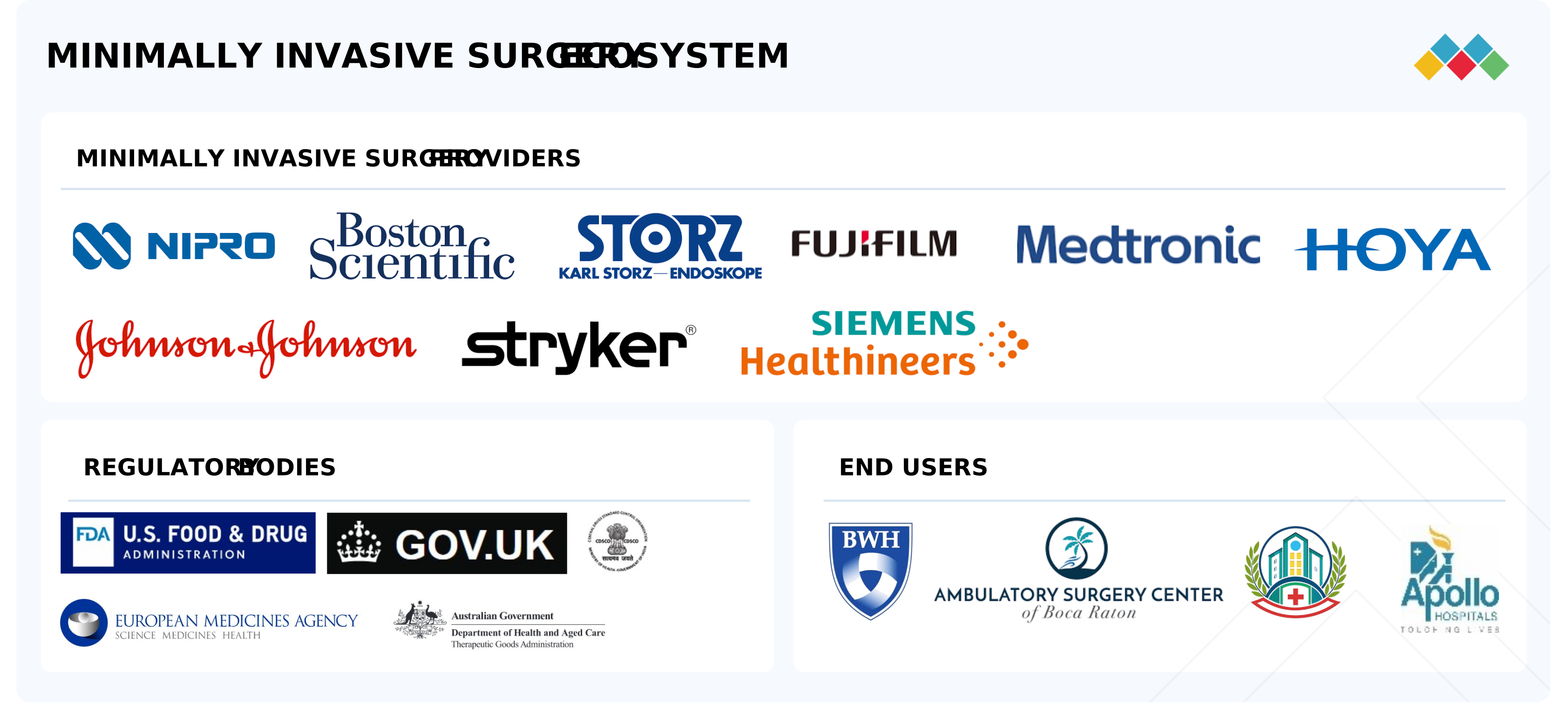
Minimally Invasive Surgery Market: COMMERCIAL USE CASES ACROSS INDUSTRIES
| COMPANY | USE CASE DESCRIPTION | BENEFITS |
|---|---|---|
 |
Provides advanced laparoscopic, endoscopic, and robot-assisted surgery platforms with energy devices, surgical staplers, and visualization technologies for multiple specialties | Improves precision and safety, reduces operative complications, shortens hospital stay, and enhances patient recovery outcomes |
 |
Offers surgical instruments, stapling devices, energy systems, and orthopedic minimally invasive solutions through Ethicon and DePuy Synthes | Enables surgeons to perform complex procedures with minimal incisions, reduces blood loss, lowers infection risk, and delivers consistent procedural efficiency |
 |
Develops minimally invasive surgery instruments, visualization systems, and orthopedic implants with navigation and robotic assistance | Enhances surgical accuracy, reduces invasiveness in orthopedic and spine procedures, and improves long-term patient mobility and outcomes |
 |
Specializes in minimally invasive surgery devices for interventional cardiology, urology, endoscopy, and neuromodulation | Provides minimally invasive alternatives to open surgery, reduces recovery time, and expands treatment options for chronic and complex diseases |
 |
Offers advanced imaging and intraoperative solutions supporting minimally invasive surgery, including hybrid OR technologies, surgical navigation, and 3D visualization systems | Improves surgical planning, enhances visualization, and supports precision interventions while reducing operative risks |
Logos and trademarks shown above are the property of their respective owners. Their use here is for informational and illustrative purposes only.
Related Ecosystem
Analytical And Scientific Instrumentation
- Environmental Testing
- Gas Chromatography
- Polymerase Chain Reaction (PCR)
- Automated Liquid Handling Systems
- Flow Cytometry
- Thermo Fisher Scientific Inc.
- Danaher Corporation
- Agilent Technologies, Inc.
- Shimadzu Corporation
- Merck KGaA
Cardiovascular Devices
- External Defibrillators
- Implantable Cardioverter Defibrillators
- Pulse Oximeters
- Robotic Systems
- 3-Lead ECG Leadwires
- Medtronic plc
- Boston Scientific Corporation
- Abbott Laboratories
- Terumo Corporation
- KONINKLIJKE PHILIPS N.V.
Diagnostic Imaging
- Magnetic Resonance Imaging (MRI)
- Computed Tomography (CT)
- CT Scanners
- Nuclear Imaging
- Positron Emission Tomography
- Siemens healthineers
- PHILIPS HEALTHCARE
- CANON INC.
- FUJIFILM Holdings Corporation
- UNITED IMAGING HEALTHCARE CO., LTD.
Key Takeaways
- Australia's minimally invasive surgery market will nearly double from USD 1,411.0M (2025) to USD 2,667.7M (2030), driven by a 13.6% CAGR.
- Australia's aging demographic and rising chronic disease burden are key catalysts for adoption of less invasive surgical techniques.
- Australia's advanced healthcare infrastructure and high per-capita spending support rapid integration of robotic and endoscopic technologies.
- Australia is positioned as a leading Asia Pacific market for minimally invasive surgery innovation and adoption through 2030.
Minimally Invasive Surgery Market Report Scope
| Report Metric | Details |
|---|---|
| Base Year | 2025 |
| Fastest Growing Segment | AMBULATORY SURGERY CENTERS (End User) |
| Forecast Period | 2025–2030 |
| Growth Rate | CAGR of 16.1% from 2025 to 2030 |
| Largest Segment | HOSPITALS (End User) |
| Market Size Base Year (Billions) | ~USD 94.48 (2025) |
| Revenue Forecast (Billions) | ~USD 199.3 (2030) |
| Segments Covered | Type, Application, End User, Product |
Australia Minimally Invasive Surgery Market Report Segmentation
4 segment dimensions are covered across the global market.
By Type
- Balloon Catheters
- Balloon Inflation Systems
- Ct Scanners
- Dilators
- Electrocautery Devices
- Electrosurgical Generators & Accessories
- Flexible Endoscopes
- Graspers & Dissectors
- Guidewires
- Guiding Catheters
- Guiding Devices
- Handheld Instruments
- Inflation Systems
- Laparoscopes
- Laparoscopy Devices
- Laser Fiber Devices
- Mri Systems
- Other Imaging & Visualization Systems
- Probes
- Rigid Endoscopes
- Robotic Instruments
- Robotic Software & Services
- Robotic Systems
- Suturing Instruments
- Trocars & Cannulas
- Tubular Retractors
- Ultrasound Systems
- X-Ray Systems
By Application
- Cardiothoracic Surgery
- Cosmetic Surgery
- Dental Surgery
- Ent & Respiratory Surgery
- Gastrointestinal & Abdominal Surgery
- Gynecological Surgery
- Neurological Surgery
- Oncological Surgery
- Orthopedic Surgery
- Other Surgeries
- Urological Surgery
- Vascular Surgery
By End User
- Ambulatory Surgery Centers
- Clinics
- Emergency & Trauma Centers
- Hospitals
- Other End Users
By Product
- Electrosurgical Devices
- Endoscopy Devices
- Imaging & Visualization Systems
- Medical Robotics
- Surgical Devices
AUSTRALIA: MINIMALLY INVASIVE SURGERY MARKET, BY END USER, 2023–2030
| Segment | 2023 | 2024 | 2025 | 2026 | 2027 | 2028 | 2029 | 2030 | CAGR (%) |
|---|---|---|---|---|---|---|---|---|---|
| AMBULATORY SURGERY CENTERS | 244.8 | 255.7 | 294.8 | 340.1 | 392.7 | 453.6 | 524.7 | 607.4 | 15.6 |
| CLINICS | 180.4 | 184.9 | 209.2 | 236.8 | 268.3 | 304.1 | 345.2 | 392.1 | 13.4 |
| EMERGENCY & TRAUMA CENTERS | 100.9 | 103.2 | 116.6 | 131.9 | 149.2 | 168.9 | 191.5 | 217.2 | 13.2 |
| HOSPITALS | 547.4 | 563.2 | 639.7 | 727 | 827 | 941 | 1072.3 | 1222.6 | 13.8 |
| OTHER END USERS | 141.1 | 138.6 | 150.4 | 163.2 | 177.2 | 192.5 | 209.5 | 228 | 8.7 |
| TOTAL | 1214.6 | 1245.6 | 1410.7 | 1599 | 1814.6 | 2060.3 | 2343.3 | 2667.3 | 13.6 |
Target Audience
- Medical Device Manufacturers : Surgical equipment and robotic system manufacturers need Australia-specific market data to assess market opportunity, identify distribution channels, and develop localized product strategies for the growing MIS sector.
- Healthcare Facility Operators : Hospital administrators and private surgical center operators require market insights to justify capital investments in minimally invasive surgical equipment and plan facility expansion aligned with regional demand trends.
- Investment & Private Equity Firms : Healthcare investors and PE firms evaluating opportunities in Australian surgical services need comprehensive market sizing and growth projections to assess investment returns and portfolio company valuations.
- Healthcare Consultants & Advisors : Management consulting firms and healthcare strategy advisors require detailed Australia market data to support client engagements, competitive analyses, and strategic planning initiatives in the MIS space.
- Government & Policy Makers : Australian health department officials and policy makers need market intelligence to inform healthcare funding decisions, technology adoption initiatives, and regulatory frameworks supporting surgical innovation.
Key Companies in the Australia Minimally Invasive Surgery Market
| Company | HQ | Ownership | Strongest segments |
|---|---|---|---|
| BRUKER CORPORATION | United States | Public Company | BSI BioSpin (NMR/EPR and preclinical imaging),BSI CALID (mass spectrometry, molecular diagnostics, automation, digital),BSI Nano (X-ray, AFM, electron microscopy tools, optical microscopy), |
| MEDTRONIC | Ireland | Public Company | Cardiovascular Portfolio,Neuroscience Portfolio,Medical Surgical Portfolio (incl. Diabetes), |
| JOHNSON & JOHNSON | United States | Public Company | Oncology & Immunology (Innovative Medicine),Neuroscience, Cardiovascular & Metabolism, Infectious Diseases,Surgery & Interventional Solutions (MedTech), |
| STRYKER | United States | Public Company | Orthopaedics Implants (Hip, Knee, Shoulder, Ankle, Trauma & Extremities),MedSurg Equipment & Patient Handling,Neurotechnology & Stroke / VTE Intervention, |
| BOSTON SCIENTIFIC CORPORATION | United States | Public Company | Cardiovascular (structural heart, CRM, peripheral interventions, oncology),MedSurg – Endoscopy (GI, pancreaticobiliary, single-use scopes, infection prevention),MedSurg – Urology and Pelvic Health, |
| ABBOTT | United States | Public Company | Diagnostic Products,Medical Devices,Nutritional Products, |
| ZIMMER BIOMET | United States | Public Company | Knee and Hip Reconstructive Products,S.E.T. (Sports Medicine, Extremities, Trauma, CMF/T),Digital, Robotic, and Enabling Technologies (ROSA, ZBEdge, Bone Cement, Surgical Products), |
| GLOBUS MEDICAL | United States | Public Company | Spine fusion implants (pedicle screw and rod, plating, interbody, corpectomy),Motion preservation and interventional spine (disc replacement, dynamic stabilization, VCF solutions),Biologic solutions and HCT/P distribution, |
| INTEGRA LIFESCIENCES CORPORATION | United States | Public Company | Codman Specialty Surgical (neurosurgery and neurocritical care),Tissue Technologies – acute and chronic wound care,Tissue Technologies – surgical reconstruction and nerve/tendon repair, |
| SIEMENS HEALTHINEERS AG | Germany | Public Company | Imaging,Diagnostics,Varian (Oncology), |
| FUJIFILM CORPORATION | Japan | Public Company | Healthcare (medical systems, CDMO, pharma, regenerative, cosmetics/supplements),Electronics (display, semiconductor, functional films, storage, industrial equipment),Business Innovation (office equipment, document services, graphic communications), |
| KONINKLIJKE PHILIPS N.V. | Netherlands | Public Company | Diagnostic Imaging (MRI, CT, X-ray, Ultrasound),Connected Care (Monitoring, Enterprise Informatics, Sleep & Respiratory),Image Guided Therapy Systems & Devices, |
| GE HEALTHCARE | United States | Public Company | Imaging,Advanced Visualization Solutions (AVS),Patient Care Solutions (PCS), |
BRUKER CORPORATION
Bruker Corporation is a U.S.-based public company founded in 1960 that employs 11,085 people. The company specializes in scientific instruments and analytical solutions.
MEDTRONIC
Medtronic is a public company headquartered in Ireland, founded in 1949, with 95,000 employees. It is a global leader in medical technology, services, and solutions.
JOHNSON & JOHNSON
Johnson & Johnson is a U.S.-based public company founded in 1886 with 138,200 employees. It operates across pharmaceuticals, medical devices, and consumer health products.
STRYKER
Stryker is a U.S. public company founded in 1941 with 56,000 employees. It is a leading provider of medical devices and software for orthopedic, surgical, and neurotechnology markets.
BOSTON SCIENTIFIC CORPORATION
Boston Scientific Corporation is a U.S. public company founded in 1979 with 59,000 employees. It develops and manufactures medical devices for interventional medicine and patient monitoring.
ABBOTT
Abbott is a U.S. public company founded in 1888 with 115,000 employees. It operates in diagnostics, medical devices, nutrition, and branded generic pharmaceuticals.
ZIMMER BIOMET
Zimmer Biomet is a U.S. public company founded in 1927 with 17,000 employees. It specializes in orthopedic implants, surgical products, and musculoskeletal healthcare solutions.
GLOBUS MEDICAL
Globus Medical is a U.S. public company founded in 2003 with 6,000 employees. It develops and manufactures musculoskeletal implants and surgical instruments.
INTEGRA LIFESCIENCES CORPORATION
Integra LifeSciences Corporation is a U.S. public company founded in 1989 with 4,427 employees. It provides surgical implants, instruments, and regenerative medicine products.
SIEMENS HEALTHINEERS AG
Siemens Healthineers AG is a German public company founded in 1896 with 72,369 employees. It offers diagnostic imaging, laboratory diagnostics, and point-of-care testing solutions.
FUJIFILM CORPORATION
Fujifilm Corporation is a Japanese public company founded in 1934 with 73,526 employees. It operates across imaging, information, and document solutions, including healthcare technologies.
KONINKLIJKE PHILIPS N.V.
Koninklijke Philips N.V. is a Dutch public company founded in 1891 with 64,317 employees. It provides health technology solutions including diagnostic imaging, patient monitoring, and connected care.
GE HEALTHCARE
GE Healthcare is a U.S. public company founded in 2022 with 54,000 employees. It provides medical imaging, monitoring, and diagnostic equipment and software solutions.
Reasons to Buy this Report
- Market Size & Growth Validation : Obtain precise market valuation data for Australia's MIS sector with verified CAGR of 13.6%, enabling accurate financial forecasting and investment decision-making for the 2025-2030 period.
- Demographic Insights & Opportunity Mapping : Understand Australia's aging population dynamics and their impact on surgical demand, identifying high-opportunity segments and geographic regions with greatest growth potential for MIS technologies.
- Competitive Landscape Intelligence : Gain detailed analysis of Australian healthcare providers, hospital networks, and surgical centers adopting minimally invasive technologies, including market share distribution and competitive positioning strategies.
- Regulatory & Reimbursement Framework : Access comprehensive insights into Australian healthcare policies, Medicare reimbursement structures, and regulatory pathways that influence MIS adoption rates and market dynamics specific to the region.
- Strategic Market Entry Planning : Leverage Australia-specific market data to develop targeted go-to-market strategies, identify key stakeholders, and optimize product positioning for surgical device manufacturers and healthcare service providers.
Frequently asked questions
What is the current size of Australia's minimally invasive surgery market?
Australia's minimally invasive surgery market was valued at USD 1,411.0 million in 2025.
What is the projected market size for Australia by 2030?
Australia's minimally invasive surgery market is forecast to reach USD 2,667.7 million by 2030.
What is the CAGR for Australia's minimally invasive surgery market?
Australia's minimally invasive surgery market is expected to grow at a compound annual growth rate (CAGR) of 13.6% from 2025 to 2030.
What factors are driving growth in Australia's minimally invasive surgery market?
Key drivers include Australia's aging population, rising prevalence of chronic diseases, advanced healthcare infrastructure, and increasing adoption of robotic-assisted and endoscopic procedures.
How does Australia's market compare to the global minimally invasive surgery market?
Australia's 13.6% CAGR is slightly below the global average of 16.1%, though Australia remains a significant regional market within Asia Pacific with strong healthcare spending and technology adoption.
RESEARCH METHODOLOGY
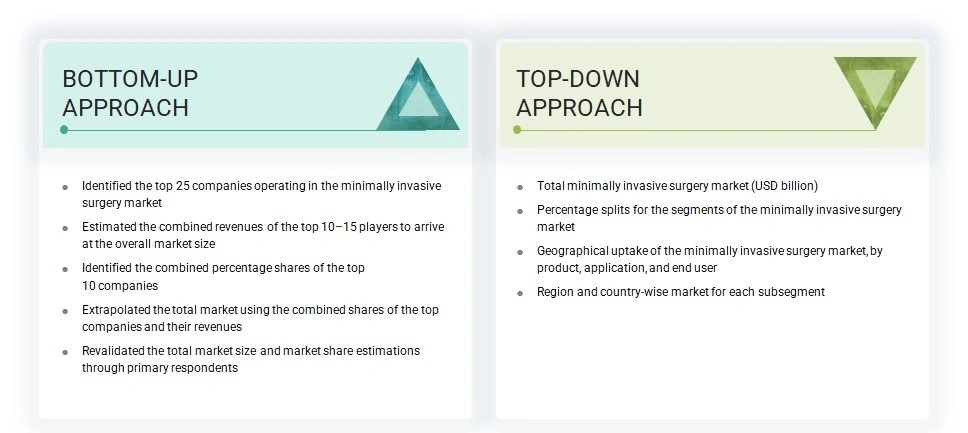
The study involved key activities in estimating the current size of the minimally invasive surgery market. Extensive secondary research was conducted to gather information on the industry. The next step was to validate these findings, assumptions, and market size with industry experts across the value chain through primary research. Different methods, such as top-down and bottom-up approaches, were used to estimate the overall market size. Subsequently, market segmentation and data triangulation techniques were applied to determine the size of various segments and subsegments within the MIS market.
Secondary Research
The secondary research process involves the widespread use of secondary sources, directories, databases (such as Bloomberg Businessweek, Factiva, and D&B Hoovers), white papers, annual reports, investor presentations, SEC filings of companies and publications from government sources [such as National Institutes of Health (NIH), US FDA, US Census Bureau, World Health Organization (WHO), International Trade Administration (ITA), Global Burden of Disease Study, and Centers for Medicare and Medicaid Services (CMS) were referred to identify and collect information for the global minimally invasive surgery market study. It was also used to obtain important information about the key players and market classification & segmentation according to industry trends to the bottom-most level, and key developments related to market and technology perspectives. A database of the key industry leaders was also prepared using secondary research.
Primary Research
During the primary research process, various sources from both the supply and demand sides were interviewed to gather qualitative and quantitative information for this report. The primary sources on the supply side include industry experts such as CEOs, vice presidents, marketing and sales directors, technology and innovation directors, and other key executives from various companies and organizations in the minimally invasive surgery market. On the demand side, primary sources include ambulatory surgical centers, hospitals, clinics, and other end users. The primary research was conducted to validate market segmentation, identify key players, and gather insights on important industry trends and market dynamics.
A breakdown of the primary respondents is provided below:
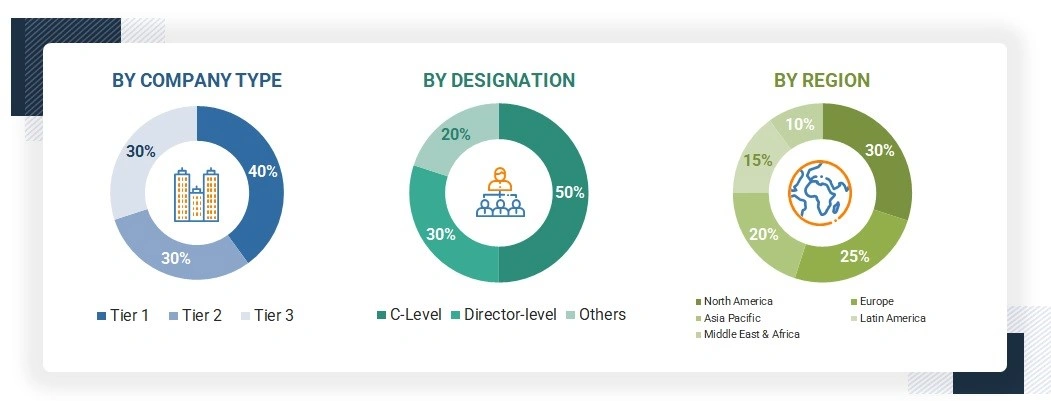
*C-level primaries include CEOs, CFOs, COOs, and VPs.
Others include sales managers, marketing managers, business development managers, product managers, distributors, and suppliers.
Note: Companies are classified into tiers based on their total revenue. As of 2024, Tier 1 = >USD 10.00 billion, Tier 2 = USD 1.00 billion to USD 10.00 billion, and Tier 3 = USD 1.00 billion.
Source: MarketsandMarkets Analysis
To know about the assumptions considered for the study, download the pdf brochure
Market Size Estimation
For the global market value, annual revenues were estimated based on revenue mapping of leading product manufacturers and OEMs active in the worldwide minimally invasive surgery market. All major product manufacturers were identified at the global and/or country or regional level. Revenue mapping for the respective business segments or sub-segments was performed for the key players. Also, the global minimally invasive surgery market was split into various segments and sub-segments based on:
- List of major players operating in the product market at the regional and/or country level
- Product mapping of various minimally invasive surgery manufacturers at the regional and/or country level
- Mapping of annual revenue generated by listed major players from minimally invasive surgery (or the nearest reported business unit/product category)
- Extrapolation of the revenue mapping of the listed major players to derive the global market value of the respective segments/subsegments
- Summation of the market value of all segments/subsegments to arrive at the global minimally invasive surgery market
The data mentioned above was consolidated and added with detailed inputs and analysis from MarketsandMarkets and presented in this report.
Data Triangulation
After determining the overall size of the global minimally invasive surgery market using the methodology mentioned above, the market was divided into several segments and subsegments. Data triangulation and market breakdown techniques were used, where applicable, to complete the overall market analysis and obtain precise market value data for the key segments and subsegments. The extrapolated market data was then triangulated by examining various macro indicators and regional trends from both demand- and supply-side participants.
Market Definition
Minimally invasive surgery (MIS) is a procedure that causes little to no trauma or injury to a patient. MIS is performed through a cannula using lasers, endoscopes, or laparoscopes. It involves less bleeding, reduced anesthesia, less pain, and minimal scarring compared to other procedures. The surgical instruments used to make tiny incisions and carry out MIS are minimally invasive. The primary products used for minimally invasive surgery are surgical tools, imaging and visualization systems, electrosurgical devices, endoscopy devices, and medical robotics.
Stakeholders
- Manufacturers and Distributors of Minimally Invasive Surgical Instruments
- Healthcare Institutions (Hospitals and Clinics)
- Ambulatory Surgery Centers (ASCs)
- Healthcare Institutions (hospitals and outpatient clinics)
- Research Institutions
- Research and Consulting Firms
- Contract Research Organizations (CROs) and Contract Manufacturing Organizations (CMOs)
- Academic Medical Centers and Universities
- Market Research and Consulting Firms
- Clinical Research Organizations
- Research Laboratories and Academic Institutes
- Minimally Invasive Surgical Instrument Service Providers
Report Objectives
- To describe, analyze, and forecast the minimally invasive surgery market by product, application, end user, and region
- To describe and forecast the minimally invasive surgery market in key regions—North America, Europe, the Asia Pacific, Latin America, and the Middle East & Africa
- To provide detailed information regarding the drivers, restraints, opportunities, and challenges influencing the market growth
- To strategically analyze micromarkets1 with respect to individual growth trends, prospects, and contributions to the overall market
- To analyze market opportunities for stakeholders and provide details of the competitive landscape for market players
- To profile key players and comprehensively analyze their market shares and core competencies2 in the minimally invasive surgery market
- To analyze competitive developments such as partnerships, agreements & acquisitions, product launches, product approvals, and expansions in the minimally invasive surgery market
- To analyze the impact of AI/Gen AI on the minimally invasive surgery market in terms of its capabilities, potential, use cases, and future
Available customizations:
With the given market data, MarketsandMarkets offers customizations to meet your company’s specific needs. The following customization options are available for the report:
Geographic Analysis
- Further breakdown of the Rest of European minimally invasive surgery market into Russia, Switzerland, Denmark, Austria, and others
- Further breakdown of the Rest of Asia Pacific minimally invasive surgery market into South Korea, Taiwan, and others
- Further breakdown of the Rest of Latin American minimally invasive surgery market into Argentina, Colombia, Chile, Ecuador, and others
- Further breakdown of the Southeast Asian minimally invasive surgery market into Malaysia, Singapore, Australia, New Zealand, and others
Competitive Landscape Assessment
- Market share analysis, by region (North America and Europe), which provides market shares of the top 3–5 key players in the minimally invasive surgery market
- Competitive leadership mapping for established players in the US
Get the Full Minimally Invasive Surgery Market Report
Full forecast, segment splits, and company analysis for all Minimally Invasive Surgery Market.
- Canada Minimally Invasive Surgery Market
- US Minimally Invasive Surgery Market
- Germany Minimally Invasive Surgery Market
- UK Minimally Invasive Surgery Market
- France Minimally Invasive Surgery Market
- Italy Minimally Invasive Surgery Market
- Spain Minimally Invasive Surgery Market
- China Minimally Invasive Surgery Market
- India Minimally Invasive Surgery Market
- Japan Minimally Invasive Surgery Market
- South Korea Minimally Invasive Surgery Market
- Brazil Minimally Invasive Surgery Market
- Mexico Minimally Invasive Surgery Market
Need a Tailored Report?
Customize this report to your needs
Get 10% FREE Customization
Customize This Report
