
South Korea Molecular Diagnostics Market (2025-2030)

The South Korea Molecular Diagnostics Market was valued at $47.5 Million in 2025 and projected to reach to $80 Million by 2030, representing a compound annual growth rate of 11.0%. South Korea's molecular diagnostics market is positioned for sustained expansion driven by technological advancement, rising healthcare spending, and increasing prevalence of chronic diseases requiring precision diagnostic solutions.


| Market Size in | USD 26.32 MN |
| Market Forecast in | |
| CAGR | |
| Forecast Period | |
| Units Considered | Value (USD MN) |
South Korea Molecular Diagnostics Market Trends and Insights
- This 11.0% compound annual growth rate reflects South Korea's advanced healthcare infrastructure, high adoption of precision medicine technologies, and strong government support for diagnostic innovation.
- South Korea's position as a leading biotech hub in Asia Pacific drives significant investment in molecular testing capabilities across clinical laboratories and hospitals. The molecular diagnostics sector in South Korea is characterized by increasing demand for infectious disease testing, oncology diagnostics, and genetic screening services.
- South Korea's aging population and rising prevalence of chronic diseases are accelerating the adoption of molecular diagnostic solutions.
- South Korea's regulatory environment and reimbursement policies continue to support market expansion, with healthcare providers increasingly integrating molecular testing into standard clinical protocols. South Korea's competitive landscape features both established diagnostic companies and emerging biotech firms developing next-generation sequencing and PCR-based solutions.
- South Korea's emphasis on personalized medicine and early disease detection positions the market for sustained growth through 2030, supported by technological advancement and expanding clinical applications..
Key Market Statistics
- CAGR (2025-2030) 11.0% CAGR
- Market Size, 2025 ~USD 47.5 Million
- Forecast, 2030 ~USD 80 Million
- Country South Korea
South Korea Molecular Diagnostics Market Overview
Market Valuation & Growth :
South Korea's molecular diagnostics market is valued at $47.5 million in 2025, with a robust 11% CAGR projected through 2030, reaching $80.0 million. This growth rate outpaces the global average of 9.6%, reflecting strong regional momentum.
Advanced Healthcare Infrastructure :
South Korea boasts one of Asia's most sophisticated healthcare systems with high digital adoption rates, universal health coverage, and significant investment in precision medicine technologies that drive molecular diagnostics demand.
Government Support & Innovation :
Strong government initiatives promoting diagnostic innovation, biotech R&D funding, and regulatory frameworks supporting rapid commercialization of molecular diagnostic solutions accelerate market expansion in South Korea.
Precision Medicine Leadership :
South Korea is establishing itself as a regional leader in precision medicine adoption, with increasing clinical integration of molecular diagnostics across oncology, infectious disease, and genetic testing applications.
South Korea Molecular Diagnostics Market Dynamics
- The country's strong biotech ecosystem and government backing create favorable conditions for market players.
- Healthcare providers are increasingly adopting molecular diagnostic platforms to improve patient outcomes and reduce treatment costs through personalized medicine approaches. The forecast period through 2030 will see accelerated adoption across hospitals, diagnostic laboratories, and point-of-care settings.
- South Korea's aging population and emphasis on early disease detection will further propel demand for advanced molecular testing.
- Strategic partnerships between domestic biotech firms and international diagnostics companies will enhance market penetration and innovation capabilities..
Market Ecosystem
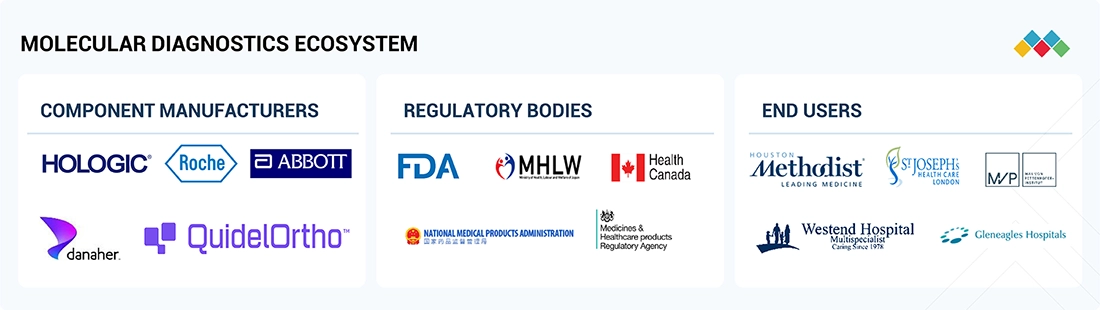
Molecular Diagnostics Market: COMMERCIAL USE CASES ACROSS INDUSTRIES
| COMPANY | USE CASE DESCRIPTION | BENEFITS |
|---|---|---|
 |
Advanced molecular diagnostic platforms across PCR, NGS, and immunoassays | Higher testing accuracy, scalable automation, and improved laboratory efficiency |
 |
Integrated molecular diagnostics for oncology and infectious diseases | Early disease detection, personalized treatment guidance, and broader patient access |
 |
Next-generation sequencing (NGS) technologies for clinical and research applications | Comprehensive genomic insights, detection of rare mutations, and precision medicine support |
 |
Molecular testing solutions with a strong focus on women’s health | Faster results, enhanced diagnostic reliability, and improved patient outcomes |
 |
Molecular diagnostics and microbiology solutions for infectious disease detection | Rapid pathogen identification, better outbreak management, and optimized clinical workflows |
Logos and trademarks shown above are the property of their respective owners. Their use here is for informational and illustrative purposes only.
Related Ecosystem
In Vitro Diagnostics
- Polymerase Chain Reaction (PCR)
- Enzyme-Linked Immunosorbent Assay (ELISA)
- Dna Microarrays
- Assay Kits
- Microarrays
- ROCHE HOLDINGS AG
- Thermo Fisher Scientific Inc.
- Danaher Corporation
- Abbott Laboratories
- Biomerieux s.a.
Medical Devices
- Polymerase Chain Reaction (PCR)
- Magnetic Resonance Imaging (MRI)
- Disposable Autoinjectors
- Pulse Oximeters
- Blood Pressure Monitors
- Medtronic plc
- Stryker Corporation
- Abbott Laboratories
- Becton, Dickinson and Company
- JOHNSON & JOHNSON
Key Takeaways
- South Korea's molecular diagnostics market will grow from $47.5M (2025) to $80.0M (2030) at an 11.0% CAGR, outpacing global growth rates.
- South Korea's advanced healthcare infrastructure and biotech ecosystem drive rapid adoption of precision medicine and molecular testing technologies.
- South Korea's aging population and increasing chronic disease prevalence fuel demand for oncology, infectious disease, and genetic diagnostic solutions.
- South Korea's supportive regulatory environment and reimbursement policies accelerate clinical integration of molecular diagnostics across healthcare providers.
Molecular Diagnostics Market Report Scope
| Report Metric | Details |
|---|---|
| Base Year | 2025 |
| Fastest Growing Segment | HEPATITIS (Type) |
| Forecast Period | 2025–2030 |
| Growth Rate | CAGR of 9.6% from 2025 to 2030 |
| Largest Segment | LAB TESTS (Test Type) |
| Market Size Base Year (Billions) | ~USD 19.44 (2025) |
| Revenue Forecast (Billions) | ~USD 30.74 (2030) |
| Segments Covered | Product & Service, Test Type, Sample Type, Type |
South Korea Molecular Diagnostics Market Report Segmentation
4 segment dimensions are covered across the global market.
By Product & Service
- Instruments
- Reagents & Kits
- Services & Software
By Test Type
- Lab Tests
- Poc Tests
By Sample Type
- Blood, Serum & Plasma
- Other Sample Types
- Urine
By Type
- Breast Cancer
- Colorectal Cancer
- Influenza
- Lung Cancer
- Other Cancers
- Other Respiratory Infectious Diseases
- Pharyngitis
- Prostate Cancer
- Tuberculosis
Target Audience
- Diagnostic Equipment Manufacturers : Manufacturers need South Korea-specific market data to develop localized product strategies, understand regulatory requirements, and identify distribution partnerships in this high-growth precision medicine market.
- Healthcare Providers & Hospital Networks : Hospital administrators and laboratory directors require market insights to justify capital investments in molecular diagnostic infrastructure, benchmark against peers, and optimize testing portfolios.
- Biotech & Diagnostics Companies : Domestic and international biotech firms need detailed South Korea market analysis to guide R&D investments, commercialization strategies, and competitive positioning in this expanding market.
- Healthcare Investors & Private Equity : Investment firms evaluating opportunities in South Korea's healthcare sector need comprehensive market sizing, growth projections, and competitive dynamics to inform investment decisions and valuations.
- Government & Healthcare Policy Makers : Policy officials and healthcare administrators require market intelligence to develop evidence-based healthcare policies, allocate resources effectively, and support precision medicine initiatives.
Key Companies in the South Korea Molecular Diagnostics Market
| Company | HQ | Ownership | Strongest segments |
|---|---|---|---|
| CEPHEID INC. | United States | Private Company | GeneXpert instruments,Xpert test cartridges (infectious disease and HAIs),Virology, oncology, and genetics assays, |
| FLUOR CORPORATION | United States | Public Company | Energy Solutions (oil, gas, chemicals, LNG, power, energy transition),Urban Solutions (advanced technologies, life sciences, mining, infrastructure, staffing, maintenance),Mission Solutions (government, nuclear remediation, logistics, O&M, mission-critical facilities), |
| SANOFI | France | Public Company | Pediatric and combination vaccines (polio, pertussis, Hib, hexavalent),Other vaccines (RSV, hepatitis A, typhoid, yellow fever, rabies),Immunology and inflammation therapies, |
| CODEXIS, INC. | United States | Public Company | CodeEvolver-enabled enzyme products and services,ECO Synthesis RNAi manufacturing platform (licenses, milestones, royalties),Other technology partnerships and R&D collaborations, |
| UNILABS | Switzerland | Private Company | Core laboratory testing,Medical imaging,Pathology and centres of excellence, |
| EIKEN CHEMICAL CO., LTD. | Japan | Public Company | Fecal immunochemical test (FIT) reagents and analyzers,Microbiological reagents and media (clinical),Urinalysis test strips, |
| DANAHER CORPORATION | United States | Public Company | Biotechnology,Life Sciences,Diagnostics, |
| ILLUMINA, INC. | United States | Public Company | Sequencing instruments,Sequencing consumables (reagents, flow cells, library prep),Array instruments and consumables, |
| HOLOGIC, INC. | United States | Private Company | Diagnostics (Aptima, Panther, ThinPrep, viral load, SARS-CoV-2),Breast Health (3D mammography, biopsy, localization, treatment support),GYN Surgical (MyoSure, NovaSure, Fluent, Acessa ProVu, CoolSeal), |
| BIOMÉRIEUX | France | Public Company | |
| ABBOTT LABORATORIES | United States | Public Company | Medical Devices (cardiovascular, diabetes care, neuromodulation),Diagnostic Products (lab, molecular, point-of-care, rapid),Nutritional Products (pediatric, adult, infant formula), |
| THERMO FISHER SCIENTIFIC INC. | United States | Public Company | Life Sciences Solutions,Analytical Instruments,Specialty Diagnostics, |
| QIAGEN N.V. | Netherlands | Public Company | Sample technology consumables and instruments,Immune response (TB and transplant/viral load assays),Oncology and sexual and reproductive health assays, |
| REVVITY, INC. | United States | Public Company | Diagnostics (prenatal, neonatal, infectious disease, autoimmune),Life science reagents and assay platforms,Instruments, software, and services, |
| GRIFOLS, S.A. | Spain | Public Company | Biopharma (plasma-derived medicines),Diagnostic,Bio Supplies, |
CEPHEID INC.
Cepheid Inc. is a private U.S. diagnostic company founded in 1996 with 1,700 employees. The company specializes in molecular diagnostics and infectious disease testing solutions.
FLUOR CORPORATION
Fluor Corporation is a large U.S. engineering and construction company founded in 1912, operating as a public company with approximately 23,000 employees. The firm provides design, engineering, procurement, and construction services across multiple industries.
SANOFI
Sanofi is a major French pharmaceutical company founded in 1994 and publicly traded, with over 74,800 employees worldwide. The company develops and manufactures prescription medicines, vaccines, and consumer healthcare products.
CODEXIS, INC.
Codexis, Inc. is a publicly traded U.S. biotechnology company founded in 2002 with 146 employees. The company develops and commercializes biocatalysts and enzymes for pharmaceutical and chemical manufacturing.
UNILABS
Unilabs is a private Swiss clinical laboratory and diagnostics company founded in 1987 with 1,897 employees. The company offers laboratory testing and diagnostic services across Europe.
EIKEN CHEMICAL CO., LTD.
Eiken Chemical Co., Ltd. is a publicly traded Japanese chemical and diagnostics company founded in 1939 with 696 employees. The company manufactures diagnostic reagents, pharmaceuticals, and chemical products.
DANAHER CORPORATION
Danaher Corporation is a large publicly traded U.S. conglomerate founded in 1969 with 59,000 employees. The company operates across multiple sectors including diagnostics, life sciences, and environmental solutions.
ILLUMINA, INC.
Illumina, Inc. is a publicly traded U.S. genomics company founded in 1998 with 8,625 employees. The company designs and manufactures DNA sequencing and array-based analysis systems.
HOLOGIC, INC.
Hologic, Inc. is a private U.S. medical device company founded in 1985 with 7,070 employees. The company develops and manufactures diagnostic and surgical products focused on women's health and oncology.
BIOMÉRIEUX
bioMérieux is a publicly traded French diagnostics company founded in 1963 with 14,894 employees. The company specializes in in vitro diagnostics for infectious diseases, industrial microbiology, and food safety.
ABBOTT LABORATORIES
Abbott Laboratories is a large publicly traded U.S. healthcare company founded in 1888 with 115,000 employees. The company manufactures pharmaceuticals, diagnostics, medical devices, and nutritional products.
THERMO FISHER SCIENTIFIC INC.
Thermo Fisher Scientific Inc. is a major publicly traded U.S. life sciences company founded in 1956 with 125,000 employees. The company provides laboratory equipment, reagents, software, and services for research and diagnostics.
QIAGEN N.V.
QIAGEN N.V. is a publicly traded Dutch life sciences company founded in 1984 with 5,500 employees. The company develops and manufactures molecular diagnostics, sample preparation, and bioinformatics solutions.
REVVITY, INC.
Revvity, Inc. is a publicly traded U.S. life sciences and diagnostics company founded in 1937 with 11,000 employees. The company provides analytical instruments, software, and services for research and diagnostics.
GRIFOLS, S.A.
Grifols, S.A. is a publicly traded Spanish pharmaceutical and diagnostics company founded in 1909 with 25,000 employees. The company specializes in plasma-derived medicines, transfusion medicine, and diagnostics.
Reasons to Buy this Report
- Market-Specific Growth Insights : Gain detailed understanding of South Korea's 11% CAGR trajectory and identify high-growth segments within the $47.5M-$80M market expansion, enabling targeted investment and expansion strategies.
- Competitive Landscape Analysis : Understand South Korea's unique competitive dynamics, key players, market consolidation trends, and barriers to entry specific to the Korean healthcare regulatory environment and reimbursement landscape.
- Government Policy & Regulatory Framework : Access detailed analysis of South Korean government initiatives, biotech funding programs, regulatory pathways, and healthcare policies driving molecular diagnostics adoption and commercialization.
- Clinical Application Opportunities : Identify high-demand molecular diagnostic applications in South Korea including oncology, infectious disease, and genetic testing, with insights into clinical adoption rates and healthcare provider preferences.
- Strategic Partnership & Investment Guidance : Leverage country-specific intelligence to identify partnership opportunities, acquisition targets, and investment hotspots within South Korea's growing molecular diagnostics ecosystem.
Frequently asked questions
What is the current size of South Korea's molecular diagnostics market?
South Korea's molecular diagnostics market is valued at $47.5 million in 2025 and is projected to reach $80.0 million by 2030.
What is the growth rate for molecular diagnostics in South Korea?
South Korea's molecular diagnostics market is expected to grow at an 11.0% compound annual growth rate (CAGR) from 2025 to 2030.
What factors are driving growth in South Korea's molecular diagnostics market?
South Korea's market growth is driven by advanced healthcare infrastructure, high adoption of precision medicine, government support for diagnostic innovation, an aging population, and rising chronic disease prevalence.
Which diagnostic applications are most in demand in South Korea?
South Korea shows strong demand for infectious disease testing, oncology diagnostics, and genetic screening services within the molecular diagnostics sector.
How does South Korea's market compare to global molecular diagnostics growth?
South Korea's 11.0% CAGR exceeds the global average of 9.6%, reflecting the country's advanced healthcare system and strong biotech sector.
RESEARCH METHODOLOGY
The study involved major activities in estimating the current market size for the global molecular diagnostics market. Exhaustive secondary research was done to collect information on the molecular diagnostics market. The next step was to validate these findings, assumptions, and sizing with industry experts across the value chain using primary research. Different approaches, such as top-down and bottom-up, were employed to estimate the total market size. After that, the market breakup and data triangulation procedures were used to estimate the market size of the segments and subsegments of the molecular diagnostics market.
The four steps involved in estimating the market size are as follows:
Secondary Research
In the secondary research process, various secondary sources such as annual reports, press releases & investor presentations of companies, white papers, certified publications, articles by recognized authors, gold-standard & silver-standard websites, regulatory bodies, and databases (such as D&B Hoovers, Bloomberg Business, and Factiva) were referred to, to identify and collect information for this study.
Primary Research
In the primary research process, various sources from the supply and demand sides were interviewed to obtain qualitative and quantitative information for this report. Primary sources mainly include industry experts from the core and related industries and preferred suppliers, manufacturers, distributors, service providers, technology developers, researchers, and organizations related to all segments of this industry’s value chain. In-depth interviews were conducted with primary respondents, including key industry participants, subject-matter experts, C-level executives of key market players, and industry consultants, to obtain and verify critical qualitative and quantitative information and assess prospects.
Breakdown Of Primary Participants
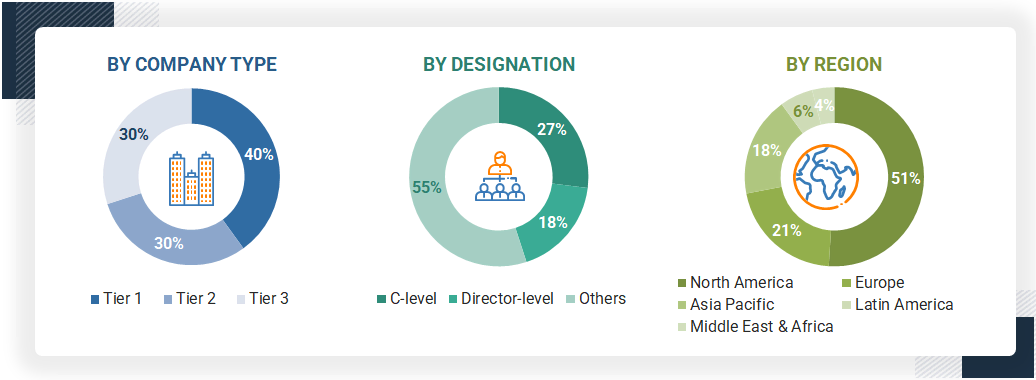
Note 1: Others include Sales Managers, Marketing Managers, and Product Managers.
Note 2: Companies are classified into tiers based on their total revenue. Here’s the breakdown of tiers:
Tier 1 = > USD 100 million, tier 2 = USD 10 million to USD 100 million, and tier 3 = < USD 10 million
To know about the assumptions considered for the study, download the pdf brochure
Market Size Estimation
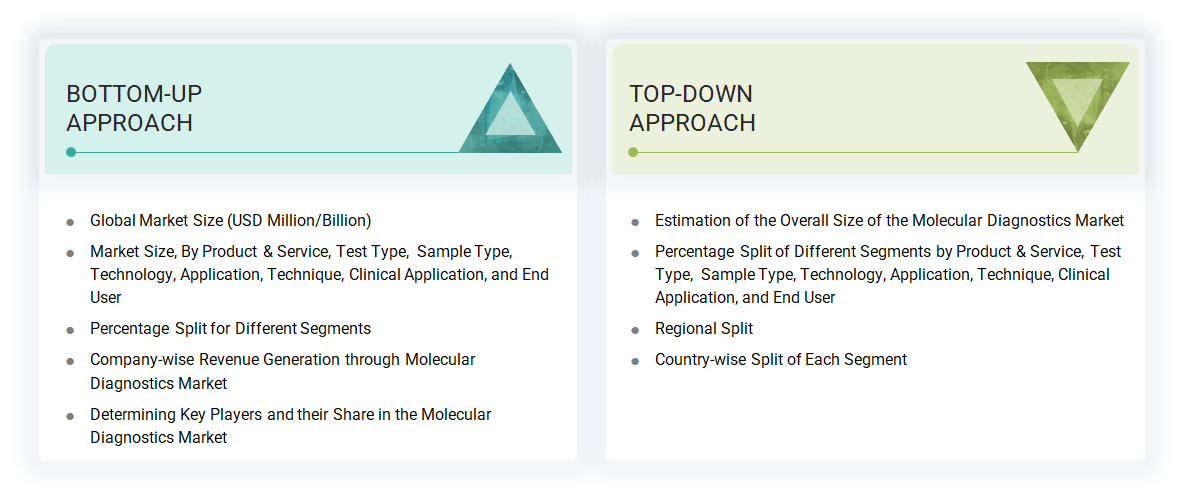
The top-down and bottom-up approaches were used to estimate and validate the molecular diagnostics market’s total size. These methods were also used extensively to estimate the size of various subsegments in the market.
- The key players in the industry have been identified through extensive secondary research.
- Primary and secondary research have determined the revenues generated by leading players operating in the molecular diagnostics market.
- All percentage share, splits, and breakdowns have been determined using secondary sources and verified through primary sources.
Data Triangulation
After arriving at the overall market size by applying the process mentioned above, the total market was split into several segments and subsegments. To complete the overall market engineering process and arrive at the exact statistics for all segments and subsegments, data triangulation and market breakdown procedures were employed, wherever applicable. The data was triangulated by studying various factors and trends from both the demand and supply sides.
Market Definition
Molecular diagnostics is a technique used to identify and analyze nucleic acids or proteins at a molecular level. This technique assesses an individual’s genetic makeup to identify a predisposition to any particular disease or condition and diagnose it.
Stakeholders
- Senior Management
- End Users
- Finance/Procurement Department
- R&D Department
Report Objectives
- To define, describe, segment, and forecast the global molecular diagnostics market by product & service, test type, sample type, technology, application, technique, clinical application, end user, and region
- To provide detailed information regarding the major factors (such as drivers, restraints, opportunities, and challenges) influencing market growth
- To analyze the micromarkets concerning individual growth trends, prospects, and contributions to the overall molecular diagnostics market
- To analyze market opportunities for stakeholders and provide details of the competitive landscape for key players
- To forecast the size of the market with respect to five regions, namely North America, Europe, the Asia Pacific, Latin America, and the Middle East & Africa
- To profile the key players and comprehensively analyze their product portfolios, market positions, and core competencies
- To track and analyze company developments, such as product launches & approvals, partnerships, acquisitions, agreements, and other developments
- To benchmark players within the molecular diagnostics market using the Company Evaluation Matrix framework, which analyzes market players on various parameters within the broad categories of business strategy, market share, and product offerings
- To study the impact of AI/Gen AI on the molecular diagnostics market, along with the macroeconomic outlook for each region
Get the Full Molecular Diagnostics Market Report
Full forecast, segment splits, and company analysis for all Molecular Diagnostics Market.
- Canada Molecular Diagnostics Market
- US Molecular Diagnostics Market
- Germany Molecular Diagnostics Market
- UK Molecular Diagnostics Market
- France Molecular Diagnostics Market
- Italy Molecular Diagnostics Market
- Spain Molecular Diagnostics Market
- Russia Molecular Diagnostics Market
- Switzerland Molecular Diagnostics Market
- China Molecular Diagnostics Market
- Japan Molecular Diagnostics Market
- India Molecular Diagnostics Market
- Australia Molecular Diagnostics Market
- Brazil Molecular Diagnostics Market
- Mexico Molecular Diagnostics Market
- Saudi Arabia Molecular Diagnostics Market
- UAE Molecular Diagnostics Market
Need a Tailored Report?
Customize this report to your needs
Get 10% FREE Customization
Customize This Report
