
China Neurovascular Devices Market (2025-2030)

The China Neurovascular Devices Market was valued at $299.01 Million in 2025 and projected to reach to $522.27 Million by 2030, representing a compound annual growth rate of 11.8%. China's neurovascular devices market is positioned for substantial growth, expanding from $299.01 million in 2025 to $522.27 million by 2030.


| Market Size in | USD 26.32 MN |
| Market Forecast in | |
| CAGR | |
| Forecast Period | |
| Units Considered | Value (USD MN) |
China Neurovascular Devices Market Trends and Insights
- This growth trajectory reflects China's increasing healthcare investments, rising prevalence of cerebrovascular diseases, and expanding access to advanced interventional procedures.
- China's aging population and urbanization trends are driving demand for minimally invasive neurovascular treatments, positioning the country as a critical growth engine within the Asia Pacific region. The 11.8% compound annual growth rate in China significantly outpaces global benchmarks, underscoring the market's accelerating adoption of neurovascular technologies.
- China's regulatory environment has become increasingly supportive of device innovation, with streamlined approval pathways encouraging both domestic manufacturers and international players to expand their portfolios.
- Between 2025 and 2030, China is expected to capture substantial market share through enhanced hospital infrastructure, growing physician expertise, and rising patient awareness of stroke prevention and treatment options..
Key Market Statistics
- CAGR (2025-2030) 11.8% CAGR
- Market Size, 2025 ~USD 299.01 Million
- Forecast, 2030 ~USD 522.27 Million
- Country China
China Neurovascular Devices Market Overview
Rapid Market Expansion :
China's neurovascular devices market is growing at 11.8% CAGR, significantly outpacing the global rate of 9.3%, driven by increased healthcare spending and modernization of medical infrastructure across urban and rural regions.
Aging Population Dynamics :
With China's rapidly aging demographic, the prevalence of cerebrovascular diseases and stroke incidents is accelerating demand for advanced neurovascular interventions, creating sustained market growth opportunities through 2030.
Healthcare Investment Surge :
Government initiatives and private sector investments in healthcare technology are expanding access to minimally invasive neurovascular procedures, particularly in tier-2 and tier-3 cities, broadening the patient treatment base.
Urbanization and Lifestyle Factors :
Rapid urbanization in China is correlating with increased risk factors for neurovascular diseases, including hypertension and diabetes, driving higher procedural volumes and device adoption across major metropolitan centers.
China Neurovascular Devices Market Dynamics
- This trajectory is underpinned by China's commitment to healthcare modernization, increasing prevalence of age-related cerebrovascular conditions, and growing adoption of interventional neurovascular procedures in both public and private healthcare systems. The market will benefit from technological advancements in device design, improved reimbursement policies, and enhanced clinical training programs.
- Rising awareness of stroke prevention and treatment options, combined with expanding hospital infrastructure in secondary cities, will drive sustained demand.
- Strategic partnerships between international device manufacturers and Chinese healthcare providers are expected to accelerate market penetration and innovation..
Market Ecosystem
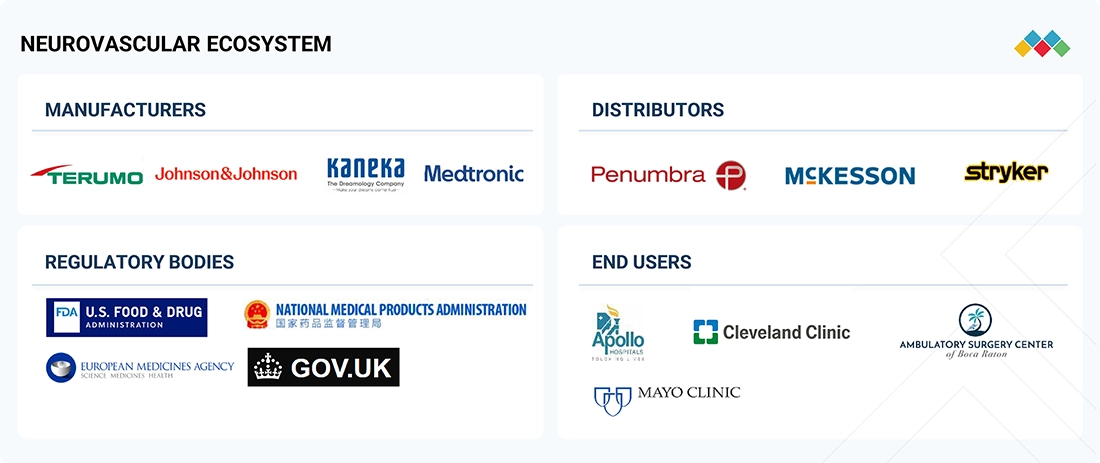
Neurovascular Devices Market: COMMERCIAL USE CASES ACROSS INDUSTRIES
| COMPANY | USE CASE DESCRIPTION | BENEFITS |
|---|---|---|
 |
Neurovascular devices for ischemic and hemorrhagic stroke treatment, including stent retrievers, aspiration systems, and flow diverters. | Enables rapid clot removal, restores blood flow, minimizes brain damage, and improves recovery outcomes in stroke patients |
 |
Neurovascular technologies including Solitaire™ stent retrievers, flow diverters, and embolization coils for stroke and aneurysm management. | Provides effective clot retrieval and aneurysm repair, reduces procedural time, and improves patient survival rates. |
 |
Comprehensive portfolio for stroke care — embolic coils, stent retrievers, and access systems for both ischemic and hemorrhagic stroke management | Delivers reliable stroke intervention solutions, supports minimally invasive procedures, and enhances long-term neurological outcomes. |
 |
Catheters, guidewires, and embolization devices for neurovascular access and aneurysm treatment. | Offers superior device flexibility and control, ensures precise navigation in complex brain vasculature, and supports safer neurointerventions. |
 |
Aspiration-based thrombectomy systems and embolization devices for ischemic and hemorrhagic stroke. | Facilitates rapid clot removal with continuous aspiration, reduces the risk of re-occlusion, and enables faster neurological recovery |
Logos and trademarks shown above are the property of their respective owners. Their use here is for informational and illustrative purposes only.
Related Ecosystem
Key Takeaways
- China's neurovascular devices market will grow from $299.01M (2025) to $522.27M (2030) at an 11.8% CAGR, outpacing global growth rates.
- China's aging demographic and high stroke burden are primary drivers of neurovascular device adoption and market expansion.
- Regulatory reforms in China are accelerating device approvals and attracting both international and domestic manufacturers to the market.
- China's expanding hospital infrastructure and interventional cardiology expertise position it as the fastest-growing neurovascular market in Asia Pacific.
Neurovascular Devices Market Report Scope
| Report Metric | Details |
|---|---|
| Base Year | 2025 |
| Fastest Growing Segment | CLOT RETRIEVER DEVICES (Type 2023–2030) |
| Forecast Period | 2025–2030 |
| Growth Rate | CAGR of 9.3% from 2025 to 2030 |
| Largest Segment | HOSPITALS AND AMBULATORY SURGICAL CENTERS (End User) |
| Market Size Base Year (Billions) | ~USD 4.7 (2025) |
| Revenue Forecast (Billions) | ~USD 7.33 (2030) |
| Segments Covered | Disease Pathology, Type, Type 2023–2030, End User |
China Neurovascular Devices Market Report Segmentation
4 segment dimensions are covered across the global market.
By Disease Pathology
- Arteriovenous Malformations & Fistulas
- Arteriovenous Malformations And Fistulas
- Carotid Artery Stenosis
- Cerebral Aneurysms
- Device For Cerebral Aneurysms
- Ischemic Strokes
- Other Disease Pathologies
By Type
- Balloon Catheters
- Bare Detachable Coils
- Carotid Artery Stents
- Clot Retriever Devices
- Coated Detachable Coils
- Embolic Coils
- Embolic Protection Devices
- Flow Diversion Devices
- Intracranial Stents
- Liquid Embolic Agents
- Microcatheter
- Microcatheters
- Occlusion Balloon Catheters
- Other Devices
- Suction & Aspiration Devices
- Vascular Snares
By Type 2023–2030
- Balloon Catheters
- Clot Retriever Devices
- Other Devices
- Suction & Aspiration Devices
- Vascular Snares
By End User
- Hospitals And Ambulatory Surgical Centers
- Research And Academic Institutes
- Specialty Clinics
CHINA: NEUROVASCULAR DEVICES MARKET, BY END USER, 2023–2030
| Segment | 2023 | 2024 | 2025 | 2026 | 2027 | 2028 | 2029 | 2030 | CAGR (%) |
|---|---|---|---|---|---|---|---|---|---|
| HOSPITALS AND AMBULATORY SURGICAL CENTERS | 179.33 | 196.82 | 218.96 | 244.09 | 272.66 | 305.22 | 342.42 | 385.02 | 11.9 |
| RESEARCH AND ACADEMIC INSTITUTES | 11.44 | 12.38 | 13.58 | 14.93 | 16.44 | 18.14 | 20.07 | 22.24 | 10.4 |
| SPECIALTY CLINICS | 54.78 | 59.93 | 66.46 | 73.85 | 82.23 | 91.76 | 102.61 | 115.01 | 11.6 |
| TOTAL | 245.55 | 269.13 | 299.01 | 332.87 | 371.33 | 415.12 | 465.1 | 522.27 | 11.8 |
Target Audience
- Medical Device Manufacturers : Manufacturers need China-specific market data to identify growth opportunities, assess competitive positioning, and develop localized product strategies for the rapidly expanding neurovascular device segment.
- Healthcare Investors & PE Firms : Investors require detailed China market analysis to evaluate investment opportunities in neurovascular device companies, healthcare providers, and distribution networks with clear growth trajectories and ROI potential.
- Hospital & Healthcare Systems : Healthcare administrators need market insights to guide procurement decisions, budget planning, and technology adoption strategies aligned with China's evolving neurovascular treatment standards and patient demand.
- Market Research & Strategy Consultants : Consultants require granular China market data to support client advisory work, competitive analysis, and strategic planning for healthcare organizations entering or expanding in the Chinese neurovascular market.
- Regulatory & Policy Advisors : Policy professionals need market-specific insights to understand China's healthcare landscape, reimbursement trends, and regulatory developments affecting neurovascular device approval and market access strategies.
Key Companies in the China Neurovascular Devices Market
| Company | HQ | Ownership | Strongest segments |
|---|---|---|---|
| ATS AUTOMATION TOOLING SYSTEMS INC | Canada | Public Company | Turnkey automated manufacturing and assembly systems,Pre- and post-automation services,Software and digital solutions, |
| NOLATO | Sweden | Public Company | Medical components and systems (Medical Solutions),Pharmaceutical primary packaging and labware,EMC shielding and thermal management (Compatherm, Compashield, Trishield), |
| CONMED CORPORATION | United States | Public Company | Sports medicine & orthopedic arthroscopy (BioBrace, TruShot, Y-Knot, Agro, powered resection, fluid management, visualization),Hall large and small bone power tools,General surgery: AirSeal insufflation, Buffalo smoke evacuation, endomechanical (trocars, retrieval bags, suction-irrigation, graspers, scissors, dissectors), |
| LIVANOVA PLC | United Kingdom | Public Company | Cardiopulmonary (heart-lung machines, oxygenators, autotransfusion, perfusion disposables and services),Neuromodulation (VNS Therapy for epilepsy and depression, OSA development programs), |
| BIOGEN | United States | Public Company | Multiple sclerosis therapies (TECFIDERA, VUMERITY, AVONEX, PLEGRIDY, TYSABRI, OCREVUS-related),SMA and rare neuromuscular (SPINRAZA, QALSODY),Alzheimer’s and neuropsychiatry (LEQEMBI, ZURZUVAE), |
| JOHNSON & JOHNSON | United States | Public Company | Oncology,Immunology,Neuroscience & Other Innovative Medicine, |
| TERUMO CORPORATION | Japan | Public Company | Cardiac and Vascular Company,Medical Care Solutions Company,Blood and Cell Technologies Company, |
| PENUMBRA, INC. | United States | Public Company | Neurovascular mechanical thrombectomy (Penumbra System, RED, JET, ACE, ENGINE, 3D Revascularization),Peripheral thrombectomy (Indigo, Lightning Flash, Lightning Bolt 7, CAT RX),Neuro embolization coils and POD/PAC platforms, |
| MICROPORT SCIENTIFIC CORPORATION | China | Public Company | Cardiovascular Devices (coronary stents, balloons, accessories),Orthopedics Devices (reconstructive joints, spine, trauma),Cardiac Rhythm Management (pacemakers, CRT, defibrillators), |
| KANEKA CORPORATION | Japan | Public Company | PVC and Vinyl Polymers (PVC, crosslinked PVC, PVC-PVAc, paste PVC, chlorinated PVC),Specialty Additives and Engineering Resins (impact modifiers, processing aids, tougheners, engineering resin for injection molding),High-Performance Films and Thermal Materials (polyimide film, optical films, graphite sheets, multi-layer insulation), |
| ASAHI INTECC CO., LTD | Japan | Public Company | PCI guide wires and cardiology catheters,Peripheral and cerebrovascular guide wires and microcatheters,Angiography and general-purpose catheters, |
| JAPAN LIFELINE CO., LTD | Japan | Public Company | Electrophysiology and Ablation Products,Cardiac Rhythm Management and Defibrillation,Cardiovascular and Endografting, |
ATS AUTOMATION TOOLING SYSTEMS INC
ATS Automation Tooling Systems Inc is a Canadian public company founded in 1978 that employs 7,000 people. The company specializes in automation and tooling systems for manufacturing industries.
NOLATO
Nolato is a Swedish public company founded in 1938 with 5,607 employees. The company operates in the manufacturing and materials processing sectors.
CONMED CORPORATION
CONMED Corporation is a United States-based public company founded in 1970 with 3,900 employees. The company operates in the medical device and healthcare equipment industry.
LIVANOVA PLC
LivaNova PLC is a United Kingdom-based public company founded in 2015 with 3,300 employees. The company specializes in medical devices and healthcare solutions.
BIOGEN
Biogen is a United States-based public company founded in 1978 with 7,500 employees. The company specializes in biotechnology and biopharmaceutical development.
JOHNSON & JOHNSON
Johnson & Johnson is a United States-based public company founded in 1886 with 138,200 employees. The company is a diversified healthcare conglomerate operating in pharmaceuticals, medical devices, and consumer health.
TERUMO CORPORATION
Terumo Corporation is a Japanese public company founded in 1921 with 30,591 employees. The company specializes in medical devices and healthcare products.
PENUMBRA, INC.
Penumbra, Inc. is a United States-based public company founded in 2004 with 4,700 employees. The company develops and manufactures medical devices for vascular and neurovascular interventions.
MICROPORT SCIENTIFIC CORPORATION
MicroPort Scientific Corporation is a Chinese public company founded in 1998 with 6,547 employees. The company specializes in medical device manufacturing and cardiovascular solutions.
KANEKA CORPORATION
Kaneka Corporation is a Japanese public company founded in 1949 with 11,762 employees. The company operates in chemicals, plastics, and medical device manufacturing.
ASAHI INTECC CO., LTD
Asahi Intecc Co., Ltd is a Japanese public company founded in 1976 with 9,473 employees. The company specializes in medical devices and interventional equipment.
JAPAN LIFELINE CO., LTD
Japan Lifeline Co., Ltd is a Japanese public company founded in 1981 with 1,304 employees. The company operates in the medical device and healthcare industry.
Reasons to Buy this Report
- Market-Specific Growth Intelligence : Gain detailed insights into China's 11.8% CAGR trajectory, understanding the unique drivers differentiating this market from global trends and identifying high-growth segments within the Chinese healthcare landscape.
- Competitive Positioning Strategy : Develop targeted market entry or expansion strategies with comprehensive data on China's healthcare infrastructure, regulatory environment, and competitive dynamics specific to neurovascular device distribution and adoption.
- Investment Decision Support : Access validated market sizing ($299.01M to $522.27M forecast) and demographic analysis to support investment decisions, partnership evaluations, and resource allocation for China-focused business initiatives.
- Regional Demand Forecasting : Understand China's aging population trends, urbanization patterns, and disease prevalence to accurately forecast demand for specific neurovascular device categories and optimize inventory and supply chain planning.
- Regulatory and Reimbursement Insights : Navigate China's evolving healthcare policies, reimbursement frameworks, and regulatory requirements with market-specific analysis enabling compliant product positioning and pricing strategies.
Frequently asked questions
What is the current size of China's neurovascular devices market in 2025?
China's neurovascular devices market is valued at $299.01 million in 2025, with strong growth momentum expected through 2030.
What is the projected market size for China's neurovascular devices by 2030?
China's neurovascular devices market is forecast to reach $522.27 million by 2030, representing a 74.6% increase from 2025 levels.
What is the CAGR for China's neurovascular devices market?
China's neurovascular devices market is growing at an 11.8% compound annual growth rate, significantly exceeding the global average of 9.3%.
What factors are driving growth in China's neurovascular devices market?
Key drivers include China's aging population, rising stroke incidence, improved healthcare infrastructure, regulatory support for device innovation, and increasing adoption of minimally invasive procedures.
How does China's neurovascular market compare to global trends?
China's 11.8% CAGR outpaces the global 9.3% CAGR, reflecting accelerated healthcare modernization, demographic shifts, and expanding access to advanced interventional treatments in the country.
RESEARCH METHODOLOGY
The study included four main activities to estimate the current size of the neurovascular devices market. First, extensive secondary research was performed to collect information on the market, including related and parent markets. The next step was to validate these findings, assumptions, and market size estimates through primary research with industry experts across the value chain. We used both top-down and bottom-up approaches to develop a comprehensive estimate of the overall market size. Finally, we applied market segmentation and data triangulation techniques to assess the sizes of segments and subsegments within the market.
Secondary Research
The secondary research process involved extensively using various sources, including directories, databases like Bloomberg Business, Factiva, and D&B Hoovers, as well as white papers, annual reports, company house documents, investor presentations, and SEC filings. This research aimed to gather information valuable for a thorough, technical, market-focused, and commercial study of the neurovascular devices market. It also helped obtain key insights about industry leaders, market classification, and segmentation based on current industry trends, down to the smallest details. Additionally, a database of leading industry players was compiled through this secondary research.
Primary Research
In the primary research process, we conducted interviews with various sources from both the supply and demand sides to collect qualitative and quantitative information for this report. On the supply side, we spoke with industry experts, including CEOs, vice presidents, marketing and sales directors, technology and innovation directors, and other key executives from prominent companies and organizations involved in the neurovascular devices market. For the demand side, we engaged with industry experts, purchasing and sales managers, doctors, and personnel from research organizations. This primary research was crucial to validate market segmentation, identify key players in the industry, and gather insights on important industry trends and market dynamics.
A breakdown of the primary respondents for the neurovascular devices market is provided below:
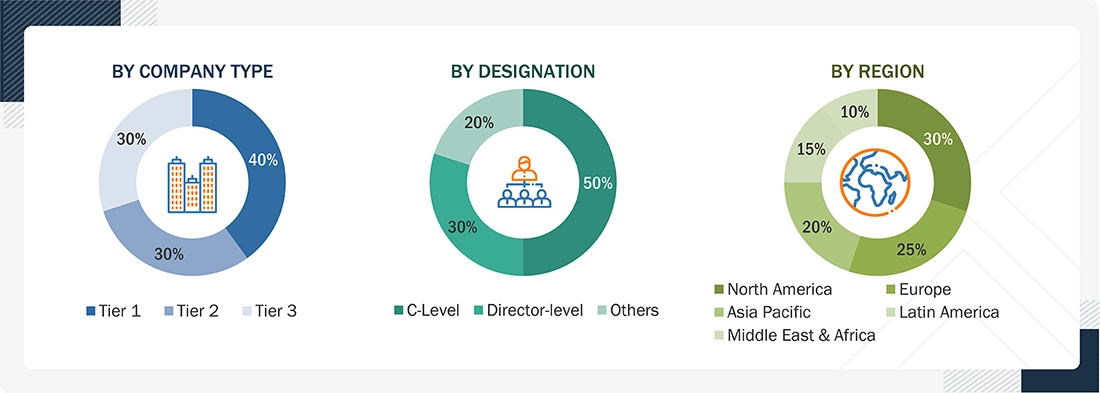
Note 1: C-level executives include CEOs, COOs, CTOs, and VPs.
Note 2: Others include sales, marketing, and product managers.
Note 3: Companies are classified into tiers based on their total revenue. As of 2024: Tier 1=>USD 1 billion, Tier 2 = USD 500 million to USD 1 billion, and Tier 3 = < USD 500 million.
To know about the assumptions considered for the study, download the pdf brochure
Market Size Estimation
The research methodology used to estimate the size of the neurovascular devices market includes the following details.
The market sizing was undertaken from the global side.
Country-level Analysis: The size of the neurovascular devices market was determined from annual presentations by leading players and secondary data available in the public domain. The share of products and services within the overall neurovascular devices market was derived from secondary data and validated by primary participants to estimate the total market. Primary participants further confirmed the validity of these data numbers.
Geographic Market Assessment (By Region & Country): The geographic assessment was done using the following approaches:
Approach 1: Geographic revenue contributions/splits of leading players in the market (wherever available) and respective growth trends
Approach 2: Geographic adoption trends for individual product segments by end users and growth prospects for each of the segments (assumptions and indicative estimates validated from primary interviews)
At each stage, the assumptions and approaches were verified through industry experts contacted during primary research. Given the limitations of data available from secondary research, revenue estimates for individual companies—covering the overall neurovascular devices market and regional market assessments—were determined based on a detailed analysis of their product offerings, geographic reach or strength (whether direct or through distributors or suppliers), and the market shares of leading players in specific regions and countries.
Global Neurovascular Devices Market Size: Bottom-Up and Top-Down Approach

Data Triangulation
After determining the overall size from the market size estimation process described above, the total market was divided into multiple segments and subsegments. The data triangulation and market breakdown procedures explained below were applied, where applicable, to complete the overall market analysis and derive precise statistics for various market segments and subsegments. The data was triangulated by examining diverse factors and trends from both the demand and supply sides. Additionally, the market size was validated using both top-down and bottom-up methods.
Market Definition
The neurovascular devices market includes medical technologies and tools designed for monitoring, managing, and treating neurovascular diseases. It encompasses devices used to treat brain aneurysms (such as embolic coils, flow diversion devices, intracranial stents, and others), ischemic strokes (like clot retriever devices, suction and aspiration tools, vascular snares, balloon catheters, and more), carotid artery stenosis (including carotid artery stents, embolic protection devices, and balloon catheters), arteriovenous malformations and fistulas (such as liquid embolic agents, occlusion balloon catheters, microcatheters), and other related conditions. Neurovascular devices are essential for accurate diagnosis, effective treatment, and comprehensive management of neurovascular disorders. By enabling timely interventions and enhancing procedural success, these technologies help reduce complications and promote better patient recovery. The market serves patients, healthcare professionals, and medical institutions, driven by continuous advancements in device technology, the rising prevalence of neurovascular disorders, and increasing demand for innovative, minimally invasive, and user-friendly treatment options.
Stakeholders
- Neurovascular devices’ manufacturing companies
- Contract manufacturers
- Distributors, suppliers, and channel partners of neurovascular devices
- Senior Management
- Finance Department
- Procurement Department
- Hospitals & Clinics
- E-commerce and Digital Platforms
- Academic & Research Institutes
- Trade Associations and Industry Bodies
- Regulatory Bodies and Government Agencies
- Business Research and Consulting Service Providers
- Market Research and Consulting Firms
- Venture Capitalists and Investors
Report Objectives
- To define, describe, segment, analyse, and forecast the global neurovascular devices market by disease pathology, end user, and region
- To provide detailed information about the factors influencing market growth (drivers, restraints, opportunities, and challenges)
- To analyze micro markets concerning individual growth trends, prospects, and contributions to the overall market
- To analyze market opportunities for stakeholders and provide details of the competitive landscape for key players
- To forecast the size of the neurovascular devices market in North America, Europe, the Asia Pacific, Latin America, the Middle East & Africa, and GCC countries
- To profile the key players in the neurovascular devices market and comprehensively analyze their core competencies
- To track and analyze competitive developments such as agreements, collaborations, and partnerships; expansions; acquisitions; and product launches & approvals in the neurovascular devices market
Get the Full Neurovascular Devices Market Report
Full forecast, segment splits, and company analysis for all Neurovascular Devices Market.
- Canada Neurovascular Devices Market
- US Neurovascular Devices Market
- Germany Neurovascular Devices Market
- France Neurovascular Devices Market
- UK Neurovascular Devices Market
- Italy Neurovascular Devices Market
- Spain Neurovascular Devices Market
- Japan Neurovascular Devices Market
- India Neurovascular Devices Market
- Australia Neurovascular Devices Market
- South Korea Neurovascular Devices Market
- Brazil Neurovascular Devices Market
- Mexico Neurovascular Devices Market
Need a Tailored Report?
Customize this report to your needs
Get 10% FREE Customization
Customize This Report
