
Brazil Neuromodulation Market (2025-2030)

The Brazil Neuromodulation Market was valued at $99.6 Million in 2025 and projected to reach to $158 Million by 2030, representing a compound annual growth rate of 9.7%. Brazil's neuromodulation market is positioned for sustained growth through 2030, driven by rising healthcare expenditure, increasing awareness of neurological disorders, and expanding access to advanced treatment options.


| Market Size in | USD 26.32 MN |
| Market Forecast in | |
| CAGR | |
| Forecast Period | |
| Units Considered | Value (USD MN) |
Brazil Neuromodulation Market Trends and Insights
- This expansion in Brazil reflects increasing adoption of advanced neurological therapies, rising prevalence of chronic pain conditions, and growing healthcare infrastructure investment across the country.
- Brazil's neuromodulation sector is benefiting from improved patient awareness, expanding reimbursement coverage, and the entry of both multinational and regional device manufacturers seeking to capture market share in Latin America's largest economy. The Brazilian neuromodulation market is driven by demographic shifts, including an aging population with higher incidence of neurological disorders, and technological innovations in spinal cord stimulation, deep brain stimulation, and peripheral nerve stimulation devices.
- Brazil's healthcare system reforms and increased private sector participation are creating favorable conditions for neuromodulation adoption through 2030.
- Strategic partnerships between international device manufacturers and local healthcare providers are accelerating market penetration, while regulatory streamlining by ANVISA (Brazil's health authority) is facilitating faster product approvals and market entry..
Key Market Statistics
- CAGR (2025-2030) 9.7% CAGR
- Market Size, 2025 ~USD 99.6 Million
- Forecast, 2030 ~USD 158 Million
- Country Brazil
Brazil Neuromodulation Market Overview
Market Valuation Growth :
Brazil's neuromodulation market is valued at USD 99.6 million in 2025, with projections reaching USD 158.0 million by 2030, demonstrating strong market expansion and investor confidence in neurological treatment solutions.
Robust CAGR Performance :
The Brazilian market is growing at 9.7% CAGR, outpacing the global average of 9.4%, indicating accelerated adoption of neuromodulation therapies and increasing healthcare spending in the region.
Rising Chronic Pain Prevalence :
Increasing incidence of chronic pain conditions across Brazil's population is driving demand for advanced neuromodulation treatments, including spinal cord stimulation and deep brain stimulation therapies.
Healthcare Infrastructure Investment :
Brazil's growing investment in healthcare infrastructure and modernization of medical facilities is enabling wider accessibility to neuromodulation technologies across urban and emerging markets.
Brazil Neuromodulation Market Dynamics
- The country's aging population and growing prevalence of chronic pain conditions are creating significant demand for innovative neuromodulation solutions.
- Healthcare providers are increasingly adopting these technologies to improve patient outcomes and reduce long-term treatment costs. The Brazilian market will benefit from strengthening regulatory frameworks, improved reimbursement policies, and partnerships between local healthcare institutions and international neuromodulation manufacturers.
- Investment in medical education and clinical training will further accelerate adoption rates.
- As the market matures, competition will intensify, driving innovation and price optimization while expanding treatment accessibility across diverse socioeconomic segments..
Market Ecosystem
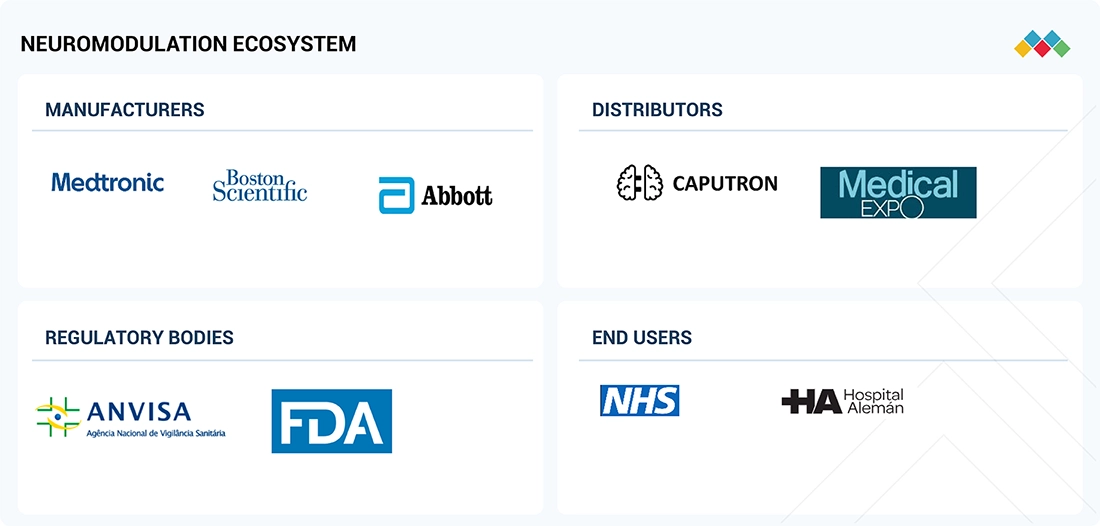
Neuromodulation Market: COMMERCIAL USE CASES ACROSS INDUSTRIES
| COMPANY | USE CASE DESCRIPTION | BENEFITS |
|---|---|---|
 |
Offers a wide portfolio of neuromodulation devices including spinal cord stimulators, deep brain stimulation systems, sacral neuromodulation, and targeted drug delivery systems for managing chronic pain, movement disorders, and urological conditions. | Provides proven pain relief, improves motor function in movement disorder patients, restores bladder/bowel control, and supports personalized therapy through advanced programming features. |
 |
Provides advanced neuromodulation solutions such as spinal cord stimulation and deep brain stimulation devices, integrating adaptive stimulation and wireless technologies for chronic pain and neurological disorders. | Enhances patient comfort with customizable stimulation, reduces chronic pain intensity, improves neurological function, and offers minimally invasive options that support quicker recovery. |
 |
Supplies a broad range of neuromodulation therapies including spinal cord stimulation, dorsal root ganglion stimulation, and deep brain stimulation systems for pain and movement disorders. | Ensures targeted pain relief, improves patient mobility and daily functioning, enables remote monitoring and adjustments, and delivers long-term therapy cost efficiency. |
 |
Focuses on neuromodulation solutions such as vagus nerve stimulation (VNS) therapy for epilepsy and treatment-resistant depression. | Provides clinically validated therapy for hard-to-treat epilepsy and depression, reduces seizure frequency, improves mood stability, and enhances patient quality of life through continuous stimulation. |
 |
Specializes in high-frequency spinal cord stimulation systems (HF10 therapy) designed for chronic pain management without paresthesia. | Delivers superior pain relief without tingling sensations, supports treatment of back and leg pain, improves long-term patient outcomes, and enhances overall quality of life with reduced side effects. |
Logos and trademarks shown above are the property of their respective owners. Their use here is for informational and illustrative purposes only.
Related Ecosystem
Biotechnology
- Reagents
- Polymerase Chain Reaction (PCR)
- Stem Cells
- Assay Kits
- Flow Cytometers
- Thermo Fisher Scientific Inc.
- Merck KGaA
- Danaher Corporation
- Agilent Technologies, Inc.
- Bio-Rad Laboratories, Inc.
Medical Devices
- Polymerase Chain Reaction (PCR)
- Magnetic Resonance Imaging (MRI)
- Disposable Autoinjectors
- Pulse Oximeters
- Blood Pressure Monitors
- Medtronic plc
- Abbott Laboratories
- Stryker Corporation
- Becton, Dickinson and Company
- JOHNSON & JOHNSON
Key Takeaways
- Brazil's neuromodulation market is valued at USD 99.6 million in 2025 and is forecast to reach USD 158.0 million by 2030, growing at a 9.7% CAGR.
- Brazil's aging population and rising chronic pain prevalence are primary drivers of neuromodulation device adoption and market expansion.
- Regulatory improvements and expanded reimbursement policies in Brazil are accelerating market growth and attracting international device manufacturers.
- Brazil's private healthcare sector and strategic partnerships are enhancing neuromodulation accessibility and driving innovation in the country.
Neuromodulation Market Report Scope
| Report Metric | Details |
|---|---|
| Base Year | 2025 |
| Fastest Growing Segment | DEEP BRAIN STIMULATION (Stimulation Type) |
| Forecast Period | 2025–2030 |
| Growth Rate | CAGR of 9.4% from 2025 to 2030 |
| Largest Segment | INTERNAL NEUROMODULATION (Technology) |
| Market Size Base Year (Billions) | ~USD 6.82 (2025) |
| Revenue Forecast (Billions) | ~USD 10.68 (2030) |
| Segments Covered | Technology, Stimulation Type, Application, End User |
Brazil Neuromodulation Market Report Segmentation
4 segment dimensions are covered across the global market.
By Technology
- External Neuromodulation
- Internal Neuromodulation
By Stimulation Type
- Deep Brain Stimulation
- Gastric Electrical Stimulation
- Other Stimulation Types
- Respiratory Electrical Stimulation
- Sacral Nerve Stimulation
- Spinal Cord Stimulation
- Transcranial Magnetic Stimulation
- Transcutaneous Electrical Nerve Stimulation
- Vagus Nerve Stimulation
By Application
- Chronic Pain
- Depression
- Epilepsy
- Failed Back Surgery Syndrome
- Fecal Incontinence
- Gastroparesis
- Ischemia
- Migraine
- Obesity
- Other Deep Brain Stimulation Applications
- Other Transcutaneous Electrical Nerve Stimulation Applications
- Other Vagus Nerve Stimulation Applications
- Parkinson’S Disease
- Treatment-Resistant Depression
- Tremor
- Urine Incontinence
By End User
- Clinics & Physiotherapy Centers
- Hospitals & Ambulatory Surgery Centers
- Other End Users
BRAZIL: NEUROMODULATION MARKET, BY END USER, 2023–2030
| Segment | 2023 | 2024 | 2025 | 2026 | 2027 | 2028 | 2029 | 2030 | CAGR (%) |
|---|---|---|---|---|---|---|---|---|---|
| CLINICS & PHYSIOTHERAPY CENTERS | 25.1 | 28.1 | 31 | 34.3 | 38 | 42.2 | 46.8 | 52.1 | 10.9 |
| HOSPITALS & AMBULATORY SURGERY CENTERS | 63.1 | 69.6 | 75.5 | 82.2 | 89.5 | 97.6 | 106.6 | 116.6 | 9.1 |
| OTHER END USERS | 5.9 | 6.5 | 7 | 7.6 | 8.2 | 8.9 | 9.6 | 10.5 | 8.5 |
| TOTAL | 94.1 | 104.1 | 113.5 | 124.1 | 135.7 | 148.6 | 163.1 | 179.2 | 9.6 |
Target Audience
- Medical Device Manufacturers : Neuromodulation device companies seeking to expand operations in Brazil need market-specific data on demand, regulatory pathways, and competitive positioning to maximize market share and revenue growth.
- Healthcare Investors & PE Firms : Investment professionals evaluating opportunities in Brazil's healthcare sector require detailed market analysis, growth projections, and risk assessments to make informed capital allocation decisions.
- Hospital & Clinical Networks : Brazilian healthcare providers need market intelligence on neuromodulation adoption trends, patient demand, and reimbursement models to optimize service offerings and procurement strategies.
- Market Research & Consulting Firms : Research organizations and consultants require Brazil-specific market data and forecasts to support client advisory services, competitive analysis, and strategic planning engagements.
- Government & Healthcare Policy Makers : Brazilian health authorities and policymakers need market insights to inform healthcare policy, reimbursement decisions, and infrastructure investment priorities in neuromodulation services.
Key Companies in the Brazil Neuromodulation Market
| Company | HQ | Ownership | Strongest segments |
|---|---|---|---|
| BIOGEN | United States | Public Company | Internal neuromodulation (implanted SCS/DBS/VNS-aligned adjacencies),External neuromodulation (non-invasive stimulation adjacencies),Spinal cord stimulation–linked care pathways, |
| MEDTRONIC | Ireland | Public Company | Internal neuromodulation – Spinal Cord Stimulation,Internal neuromodulation – Deep Brain Stimulation,Internal neuromodulation – Vagus Nerve and Other Implants, |
| BOSTON SCIENTIFIC CORPORATION | United States | Public Company | Internal neuromodulation systems (implantable SCS, DBS, VNS),External neuromodulation systems and accessories,Radiofrequency and intraosseous nerve ablation for pain, |
| ABBOTT | United States | Public Company | Internal neuromodulation – Spinal cord stimulation,Internal neuromodulation – Deep brain stimulation,Internal neuromodulation – Vagus nerve and other implants, |
| LIVANOVA PLC | United Kingdom | Public Company | Internal Vagus Nerve Stimulation for Epilepsy,Internal Vagus Nerve Stimulation for Depression,Other Neuromodulation (including aura6000 OSA development), |
| NEVRO CORP. | United States | Private Company | Internal SCS systems (Senza, Senza II, Senza Omnia, HFX iQ IPG),Surgical and percutaneous leads,Trial stimulators, remotes, and HFX App / digital, |
| NEUROPACE, INC. | United States | Public Company | Internal neuromodulation – Deep brain–adjacent epilepsy (RNS neurostimulator + leads),Digital platforms and data services (nSight, patient data management, physician tablet ecosystem),Accessories and disposables (non-implantable components, remote monitors, ancillary hardware), |
| BIOVENTUS | United States | Public Company | External / Peripheral Neuromodulation (Stimrouter, TalisMann, Exogen-related pain pathways),Surgical Ultrasonic Systems (neXus, BoneScalpel, SonaStar, SonicOne) in Neuro and Spine,Bone Graft Substitutes and Restorative Therapies in Neuro/Spine Settings, |
| ELECTROCORE, INC. | United States | Public Company | External VNS – gammaCore (migraine, cluster, other headache),General wellness nVNS – Truvaga 350 and Truvaga Plus,Human performance and other non-invasive bioelectronic therapies (TAC-STIM, chronic pain, performance), |
| HELIUS MEDICAL TECHNOLOGIES, INC. | United States | Public Company | External neuromodulation – PoNS for gait and balance deficits,Other neurological wellness and digital programs,Other digital asset / treasury-related activities, |
| NEURONETICS | United States | Public Company | External neuromodulation – TMS for Depression (Clinics & Psychiatrist Offices),External neuromodulation – Hospital-based TMS Programs,Other neuromodulation applications (Ischemia, Epilepsy, Obesity; emerging geographies and pilots), |
| NEUROSIGMA, INC. | United States | Private Company | External Neuromodulation – Trigeminal Nerve Stimulation (eTNS/TNS) for ADHD,External Neuromodulation – TNS for Epilepsy and LGS (early commercialization),External Neuromodulation – TNS for Depression, PTSD, TBI, |
BIOGEN
Biogen is a United States-based biotechnology company founded in 1978 with 7,500 employees. Operating as a public company, Biogen focuses on developing and commercializing therapies for neurological and neurodegenerative diseases.
MEDTRONIC
Medtronic is a multinational medical device company headquartered in Ireland, founded in 1949 with 95,000 employees. As a public company, Medtronic develops and manufactures a broad range of medical devices and therapies across multiple therapeutic areas.
BOSTON SCIENTIFIC CORPORATION
Boston Scientific Corporation is a United States-based medical device company founded in 1979 with 59,000 employees. The public company designs, manufactures, and markets medical devices used in interventional medical specialties.
ABBOTT
Abbott is a diversified healthcare company founded in the United States in 1888 with 115,000 employees. Operating as a public company, Abbott develops pharmaceuticals, medical devices, diagnostics, and nutritional products.
LIVANOVA PLC
LivaNova PLC is a United Kingdom-based medical device company founded in 2015 with 3,300 employees. The public company specializes in neuromodulation and cardiac surgery solutions.
NEVRO CORP.
Nevro Corp. is a United States-based medical device company founded in 2006 with 1,099 employees. Operating as a private company, Nevro develops neuromodulation therapies for chronic pain management.
NEUROPACE, INC.
NeuroPace, Inc. is a United States-based medical device company founded in 1997 with 220 employees. The public company develops and commercializes neurostimulation technology for neurological disorders.
BIOVENTUS
BioVentus is a United States-based medical device company founded in 2011 with 940 employees. Operating as a public company, BioVentus focuses on orthopedic and regenerative medicine solutions.
ELECTROCORE, INC.
ElectroCore, Inc. is a United States-based bioelectronic medicine company founded in 2005 with 83 employees. The public company develops non-invasive vagus nerve stimulation therapies for various conditions.
HELIUS MEDICAL TECHNOLOGIES, INC.
Helius Medical Technologies, Inc. is a United States-based medical device company with 21 employees. Operating as a public company, Helius develops neurorehabilitation technologies.
NEURONETICS
Neuronetics is a United States-based medical device company founded in 2001 with 658 employees. The public company develops and commercializes neuromodulation therapies for psychiatric and neurological conditions.
NEUROSIGMA, INC.
NeuroSigma, Inc. is a United States-based neurotechnology company founded in 2008 with 11 employees. Operating as a private company, NeuroSigma develops bioelectronic therapies for neurological disorders.
Reasons to Buy this Report
- Market-Specific Growth Insights : Gain detailed understanding of Brazil's neuromodulation market dynamics, including country-specific growth drivers, competitive landscape, and expansion opportunities that outpace global averages.
- Accurate Forecasting Data : Access precise market valuations and 5-year forecasts (2025-2030) tailored to Brazil, enabling confident investment decisions and strategic planning for market entry or expansion.
- Regulatory & Reimbursement Intelligence : Understand Brazil-specific regulatory requirements, healthcare reimbursement policies, and compliance frameworks essential for successful product launches and market penetration strategies.
- Competitive Positioning Strategy : Identify key competitors, market gaps, and differentiation opportunities specific to Brazil's neuromodulation sector to develop targeted go-to-market strategies and competitive advantages.
- Healthcare Infrastructure Insights : Leverage data on Brazil's healthcare infrastructure investments, hospital networks, and clinical adoption patterns to optimize distribution channels and partnership opportunities.
Frequently asked questions
What is the current size of Brazil's neuromodulation market?
Brazil's neuromodulation market is valued at USD 99.6 million in 2025 and is expected to grow to USD 158.0 million by 2030.
What is the projected growth rate for neuromodulation in Brazil?
Brazil's neuromodulation market is projected to grow at a compound annual growth rate (CAGR) of 9.7% from 2025 to 2030.
What are the main drivers of growth in Brazil's neuromodulation market?
Key growth drivers in Brazil include an aging population, rising prevalence of chronic pain and neurological disorders, improved healthcare infrastructure, expanded reimbursement coverage, and increased adoption of advanced neuromodulation technologies.
Which neuromodulation therapies are most prevalent in Brazil?
Spinal cord stimulation, deep brain stimulation, and peripheral nerve stimulation are among the most prevalent neuromodulation therapies adopted in Brazil's healthcare system.
How is Brazil's regulatory environment supporting neuromodulation market growth?
Brazil's health authority ANVISA has streamlined regulatory processes for neuromodulation devices, facilitating faster product approvals and market entry, which is accelerating adoption across the country.
RESEARCH METHODOLOGY
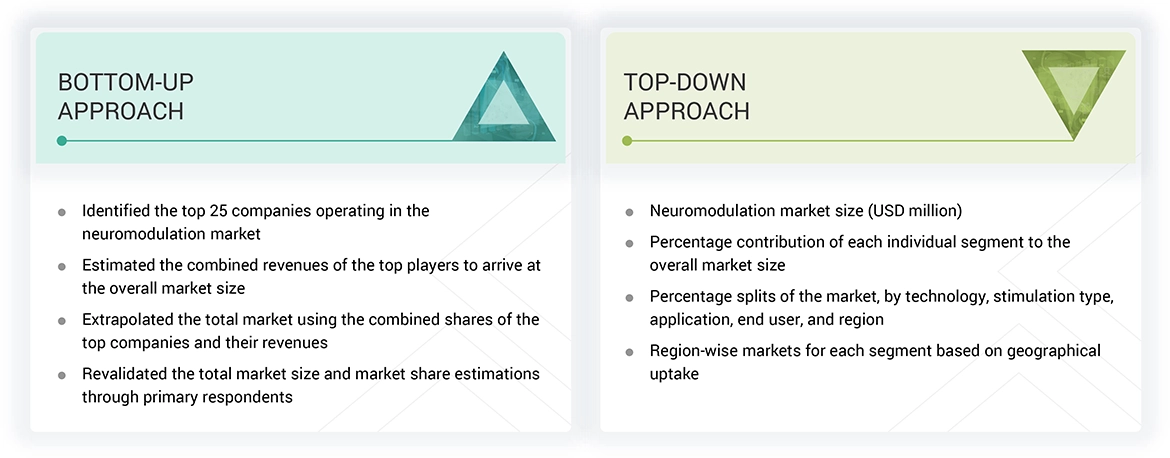
The study involved key activities in estimating the current market size for the neuromodulation industry. Exhaustive secondary research was conducted to gather information on the neuromodulation sector. The next step was to validate these findings, assumptions, and estimates with industry experts across the value chain through primary research. Different methods, such as top-down and bottom-up approaches, were used to determine the total market size. Subsequently, market segmentation and data triangulation procedures were applied to estimate the market size of segments and subsegments within the neuromodulation market.
The four steps involved in estimating the market size are:
Secondary Research
The secondary research process involves the widespread use of secondary sources, directories, databases (such as Bloomberg Businessweek, Factiva, and D&B Hoovers), white papers, annual reports, investor presentations, SEC filings of companies and publications from government sources [such as National Institutes of Health (NIH), US FDA, US Census Bureau, World Health Organization (WHO), , Global Burden of Disease Study, and Centers for Medicare and Medicaid Services (CMS) were referred to identify and collect information for the global neuromodulation market study. It was also used to obtain important information about the key players and market classification & segmentation according to industry trends to the bottom-most level, and key developments related to market and technology perspectives. A database of the key industry leaders was also prepared using secondary research.
Primary Research
In the primary research process, various sources from both the supply and demand sides were interviewed to gather qualitative and quantitative information for this report. The primary sources from the supply side include industry experts such as CEOs, vice presidents, marketing and sales directors, technology and innovation directors, and other key executives from various companies and organizations in the neuromodulation market. The primary sources from the demand side include biotechnology companies, CROs, pharmacies, medical device companies, and research academics and universities. Primary research was conducted to validate the market segmentation, identify key players, and gather insights on important industry trends and key market dynamics.
The following is a breakdown of the primary respondents:
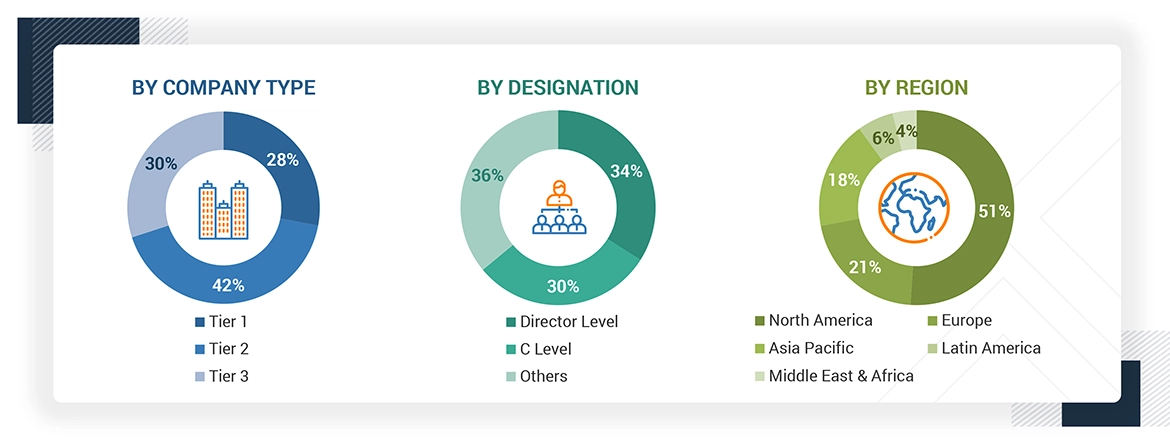
Note 1: Others include sales managers, marketing managers, and product managers.
Note 2: Companies are classified into tiers based on their total revenues. As of 2024, Tier 1 = >USD 100 million, Tier 2 = USD 10 million to USD 100 million, and Tier 3 = < USD 10 million.
To know about the assumptions considered for the study, download the pdf brochure
Market Size Estimation
For the global market value, annual revenues were calculated based on revenue mapping of major product manufacturers and OEMs active in the worldwide neuromodulation market. All key service providers were identified at the global and/or country/regional level. Revenue mapping for the relevant business segments/sub-segments was performed for the major players. The global neuromodulation market was split into various segments and sub-segments based on:
- List of major players operating in the products market at the regional and/or country level
- Product mapping of neuromodulation providers at the regional and/or country level
- Mapping of annual revenue generated by listed major players from neuromodulation (or the nearest reported business unit/product category)
- Extrapolation of the revenue mapping of the listed major players to derive the global market value of the respective segments/subsegments
- Summation of the market value of all segments/subsegments to arrive at the global neuromodulation market
The above-mentioned data was consolidated and added with detailed inputs and analysis from MarketsandMarkets and presented in this report.
The research methodology used to estimate the market size includes the following:
Data Triangulation
After determining the overall market size using the process described above, the total market was divided into several segments. To finalize the market engineering process and obtain precise statistics for all segments and subsegments, data triangulation and market breakdown methods were employed where applicable. The data was triangulated by analyzing various factors and trends from both the demand and supply sides.
Market Definition
Neuromodulation is a medical technology that modifies nerve activity by delivering targeted stimulation to specific areas of the body. It covers a broad range of therapies, from managing chronic pain—which is the most common use—to treating neurological and urological disorders, as well as movement disorders like Parkinson’s disease. By directly affecting neural pathways, neuromodulation can restore function, alleviate symptoms, and enhance quality of life, with ongoing innovations making it a rapidly growing field in modern medicine healthcare.
Stakeholders
- Neuromodulation and related device manufacturing companies
- Equipment manufacturers
- Suppliers and distributors of neuromodulation devices
- Healthcare service providers
- Teaching hospitals and academic medical centers (AMCs)
- Health insurance players
- Research and consulting firms
- Medical research institutes
- Healthcare institutions/providers (hospitals, medical groups, physicians’ practices, diagnostic centers, and outpatient clinics)
- Venture capitalists
- Community centers
Report Objectives
- To define, describe, segment, and forecast the global neuromodulation market by technology, stimulation type, application, end user, and region
- To provide detailed information regarding the major factors influencing market growth (such as drivers, restraints, opportunities, and challenges)
- To analyze the micromarkets with respect to individual growth trends, prospects, and contributions to the overall neuromodulation market
- To analyze market opportunities for stakeholders and provide details of the competitive landscape for key players
- To forecast the size of the market segments with respect to five regions: North America, Europe, the Asia Pacific, Latin America, and the Middle East & Africa
- To profile the key players and comprehensively analyze their product portfolios, market positions, and core competencies
- To benchmark players within the market using the proprietary Company Evaluation Matrix framework, which analyzes market players on various parameters within the broad categories of business and product excellence
- To study the impact of AI/Gen AI on the market, along with the macroeconomic outlook for each region
Get the Full Neuromodulation Market Report
Full forecast, segment splits, and company analysis for all Neuromodulation Market.
- Canada Neuromodulation Market
- US Neuromodulation Market
- Germany Neuromodulation Market
- France Neuromodulation Market
- UK Neuromodulation Market
- Italy Neuromodulation Market
- Spain Neuromodulation Market
- Russia Neuromodulation Market
- China Neuromodulation Market
- Japan Neuromodulation Market
- India Neuromodulation Market
- Australia Neuromodulation Market
- Mexico Neuromodulation Market
Need a Tailored Report?
Customize this report to your needs
Get 10% FREE Customization
Customize This Report
