
Brazil Plasma Fractionation Market (2026-2031)

The Brazil Plasma Fractionation Market was valued at $816.4 Million in 2026 and projected to reach to $1177.4 Million by 2031, representing a compound annual growth rate of 7.6%. Brazil's plasma fractionation market is experiencing significant expansion driven by increasing healthcare investments, growing patient awareness of immunoglobulin and clotting factor therapies, and improving access to plasma-derived products across urban and emerging healthcare centers.


| Market Size in | USD 26.32 MN |
| Market Forecast in | |
| CAGR | |
| Forecast Period | |
| Units Considered | Value (USD MN) |
Brazil Plasma Fractionation Market Trends and Insights
- Valued at USD 816.4 million in 2026, Brazil is expected to expand to USD 1,177.4 million by 2031, reflecting a compound annual growth rate of 7.6%.
- This expansion is underpinned by rising demand for immunoglobulin therapies, albumin products, and clotting factor concentrates across Brazil's aging population and expanding patient access initiatives. The Brazilian plasma fractionation landscape benefits from strengthened regulatory frameworks and increased investment in domestic plasma collection infrastructure.
- Brazil's healthcare system continues to prioritize self-sufficiency in blood-derived therapeutics, driving both public and private sector participation.
- Between 2026 and 2031, Brazil is anticipated to see accelerated adoption of advanced fractionation technologies and enhanced distribution networks, positioning the country as a regional hub for plasma-derived medicines within Latin America..
Key Market Statistics
- CAGR (2026-2031) 7.6% CAGR
- Market Size, 2026 ~USD 816.4 Million
- Forecast, 2031 ~USD 1177.4 Million
- Country Brazil
Brazil Plasma Fractionation Market Overview
Market Valuation Growth :
Brazil's plasma fractionation market is valued at USD 816.4 million in 2026 and is projected to reach USD 1,177.4 million by 2031, demonstrating robust expansion within Latin America's healthcare landscape.
Consistent CAGR Performance :
The Brazilian market maintains a steady compound annual growth rate of 7.6% through 2031, aligning with global market trends and reflecting sustained demand for plasma-derived therapies.
Key Product Demand Drivers :
Rising demand for immunoglobulin therapies, albumin products, and clotting factor concentrates is propelling market growth, driven by increased prevalence of immunodeficiency disorders and bleeding disorders in Brazil.
Latin American Leadership Position :
Brazil serves as a key growth driver within Latin America's plasma fractionation sector, positioning the country as a critical market for manufacturers and healthcare providers expanding regional operations.
Brazil Plasma Fractionation Market Dynamics
- The market benefits from Brazil's large population base and rising incidence of conditions requiring plasma fractionation treatments. Looking ahead to 2031, Brazil's market is expected to sustain its 7.6% CAGR trajectory, supported by regulatory improvements, enhanced blood collection infrastructure, and growing adoption of advanced plasma fractionation technologies.
- Strategic partnerships between local healthcare providers and international manufacturers will further accelerate market penetration and product availability across the country..
Market Ecosystem
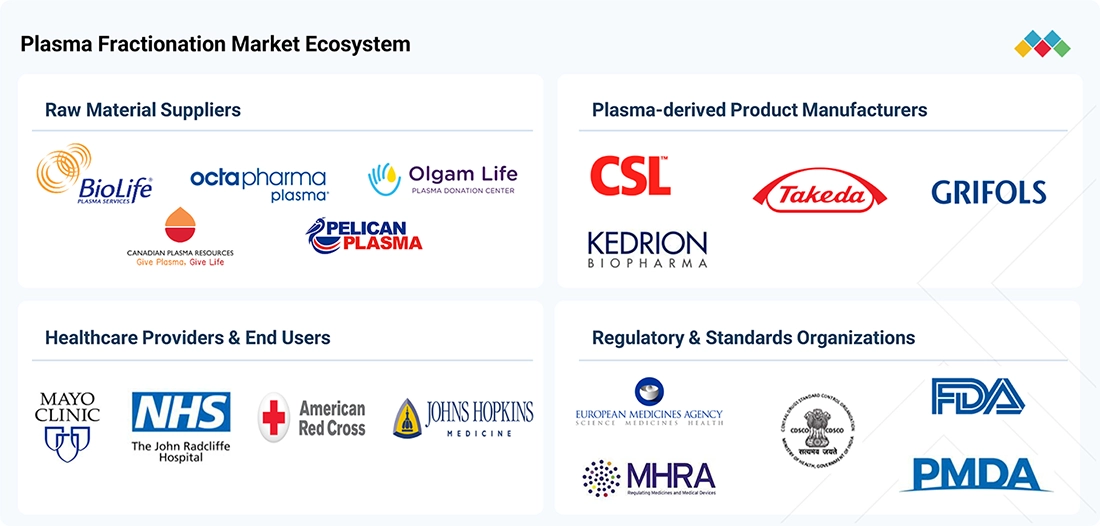
PLASMA FRACTIONATION MARKET: COMMERCIAL USE CASES ACROSS INDUSTRIES
| COMPANY | USE CASE DESCRIPTION | BENEFITS |
|---|---|---|
 |
Implemented the Horizon 2 plasma fractionation process at its Kankakee facility to improve immunoglobulin recovery from donated plasma | Higher immunoglobulin yield | Improved plasma utilization | Greater production efficiency | Increased supply capacity |
 |
Implemented process improvements through its One Day Batch Release program at plasma-derived therapy manufacturing sites to accelerate batch release | Faster batch release | Improved manufacturing efficiency | Shorter lead times | Faster product availability |
Logos and trademarks shown above are the property of their respective owners. Their use here is for informational and illustrative purposes only.
Related Ecosystem
Biotechnology
- Reagents
- Polymerase Chain Reaction (PCR)
- Stem Cells
- Assay Kits
- Flow Cytometers
- Thermo Fisher Scientific Inc.
- Merck KGaA
- Danaher Corporation
- Agilent Technologies, Inc.
- Bio-Rad Laboratories, Inc.
Pharmaceuticals
- Bioreactors
- Analytical Testing
- Bioanalytical Testing Services
- Cell Counters
- Data Management Services
- Thermo Fisher Scientific Inc.
- Merck KGaA
- SANOFI
- Pfizer Inc.
- NOVARTIS
Key Takeaways
- Brazil's plasma fractionation market will grow from USD 816.4M (2026) to USD 1,177.4M (2031) at a 7.6% CAGR.
- Brazil's aging demographic and expanded healthcare access are primary drivers of plasma-derived therapeutic demand.
- Brazil is investing in domestic plasma collection and fractionation capacity to reduce import dependency.
- Brazil's regulatory environment and public-private partnerships are accelerating market expansion through 2031.
Plasma Fractionation Market Report Scope
| Report Metric | Details |
|---|---|
| Base Year | 2026 |
| Fastest Growing Segment | SCIG (Type) |
| Forecast Period | 2026-2030 |
| Growth Rate | CAGR of 7.6% from 2026 to 2030 |
| Largest Segment | THERAPEUTICS (Application) |
| Market Size Base Year (Billions) | ~USD 36.46 (2026) |
| Revenue Forecast (Billions) | ~USD 48.87 (2030) |
| Segments Covered | Product, Type, Application, Therapeutic Area, End User |
Brazil Plasma Fractionation Market Report Segmentation
5 segment dimensions are covered across the global market.
By Product
- Albumin
- Coagulation Factor Concentrates
- Immunoglobulins
- Other Plasma Products
- Protease Inhibitors
By Type
- Factor Ix
- Factor Viii
- Factor Xiii
- Fibrinogen Concentrates
- Ivig
- Other Coagulation
- Other Coagulation Factor Concentrates
- Other Immunoglobulins
- Prothrombin Complex Concentrates
- Prothrombin Factor Concentrates
- Scig
- Von Willebrand Factor
By Application
- Academics & Preclinical Research
- Therapeutics
By Therapeutic Area
- Critical Care
- Hemato-Oncology
- Hematology
- Immunology
- Neurology
- Other Therapeutic Areas
- Pulmonology
- Rheumatology
By End User
- Home Care Settings & Infusion Centers
- Hospitals & Specialty Clinics
- Other End Users
Target Audience
- Pharmaceutical Manufacturers : Plasma fractionation companies and biopharmaceutical firms need Brazil-specific market data to guide product development priorities, manufacturing capacity planning, and regional distribution strategy decisions.
- Healthcare Investors & PE Firms : Investment professionals evaluating opportunities in Brazil's healthcare sector require detailed market sizing, growth projections, and competitive landscape analysis to assess portfolio companies and acquisition targets.
- Hospital & Clinical Networks : Brazilian healthcare providers and hospital chains need market intelligence on plasma product availability, pricing trends, and demand forecasts to optimize procurement strategies and patient care protocols.
- Government & Health Policy Makers : Brazilian health ministry officials and regulatory bodies utilize market data to inform healthcare policy, blood donation initiatives, plasma fractionation facility planning, and public health program development.
- Market Research & Consulting Firms : Research organizations and management consultants require Brazil market cutout data to support client engagements, competitive analysis, and strategic recommendations within Latin America's healthcare sector.
Reasons to Buy this Report
- Market Size & Growth Validation : Obtain precise valuation data for Brazil's plasma fractionation market (USD 816.4M in 2026) with verified 7.6% CAGR forecasts through 2031, enabling accurate business planning and investment decisions.
- Competitive Positioning Strategy : Understand Brazil-specific market dynamics, product demand patterns, and regional healthcare trends to develop targeted go-to-market strategies and competitive advantages in Latin America's fastest-growing plasma fractionation segment.
- Investment & Expansion Planning : Access detailed Brazil market intelligence to evaluate expansion opportunities, identify high-potential therapeutic segments (immunoglobulins, albumin, clotting factors), and assess market entry timing and resource allocation.
- Regulatory & Operational Insights : Gain country-specific knowledge on Brazil's healthcare infrastructure, regulatory environment, blood collection systems, and distribution channels essential for successful market penetration and operational efficiency.
- Stakeholder Communication : Leverage comprehensive Brazil market data to support investor presentations, board discussions, and partnership negotiations with credible forecasts and regional performance benchmarks.
Frequently asked questions
What is the projected market size of plasma fractionation in Brazil by 2031?
Brazil's plasma fractionation market is projected to reach USD 1,177.4 million by 2031, up from USD 816.4 million in 2026.
What is the CAGR for Brazil's plasma fractionation market?
Brazil's plasma fractionation market is expected to grow at a compound annual growth rate of 7.6% between 2026 and 2031.
What are the main drivers of growth in Brazil's plasma fractionation market?
Key drivers include Brazil's aging population, expanded healthcare access, increased demand for immunoglobulin and clotting factor therapies, and government initiatives to build domestic plasma collection capacity.
How is Brazil addressing plasma supply and self-sufficiency?
Brazil is investing in domestic plasma collection infrastructure and fractionation facilities to reduce reliance on imports and strengthen national blood-derived therapeutic supply chains.
Which plasma-derived products are most in demand in Brazil?
Immunoglobulin therapies, albumin products, and clotting factor concentrates are among the most demanded plasma fractionation products in Brazil's healthcare market.
RESEARCH METHODOLOGY
This research study extensively used secondary sources, directories, and databases to identify and collect valuable information for analyzing the global plasma fractionation market. In-depth interviews were conducted with primary respondents, including key industry participants, subject-matter experts (SMEs), C-level executives of key market players, and industry consultants, to obtain and verify critical qualitative and quantitative information and to assess the market's growth prospects. The global market size estimated through secondary research was triangulated with inputs from primary research to determine the final market size..
Secondary Research
The secondary sources for this research study include publications from government sources, such as FDA/CBER, EMA, WHO, and national health and regulatory authorities; industry associations, such as the Plasma Protein Therapeutics Association (PPTA), the International Plasma and Fractionation Association (IPFA), and AABB; and commercial databases, such as Bloomberg Business, D&B, Factiva, and relevant trade databases. Additional sources include white papers, annual reports, company house documents, investor presentations, scientific and clinical publications, regulatory filings, patent databases, and product and clinical trial databases. Secondary research was used to identify and collect information for the extensive, technical, market-oriented, and commercial study of the plasma fractionation market. It was also used to obtain important information about key players, market classification, segmentation according to industry trends, the bottom-up approach, and key developments from market and technology perspectives. Secondary data was also used to assess plasma collection capacity, fractionation and manufacturing infrastructure, product portfolios, regulatory frameworks, trade patterns, clinical applications, and regional market trends. These sources were also used to gather key information about major players, market classification, and segmentation based on industry trends, regional/country-level markets, market developments, and technological perspectives.
Primary Research
In-depth interviews were conducted with primary respondents, including key industry participants, subject-matter experts (SMEs), C-level executives of key market players, and industry consultants, to obtain and verify critical qualitative and quantitative information and to assess the market’s prospects. Primary sources from both the supply and demand sides of the market were interviewed to gather qualitative and quantitative information.
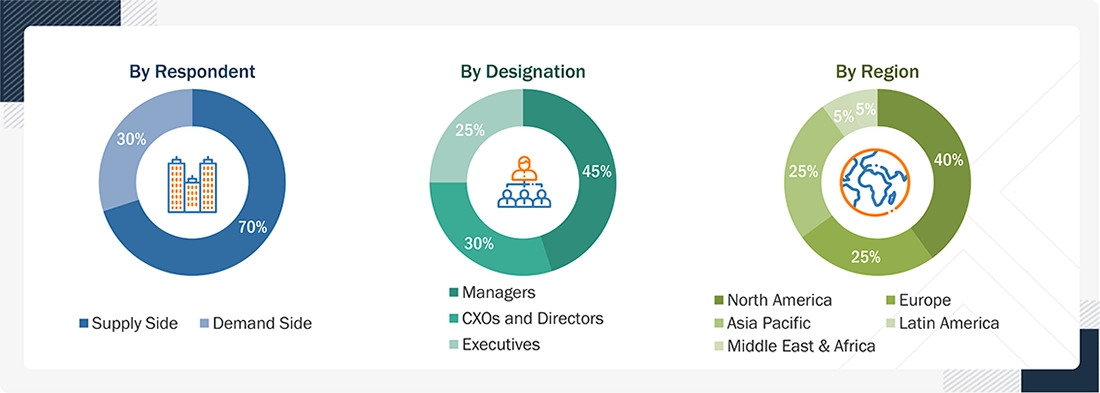
To know about the assumptions considered for the study, download the pdf brochure
Market Size Estimation
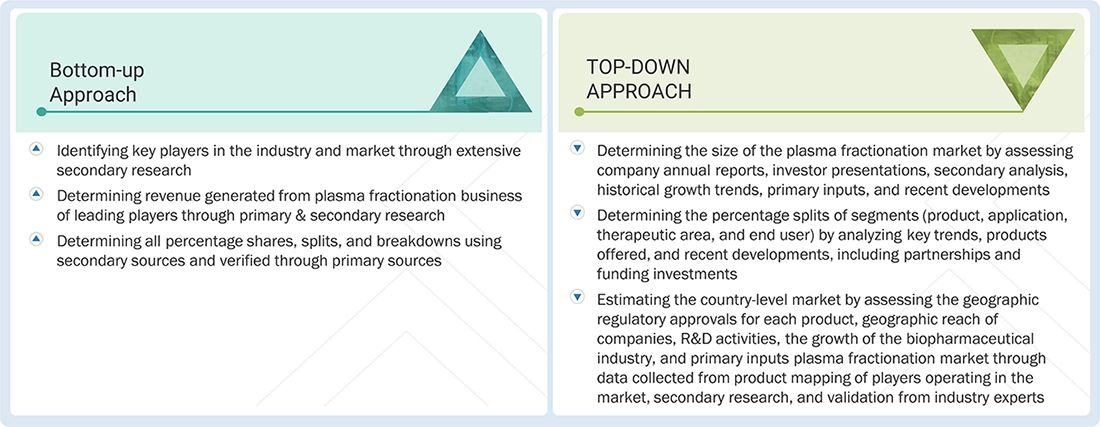
The top-down and bottom-up approaches were used to estimate & validate the total size of the plasma fractionation market. These methods were also used extensively to estimate the size of various market segments.
Plasma Fractionation Market : Top-Down and Bottom-Up Approach
Data Triangulation
After evaluating the overall market size through the market size estimation process, the total market was divided into several segments and subsegments. Data triangulation and market breakdown procedures were used, whenever applicable, to complete the overall market engineering process and obtain precise statistics for all segments and subsegments. The data was triangulated by analyzing various factors and trends from both the demand and supply sides.
Market Definition
Plasma-derived therapies are medical treatments based on human plasma. Plasma is the largest component of human blood and contains water, salts, enzymes, antibodies, and other proteins. Before it can be used in medical therapies, it undergoes a fractionation process in which the relevant proteins are separated. Plasma-derived therapies are used to treat a wide range of (rare) diseases, from bleeding disorders and inhibitor deficiencies to primary and secondary immunodeficiencies.
Key Stakeholders
- Plasma Fractionation Product Manufacturers and Distributors
- Pharmaceutical and Biotechnology Companies
- Healthcare Service Providers (including Hospitals and Clinics)
- Research and Development (R&D) companies
- Academic Institutes
- Government Associations
- Market Research and Consulting Firms
- Venture Capitalists and Investors
Report Objectives
- To define, describe, and forecast the plasma fractionation market based on product, application, therapeutic area, end user, and region
- To provide detailed information regarding the major factors influencing the market growth (such as drivers, restraints, opportunities, and challenges)
- To strategically analyze micromarkets concerning individual growth trends, prospects, and contributions to the overall plasma fractionation market
- To analyze the opportunities in the market for stakeholders and provide details of the competitive landscape for market leaders
- To forecast the size of the market segments concerning six main regions, namely, North America, Europe, the Asia Pacific, Latin America, the Middle East, and Africa
- To strategically profile the key players in the plasma fractionation market and comprehensively analyze their core competencies and market rankings
- To track and analyze competitive developments such as product launches, acquisitions, expansions, agreements, partnerships, and collaborations in the plasma fractionation market
- To benchmark players within the plasma fractionation market using the ‘Company Evaluation Matrix' framework, which analyzes market players based on various parameters within the broad categories of business and product/service strategy
Available customizations:
With the given market data, MarketsandMarkets offers customizations per the company’s specific needs. The following customization options are available for this report:
Product Analysis
- Further breakdown of the Rest of Europe Plasma Fractionation Market, by country
- Further breakdown of the Rest of Asia Pacific Plasma Fractionation Market, by country
- Further breakdown of the Rest of Latin America Plasma Fractionation Market, by country
- Further breakdown of the Rest of Middle East Plasma Fractionation Market, by country
Company Information
- Detailed analysis and profiling of additional market players (up to five)
Get the Full Plasma Fractionation Market Report
Full forecast, segment splits, and company analysis for all Plasma Fractionation Market.
- Canada Plasma Fractionation Market
- US Plasma Fractionation Market
- Germany Plasma Fractionation Market
- UK Plasma Fractionation Market
- France Plasma Fractionation Market
- Italy Plasma Fractionation Market
- Spain Plasma Fractionation Market
- China Plasma Fractionation Market
- Japan Plasma Fractionation Market
- India Plasma Fractionation Market
- South Korea Plasma Fractionation Market
- Australia Plasma Fractionation Market
- Vietnam Plasma Fractionation Market
- Malaysia Plasma Fractionation Market
- Indonesia Plasma Fractionation Market
- Mexico Plasma Fractionation Market
- Saudi Arabia Plasma Fractionation Market
- UAE Plasma Fractionation Market
- Turkey Plasma Fractionation Market
- Egypt Plasma Fractionation Market
- Rest Of Europe Plasma Fractionation Market
- Rest Of Asia Pacific Plasma Fractionation Market
- Rest Of Latin America Plasma Fractionation Market
- GCC Countries Plasma Fractionation Market
- Rest Of Middle East Plasma Fractionation Market
- Rest Of GCC Countries Plasma Fractionation Market
Need a Tailored Report?
Customize this report to your needs
Get 10% FREE Customization
Customize This Report
