
GCC Protective Relay Market (2024-2029)

The GCC Protective Relay Market was valued at $102.7 Million in 2024 and projected to reach to $136.2 Million by 2029, representing a compound annual growth rate of 4.8%. The GCC protective relay market is positioned for steady expansion driven by regional investments in electrical grid modernization and renewable energy infrastructure.


| Market Size in | USD 26.32 MN |
| Market Forecast in | |
| CAGR | |
| Forecast Period | |
| Units Considered | Value (USD MN) |
GCC Protective Relay Market Trends and Insights
- GCC nations are investing heavily in grid modernization and renewable energy infrastructure, driving demand for advanced protective relay systems.
- The region's focus on electrical safety standards and smart grid deployment is positioning GCC as a key market for protective relay technologies across the Middle East Africa region. GCC's energy sector expansion and increasing electrification initiatives are accelerating protective relay adoption.
- GCC countries are prioritizing grid reliability and fault detection capabilities to support their diversifying energy portfolios.
- The 4.8% compound annual growth rate reflects GCC's commitment to upgrading aging infrastructure and integrating digital protection solutions into existing power networks..
Key Market Statistics
- CAGR (2024-2029) 4.8% CAGR
- Market Size, 2024 ~USD 102.7 Million
- Forecast, 2029 ~USD 136.2 Million
- Country GCC
GCC Protective Relay Market Overview
Market Valuation :
The GCC protective relay market is valued at USD 102.7 million in 2024, with a projected CAGR of 4.8% through 2029, reaching USD 136.2 million by forecast end.
Grid Modernization Investments :
GCC nations are prioritizing electrical infrastructure upgrades and smart grid deployment, creating substantial demand for advanced protective relay systems across the region.
Renewable Energy Integration :
Accelerated renewable energy projects across GCC countries require sophisticated protective relay solutions to ensure grid stability and safety in hybrid power systems.
Safety & Compliance Focus :
Stringent electrical safety standards and regulatory frameworks in GCC are driving adoption of modern protective relay technologies to meet international compliance requirements.
GCC Protective Relay Market Dynamics
- GCC nations' commitment to smart grid technologies and enhanced electrical safety standards creates a favorable environment for protective relay system adoption.
- The region's strategic focus on energy diversification and infrastructure development supports sustained market growth through 2029. Key growth drivers include increasing grid complexity, rising electricity demand, and integration of distributed energy resources across GCC countries.
- Utilities and industrial operators are upgrading legacy systems with advanced protective relay solutions to improve operational efficiency and grid reliability.
- This modernization trend, coupled with regulatory emphasis on electrical safety, positions the GCC market for consistent expansion over the forecast period..
Market Ecosystem
Related Ecosystem
Key Takeaways
- GCC protective relay market valued at USD 102.7M in 2024, growing to USD 136.2M by 2029 at 4.8% CAGR
- GCC's grid modernization and renewable energy investments are primary growth catalysts for protective relay demand
- GCC countries prioritize electrical safety standards and smart grid integration to enhance power system reliability
- Digital protection solutions and advanced relay technologies are gaining traction across GCC energy infrastructure
Protective Relay Market Report Scope
| Report Metric | Details |
|---|---|
| Base Year | 2024 |
| Fastest Growing Segment | MOTORS (Application) |
| Forecast Period | 2024-2029 |
| Growth Rate | CAGR of 5.7% from 2024 to 2029 |
| Largest Segment | ELECTROMECHANICAL (Technology) |
| Market Size Base Year (Billions) | ~USD 2.8 (2024) |
| Revenue Forecast (Billions) | ~USD 3.69 (2029) |
| Segments Covered | Application, Voltage, Technology, End User, Voltage 2019-2022 |
GCC Protective Relay Market Report Segmentation
5 segment dimensions are covered across the global market.
By Application
- Busbars
- Feeders
- Generators
- Motors
- Other Applications
- Transformers
- Transmission Lines
By Voltage
- High
- Low
- Medium
- Very High
By Technology
- Digital &
- Digital & Numerical Relays
- Electromechanical
- Electromechanical & Static Relays
By End User
- Industrial
- Railways
- Utilities
By Voltage 2019-2022
- High
- Low
- Medium
- Very High
REST OF GCC: PROTECTIVE RELAY MARKET, BY END USER, 2023–2030
| Segment | 2023 | 2024 | 2025 | 2026 | 2027 | 2028 | 2029 | 2030 | CAGR (%) |
|---|---|---|---|---|---|---|---|---|---|
| INDUSTRIAL | 1.4 | 1.4 | 1.4 | 1.7 | 1.7 | 1.9 | 2 | 2 | 5.7 |
| OTHERS | 0.2 | 0.2 | 0.2 | 0.2 | 0.2 | 0.3 | 0.3 | 0.3 | 5.2 |
| RAILWAYS | 0.4 | 0.4 | 0.5 | 0.5 | 0.5 | 0.6 | 0.6 | 0.6 | 5.7 |
| UTILITIES | 1.6 | 1.7 | 1.7 | 1.9 | 2 | 2.2 | 2.3 | 2.3 | 5.7 |
| TOTAL | 3.7 | 3.7 | 3.8 | 4.4 | 4.4 | 5.1 | 5.1 | 5.2 | 5.7 |
GCC: PROTECTIVE RELAY MARKET, BY END USER, 2023–2030
| Segment | 2023 | 2024 | 2025 | 2026 | 2027 | 2028 | 2029 | 2030 | CAGR (%) |
|---|---|---|---|---|---|---|---|---|---|
| INDUSTRIAL | 37.6 | 39.1 | 40.7 | 43.2 | 45.2 | 47.3 | 49.7 | 52.1 | 4.9 |
| OTHERS | 5.5 | 5.7 | 5.9 | 6.3 | 6.5 | 6.8 | 7.1 | 7.4 | 4.3 |
| RAILWAYS | 11.9 | 12.3 | 12.8 | 13.6 | 14.2 | 14.9 | 15.6 | 16.3 | 4.8 |
| UTILITIES | 43.8 | 45.5 | 47.3 | 50.3 | 52.5 | 55 | 57.7 | 60.4 | 4.8 |
| TOTAL | 98.7 | 102.7 | 106.8 | 113.4 | 118.4 | 124.1 | 130.1 | 136.2 | 4.8 |
Target Audience
- Protective Relay Manufacturers : Manufacturers need GCC market data to assess regional demand, identify growth opportunities, and develop product strategies aligned with local grid modernization and renewable energy initiatives.
- Utility Companies & Grid Operators : GCC utilities require market intelligence to benchmark protective relay investments, evaluate technology trends, and plan infrastructure upgrades supporting smart grid deployment.
- System Integrators & Distributors : Regional integrators and distributors need GCC-specific market insights to identify customer segments, forecast demand, and optimize inventory and service offerings.
- Investment & Consulting Firms : Investors and consultants require detailed GCC market analysis to evaluate sector attractiveness, identify acquisition targets, and advise clients on regional expansion strategies.
- Energy & Infrastructure Planners : Government agencies and infrastructure planners need market data to inform policy decisions, prioritize grid modernization investments, and align protective relay standards with regional goals.
Reasons to Buy this Report
- Regional Market Sizing : Obtain precise market valuation data specific to GCC, including 2024 baseline (USD 102.7M) and 2029 forecast (USD 136.2M), enabling accurate investment and expansion planning.
- Growth Trajectory Analysis : Understand GCC's 4.8% CAGR performance relative to global 5.7% growth, identifying regional opportunities and competitive positioning within the protective relay sector.
- Infrastructure Investment Insights : Access detailed intelligence on GCC grid modernization initiatives and renewable energy projects driving protective relay demand across utilities and industrial sectors.
- Regulatory & Compliance Landscape : Gain comprehensive understanding of GCC electrical safety standards and smart grid deployment requirements shaping protective relay specifications and market adoption.
- Strategic Market Entry : Leverage GCC-specific market data to develop targeted go-to-market strategies, identify key customer segments, and prioritize regional expansion opportunities through 2029.
Frequently asked questions
What is the current size of the GCC protective relay market?
The GCC protective relay market was valued at USD 102.7 million in 2024 and is expected to reach USD 136.2 million by 2029.
What is the projected growth rate for GCC protective relays?
The GCC protective relay market is projected to grow at a compound annual growth rate (CAGR) of 4.8% from 2024 to 2029.
What factors are driving growth in the GCC protective relay market?
GCC's grid modernization initiatives, renewable energy expansion, smart grid deployment, and emphasis on electrical safety standards are key growth drivers for protective relay adoption.
How much will the GCC protective relay market grow by 2029?
The GCC protective relay market is expected to grow by USD 33.5 million, from USD 102.7 million in 2024 to USD 136.2 million in 2029.
Why is GCC investing in protective relay technology?
GCC nations are upgrading aging infrastructure, integrating renewable energy sources, and enhancing grid reliability and fault detection capabilities through advanced protective relay systems.
RESEARCH METHODOLOGY
This study undertook an extensive process to determine the current dimensions of the protective relay market, beginning with an in-depth secondary research phase focused on gathering data from the market, related markets, and the overall industry context. This initial data collection was followed by a thorough validation using primary research, which included discussions with industry experts across the value chain. Market size evaluations were then conducted for each country through a tailored analysis, leading to a detailed breakdown of the market. Data from these analyses were cross-checked to estimate the sizes of different segments and sub-segments. By integrating both secondary and primary research methods, the study ensures that the findings are both accurate and reliable.
Secondary Research
This research study involved the use of extensive secondary sources, directories, and databases such as UNCTAD data, industry publications, several newspaper articles, the Statista Industry Journal, and Factiva, to identify and collect information useful for a technical, market-oriented, and commercial study of the protective relay market. The other secondary sources included annual reports, press releases & investor presentations of companies, white papers, certified publications, articles by recognized authors, manufacturer associations, trade directories, and databases.
Primary Research
In the primary research process, various primary sources from the supply and demand sides were interviewed to obtain qualitative and quantitative information for this report. Primary sources from the supply side include industry experts such as chief executive officers (CEOs), vice presidents (VPs), marketing directors, and related key executives from various companies and organizations operating in the protective relay market.
In the complete market engineering process, the top-down and bottom-up approaches, along with several data triangulation methods, were extensively used to perform the market size estimations and forecasts for all segments and subsegments listed in this report. Extensive qualitative and quantitative analyses were conducted to complete the market engineering process and list key information/insights throughout the report. Following is the breakdown of primary respondents.
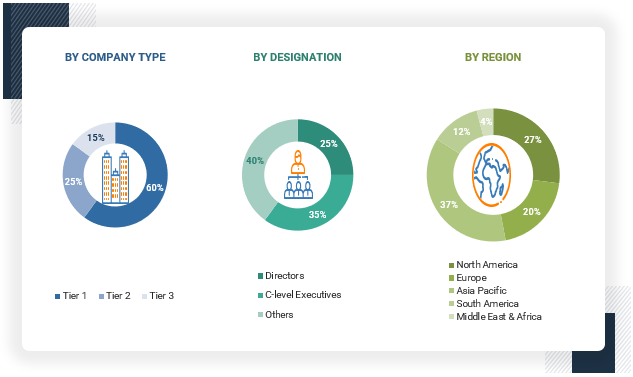
Note: Other designations include sales managers, engineers, and regional managers.
The tier of the companies is defined based on their total revenue; as of 2023: Tier 1 = > USD 1 billion,
Tier 2 = From USD 500 million to USD 1 billion, and Tier 3 = < USD 500 million.
To know about the assumptions considered for the study, download the pdf brochure
Market Size Estimation
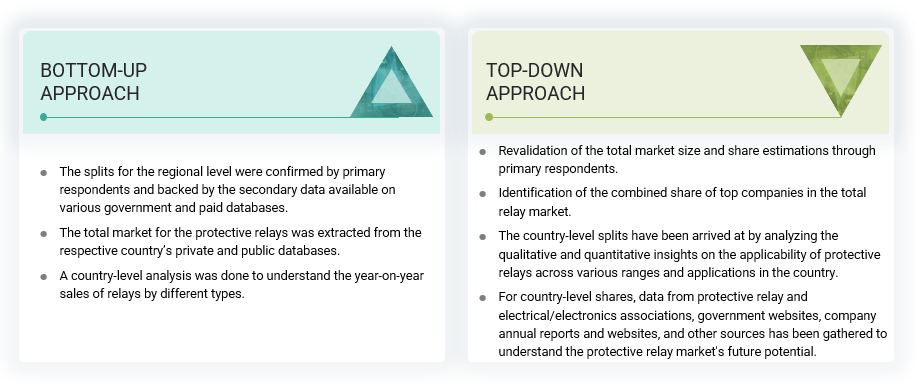
Both top-down and bottom-up approaches were used to estimate and validate the size of the protective relay market. These methods were also used extensively to estimate the size of various subsegments in the market. The research methodology used to estimate the market size includes the following:
Protective Relay Market: Top-Down and Bottom-Up Approach
Data Triangulation
After arriving at the overall market size from the estimation process explained below, the total market was split into several segments and subsegments. The data triangulation and market breakdown procedures were employed, wherever applicable, to complete the overall market engineering process and arrive at the exact statistics for all segments and subsegments. The data was triangulated by studying various factors and trends from both the demand and supply sides. The market size was validated using the top-down and bottom-up approaches.
Market Definition
A protective relay is a power system component that senses abnormalities or faults in the power system and initiates the control circuit operation. Major power system components such as transmission lines, feeders, busbars, transformers, motors, generators, and capacitor banks are capital-intensive assets that need to be protected in case of faults. Protective relays serve this purpose by continuously monitoring system health and by initiating switchgear operation to disconnect the faulty sections of the power network.
The market for protective relays is defined as the sum of revenues global companies generate from selling their protective relays. These devices are used by various end-users such as utilities, industries, railway & metro, and others. The regions considered for the protective relay market study include North America, Europe, Asia Pacific, Middle East & Africa, and South America.
Stakeholders
- Consulting companies in energy & power sector
- State and national regulatory authorities
- Organizations, forums, alliances, and associations
- Investors/Shareholders
- Manufacturers’ associations
- Protective Relay raw material and component manufacturers
- Protective Relay manufacturers, dealers, and suppliers
- Electrical equipment manufacturers’ associations and groups
- Power utilities and other end-user companies
- Consulting companies in the energy and power domain
- EV protective relay manufacturers
Report Objectives
- To define, describe, and forecast the global protective relay market based on voltage, technology, end-user, application, and region
- To provide detailed information regarding the major factors influencing the growth of the protective relay market (drivers, restraints, opportunities, and industry-specific challenges)
- To strategically analyze the protective relay market concerning individual growth trends, future prospects, and contributions of each segment to the market
- To analyze market opportunities for stakeholders and provide details of the competitive landscape for market leaders
- To benchmark players within the market using the proprietary Vendor DIVE framework, which analyzes the market players on various parameters within the broad categories of business and product strategies
- To track and analyze competitive developments such as expansions, new product launches, partnerships & collaborations, and mergers & acquisitions in the protective relay market
- To forecast the protective relay market, by region, in terms of volume.
- To project the market sizes for each of the major regions—North America, Europe, Asia Pacific, Middle East & Africa, and South America,—at the individual national levels
- To sketch a competitive environment for market participants and assess the potential for stakeholders in the protective relay business
- To compare key market players for the market share, product specifications, and applications
- To strategically profile key players and comprehensively analyze their market ranking and core competencies
- To track and analyze competitive developments in the protective relay market, such as sales contracts, agreements, investments, expansions, product launches, alliances, mergers, partnerships, joint ventures, collaborations, and acquisitions
- To study the impact of AI/Gen AI on the market under study, along with the global macroeconomic outlook
Available Customizations
With the given market data, MarketsandMarkets offers customizations according to the specific requirements of companies. The following customization options are available for the report:
Product Analysis
- Product Matrix, which provides a detailed comparison of the product portfolio of each company
Company Information
- Detailed analyses and profiling of additional market players
Get the Full Protective Relay Market Report
Full forecast, segment splits, and company analysis for all Protective Relay Market.
- China Protective Relay Market
- India Protective Relay Market
- Japan Protective Relay Market
- Australia Protective Relay Market
- South Korea Protective Relay Market
- Canada Protective Relay Market
- Mexico Protective Relay Market
- US Protective Relay Market
- United Kingdom Protective Relay Market
- Germany Protective Relay Market
- Italy Protective Relay Market
- France Protective Relay Market
- Spain Protective Relay Market
- Saudi Arabia Protective Relay Market
- UAE Protective Relay Market
- Qatar Protective Relay Market
- Egypt Protective Relay Market
- South Africa Protective Relay Market
- Brazil Protective Relay Market
- Argentina Protective Relay Market
- Rest Of Europe Protective Relay Market
- Rest Of Asia Pacific Protective Relay Market
- Rest Of GCC Protective Relay Market
- Rest Of South America Protective Relay Market
Need a Tailored Report?
Customize this report to your needs
Get 10% FREE Customization
Customize This Report
