
Spain Traffic Management Market (2024-2029)

The Spain Traffic Management Market was valued at $956.5 Million in 2024 and projected to reach to $1343.6 Million by 2029, representing a compound annual growth rate of 7.0%.
Spain Traffic Management Market Trends and Insights
- This 7.0% compound annual growth rate reflects Spain's increasing investment in intelligent transportation systems and urban mobility solutions.
- Spain is leveraging advanced technologies to address congestion in major metropolitan areas, particularly in Madrid and Barcelona, where traffic optimization has become a critical infrastructure priority. The Spanish market benefits from strong government initiatives promoting smart city development and digital transformation across transportation networks.
- Spain's commitment to European Union sustainability standards is driving adoption of traffic management solutions that reduce emissions and improve traffic flow efficiency.
- By 2029, Spain is expected to see significant expansion in real-time traffic monitoring, predictive analytics, and integrated mobility platforms that enhance both urban and highway traffic operations..
Key Market Statistics
- CAGR (2024-2029) : 7.0% CAGR
- Market Size, 2024 : ~USD 956.5
- Forecast, 2029 : ~USD 1343.6
- Country : Spain
Spain Traffic Management Market Overview
Market Valuation Growth :
Spain's traffic management market is valued at $956.5 million in 2024, with projections reaching $1,343.6 million by 2029, representing a steady 7% CAGR driven by urban congestion challenges.
Metropolitan Area Focus :
Major Spanish cities including Madrid, Barcelona, and Valencia are prioritizing intelligent transportation systems to manage traffic congestion and improve urban mobility solutions.
Technology Investment :
Spain is increasingly adopting advanced traffic management technologies including real-time monitoring, AI-powered analytics, and integrated mobility platforms across major urban centers.
Regional Growth Differential :
Spain's 7% CAGR is below the global average of 11.7%, indicating opportunities for accelerated adoption of next-generation traffic management solutions in the Spanish market.
Spain Traffic Management Market Dynamics
Spain's traffic management market is positioned for consistent growth as municipalities and regional governments prioritize smart city initiatives and sustainable urban mobility. The expansion from $956.5 million to $1,343.6 million reflects increasing government funding for intelligent transportation infrastructure and the integration of IoT and AI technologies in traffic control systems. Spanish cities are focusing on reducing congestion, improving air quality, and enhancing commuter experiences through data-driven traffic solutions. The market outlook remains positive with growing investments in connected vehicle technologies, real-time traffic analytics platforms, and integrated mobility management systems. Public-private partnerships are emerging as key drivers for technology deployment, particularly in major metropolitan regions. As Spain aligns with EU sustainability directives and smart mobility standards, the demand for advanced traffic management solutions is expected to accelerate, creating opportunities for both established vendors and innovative technology providers.
Related Ecosystem
Cns Systems
- C-Band
- Ka-Band
- Antennas
- Unmanned Ground Vehicles (UGV)
- Rotary Wing Aircraft
- L3Harris Technologies, Inc.
- Thales group
- HONEYWELL INTERNATIONAL INC.
- Northrop Grumman Corporation
-
LOCKHEED MARTIN CORPORATION
Digitalization And Iot
- Sensors
- Remote Monitoring
- Supply Chain Management
- Passenger Information System (PIS)
- Platform as A Service (PaaS)
- International Business Machines Corporation
- Cisco Systems, Inc.
- MICROSOFT CORPORATION
- Oracle Corporation
-
HUAWEI TECHNOLOGIES CO LTD
Mobility And Telecom
- Smart Utilities
- Smart Healthcare
- Sensors
- Parking Management System
- Passenger Information System (PIS)
- AT&T Inc.
- Cisco Systems, Inc.
- HUAWEI TECHNOLOGIES CO LTD
- Telefonaktiebolaget LM Ericsson (publ)
-
International Business Machines Corporation
Key Takeaways
- Spain's traffic management market will grow from $956.5M (2024) to $1,343.6M (2029) at a 7.0% CAGR.
- Spain is prioritizing smart city infrastructure and EU-aligned sustainability standards in traffic solutions.
- Major Spanish cities like Madrid and Barcelona are driving demand for advanced congestion management technologies.
- Spain's market expansion is supported by government digital transformation initiatives and real-time traffic monitoring investments.
Spain Traffic Management Market Report Scope
| Report Metric | Details |
|---|---|
| Base Year | 2024 |
| Fastest Growing Segment | AIRWAY (Transportation Mode) |
| Forecast Period | 2024–2039 |
| Growth Rate | CAGR of 11.7% from 2024 to 2039 |
| Largest Segment | ROADWAY (Transportation Mode) |
| Market Size Base Year | 43.56 (2024) |
| Revenue Forecast | 75.74 (2039) |
| Segments Covered | Offering, Solution, Service, Area Of Application, End User, Transportation Mode, Type |
Spain Traffic Management Market Report Segmentation
7 segment dimensions are covered across the global market.
By Offering
- Services
- Solutions
By Solution
- Adaptive Traffic Control
- Electronic Toll Management
- Incident Detection & Management
- Other Solutions
- Traffic Enforcement Management
- Traffic Monitoring & Analytics
By Service
- Consulting
- Implementation
- Support & Maintenance
By Area Of Application
- Inter-Urban
- Rural
- Urban
By End User
- Government
- Private
By Transportation Mode
- Airway
- Maritime
- Railway
- Roadway
By Type
- Services
- Solutions
Target Audience
- Traffic Management Solution Vendors : Require detailed Spain market insights to develop localized product offerings, identify key customer segments, and establish distribution partnerships with Spanish municipalities and transportation authorities.
- Municipal Government Officials : Need market data to justify infrastructure investments, benchmark against peer cities, and make informed decisions about intelligent transportation system implementations in their regions.
- Investment & Private Equity Firms : Seek comprehensive market analysis to evaluate investment opportunities in Spanish traffic management companies, assess market growth potential, and identify acquisition targets in the sector.
- Technology Consultants & System Integrators : Require Spain-specific market intelligence to advise clients on technology selection, implementation strategies, and ROI projections for traffic management system deployments.
- Urban Planning & Smart City Developers : Need market insights to integrate traffic management solutions into broader smart city initiatives, understand funding mechanisms, and align projects with Spain's sustainability and mobility goals.
Key Companies in the Spain Traffic Management Market
| Company | HQ | rev. share | Strongest segments |
|---|
Reasons to Buy this Report
- Market Size & Growth Trajectory : Access precise valuation data for Spain's traffic management market with detailed forecasts through 2029, enabling accurate investment planning and resource allocation decisions.
- Competitive Landscape Intelligence : Understand Spain-specific market dynamics, key players, and technology adoption patterns to identify competitive advantages and market entry opportunities in this growing segment.
- Regional Investment Opportunities : Identify high-growth metropolitan areas and municipal projects in Spain with detailed insights into government spending priorities and infrastructure development initiatives.
- Technology Trend Analysis : Gain insights into Spain's adoption of AI, IoT, and real-time analytics in traffic management, helping technology providers align product development with local market demands.
- Strategic Decision Support : Leverage comprehensive Spain market data to support business expansion, partnership development, and go-to-market strategies tailored to Spanish municipalities and transportation authorities.
Frequently asked questions
What is the current size of Spain's traffic management market?
Spain's traffic management market was valued at $956.5 million in 2024 and is projected to reach $1,343.6 million by 2029.
What is the growth rate for Spain's traffic management market?
Spain's traffic management market is expected to grow at a compound annual growth rate (CAGR) of 7.0% from 2024 to 2029.
Which cities in Spain are leading traffic management adoption?
Madrid and Barcelona are the primary drivers of traffic management technology adoption in Spain, where congestion management is a critical priority.
What technologies are driving Spain's traffic management market?
Real-time traffic monitoring, predictive analytics, intelligent transportation systems, and integrated mobility platforms are key technologies driving Spain's market growth.
How do EU regulations impact Spain's traffic management market?
Spain's commitment to EU sustainability standards is accelerating adoption of traffic management solutions that reduce emissions and improve traffic flow efficiency.
RESEARCH METHODOLOGY
The research study involved four major activities in estimating the traffic management market size. Exhaustive secondary research has been done to collect important information about the market and peer markets. The next step has been to validate these findings and assumptions and size them with the help of primary research with industry experts across the value chain. Both top-down and bottom-up approaches have been used to estimate the market size. Post which, the market breakdown and data triangulation have been adopted to estimate the market sizes of segments and subsegments.
Secondary Research
The market size of the companies offering traffic management solutions to various end users was arrived at based on the secondary data available through paid and unpaid sources and by analyzing the product portfolios of major companies in the ecosystem and rating the companies based on their performance and quality. In the secondary research process, various sources were referred to identify and collect information for the study. The secondary sources include annual reports, press releases, investor presentations of companies, white papers, certified publications, and articles from recognized associations and government publishing sources. Several journals and various associations, such as the International Road Federation (IRF), International Traffic Safety Data and Analysis Group (IRTAD), The World Road Association (PIARC), the American Traffic Safety Services Association (ATSSA), and the Traffic Management Association of Australia (TMAA), were also referred to.
Secondary research was mainly used to obtain critical information about industry insights, the market’s monetary chain, the overall pool of key players, market classification and segmentation according to industry trends to the bottom-most level, regional markets, and key developments from both market-oriented and technology-oriented perspectives.
Primary Research
In the primary research process, various sources from the supply and demand sides were interviewed to obtain qualitative and quantitative information for the report, such as chief experience officers (CXOs), vice presidents (VPs), directors from business development, marketing, and product development/innovation teams, and related key executives from traffic management solution vendors, system integrators, professional and managed service providers, industry associations, independent consultants, and key opinion leaders.
Primary interviews were conducted to gather insights, such as market statistics, data on revenue collected from platforms and services, market breakups, market size estimations, market forecasts, and data triangulation. Stakeholders from the demand side, such as chief information officers (CIOs), chief finance officers (CFOs), chief strategy officers (CSOs), and the installation team of end users who use traffic management solutions, were interviewed to understand buyers’ perspectives on suppliers, products, service providers, and their current usage of traffic management solutions which is expected to affect the overall traffic management market growth.
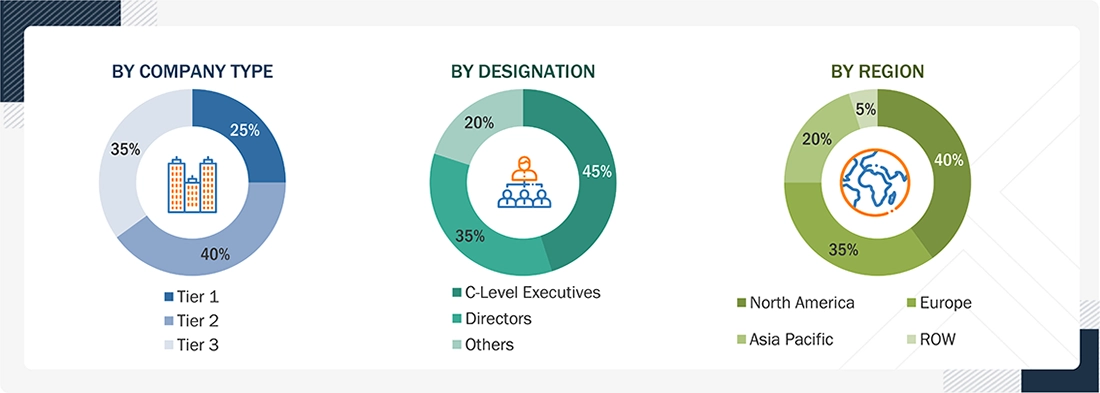
Note 1: Tier 1 companies have revenues over USD 1 billion; Tier 2 companies’ revenues range between USD 500 million and 1 billion; and Tier 3 companies have revenues of less than USD 500 million.
Other designations include sales managers, marketing managers, and product managers.
To know about the assumptions considered for the study, download the pdf brochure
Market Size Estimation
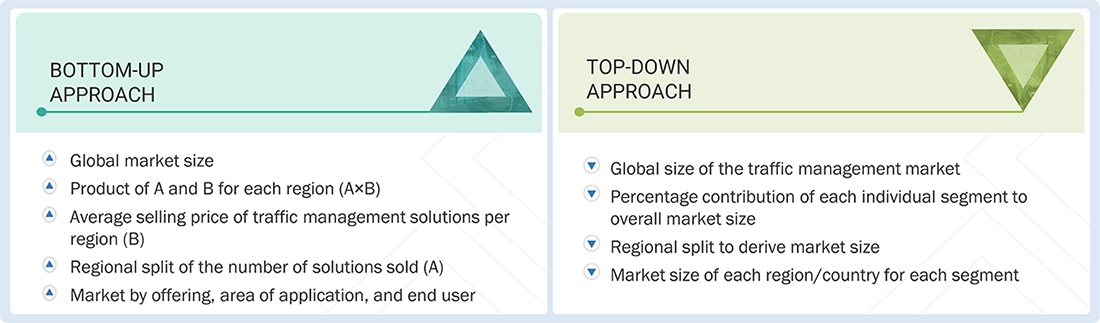
Multiple approaches were adopted to estimate and forecast the size of the traffic management market. The first approach involves estimating market size by summing up the revenue generated by companies through the sale of solutions.
Top-down and bottom-up approaches were used to estimate and validate the total size of the traffic management market. These methods were extensively used to estimate the size of various segments in the market. The research methodology used to evaluate the market size is listed below.
- Key players in the market have been identified through extensive secondary research.
- In terms of value, the industry’s supply chain and market size have been determined through primary and secondary research processes.
- All percentage shares, splits, and breakups have been determined using secondary sources and verified through primary sources.
Data Triangulation
After arriving at the overall market size from the above estimation process, the traffic management market has been split into several segments and subsegments. To complete the overall market engineering process and arrive at the exact statistics for all segments and subsegments, data triangulation and market breakdown procedures have been used, wherever applicable. The data has been triangulated by studying various factors and trends from both the demand and supply sides. The traffic management market size has been validated using top-down and bottom-up approaches.
Market Definition
Traffic management refers to the planning, monitoring, control, and optimization of traffic flow across road transportation networks to improve mobility, enhance road safety, reduce congestion, and maximize the efficiency of existing transportation infrastructure. It involves the use of technologies such as traffic signal control systems, traffic surveillance cameras, sensors, traffic monitoring platforms, incident detection systems, and intelligent transportation systems (ITS) to collect, analyze, and manage real-time traffic information. Traffic management solutions enable transportation authorities and road operators to monitor roadway conditions, respond to incidents, optimize traffic operations, and support efficient movement of vehicles, pedestrians, and public transportation across urban and interurban networks.
Key Stakeholders
- Original Equipment Manufacturers (OEMs)
- Internet of Things (IoT) Technology Vendors
- Technology Vendors
- Managed Service Providers (MSPs)
- Networking and Communications Service Providers (CSPs)
- Consulting and Advisory Firms
- Regional Department of Public Transport Authorities
- Governments and Urban Planning Agencies
- Regional Associations
- Investors and Venture Capitalists
- Independent Software Vendors
- Value-added Resellers (VARs) and Distributors
Report Objectives
- To determine, segment, and forecast the traffic management market based on offering, area of application, end user, and region
- To forecast the size of the market segments with respect to five main regions: North America, Europe, Asia Pacific, the Middle East & Africa, and Latin America
- To provide detailed information about the major factors (drivers, restraints, opportunities, and challenges) influencing the growth of the market
- To study the complete supply chain and related industry segments, and perform a supply chain analysis of the market landscape
- To strategically analyze the macro- and micro-markets with respect to individual growth trends, prospects, and contributions to the total market
- To analyze the industry trends, pricing data, patents, and innovations related to the market
- To analyze the opportunities for stakeholders by identifying the high-growth segments of the market
- To profile the key players in the market and comprehensively analyze their market share/ranking and core competencies
- To track and analyze competitive developments, such as mergers & acquisitions, product launches & developments, partnerships, and collaborations, in the market
Available customizations:
With the given market data, MarketsandMarkets offers customizations per the company’s specific needs. The following customization options are available for the report:
Geographic Analysis
- Further breakup of the Asia Pacific market into countries contributing 75% to the regional market size
- Further breakup of the North American market into countries contributing 75% to the regional market size
- Further breakup of the Latin American market into countries contributing 75% to the regional market size
- Further breakup of the Middle East & African market into countries contributing 75% to the regional market size
- Further breakup of the European market into countries contributing 75% to the regional market size
Company Information
- Detailed analysis and profiling of additional market players (up to 5)
Get the Full Traffic Management Market Report
Full forecast, segment splits, and company analysis for all Traffic Management Market.
- Canada Traffic Management Market
- US Traffic Management Market
- UK Traffic Management Market
- Italy Traffic Management Market
- China Traffic Management Market
- India Traffic Management Market
- Brazil Traffic Management Market
- France Traffic Management Market
- Germany Traffic Management Market
- Rest Of Europe Traffic Management Market
- Japan Traffic Management Market
- Rest Of Asia Pacific Traffic Management Market
- Mexico Traffic Management Market
- Rest Of Latin America Traffic Management Market
- GCC Countries Traffic Management Market
- South Africa Traffic Management Market
- Ksa Traffic Management Market
- Qatar Traffic Management Market
- Rest Of GCC Countries Traffic Management Market
- UAE Traffic Management Market
Need a Tailored Report?
Customize this report to your needs
Get 10% FREE Customization
Customize This Report