
Brazil Vascular Access Device Market (2026-2031)

The Brazil Vascular Access Device Market was valued at $147.8 Million in 2026 and projected to reach to $197.6 Million by 2031, representing a compound annual growth rate of 6.0%. Brazil's vascular access device market is poised for sustained growth through 2031, driven by healthcare infrastructure modernization and rising chronic disease prevalence.


| Market Size in | USD 26.32 MN |
| Market Forecast in | |
| CAGR | |
| Forecast Period | |
| Units Considered | Value (USD MN) |
Brazil Vascular Access Device Market Trends and Insights
- Brazil's healthcare infrastructure modernization and increasing prevalence of chronic diseases are driving demand for reliable vascular access solutions across hospitals, dialysis centers, and outpatient facilities.
- The market in Brazil benefits from rising patient populations requiring long-term intravenous therapies, chemotherapy, and hemodialysis treatments. The forecast period through 2031 indicates steady growth in Brazil's adoption of advanced vascular access technologies, including peripherally inserted central catheters (PICCs), central venous catheters (CVCs), and arteriovenous fistulas.
- Brazil's expanding middle class and improved healthcare reimbursement policies are expected to support market penetration in both urban and emerging regional markets.
- Investment in healthcare quality and infection prevention initiatives across Brazil further strengthens the outlook for vascular access device adoption..
Key Market Statistics
- CAGR (2026-2031) 6.0% CAGR
- Market Size, 2026 ~USD 147.8 Million
- Forecast, 2031 ~USD 197.6 Million
- Country Brazil
Brazil Vascular Access Device Market Overview
Market Size & Growth :
Brazil's vascular access device market is valued at USD 147.8 million in 2026 and is projected to reach USD 197.6 million by 2031, representing a steady 6.0% CAGR driven by healthcare modernization and chronic disease prevalence.
Healthcare Infrastructure Expansion :
Brazil is investing significantly in modernizing its healthcare infrastructure, with increased funding for hospital equipment and dialysis center upgrades, creating substantial demand for advanced vascular access solutions.
Chronic Disease Burden :
Rising prevalence of diabetes, hypertension, and chronic kidney disease in Brazil is driving demand for reliable vascular access devices across hospitals, dialysis centers, and outpatient facilities nationwide.
Regional Market Dynamics :
Brazil represents the largest vascular access device market in Latin America, with growing adoption in both public healthcare systems (SUS) and private medical institutions, supported by increasing patient awareness.
Brazil Vascular Access Device Market Dynamics
- The expansion of dialysis centers and improved hospital capabilities are creating consistent demand for peripheral and central venous catheters, arteriovenous fistulas, and grafts.
- Government initiatives to enhance healthcare accessibility and private sector investments are expected to accelerate market penetration in underserved regions. The market will benefit from increasing adoption of advanced vascular access technologies and growing patient populations requiring long-term vascular access.
- Strategic partnerships between international manufacturers and Brazilian healthcare providers, combined with regulatory improvements, will facilitate market entry and product innovation.
- By 2031, Brazil's market is expected to establish itself as a key growth driver in Latin America's vascular access device sector..
Market Ecosystem
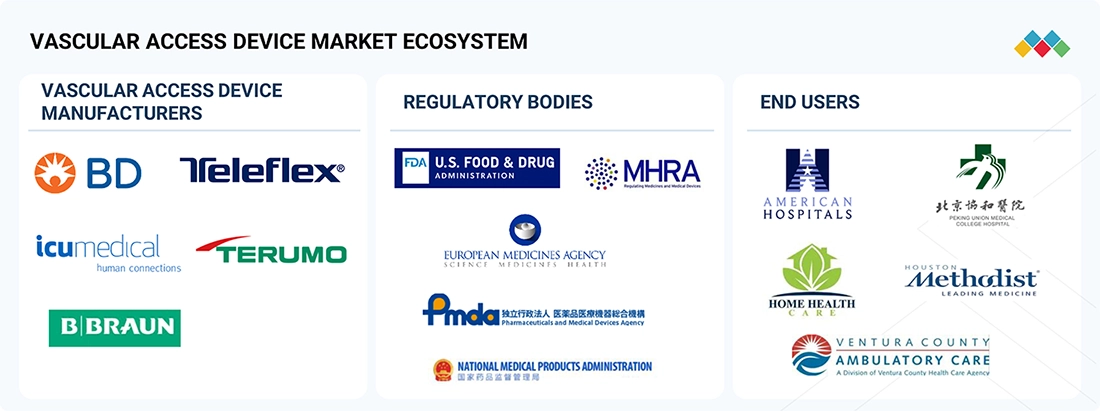
VASCULAR ACCESS DEVICE MARKET: COMMERCIAL USE CASES ACROSS INDUSTRIES
| COMPANY | USE CASE DESCRIPTION | BENEFITS |
|---|---|---|
 |
Portfolio spans closed PIVC systems (BD Nexiva) and ultrasound-guided midlines (BD PowerGlide Pro) for extended peripheral therapy and streamlined insertion workflows | Closed, integrated design supports longer dwell and reduced blood exposure and needlestick risk, while midlines allow dwell of up to 29 days with guidewire-assisted placement to improve insertion success |
 |
Emergency intraosseous access (Arrow EZ-IO) and antimicrobial-impregnated short-term CVCs (Arrowg+ard Blue Plus) covering difficult-access and high infection-risk patients | IO enables access in about 10 seconds with high first-attempt success, while chlorhexidine/silver-sulfadiazine CVCs suppress microbial colonization and reduce catheter-related bloodstream infections |
 |
Subcutaneous infusion systems (Terufusion®), infusion sets, safety needles, and drug delivery devices designed to support continuous subcutaneous administration of biologics, insulin, analgesics, and other specialty therapies across hospital and home care settings | Precision-engineered infusion systems provide consistent drug delivery, low dead-space design, secure needle fixation, and enhanced patient comfort, supporting reliable long-term subcutaneous therapy while minimizing leakage, dislodgement, and infusion-related complications |
 |
Antimicrobial hemodialysis catheter caps (ClearGuard HD) standardize line access and protect catheter hubs | A straight fluid path minimizes reflux and occlusion and provides a microbial barrier, while ClearGuard HD caps achieved significant CLABSI reductions in multicenter randomized trials |
 |
Subcutaneous infusion systems (Introcan Safety 2 SC), winged infusion sets (Saf-T-Intima), and infusion accessories designed for continuous and intermittent subcutaneous administration of medications, fluids, and biologic therapies in hospital and home care settings | Soft cannula technology improves patient comfort and reduces tissue trauma, while integrated safety features and secure fixation help minimize needlestick injuries, accidental dislodgement, and leakage, supporting reliable long-term subcutaneous infusion and consistent clinical workflows |
Logos and trademarks shown above are the property of their respective owners. Their use here is for informational and illustrative purposes only.
Related Ecosystem
Medical Devices
- Polymerase Chain Reaction (PCR)
- Magnetic Resonance Imaging (MRI)
- Disposable Autoinjectors
- Pulse Oximeters
- Blood Pressure Monitors
- Medtronic plc
- Abbott Laboratories
- Stryker Corporation
- Becton, Dickinson and Company
- CONMED Corporation
Key Takeaways
- Brazil's vascular access device market will grow from USD 147.8M (2026) to USD 197.6M (2031) at a 6.0% CAGR.
- Brazil's chronic disease burden and aging population are primary drivers of sustained vascular access device demand.
- Healthcare infrastructure investment and reimbursement improvements in Brazil support market expansion through 2031.
- Brazil's adoption of advanced catheter technologies and infection prevention protocols will accelerate market growth.
Vascular Access Device Market Report Scope
| Report Metric | Details |
|---|---|
| Base Year | 2026 |
| Fastest Growing Segment | SUBCUTANEOUS (Route Of Insertion) |
| Forecast Period | 2026–2031 |
| Growth Rate | CAGR of 6.7% from 2026 to 2031 |
| Largest Segment | INTRAVENOUS (Route Of Insertion) |
| Market Size Base Year (Billions) | ~USD 6.29 (2026) |
| Revenue Forecast (Billions) | ~USD 8.7 (2031) |
| Segments Covered | Type, Route Of Insertion, Application, End User |
Brazil Vascular Access Device Market Report Segmentation
4 segment dimensions are covered across the global market.
By Type
- Accessories
- Butterfly/Winged Steel Needles
- Central Venous Access Devices
- Chemotherapy
- Implantable Conventional Ports
- Implantable Ports
- Implantable Power Injectable Ports
- Integrated/Accelerated Midline Catheters
- Intraosseous Vascular Access Devices
- Midline Catheters
- Mst Max Barrier Midline Catheters
- Non-Tunneled Catheters
- Other Drug Administration Applications
- Peripheral Arterial Access Devices
- Peripheral Intravenous Catheters
- Peripheral Vascular Access Devices
- Peripheral Venous Access Devices
- Peripherally Inserted Central Catheters
- Private
- Public
- Tunneled Catheters
By Route Of Insertion
- Intraosseous
- Intravenous
- Subcutaneous
By Application
- Blood Transfusion
- Diagnostics & Testing
- Drug Administration
- Fluid & Nutrition Administration
By End User
- Ambulatory Care Centers
- Clinics
- Hospitals
- Other End Users
BRAZIL: VASCULAR ACCESS DEVICE MARKET, BY END USER, 2024–2031
| Segment | 2024 | 2025 | 2026 | 2027 | 2028 | 2029 | 2030 | 2031 | CAGR (%) |
|---|---|---|---|---|---|---|---|---|---|
| AMBULATORY CARE CENTERS | 53.4 | 57.3 | 61 | 64.9 | 69.4 | 74.4 | 79.9 | 86 | 7.1 |
| CLINICS | 35.4 | 37.8 | 40 | 42.4 | 45.1 | 48.2 | 51.5 | 55.1 | 6.6 |
| HOSPITALS | 125.1 | 132.9 | 139.9 | 147.5 | 156.2 | 165.8 | 176.3 | 187.9 | 6.1 |
| OTHER END USERS | 26.1 | 27.9 | 29.5 | 31.2 | 33.1 | 35.3 | 37.7 | 40.4 | 6.5 |
| TOTAL | 240 | 255.9 | 270.4 | 285.9 | 303.8 | 323.7 | 345.5 | 369.4 | 6.4 |
Target Audience
- Medical Device Manufacturers : Manufacturers need Brazil-specific market data to develop localized product strategies, identify distribution partnerships, and allocate resources effectively in Latin America's largest vascular access market.
- Healthcare Facility Operators : Hospital administrators and dialysis center operators require market insights to make informed procurement decisions, forecast equipment needs, and optimize capital expenditure planning for vascular access devices.
- Investment & Private Equity Firms : Investors evaluating opportunities in Brazil's healthcare sector need detailed market analysis to assess growth potential, competitive dynamics, and risk factors specific to the vascular access device market.
- Healthcare Consultants & Advisors : Consulting firms advising healthcare clients in Brazil require country-specific market data to develop strategic recommendations, conduct feasibility studies, and support market entry initiatives.
- Government & Policy Makers : Brazilian health ministry officials and policy makers need market intelligence to inform healthcare infrastructure planning, procurement policies, and regulatory frameworks for vascular access devices.
Key Companies in the Brazil Vascular Access Device Market
| Company | HQ | Ownership | Strongest segments |
|---|---|---|---|
| PENUMBRA, INC. | United States | Public Company | Neurovascular thrombectomy (Penumbra System, RED, JET, ACE, ENGINE, 3D Revascularization Device),Peripheral thrombectomy (Indigo, Lightning Flash, Lightning Bolt 7, CAT RX),Neuro and peripheral embolization (Ruby platforms, POD, coils, LANTERN, Packing Coil), |
| SANOFI | France | Public Company | Pediatric and Combination Vaccines (including hexavalent),Other Vaccines (RSV, travel, rabies, yellow fever, typhoid, hepatitis A),Immunology & Inflammation Therapies, |
| BECTON, DICKINSON AND COMPANY | United States | Public Company | Medical Essentials (syringes, needles, IV and vascular access, sharps, basic disposables),Connected Care (infusion, medication management, pharmacy automation, informatics, hemodynamic monitoring),BioPharma Systems (prefillable drug delivery systems and related services), |
| TERUMO CORPORATION | Japan | Public Company | Cardiac and Vascular Company,Medical Care Solutions Company,Blood and Cell Technologies Company, |
| TELEFLEX INCORPORATED | United States | Public Company | Vascular access and emergency medicine (Arrow, EZ-IO, QuikClot, FAST1),Surgical products (Weck, MiniLap, Pleur-Evac, Deknatel, KMedic, Pilling, Titan SGS),Interventional cardiology and peripheral (GuideLiner, Turnpike, TrapLiner, MANTA, DCBs, stents, balloons), |
| ICU MEDICAL INC. | United States | Public Company | IV solutions and diluents,Infusion pumps and hardware,Vascular access and needlefree connectors, |
| MERIT MEDICAL SYSTEMS | United States | Public Company | Cardiovascular – Peripheral Intervention (angiography, drainage, delivery, embolotherapy),Cardiovascular – Cardiac Intervention (access, EP/CRM, fluid management, hemodynamic, hemostasis),Oncology and Spine (soft tissue biopsy, vertebral augmentation, RFA, bone biopsy), |
| NIPRO CORPORATION | Japan | Public Company | Renal care (hemodialysis machines, dialyzers, blood tubing sets),Injection and infusion (syringes, catheters, IV sets),Glass pharma packaging and components, |
| ANGIODYNAMICS | United States | Public Company | Med Tech (Auryon, AlphaVac, AngioVac, NanoKnife, Solero, VenaCure EVLT),Med Device (peripheral catheters, guidewires, ports, drainage, micropuncture kits), |
| AMECATH | Egypt | Private Company | Dialysis catheters,Central venous and midline catheters,Urology catheters, |
PENUMBRA, INC.
PENUMBRA, INC. is a United States-based public company founded in 2004 with 4700 employees.
SANOFI
SANOFI is a French public company founded in 1994 with 74846 employees.
BECTON, DICKINSON AND COMPANY
BECTON, DICKINSON AND COMPANY is a United States-based public company founded in 1897 with 72000 employees.
TERUMO CORPORATION
TERUMO CORPORATION is a Japanese public company founded in 1921 with 30591 employees.
TELEFLEX INCORPORATED
TELEFLEX INCORPORATED is a United States-based public company founded in 1943 with 15500 employees.
ICU MEDICAL INC.
ICU MEDICAL INC. is a United States-based public company founded in 1984 with 13000 employees.
MERIT MEDICAL SYSTEMS
MERIT MEDICAL SYSTEMS is a United States-based public company founded in 1987 with 7500 employees.
NIPRO CORPORATION
NIPRO CORPORATION is a Japanese public company founded in 1954.
ANGIODYNAMICS
ANGIODYNAMICS is a United States-based public company founded in 1988 with 632 employees.
AMECATH
AMECATH is an Egypt-based private company founded in 1991.
Reasons to Buy this Report
- Market-Specific Sizing & Forecasts : Access precise market valuations for Brazil (USD 147.8M in 2026, USD 197.6M in 2031) with country-specific CAGR of 6.0%, enabling accurate financial planning and investment decisions tailored to the Brazilian market.
- Healthcare Infrastructure Insights : Understand Brazil's healthcare modernization trajectory, including hospital upgrades and dialysis center expansion, to identify high-potential customer segments and distribution opportunities in the region.
- Chronic Disease Epidemiology : Gain detailed analysis of diabetes, hypertension, and chronic kidney disease prevalence in Brazil to forecast demand patterns and develop targeted marketing strategies for vascular access solutions.
- Competitive Landscape Analysis : Benchmark against regional competitors and understand market dynamics specific to Brazil's public (SUS) and private healthcare sectors to optimize market entry and positioning strategies.
- Growth Opportunity Identification : Identify emerging opportunities in underserved Brazilian regions and high-growth segments within dialysis centers and outpatient facilities to maximize market share and revenue potential through 2031.
Frequently asked questions
What is the current size of Brazil's vascular access device market?
Brazil's vascular access device market is valued at USD 147.8 million in 2026.
What is the projected market size for vascular access devices in Brazil by 2031?
Brazil's vascular access device market is forecast to reach USD 197.6 million by 2031.
What is the growth rate of Brazil's vascular access device market?
Brazil's vascular access device market is expected to grow at a compound annual growth rate (CAGR) of 6.0% from 2026 to 2031.
What factors are driving growth in Brazil's vascular access device market?
Key drivers include rising chronic disease prevalence, an aging population, healthcare infrastructure modernization, improved reimbursement policies, and increased adoption of advanced catheter technologies in Brazil.
Which vascular access device types are most commonly used in Brazil?
Brazil's market includes peripherally inserted central catheters (PICCs), central venous catheters (CVCs), arteriovenous fistulas, and other advanced vascular access solutions used across hospitals, dialysis centers, and outpatient facilities.
RESEARCH METHODOLOGY
Secondary research was conducted to gather information for this technical, market-oriented, and commercial study of the global vascular access device (VAD) market. The next step was to validate these findings, assumptions, and sizing with industry experts across the value chain through primary research. Different approaches, such as top-down and bottom-up, were used to estimate the total market size. After that, market breakup and data triangulation procedures were used to estimate the size of the segments and subsegments of the VAD market.
Secondary Research
In the secondary research process, various secondary sources were consulted to identify and collect information for the study. These sources included annual reports, press releases, and investor presentations of device manufacturers; regulatory filings and clearance databases; clinical literature and peer-reviewed journals; healthcare and infection-control association publications; certified publications; and white papers. Secondary research was primarily used to obtain key information on the industry's supply chain, the total pool of key players, market classification and segmentation according to industry trends down to the most granular level, regional markets, and key developments from both market- and technology-oriented perspectives. All of this information was further validated by primary sources.
Primary Research
In the primary research process, various primary sources from both the supply and demand sides were interviewed to obtain qualitative and quantitative information for this report: marketing directors, technology and innovation directors, and related key executives from various key companies and organizations operating in the vascular access device market. Primary sources on the demand side include directors and presidents of hospitals & cardiac centers, as well as scientists/researchers from academic & research institutes. Primary research was conducted to validate the market segmentation, identify key players, and gather insights on key industry trends and dynamics.
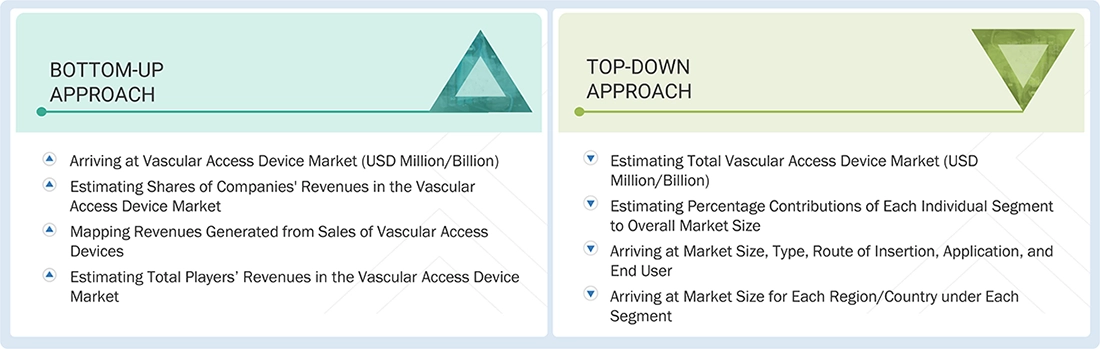
In the market engineering process, top-down and bottom-up approaches were extensively used, along with several data triangulation methods, to perform market estimation and forecasting for the overall market segments and subsegments listed in this report. Extensive qualitative and quantitative analysis was conducted throughout the market engineering process to present key information and insights throughout the report.
After the complete market engineering process—including calculations for market statistics, market breakups, market size estimates, market forecasts, and data triangulation—extensive primary research was conducted to gather information and verify and validate the critical numbers arrived at. Primary research was also used to identify segmentation types, industry trends, the competitive landscape among VAD market players, and key market dynamics, including drivers, restraints, opportunities, challenges, and key strategies.
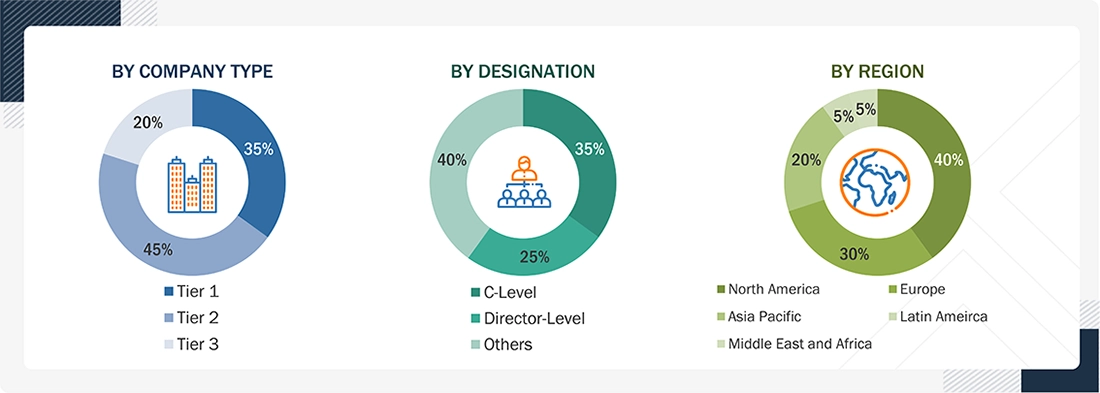
Note 2: Tier 1 companies – revenue higher than USD 10 billion; Tier 2 companies – revenue between USD 1 and 10 billion; Tier 3 companies – revenue between USD 500 million and USD 1 billion.
To know about the assumptions considered for the study, download the pdf brochure
Market Size Estimation
Top-down and bottom-up approaches were used to estimate and validate the size of the VAD market and the sizes of various dependent subsegments within the overall market. The research methodology used to estimate market size included identifying key market players through secondary research and determining their market shares in each region through both primary and secondary research. This entire procedure included the study of the annual and financial reports of the top market players, and extensive interviews were conducted with key industry leaders, such as CEOs, VPs, directors, and marketing executives, to gain key insights.
All percentage splits and breakdowns were determined using secondary sources and verified through primary sources. All possible parameters that affect the market covered in this research study have been accounted for, examined in extensive detail, verified through primary research, and analyzed to obtain the final quantitative and qualitative data. This data is consolidated and combined with detailed input and analysis from MarketsandMarkets.
Data Triangulation
After determining the overall market size using the market size estimation processes explained above, the market was segmented into several segments and subsegments. Data triangulation and market breakup procedures were employed, where applicable, to complete the overall market engineering process and obtain the exact statistics for each market segment and subsegment. The data was triangulated by analyzing various factors and trends from both the demand and supply sides.
Market Definition
A vascular access device (VAD) is a medical device used to gain access to a patient's bloodstream for the administration of drugs, fluids, blood products, and nutrition, as well as for blood sampling and diagnostic procedures. VADs include peripheral devices (such as peripheral intravenous catheters, midline catheters, and arterial catheters), central devices (such as peripherally inserted central catheters, centrally and non-tunneled/tunneled central venous catheters, and implantable ports), and intraosseous access systems, along with related accessories. These devices incorporate features such as safety-engineered designs, antimicrobial and antithrombogenic coatings, and compatibility with ultrasound-guided insertion to ensure safe, reliable, and repeatable vascular access across hospital, ambulatory, and home-care settings.
Key Stakeholders
- Vascular access device manufacturers and suppliers
- Hospitals, clinics, and ambulatory care centers
- Clinicians (interventional radiologists, vascular access nurses, anesthesiologists, and intensivists)
- Hospital procurement teams and group purchasing organizations (GPOs)
- Infection-prevention and patient-safety professionals
- Distributors, dealers, and contract manufacturers
- Regulatory authorities and healthcare standards organizations
- Research institutes and academic medical centers
- Investors and technology partners
Report Objectives
- To describe and forecast the global vascular access device market by type, route of insertion, application, end user, and region from 2026 to 2031, and to analyze the various macroeconomic and microeconomic factors that affect market growth.
- To forecast the market size of five main regions: North America, Europe, Asia Pacific, the Middle East & Africa, and Latin America.
- To analyze the subsegments of the market with respect to individual growth trends, prospects, and contributions to the overall market.
- To provide detailed information regarding the major factors (drivers, restraints, opportunities, and challenges) influencing market growth.
- To analyze opportunities in the market for stakeholders and to provide details of the competitive landscape of major players.
- To profile key market players and comprehensively analyze their business overviews, regional presence, product offerings, business strategies, and key financials, and to illustrate the competitive landscape of the market.
- To analyze competitive developments such as mergers & acquisitions, product launches, partnerships and collaborations, and research & development (R&D) activities in the market.
Available customizations:
With the provided market data, MarketsandMarkets offers customizations tailored to company-specific needs. The following customization options are available for the report:
Geographic Analysis
- Further breakup of the Rest of Asia Pacific market, by country
- Further breakup of the Rest of Europe market, by country
- Further breakup of the Rest of Latin America market, by country
- Further breakup of the Middle East & African market, by country
Company Information
- Detailed analysis and profiling of additional market players (up to 5)
Get the Full Vascular Access Device Market Report
Full forecast, segment splits, and company analysis for all Vascular Access Device Market.
- US Vascular Access Device Market
- Canada Vascular Access Device Market
- Germany Vascular Access Device Market
- UK Vascular Access Device Market
- France Vascular Access Device Market
- Italy Vascular Access Device Market
- Spain Vascular Access Device Market
- China Vascular Access Device Market
- India Vascular Access Device Market
- Japan Vascular Access Device Market
- Australia Vascular Access Device Market
- South Korea Vascular Access Device Market
- Mexico Vascular Access Device Market
Need a Tailored Report?
Customize this report to your needs
Get 10% FREE Customization
Customize This Report
