
Australia Wearable Healthcare Devices Market (2025-2030)

The Australia Wearable Healthcare Devices Market was valued at $292.7 Million in 2025 and projected to reach to $523.1 Million by 2030, representing a compound annual growth rate of 12.3%. Australia's wearable healthcare devices market is positioned for sustained expansion through 2030, driven by increasing healthcare costs, rising prevalence of chronic diseases, and strong government support for digital health transformation.


| Market Size in | USD 26.32 MN |
| Market Forecast in | |
| CAGR | |
| Forecast Period | |
| Units Considered | Value (USD MN) |
Australia Wearable Healthcare Devices Market Trends and Insights
- This 12.3% compound annual growth rate reflects Australia's strong adoption of digital health technologies and increasing consumer demand for remote monitoring solutions.
- Australia's healthcare system is increasingly integrating wearable devices into clinical workflows, driven by aging demographics and rising chronic disease prevalence. The Australian market benefits from high smartphone penetration, advanced healthcare infrastructure, and government support for digital health initiatives.
- Australia's tech-savvy population and strong private healthcare sector are accelerating wearable device adoption across fitness tracking, cardiac monitoring, and glucose management segments.
- Between 2025 and 2030, Australia is expected to see significant expansion in both consumer and clinical-grade wearable applications, positioning the country as a key growth market within the Asia Pacific region..
Key Market Statistics
- CAGR (2025-2030) 12.3% CAGR
- Market Size, 2025 ~USD 292.7 Million
- Forecast, 2030 ~USD 523.1 Million
- Country Australia
Australia Wearable Healthcare Devices Market Overview
Market Valuation Growth :
Australia's wearable healthcare devices market is valued at $292.7 million in 2025, with projections reaching $523.1 million by 2030, representing an impressive 12.3% CAGR that outpaces the global average of 10.9%.
Digital Health Integration :
Australia's healthcare system is rapidly integrating wearable technologies into clinical workflows, supported by government initiatives and private sector investment in telehealth and remote patient monitoring infrastructure.
Consumer Adoption Trends :
Australian consumers demonstrate strong demand for remote monitoring solutions, driven by aging population demographics, chronic disease management needs, and increasing health consciousness among younger demographics.
Regulatory Environment :
Australia's Therapeutic Goods Administration (TGA) provides clear regulatory pathways for wearable device approval, fostering innovation while maintaining safety standards that build consumer confidence in the market.
Australia Wearable Healthcare Devices Market Dynamics
- The National Digital Health Strategy and Medicare integration of telehealth services create favorable conditions for wearable adoption across hospitals, aged care facilities, and home-based care settings. Key growth drivers include aging population demographics, consumer preference for preventive health monitoring, and integration with Australia's electronic health record systems.
- Investment in 5G infrastructure and health tech startups further accelerates market development.
- The competitive landscape will intensify as both international and local manufacturers expand product portfolios tailored to Australian healthcare needs and regulatory requirements..
Market Ecosystem
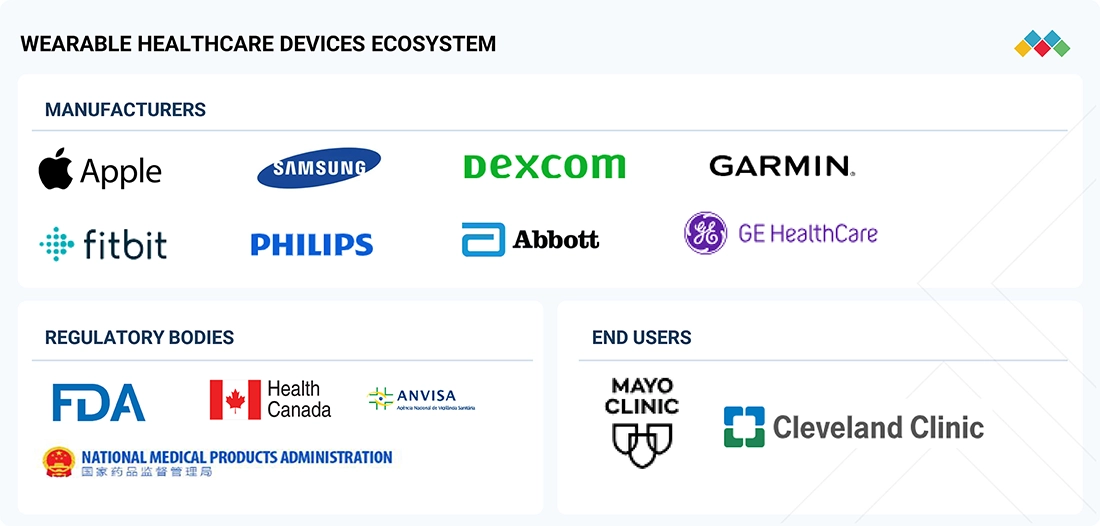
Wearable Healthcare Devices Market: COMMERCIAL USE CASES ACROSS INDUSTRIES
| COMPANY | USE CASE DESCRIPTION | BENEFITS |
|---|---|---|
 |
Provides smartwatches (Apple Watch series) with health features including heart rate tracking, ECG, blood oxygen monitoring (SpO2), sleep tracking, fall detection, and integration with Apple Health/HealthKit | Continuous health tracking, early detection of irregularities, seamless integration with iOS ecosystem, improved patient engagement, and actionable wellness insights |
 |
Offers smartwatches (Galaxy Watch series) and trackers (Galaxy Fit) with sensors for heart rate, sleep, SpO2, stress, and fitness, integrated into the Samsung Health platform | Comprehensive wellness monitoring, easy-to-use interface, preventive health support, and connectivity across Android ecosystem |
 |
Specializes in glucose monitoring patches (FreeStyle Libre systems) that provide continuous glucose monitoring (CGM) without routine finger pricks | Improved diabetes management, reduced discomfort, enhanced treatment compliance, and real-time glucose insights for better clinical and personal decision-making |
 |
Develops continuous glucose monitoring patches (Dexcom G6/G7) that transmit real-time glucose data to smartphones and connected devices for ongoing diabetes management | Accurate glucose tracking, better glycemic control, remote monitoring for caregivers, reduced hypoglycemia risks, and improved patient outcomes |
 |
Provides trackers (Charge, Inspire) and smartwatches (Versa, Sense) with features such as heart rate monitoring, sleep analysis, stress tracking, SpO2, and integration with Fitbit Health Solutions for wellness programs | Affordable wellness solutions, accessibility for a large user base, data-driven lifestyle improvement, and preventive healthcare support |
Logos and trademarks shown above are the property of their respective owners. Their use here is for informational and illustrative purposes only.
Related Ecosystem
Healthcare Analytics
- Machine Learning
- Natural Language Processing (NLP)
- Blood Pressure Monitors
- Computed Tomography (CT)
- Magnetic Resonance Imaging (MRI)
- Oracle Corporation
- PHILIPS HEALTHCARE
- Siemens healthineers
- International Business Machines Corporation
- EPIC SYSTEMS CORPORATION
Medical Devices
- Polymerase Chain Reaction (PCR)
- Magnetic Resonance Imaging (MRI)
- Disposable Autoinjectors
- Pulse Oximeters
- Blood Pressure Monitors
- Medtronic plc
- Abbott Laboratories
- Stryker Corporation
- Becton, Dickinson and Company
- JOHNSON & JOHNSON
Key Takeaways
- Australia's wearable healthcare devices market will nearly double from $292.7M (2025) to $523.1M (2030), growing at 12.3% CAGR.
- Australia's aging population and rising chronic disease burden are primary drivers of wearable device adoption in clinical and consumer segments.
- Australia's advanced digital health infrastructure and government support create favorable conditions for wearable technology integration.
- Australia's high smartphone penetration and tech-savvy consumers position the country as a leading Asia Pacific market for wearable healthcare innovation.
Wearable Healthcare Devices Market Report Scope
| Report Metric | Details |
|---|---|
| Base Year | 2025 |
| Fastest Growing Segment | ONLINE CHANNELS (Distribution Channel) |
| Forecast Period | 2025-2030 |
| Growth Rate | CAGR of 10.9% from 2025 to 2030 |
| Largest Segment | DIAGNOSTIC & MONITORING DEVICES (Type) |
| Market Size Base Year (Billions) | ~USD 45.29 (2025) |
| Revenue Forecast (Billions) | ~USD 75.98 (2030) |
| Segments Covered | Product, Type, Grade, Distribution Channel, Application |
Australia Wearable Healthcare Devices Market Report Segmentation
5 segment dimensions are covered across the global market.
By Product
- Patches
- Smart Clothing
- Smartwatches
- Trackers
By Type
- Blood Pressure Monitors
- Diagnostic & Monitoring Devices
- Ecg/Heart Rate Monitors
- Fetal Monitoring & Obstetric Devices
- Glucose Monitoring Devices
- Insulin Pumps
- Multiparameter Trackers
- Neuromonitoring Devices
- Pain Management Devices
- Polysomnography Devices
- Pulse Oximeters
- Rehabilitation Devices
- Respiratory Therapy Devices
- Sleep Monitoring Devices
- Therapeutic Devices
- Vital Sign Monitoring Devices
- Wrist Actigraphs
By Grade
- Clinical-Grade Wearable Healthcare Devices
- Consumer-Grade Wearable Healthcare Devices
By Distribution Channel
- Hypermarkets
- Online Channels
- Pharmacies
By Application
- General Health & Fitness
- Home Healthcare
- Remote Patient Monitoring
AUSTRALIA: WEARABLE HEALTHCARE DEVICES MARKET, BY APPLICATION, 2023–2030
| Segment | 2023 | 2024 | 2025 | 2026 | 2027 | 2028 | 2029 | 2030 | CAGR (%) |
|---|---|---|---|---|---|---|---|---|---|
| GENERAL HEALTH & FITNESS | 209.1 | 233.2 | 260.5 | 291.5 | 326.6 | 366.7 | 412.3 | 464.4 | 12.3 |
| HOME HEALTHCARE | 86 | 93.8 | 102.3 | 111.9 | 122.6 | 134.6 | 147.9 | 162.9 | 9.7 |
| REMOTE PATIENT MONITORING | 139.5 | 153.9 | 170 | 188.1 | 208.6 | 231.8 | 257.9 | 287.6 | 11.1 |
| TOTAL | 434.6 | 480.8 | 532.8 | 591.5 | 657.9 | 733 | 818.2 | 915 | 11.4 |
Target Audience
- Medical Device Manufacturers : Manufacturers need Australia-specific market data to assess market entry viability, competitive positioning, and growth potential while understanding local regulatory requirements and healthcare system integration opportunities.
- Healthcare Providers & Hospitals : Australian hospitals and healthcare networks require market intelligence to evaluate wearable technology investments, identify best-in-class solutions, and understand adoption trends for remote monitoring and patient care optimization.
- Investment & Private Equity Firms : Investors targeting Australia's health tech sector need detailed market sizing, growth forecasts, and competitive analysis to identify high-potential acquisition targets and funding opportunities in the wearable healthcare space.
- Government & Policy Makers : Australian health policy officials and government agencies require market data to inform digital health strategy, funding decisions, and regulatory frameworks that support innovation while ensuring patient safety and equitable access.
- Telehealth & Digital Health Platforms : Telehealth providers and digital health companies need Australia-specific insights to integrate wearable devices into their platforms, understand reimbursement models, and capitalize on remote monitoring market growth.
Reasons to Buy this Report
- Market-Specific Sizing & Forecasts : Access precise valuation data for Australia's wearable healthcare market with detailed 2025-2030 projections, enabling accurate budget allocation and revenue forecasting for market entry or expansion strategies.
- Competitive Landscape Intelligence : Understand Australia-specific competitive dynamics, key players, market share distribution, and differentiation strategies to identify partnership opportunities and competitive positioning gaps.
- Regulatory & Compliance Insights : Gain detailed knowledge of TGA approval processes, Australian healthcare standards, and compliance requirements specific to wearable devices, reducing time-to-market and regulatory risks.
- Consumer Behavior & Adoption Patterns : Analyze Australian consumer preferences, purchasing behaviors, and adoption drivers across demographics to tailor product development, marketing strategies, and distribution channels effectively.
- Healthcare System Integration Opportunities : Identify integration pathways with Australia's Medicare system, electronic health records, and public/private healthcare providers to unlock B2B opportunities and reimbursement models.
Frequently asked questions
What is the current size of Australia's wearable healthcare devices market?
Australia's wearable healthcare devices market is valued at $292.7 million in 2025 and is projected to reach $523.1 million by 2030.
What is the growth rate of Australia's wearable healthcare market?
Australia's wearable healthcare devices market is growing at a compound annual growth rate (CAGR) of 12.3% from 2025 to 2030.
What factors are driving growth in Australia's wearable healthcare market?
Australia's market growth is driven by an aging population, rising chronic disease prevalence, high smartphone penetration, advanced healthcare infrastructure, and government digital health initiatives.
Which wearable device segments are most popular in Australia?
Australia's wearable healthcare market includes fitness trackers, smartwatches, cardiac monitoring devices, glucose monitors, and sleep tracking devices, with strong adoption across both consumer and clinical segments.
How does Australia's wearable healthcare market compare to other Asia Pacific countries?
Australia's 12.3% CAGR and advanced digital health infrastructure position it as a leading wearable healthcare market within the Asia Pacific region, driven by high consumer adoption and healthcare system integration.
RESEARCH METHODOLOGY
The study involved major activities in estimating the current market size for the wearable healthcare devices market. Exhaustive secondary research was done to collect information on the wearable healthcare devices industry. The next step was to validate these findings, assumptions, and sizing with industry experts across the value chain using primary research. Different approaches, such as top-down and bottom-up, were employed to estimate the total market size. After that, the market breakup and data triangulation procedures were used to estimate the market size of the segments and subsegments of the wearable healthcare devices market.
The four steps involved in estimating the market size are:
Secondary Research
The secondary research process involves utilizing a variety of secondary sources, including directories, databases such as Bloomberg Businessweek, Factiva, and D&B Hoovers, as well as white papers, annual reports, investor presentations, and SEC filings from companies. Additionally, publications from government sources—such as the National Institutes of Health (NIH), US Food and Drug Administration (FDA), US Census Bureau, World Health Organization (WHO), Global Burden of Disease Study, and Centers for Medicare and Medicaid Services (CMS)—were referenced to identify and gather information for the global wearable healthcare devices market study. It was also used to obtain important information about the key players and market classification & segmentation according to industry trends, to the bottom-most level, and key developments related to market and technology perspectives. A database of the key industry leaders was also prepared using secondary research.
Primary Research
In the primary research process, various sources from both the supply and demand sides were interviewed to obtain qualitative and quantitative information for this report. The primary sources from the supply side include industry experts such as CEOs, vice presidents, marketing & sales directors, technology & innovation directors, and related key executives from various key companies and organizations in the wearable healthcare devices market. The primary sources from the demand side include biotechnology companies, CROs, pharmacies, medical device companies, and research academies and universities. Primary research was conducted to validate the market segmentation, identify key players in the market, and gather insights on key industry trends & key market dynamics.
The following is a breakdown of the primary respondents:
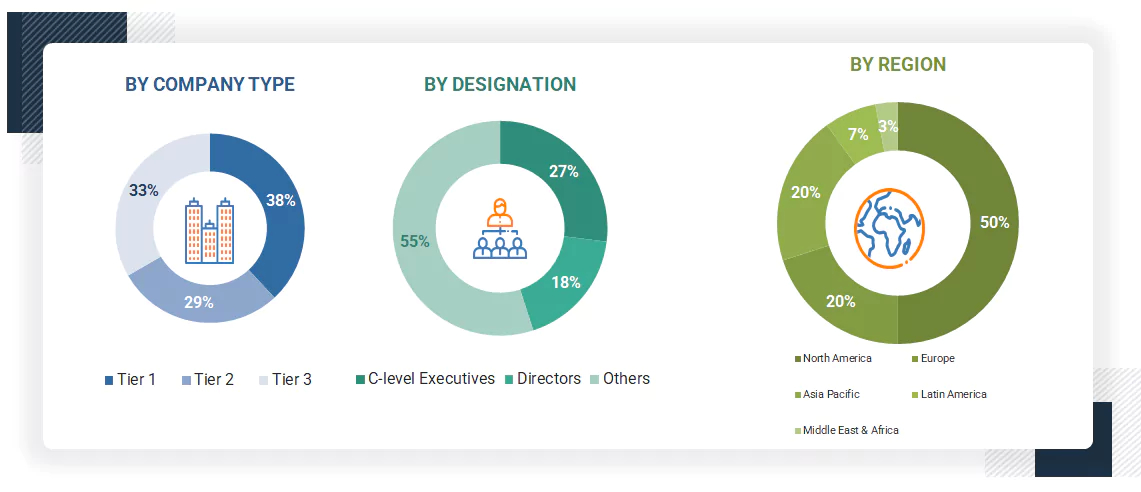
Note 1: Others include sales, marketing, and product managers.
Note 2: Companies are classified into tiers based on their total revenues. As of 2024, Tier 1 = >USD 100 million, Tier 2 = USD 10 million to USD 100 million, and Tier 3 = < USD 10 million.
To know about the assumptions considered for the study, download the pdf brochure
Market Size Estimation
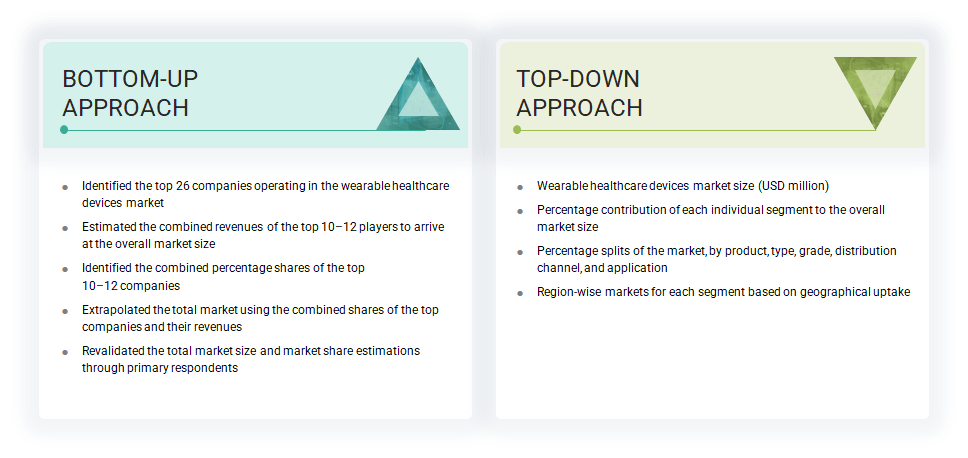
For the global market value, annual revenues were calculated based on the revenue mapping of major product manufacturers and OEMs active in the global wearable healthcare devices market. All the major service providers were identified at the global and/or country/regional level. Revenue mapping for the respective business segments/subsegments was done for the major players. The global wearable healthcare devices market was split into various segments and subsegments based on:
- List of major players operating in the product market at the regional and/or country level
- Product mapping of wearable healthcare device providers at the regional and/or country level
- Mapping of annual revenues generated by listed major players from wearable healthcare devices (or the nearest reported business unit/product category)
- Extrapolation of the revenue mapping of the listed major players to derive the global market value of the respective segments/subsegments
- Summation of the market value of all segments/subsegments to arrive at the global wearable healthcare devices market
The above-mentioned data was consolidated and added with detailed inputs and analysis from MarketsandMarkets and presented in this report.
The research methodology used to estimate the market size includes the following:
Data Triangulation
After arriving at the overall market size by applying the process mentioned above, the total market was split into several segments. To complete the overall market engineering process and arrive at the exact statistics for all segments and subsegments, data triangulation and market breakdown procedures were employed, wherever applicable. The data was triangulated by studying various factors and trends from both the demand and supply sides.
Market Definition
Wearable healthcare devices are autonomous devices that can be attached, worn, or held and are used to monitor and examine the metabolic & physiological changes that occur in the human body. These devices are also used to record data. Wearable healthcare devices diagnose many diseases, such as sleep apnea, and are used to monitor skin temperature, blood glucose levels, sleep patterns, general health parameters, and fitness. These devices are also used for various therapeutic applications such as pain management, rehabilitative services, and respiratory care.
Stakeholders
- Wearable healthcare device manufacturers
- Hospitals and ASCs
- Research and consulting firms
- Distributors of wearable healthcare devices
- Contract manufacturers of wearable healthcare devices
- Venture capitalists and investors
- Government organizations
Report Objectives
- To define, describe, segment, and forecast the wearable healthcare devices market by product, type, grade, distribution channel, application, and region
- To provide detailed information regarding the major factors influencing market growth (such as drivers, restraints, opportunities, and challenges)
- To analyze the micromarkets with respect to individual growth trends, prospects, and contributions to the overall wearable healthcare devices market
- To analyze market opportunities for stakeholders and provide details of the competitive landscape for key players
- To forecast the size of the market segments with respect to five regions: North America, Europe, the Asia Pacific, Latin America, the Middle East & Africa, and the GCC Countries
- To profile the key players and comprehensively analyze their product portfolios, market positions, and core competencies
- To benchmark players within the market using the proprietary Company Evaluation Matrix framework, which analyzes market players on various parameters within the broad categories of business and product excellence
- To study the impact of AI/Gen AI on the market, along with the macroeconomic outlook for each region
Get the Full Wearable Healthcare Devices Market Report
Full forecast, segment splits, and company analysis for all Wearable Healthcare Devices Market.
- Canada Wearable Healthcare Devices Market
- US Wearable Healthcare Devices Market
- Germany Wearable Healthcare Devices Market
- UK Wearable Healthcare Devices Market
- France Wearable Healthcare Devices Market
- Italy Wearable Healthcare Devices Market
- Spain Wearable Healthcare Devices Market
- China Wearable Healthcare Devices Market
- Japan Wearable Healthcare Devices Market
- India Wearable Healthcare Devices Market
- New Zealand Wearable Healthcare Devices Market
- Brazil Wearable Healthcare Devices Market
- Mexico Wearable Healthcare Devices Market
- Rest Of Europe Wearable Healthcare Devices Market
- Rest Of Asia Pacific Wearable Healthcare Devices Market
- Rest Of Latin America Wearable Healthcare Devices Market
Need a Tailored Report?
Customize this report to your needs
Get 10% FREE Customization
Customize This Report
