Healthcare EDI Market

Healthcare EDI Market by Offering (Clearinghouse, Claims, Eligibility & Verification, Referral Management), Connectivity (VAN, Point-to-point, Web Portal, API-enabled), Deployment, End user (Hospitals, ASC, Payers, Pharmacies) - Global Forecast to 2031



HEALTHCARE EDI MARKET SIZE, SHARE & GROWTH SNAPSHOT
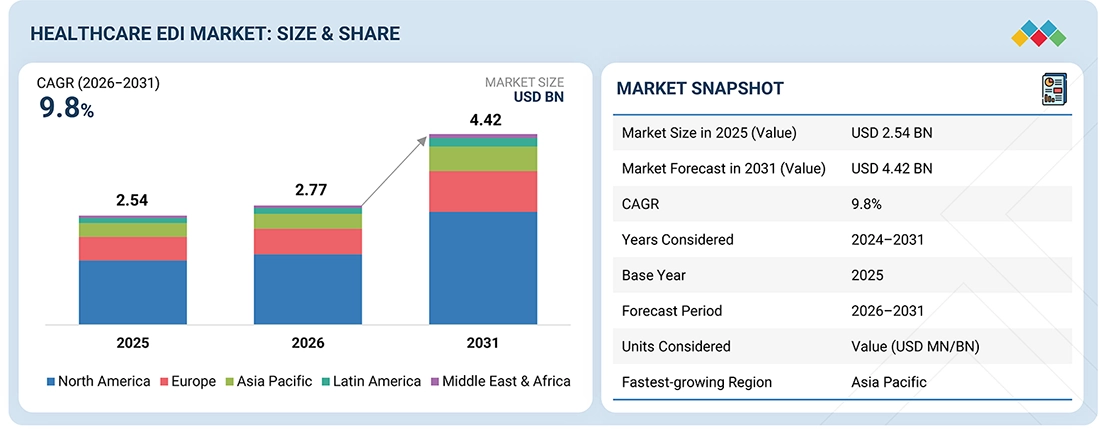
Source: Secondary Research, Interviews with Experts, MarketsandMarkets Analysis
The global healthcare EDI market is projected to grow from USD 2.77 billion in 2026 to USD 4.42 billion by 2031, at a CAGR of 9.8% during the forecast period. The market was valued at USD 2.54 billion in 2025. The growth of the healthcare EDI market is driven by the increasing need to automate claims submission, eligibility and benefits verification, prior authorization, electronic remittance, and payment posting between providers and payers. Healthcare organizations are adopting EDI to reduce manual paperwork, lower claim errors, speed up reimbursements, and improve revenue cycle efficiency.
KEY TAKEAWAYS
-
MARKET SNAPSHOT:
Base Year Market Size (2025): USD 2.54 Billion
Current Market Size (2026): USD 2.77 Billion
Forecast Market Size (2031): USD 4.42 Billion
CAGR (2026–2031): 9.8% -
SEGMENT LEADERSHIP:
Regional Leader: North America dominated the market in 2025 with a share of 59.0%.
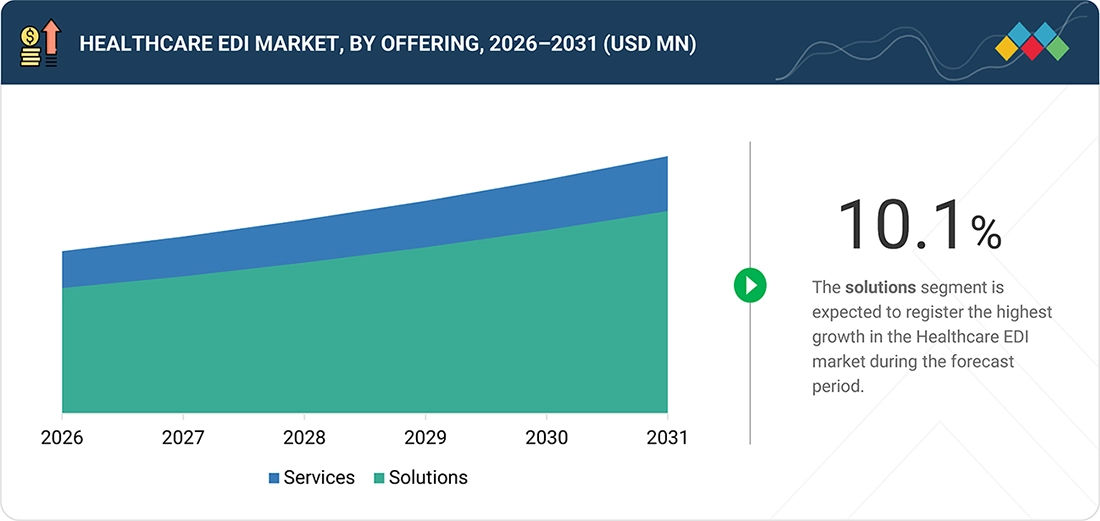
Fastest-Growing Solution: Solutions segment is expected to register the highest CAGR of 10.1% during the forecast period.
Deployment Leader: VAN/Clearinghouse-based EDI segment held the largest market share in 2025.
Fastest-Growing Delivery Mode: Cloud-based segment is expected to register the highest CAGR of 10.0% during the forecast period.
End User Leader: Healthcare providers held the largest share of the end-user market in 2025. -
MARKET OUTLOOK & COMPETITIVE LANDSCAPE:
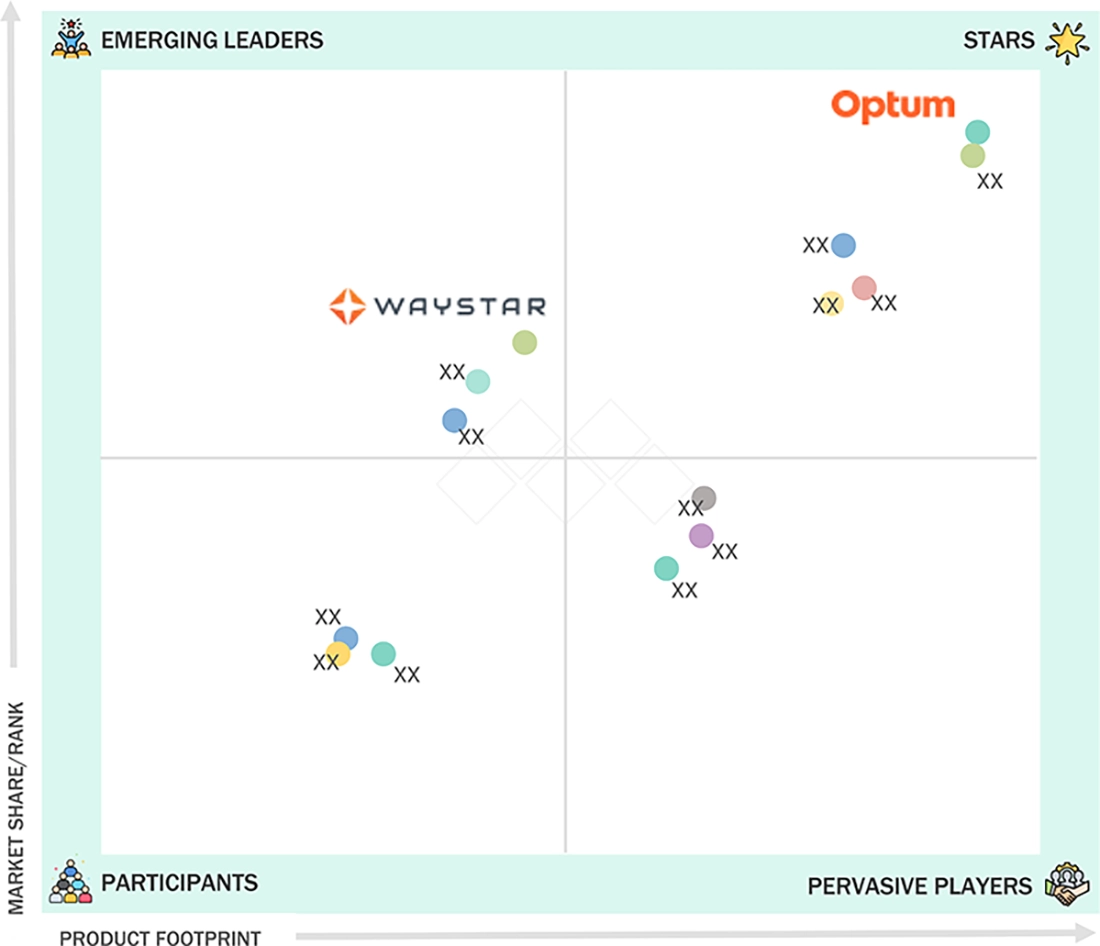
Optum, Inc., Availity, LLC, and Experian Information Solutions, Inc. were identified as some of the star players in the healthcare EDI market, given their strong market share and product footprint.
Stedi, Inc., Candid Health, Inc., and Rialtic, Inc., among others, have distinguished themselves among startups and SMEs by securing strong footholds in specialized niche areas, underscoring their potential as emerging market leaders.
There is an increasing demand for EDI in the healthcare sector due to emphasis on efficient data transfer and minimized administrative costs, among others. This involves the use of technology that facilitates the exchange of transactions between various healthcare stakeholders, including the provider, payer, clearing house, pharmacy, and billing team, using a consistent electronic format. It has applications in functions such as claim filing, eligibility verification, pre-authorizations, claim status, electronic remittances, payment posting, and transaction enrollment.
TRENDS & DISRUPTIONS IMPACTING CUSTOMERS' CUSTOMERS
The growing requirement for rapid payer-provider communication, reduced administrative costs, and enhanced transaction accuracy are some key trends in the market. Healthcare providers, payers, clearinghouses, pharmacies, and billing service providers are implementing EDI technology to automate claims submission, eligibility verification, prior authorization, claim status, electronic remittance, and payment posting. The increasing adoption of cloud-based EDI systems, managed EDI services, API-powered data exchange, and artificial intelligence-based claims automation has transformed how healthcare entities manage their administrative processes. This trend is contributing to increased efficiency, reduced human effort, error prevention, faster payment processing, and improved transparency throughout the revenue cycle. Major players in this market, such as Optum, Inc., Availity, LLC, Waystar Holding Corp., Cognizant Technology Solutions Corporation, Experian Information Solutions, Inc., Inovalon Holdings, Inc., athenahealth Group, Inc., Veradigm Inc., The SSI Group, LLC, and Quadax, Inc., have contributed towards the development of the trend.
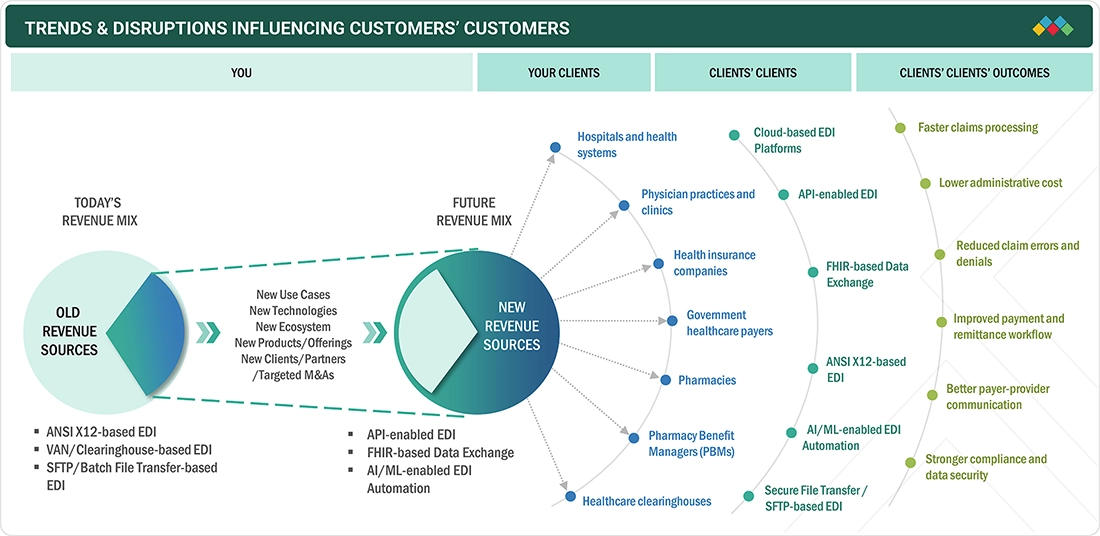
Source: Secondary Research, Interviews with Experts, MarketsandMarkets Analysis
MARKET DYNAMICS

Level
-
Supportive regulations for transaction processes

-
Growing requirement to curb healthcare costs


Level
-
Concerns associated with data security

-
High software implementation costs


Level
-
Rising trend of outsourcing EDI services

-
Adoption of ICD-11 guidelines


Level
-
Integration of healthcare IT solutions

-
End-user limitations & requirements

Source: Secondary Research, Interviews with Experts, MarketsandMarkets Analysis
Driver: Supportive regulations for transaction processes
The availability of supportive regulations is one of the key factors contributing to the growth of the healthcare EDI market due to the requirement to standardize electronic data interchange between payers, healthcare providers, and other stakeholders involved in the processes of healthcare transactions, including the transmission of claims, eligibility verifications, remittances, enrollments, and the retrieval of claims statuses. According to CMS, healthcare transactions involve electronic transmissions that are employed for financial or administrative activities, such as transmitting a claim by a provider to the health plan in order to receive payment. With standardization, EDI has become a necessity rather than an option.
Restraint: Concerns associated with data security
Data protection will continue being a critical constraint, as EDI systems in the healthcare industry deal with sensitive patient, insurance, claims, and payments data. The HIPAA Security Rule mandates that covered entities and their business associates safeguard electronic protected health information through administrative, physical, and technical measures. There will be substantial pressure on healthcare organizations to comply with such obligations by securing all transactions conducted within the EDI system. Therefore, any failure of the healthcare organization to ensure adequate data protection measures may lead to privacy concerns, regulatory non-compliance, and operational disruptions. For these reasons, many healthcare organizations opt for a cautious approach to implementing EDI systems.
Opportunity: Rising trend of outsourcing EDI services
Outsourcing of EDI services is a rapidly growing trend that provides a good chance, since many healthcare providers find managing relationships with payers, transaction mapping, compliance, error handling, and monitoring challenging. EDI in healthcare is characterized by a diversity of transactions, specific payer requirements, and constant system upgrades, which cannot be easily managed by small or regional providers lacking large IT departments. CAQH emphasizes the need for automation insight when it comes to minimizing administrative costs in healthcare business processes. It helps to make a point in favor of EDI-managed services that will assist with transaction operations and process monitoring.
Challenge: Integration of healthcare IT solutions
Integration of healthcare IT solutions poses an obstacle in that the EDI solution needs to interface with the EHRs, the practice management systems, the billing systems, the payer systems, the clearinghouses, and, in some cases, even the pharmacy systems. As per the description by ONC, the capability of interoperability requires the ability to exchange, search, and integrate information received through electronic means. The reality in a real-world health care environment shows that integrating such technologies is difficult owing to the use of older systems, varying data formats, payer requirements, and varied workflows.
HEALTHCARE EDI MARKET: COMMERCIAL USE CASES ACROSS INDUSTRIES
| COMPANY | USE CASE DESCRIPTION | BENEFITS |
|---|---|---|
 |
Provides healthcare EDI and clearinghouse capabilities for claims submission, eligibility verification, claim status, prior authorization, remittance, and payment workflows across providers and payers | Improves payer-provider connectivity, reduces claim errors, speeds up reimbursement, and supports smoother revenue cycle operations |
 |
Offers a provider-payer network for exchanging EDI transactions such as eligibility and benefits checks, claims, authorizations, remittance, and payment-related information | Reduces manual calls and portal work, improves transaction visibility, and helps providers manage multiple payer connections through one platform |
 |
Delivers claims management, eligibility verification, authorization, denial management, payment, and clearinghouse solutions for hospitals, clinics, and billing teams | Helps reduce claim rejections, improves cash flow, automates payment posting, and gives providers better control over revenue cycle workflows |
 |
Provides healthcare EDI and revenue cycle tools for insurance eligibility, claims management, prior authorization, patient access, remittance, and payment-related workflows | Supports faster insurance checks, improves claim accuracy, reduces administrative burden, and helps providers identify payment issues earlier |
 |
Offers cloud-based healthcare data and EDI-enabled solutions for claims processing, eligibility checks, payer-provider data exchange, prior authorization, and administrative automation | Enhances data accuracy, supports real-time healthcare transactions, improves operational efficiency, and helps payers and providers manage large transaction volumes |
Logos and trademarks shown above are the property of their respective owners. Their use here is for informational and illustrative purposes only.
MARKET ECOSYSTEM
The EDI ecosystem in healthcare consists of EDI solution providers, clearinghouses, healthcare information technology solution providers, system integration firms, managed services providers, and EDI compliance assistance firms. The solution providers provide a platform for claim transmission, eligibility and benefits inquiry, prior authorization, claim status inquiries, remittance advice transactions, payment posting, transaction enrollments, and EDI reports. Clearinghouses facilitate the secure transmission of transactions among providers, payers, pharmacies, pharmacy benefit managers, and other relevant entities in the healthcare industry. Managed service providers assist with implementation, payer connectivity, transaction mapping, partner onboarding, monitoring, and compliance updates. End-users of EDI solutions include hospitals, ambulatory surgery centers, diagnostic centers, payers, pharmacies, PBMs, clearinghouses, billing service providers, and revenue cycle management firms.
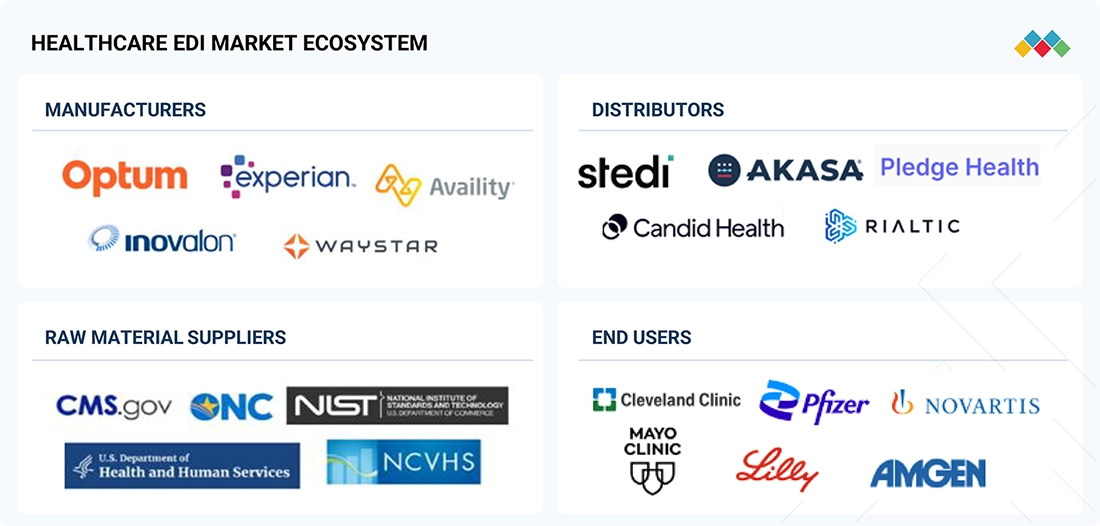
Logos and trademarks shown above are the property of their respective owners. Their use here is for informational and illustrative purposes only.
MARKET SEGMENTS
Source: Secondary Research, Interviews with Experts, MarketsandMarkets Analysis
By Offering
In 2025, the services segment held the largest share of the healthcare EDI market as many providers, payers, and clearinghouses continue to rely on vendors to provide managed EDI services. The requirements of the healthcare EDI market include payer connections, transaction mapping, compliance changes, claims error management, partner onboarding, and monitoring. Since many healthcare businesses lack EDI teams, they prefer to delegate these functions to external service providers. With managed EDI services, organizations can streamline claims, eligibility, prior authorizations, and remittances without interruptions.
By Connectivity Mode
In 2025, VAN/clearinghouse-based EDI accounted for the largest share of the healthcare EDI market due to its significant contribution to provider-payer pharmacy interactions and exchanges within clearinghouses. Clearinghouse-based EDI is applied by healthcare facilities in order to transmit claims, perform eligibility checks, trace claim status, manage remittance information, and exchange other transactional data in standardized form. The subsegment will continue leading the market on account of providers' need to establish interactions with multiple payers and their inability to create individual connections with each payer separately.
By Deployment Model
During the forecast period, cloud-based deployment is anticipated to experience the highest rate of adoption in the healthcare EDI market. Cloud EDI solutions assist payers and providers in managing their claims, eligibility, prior authorizations, remittances, and posting without having to invest in an extensive IT infrastructure locally. They are easier to scale up, faster to update, and better suited for organizations operating with more than one payer or location. In addition, cloud deployment is also beneficial when it comes to remote access, faster onboarding, transaction monitoring in real time, and API integration with EDI transactions.
By End User
In 2025, healthcare providers held the largest share in the healthcare EDI market due to the high number of transactions carried out by providers on a daily basis. Providers like hospitals, clinics, ambulatory surgery centers, diagnostic centers, among others, utilize EDI technology to conduct insurance verification, claims submission, claims status inquiry, prior authorization, electronic remittance advice, and payment posting processes. The EDI is necessary in minimizing paperwork and avoiding denial of claims, as well as speeding up the payment process. Hospitals & clinics have the largest share in this category.
REGION
Asia Pacific region to register fastest growth in healthcare EDI market during forecast period
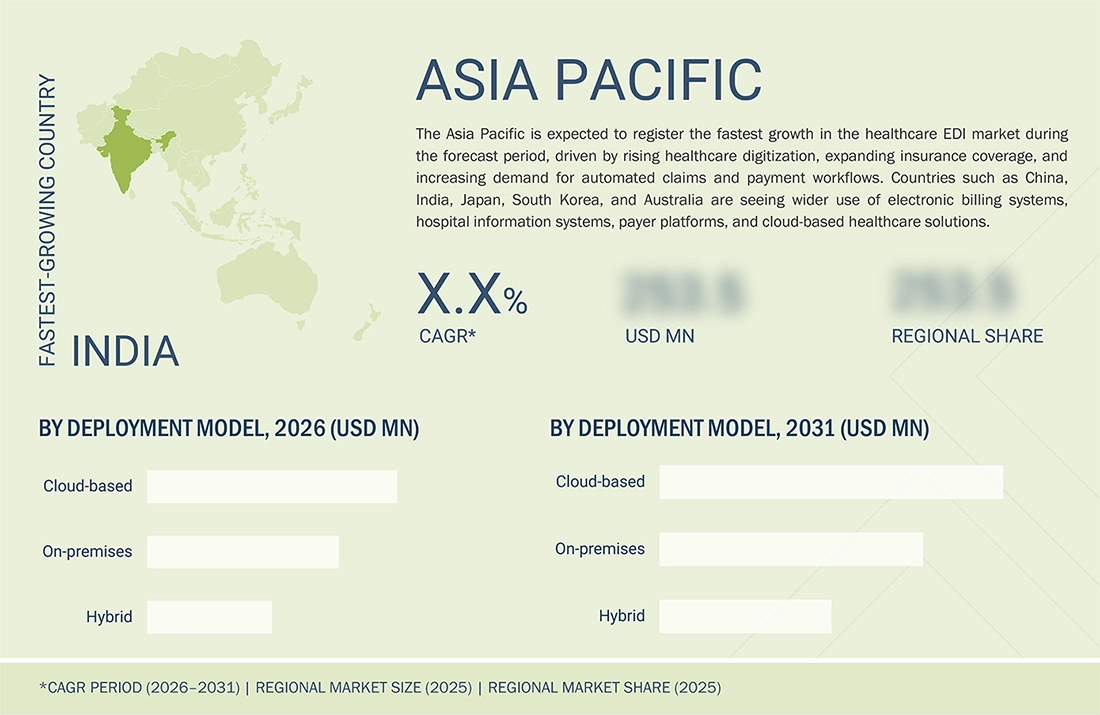
The Asia Pacific market is anticipated to grow at the fastest CAGR in the healthcare EDI market. This growth can be attributed to the rise in digitization of healthcare, insurance penetration, hospital networks, and the growing demand for automating the workflow of claims and payment processing. Some of the countries that are adopting electronic billing software, hospital information systems, cloud-based EDI systems, and payer network solutions include China, India, Japan, South Korea, and Australia. Increased demand for healthcare EDI by hospitals, clinics, diagnostic centers, payers, pharmacies, and PBMs for claims processing, eligibility determination, prior authorization, remittance advice, and payment processing is expected to boost market growth.
HEALTHCARE EDI MARKET: COMPANY EVALUATION MATRIX
In the healthcare EDI market matrix, Optum, Inc. (Star) leads with its strong footprint in payer-provider connectivity, clearinghouse operations, claims management, eligibility verification, remittance, and payment workflows. Its large transaction network, broad payer relationships, and integration with revenue-cycle and administrative workflows strengthen its market position. Waystar Holding Corp. (Emerging Leader) is gaining traction through its cloud-based revenue cycle platform, claims automation, eligibility verification, prior authorization, denial management, and payment solutions. Its strength in simplifying provider billing workflows and improving reimbursement visibility supports its growing role in the healthcare EDI market.
Source: Secondary Research, Interviews with Experts, MarketsandMarkets Analysis
KEY MARKET PLAYERS
- Optum, Inc. (US)
- Availity, LLC (US)
- Waystar Holding Corp. (US)
- Cognizant Technology Solutions Corporation (US)
- Experian Information Solutions, Inc. (US)
- Inovalon Holdings, Inc. (US)
- athenahealth Group, Inc. (US)
- Veradigm Inc. (US)
- The SSI Group, LLC (US)
- Quadax, Inc. (US)
- International Business Machines Corporation (US)
- Oracle Corporation (US)
- NTT DATA Group Corporation (Japan)
- Comarch S.A. (Poland)
- Axway Software, a 74Software company (France)
- Boomi, LP (US)
- TrueCommerce, Inc. (US)
- PLEXIS Healthcare Systems, Inc. (US)
- Epicor Software Corporation (US)
- Cleo Communications LLC (US)
- McKesson Corporation (US)
- OSP Labs (US)
- PilotFish Technology, LLC (US)
- Nalashaa Healthcare Solutions LLC (US)
- 123 EDI, Inc. (US)
- Cirius Group, Inc. (US)
- Bar Code India Limited (India)
MARKET SCOPE
| REPORT METRIC | DETAILS |
|---|---|
| Market Size in 2025 (Value) | USD 2.54 Billion |
| Market Size in 2026 (Value) | USD 2.77 Billion |
| Market Forecast in 2031 (Value) | USD 4.42 Billion |
| CAGR | CAGR of 9.8% from 2026-2031 |
| Years Considered | 2024-2031 |
| Base Year | 2025 |
| Forecast Period | 2026-2031 |
| Units Considered | Value (USD Million/Billion) |
| Report Coverage | Revenue forecast, company ranking, competitive landscape, growth factors, and trends |
| Segments Covered |
|
| Regions Covered | North America, Europe, Asia Pacific, Latin America, Middle East & Africa |
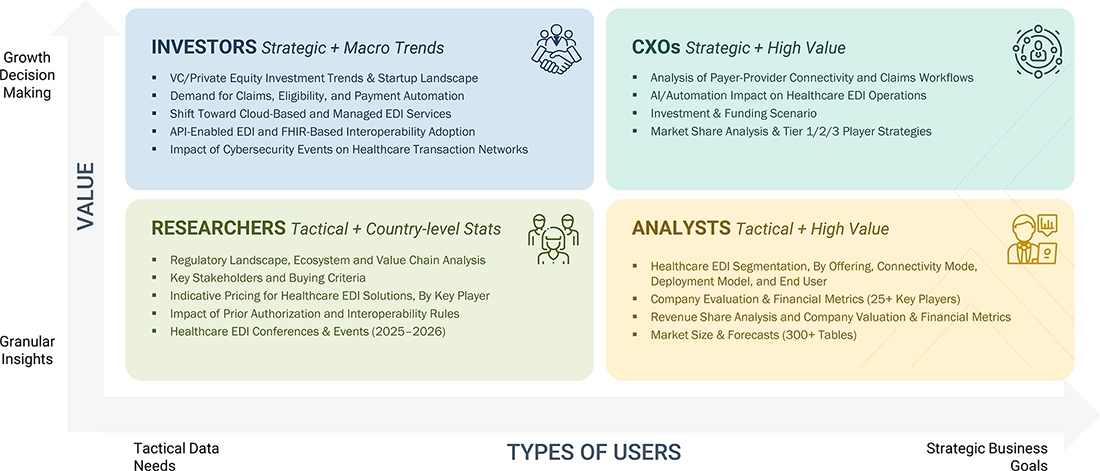
WHAT IS IN IT FOR YOU: HEALTHCARE EDI MARKET REPORT CONTENT GUIDE
DELIVERED CUSTOMIZATIONS
We have successfully delivered the following deep-dive customizations:
| CLIENT REQUEST | CUSTOMIZATION DELIVERED | VALUE ADDS |
|---|---|---|
| Healthcare EDI Market – North America | Built a region-specific view covering the US and Canada, with focus on payer-provider EDI adoption, clearinghouse networks, claims submission, eligibility verification, prior authorization, electronic remittance, and managed EDI services. Mapped the role of major US-based players such as Optum, Availity, Waystar, Experian Health, Inovalon, athenahealth, Veradigm, SSI Group, and Quadax. | Provided clear visibility into the most mature healthcare EDI region, supported by high claims volume, strong payer presence, established clearinghouse usage, and regulatory-driven electronic transaction adoption. Helped identify North America as the largest regional market and a key base for competitive benchmarking. |
| Healthcare EDI Market – Cybersecurity & Transaction Resilience | Developed a separate customization focused on healthcare EDI security risks, transaction downtime, clearinghouse dependency, ransomware impact, backup transaction routing, and recovery planning. Assessed how providers, payers, and clearinghouses can maintain claims submission, eligibility checks, remittance, and payment workflows during system disruptions. | Helped identify cybersecurity and operational resilience as a differentiated value area beyond normal market sizing. Supported stronger positioning around secure EDI networks, transaction continuity, vendor risk assessment, and disaster recovery planning for healthcare organizations. |
RECENT DEVELOPMENTS
- May 2026 : The Centers for Medicare & Medicaid Services (CMS) (US) advanced electronic prior authorization readiness, noting that certain CMS-regulated health plans must implement and maintain prior authorization APIs starting January 1, 2027. This is expected to support demand for API-enabled EDI and FHIR-based payer-provider transaction workflows.
- July 2025 : HealthEdge Software, Inc. (US) and Codoxo, Inc. (US) announced a strategic partnership focused on payment integrity using generative AI. The collaboration supports payer operations by improving claim review, payment accuracy, and administrative automation around healthcare transaction workflows.
- February 2025 : Edifecs, Inc. (US) launched Healthcare Interoperability Cloud, combining EDI, FHIR, and smart trading capabilities to help payers and healthcare organizations manage interoperability and CMS prior authorization compliance needs. The platform supports payer-provider data exchange, EDI gateway workflows, and FHIR-based connectivity.
- February 2026 : HealthEdge Software, Inc. (US) and ECHO Health, Inc. (US) partnered to simplify the healthcare payment process by integrating HealthEdge HealthRules Payer with the ECHO payments platform. The partnership supports electronic payment and remittance workflows for health plans and provider networks.
Table of Contents
 Exclusive indicates content/data unique to MarketsandMarkets and not available with any competitors.
Methodology
The study involved five major activities to estimate the current size of the Healthcare EDI Market. Exhaustive secondary research was done to collect information on the market and its different subsegments. The next step was to validate these findings, assumptions, and sizing with industry experts across the value chain through primary research. Both top-down and bottom-up approaches were employed to estimate the complete market size. Thereafter, market breakdown and data triangulation procedures were used to estimate the market size of the segments and subsegments.
Secondary Research
In the secondary research process, various secondary sources such as annual reports, press releases & investor presentations of companies, white papers, certified publications, articles by recognized authors, gold-standard & silver-standard websites, regulatory bodies, and databases (such as D&B Hoovers, Bloomberg Business, and Factiva) were referred to identify and collect information for the study of the Healthcare EDI market. It was also used to obtain important information about the top players, market classification, and segmentation according to industry trends to the bottom-most level, geographic markets, and key developments related to the market. A database of the key industry leaders was also prepared using secondary research.
Primary Research
Extensive primary research was conducted after acquiring basic knowledge about the global Healthcare EDI market scenario through secondary research. Several primary interviews were conducted with market experts from both the demand side (Hospital directors, Hospital Vice Presidents, Department heads, and Critical care specialists ) and supply side (such as C-level and D-level executives, technology experts, product managers, marketing and sales managers, among others) across five major regions North America, Europe, the Asia Pacific, Latin America, Middle East, and Africa. This primary data was collected through questionnaires, e-mails, online surveys, personal interviews, and telephonic interviews.
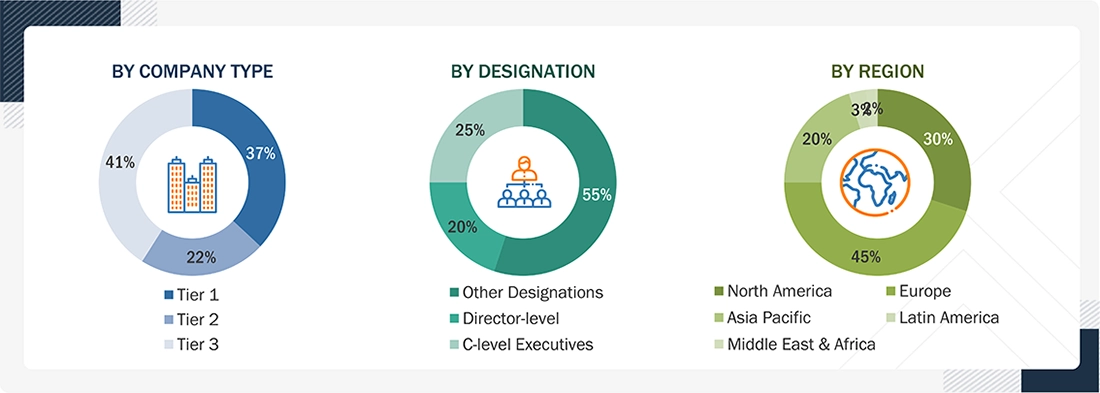
Note 1: Others include sales managers, marketing managers, and product managers.
Note 2: Tiers of companies are defined on the basis of their total revenues in 2025. Tier 1 = >USD 1 billion, Tier 2 = USD 500 million to USD 1 billion, and Tier 3 = <USD 500 million
To know about the assumptions considered for the study, download the pdf brochure
Market Size Estimation
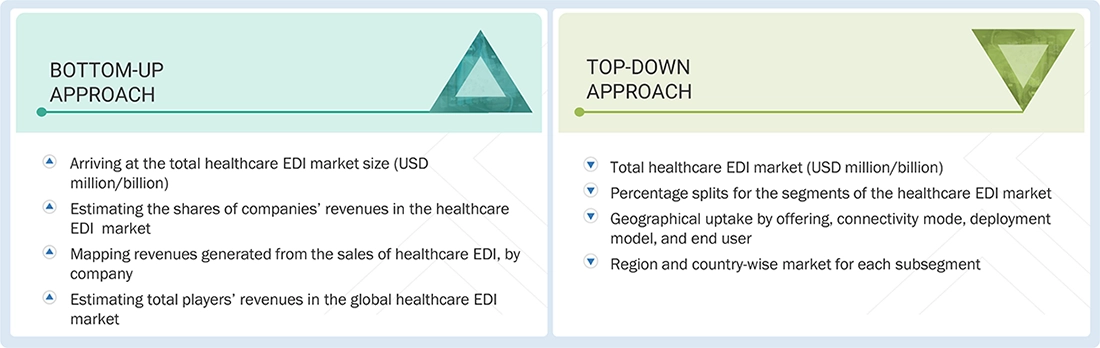
Both top-down and bottom-up approaches were used to estimate and validate the total size of the Healthcare EDI market. These methods were also used extensively to estimate the size of various subsegments in the market.
Data Triangulation
After arriving at the overall market size using the market size estimation processes, the market was split into several segments and subsegments. To complete the overall market engineering process and arrive at the exact statistics of each market segment and sub-segment, data triangulation and market breakdown procedures were employed, wherever applicable. The data was triangulated by studying various factors and trends from both the demand and supply sides in the Healthcare EDI market.
Market Definition
Healthcare electronic data interchange (EDI) is a structured method to exchange healthcare information in a standardized format between providers, payers, clearinghouses, pharmacies, suppliers, and manufacturers. Healthcare providers use EDI to send insurance claims directly to payers (insurance companies, Medicare/Medicaid) in standardized formats (e.g., X12 837 format). Healthcare EDI applies to claims, medical billing, health records, purchase orders, invoices, shipping notices, and other essential or classified healthcare-related information.
Key Stakeholders
- Healthcare EDI Software & Service Providers
- Government Agencies
- Healthcare Startups, Consultants, and Regulators
- Healthcare Providers
- Clinical/Physician Centers
- Surgeons, Physicians, and Operating Room Staff
- Health IT Service Providers
- Healthcare Associations/Institutes
- Hospitals (Public and Private)
- Ambulatory Care Centers
- Academic Medical Institutes
- Venture Capitalists
- Distributors & Resellers
- Maintenance & Support Service Providers
- Integration Service Providers
- Data Security & Privacy Experts
Report Objectives
- To define, describe, and forecast the global healthcare EDI market based on offering, connectivity mode, deployment model, end user, and region
- To provide detailed information regarding the major factors (such as drivers, restraints, opportunities, and challenges) influencing market growth
- To strategically analyze micro-markets with respect to individual growth trends, prospects, and contributions to the overall healthcare EDI market
- To analyze opportunities in the market for stakeholders and provide details of the competitive landscape for market leaders
- To strategically analyze the market structure profile of the key players of the healthcare EDI market and comprehensively analyze their core competencies
- To forecast the size of the market segments with respect to five regions: North America, Europe, Asia Pacific, Latin America, and the Middle East & Africa
- To track and analyze competitive developments such as product launches, investments, partnerships, collaborations, acquisitions, expansions, product approval, and alliances in the healthcare EDI market during the forecast period
Available customizations:
With the given market data, MarketsandMarkets offers customizations as per the company’s specific needs. The following customization options are available for the report:
- Product Analysis: Product matrix, which gives a detailed comparison of the product portfolios of each company
- Geographic Analysis: Further breakdown of Latin America, Europe, the Middle East & Africa Healthcare EDI into specific countries


Personalize This Research
- Triangulate with your Own Data
- Get Data as per your Format and Definition
- Gain a Deeper Dive on a Specific Application, Geography, Customer or Competitor
- Any level of Personalization
Let Us Help You
- What are the Known and Unknown Adjacencies Impacting the Healthcare EDI Market
- What will your New Revenue Sources be?
- Who will be your Top Customer; what will make them switch?
- Defend your Market Share or Win Competitors
- Get a Scorecard for Target Partners

Custom Market Research Services
We Will Customise The Research For You, In Case The Report Listed Above Does Not Meet With Your Requirements
Get 10% Free CustomisationTESTIMONIALS

JAYANT RAJPUROHIT
Director of Market Insights, Data and Analytics
SFI Health,
Leading Pharmaceutical Companywww.sfihealth.com/
We at SFI Health approached MarketsandMarkets for an Opportunity Assessment on "Incidence and Prevalence of Focus Indications" as we wanted to know the most attractive HCPs like Physician, Functional MD, Naturopath and Pharmacist. The project was critical for us to ensure our focus on the right target which would enable sustainable growth and profitability for SFI Health. The business insights provided exceeded our expectations and we were extremely impressed. The team at MarketsandMarkets is highly professional and detail oriented and very well understood our business needs. MarketsandMarkets offers a unique combination of expertise and dedicated engagement model. We identified 2 new products to be launched in coming months, based on the research findings provided by MarketsandMarkets. We are happy with the services and would strongly recommend MarketsandMarkets to my peers in the industry.

BEATRIZ DE LA CALLE
Head of Commercial Analytics
Qualicaps,
Leading Pharmaceutical Companywww.qualicaps.com/

We partnered with MarketsandMarkets for an assessment study on hard empty capsules. The team was extremely professional in understanding our business requirements and we received timely responses to all our queries. The market intelligence and the recommendations has met our business requirements. We were extremely impressed to see the final study results; it really exceeded our expectations. The market intelligence offered by MarketsandMarkets, and clarity on next steps will help us achieve our business objective for the Year 2021. We are happy with the services and would strongly recommend MarketsandMarkets to my peers in the industry.

Bob Williams,
Senior Director Business Development & Innovation
Bracco Diagnostics Inc.,
Italian Multinational in life sciences sector and a World Leader in imaging diagnosticsimaging.bracco.com/us-en
We were pleased with targeted insights that MarketsandMarkets identified from a custom study on the 'Radiation Dose Management Solutions Market'. Your team identified and characterized the market participants as well as underlying trends accurately. This study was useful to Bracco in formulating business strategies for our dose monitoring product lines and we thank MarketsandMarkets for the job well done.
Cody Coonradt,
Market Development and Strategy Manager
3M Health Information Systems,
Leader in Health care Coding, Payment & Analytics Solutions.www.3m.com/3M/en_US/health-information-systems-us
The value for our organization comes from three things: depth of research, specificity of segments and being easy to work with. As important as the first two are, the third can't be underestimated. MarketsandMarkets, maybe more than any other research vendor, wants to know what is top of mind for our team and what big questions we are grappling to answer.
Their customer first approach and high value engagement model, have given us great analysis and excellent value for money
- India Healthcare EDI Market
- Australia Healthcare EDI Market
- South Korea Healthcare EDI Market
- Brazil Healthcare EDI Market
- Mexico Healthcare EDI Market
- Saudi Arabia Healthcare EDI Market
- UAE Healthcare EDI Market
- US Healthcare EDI Market
- Canada Healthcare EDI Market
- Germany Healthcare EDI Market
- France Healthcare EDI Market
- UK Healthcare EDI Market
- Italy Healthcare EDI Market
- Spain Healthcare EDI Market
- China Healthcare EDI Market
- Japan Healthcare EDI Market






Growth opportunities and latent adjacency in Healthcare EDI Market