Power Transformer Market

Power Transformer Market by Power Rating (Small, Medium, Large), Cooling Type (Oil-cooled, Air-cooled), Phase (Single Phase, Three Phase), End Use (Utilities, Residential & Commercial, Industrial), and Region - Global Forecast to 2030




OVERVIEW
The global power transformer market is projected to reach USD 41.62 billion by 2030 from USD 30.38 billion in 2025, at a CAGR of 6.5%, driven by rising global electricity demand, rapid urbanization, and industrial expansion, which put significant pressure on existing transmission and distribution infrastructure.
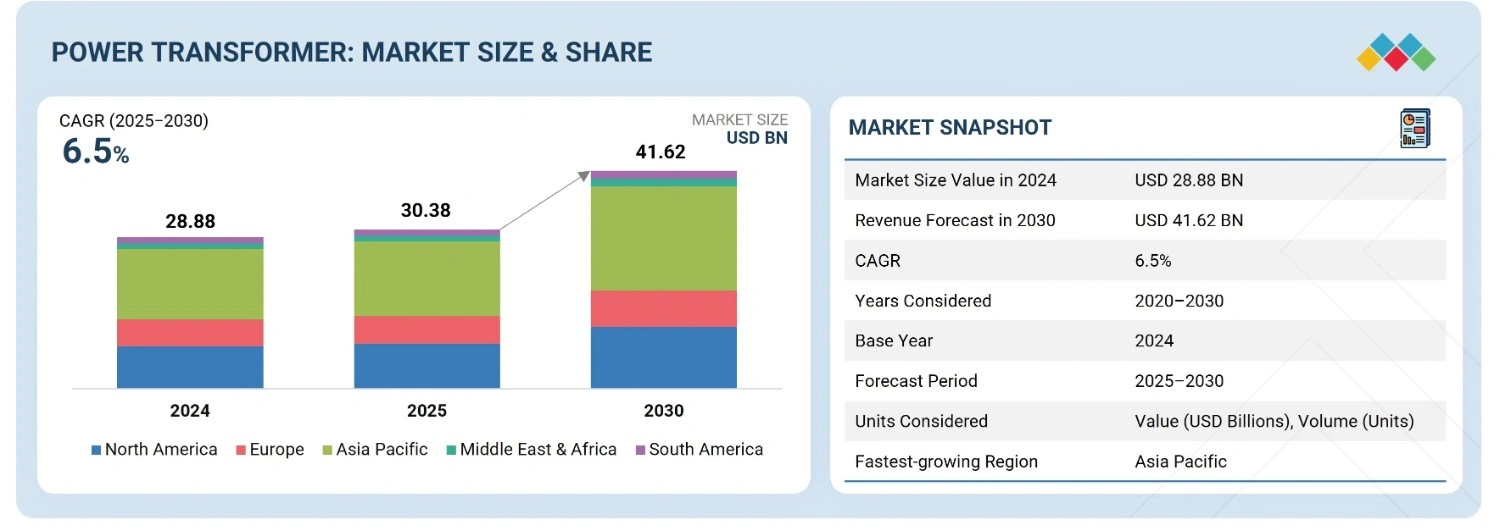
Source: Secondary Research, Interviews with Experts, MarketsandMarkets Analysis
Power Transformer Market Size and Forecast:
- Market Size (2024): USD 28.88 Billion
- Market Size (2025): USD 30.38 Billion
- Market Forecast (2030): USD 41.62 Billion
- Growth Rate: CAGR of 6.5% from 2025 to 2030
- Base Year: 2024
- Forecast Period: 2025–2030
Key growth drivers
- Increasing global electricity demand
- Rising need to upgrade power transmission and distribution infrastructure due to high power demand
- Increasing emphasis on renewable energy capacity expansion
- Rise of decentralized power generation
- Shift from traditional to smart grid infrastructure
- Growing adoption of high-voltage direct current (HVDC) systems
KEY TAKEAWAYS
-
BY POWER RATINGGrowing demand for medium ( 61–600 MVA) transformers as utilities expand renewable integration projects and upgrade aging transmission networks
-
BY COOLING TYPEShift towards eco-friendly insulation and hybrid cooling systems in oil-cooled transformers to improve efficiency and meet environmental regulations
-
BY PHASEThree-phase transformers dominate due to bulk power transmission needs, while single-phase units are rising in adoption for EV charging stations and rural electrification
-
BY END USERUtilities remain the largest consumer, but industrial demand is accelerating with growth in heavy industries and captive power plants, especially in emerging economies
-
BY REGIONThe Asia Pacific is expected to be the fastest-growing regional segment, at a CAGR of 6.9%, driven by rapid urbanization, large-scale infrastructure development, and increasing investments in power grid expansion across emerging economies such as China, India, and Japan.
-
COMPETITIVE LANDSCAPEThe major market players have adopted both organic and inorganic strategies, such as partnerships and investments. For instance, Hitachi Energy Ltd., Siemens Energy, and GE Vernova have entered into a number of agreements and partnerships to cater to the growing demand for power transformers.
The rapid integration of renewable energy sources, such as wind and solar, into national grids necessitates advanced power transformers to ensure efficient voltage regulation and grid stability. Governments around the world are investing significantly in smart grid projects and cross-border power transmission networks, which are further driving market growth. Additionally, the need to replace and modernize aging grid infrastructure in developed countries, combined with increasing electrification efforts in developing regions, is expected to maintain a strong demand for power transformers throughout the forecast period.
TRENDS & DISRUPTIONS IMPACTING CUSTOMERS' CUSTOMERS
The power transformer market is experiencing significant changes driven by several key trends and disruptions. Technological advancements play a crucial role, as the rising popularity of smart grids and increased digitization have led to a growing demand for smart transformers. These transformers utilize technologies such as sensors, IoT connectivity, and big data analytics, allowing for remote monitoring and control. Additionally, high-voltage direct current (HVDC) transmission is becoming more popular for long-distance power transmission, due to its lower losses and higher efficiency. This shift is affecting the demand for HVDC transformers, which differ from traditional AC transformers. Another important trend is the increasing preference for biodegradable insulating oils, motivated by environmental concerns related to traditional mineral oils.
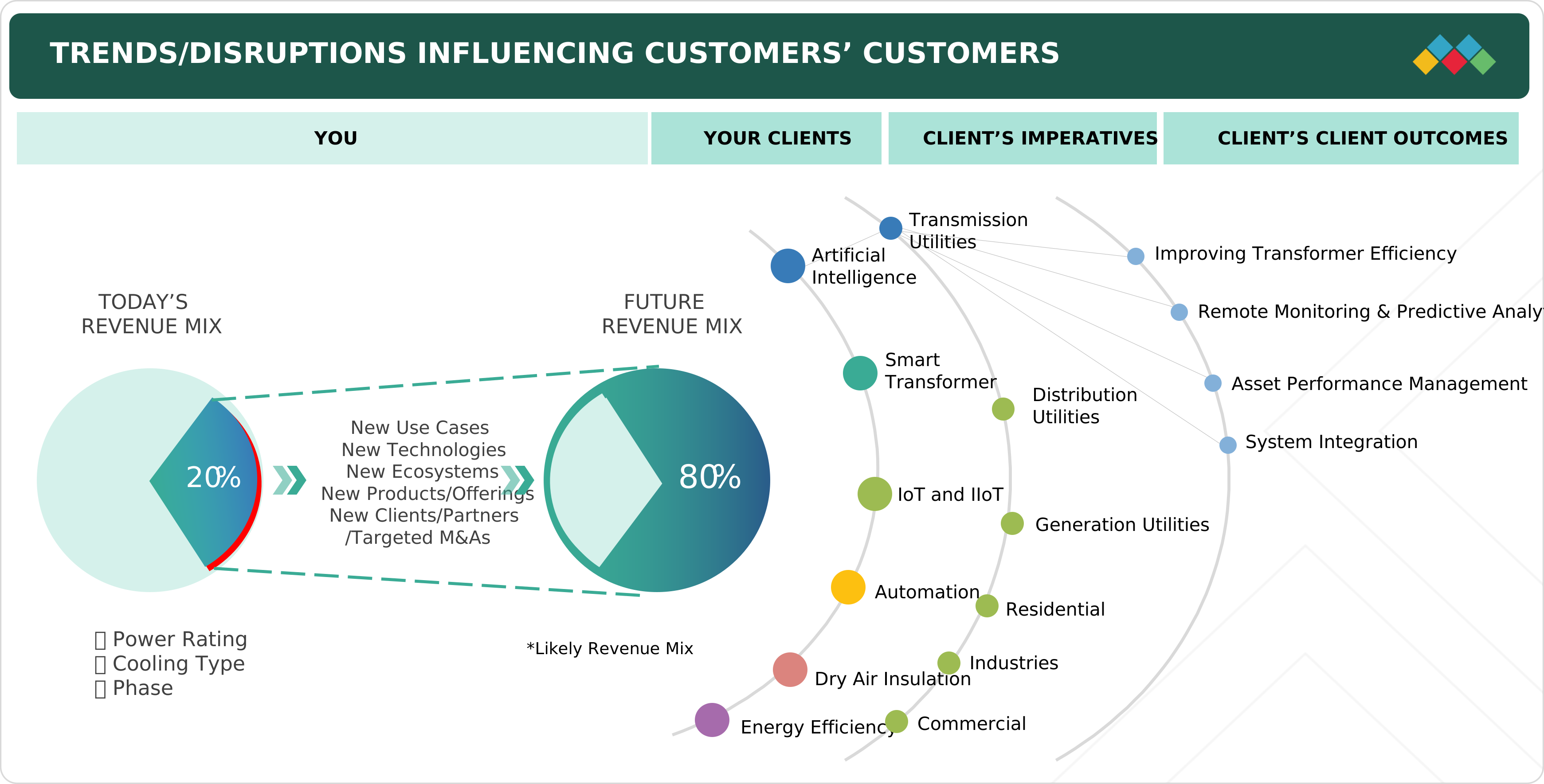
Source: Secondary Research, Interviews with Experts, MarketsandMarkets Analysis
MARKET DYNAMICS

Level
-
Rising need to upgrade transmission infrastructure due to high power demand

-
Increasing emphasis on renewable energy capacity expansion


Level
-
Limited budget for grid expansion projects in developing economies

-
Shortage of skilled professionals for installing advanced transformers


Level
-
Rise of decentralized power generation

-
Shift from traditional to smart grid infrastructure


Level
-
Cybersecurity threats due to grid digitization

Source: Secondary Research, Interviews with Experts, MarketsandMarkets Analysis
Driver: Rising need to upgrade transmission infrastructure due to high power demand
The increasing global demand for electricity is a major factor driving the growth of the power transformer market. To address this rising need, there is a significant requirement to upgrade transmission infrastructure for greater capacity. This will involve expanding existing grids and deploying additional transformers in substations and along transmission lines. Furthermore, modernizing aging grid systems necessitates advanced transformers that are equipped with improved voltage and current handling capabilities. These transformers should also be compatible with smart grids and enable efficient load balancing to support bidirectional power flow and real-time communication.
Restraint: Limited budget for grid expansion projects in developing economies
The high upfront costs associated with deploying high-capacity transformers often strain the limited budgets allocated for grid modernization and expansion in these regions. As a result, many infrastructure projects are either delayed or scaled down. Additionally, price volatility in essential raw materials, such as steel and copper, poses significant risks. Fluctuating material costs directly impact manufacturing expenses, reduce profit margins, and complicate planning for both producers and buyers.
Opportunity: Shift from traditional to smart grid infrastructure
The growing shift toward smart grid infrastructure presents significant opportunities for the power transformer market. As utilities and governments increasingly adopt smart grids to improve the reliability, efficiency, and resilience of electricity delivery, the demand for advanced transformers specifically designed for these modern systems is rapidly increasing. Smart grids incorporate sophisticated technologies that require transformers capable of real-time voltage regulation and adaptive load management. This capability is especially important given the rising integration of variable renewable energy sources, such as solar and wind, which can cause fluctuations in power supply.
Challenge: Cybersecurity threats posed by grid digitalization
The power transformer market faces a significant challenge due to the increasing digitalization of power grids, which brings about cybersecurity threats. As grid infrastructure becomes more interconnected and reliant on digital technologies, the risk of cyberattacks targeting transformers and the broader grid infrastructure increases. These cyber threats pose serious risks to the reliability, safety, and resilience of the power grid, necessitating robust security measures to mitigate potential risks. Cyberattacks on transformers and grid infrastructure can take various forms, including malware infections, ransomware attacks, denial-of-service (DoS) attacks, and unauthorized access to control systems. Such attacks can disrupt normal grid operations, manipulate grid parameters, or even cause physical damage to transformers. This can lead to widespread power outages, equipment failures, and potential safety hazards.
power transformer market: COMMERCIAL USE CASES ACROSS INDUSTRIES
| COMPANY | USE CASE DESCRIPTION | BENEFITS |
|---|---|---|
 |
ABB successfully launched its online oil reclamation service to tackle the declining condition of transformer oil at Deeside Power Station. The power station had been struggling with rising acidity and corrosive sulfur levels in the transformer oil, resulting in increased usage of passivator chemicals, such as Irgamet 39. | The benefits of this solution were significant. First, it provided a cost-effective alternative to traditional maintenance methods, saving the power station from expensive equipment replacement. Second, the online nature of the service meant that there was no need to shut down operations, ensuring an uninterrupted power supply. Third, the treatment helped preserve the Degree of Polymerization (DP) of the paper insulation inside the transformers, which is crucial for their long-term reliability and performance. Lastly, the approach was environmentally friendly, as it reduced the need to dispose of large volumes of contaminated oil. |
 |
Siemens Energy is tackling the critical shortage of large power transformers (LPTs) in the US by investing USD 150 million to establish its first domestic LPT manufacturing facility in Charlotte, North Carolina. This strategic initiative aims to expand Siemens Energy's presence in the market and enhance refurbishment capabilities to strengthen grid infrastructure. The facility is expected to produce 24 LPTs annually at launch, with plans to increase production to 57 units per year. Additionally, it will refurbish 12 to 24 units each year. Construction of the facility began in 2024, with the first transformers anticipated to be ready by early 2026. This project is expected to create approximately 559 new jobs in logistics, assembly, and mechanical roles. | This investment significantly reduces lead times—currently up to five years—by increasing the domestic supply of critical transformers, which are essential for transmission and distribution networks, renewable energy integration, and power-hungry AI/data center projects. By localizing production and refurbishment, Siemens Energy enhances grid reliability, supports decarbonization goals, and mitigates supply chain risks, leveraging its century-long expertise in transformer technology. |
Logos and trademarks shown above are the property of their respective owners. Their use here is for informational and illustrative purposes only.
MARKET ECOSYSTEM
The power transformer market is primarily dominated by well-established companies that possess extensive experience and a strong reputation in manufacturing power transformers and their accessories. These firms are recognized within the industry and offer diverse portfolios. Utilizing state-of-the-art technologies, they maintain broad marketing and sales networks on a global scale. Major players in this sector include Hitachi Energy (Japan), GE Vernova (US), Siemens Energy (Germany), Mitsubishi Electric Corporation (Japan), HD Hyundai Electric Co., Ltd. (South Korea), Fuji Electric Co., Ltd. (Japan), Toshiba Energy Systems & Solutions Corporation (Japan), and HYOSUNG HEAVY INDUSTRIES (South Korea).
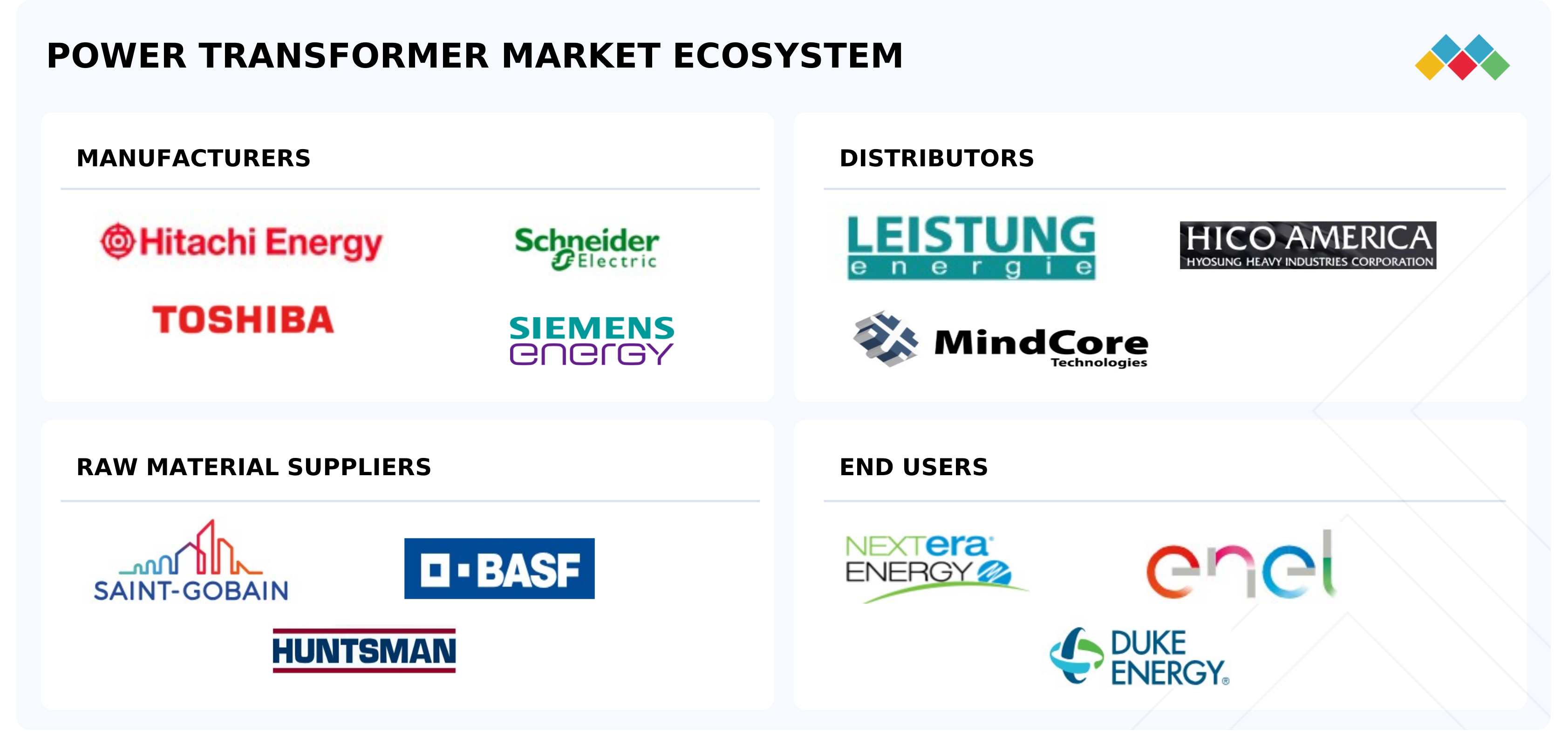
Logos and trademarks shown above are the property of their respective owners. Their use here is for informational and illustrative purposes only.
MARKET SEGMENTS
Source: Secondary Research, Interviews with Experts, MarketsandMarkets Analysis
Power Transformer Market, By Power Rating
The medium power rating segment (61–600 MVA) is expected to hold the largest market share in 2024. This segment is essential for high-voltage transmission and distribution networks that connect power plants to urban and industrial load centers. The increasing demand for reliable bulk power transmission over long distances, particularly for integrating renewable energy projects situated in remote locations, is significantly boosting the adoption of transformers in this range. Furthermore, the rapid industrialization and growth of energy-intensive sectors such as manufacturing, data centers, and heavy industries are increasing the need for mid-to-large capacity transformers to ensure grid stability. Governments and utility companies are also upgrading existing grids with higher-rated transformers to accommodate growing electricity consumption, reduce transmission losses, and enhance energy efficiency. These factors collectively position the 61–600 MVA segment as a key component of global grid modernization efforts.
Power Transformer Market, By Cooling Type
The oil-cooled transformers segment is projected to have the largest market share in 2024 due to its superior efficiency in managing high-voltage and heavy-duty applications compared to air-cooled alternatives. These oil-cooled systems are widely preferred for utility-scale power transmission, industrial operations, and the integration of renewable energy sources because they can handle higher loads with better thermal stability and a longer operational lifespan. The rising demand for large-scale grid expansion projects and the need to replace aging infrastructure have further accelerated the adoption of oil-cooled transformers, especially in regions with rapidly increasing electricity consumption. Additionally, advancements in biodegradable insulating oils and eco-friendly cooling technologies are making oil-cooled transformers more sustainable, aligning with global initiatives for a greener grid infrastructure and reinforcing their dominance in the market.
Power Transformer Market, By Phase
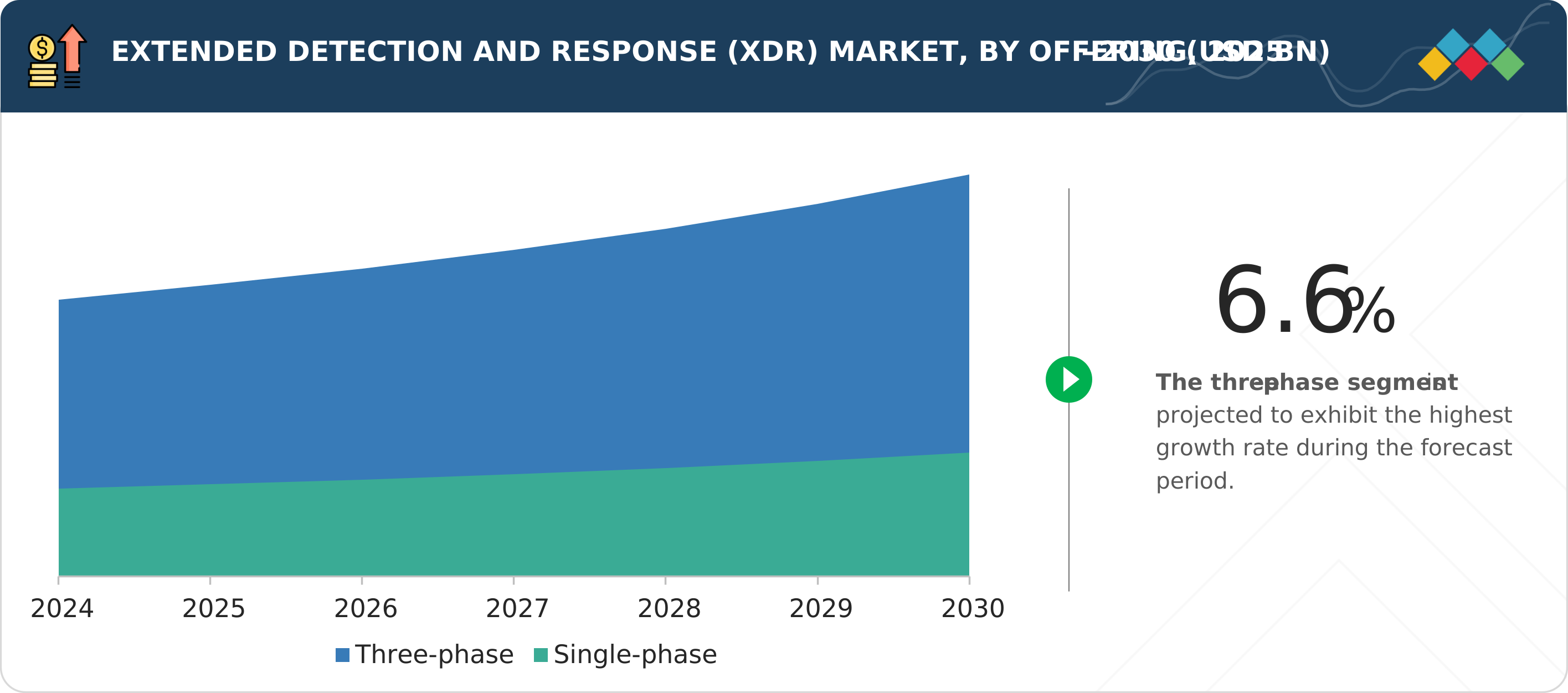
The three-phase transformers segment is expected to hold the largest market share in 2024. This is primarily because three-phase transformers are the industry standard for high-capacity power transmission and distribution in utility and industrial networks. They offer greater efficiency, require less conductor material, and deliver smoother power compared to single-phase systems, making them essential for large-scale applications. The increasing global demand for reliable electricity in urban areas, manufacturing centers, and renewable energy projects is driving their adoption. Additionally, ongoing grid modernization efforts and the expansion of cross-border transmission lines increasingly rely on three-phase configurations to manage higher voltages and transfer bulk power effectively. These benefits, combined with the growing need for energy efficiency and reliability in both developed and developing regions, are propelling the dominance of the three-phase transformers market.
Power Transformer Market, By End User
In 2024, the utilities segment held the largest market share, driven by the increasing need for reliable and efficient transmission and distribution infrastructure to meet rising electricity demand. Utilities are leading the way in grid modernization initiatives, replacing aging transformer fleets with advanced, high-capacity units to reduce technical losses and improve grid stability. The rapid integration of renewable energy into national grids, along with the growing electrification of transportation and urban infrastructure, has further accelerated investment in utility-scale transformers. Additionally, government funding for smart grid projects, rural electrification programs, and cross-border interconnection initiatives is significantly boosting demand from utilities. As global electricity consumption continues to surge, utilities remain the primary end users, reinforcing their dominant position in the market.
REGION
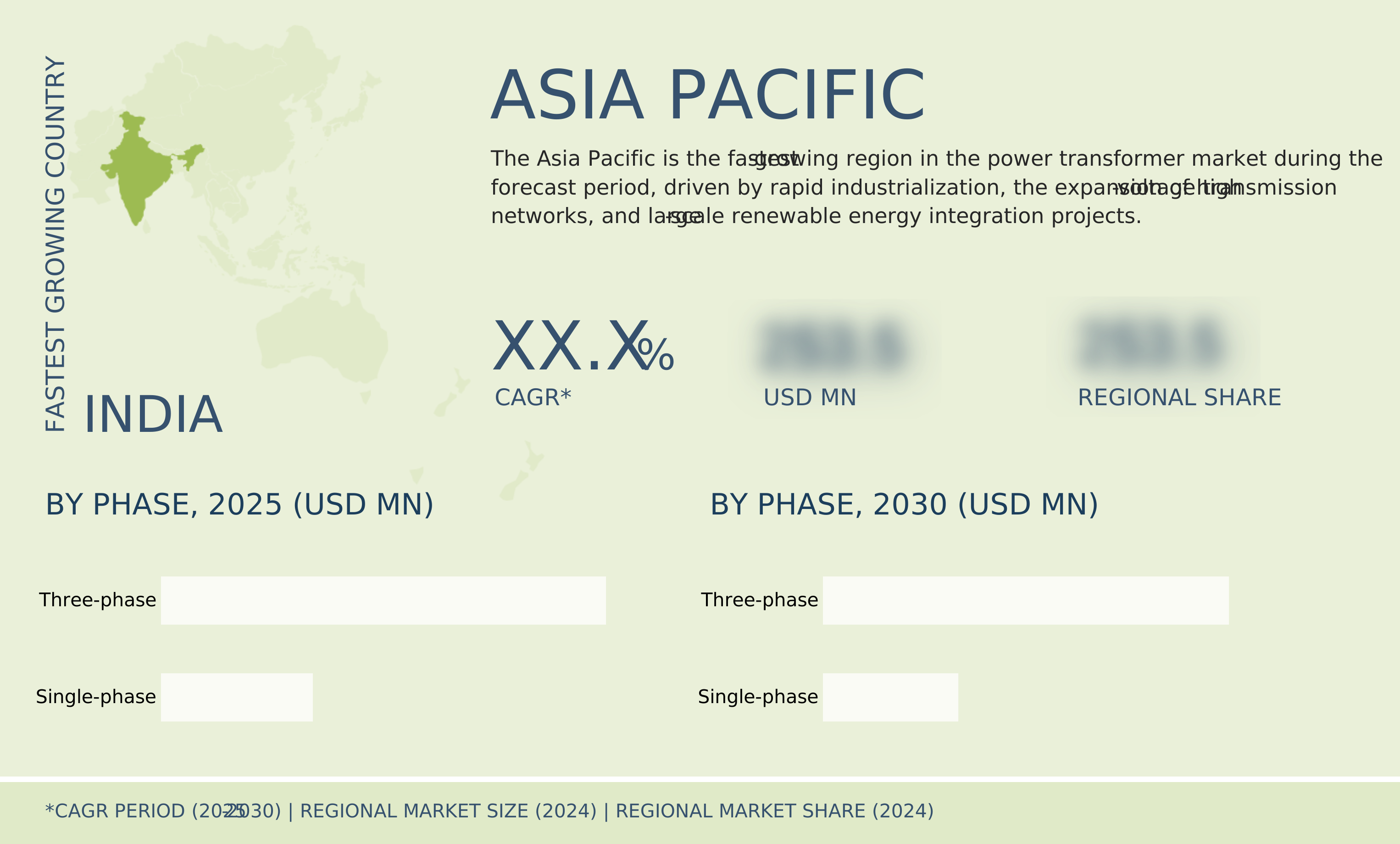
Asia Pacific accounted for largest share of power transformer market in 2024
The Asia Pacific held the largest market share in 2024, driven by rapid industrialization, urbanization, and robust economic expansion. Major economies such as China, India, and Japan made significant investments to upgrade and expand their power infrastructure to meet the growing electricity demand in urban and rural regions.
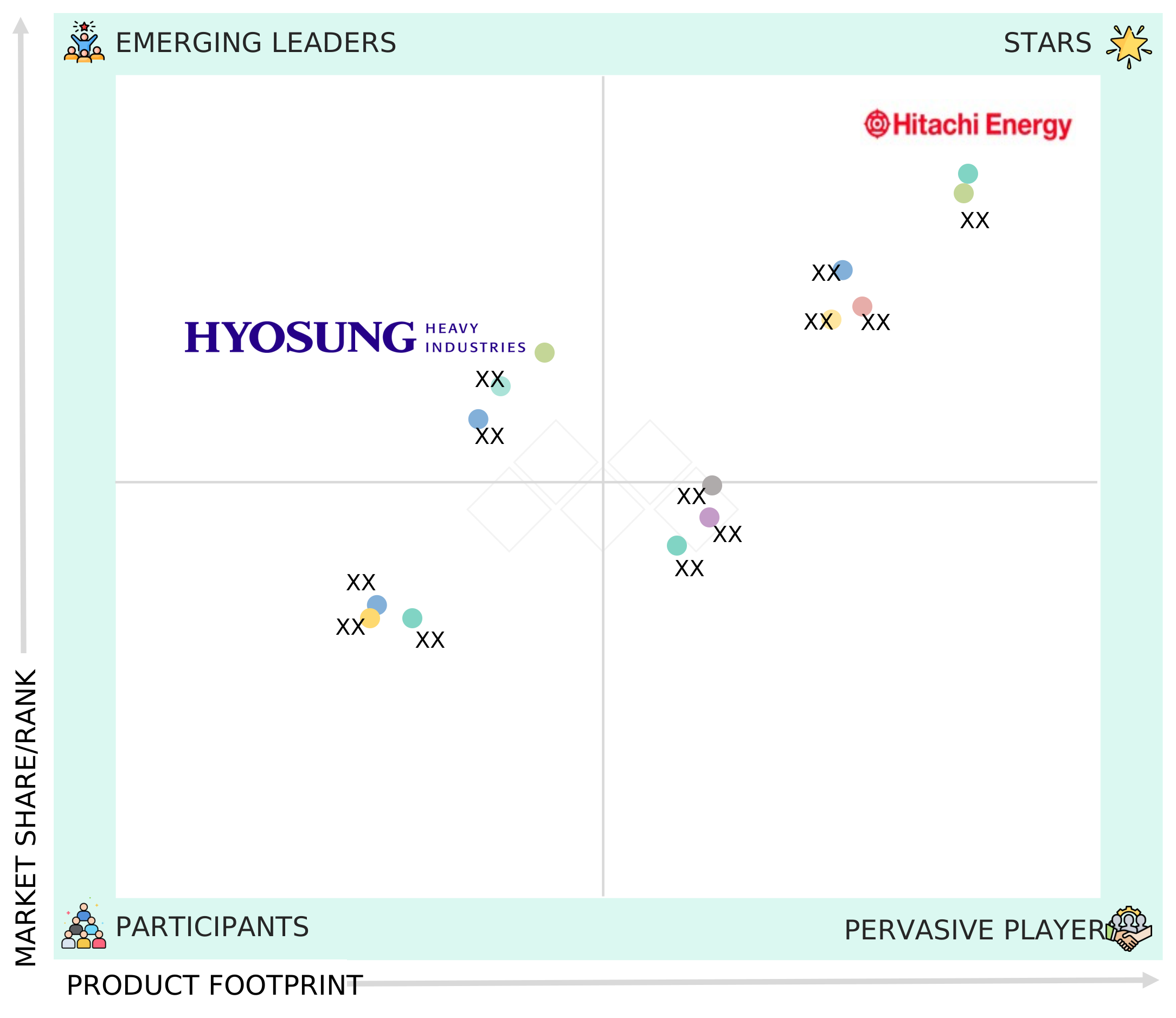
power transformer market: COMPANY EVALUATION MATRIX
In the power transformer market matrix, Hitachi Energy Ltd. (Star) leads with a strong market presence and a wide product portfolio. HYUSONG HEAVY INDUSTRIES (South Korea) is gaining traction as it is expanding globally.
Source: Secondary Research, Interviews with Experts, MarketsandMarkets Analysis
KEY MARKET PLAYERS
- 1. Hitachi Energy Ltd. (Japan)
- 2. GE Vernova (US)
- 3. Siemens Energy (Germany)
- 4. Schneider Electric (France)
- 5. Mitsubishi Electric Corporation (Japan)
- 6. HD Hyundai Electric Co., Ltd. (South Korea)
- 7. Fuji Electric Co., Ltd. (Japan)
- 8. Toshiba Energy Systems & Solution Corporation (Japan)
- 9. CG Power and Industrial Solutions (India)
- 10. Chint Group (China)
- 11. HYOSUNG HEAVY INDUSTRIES (South Korea)
- 12. Bharat Heavy Electricals Limited (India)
- 13. SBG SMIT (Germany)
- 14. WEG (Brazil)
- 15. Transformer & Rectifier India Ltd. (India)
- 16. Niagara Power Transformer Corp. (US)
- 17. LS Electric Co., Ltd. (South Korea)
- 18. Hammond Power Solutions (Canada)
- 19. Wilson Power Solutions (UK)
- 20. ABC Transformer (P) Ltd. (India)
- 21. Daelim Transformer (US)
- 22. BEST Transformer (Turkey)
- 23. Ormazabal (Spain)
- 24. Vijay Power (India)
- 25. Niagara Power Transformer LLC (US)
MARKET SCOPE
| REPORT METRIC | DETAILS |
|---|---|
| Market Size in 2024 (Value) | USD 28.88 Billion |
| Market Forecast in 2030 (Value) | USD 41.62 Billion |
| Growth Rate | CAGR of 6.5% from 2025–2030 |
| Years Considered | 2020–2030 |
| Base Year | 2024 |
| Forecast Period | 2025–2030 |
| Units Considered | Value (USD Billion), Volume (Units) |
| Report Coverage | Revenue forecast, company ranking, competitive landscape, growth factors, and trends |
| Segments Covered |
|
| Regions Covered | Europe, Asia Pacific, North America, Middle East & Africa, and South America |
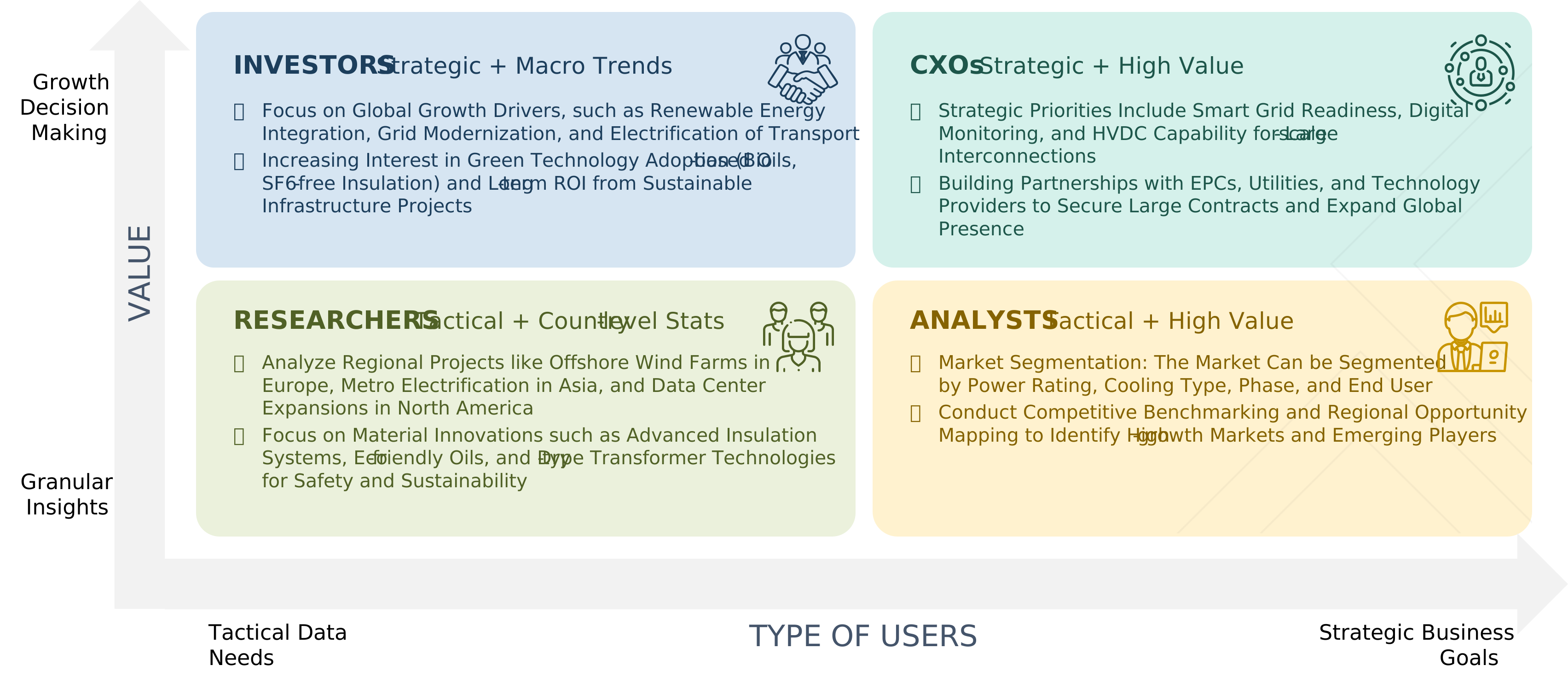
WHAT IS IN IT FOR YOU: power transformer market REPORT CONTENT GUIDE
DELIVERED CUSTOMIZATIONS
We have successfully delivered the following deep-dive customizations:
| CLIENT REQUEST | CUSTOMIZATION DELIVERED | VALUE ADDS |
|---|
RECENT DEVELOPMENTS
- February 2025 : Schneider Electric’s subsidiary, Schneider Electric Infrastructure Ltd., announced a significant expansion of its transformer manufacturing capacity at its plant in Vadodara, Gujarat, India. With an investment of ?13.6 crore (approximately USD 1.5 million), the company aims to increase its medium power transformer output by 1,500 MVA annually, raising the total capacity from 5,500 MVA to 7,000 MVA.
- July 2024 : Siemens Energy made a significant investment to expand its grid division, a strategic decision designed to enhance global energy infrastructure and speed up the energy transition. This expansion includes the construction of new manufacturing facilities, such as a large power transformer plant in Charlotte, North Carolina. This facility aims to address the critical shortage of transformers in the US and support the aging grid infrastructure.
- March 2024 : Hitachi Energy Ltd. signed an agreement with RWE, one of Europe’s largest electricity producers, to supply small power transformers for RWE’s renewable energy projects throughout Europe. This partnership supports the acceleration of the continent’s energy transition by facilitating the development of various clean energy initiatives that are aligned with national technical and regulatory standards.
- January 2024 : Hitachi Energy successfully acquired COET, a prominent designer and manufacturer of power equipment for electric mobility, rail, and industrial applications. This acquisition enhances Hitachi Energy's global presence and offerings at the grid edge.
- April 2023 : Siemens Energy and Spain’s Dragados Offshore signed a framework agreement with the German-Dutch transmission system operator TenneT to provide high-voltage direct current (HVDC) transmission technology for three grid connections in the German North Sea.
Table of Contents
 Exclusive indicates content/data unique to MarketsandMarkets and not available with any competitors.
Methodology
This study undertook an extensive process to determine the current dimensions of the power transformer market, beginning with an in-depth secondary research phase focused on gathering data from the market, related markets, and the overall industry context. This initial data collection was followed by thorough validation using primary research, which included discussions with industry experts across the value chain. Market size evaluations were then conducted for each country through a tailored analysis, leading to a detailed breakdown of the market. Data from these analyses were cross-checked to estimate the sizes of different segments and sub-segments. By integrating secondary and primary research methods, the study ensures the findings are accurate and reliable.
Secondary Research
In this research study, a comprehensive range of secondary sources was utilized, including directories, databases, and trusted references such as Hoover’s, Bloomberg BusinessWeek, Factiva, the World Bank, the US Department of Energy (DOE), and the International Energy Agency (IEA). These sources were crucial in gathering essential data needed for a detailed analysis of the global power transformers market. Covering technical, market-oriented, and commercial facets, these secondary sources greatly enriched the study’s depth and scope. Additional resources included annual reports, press releases, investor presentations, white papers, authoritative publications, articles by respected experts, information from industry associations, trade directories, and various database resources. The extensive and varied secondary sources employed provide a solid and well-rounded basis for this research study.
Primary Research
The power transformers market includes a diverse array of stakeholders throughout its supply chain, ranging from component manufacturers and product assemblers to service providers, distributors, and end users. The primary demand drivers in this market are industrial end users, with the growing needs of transmission and distribution utilities playing a crucial role in market expansion. On the supply side, there is a clear trend toward increased demand for contracts within the industrial sector, complemented by a significant number of mergers and acquisitions among leading industry participants. The calculation and verification of the power transformer market size were carefully performed using a bottom-up approach. This technique was rigorously applied to determine the sizes of various subsegments within the market. The research process included several critical stages.
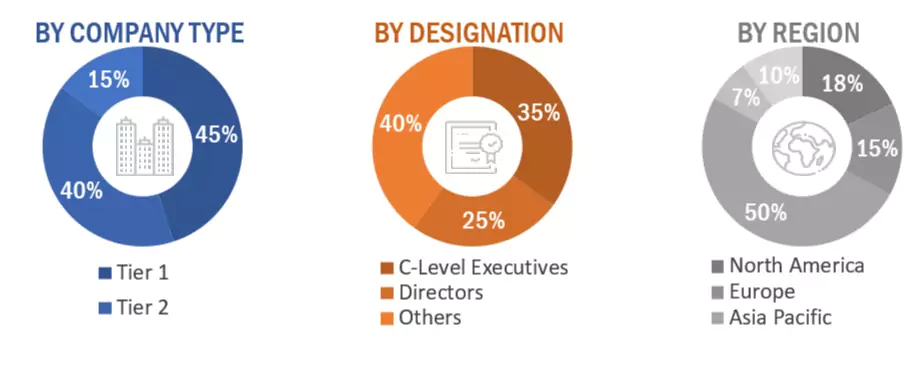
Note: “Others” include sales managers, engineers, and regional managers
The tiers of the companies are defined based on their total revenue as of 2021: Tier 1: >USD 1 billion, Tier 2: USD 500
million–1 billion, and Tier 3:
To know about the assumptions considered for the study, download the pdf brochure
Market Size Estimation
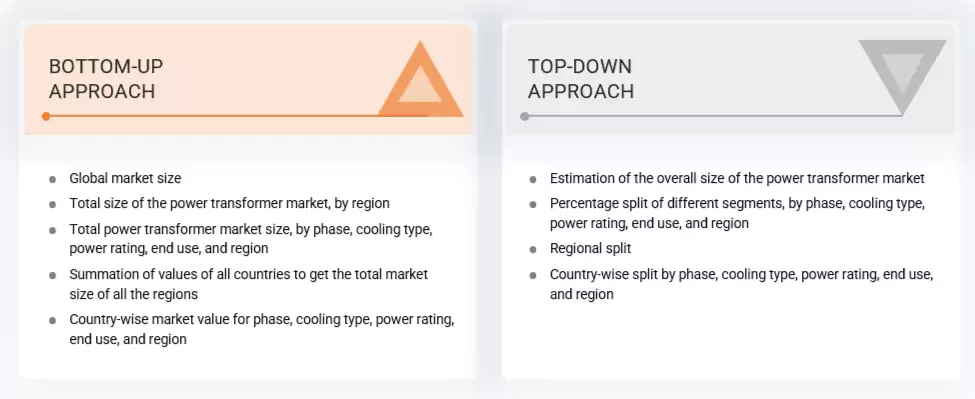
Both top-down and bottom-up approaches were used to estimate and validate the power transformer market size. These methods were also used extensively to estimate the size of various subsegments in the market. The research methodology used to estimate the market size includes the following:
Power Transformer Market : Top-Down and Bottom-Up Approach
Data Triangulation
The determination of the overall market size was conducted using the outlined methodologies, which involved dividing the market into various segments and subsegments. Techniques such as data triangulation and market segmentation were employed to finalize the comprehensive market analysis and obtain accurate statistics for each segment and subsegment. Data triangulation included a detailed analysis of different factors and trends from both demand and supply sides within the power transformers market ecosystem.
Market Definition
A power transformer is a vital component in the transmission and distribution of electrical energy, designed to adjust voltage levels between different segments of the power grid. Its core function is to either step up (increase) or step down (decrease) voltage, enabling electricity to be transmitted efficiently over long distances while minimizing energy losses. This capability is essential for linking generation facilities to distribution networks and ensuring a stable and reliable power supply to end users. Structurally, a power transformer consists of a magnetic core—typically made of silicon steel—and insulated copper or aluminum windings. These windings operate on the principle of electromagnetic induction: when alternating current flows through the primary winding, it generates a magnetic field in the core, which then induces a voltage in the secondary winding. The resulting output voltage is determined by the ratio of turns between the primary and secondary coils. For example, if the secondary coil has fewer turns than the primary, the transformer acts as a step-down unit, reducing the voltage for safe and efficient local distribution.
Stakeholders
- Government utility providers
- Independent power producers
- Transformer manufacturers
- Power equipment and garden tool manufacturers
- Consulting companies (energy & power sector)
- Distribution utilities
- Government and research organizations
- Organizations, forums, and associations
- Raw material suppliers
- State and national regulatory authorities
- Transformer manufacturers, distributors, and suppliers
- Transformer original equipment manufacturers (OEMs)
Report Objectives
- To define, categorize, segment, and project the power transformer market, by power rating, phase, cooling type, and end use, in terms of value
- To describe and forecast the power transformers market in terms of volume
- To project market sizes for the major countries in each of these five regions: North America, South America, Europe, Asia Pacific, the Middle East, and Africa, in terms of value
- To provide in-depth analyses of the drivers, restraints, opportunities, and challenges impacting the growth of the market
- To systematically assess the market share, growth trends, and prospects of each subsegment
- To evaluate the competitive landscape for leaders in the industry and the market prospects for interested parties
- To create strategic profiles of the top players by closely examining their market shares and essential strengths
- To monitor and assess competitive changes in the market, such as contracts, sales contracts, product launches, expansions, and investments
- To analyze the ecosystem, trends/disruptions impacting customers businesses, technology analysis, pricing analysis, Porter’s five force analysis, key stakeholders & buying criteria, case study analysis, trade analysis, patent analysis, key conferences & events, investment & funding scenario, tariff & regulatory landscape, the AI/Gen AI impact, and the impact of the 2025 US tariff impact related to the market
- To strategically analyze the micro markets with respect to individual growth trends, prospects, and contributions to the overall power transformers market
- To strategically profile the key players and comprehensively analyze their market shares and core competencies
Available Customizations
With the given market data, MarketsandMarkets offers customizations based on the company’s specific needs. The following customization options are available for the report:
Product Analysis
- Product Matrix, which provides a detailed comparison of the product portfolio of each company
Company Information
- Detailed analyses and profiling of additional market players (up to 5)
Key Questions Addressed by the Report
What was the size of the global power transformer market?
The global power transformer market size reached USD 30.38 billion in 2025.
What are the major drivers for the power transformer market?
Major drivers for the power transformer market include the rising global demand for electricity driven by rapid urbanization, industrialization, and infrastructure development, particularly in emerging economies. The increasing integration of renewable energy sources, including wind and solar, into power grids necessitates advanced transformers for efficient voltage regulation and grid stability.
Which end use captured the largest share of the power transformer market in 2024?
The utilities segment held the largest market share in the power transformer market in 2024. This dominance is driven by the critical role utilities play in electricity generation, transmission, and distribution across residential, commercial, and industrial sectors. With rising global electricity demand, aging grid infrastructure, and the ongoing integration of renewable energy sources, utilities continuously invest in advanced power transformers to enhance grid reliability, efficiency, and stability.
Which is the fastest-growing region in the power transformer market during the forecast period?
Asia Pacific is the fastest-growing region in the power transformer market during the forecast period. This growth is fueled by rapid industrialization, urbanization, and economic development in countries such as China, India, Japan, and South Korea. These nations heavily invest in upgrading aging power infrastructure, expanding grid capacity, and integrating large-scale renewable energy projects. Additionally, government initiatives focused on rural electrification, energy efficiency, and smart grid development further drive the demand for power transformers, making it the largest and fastest-growing market.
Which is the fastest-growing segment, by phase, in the power transformer market during the forecast period?
The three-phase segment is the fastest-growing phase in the power transformer market during the forecast period. This growth is attributed to its widespread application across industrial, commercial, and utility sectors due to its ability to handle high power loads efficiently and transmit electricity over long distances with minimal losses.


Personalize This Research
- Triangulate with your Own Data
- Get Data as per your Format and Definition
- Gain a Deeper Dive on a Specific Application, Geography, Customer or Competitor
- Any level of Personalization
Let Us Help You
- What are the Known and Unknown Adjacencies Impacting the Power Transformer Market
- What will your New Revenue Sources be?
- Who will be your Top Customer; what will make them switch?
- Defend your Market Share or Win Competitors
- Get a Scorecard for Target Partners

Custom Market Research Services
We Will Customise The Research For You, In Case The Report Listed Above Does Not Meet With Your Requirements
Get 10% Free CustomisationTESTIMONIALS

Kimberly Murphy
GLOBAL MARKETING DIRECTOR
Bently Nevada,
Leading Condition Monitoring & Asset Protectionwww.bakerhughesds.com/bently-nevada

MarketsandMarkets™ showed consistent rigor for success and relentlessly worked with Bently Nevada stakeholders to positively impact go-to-market strategy. Their proactiveness and flexibility has been instrumental in achieving the objectives to grow our sales pipeline in key industrial markets.

DARRICK HUEBER
Business Development Leader
Nexus Controls LLC,
Leading Manufacturer of Automation System & Electrical Panelswww.bakerhughesds.com/nexus-controls

We partnered with MarketsandMarkets to expand our business further by tapping into new industrial segments. It was critical for us to gather crucial business insights about specific markets to achieve this goal. MarketsandMarkets engagement model and client services helped us provide those insights, it was really impressive and valuable for my business. The team was extremely flexible and helpful.

Mike Schoff
Global Industrial Commercial Strategy Leader
Nexus Controls LLC
Leading Manufacturer of Automation System & Electrical Panelswww.bakerhughesds.com/nexus-controls
We consulted MarketsandMarkets for potential Partner Identification. Overall, it was a good experience. The insights provided through interviews conducted by the team helped us put together the questionnaire required for discussion with the selected partners. Their ability to provide insights through interviews with customers in a timely manner was quite impressive.
- US Power Transformer Market
- Canada Power Transformer Market
- Mexico Power Transformer Market
- Germany Power Transformer Market
- UK Power Transformer Market
- France Power Transformer Market
- Italy Power Transformer Market
- Spain Power Transformer Market
- China Power Transformer Market
- India Power Transformer Market
- Japan Power Transformer Market
- South Korea Power Transformer Market
- Australia Power Transformer Market
- Saudi Arabia Power Transformer Market
- UAE Power Transformer Market
- South Africa Power Transformer Market
- Brazil Power Transformer Market
- Argentina Power Transformer Market
- Rest Of Europe Power Transformer Market
- Rest Of Asia Pacific Power Transformer Market
- GCC Countries Power Transformer Market
- Rest Of GCC Countries Power Transformer Market
- Rest Of South America Power Transformer Market






Growth opportunities and latent adjacency in Power Transformer Market