Respiratory Syncytial Virus (RSV) Vaccines Market Size, Growth, Share & Trends Analysis

Respiratory Syncytial Virus (RSV) Vaccines Market by Technology (Recombinant, Inactivated & Subunit, Others), Type (Monovalent, Multivalent), End User (Pediatric, Adult) & Region – Global Forecast to 2030




OVERVIEW
-vaccines-market-img-overview.webp "Respiratory Syncytial Virus (RSV) Vaccines Market Size, Share and Trends")
Source: Secondary Research, Interviews with Experts, MarketsandMarkets Analysis
The global Respiratory Syncytial Virus (RSV) Vaccines market, valued at US$1.53 billion in 2024, stood at US$1.60 billion in 2025 and is projected to advance at a resilient CAGR of -4.9% from 2025 to 2030, culminating in a forecasted valuation of US$1.24 billion by the end of the period.The global respiratory syncytial virus (RSV) vaccines market is expanding rapidly. Growth is driven by the high burden of RSV among infants and older adults. Many countries are broadening adult and maternal immunization policies, improving uptake. Recent approvals and launches have bolstered physician and patient confidence. Companies are also investing in next-generation options, including updated formulations and potential combination vaccines.
KEY TAKEAWAYS
-
BY REGIONThe Asia Pacific respiratory syncytial virus (RSV) vaccines market was the fastest-growing segment with a CAGR of -1.9 % in 2024.
-
BY TECHNOLOGYInactivated and subunit vaccines hold the highest market share of 49.2% due to their established safety profiles, proven efficacy in approved products such as GSK's Arexvy and Pfizer's Abrysvo, and widespread adoption for adult and maternal immunization.
-
BY TYPEThe multivalent vaccines segment had the highest share of 49.2% mainly due to their ability to target multiple RSV subtypes and they simplify vaccination schedules, improves patient compliance, and enhances broad-spectrum immunity during overlapping seasonal outbreaks
-
BY End UserPediatric vaccines dominated the market supported by routine childhood immunization schedules, high vaccination coverage
-
COMPETITIVE LANDSCAPEPfizer (US), GSK, (UK) and Moderna,Inc. (US) were identified as some of the star players in the RSV vaccines market , given their strong market share and product footprint.
-
COMPETITIVE LANDSCAPENovavax Inc. and Icosavax, among others, have distinguished themselves among startups and SMEs by securing strong footholds in specialized niche areas, underscoring their potential as emerging market leaders
The respiratory syncytial virus (RSV) vaccines market is growing with the expansion of healthcare facilities, active agencies overseeing vaccine programs such as the CDC and the FDA, and increased public health knowledge. The increasing investment in RSV-related research by major pharmaceutical companies and approvals of innovative RSV vaccine products are increasing the use of RSV vaccines in preventive health practices. Sophisticated platforms focused on RSV fusion protein antigens help address respiratory diseases, thereby facilitating appropriate immunisation practices for this viral pathogen in adults and high-risk babies.
TRENDS & DISRUPTIONS IMPACTING CUSTOMERS' CUSTOMERS
The global respiratory syncytial virus (RSV) vaccine market is being reshaped by rapid clinical and regulatory progress. Following recent late-stage readouts and approvals, RSV vaccination is shifting from the pipeline to routine prevention in priority groups. Adoption is rising as health systems focus on targeted protection for older adults, high-risk adults, and maternal immunization to reduce infant RSV burden. New platform approaches are improving confidence in consistent efficacy and safety, supporting broader rollouts.
-vaccines-market-img-disruption.webp "Respiratory Syncytial Virus (RSV) Vaccines Market Trends/Disruptions")
Source: Secondary Research, Interviews with Experts, MarketsandMarkets Analysis
MARKET DYNAMICS

Level
-
Rising disease burden and expanding immunization initiatives

-
Regulatory approvals and increasing product launches


Level
-
High development costs, pricing pressures, and logistical constraints


Level
-
Pediatric, maternal, and combination vaccine development


Level
-
Safety considerations, and competitive prevention alternatives

Source: Secondary Research, Interviews with Experts, MarketsandMarkets Analysis
Driver: Rising disease burden and expanding immunization initiatives
The high incidence of RSV infections among infants, older adults, and immunocompromised populations, together with recent regulatory approvals and a growing public health focus on RSV prevention, is accelerating vaccine uptake globally.
Restraint: High development costs, pricing pressures, and logistical constraints
Complex clinical development, high manufacturing costs, cold-chain requirements, and affordability concerns in price-sensitive markets limit the widespread adoption of RSV vaccines, particularly in low- and middle-income countries.
Opportunity: Pediatric, maternal, and combination vaccine development
Ongoing development of pediatric and maternal RSV vaccines, along with emerging combination vaccines targeting multiple respiratory pathogens, presents significant opportunities for market expansion and long-term growth.
Challenge: Safety considerations, and competitive prevention alternatives
Stringent regulatory requirements, heightened safety scrutiny, especially in pediatric populations, and competition from monoclonal antibodies and other respiratory vaccines pose challenges to sustained market growth.
RESPIRATORY SYNCYTIAL VIRUS (RSV) VACCINES MARKET: COMMERCIAL USE CASES ACROSS INDUSTRIES
| COMPANY | USE CASE DESCRIPTION | BENEFITS |
|---|---|---|
-vaccines-market-gsk.svg) |
Developed and launched adult RSV vaccine and leverages this market position to drive adoption in older adults and expand reach to at-risk adults through label expansion. Commercial execution is built around seasonal respiratory campaigns, provider education, and retail/pharmacy access to improve coverage ahead of RSV season. | Builds strong prescriber confidence, improves season-ready availability, and supports wider eligible-population coverage through expanded indications and scaled distribution. |
Logos and trademarks shown above are the property of their respective owners. Their use here is for informational and illustrative purposes only.
MARKET ECOSYSTEM
The global respiratory syncytial virus (RSV) vaccines market was the fastest-growing segment, with a CAGR of -1.9% in 2024. The ecosystem comprises various players across discovery, clinical development, manufacturing, and commercial delivery. At the base of the system are the main components, such as antigens, adjuvants, excipients, single-use consumables, and vials and syringes used to make both pilot and commercial batches. Vaccine makers are increasingly outsourcing their production scale-up and highly specialized work to contract manufacturing organizations (CMOs) to support the seasonal supply of in-demand products. This move is facilitated by cold chain logistics partners and local distributors, who help reduce lead times. The ecosystem along the way includes clinical research organizations, hospital networks, and central labs which oversee and extend multi-country studies and produce the safety and effectiveness data.
-vaccines-market-img-ecosystem.webp "Respiratory Syncytial Virus (RSV) Vaccines Market Top Companies")
Logos and trademarks shown above are the property of their respective owners. Their use here is for informational and illustrative purposes only.
MARKET SEGMENTS
-vaccines-market-img-segment.webp "Respiratory Syncytial Virus (RSV) Vaccines Market End Users")
Source: Secondary Research, Interviews with Experts, MarketsandMarkets Analysis
Respiratory Syncytial Virus (RSV) Vaccines Market, By Technology
In 2024, the inactivated and subunit segment held the largest share of the global RSV vaccine market. This was mainly because the first wave of commercial RSV vaccines used subunit-based designs, which enabled rapid scale-up and broad rollout. Additionally, the approved drug Abrysvo generated the largest revenue.
Respiratory Syncytial Virus (RSV) Vaccines Market, By Type
In 2024, the multivalent segment accounted for the largest share of the global RSV vaccines market. This was primarily due to this segment generating the highest revenue. Additionally, it was driven by a strong shift toward broader respiratory protection.
Respiratory Syncytial Virus (RSV) Vaccines Market, By End User
In 2024, the pediatric end user segment held the largest share of the RSV vaccines market, primarily due to its highest revenue generation. Additionally, this segment was supported by the strong clinical focus on preventing severe RSV outcomes in infants and young children, where hospitalization risk is highest.
REGION
Asia to be fastest-growing region in market during forecast period
During the forecast period, the Asia Pacific is expected to be the fastest-growing region in the global RSV vaccines market. However, the region is still expected to post a slight decline (-1.9% growth). This growth positioning is relative, as other regions are forecast to contract more sharply, reflecting near-term normalization after the initial launch wave and seasonal demand volatility. Asia Pacific is supported by rising awareness of the RSV burden in older adults, improving adult immunization infrastructure, and the gradual expansion of market access and reimbursement discussions in select countries.
-vaccines-market-img-region.webp "Respiratory Syncytial Virus (RSV) Vaccines Market Regional CAGR, Size, Share")
RESPIRATORY SYNCYTIAL VIRUS (RSV) VACCINES MARKET: COMPANY EVALUATION MATRIX
In the global RSV vaccines market, Pfizer stands out as the Star Player, shaping competitive dynamics with a broad RSV strategy that spans older adults and maternal immunization. Its strong regulatory execution and commercial scale support wide market penetration across major geographies. Moderna is an Emerging Leader, building momentum as it expands its RSV vaccine footprint in the adult segment. The company is leveraging its mRNA platform strengths to scale manufacturing, drive lifecycle improvements and accelerate market entry across additional countries over time.
-vaccines-market-img-evaluation.webp "Respiratory Syncytial Virus (RSV) Vaccines Market Emerging Leaders")
Source: Secondary Research, Interviews with Experts, MarketsandMarkets Analysis
KEY MARKET PLAYERS
- Pfizer, Inc. (US)
- GSK (UK)
- Moderna Inc. (US)
- AstraZeneca (UK)
- Clover Biopharmaceuticals (China)
- Meissa Vaccines (US)
- Codagenix (US)
- Vicebio (UK)
MARKET SCOPE
| REPORT METRIC | DETAILS |
|---|---|
| Market Size in 2024 (Value) | USD 1.53 Billion |
| Market Forecast in 2030 (Value) | USD 1.24 Billion |
| Growth Rate | CAGR of -4.9% from 2025-2030 |
| Years Considered | 2023-2030 |
| Base Year | 2024 |
| Forecast Period | 2025-2030 |
| Units Considered | Value (USD Million) |
| Report Coverage | Revenue forecast, company ranking, competitive landscape, growth factors, and trends |
| Segments Covered | By Technology: Inactivated and Subunit, Recombinant, Others I By Type: Monovalent and Multivalent Vaccines I By End User: pediatric vaccines and adult vaccines |
| Countries Covered | North America, Europe, Asia Pacific, Latin America, Middle East and Africa |
| Parent & Related Segment Reports |
Vaccines Market Conjugate Vaccines Market Europe Vaccines Market Asia Pacific Vaccines Market North America Vaccines Market |
WHAT IS IN IT FOR YOU: RESPIRATORY SYNCYTIAL VIRUS (RSV) VACCINES MARKET REPORT CONTENT GUIDE
-vaccines-market-img-content.webp "Respiratory Syncytial Virus (RSV) Vaccines Market Growth Decision, Granular Insights")
DELIVERED CUSTOMIZATIONS
We have successfully delivered the following deep-dive customizations:
| CLIENT REQUEST | CUSTOMIZATION DELIVERED | VALUE ADDS |
|---|---|---|
| Regulatory Intelligence & Compliance | Region-specific analysis of RSV vaccine approval pathways (FDA, EMA, PMDA), including guidance on older-adult vs maternal indications. Includes review of CMC expectations for RSV antigens and adjuvants and comparability strategies for scale-up or site changes. | Reduces regulatory uncertainty, supports faster approvals,and enables smooth lifecycle management across major markets while maintaining supply continuity. |
RECENT DEVELOPMENTS
- January 2026 : Clover Biopharmaceuticals, Ltd?announced initiation and completion of enrollment of Phase 2 Clinical Trial for RSV + hMPV ± PIV3 Respiratory Combination Vaccine Candidates in Australia.
- June 2023 : Meissa Vaccines announced it has entered into a manufacturing agreement with Exothera S.A. for cGMP manufacturing for Pediatric RSV Vaccine Candidate for Phase 2 Clinical Trials.
Table of Contents
 Exclusive indicates content/data unique to MarketsandMarkets and not available with any competitors.
Methodology
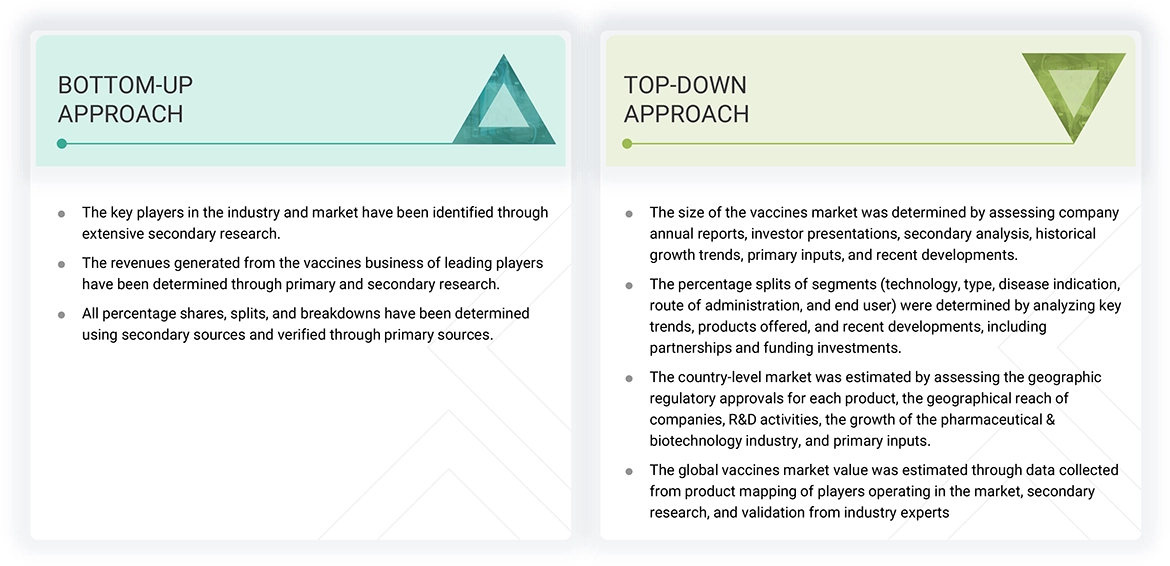
This research study involved the extensive use of secondary sources, directories, and databases to identify and collect valuable information for the analysis of the global respiratory syncytial virus (RSV) vaccines market. In-depth interviews were conducted with various primary respondents, including key industry participants, subject-matter experts (SMEs), C-level executives of key market players, and industry consultants, to obtain and verify critical qualitative and quantitative information and assess the growth prospects of the market. The global market size estimated through secondary research was then triangulated with inputs from primary research to arrive at the final market size.
Secondary Research
Secondary research was used mainly to identify and collect information for the extensive technical, market-oriented, and commercial study of the respiratory syncytial virus (RSV) vaccines market. The secondary sources used for this study include World Health Organization (WHO), the Organization for Economic Co-operation and Development (OECD), National Center for Biotechnology Information (NCBI), Centers for Disease Control and Prevention (CDC), the Global Cancer Observatory (GLOBOCAN), the National Institutes of Health (NIH), Center of Disease Control & Prevention (CDC), US Department of Health and Human Services, National Institutes of Health (NIH), National Library of Medicine, National Center for Biotechnology Information (NCBI), National Institute of Allergy and Infectious Diseases (NIAID), World Cancer Research Fund International (WCRF International), European Medicines Agency (EMA), The National Medical Products Administration (NMPA), Global Alliance for Vaccines and Immunization (GAVI), United States Food & Drug Administration (US FDA), Orange book, Purple book, Clinical trials.gov, Pan American Health Organization (PAHO), United Nation International Children’s Emergency Fund (UNICEF), Department of health and Human Services (HHS), and International Society for Vaccines (ISV). Corporate filings include annual reports, SEC filings, investor presentations, and financial statements; research journals; press releases; and trade, business, and professional associations. Secondary data was collected and analyzed to arrive at the overall size of the global respiratory syncytial virus (RSV) vaccines market, which was validated through primary research. These sources were also used to obtain key information about major players, market classification, and segmentation according to industry trends, regional/country-level markets, market developments, and technology perspectives.
Primary Research
In-depth interviews were conducted with various primary respondents, including key industry participants, subject-matter experts (SMEs), C-level executives of key market players, and industry consultants, among other experts, to obtain and verify the critical qualitative and quantitative information as well as assess future prospects of the market. Various primary sources from both the supply and demand sides of the market were interviewed to obtain qualitative and quantitative information.
To know about the assumptions considered for the study, download the pdf brochure
Market Size Estimation
Both top-down and bottom-up approaches were employed to estimate and validate the overall size of the respiratory syncytial virus (RSV) vaccines market. These methods were also widely used to determine the size of various subsegments in the market. The research methodology used to estimate the market size includes the following:
Data Triangulation
After estimating the overall market size through the market size estimation process, the total market was divided into several segments and subsegments. Data triangulation and market breakdown techniques were used where applicable to finalize the overall market analysis and obtain precise statistics for all segments and subsegments. The data was triangulated by examining various factors and trends from both demand and supply sides.
Market Definition
A vaccine is a biologically formulated product designed to trigger active acquired immunity against a specific infectious or malignant disease. Vaccines work by stimulating the immune system to identify and fight harmful agents, such as viruses or bacteria. They generally consist of parts that resemble the disease-causing microorganism, often in weakened or deactivated forms, along with their toxins or surface proteins. The report solely focuses on human vaccines and does not include veterinary vaccines, which are outside the scope of this study.
Stakeholders
- Vaccine product manufacturers and suppliers
- Distributors and suppliers of vaccine products
- Vaccine research institutes
- Biotechnology and biopharmaceutical companies
- Contract manufacturing organizations (CMOs)
- Contract development and manufacturing organizations (CDMO)
- Suppliers and distributors of pharmaceutical products
- Research and development (R&D) companies
- Drug Manufacturers, Vendors, and Distributors
- Immunization centres
- Hospitals and laboratories
- Trade associations and industry bodies
- Regulatory bodies and government organizations
- Venture capitalists and investors
- Hospitals
- Specialty Clinics
Report Objectives
- To define, describe, and forecast the respiratory syncytial virus (RSV) vaccines market by technology, type, disease indication, route of administration, end user, and region
- To provide detailed information regarding the major factors influencing the market growth (such as drivers, restraints, opportunities, and challenges)
- To analyze the micromarkets1 with respect to individual growth trends, prospects, and contributions to the overall respiratory syncytial virus (RSV) vaccines market
- To analyze the opportunities for stakeholders and provide details of the competitive landscape for market leaders
- To forecast the size of the market segments with respect to five regions: North America, Europe, the Asia Pacific, Latin America, and the Middle East & Africa
- To profile the key players and analyze their market shares and core competencies2
- To track and analyze competitive developments, such as product launches, agreements, partnerships, acquisitions, regulatory approvals, and research & development activities
- To analyze and provide funding & investment activities, brand/product comparative analysis, and vendor valuation & financial metrics of the respiratory syncytial virus (RSV) vaccines market.


Personalize This Research
- Triangulate with your Own Data
- Get Data as per your Format and Definition
- Gain a Deeper Dive on a Specific Application, Geography, Customer or Competitor
- Any level of Personalization
Let Us Help You
- What are the Known and Unknown Adjacencies Impacting the Respiratory Syncytial Virus (RSV) Vaccines Market
- What will your New Revenue Sources be?
- Who will be your Top Customer; what will make them switch?
- Defend your Market Share or Win Competitors
- Get a Scorecard for Target Partners

Custom Market Research Services
We Will Customise The Research For You, In Case The Report Listed Above Does Not Meet With Your Requirements
Get 10% Free CustomisationTESTIMONIALS

JAYANT RAJPUROHIT
Director of Market Insights, Data and Analytics
SFI Health,
Leading Pharmaceutical Companywww.sfihealth.com/

We at SFI Health approached MarketsandMarkets for an Opportunity Assessment on "Incidence and Prevalence of Focus Indications" as we wanted to know the most attractive HCPs like Physician, Functional MD, Naturopath and Pharmacist. The project was critical for us to ensure our focus on the right target which would enable sustainable growth and profitability for SFI Health. The business insights provided exceeded our expectations and we were extremely impressed. The team at MarketsandMarkets is highly professional and detail oriented and very well understood our business needs. MarketsandMarkets offers a unique combination of expertise and dedicated engagement model. We identified 2 new products to be launched in coming months, based on the research findings provided by MarketsandMarkets. We are happy with the services and would strongly recommend MarketsandMarkets to my peers in the industry.

BEATRIZ DE LA CALLE
Head of Commercial Analytics
Qualicaps,
Leading Pharmaceutical Companywww.qualicaps.com/

We partnered with MarketsandMarkets for an assessment study on hard empty capsules. The team was extremely professional in understanding our business requirements and we received timely responses to all our queries. The market intelligence and the recommendations has met our business requirements. We were extremely impressed to see the final study results; it really exceeded our expectations. The market intelligence offered by MarketsandMarkets, and clarity on next steps will help us achieve our business objective for the Year 2021. We are happy with the services and would strongly recommend MarketsandMarkets to my peers in the industry.

Bob Williams,
Senior Director Business Development & Innovation
Bracco Diagnostics Inc.,
Italian Multinational in life sciences sector and a World Leader in imaging diagnosticsimaging.bracco.com/us-en
We were pleased with targeted insights that MarketsandMarkets identified from a custom study on the 'Radiation Dose Management Solutions Market'. Your team identified and characterized the market participants as well as underlying trends accurately. This study was useful to Bracco in formulating business strategies for our dose monitoring product lines and we thank MarketsandMarkets for the job well done.
Cody Coonradt,
Market Development and Strategy Manager
3M Health Information Systems,
Leader in Health care Coding, Payment & Analytics Solutions.www.3m.com/3M/en_US/health-information-systems-us
The value for our organization comes from three things: depth of research, specificity of segments and being easy to work with. As important as the first two are, the third can't be underestimated. MarketsandMarkets, maybe more than any other research vendor, wants to know what is top of mind for our team and what big questions we are grappling to answer.
Their customer first approach and high value engagement model, have given us great analysis and excellent value for money






Growth opportunities and latent adjacency in Respiratory Syncytial Virus (RSV) Vaccines Market